






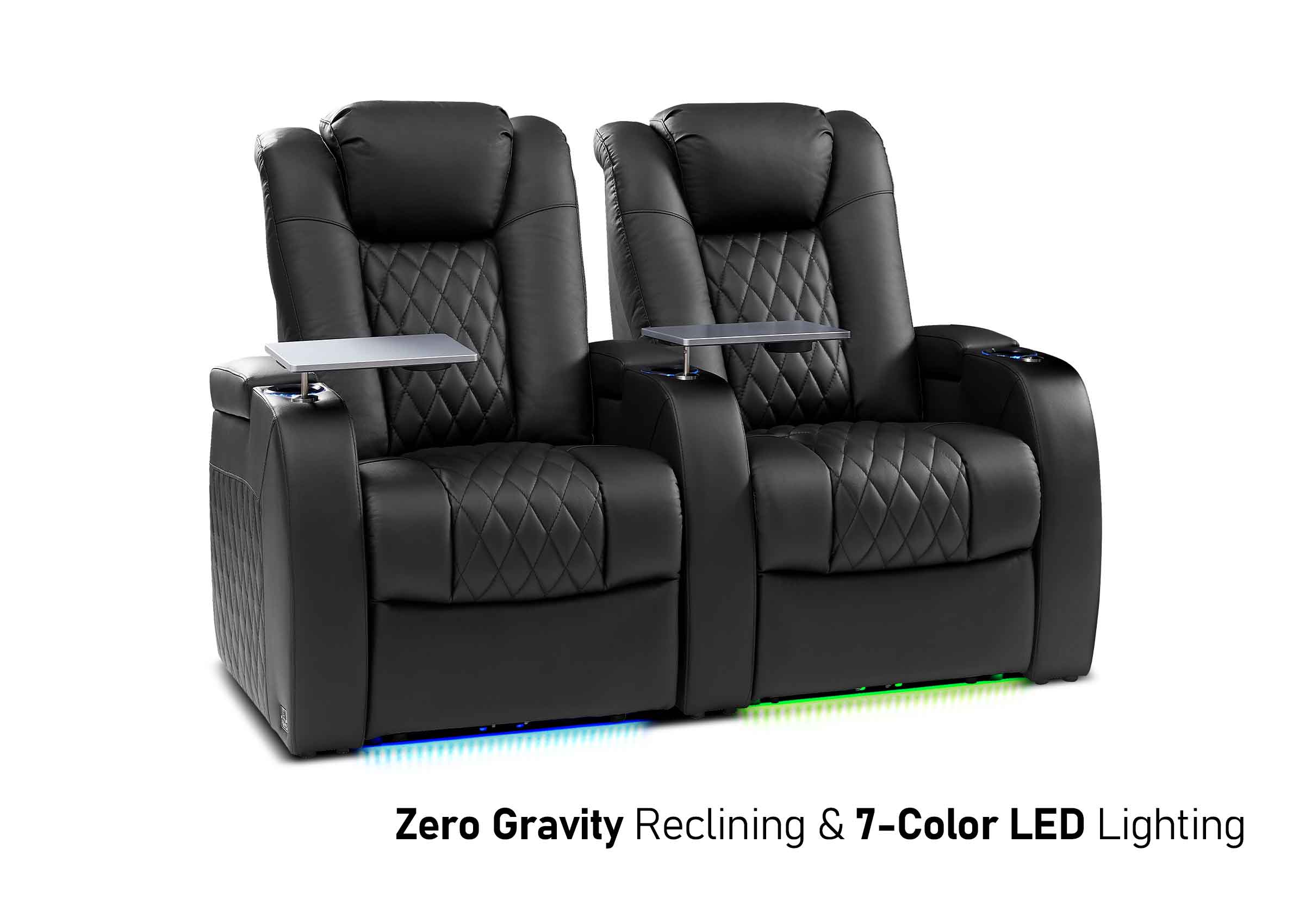
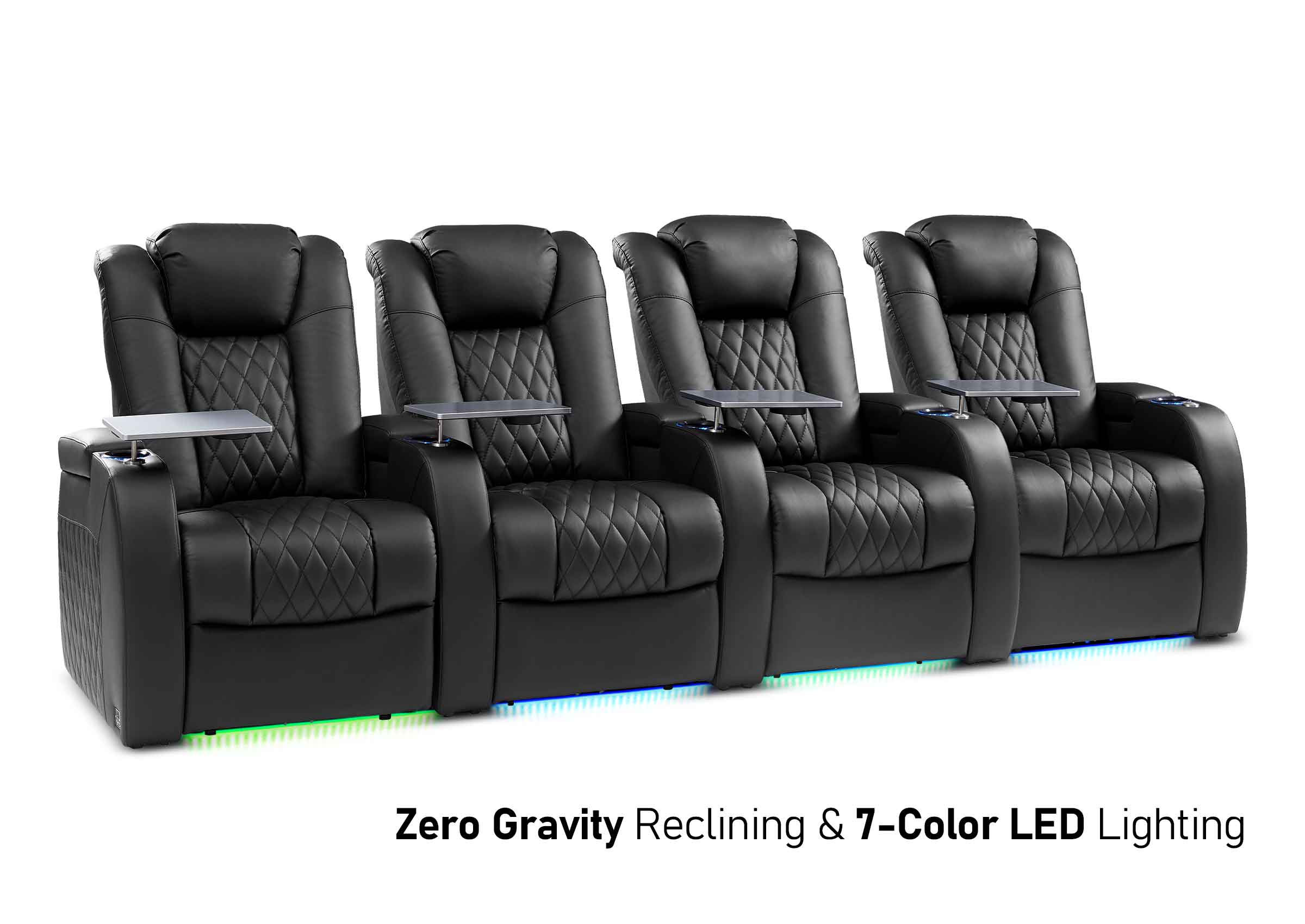
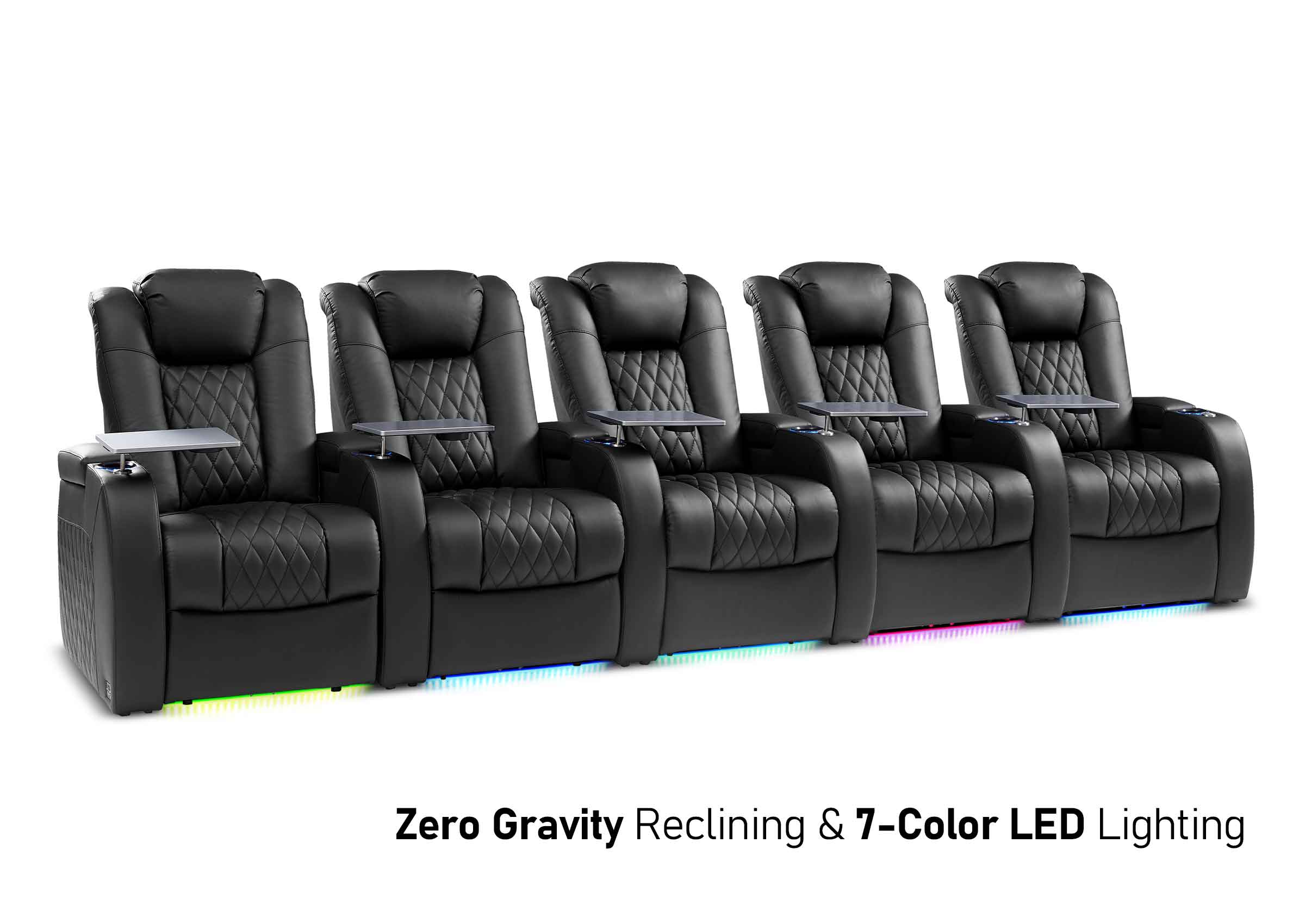
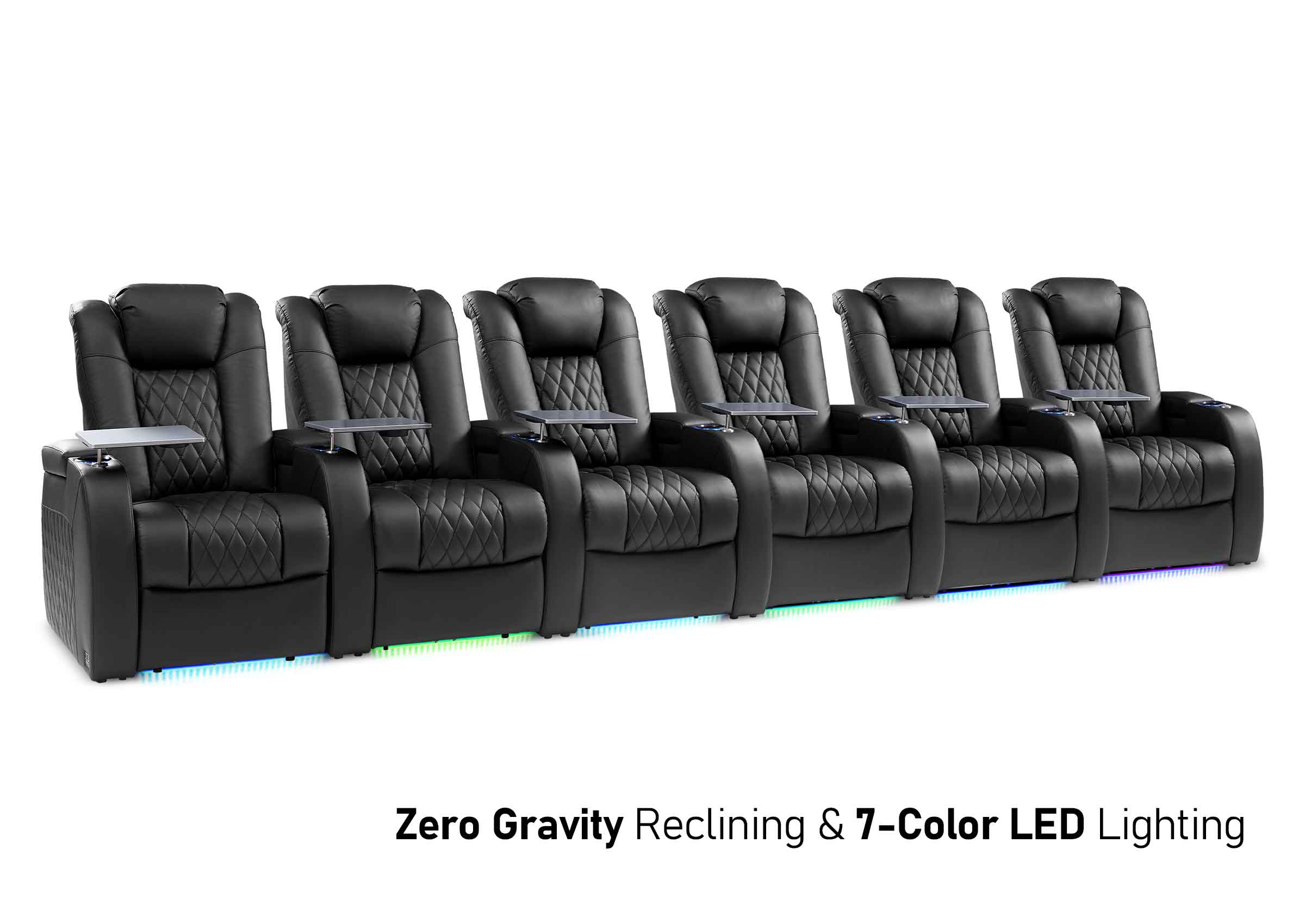
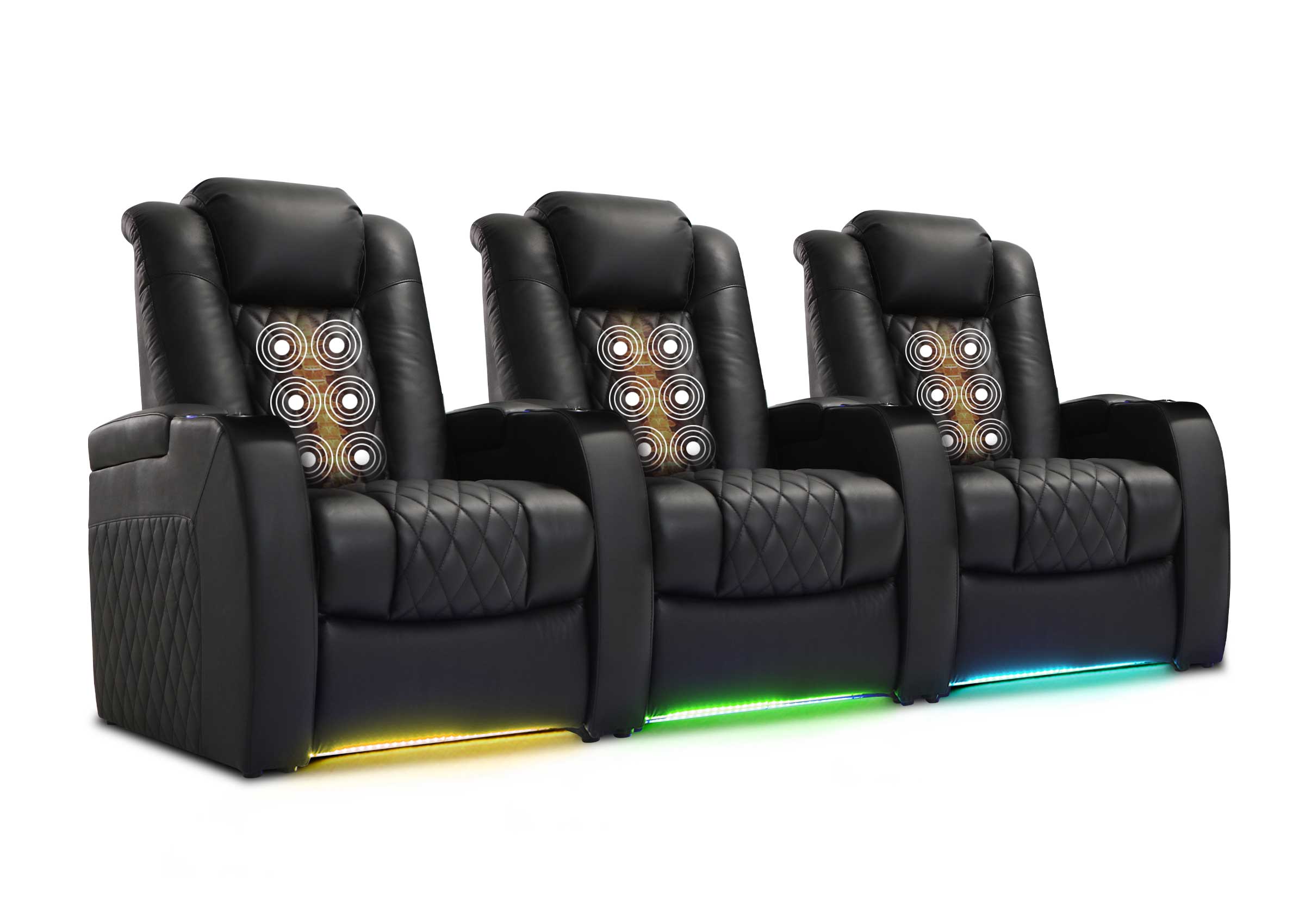

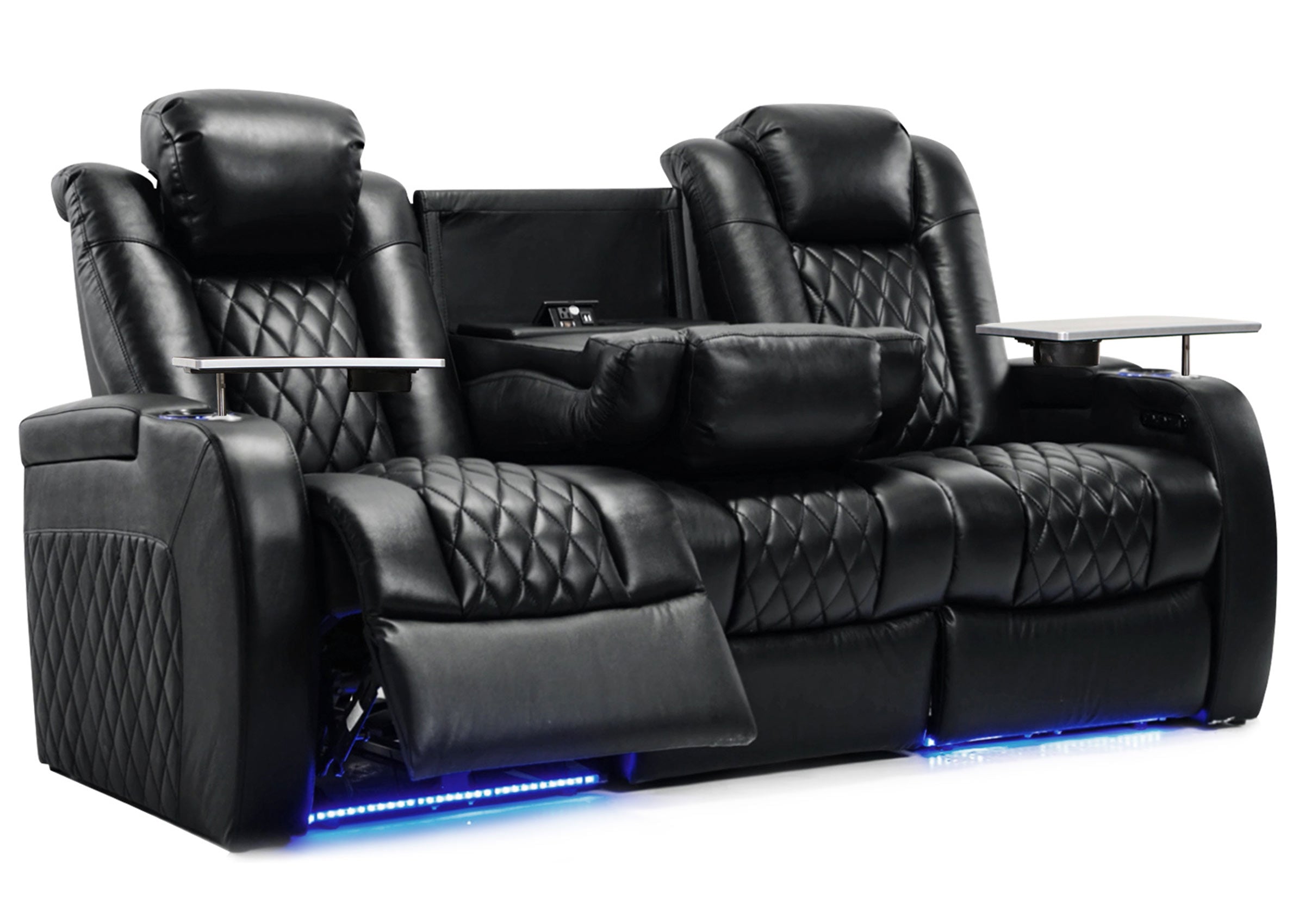
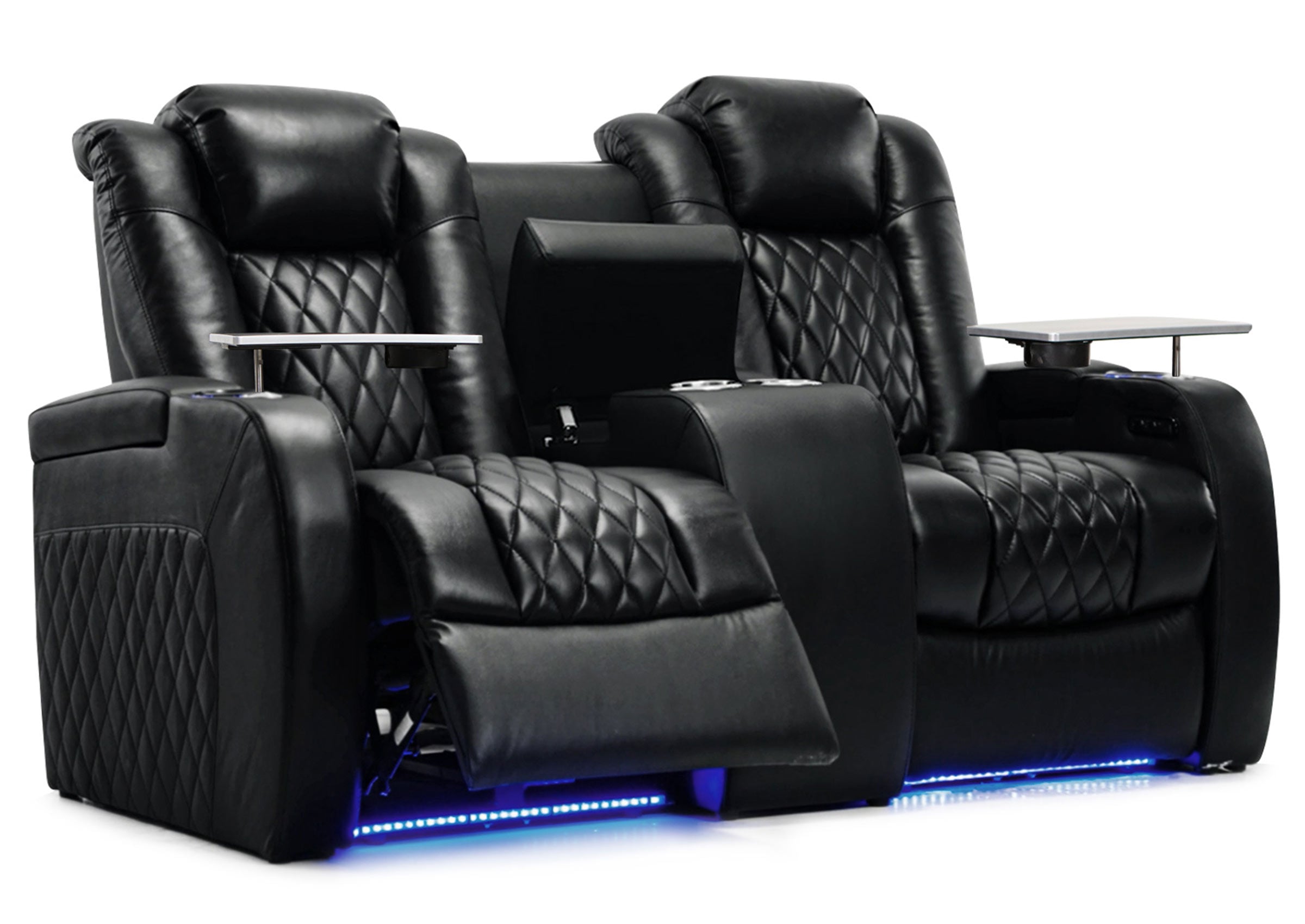





If your couch has to stay against the back wall, the goal is not to squeeze a reference-room layout into a space that cannot support it. The better goal is to preserve clear differences between sound coming from the front, sides, behind, and above you.
That may mean choosing a well-planned 5.1 or 5.1.2 system instead of forcing extra rear or overhead speakers into nearly the same location. More channels only improve immersion when the room gives those channels distinct places to work.
Can Surround Sound Work With a Couch Against the Back Wall?
Yes. A couch against the back wall does not prevent you from building an immersive surround system. It does, however, remove much of the space normally used for rear speakers and rear overhead channels.
That changes the order of decisions. Instead of choosing a speaker count first, begin with three questions:
- Where are the listeners' ears when the couch is actually occupied?
- Are there usable speaker positions beside the seats, behind them, or both?
- Can each proposed speaker create a direction that is meaningfully different from the others?
The third question is the one many setup guides miss. Two speakers mounted on the same wall do not automatically create two useful spatial layers. If side surrounds, rear surrounds, and rear height speakers all seem to come from nearly the same direction, adding more channels may increase cost and complexity without creating a more convincing sound field.
First, Identify the Speaker Layout You Actually Have
The words “rear speaker” are often used for every speaker near the back of a room, but that can lead to the wrong placement.
A 5.1 system has one pair of surround speakers. It does not have a separate pair of rear-surround channels. Those surrounds normally belong beside or somewhat behind the main listening position.
A 7.1 system adds a second pair of listener-level speakers behind the audience. That means it needs both usable side-surround positions and usable rear-surround positions.
Dolby Atmos adds a separate height layer above the listener-level system. A 5.1.2 layout, for example, combines five listener-level channels with two overhead or Atmos-enabled channels. Before cutting holes or ordering additional speakers, use this home theater speakers guide to confirm what each channel is supposed to do.
This distinction leads to a practical rule:
Do not place a 5.1 surround pair directly behind the couch simply because the rear wall is the easiest surface to use.
The speaker labels in the receiver, the layout selected in its setup menu, and the physical positions in the room should describe the same system.

Measure From the Listener's Ears, Not the Couch Frame
“The couch touches the wall” does not tell you exactly where the listening position is. A deep back cushion, a recliner mechanism, or the viewer's natural posture may place the ears well forward of the wall even when the furniture frame is flush against it.
Sit in the position normally used for movies and mark the point directly below the center of the ears. Repeat the check in the preferred reclined position and for any other seat that matters. These points—not the front edge of the couch and not the center of the room—are the references for speaker angles.
Also check whether the occupied backrest or raised headrest sits between a speaker and the listener. That is a separate obstruction problem covered in the guide to whether a high-back couch can block surround sound. For this layout decision, you only need to record the actual ear positions and any obviously blocked paths.
There is no universal couch-to-wall distance that guarantees good surround sound. A few inches may improve access or recline clearance without creating a useful rear-speaker angle. In another room, the viewer's head may already sit far enough forward for a workable rear position. Judge the geometry from the ears.

What Is the Best 5.1 Placement When the Couch Is Against the Wall?
For many wall-adjacent couches, 5.1 is the strongest starting point because it does not require a separate rear-surround pair.
Look first for positions on the side walls or at the side ends of the seating area. The surround pair should create sound from the sides or slightly behind the main listening position, rather than behaving like two speakers aimed forward from the back wall.
Dolby's consumer setup material treats the central seating point as the reference and recommends aiming the speakers toward it while keeping listener-level speakers around seated ear height unless the applicable layout calls for something different. The company's more detailed Dolby Atmos home installation guidelines also explain that practical deviations may be necessary in real rooms.
Use those diagrams as angular references, not as a demand to reproduce a showroom picture exactly. In a real living room, doors, windows, walkways, shelves, speaker dispersion, and the width of the couch can all change the workable mounting position.
When testing a 5.1 arrangement, prioritize the following:
- Keep the left and right surrounds in comparable positions relative to the main seat.
- Avoid placing one surround only inches from an outside listener's ear while the other is across the room.
- Give each speaker a clear path toward the listening area.
- Use a modest height or aiming adjustment only when it improves coverage and remains consistent with the speaker manufacturer's instructions.
- Test the center and outside seats before permanently mounting anything.
If the couch spans almost the entire room width, perfect balance at every cushion may be impossible. Decide which seats are primary and which are acceptable as secondary positions. That is more useful than pretending a single calibration can make every seat acoustically identical.
Should You Use 7.1 With the Couch on the Back Wall?
Choose 7.1 only if the room can give the side and rear pairs different jobs.
The rear-surround pair should sound as though it comes from behind the main listening position, while the side surrounds maintain lateral coverage. If all four speakers must be mounted along one narrow line beside or immediately above the couch, they may not create the intended separation.
A 7.1 system is worth testing when:
- The listeners' actual ear positions sit meaningfully forward of the rear wall.
- The rear speakers can be placed behind the listeners rather than directly beside them.
- The rear pair can be separated from each other and from the side surrounds.
- No listener is uncomfortably close to a rear speaker.
- Temporary placement produces a repeatable improvement over 5.1.
A 5.1 system is usually the better decision when:
- The rear speakers would fire almost directly into the backs of the listeners' heads.
- Side and rear channels would occupy nearly the same direction.
- The rear pair would need to be mounted near the ceiling just to clear the couch.
- Outside seats would sit much closer to one speaker than the main seat.
- The only reason for choosing 7.1 is that the receiver has two unused channels.
This is not “settling” for fewer speakers. It is protecting the directional information the soundtrack is trying to create. A clear five-channel listener-level layout can be more convincing than seven channels compressed into unsuitable positions.
Can Dolby Atmos Work With a Back-Wall Couch?
Yes, but the listener-level system must work first. Height speakers cannot repair weak surround geometry below them.
For many rooms with no usable space behind the couch, 5.1.2 is a practical Atmos option. The two height channels can often be positioned around the listening area without requiring a second pair behind it. The exact ceiling position should follow the applicable Dolby 5.1.2 layout and the speaker manufacturer's coverage guidance.
A 5.1.4 layout needs a useful front-to-back relationship between its two height pairs. If the rear height pair cannot sit behind the actual ear position, placing all four ceiling speakers in front of or directly above the listener may produce less movement than the channel count suggests.
Use this decision rule:
Two height speakers in defensible positions are usually more valuable than four height speakers clustered into the same part of the ceiling.
That does not mean every back-wall room should automatically use 5.1.2. Some deep couches place the ears far enough forward to support a rear height pair, while angled in-ceiling speakers may cover the listening area better than fixed downward-firing models. Measure the actual elevation angles and check the speaker's dispersion before choosing between .2 and .4.
If you are still deciding between overhead, upfiring, and other Atmos options, use the broader Dolby Atmos home theater setup guide for the equipment and format basics. The important point here is that adding Atmos does not turn poorly placed listener-level speakers into a correct surround layer.

Should Speakers Be Mounted on the Wall Directly Behind the Couch?
Sometimes, but the back wall should not be treated as the default location for every surround channel.
In a 5.1 layout, side-wall positions are usually the first candidates because the single surround pair is intended to cover the sides and rear of the listening field. Mounting that pair together on the wall directly behind the couch can pull both channels into a narrow rear image, especially when listeners sit very close to them.
In a 7.1 layout, the rear wall may be appropriate for the actual rear-surround pair if the listener's head sits far enough forward and the speakers can be spaced and aimed usefully. A shallow on-wall cabinet or an angled in-wall design may solve a physical clearance problem, but the product label alone does not solve the acoustic geometry.
The same caution applies to monopole and bipole speakers. A broader radiation pattern may help cover a wider couch in some rooms, but it cannot create missing space behind the listeners. Choose the speaker type after determining the required channel position, distance, and coverage—not as a substitute for those decisions.
Is Raising the Surround Speakers the Best Fix?
Not automatically. Raising a speaker may clear a backrest or reduce the intensity for a listener sitting very close to it, but it also changes the vertical direction of the sound.
In a conventional surround system, a controlled height adjustment can be a reasonable compromise when the room prevents equal-height placement. In an Atmos system, raising the listener-level surrounds too far can weaken the audible separation between sounds around the audience and sounds above it.
Use the lowest height that provides the necessary coverage while respecting the relevant speaker and layout guidance. Do not turn listener-level surrounds into ceiling speakers just because ceiling placement is convenient. Dolby's installation guidance specifically emphasizes maintaining separation between the listener-level and overhead layers.
What Should You Do About the Hard Wall Behind Your Head?
A nearby hard boundary can create strong early reflections, but “add acoustic foam behind the couch” is not a complete prescription.
First determine whether the wall is causing an audible, repeatable problem. Listen for a harsh or crowded rear image, a major tonal change when leaning forward, or surround effects that become difficult to separate. Compare the same short scene from the same seat instead of judging from memory.
As a temporary test, place a thick, safe, nonpermanent absorptive item behind the listening area and repeat the comparison. If the change is clearly beneficial, the room may justify properly specified absorption or diffusion. Thin decorative foam should not be presented as a cure for low-frequency problems, and permanent treatment should be selected for the frequencies and reflection path involved.
The seating itself also affects reflections and absorption, but material alone does not determine the result. The guide to seating materials and home theater acoustics explains that interaction without treating upholstery as a replacement for room treatment.
Use This Setup Order Before You Drill Any Holes
The most expensive placement mistake is installing first and evaluating later. A simple temporary test can reveal whether the planned channel count is helping.
1. Mark the Actual Listening Positions
Sit normally, including the reclined posture used during movies. Mark the floor below the ears for the main seat and the most important secondary seats.
2. Label Every Proposed Channel
Write down whether each candidate position is a surround, rear surround, top middle, top front, or top rear channel. If two labels point to essentially the same location, reconsider the layout.
3. Mock Up the Speakers
Use stable temporary stands or another safe support before wall mounting. Do not hold a speaker during the test; movement changes the comparison and creates a safety risk.
4. Test One Channel at a Time
Use the receiver's test signal to confirm channel assignment and relative loudness. A speaker close to one end of the couch should not dominate that seat at ordinary levels.
5. Play a Repeatable Surround Sequence
Choose a familiar scene with a clear side-to-side or front-to-back pan. Replay the same short section after each adjustment.
6. Compare 5.1 Against the Proposed Upgrade
If you are considering 7.1 or four height channels, disable the extra pair and compare. Listen for clearer movement and separation, not merely more sound.
7. Check More Than the Center Seat
Move to the other frequently used positions. It is normal for the main seat to be best, but watch for one channel becoming distracting or disappearing at an outside seat.
8. Change One Variable at a Time
Adjust position, height, or aiming separately. Otherwise, you will not know which change improved or damaged the result.
Only after the physical layout is settled should you run the receiver's room-correction system.
How Should You Calibrate a System With the Couch Near the Wall?
Place the calibration microphone at the real main listening position and at the actual seated ear height, using a tripod or stable microphone stand. Do not place it directly on a cushion or headrest, which can transmit vibration or create an unrepresentative boundary around the microphone.
Follow the measurement pattern specified by the receiver or calibration system. For example, Denon's current Audyssey setup instructions define the main listening position as the place where someone normally sits and use measurements around that listening area. Other systems use different numbers of points, spacing rules, and microphone orientations.
Calibration can improve channel levels, timing, distance compensation, and frequency response within the system's capabilities. It cannot:
- Move a rear speaker behind the listener.
- Create separation between two channels installed in the same direction.
- Remove a couch or headrest from the direct sound path.
- Make a speaker inches from one listener sound equally distant to every seat.
Use calibration to refine a defensible layout, not to rescue an impossible one. If the couch, speakers, or preferred listening position changes substantially, rerun the appropriate setup procedure.
Quick Decision Table
| Room Condition | Strong Starting Point | Reason |
|---|---|---|
| Couch touches the rear wall, but both side walls are usable | 5.1 or 5.1.2 | Preserves a clear side-surround pair without forcing rear channels |
| Actual ear position sits forward of the wall and useful rear angles are available | Test 7.1 or 7.1.x | Side and rear pairs may have enough directional separation |
| Four overhead speakers would all sit above or in front of the listener | Compare against 5.1.2 | Two well-positioned height channels may create clearer movement |
| One outside seat is extremely close to a surround speaker | Reposition for greater distance or optimize fewer primary seats | Calibration cannot remove the physical distance difference |
| No usable side or rear positions exist | Strengthen the front stage before adding compromised surrounds | Clear dialogue and front imaging may be more valuable than forced channels |
| Furniture position is not final | Delay permanent mounting and calibration | The seat establishes the angle, distance, and microphone reference |
PLAN AROUND THE LISTENING POSITION
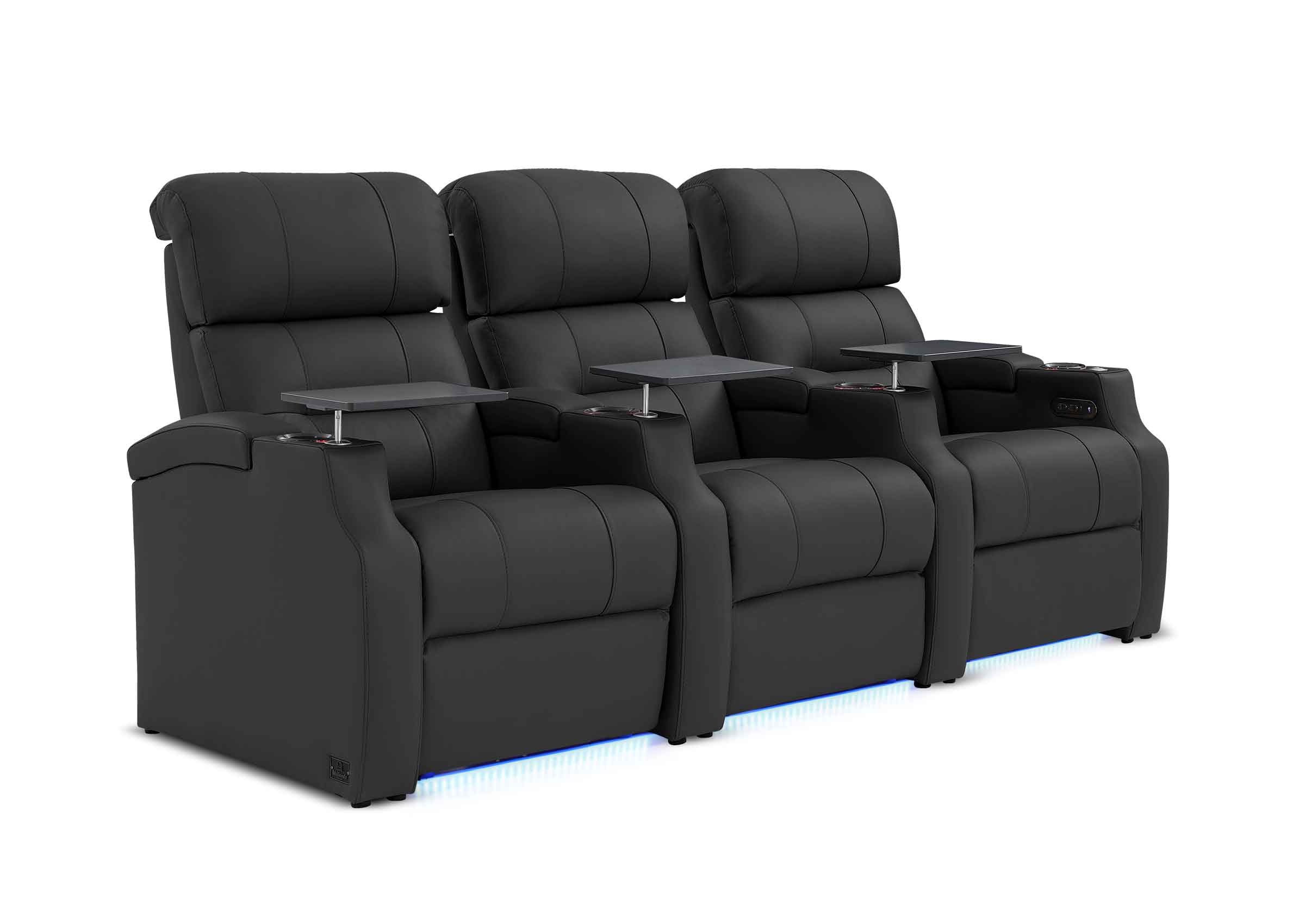
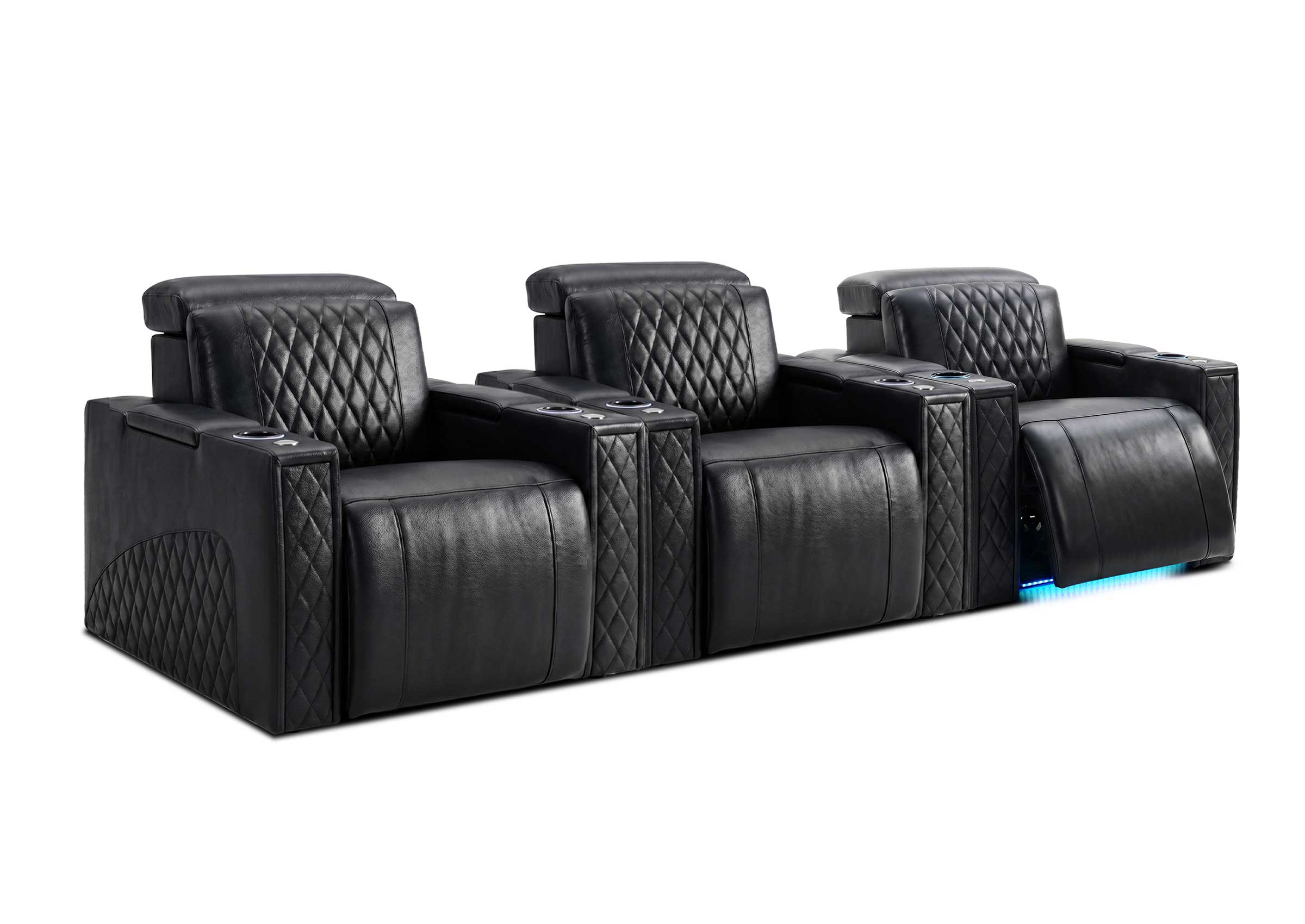
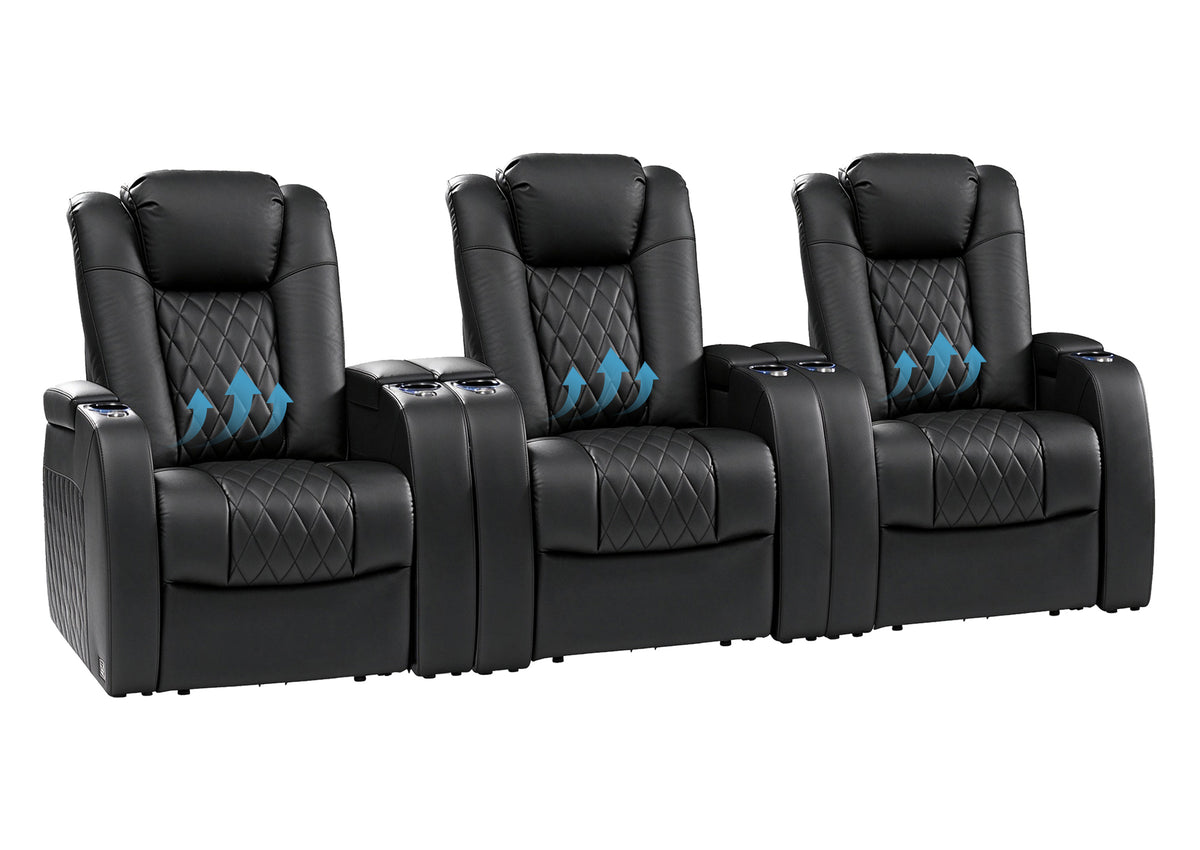
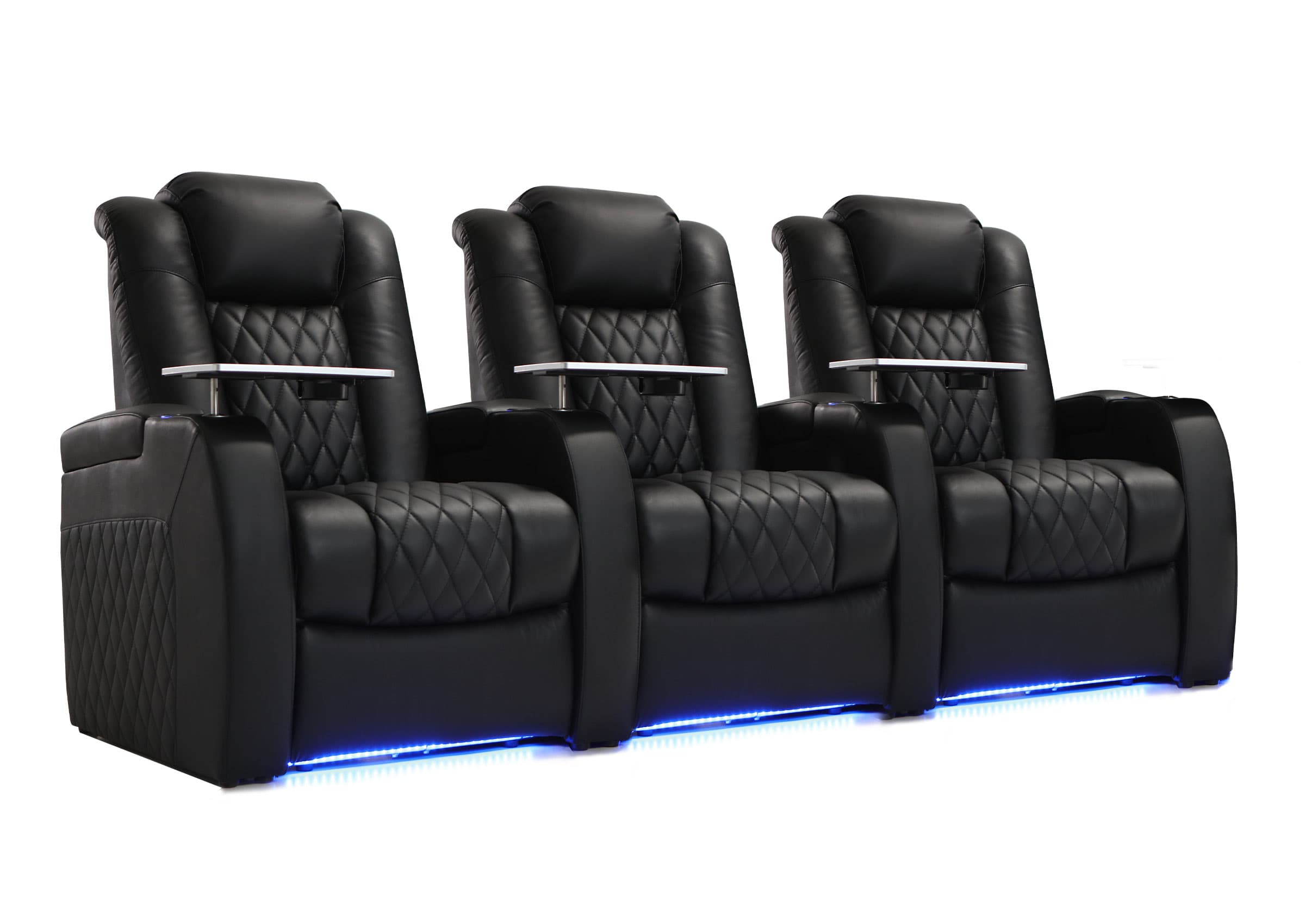
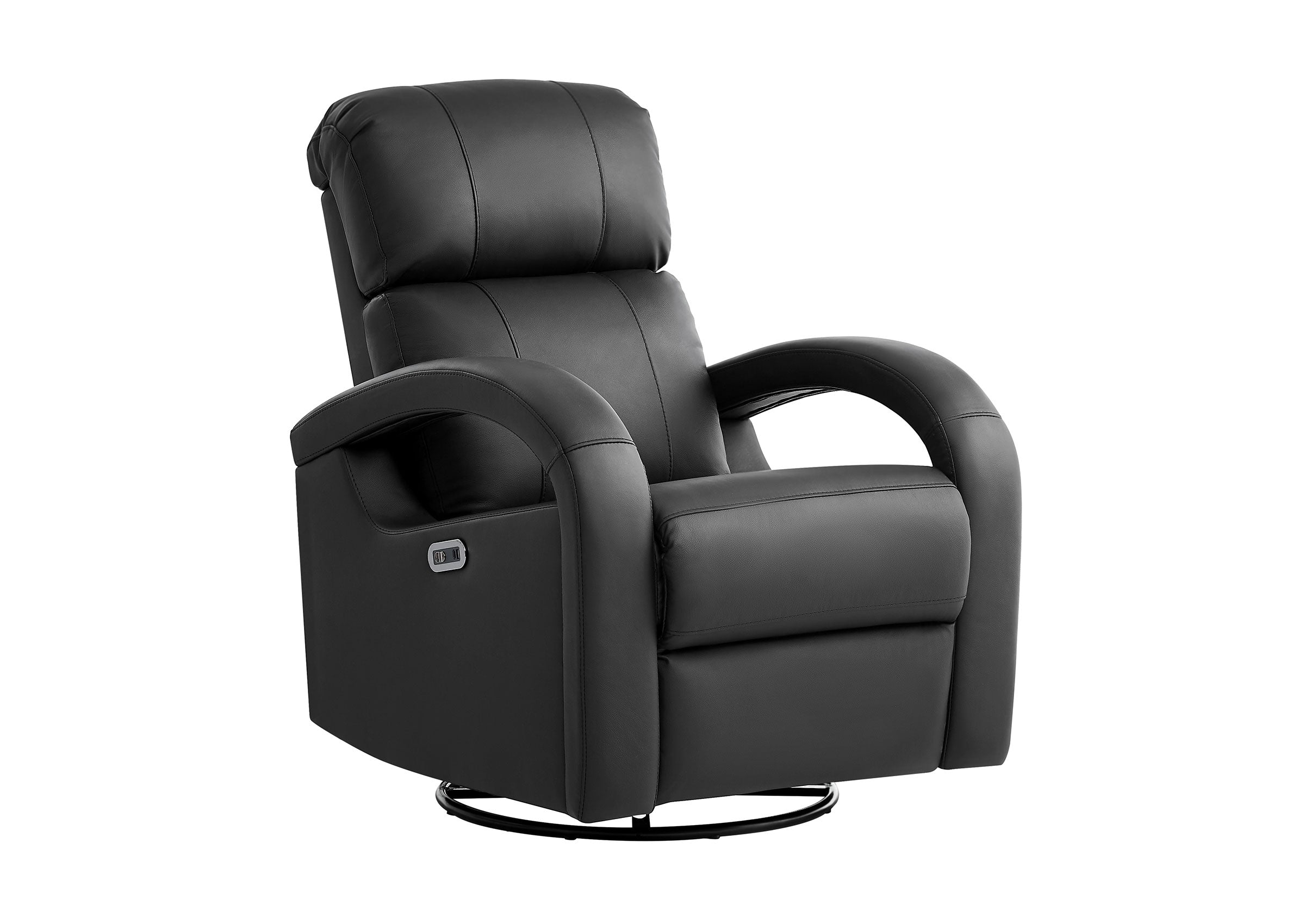
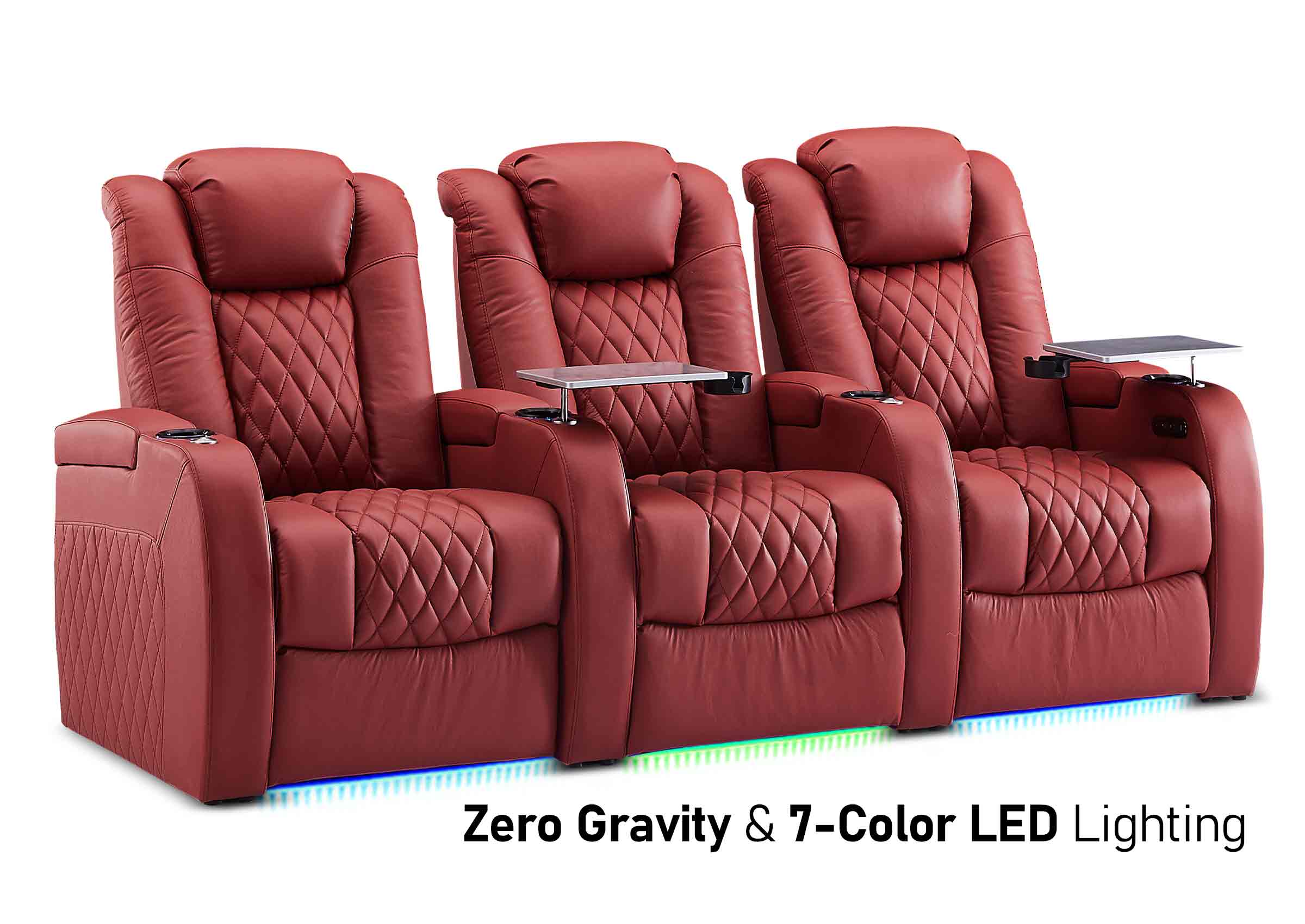
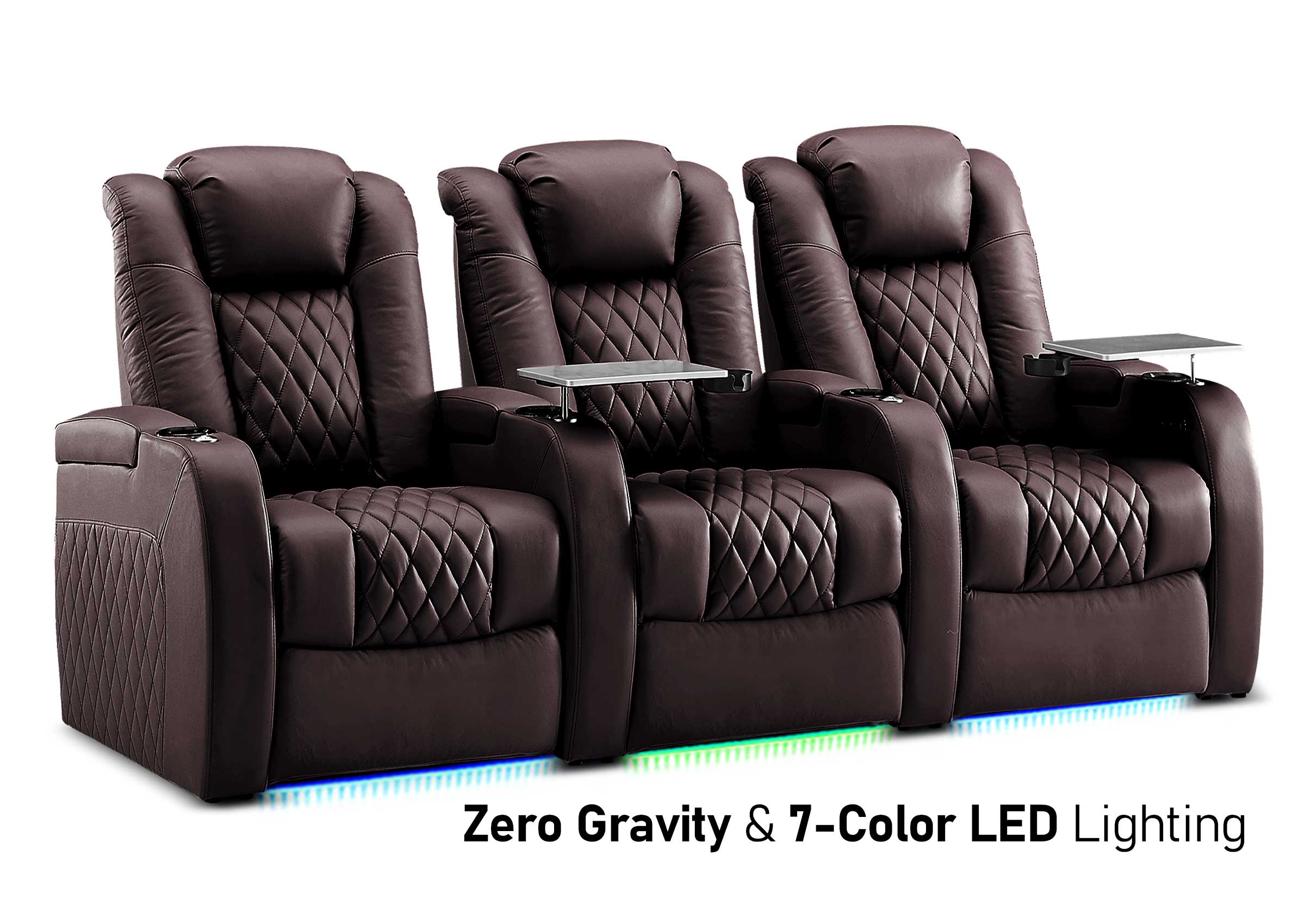
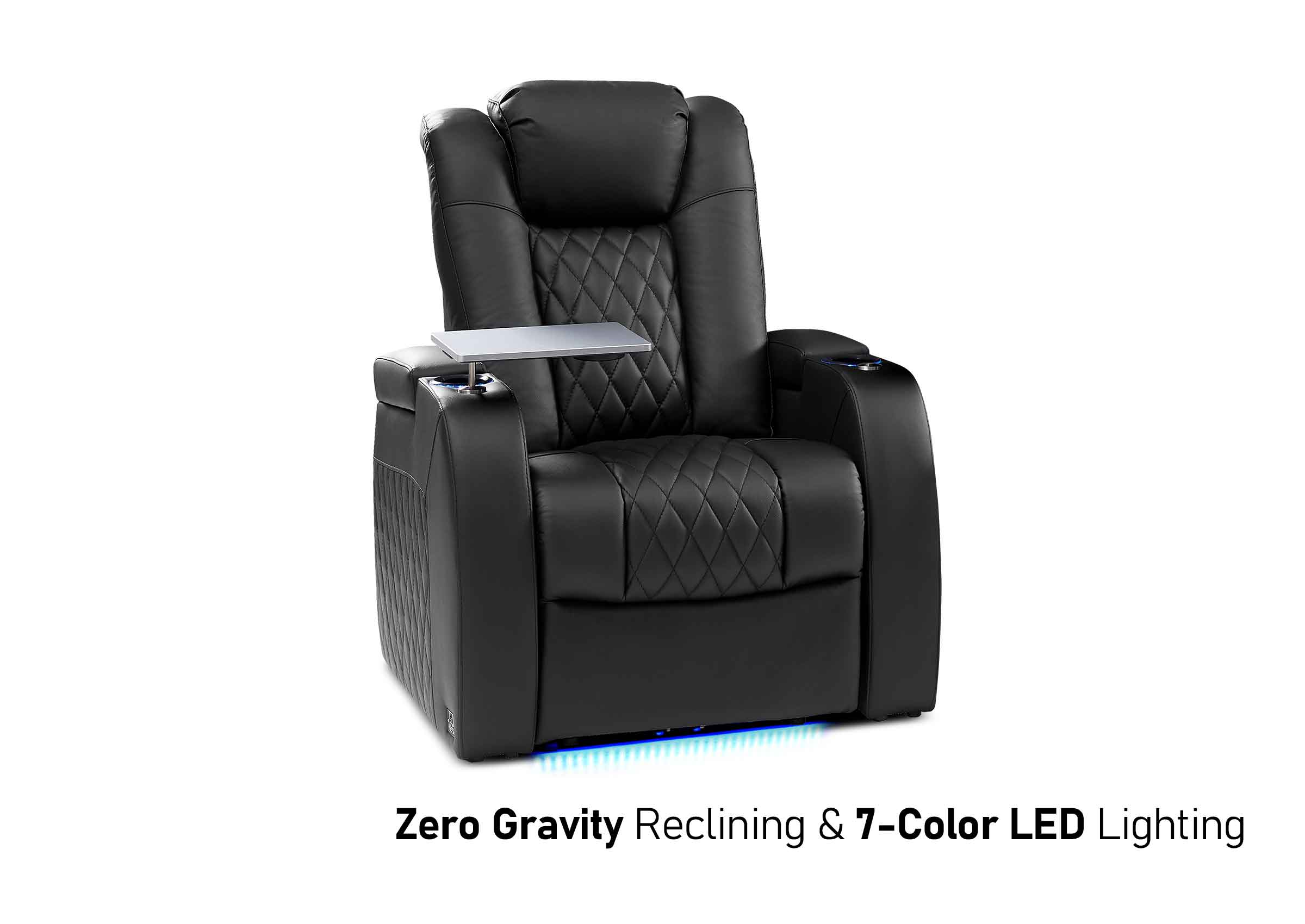
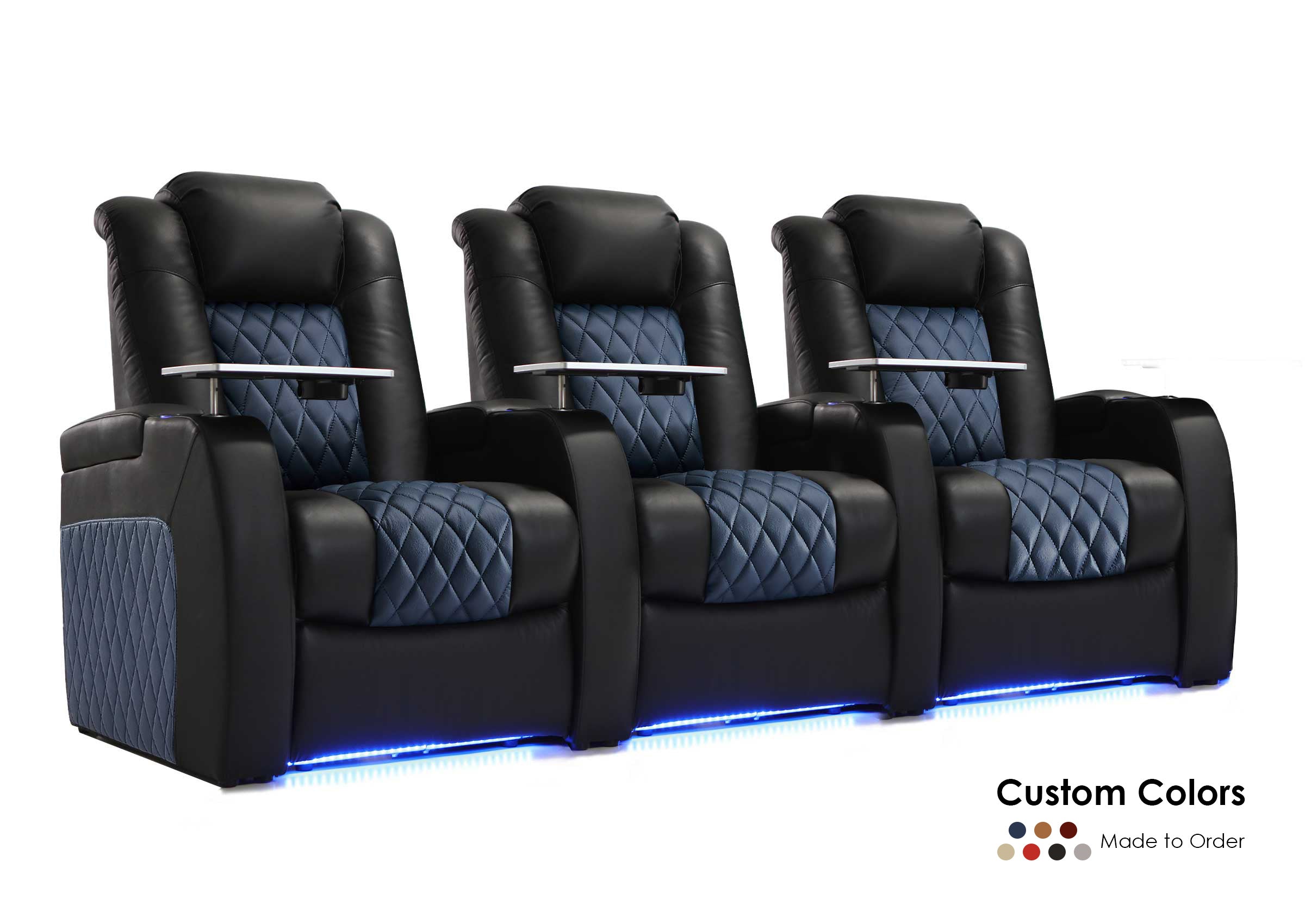
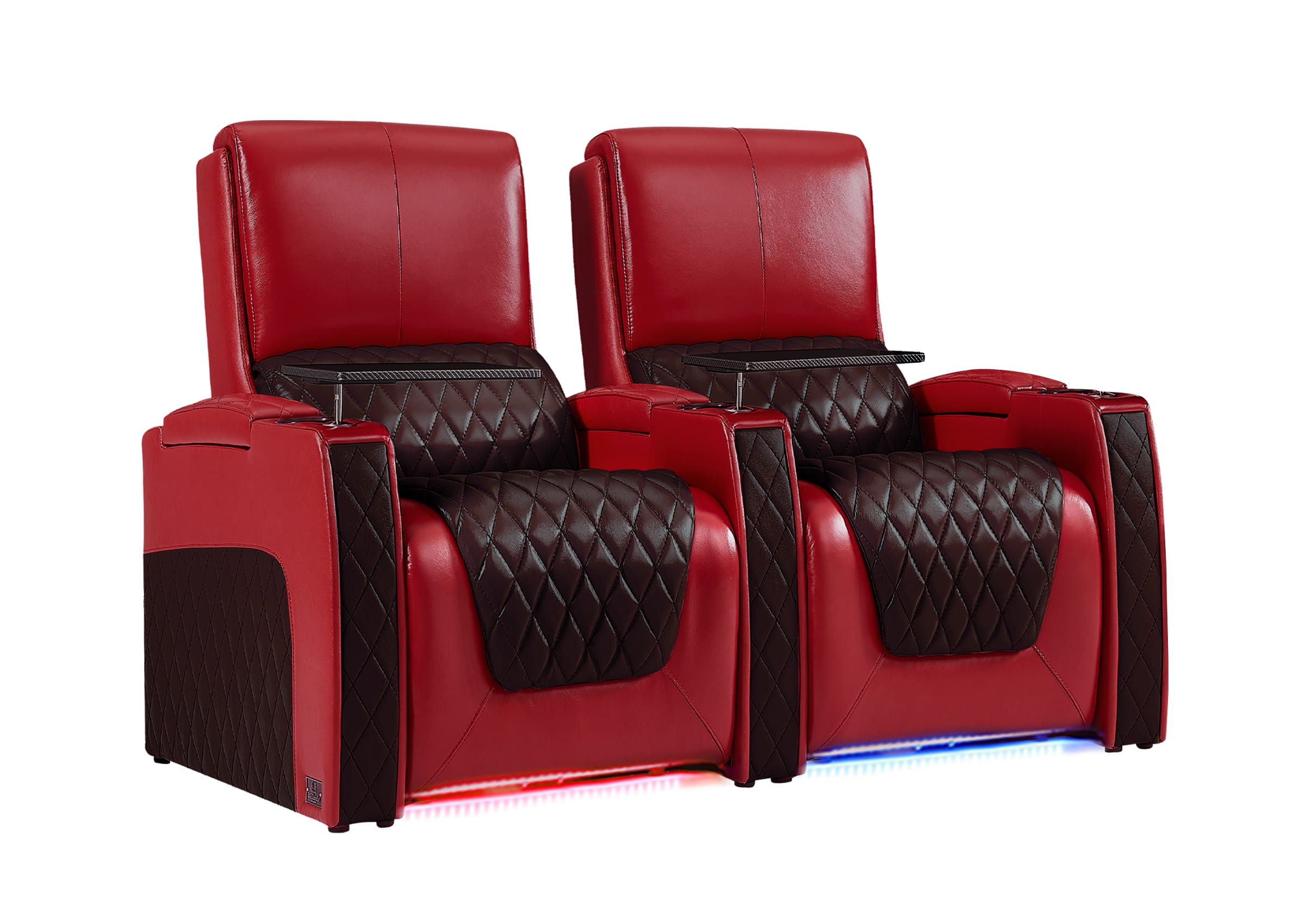
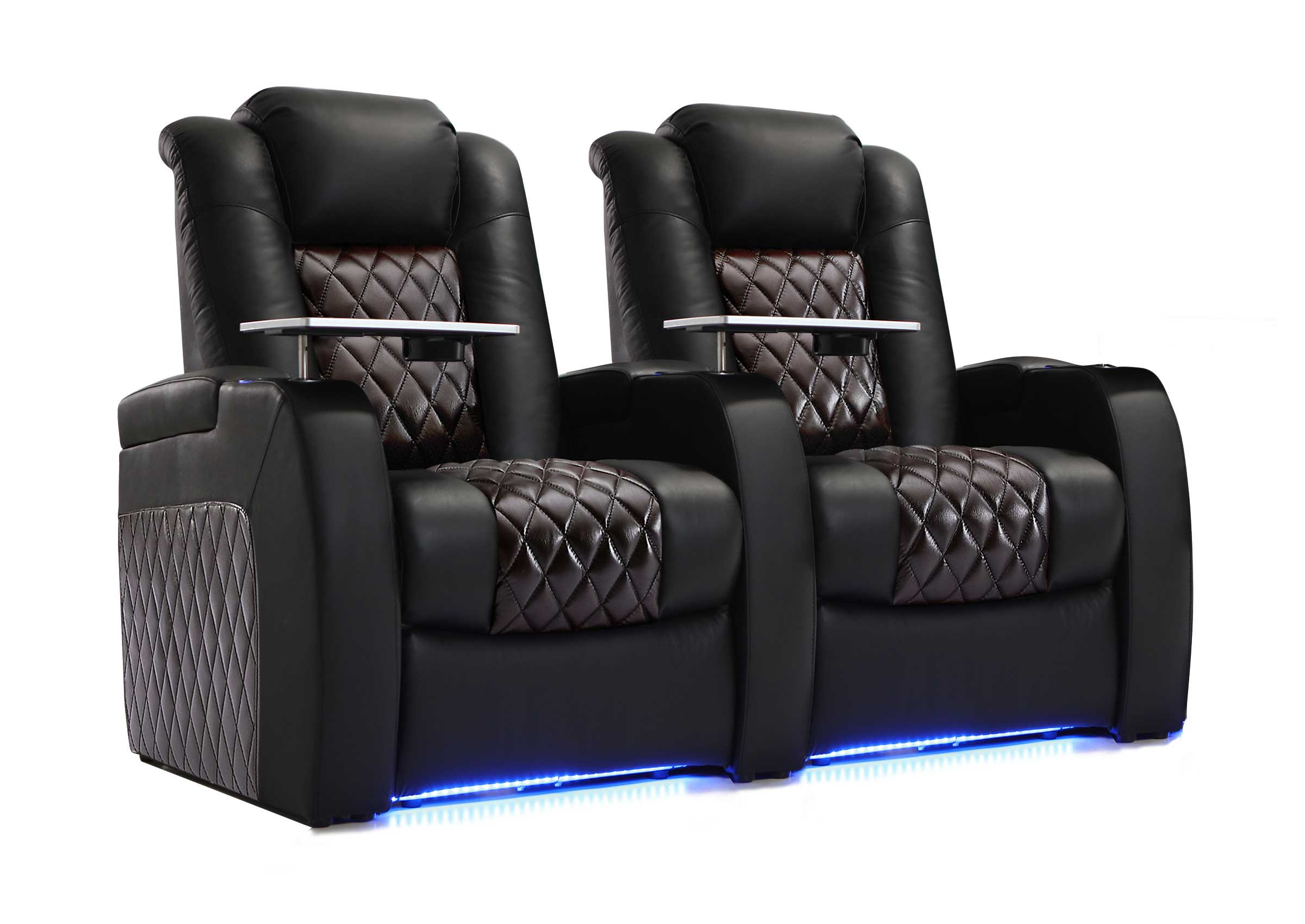
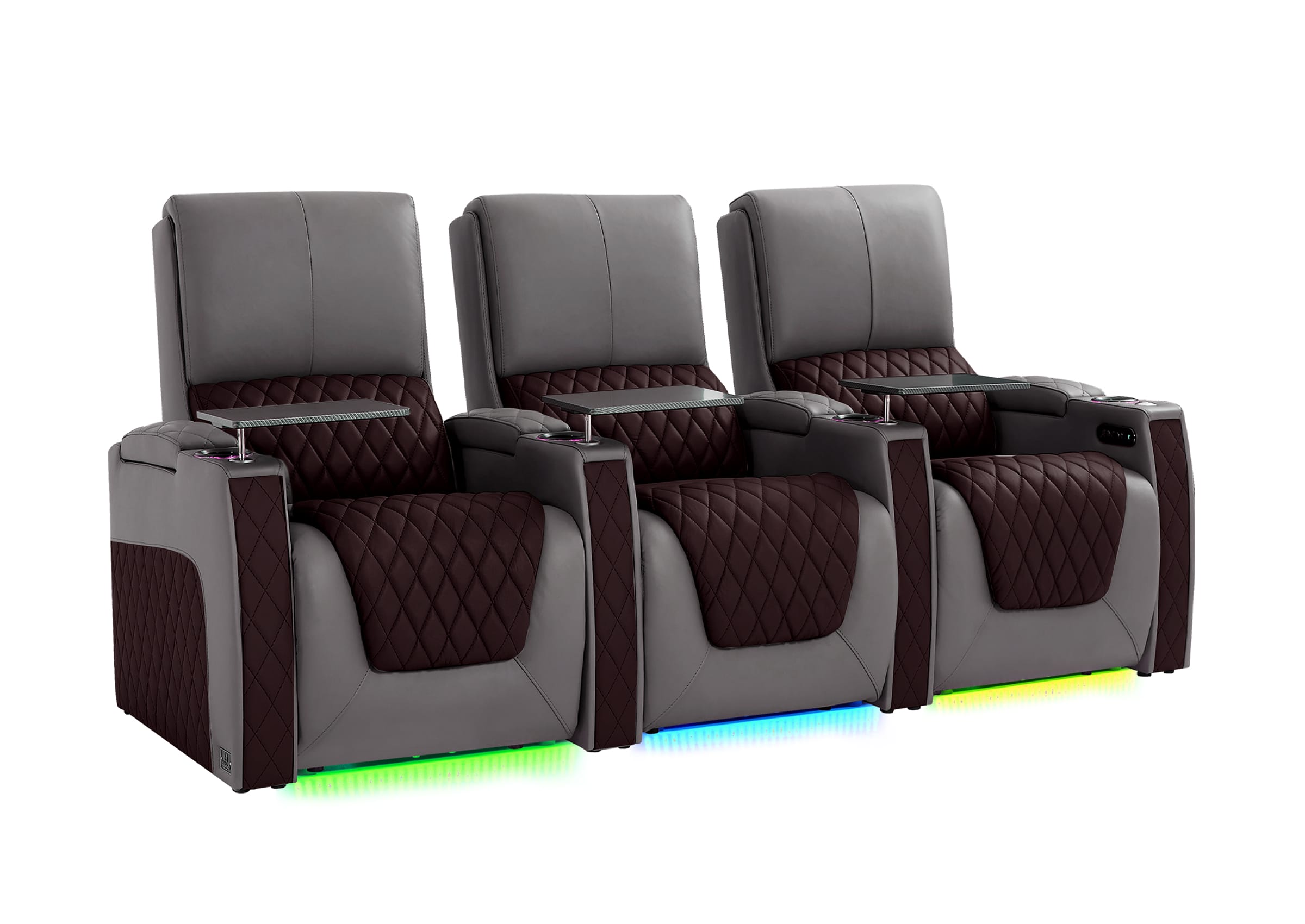
Choosing Seating for a Back-Wall Home Theater?
The occupied head position helps determine speaker angles, wall clearance, and the calibration reference. Review the room layout before choosing a seating configuration that pushes listeners too close to the rear wall.
Common Mistakes to Avoid
- Calling every speaker behind the couch a “rear speaker” without checking its assigned channel.
- Choosing 7.1 or 5.1.4 before confirming that rear positions exist.
- Mounting all listener-level and height channels near the ceiling.
- Measuring from the couch frame instead of the occupied ear position.
- Aiming one surround directly into the nearest outside listener.
- Expecting room correction to fix missing spatial separation.
- Buying bipole, in-wall, or angled speakers before defining the required coverage.
- Permanently treating the rear wall before making a controlled listening comparison.
- Calibrating the system while the couch or speaker positions are still changing.
Frequently Asked Questions
Is It Bad to Put a Couch Against the Wall for Surround Sound?
It is a compromise, not an automatic failure. The wall removes potential space for rear speakers and may increase nearby reflections, but a properly planned 5.1 or 5.1.2 system can still work well when side-surround and height positions are available.
Should Surround Speakers Go Beside or Behind a Back-Wall Couch?
For a 5.1 system, begin with positions beside or slightly behind the actual listening position. A 5.1 layout does not have a separate rear-surround pair. A 7.1 system adds rear channels, so its side and rear positions must be evaluated separately.
Is 5.1 Better Than 7.1 When the Couch Is Against the Wall?
Often, but not always. Choose 5.1 when a rear pair cannot sit meaningfully behind the listeners or would duplicate the direction of the side surrounds. Test 7.1 only when the actual ear position and room geometry provide useful side-to-rear separation.
Can Dolby Atmos Work When the Couch Is on the Back Wall?
Yes. A 5.1.2 layout is often easier to accommodate because it does not require a rear height pair. A .4 layout is worthwhile only when the room can create useful front-to-back separation between its height speakers.
Is 5.1.2 or 5.1.4 Better for a Couch Against the Wall?
Neither is universally better. If the rear height pair cannot be placed behind the actual listening position, two well-positioned height speakers may outperform four speakers clustered above or ahead of the couch. Use the measured ear position, ceiling geometry, speaker dispersion, and receiver-supported layout to decide.
How High Should Surround Speakers Be Above a Couch?
There is no couch-based universal height. Start with the applicable Dolby and speaker-manufacturer guidance relative to seated ear height. Use only the height needed for coverage or obstruction clearance, especially in an Atmos room where excessive elevation can blur the distinction between the surround and overhead layers.
Are Bipole Speakers Better for a Couch Against the Wall?
Not automatically. A bipole design may broaden coverage in some rooms, but it cannot create missing distance or rear depth. Compare the speaker's radiation pattern, mounting options, and manufacturer guidance against the actual listening area before choosing it.
Can Room Correction Fix Speakers Placed Too Close to the Couch?
It can adjust supported parameters such as level, delay, and equalization, but it cannot change the speaker's physical direction or make every seat equally distant. Solve the largest placement and coverage problems first, then calibrate.
How Far Should the Couch Be Pulled Away From the Back Wall?
Use the smallest move that produces a meaningful improvement in rear angle, speaker distance, recline clearance, or listening consistency. A token gap that leaves the ears in the same acoustic position may change very little. If the couch can move, coordinate that decision with the complete home theater seating layout rather than using an isolated distance rule.
The Best Layout Is the One With Clear Spatial Roles
A back-wall couch sets a real limit, but it does not eliminate good surround sound. Start from the occupied ear positions, identify the correct channel roles, and protect meaningful separation between the side, rear, and overhead layers.
If the room supports only five listener-level channels and two useful height positions, build those seven channels well. Do not let an unused receiver terminal persuade you to install speakers that the room cannot give a distinct job.
In constrained rooms, fewer speakers in defensible positions usually create a more coherent theater than more speakers competing from the same wall.