









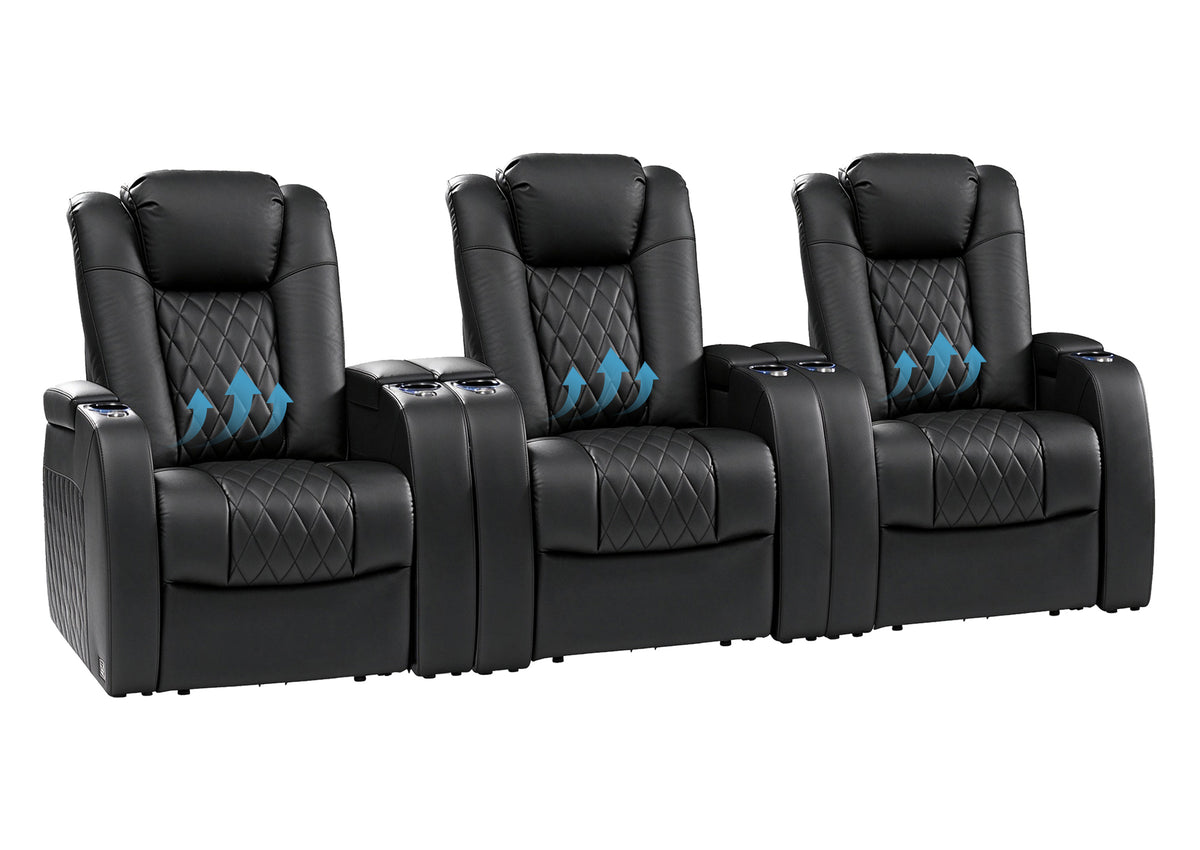






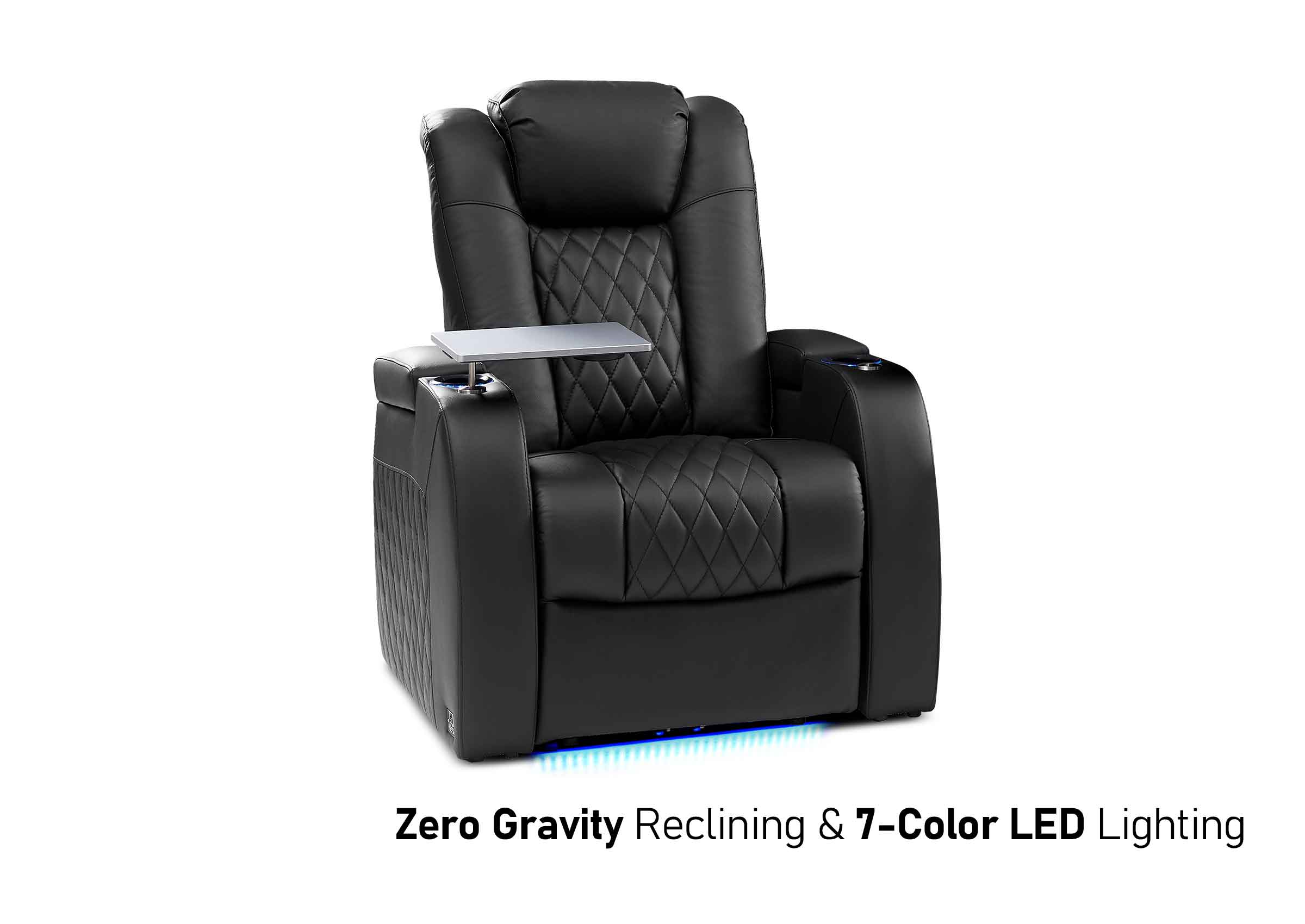




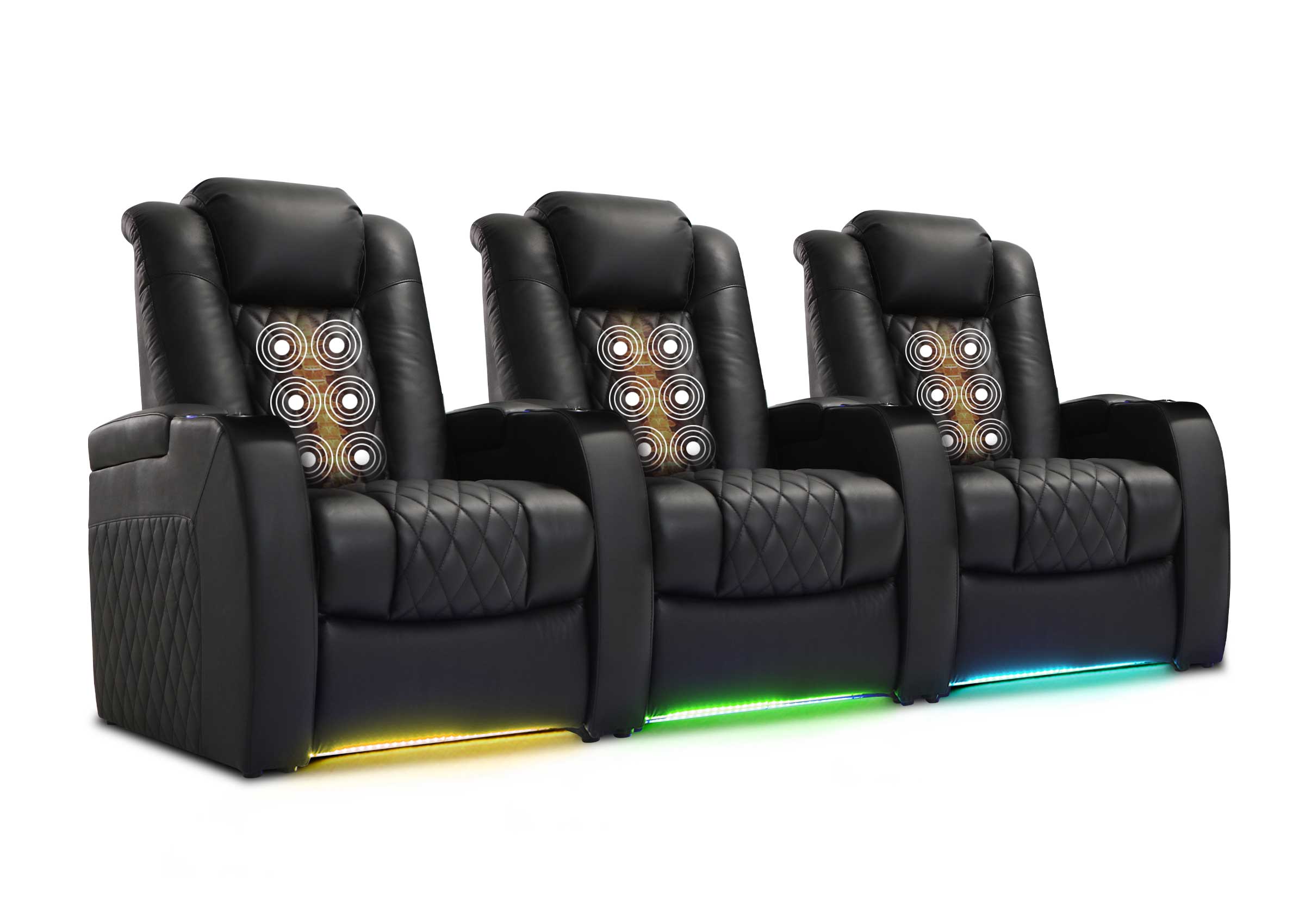







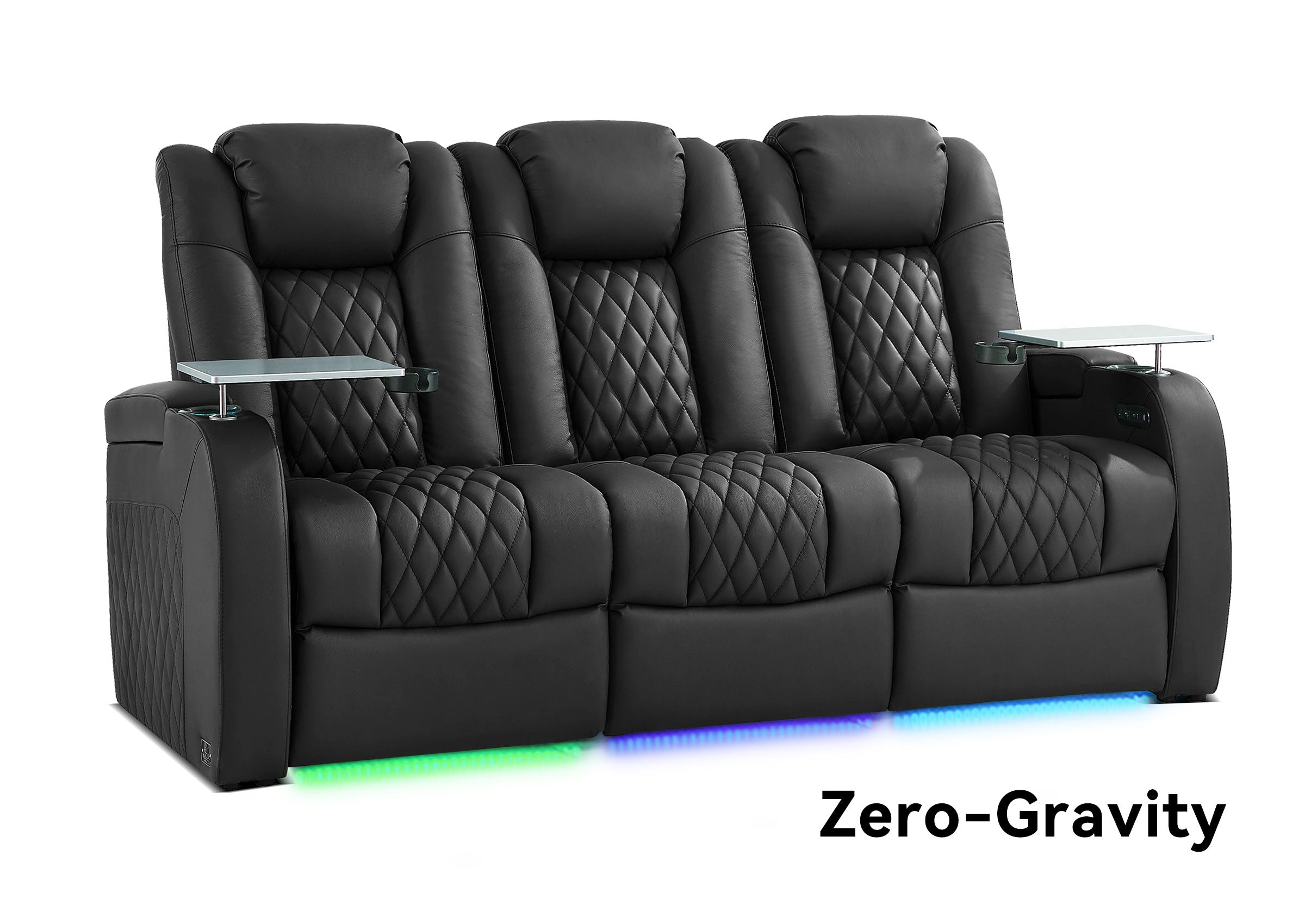


If the bass sounds powerful when you stand up, walk toward a wall, or sit in another chair—but becomes thin at your couch—the subwoofer may not be too small. Your listening position may be sitting in a low-frequency cancellation area.
Before raising the subwoofer level or buying another one, compare what happens at several nearby positions using the same content and volume. A bass problem that follows one seat calls for a different solution than bass that is weak throughout the room.
Start With the Symptom You Actually Have
Before changing a setting, play the same scene or bass sample at the same volume and compare a few seats. Then match what you hear to the closest pattern below.
| What happens during the test? | What it usually suggests | What to do first |
|---|---|---|
| Bass is weak everywhere | A connection, receiver setting, source, or output problem may be involved | Check that the subwoofer is on, connected, and enabled |
| Bass returns when you lean forward, stand, or move to another seat | The couch position is probably part of the problem | Compare several nearby listening positions |
| Only certain bass notes disappear | A frequency-specific room cancellation or speaker/subwoofer overlap issue is possible | Repeat with a slow sweep or several familiar tracks |
| The problem started after changing settings or running calibration | Bass routing, crossover, level, or timing may have changed | Review the settings before moving equipment |
| Bass is clearly audible but the seat does not shake | The system may lack tactile feedback rather than audible bass | Separate sound-pressure problems from seat vibration |
These patterns are clues, not proof. If the subwoofer suddenly stopped producing sound, will not power on, or is weak in every part of the room, start with basic system troubleshooting. A room null normally changes when the listener or subwoofer changes position.
The most useful question is not simply, “Do I need more bass?” It is, “Does the bass change with the seat, with the frequency, or with the system settings?”
What Is a Bass Null at the Listening Position?
Bass waves reflect from the walls, floor, and ceiling. At some places in the room, the direct and reflected sound add together. At other places, part of the bass cancels. Think of the room as a bass map with louder zones and quieter zones.
Your couch can land in one of those quieter zones. That is why the same subwoofer may sound powerful near a wall but weak at the main seat. SVS notes that bass response can change significantly around a room and that changing the listening position can move a listener away from a peak or null. Its subwoofer placement guide treats the seat and the subwoofer as parts of the same placement problem.
A bass null is therefore not the same as generally low output. It is a repeatable dip at a particular location, and it often affects some bass notes more than others. Raising the gain can make other seats boom while the missing notes at the couch barely improve.
It is also a mistake to blame the couch immediately. Upholstery, seat construction, and a high back can affect the acoustic environment, but a localized sub-bass dip should first be tested as a listener-location × room × subwoofer-location problem. If you want the broader furniture context, see how seating materials can affect home theater acoustics.

Run This Five-Minute Test Before Changing Any Equipment
You do not need measurement software for the first pass. You only need a repeatable sample and one rule: change one thing at a time.
1. Choose one repeatable bass sample
Use a familiar scene with sustained low-frequency content, a bass line with several distinct notes, or a slow low-frequency sweep. Keep the master volume, listening mode, subwoofer level, and source unchanged.
Use a normal listening level. Very loud test tones are unnecessary and can make it harder to judge balance while adding stress to the system and your hearing.
2. Listen in the position you actually use
Sit at the center of your usual seat and settle into your normal movie posture. If the couch is a power recliner, test it in the reclined position you normally use—not only bolt upright.
This matters because the “listening position” is not just a mark on the floor. Reclining can move your ears backward and downward. In a room with uneven bass, that new head position can produce a meaningfully different result even though the seat base has not moved.
3. Compare nearby positions
Without touching the volume control:
- Lean forward and listen again.
- Sit one position to the left or right.
- Stand near the couch at approximately the same horizontal location.
- Compare the couch with another chair or a point a little closer to the screen.
Repeat the comparison once to make sure it was not caused by a different part of the soundtrack. If the missing bass returns whenever your ears move, the evidence points toward a position-related problem. If every position remains equally weak, stop treating it as a couch problem and inspect the system first.
4. Note whether all bass is weak or only some notes
A system with low output everywhere can sound generally light. A cancellation problem is often more selective: one note disappears, a sweep drops sharply through a range, or very deep rumbles remain while kick drums and impact sounds lose their weight.
Write down what changes instead of relying on memory. A simple log is enough:
| Test position | Posture | What changed? | Next variable to test |
|---|---|---|---|
| Main couch seat | Normal recline | Baseline | None |
| Leaned forward | Upright | Bass returned / unchanged | Seat position |
| Adjacent seat | Normal | Bass returned / unchanged | Multi-seat consistency |
| Alternate sub location | Normal recline | Smoother / louder only / unchanged | Subwoofer placement |
The goal is not to find the loudest point. It is to find a more balanced result across the bass range you actually hear in movies and music.

Other Problems That Can Feel Like “Weak Bass”
Several different problems can create a similar first impression. Identifying the closest pattern prevents an unnecessary purchase.
The subwoofer is weak everywhere
Check the power light and cable first. In the receiver, confirm that the subwoofer is enabled and that low bass is being sent to it. Also check whether a night mode, volume-leveling feature, subwoofer-level change, or recent calibration reduced the output.
If bass remains weak everywhere after the signal path is confirmed, output capability may genuinely be the issue. A broader home theater sound-system guide is a better place to review system components; this article remains focused on bass that changes with the listening position.
Only a narrow range of bass sounds weak
The crossover is the range where the main speakers hand low-frequency work to the subwoofer. If their timing does not line up well at the couch, part of that range can cancel even when deeper bass still sounds strong.
Do not copy another room’s crossover, distance, or phase setting. First note whether the weakness is limited to a small range. Then verify the speaker configuration and rerun calibration after the physical setup is settled.
The bass is audible but lacks physical sensation
Low-frequency sound and seat vibration are related experiences, but they are not interchangeable. A tactile transducer can make effects feel more physical at lower playback levels, yet it does not repair missing sound at the listening position. The bass shaker installation guide for theater seats covers that separate task.
What Should You Move First: the Couch or the Subwoofer?
Start with the least expensive, most reversible change that your room allows.
First choice: test a nearby listening position
If the couch can move, shift the listening position in small, practical increments and repeat the same sample. There is no universal distance that fixes a null. The useful distance depends on the room, affected frequency, subwoofer location, and the listener’s actual ear position.
Do not optimize only for an upright head position if most viewing happens reclined. Also confirm that a move does not create a worse viewing angle, block an aisle, reduce recline clearance, or place the rear speakers uncomfortably close. The home theater seating layout guide can help check those non-acoustic tradeoffs.
If the couch is fixed: test alternative subwoofer locations
Try the positions the room can realistically support rather than forcing a textbook diagram onto a living space. Front-wall, corner, side-wall, and behind-couch locations can all work in some rooms and fail in others.
The subwoofer crawl is a useful shortcut:
- Place the subwoofer at or close to the main listening position.
- Play a repeating bass sample.
- Listen at the subwoofer locations you could actually use.
- Choose the area with the most even, controlled bass—not merely the loudest impact.
- Move the subwoofer there and retest from the couch.
This follows the reciprocal logic described in the SVS placement procedure. Get help with a heavy subwoofer, protect the seating surface, and never balance the cabinet on an unstable or moving part of a recliner.
Then review setup and calibration
Physical placement changes the sound arriving at the seat. Make those changes first, then rerun the receiver’s room-correction process. Otherwise, the system is correcting an arrangement you have already changed.
Follow the instructions for your receiver or processor rather than treating every calibration system as identical. Audyssey’s MultEQ-X user guide, for example, places the first microphone position at seated ear height and advises using a tripod rather than holding the microphone. For that specific system, Audyssey recommends at least eight measurement positions and requires at least three before calibration can continue.
For a recliner, that guidance suggests a practical refinement: define the measurement area around the head position you actually occupy. Keep the microphone clear of the cushion and backrest, but do not build the entire measurement pattern around an upright position you rarely use.
PLAN BEFORE YOU MOVE
Changing the Couch Position? Check the Whole Layout First
A position that improves bass still needs to preserve screen distance, walkways, speaker clearance and full recline space. Review the seating layout before making the move permanent.
Optional: Confirm the Problem With Measurements
Most readers can make the first placement decision with the listening test above. Measurements become useful when the result is unclear, when only certain notes are missing, or when several seats need to sound consistent.

For a more reliable comparison, use a calibrated measurement microphone and Room EQ Wizard (REW):
- Measure at the main seat’s normal ear position.
- Keep the microphone orientation and playback level consistent.
- Measure at nearby positions—forward, backward, left, and right.
- Save the first trace as a reference.
- Change one variable, then repeat the same measurements.
REW’s official Room Simulator documentation shows responses at a main listening position and at nearby points. It can also compare multiple subwoofer locations in a rectangular room. Use it as a planning aid rather than a perfect prediction, because real rooms may include openings, irregular shapes, furnishings, and different wall construction.
A phone app may help compare “more here, less there,” but the phone microphone and automatic processing are not ideal for diagnosing the exact depth or frequency of a low-bass dip. Use it as a directional clue, not proof.
Do not look for a magic decibel threshold. Look for a repeatable dip that changes when the microphone or subwoofer moves. That pattern supports a position-related diagnosis. If the weakness remains similar at every nearby position, widen the check to the signal, receiver settings, speaker/subwoofer handoff, or the subwoofer’s output.
Why Turning Up the Bass, Using EQ, or Buying a Bigger Subwoofer May Not Help
A deep cancellation is a poor place to pour in amplifier power. The added energy can create stronger peaks elsewhere, reduce headroom, and make the room sound boomier without restoring the missing frequency at the couch.
EQ, or equalization, is generally better at reducing overly loud bass peaks than overcoming a deep quiet spot. SVS similarly recommends avoiding null locations and using EQ primarily to reduce peaks. Room correction remains valuable for balancing levels and timing, but it works best after reasonable physical placement—not as a substitute for it.
A larger or more capable subwoofer makes sense when the system lacks extension or output across the listening area. It is not a dependable fix when the existing subwoofer already produces strong bass everywhere except the main seat.
That leads to a useful buying rule:
If the bass returns when you move your ears, test position before purchasing output.
When a Second Subwoofer Is the Right Next Step
A second subwoofer can be valuable, especially when the goal is consistent bass across a couch or multiple rows. Two sources placed in different parts of the room excite the room differently; with suitable placement, level matching, delay, and calibration, one can help fill response variations created by the other.
But “buy a second subwoofer” is incomplete advice. Placing two units together may mainly add output. Placing them without alignment can create new interactions. A second subwoofer is most justified when:
- One-sub placement options have already been tested.
- More than one seat matters.
- Moving the couch is not practical.
- Measurements show substantial seat-to-seat variation.
- The receiver or processor can support appropriate setup and calibration.
If the only goal is one primary seat and a small position change solves the problem, the simpler solution may also be the better one.
Where Bass Traps Fit—and Where They Do Not
Bass traps can reduce low-frequency energy storage, modal severity, and long decay in a room, but they are not the first item to buy merely because one seat sounds weak. Effective low-frequency treatment is physically substantial and should be selected for the problem being measured.
Thin decorative foam is not a substitute for purpose-built low-frequency treatment. If measurements show persistent room-wide peaks, ringing, or uneven decay after placement work, use the guide to acoustic panels, diffusers, and bass traps to plan the next step.
The order matters: identify the frequency and spatial pattern, improve placement, recalibrate, then decide whether treatment or another subwoofer addresses the remaining problem.
Common Mistakes That Waste Time
- Raising the subwoofer level first. This can hide the diagnosis behind louder peaks.
- Changing several settings at once. You will not know which change helped.
- Judging only one movie scene. The mix may not contain the frequencies you think it does.
- Choosing the loudest crawl location. Loud bass is not necessarily smooth bass.
- Measuring in the wrong posture. A recliner can move the ears away from the calibration area.
- Holding the calibration microphone. Hand movement and body proximity reduce repeatability.
- Assuming the couch absorbed the bass. Compare positions before assigning the cause to upholstery.
- Buying a second subwoofer without a placement plan. More equipment does not automatically produce more even bass.
A Practical Order of Operations
When bass is weak at the couch, work through the problem in this order:
- Confirm whether bass is weak everywhere or only near the main seat.
- Use the same content and level for every comparison.
- Test the actual upright and reclined ear positions.
- Compare the center seat with nearby seats.
- Move the couch slightly if the layout permits.
- Test realistic alternative subwoofer locations.
- Check bass routing, crossover, and timing settings only after identifying the symptom.
- Rerun room correction after physical changes.
- Measure the main seat and nearby positions if the result remains unclear.
- Consider a second subwoofer or bass treatment only for the problem that remains.
The most useful upgrade may be a new position, not a new component. Treat the room as a map: when you know where the bass changes, you can spend money on the part of the system that actually needs help.
Frequently Asked Questions
Why is the bass stronger when I stand up?
Standing changes both the height and location of your ears. If the bass changes noticeably, the response is position-dependent. Compare several nearby seated and standing points before concluding that the subwoofer lacks output.
Can a couch cause weak bass?
A couch can influence the acoustic environment, but it should not be the default explanation for a localized sub-bass loss. First test the ear position, subwoofer position, room interaction, and crossover integration.
Will moving the couch fix a bass null?
It can. Even a practical change in listener location may alter the cancellation pattern, but there is no universal movement distance. Retest the same content and protect viewing distance, aisles, speaker geometry, and recline clearance.
Can Audyssey, Dirac Live, or another room-correction system fix a deep null?
Room correction can improve level, timing, crossover integration, and overall balance. A deep spatial cancellation is harder to correct with boost alone, so placement should be tested first and calibration rerun afterward.
Will a more powerful subwoofer fix weak bass at one seat?
Not reliably. A stronger subwoofer helps when output or extension is insufficient across the listening area. If bass is already strong elsewhere, the main issue may be the relationship between the room, subwoofer, and seat.
Does a second subwoofer eliminate bass nulls?
It can reduce seat-to-seat variation when the two subwoofers are positioned and aligned appropriately, but it is not an automatic cure. Test one-sub placement options first and define whether you are optimizing one seat or several.
Can I place a subwoofer behind the couch?
Yes, if that position produces a smoother measured or audible response and does not create localization, rattles, cable hazards, blocked walkways, or recliner-clearance problems. Treat it as a candidate location, not a guaranteed best location.
Are bass traps the same as acoustic panels?
No. General acoustic panels mainly address mid- and high-frequency reflections. Effective low-frequency treatment is typically thicker or purpose-built. Choose treatment after identifying the actual low-frequency problem.
Do I need a measurement microphone?
Not for the initial location comparison. Your ears can reveal whether bass changes across seats. A calibrated microphone becomes valuable when you need to identify the affected frequencies, compare subtle changes, or optimize several seats.
What if the bass sounds fine but I want more impact in the seat?
That may be a tactile-feedback goal rather than an acoustic-response problem. A properly integrated bass shaker can add physical sensation, but it should not be presented as a repair for a room null.
Need Help Checking the Seating Side of the Room?
If moving the seating changes the bass, confirm the room dimensions, reclined footprint, aisle clearance and actual listening posture before making the new position permanent.
For help reviewing those seating-related constraints, contact Weilianda support or email leon@weiliandahome.com.