


























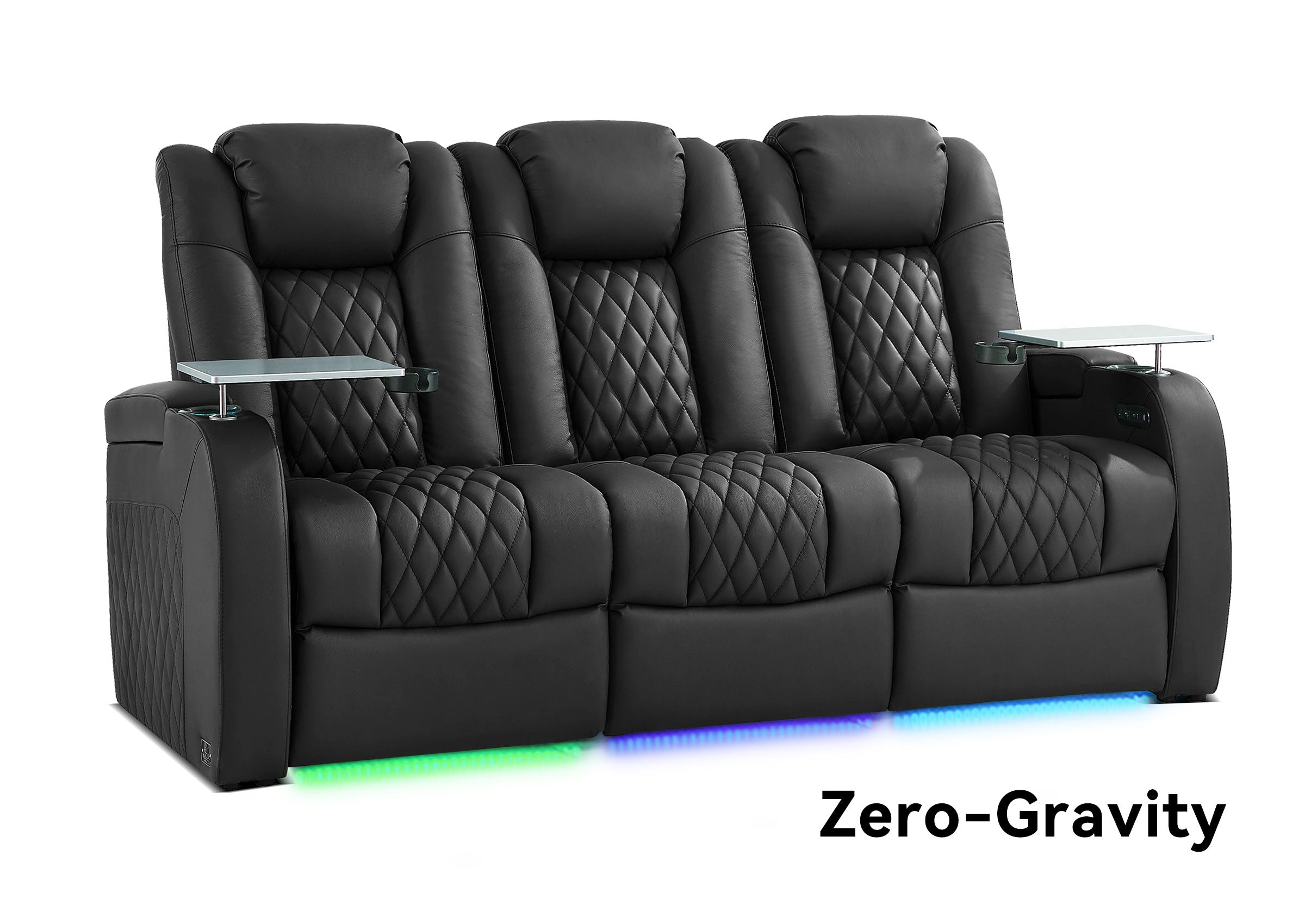


If your theater seat, floor, wall, or something in the room starts rattling every time deep bass hits, turning down the subwoofer may stop the noise.
It may also hide the actual problem.
A bass rattle can come from several very different places: the subwoofer itself, a loose object in the room, vibration traveling through the floor, a theater-seat component, a riser, or a tactile transducer attached to the seating.
Those problems can sound surprisingly similar from the couch.
The useful first question is therefore not:
“How do I reduce the bass?”
It is:
“What is actually moving, and how is the bass reaching it?”
That distinction matters because isolation feet can help with one vibration path and do almost nothing for a loose cup holder. Tightening a seat component will not stop bass traveling through the floor. Room correction will not secure a storage lid that buzzes at one particular note.
The fastest way to preserve the bass you enjoy is to diagnose the rattle before reducing it.
First, Decide What Kind of Vibration You Are Hearing
Not every physical sensation during bass is a problem.
A well-integrated home theater can produce bass that you hear and feel. The seat may transmit some impact to your body during an explosion or deep musical passage without producing a separate noise.
The problem begins when something adds a sound or movement that was not part of the soundtrack.
It helps to separate four situations.
The Bass Feels Powerful, but Nothing Makes an Extra Noise
This may simply be intended tactile impact.
Deep bass can create physical sensation through air pressure, furniture, and the structure supporting the listener. If the sensation follows the soundtrack and nothing buzzes, chatters, knocks, or rings, there may be nothing to fix.
Strong bass and unwanted rattle are not the same thing.
One Object Buzzes or Chatters at Certain Bass Notes
This is often a local sympathetic rattle.
A cup holder, storage lid, picture frame, light fixture, door, vent grille, cable, or piece of furniture begins vibrating when bass excites one of its resonant conditions.
The bass is the trigger, but the object is producing the distracting sound.
The Floor, Wall, or Several Objects Seem to Vibrate Together
Now you may be dealing with structural vibration.
SVS distinguishes the acoustic output of a subwoofer from mechanical vibration transferred into the floor and then through walls and other parts of the building. Both can make bass noticeable outside the immediate listening area, but they do not necessarily respond to the same fix. See SVS's guide to room rattle and bass vibration.
The Noise Seems to Come From the Subwoofer Itself
Treat this separately from ordinary room rattle.
A nearby object can make a healthy subwoofer sound as though the cabinet is rattling, so confirm the source carefully. But if scraping, knocking, buzzing, or another abnormal sound clearly remains at the subwoofer itself at reasonable playback levels, stop pushing the system harder and follow the manufacturer's troubleshooting or service guidance.
A room-rattle article should not turn a possible equipment problem into a DIY repair experiment.
The Thing You Hear Rattling May Not Be Where the Vibration Started
This is one of the most useful ideas when diagnosing bass problems.
Imagine a cup holder starts buzzing.
The cup holder is where you hear the noise.
But the vibration might have reached it through several paths:
Subwoofer → air → cup holder
or:
Subwoofer → floor → seat frame → cup holder
or, in a tactile system:
Bass shaker → seat frame → cup holder
The noisy object is the messenger. It is not always the original vibration source.
That is why blindly adding an isolation pad, reducing subwoofer gain, or applying acoustic treatment can produce disappointing results. Before choosing a solution, identify both:
what is making the unwanted noise
and
how the energy is reaching it.

Use One Scene, One Volume, and One Variable at a Time
You do not need to begin with elaborate measurement equipment.
A repeatable test is often more useful.
Choose one movie scene, music passage, or bass sample that reliably produces the rattle. Keep the playback level the same while you investigate.
Then change only one thing at a time.
If you change volume, subwoofer placement, crossover, seat position, EQ, and isolation simultaneously, you may stop the noise without learning why it stopped.
A better rule is:
Same bass. Same volume. One variable.
That turns an annoying noise into something you can actually diagnose.
Start With a Quick Location Test
Play the repeatable bass passage at a moderate level.
Move around the room and listen from different positions.
Does the noise stay near the subwoofer?
Does it clearly come from the seat?
Does it seem strongest near a wall, window, door, shelf, or riser?
Does the sound seem to move as you walk around?
Do not assume the loudest perceived location is automatically the source. Low-frequency energy and reflections can make localization difficult. The goal of this first pass is simply to narrow the search area.
Once you have a likely object, test it individually.
Try the Touch Test on Loose Objects
If a cup holder, storage lid, décor item, grille, or other nonmoving object appears to be buzzing, lightly stabilize it while the same bass passage plays.
If the noise immediately disappears, you have found a strong clue.
That does not necessarily tell you how the vibration reached the object, but it confirms that the object itself is participating in the noise.
Common examples include:
- cup holders;
- removable tray tables;
- storage-console lids;
- wall art;
- cabinet doors;
- windows;
- lightweight shelves;
- HVAC grilles;
- loose cables touching a hard surface.
SVS similarly recommends securing objects that resonate during strong bass rather than assuming every rattle requires changing the subwoofer itself.
Do not perform this test around a moving recliner mechanism, exposed electrical components, or a moving subwoofer driver.
Those require a different inspection.
Does the Noise Actually Come From the Subwoofer?
If the rattle seems concentrated around the subwoofer, remove nearby loose objects from the equation first.
Check whether something sitting on, beside, or behind the cabinet is vibrating.
Then listen again.
A room object close to a subwoofer can be surprisingly convincing because the sound appears to come from the same location.
If the abnormal sound clearly remains in the subwoofer cabinet itself, avoid the temptation to keep increasing the level to “test it.”
Some sounds people describe as rattling may involve cabinet hardware, grille contact, airflow, distortion, or an actual driver or amplifier problem. The correct troubleshooting depends on the specific model.
At that point, the manufacturer's manual or support process is more useful than a generic home-theater fix.
If the Theater Seat Is Rattling, Test the Seat as a Moving System
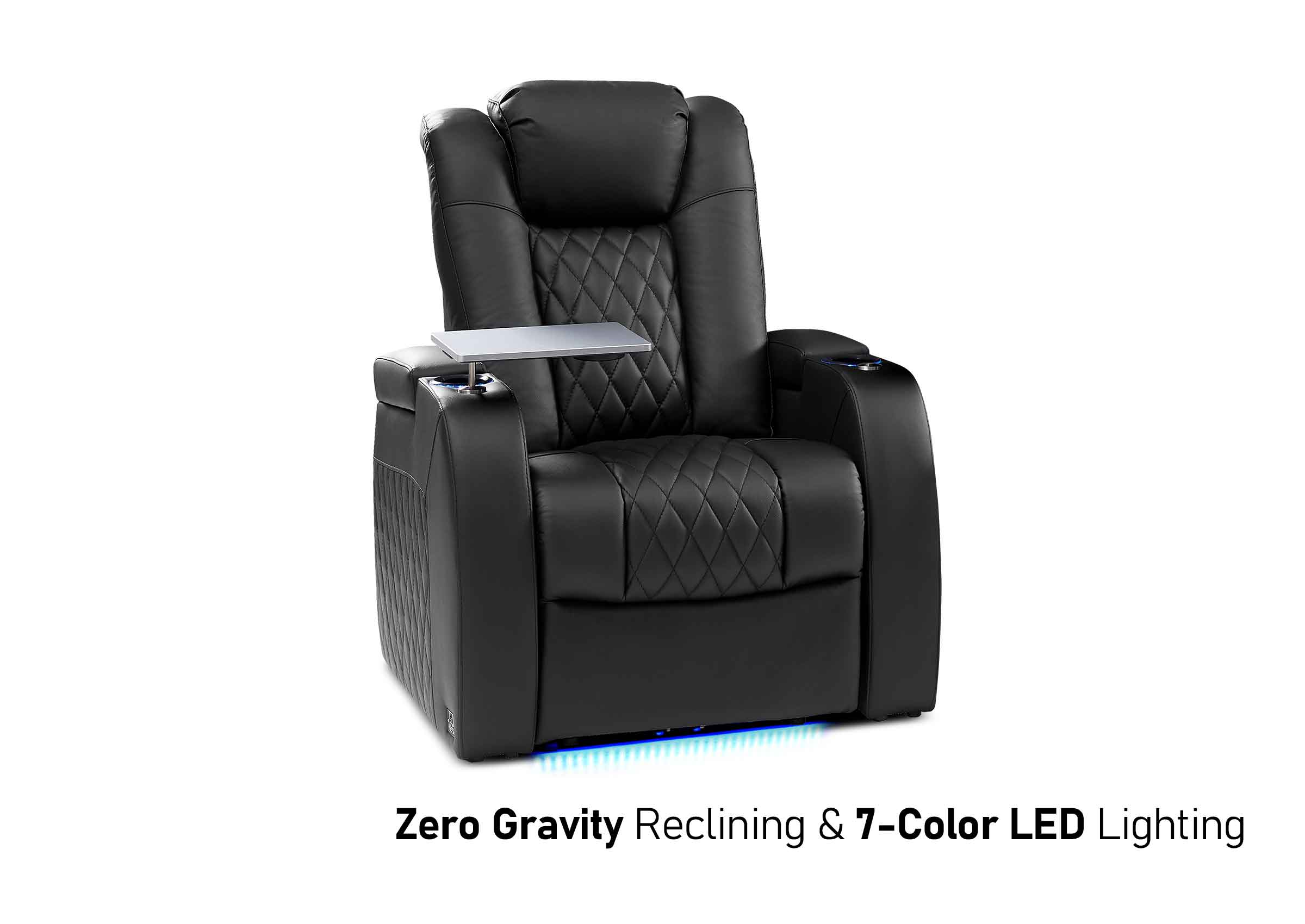
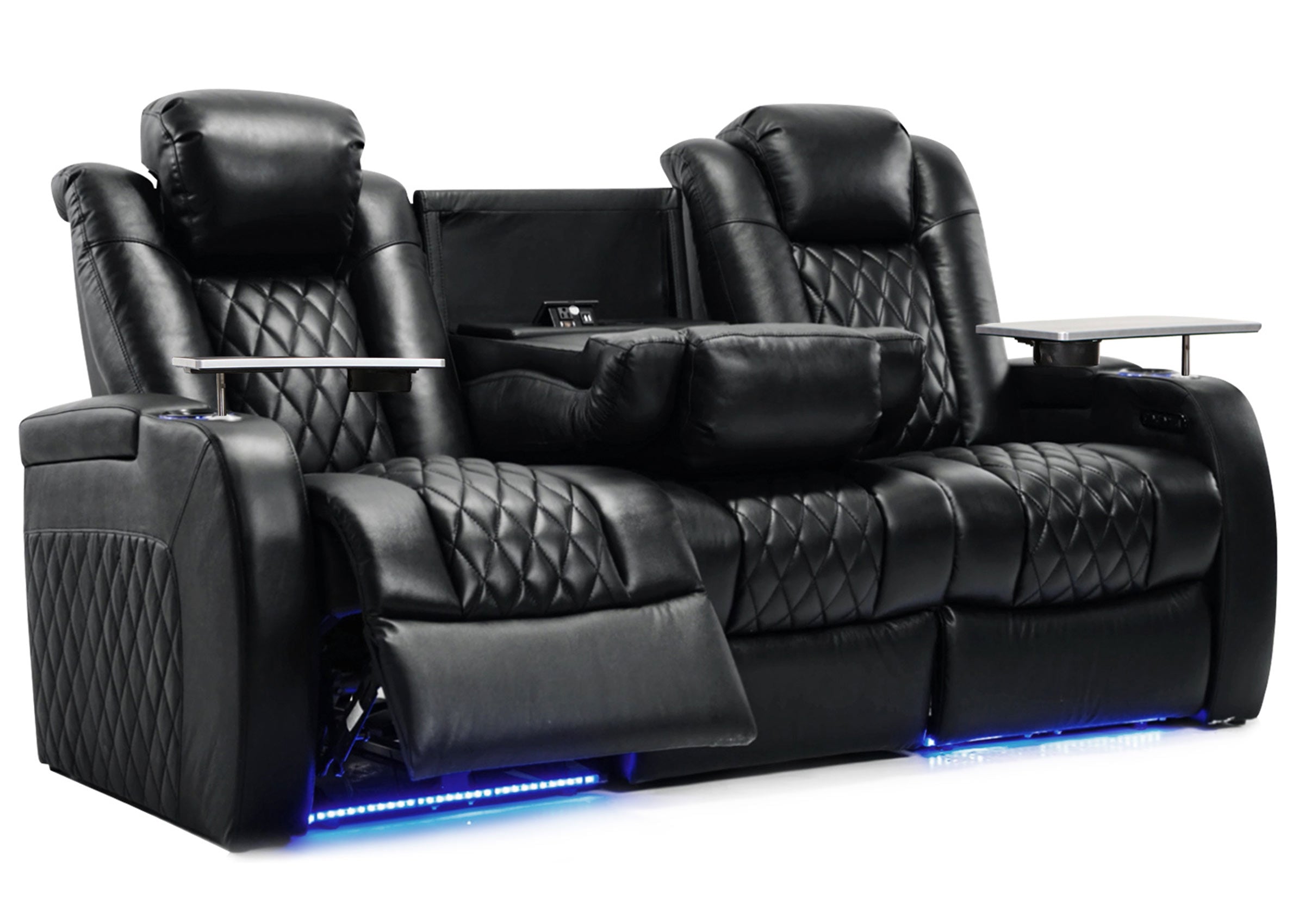
A theater recliner is much more complicated than a stationary chair.
It may contain:
- cup holders;
- storage compartments;
- removable accessories;
- backrest connections;
- metal linkages;
- a footrest mechanism;
- electric motors;
- wiring;
- power supplies;
- modular connections.
All of those components occupy the same structure that receives low-frequency energy.
That makes “the couch is rattling” too broad a diagnosis.
Instead, change the state of the seat.

Test the Seat Empty and Occupied
Play the same bass passage with nobody sitting in the chair.
Then repeat it with someone seated normally.
If the rattle changes or disappears under the person's weight, loading the seat may be changing how two parts contact each other.
That points toward a local seat component rather than a room-wide acoustic problem.
Test Upright and Reclined
A power recliner changes geometry as it moves.
Something that has clearance while upright may contact another component after the footrest opens or the backrest changes position.
If the noise appears only when reclined, that is valuable information.
It may direct attention toward:
- a cable contacting the frame;
- a moving linkage;
- the footrest assembly;
- a backrest interface;
- an accessory that changes position relative to the frame.
Pause playback and stop seat movement before physically inspecting these areas.
Do not reach into an operating recliner mechanism.
Remove Optional Accessories Temporarily
If your seating uses removable tray tables or other accessories, temporarily remove them and repeat the same scene.
Likewise, empty loose objects from cup holders and storage compartments.
The purpose is not to strip the chair apart.
It is to reduce the number of possible noise sources until the rattle becomes predictable.
A Rattle That Appears Only in One Recline Position Is a Useful Clue
This deserves more attention than it usually gets.
If the same seat is quiet upright but rattles halfway through recline, the room did not suddenly change.
The structure of the seat did.
That strongly suggests inspecting what physically changed between the two positions before buying acoustic treatment or modifying the subwoofer.
This is one reason theater seating should be tested in the position people actually use.
A home theater is not experienced with every chair empty and upright.
WHEN THE SEAT IS THE CLUE
Does the Rattle Change When the Recliner Moves?
If the noise appears only when the seat is occupied or reclined, document the position and the area where the sound starts before changing your subwoofer settings. That can help separate a seating-side contact issue from a room-wide vibration problem.
When Does Subwoofer Isolation Actually Help?
Isolation feet, pads, or platforms can be useful—but only when they address the vibration path you actually have.
SVS describes subwoofer decoupling as a way to reduce mechanical energy transferred from the cabinet into the floor, which can in turn reduce floor and wall vibration and some associated rattles. See SVS's explanation of subwoofer isolation.
That makes isolation especially relevant when you notice patterns such as:
- the floor strongly vibrates near the subwoofer;
- several objects around the room begin rattling together;
- vibration is clearly transmitted into adjoining spaces;
- the floor or wall seems to participate in the problem.
But isolation is not a universal “stop all rattles” button.
Isolation can reduce vibration traveling through the structure. It cannot tighten a loose cup holder.
If only one lid or accessory is buzzing because two surfaces are contacting each other, fixing that local contact may matter far more than changing the subwoofer's feet.
Diagnose first. Isolate second.
Airborne Bass and Structure-Borne Vibration Are Different Problems
This distinction becomes particularly important when people elsewhere in the house can hear or feel the theater.
Some low-frequency energy reaches another room through the air and building boundaries.
Some can be transmitted mechanically through the floor and structure.
SVS specifically identifies both paths when discussing bass bleed and room vibration.

This means decoupling may reduce one part of the problem without making deep acoustic bass disappear from adjoining rooms.
If your real goal is:
“I want strong bass in the theater without anyone downstairs hearing it,”
that is a larger sound-isolation problem than simply eliminating a rattle.
Likewise, placing a rug in the room or adding conventional acoustic panels should not be presented as equivalent to true structural sound isolation.
Different problems require different expectations.
What If the Rattle Happens Only at Certain Bass Notes?
That is another useful diagnostic clue.
An object does not need to rattle throughout an entire movie.
A loose panel, lid, grille, or structural element may respond much more strongly at particular frequencies.
That is why one scene can sound perfectly clean while another causes an obvious buzz—even at a similar overall volume.
Instead of concluding:
“My subwoofer is too powerful,”
ask:
“What changes when this particular bass note plays?”
Repeatability matters more than spectacle.
A consistent buzz triggered by the same passage gives you something you can isolate and verify.
This is also why indiscriminately turning the whole subwoofer down can be inefficient: you may reduce the entire low-frequency experience to suppress one narrow rattle.
What If the Whole Room Sounds Boomy but Nothing Is Actually Rattling?
That is a different symptom.
Boomy or uneven bass can come from room interactions, placement, or low-frequency response problems without any object physically buzzing.
SVS notes that room modes and placement can make bass excessive or uneven depending on location. See SVS's room-optimization guidance.
If nothing is producing an added mechanical noise, do not automatically treat acoustic boom as a “rattle.”
Likewise, if one seat loses bass while other locations sound strong, that points toward a listening-position problem rather than a vibration problem.
For seat-to-seat low-frequency differences, see our guide to getting better bass across your home theater seats.
If bass is specifically weak at one listening position, our bass null listening-position guide covers that separate diagnosis.
If the problem is primarily room acoustics rather than a loose or vibrating component, our guide to acoustic panels, diffusers, and bass traps covers that separate decision.
What If You Use Bass Shakers?
A tactile transducer intentionally puts vibration into the seating structure.
That changes the troubleshooting path.
If the seat is quiet with the tactile system off but rattles once the shaker is active, isolate the tactile system from the acoustic subwoofer problem.
Dayton Audio's installation guidance emphasizes mounting a bass shaker firmly to a solid, flat structural surface. Its current BST-1 guidance also notes that loose mounting hardware or flexible panels can reduce performance and create unwanted noise. See Dayton Audio's BST-1 guidance.
So if the rattle follows the shaker rather than the subwoofer, check:
- whether the transducer is firmly attached;
- whether the mounting surface is rigid;
- whether surrounding hardware or panels are buzzing;
- whether wires contact moving or vibrating parts;
- whether the tactile level is simply overpowering the structure.
Do not turn this diagnosis into a full installation rebuild unless installation is actually the problem.
For mounting, wiring, amplifier setup, and power-recliner considerations, use our dedicated bass shaker installation guide for theater seats.
What If the Riser Is Vibrating?
A raised theater platform adds another possible vibration path.
If the rattle is concentrated around the second row, changes when someone steps on the platform, or seems to come from below the seating rather than the seat itself, the riser deserves attention.
A properly designed riser is not supposed to become a random buzzing box.
Acoustic Frontiers, for example, treats avoiding resonance, buzz, and rattle as a specific riser-design objective. It also notes that using a riser intentionally for low-frequency absorption or integrating subwoofers into it requires deliberate design rather than simply leaving a hollow cavity and hoping it helps. See Acoustic Frontiers' riser design guidance.
For this diagnosis, you only need to determine whether the platform is participating in the noise.
Do not start cutting vents or filling cavities based on generic internet dimensions.
Those decisions depend on the actual construction and belong to the riser-design problem, not the first round of rattle troubleshooting.
For the basic structure and role of a theater platform, see our home theater riser platform guide.

Use This Rattle Diagnosis Table Before Changing the System
| What you notice | Most useful first suspicion | First test |
|---|---|---|
| A cup holder or storage lid buzzes | Local seat component | Lightly stabilize the suspected part and repeat the same bass passage |
| Rattle changes when someone sits down | Seat structure or contact point | Compare empty vs. occupied |
| Metallic noise appears only when reclined | Recliner linkage, wiring, or moving interface | Compare upright vs. reclined, then inspect with the seat stopped |
| Wall art, a grille, or a door rattles at one note | Sympathetic room-object resonance | Stabilize that object and repeat the same passage |
| Floor, walls, and several objects vibrate together | Structure-borne vibration | Compare vibration close to and farther from the subwoofer |
| Noise is clearly inside the subwoofer | Equipment-specific problem | Stop increasing output and follow manufacturer troubleshooting |
| Rattle occurs only when the bass shaker is active | Tactile-system mounting or level | Turn the shaker off, repeat, then inspect mounting |
| Noise is concentrated around the raised second row | Riser or seat-to-riser interaction | Compare the platform and seat separately |
| Bass is boomy but nothing produces an added buzz | Acoustic response problem | Evaluate placement and room response instead of chasing a rattle |
| Bass is clean and physical with no extra noise | Intended tactile impact | There may be nothing to repair |
The important part is not identifying the perfect solution from the table.
It is choosing the right next test.
Why Turning Down the Subwoofer Should Usually Come Later
There are situations where reducing low-frequency output is completely reasonable.
Maybe the overall playback level is simply too high for the room.
Maybe bass is disturbing another part of the house.
Maybe a receiver or processor provides a low-frequency containment feature that better suits nighttime use.
SVS includes lower-frequency limiting and containment among the available strategies for reducing room vibration and bass bleed.
But lowering the subwoofer should not automatically be Step 1 when one specific object rattles.
If the cup holder buzzes every time one bass note plays, reducing the entire system until that cup holder becomes quiet means one weak component has effectively chosen the bass level for the whole theater.
A better order is:
find it → confirm it → fix or isolate it → then decide whether the bass level itself needs changing.
When Should You Stop Troubleshooting and Get the Equipment Checked?
Stop treating the problem as ordinary room rattle if the sound clearly appears to come from powered equipment rather than surrounding objects.
Examples include a persistent abnormal scraping, knocking, electrical buzz, or mechanical sound coming directly from the subwoofer or another powered component.
Likewise, a power recliner that makes a mechanical noise even when no bass is playing has a different problem from a seat component sympathetically vibrating with the soundtrack.
Do not continue raising playback levels in an attempt to reproduce a possible hardware fault more dramatically.
Once the noise has been isolated to equipment, use the specific manufacturer's troubleshooting process or service support.
The goal of diagnosis is to narrow the problem—not to force every problem into a home remedy.
Frequently Asked Questions About Subwoofer Room Rattle
Why does my room rattle when the subwoofer plays?
Strong low-frequency energy can excite loose objects through acoustic pressure and can also transfer mechanical vibration into floors, walls, furniture, and other structures. The first step is determining which path is producing the unwanted noise.
Does room rattle mean my subwoofer is too loud?
Not necessarily. One loose object can rattle at a particular bass note even when the overall bass level is reasonable. Confirm the rattling object before reducing the entire low-frequency system.
Do subwoofer isolation pads stop room rattle?
They can help when mechanical vibration is being transferred from the subwoofer into the floor or structure. They are less relevant when the problem is a loose accessory, cabinet door, cup holder, or other local object.
Why does my couch rattle with bass?
The couch may be responding to acoustic energy in the room or receiving vibration through the floor. With theater recliners, cup holders, storage lids, cables, linkages, and accessories can also produce local noises. Test the seat empty and occupied, then upright and reclined, to narrow the source.
Why does my recliner rattle only when it is open?
Reclining changes the position and contact relationships of the seat's moving components. If a noise exists only in one position, inspect the components that changed position—but stop seat movement before checking the mechanism or wiring.
Can a bass shaker cause unwanted rattles?
Yes. A tactile transducer intentionally vibrates the seating structure, so loose hardware, flexible mounting surfaces, surrounding panels, or excessive output can become audible. A rigid mounting surface and controlled level are important.
Will acoustic panels stop furniture from rattling?
Not usually if the problem is a loose physical component. Acoustic treatment and mechanical rattle control solve different problems. Identify whether you are dealing with room response or an object physically making noise.
Why can people downstairs still feel the bass after I isolate the subwoofer?
Isolation can reduce mechanical transfer into the floor, but acoustic low-frequency energy can still travel through the building. Reducing room rattle and completely containing bass are not the same task.
Should I use a test tone to find the rattle?
A repeatable scene or controlled bass sample is often enough. A frequency sweep can help identify frequency-specific rattles if your system is otherwise operating normally, but use moderate levels and stop if the noise appears to come from damaged equipment.
Should a home theater riser vibrate?
Some tactile sensation can be intentional, but uncontrolled buzz or rattle is not the same thing. If the riser itself produces unwanted noise, treat that as a structural or construction issue rather than assuming more vibration equals better immersion.
Fix the Rattle Without Removing the Bass You Wanted
Deep bass is supposed to add weight and physical presence to a home theater.
The goal is not to make the room motionless.
It is to separate the movement that supports the movie from the movement that distracts from it.
A rattling cup holder, vibrating floor, loose cable, resonating riser, and noisy subwoofer may all appear during the same explosion, but they are not the same problem.
That is why the most effective troubleshooting sequence is simple:
Find what is making the noise. Identify how the vibration reaches it. Change one thing. Test again.
Once the unwanted vibration is gone, you can judge the bass itself again.
And that is usually a better outcome than turning the whole system down just because one part of the room could not keep quiet.
If the rattle appears tied to a Weilianda seat component or changes as the recliner moves, you can contact Weilianda Support or email leon@weiliandahome.com with the seat position and where the noise appears.