



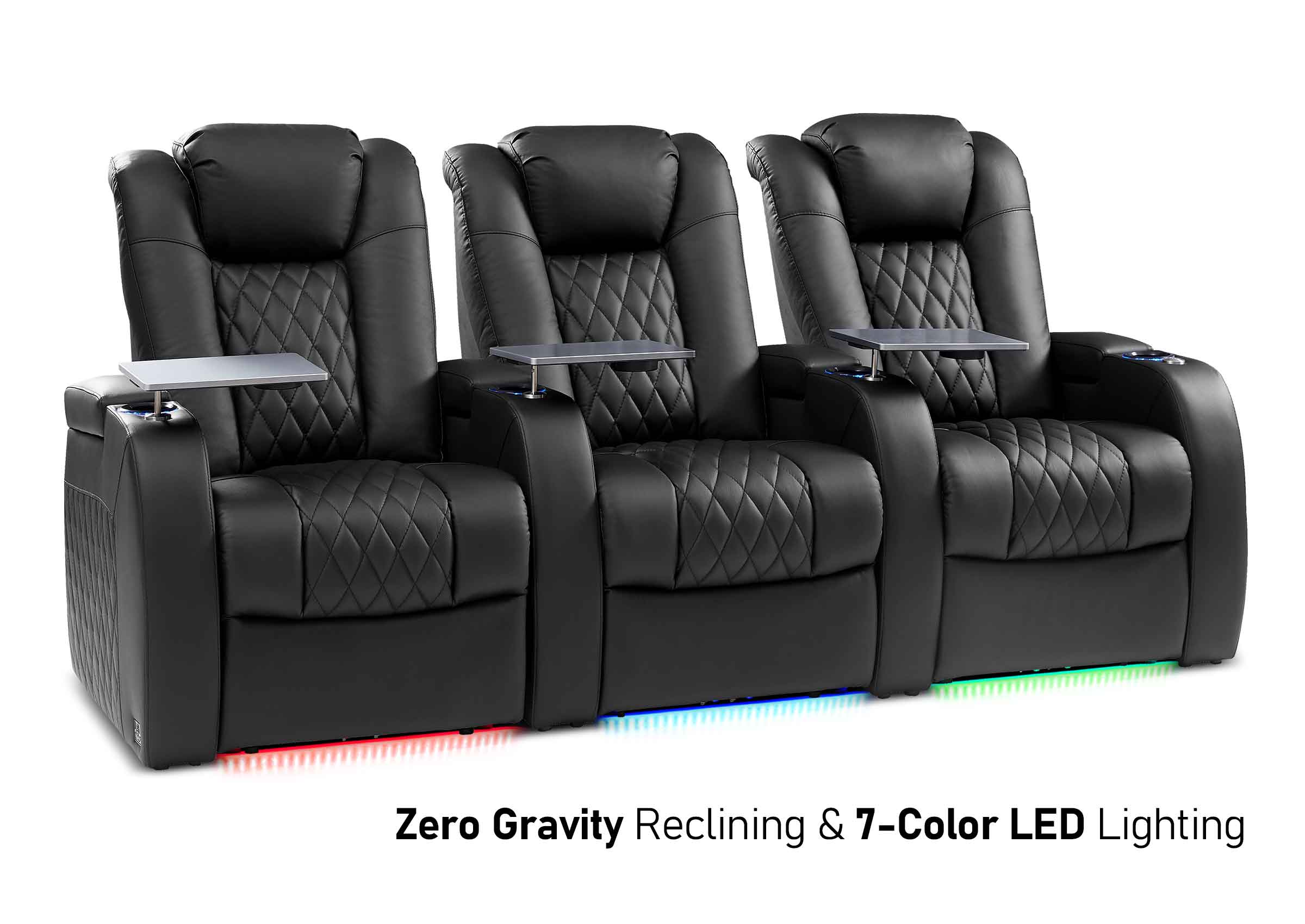
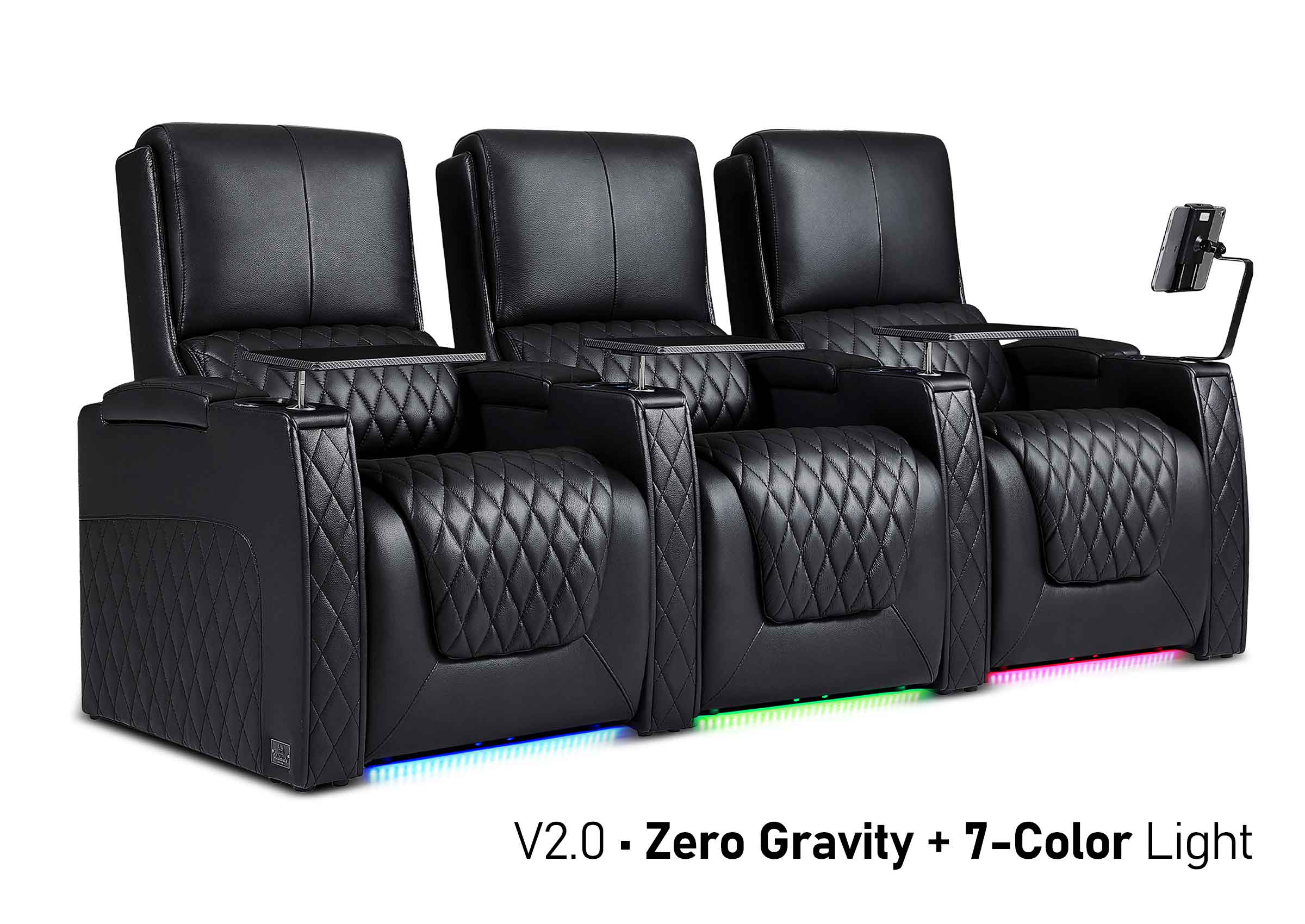
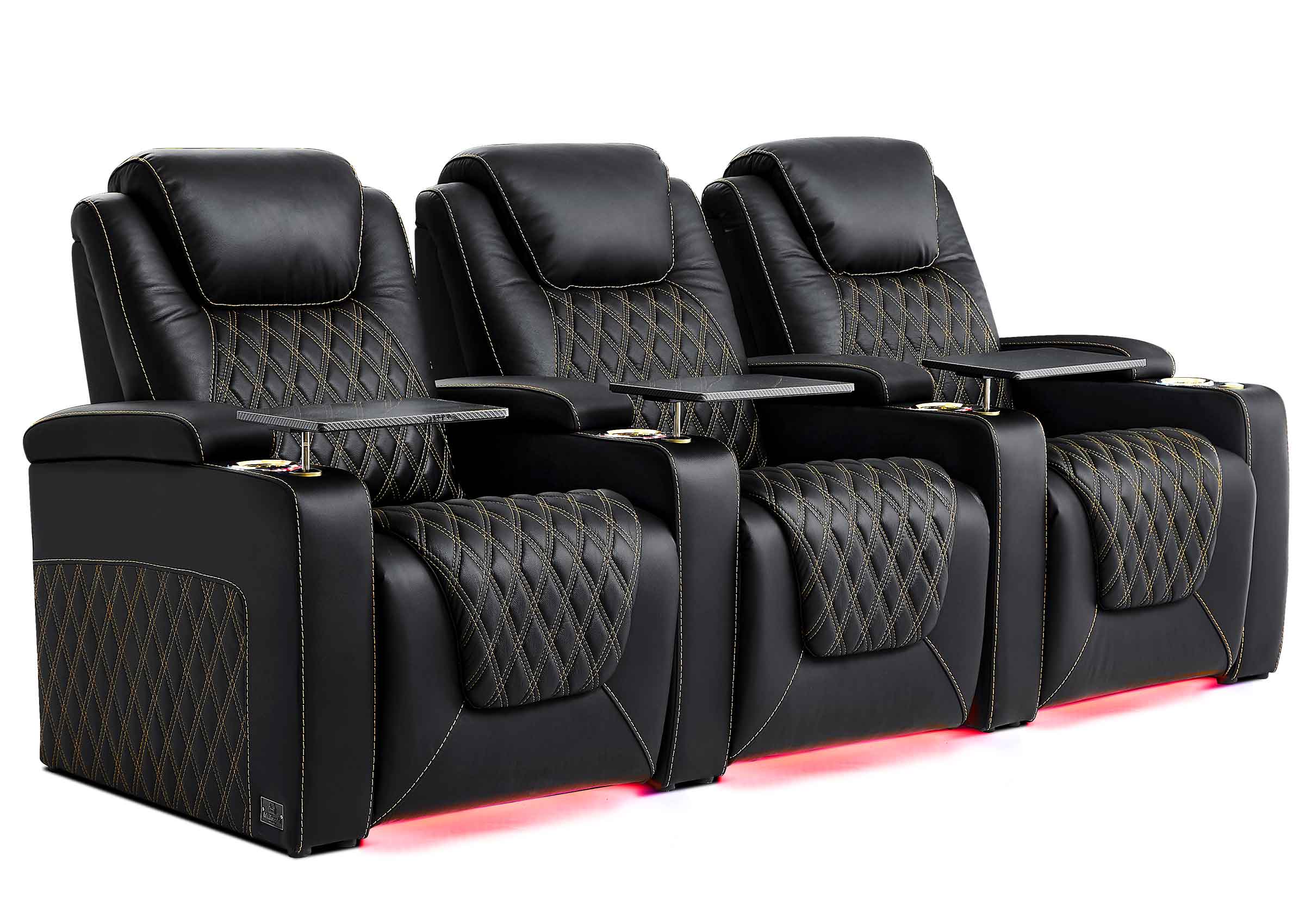
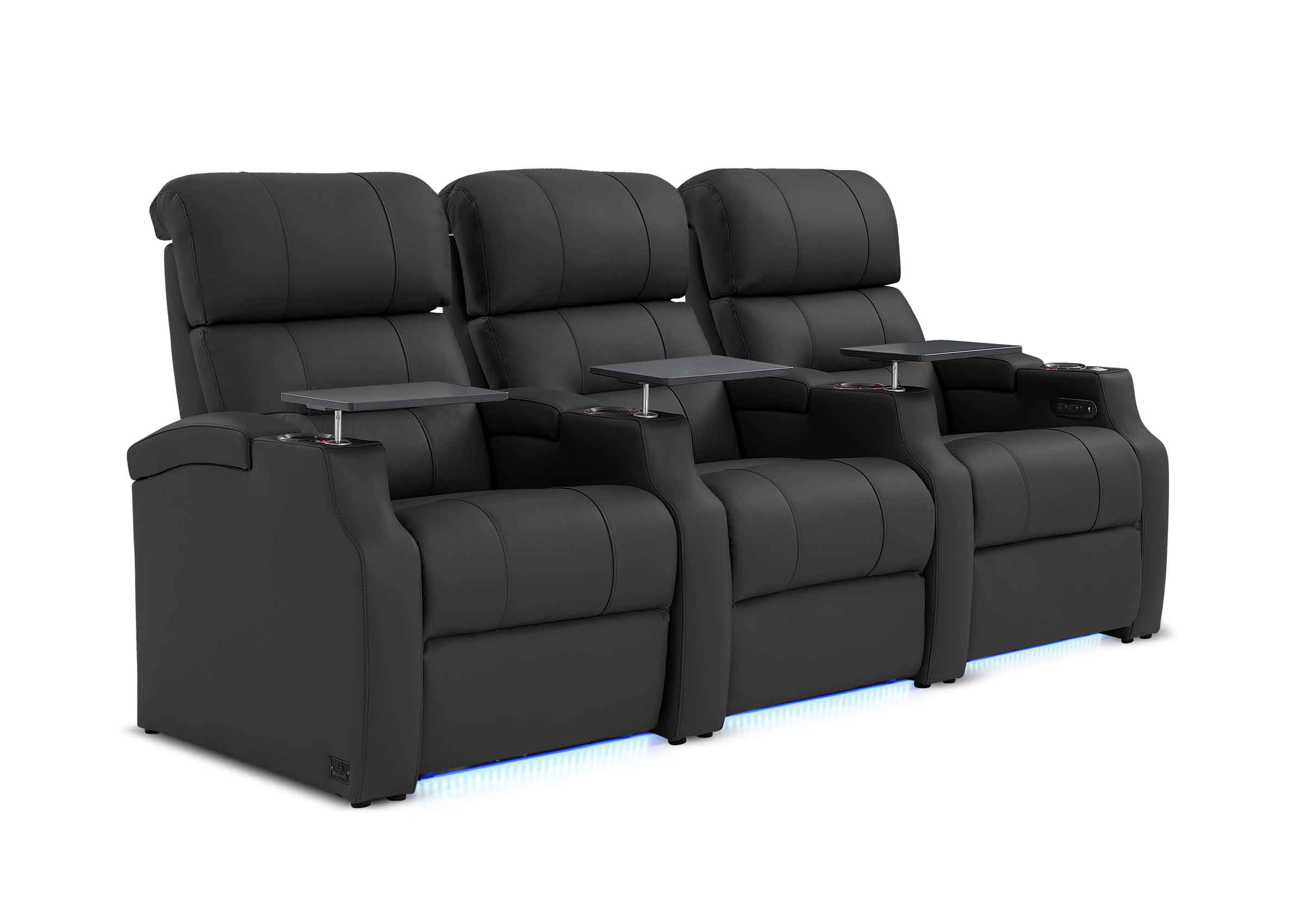
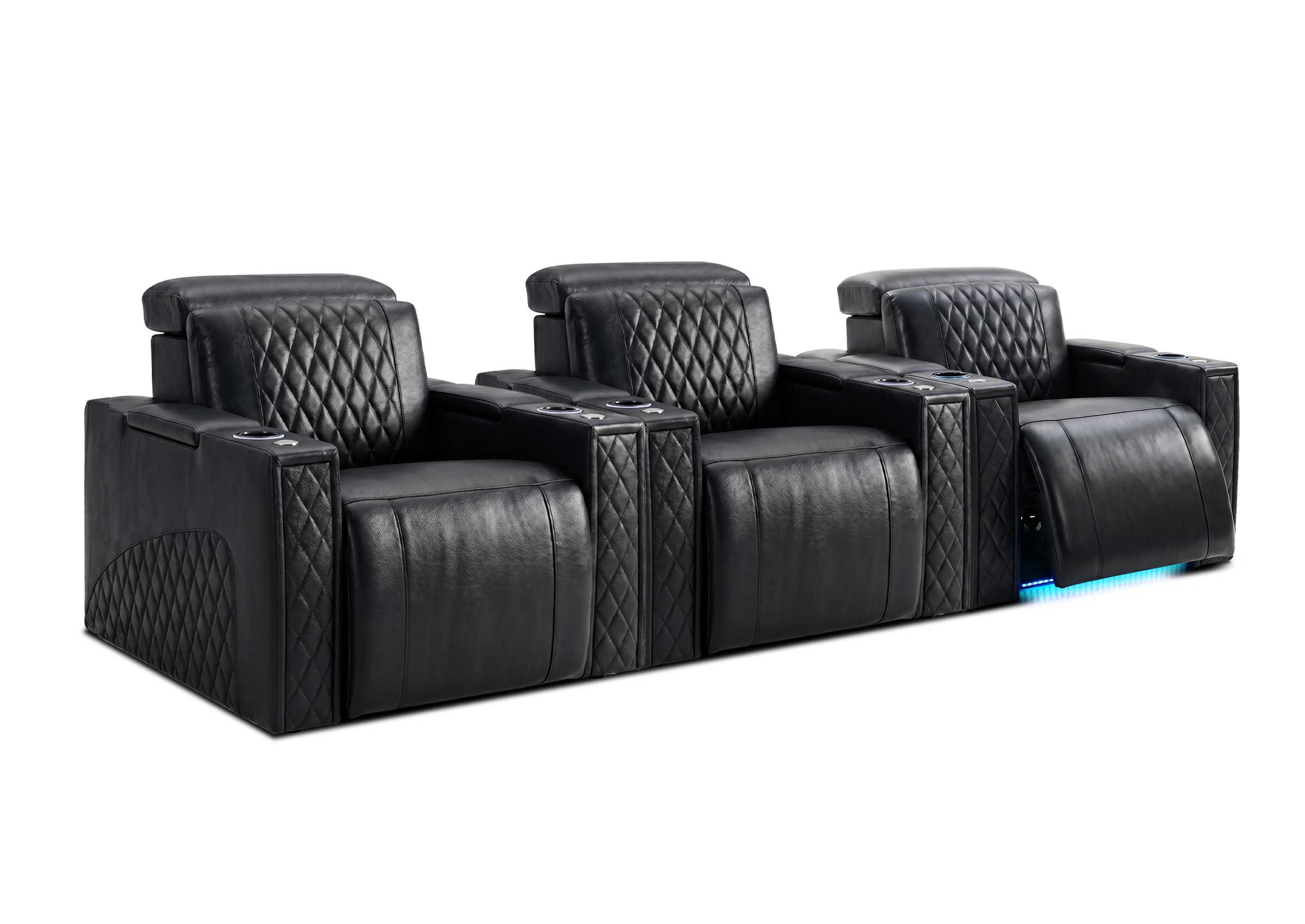

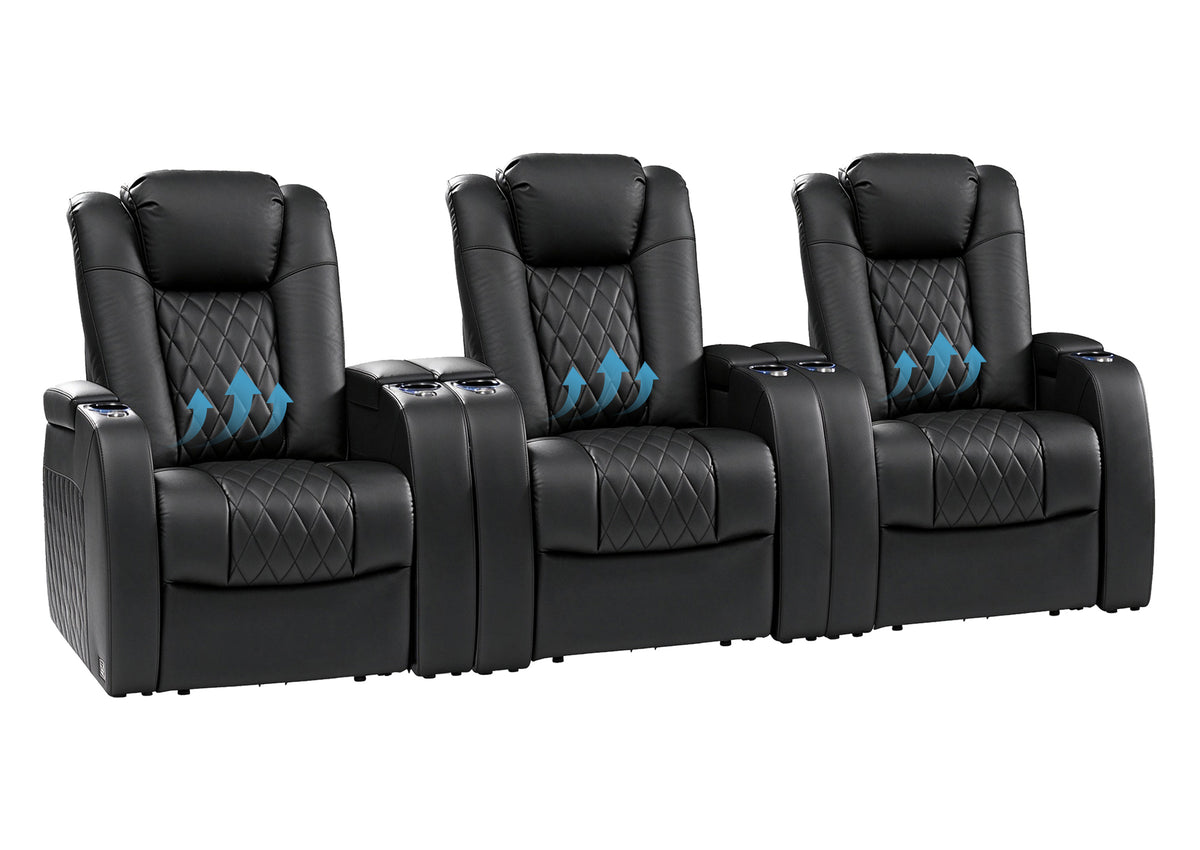

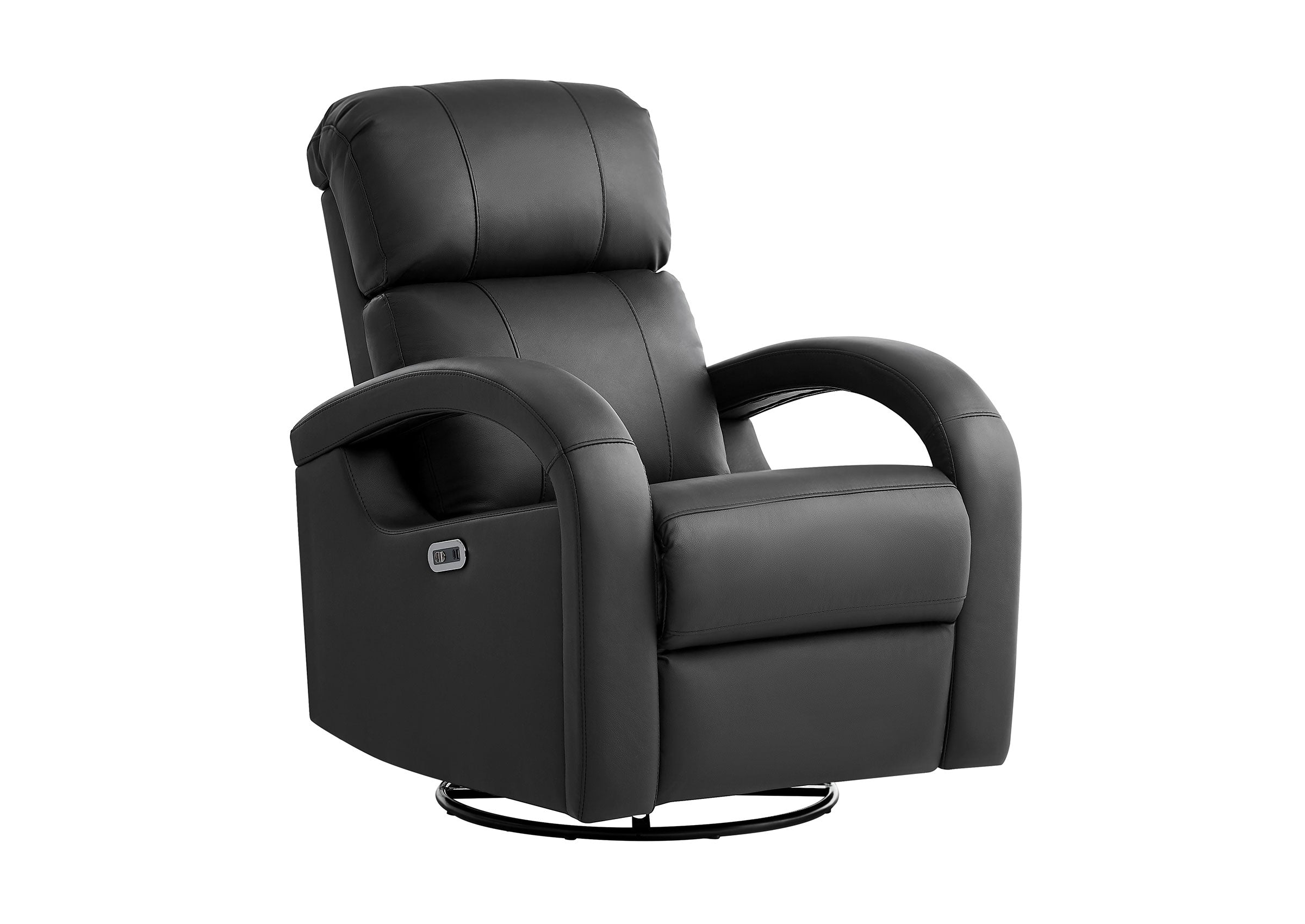

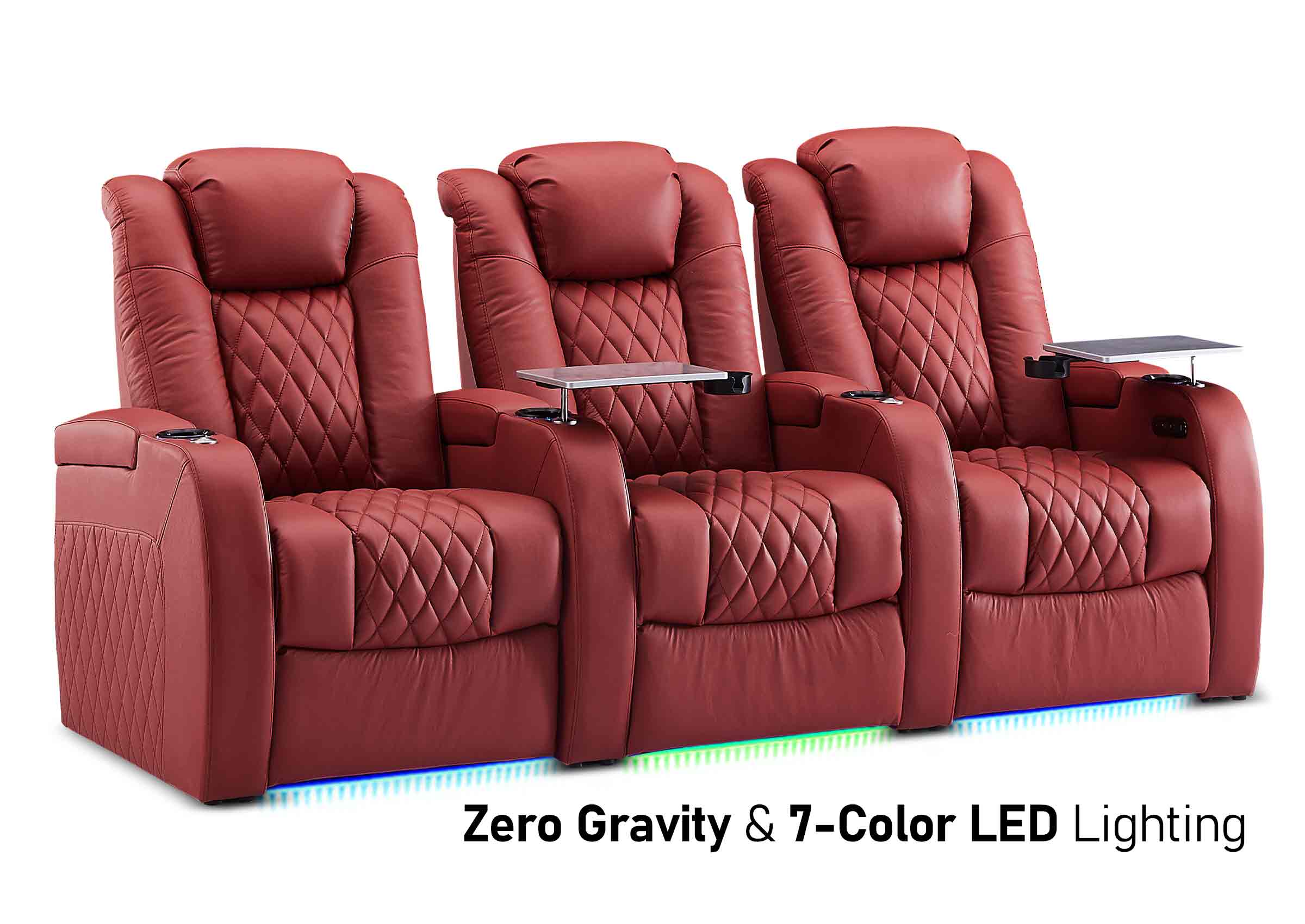



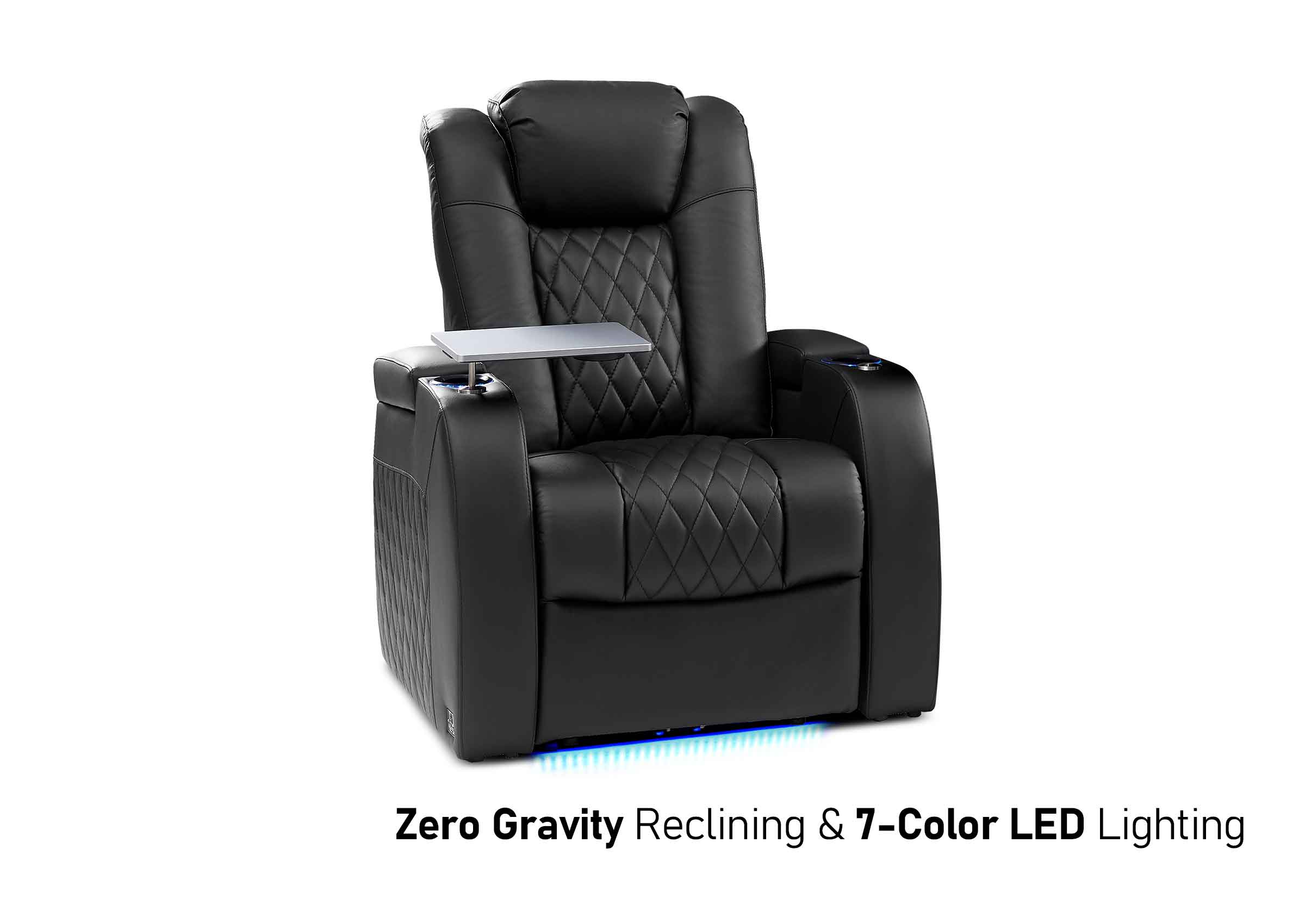
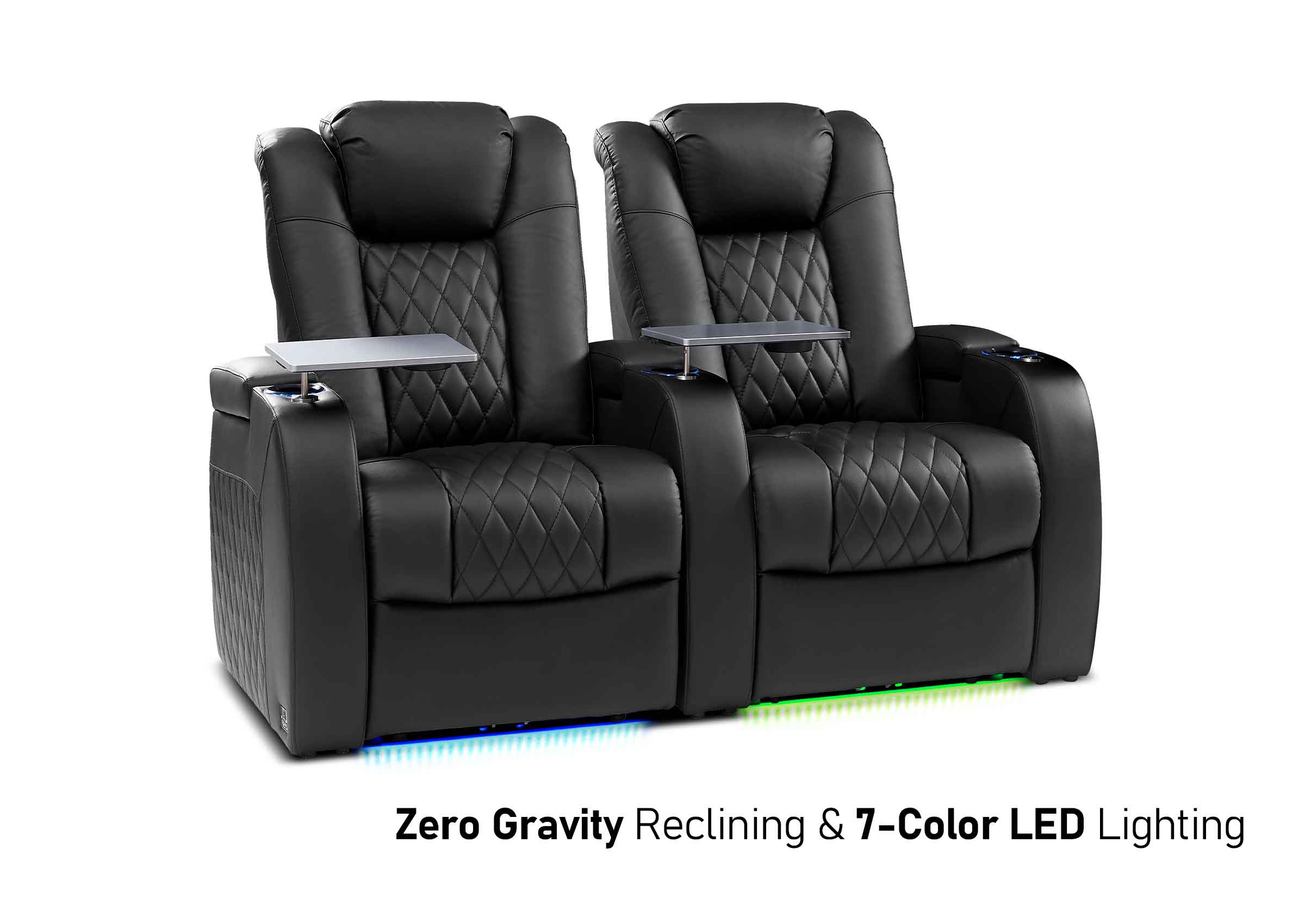
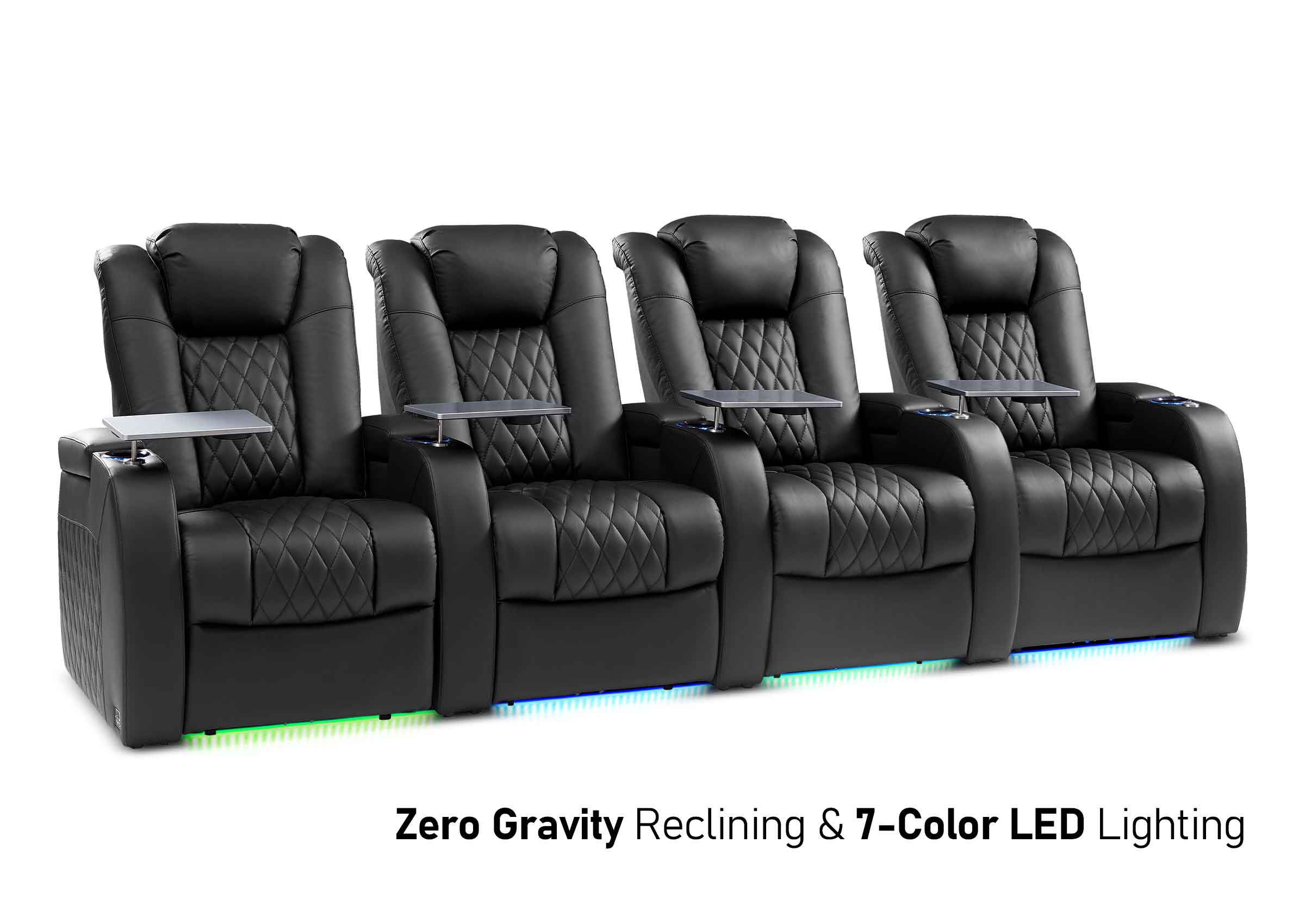
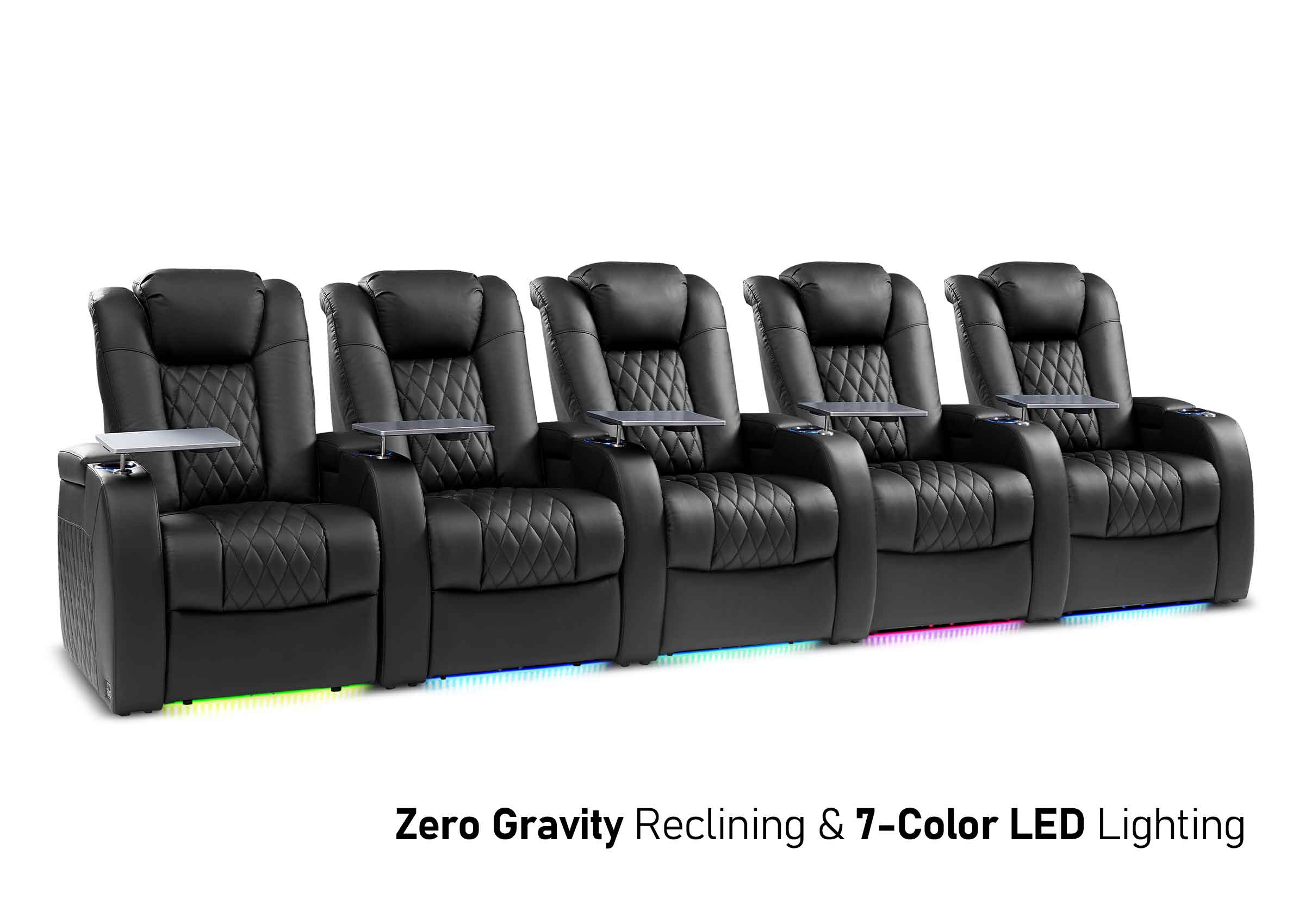
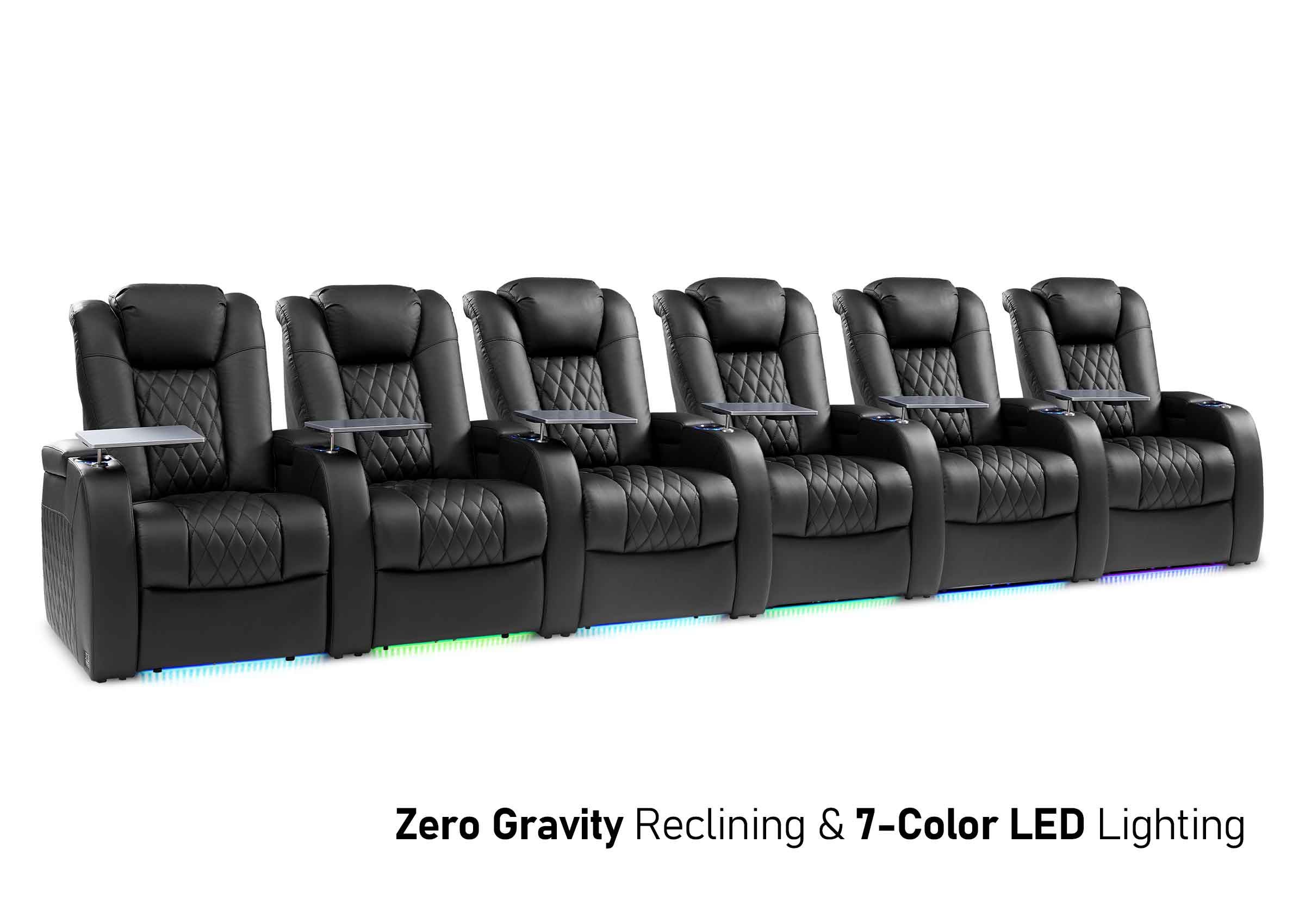
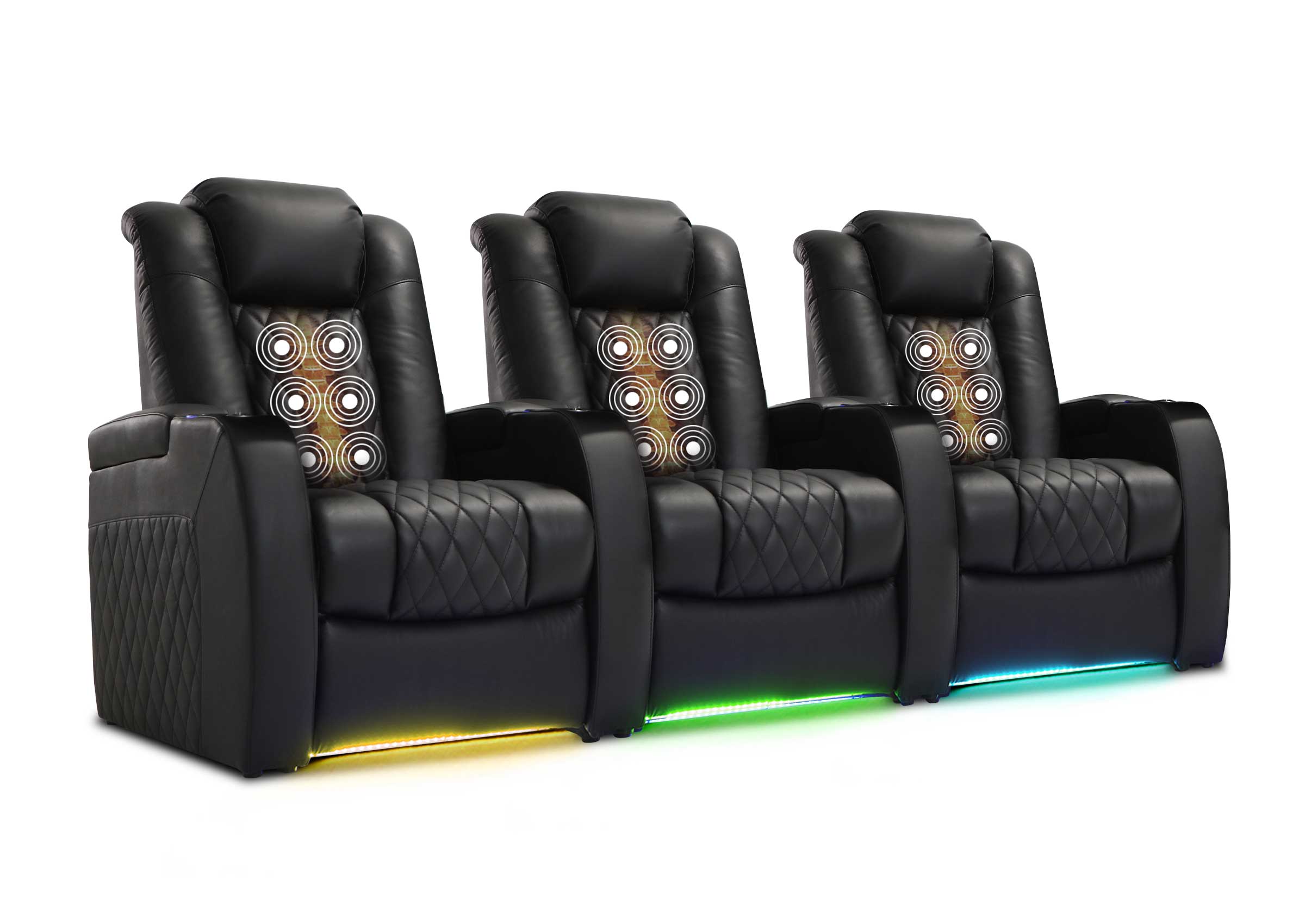
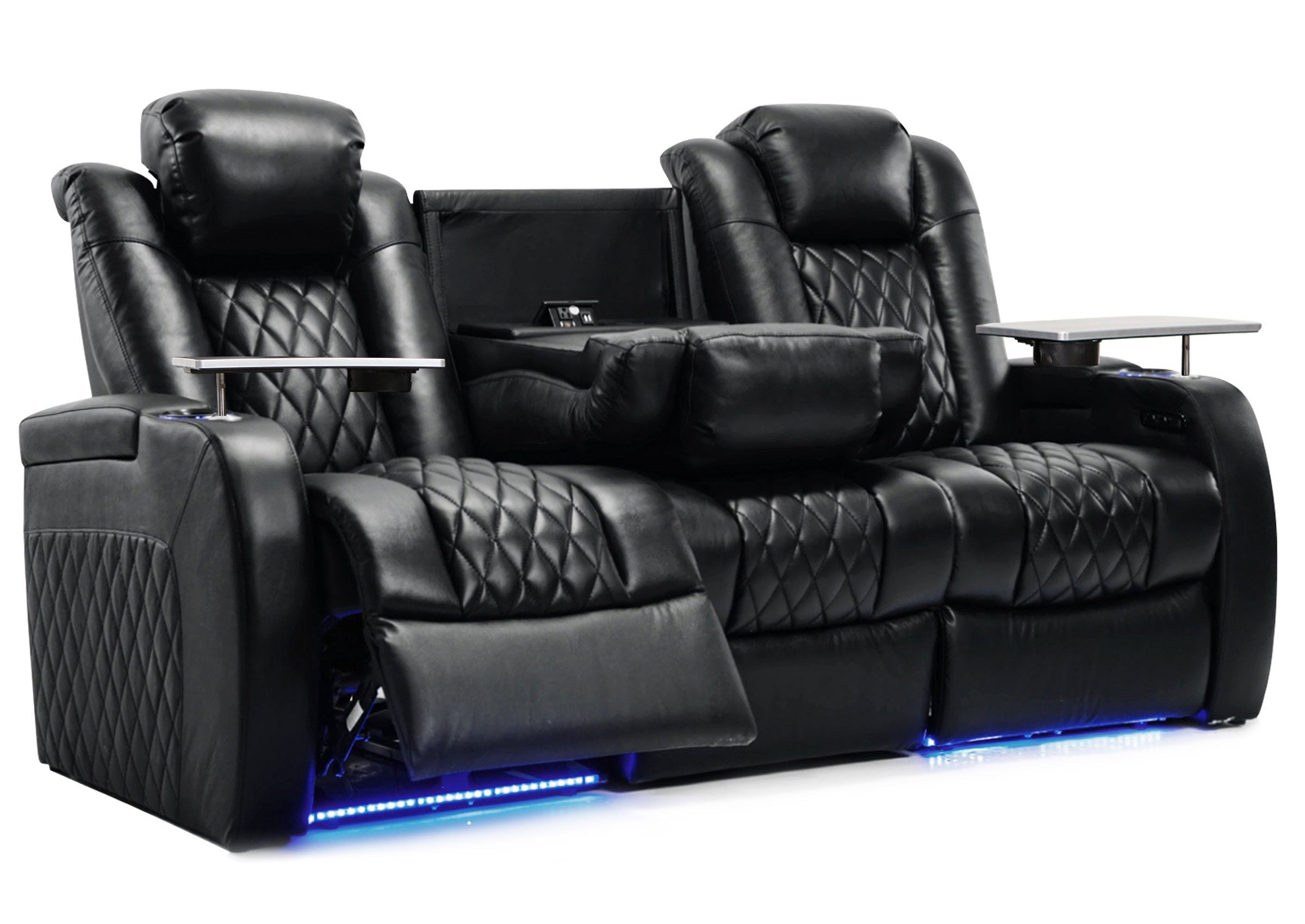
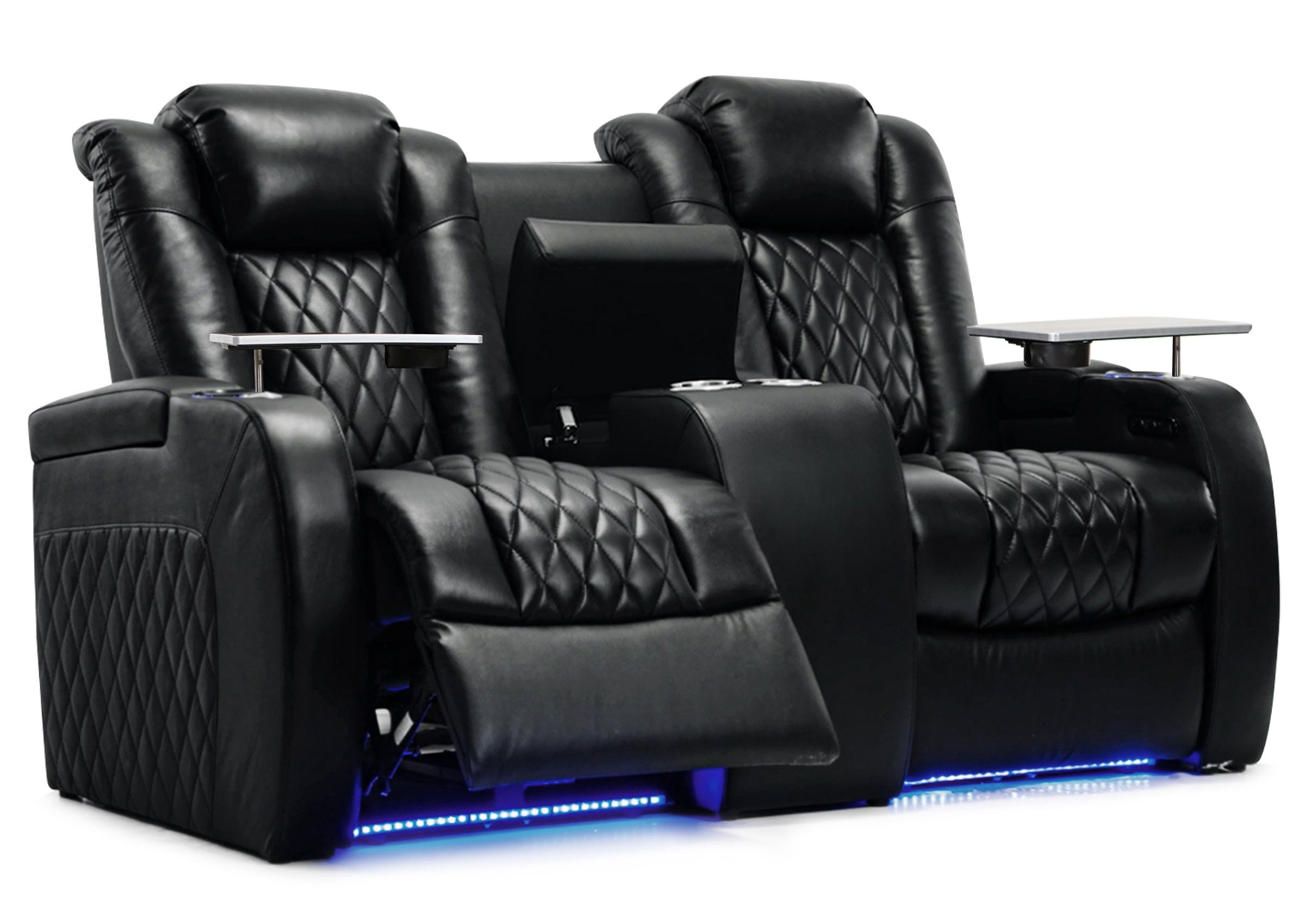


Leatherette is usually a manufactured leather-look material, bonded leather uses reconstituted leather fibers, and genuine leather comes from a tanned hide with its natural fibrous structure retained. These are differences in construction, not three steps on a universal quality ladder.
For a sofa or recliner, the useful comparison goes further: what covers the seat, how that surface handles your routine, and what you can reasonably expect when it wears. A clear material description helps you compare prices without paying for a name that leaves those questions unanswered.
What Are Leatherette, Bonded Leather, and Genuine Leather?
Start with the material beneath the leather-like appearance.
| Material | Basic construction | What to clarify before buying |
|---|---|---|
| Leatherette | Commonly a polyurethane (PU) or polyvinyl chloride (PVC) surface on a textile backing | Surface chemistry, backing, care requirements, and intended upholstery use |
| Bonded leather | Leather fibers or particles reconstituted into a material with binders; upholstery versions may include a backing and surface coating | Full composition and layer construction, rather than leather content alone |
| Genuine leather | Tanned animal hide retaining its original fibrous structure, which may be split or finished in different ways | Grain or split, finish, and which furniture panels use it |
SATRA's explanation of leather and lookalike materials distinguishes intact hide structure from coated textiles and reconstituted fiber materials. Containing leather fibers does not make a sheet equivalent to a continuous piece of hide.
For example, a seller may describe bonded upholstery as containing recycled leather. That information tells you something about an ingredient. It does not establish that you will be sitting on the same material as a hide upholstered onto a cushion. Ask for the composition of the complete covering, including its exposed surface.

Why “Genuine Leather” Is Not a Quality Grade
The word “genuine” identifies leather rather than a particular level of quality. It does not automatically mean full-grain, a protected finish, or complete leather coverage. Nor does it automatically mean the lowest grade. The industry initiative One 4 Leather addresses this confusion in its explanation of genuine leather terminology.
Grain and finish supply additional information. Full-grain describes retention of the grain surface; corrected-grain describes a surface that has been mechanically corrected. Aniline, semi-aniline, and pigmented descriptions address finishing. The Leather Working Group glossary separates these terms rather than treating “genuine” as a ranking between them.
Other labels need care, too. “PU leather” can be ambiguous: it may refer to a synthetic coated textile or to a PU-coated split-leather construction, sometimes called bicast. A product name alone may not resolve which one you are comparing. Ask whether the backing is textile, a continuous split hide, or reconstituted fibers.
This distinction also matters if avoiding animal material is essential to you. Bonded leather contains animal-derived material. For a leatherette option, get the complete composition instead of relying on a leather-look name or assuming every material described with “PU” has the same substrate.
Compare Comfort and Everyday Use on the Finished Seat
Choose the material around the way you use the furniture. A quiet reading chair, a shared family sofa, and a recliner used for several hours each evening create different priorities.
If you can try the seat, spend time in your normal sitting position. Notice how the surface feels against clothing, whether you slide forward, and how it feels after remaining seated. Keep the cushion firmness, seat depth, and back support in the comparison. A soft covering cannot compensate for a seat that does not fit you.
When you have only samples, compare them under the same conditions. Handle them as the supplier allows, check color and sheen in the room, and keep the sample codes. Use those observations to shortlist a surface; do not treat a swatch as a test of the finished chair's support or long-term comfort.
For a room with drinks and snacks, start with the approved cleaning routine. A wipeable surface may suit your habits, but “easy to clean” should refer to identified products and stains, not a promise that every spill wipes away. If natural variation and visible aging appeal to you, ask what changes to expect from the particular leather finish.
Pets add another question. Ease of removing hair or wiping a mark is different from resistance to claws. No one of these three material names establishes that a sofa is scratch-proof. Compare the actual surface, your pet's access to the furniture, and your willingness to use protective covers where needed.
Compare Wear Evidence Instead of Promised Lifespans
A material name cannot reliably tell you how many years a sofa will last. For manufactured coverings, the coating, backing, bond between layers, and intended use all matter. Leather also needs a suitable finish and care routine, alongside sound furniture construction.
Ask what evidence applies to the exact upholstery. Abrasion testing concerns surface rubbing; it does not answer every question about tears, flexing, coating separation, or cleaning compatibility. The manufacturer Mitchell Group explains these different questions in its guide to faux-leather specifications and testing.
For PU-coated fabric, prolonged heat and humidity can contribute to hydrolysis, a form of polymer degradation. The Association for Contract Textiles explains that resistance varies with composition and manufacturing. It also cautions that weeks in an accelerated hydrolysis test do not translate directly into years of service. See ACT's hydrolysis guidance.
Use a report to understand the property tested, test method, material identity, and result. Avoid comparing two impressive numbers when they measure different things. Contract textile guidance can help explain the evidence, but it is not a universal pass/fail requirement for every residential sofa.
On a power recliner, distinguish rubbing from repeated movement. A surface can have an abrasion result without that number explaining how its covering behaves at a folding footrest. Ask whether the supplied evidence addresses the relevant construction and use. If a display chair is available, operate it normally and observe exposed folds and panel transitions, without pulling or stretching the covering by hand.
If no useful test information is available, keep that uncertainty in the purchase decision. Look for a clear material specification, applicable written coverage, and a price you are comfortable paying without a guaranteed service-life assumption.
Check the Coverage Before Comparing Two Quotes
A sofa can combine materials. “Leather match” commonly describes leather on specified areas with a matching alternative elsewhere. It is a coverage arrangement, not another name for bonded leather.
Get the covering identified for the seat, inside back, arm contact areas, outer arms, rear panels, and footrest. On a recliner, include the panels exposed in its extended position. Then match the material statement to the exact model and color option on the quote.
Keep these four items together:
- Composition: Surface and substrate, with grain or split details where relevant.
- Coverage: Which material appears on each part of the furniture.
- Care: Approved routine and any material-specific restrictions.
- Purchase terms: What the seller's written upholstery coverage includes and excludes.
Consider two otherwise similar sofas. One uses leather on contact areas and a synthetic covering on the sides; the other lists leather across all specified upholstered panels. Their prices are not a like-for-like material comparison until you account for that difference. It may also affect how you clean exposed panels and how the sofa looks in an open room.

With those details established, compare home theater seating configurations using the specific upholstery information for each option. A collection label does not establish every panel's composition.
COMPARE YOUR SEATING OPTIONS
Compare Configurations With the Upholstery Details in Hand
Use the material composition, panel coverage, and care information to compare the specific seating options on your shortlist.
Choose Within Your Budget Without Guessing the Wear Rate
If you prefer to avoid animal material, focus on a documented composition that meets that preference, then compare comfort, care, and performance information. Genuine leather and bonded leather will not meet an animal-free material requirement.
If you want the appearance and feel of hide, look for a clearly specified leather option and a finish you are comfortable maintaining. Do not pay more solely for the word “genuine.” If you are considering bonded upholstery for its price or look, recognize that it is a composite choice and assess its own care and wear expectations. You are not necessarily getting a less expensive version of the same hide upholstery.
Use the actual price difference before trying to estimate lifetime value. In a hypothetical comparison, a $900 chair and a $1,300 chair leave a $400 gap. If they have the same dimensions, mechanism, cushioning, and delivery conditions, ask what the covering change buys you. If they differ in those other respects, separate those differences first.
You can also test your financial assumption. Hypothetically, replacing a $900 chair once would mean $1,800 in purchase costs before delivery or disposal. That exceeds a single $1,300 purchase, but only if the second chair continues to meet your needs through the same period. This illustrates a break-even scenario, not evidence that either material will last a set number of years.
For occasional use or a short-term furnishing need, a lower initial cost may be a reasonable priority. For a heavily used main seat you hope to keep, give clear material information, care compatibility, and credible support for wear claims more weight. If a seller cannot clarify an upholstery description, you can leave that option off the shortlist without declaring it fake.
Before choosing the cheaper chair as a temporary solution, also check whether you can replace an upholstered panel or would need to replace the whole seat. That answer can change the financial consequence of surface damage. Availability and cost need confirmation for the actual model; a generic promise that a material is “repairable” does not supply either.
Care and Repair Depend on the Actual Surface
Use the care instructions for the selected covering, including any different materials on the sides or back. “Leather conditioner” is not a universal treatment for every leather-look surface. Geist's PU and bicast care guidance warns about conventional oil- and wax-based products on PU coatings. Do not borrow a treatment simply because another chair has a similar color or texture.
Before choosing a recliner, read how its materials and components affect cleaning. The recliner cleaning guide separates surfaces, folds, and controls so that one routine is not applied indiscriminately to the whole piece.
If a covering starts peeling, document the affected area and identify the material before buying a repair kit. A lifting film on a composite material is a different problem from color separation on hide. Lederzentrum documents color delamination on furniture leather, so peeling alone cannot prove that the original material was bonded or synthetic.
Ask whether a proposed repair addresses a localized finish problem or an underlying material that is continuing to deteriorate. A patch that hides a mark does not necessarily restore a failing surface. Have the seller or an upholstery specialist assess the options before paying for a cosmetic repair, a panel replacement, or a replacement chair.
Frequently Asked Questions
Is bonded leather real leather?
It contains leather-derived fibers or particles, but those have been reconstituted rather than kept as the original hide structure. Treat it as a composite material in this comparison. Its leather content alone does not make it equivalent to hide upholstery.
Are leatherette and bonded leather the same?
No. Leatherette commonly describes a synthetic leather-look covering, while bonded material contains reconstituted leather fibers. Both can have a manufactured surface, which is why similar appearance does not establish the same construction. Request the full composition.
Is genuine leather always the lowest grade?
No. “Genuine” is not a complete grade specification. Ask which hide layer is used, how it is finished, and what areas it covers. A poorly explained listing is a reason to obtain better information, not proof of a particular grade.
Is all PU leather vegan?
Do not assume that from “PU leather” alone. The phrase may describe synthetic material or a PU-coated split-leather construction. If avoiding animal-derived material is essential, confirm the substrate and complete product composition in writing.
Which option is best for children or pets?
Start with the likely problem: spills, cleaning frequency, hair, scratching, or chewing. Those call for different properties. Compare approved cleaning methods and the actual surface information; none of these broad names promises resistance to all household damage.
Can I identify the material by smell or a water-drop test?
Neither establishes the complete construction reliably. Coatings change how surfaces respond to water, and smell does not document the layers beneath them. Use product specifications and a matching sample first. Do not wet, burn, scratch, or cut furniture to identify it; an unresolved dispute may need professional assessment.
Does genuine leather mean the entire sofa is leather?
No. It may describe only specified areas. Ask for the seat, inside back, arms, outside panels, rear, and footrest to be identified separately, especially if the description says “seating surfaces” or “leather match.”
Match the Material Details to Your Seating Choice
Choose with a clear description of the surface, substrate, coverage, and care requirements. Keep that information attached to the model and color on your order so you can compare what is actually included.
For a Weilianda configuration, contact Support or email leon@weiliandahome.com with the model link and your material questions. Confirm the upholstery details relevant to your selection before placing the order.