


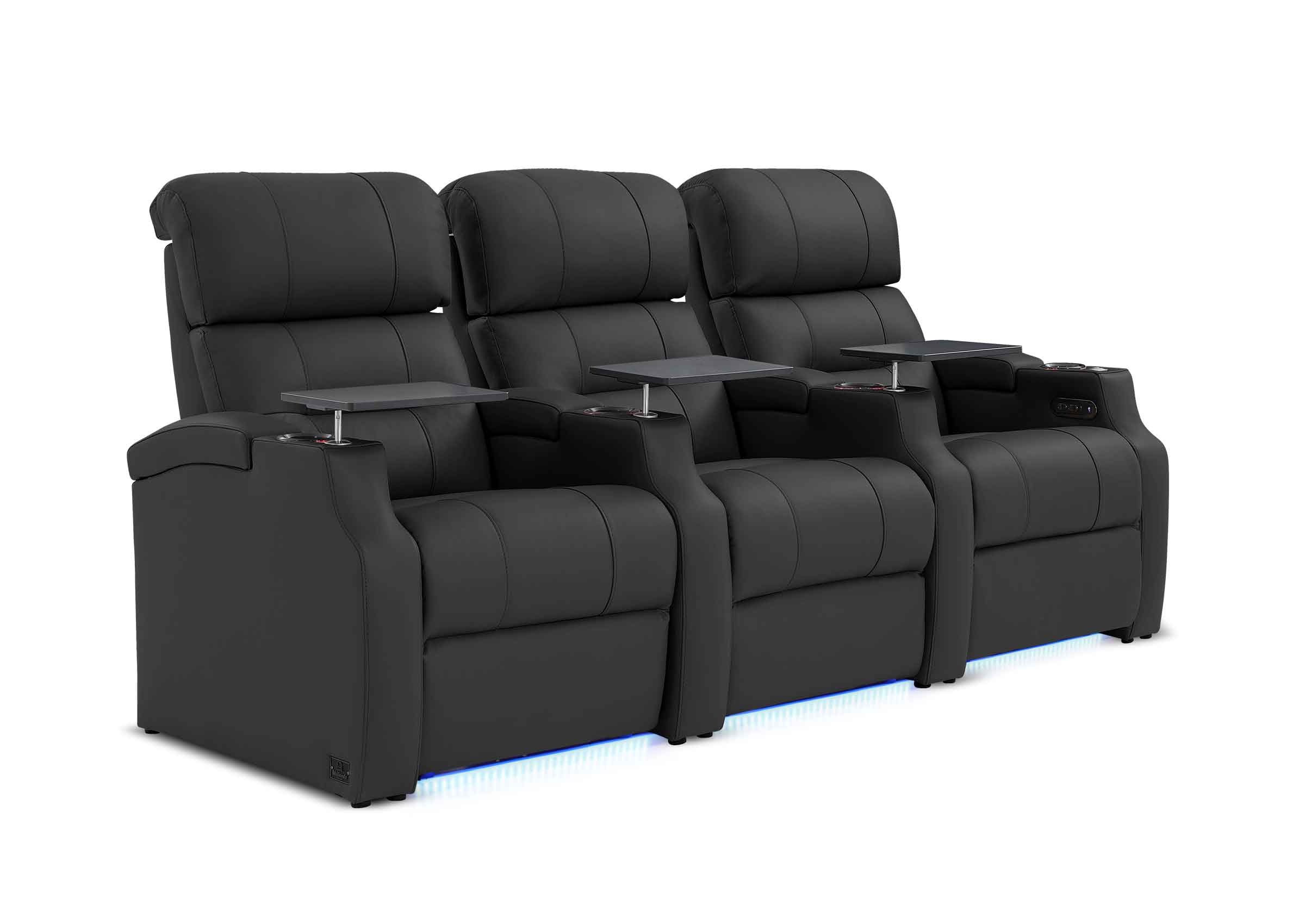


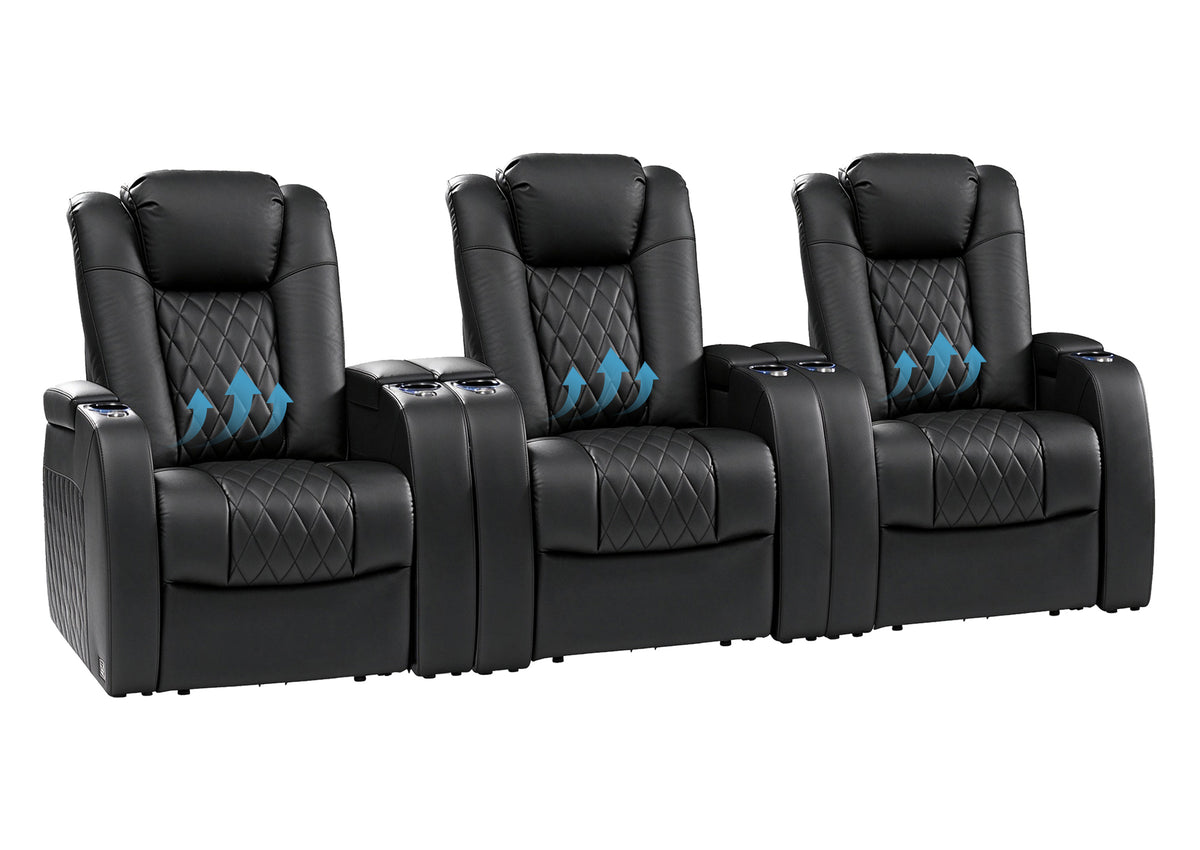
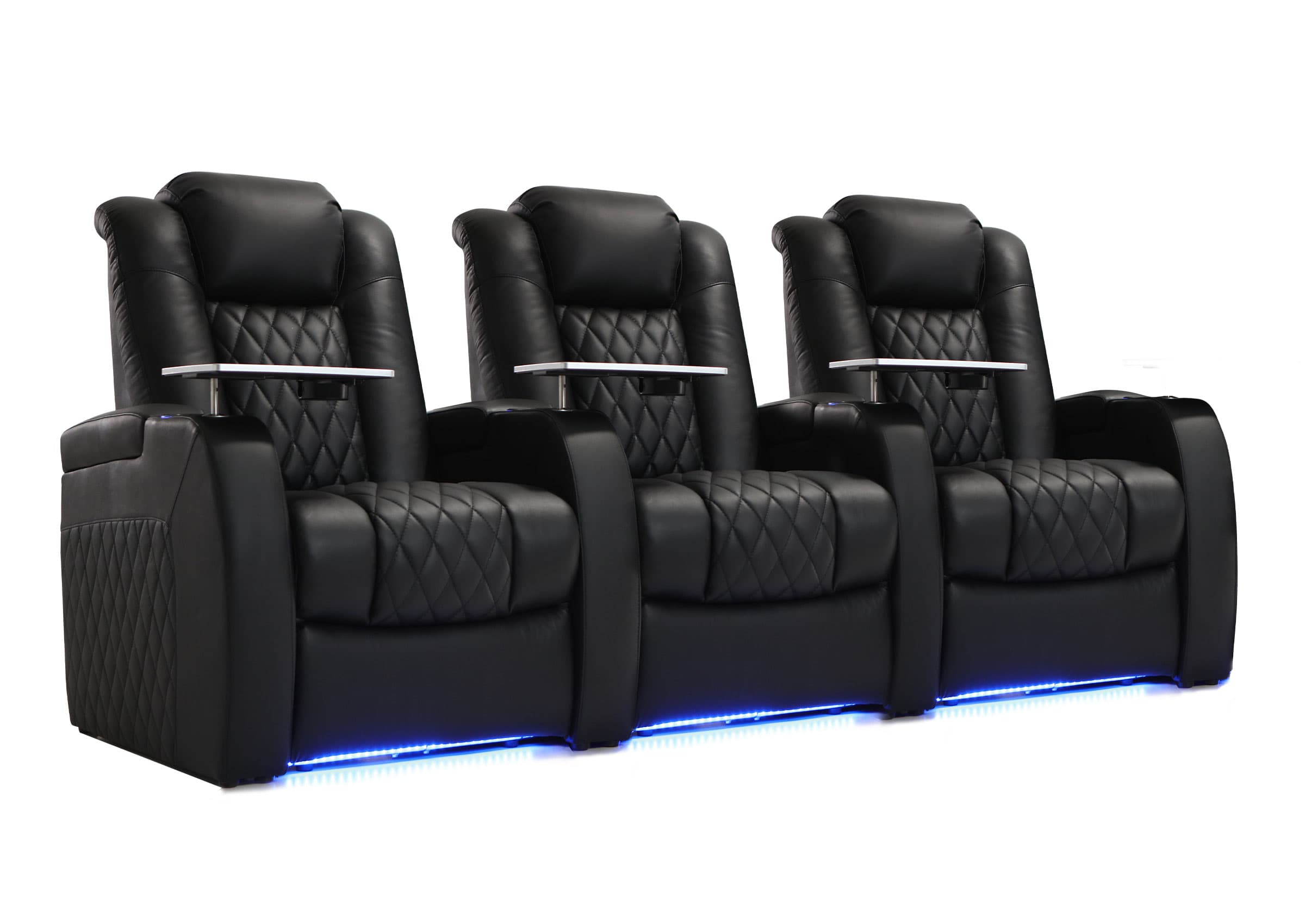

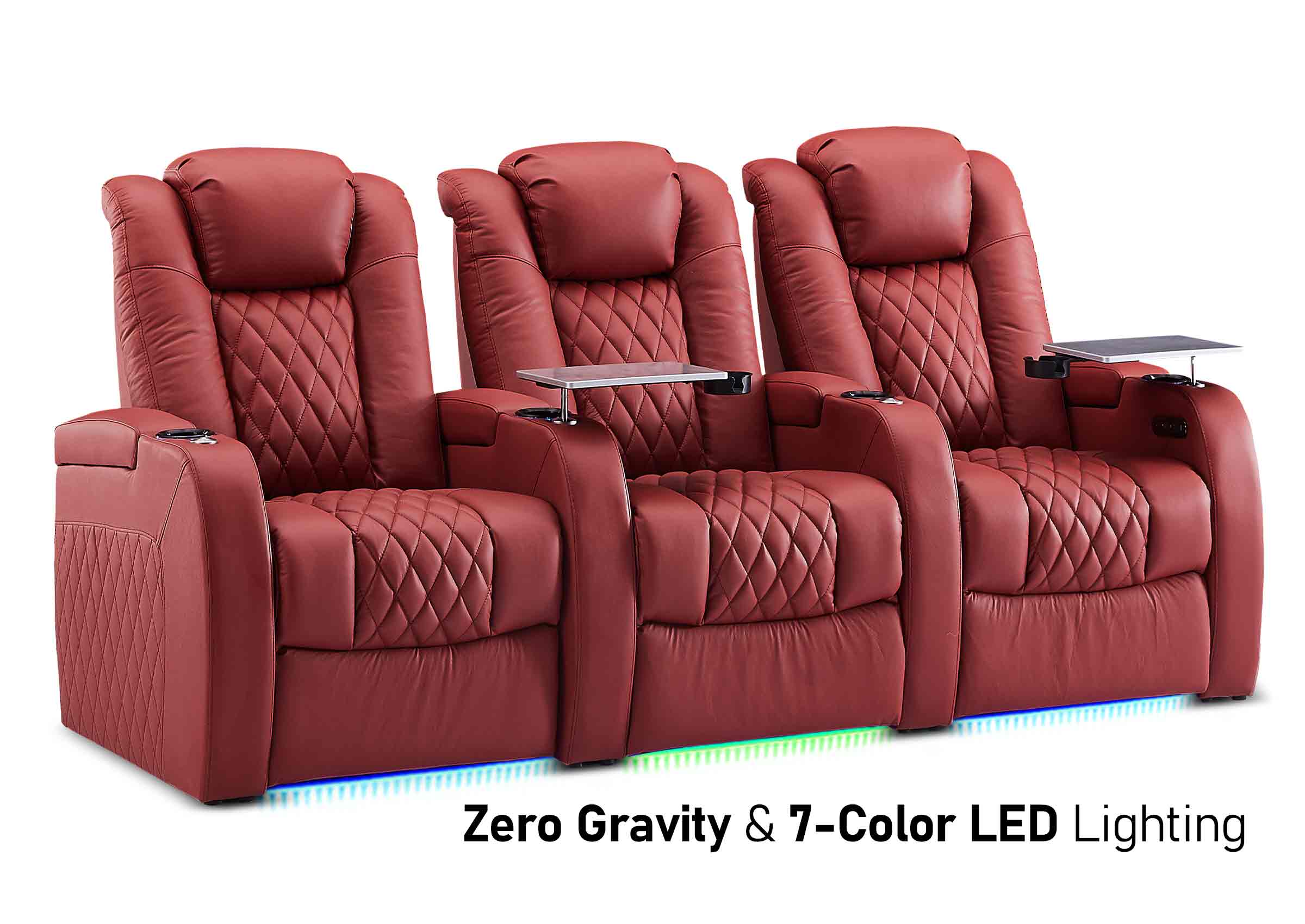



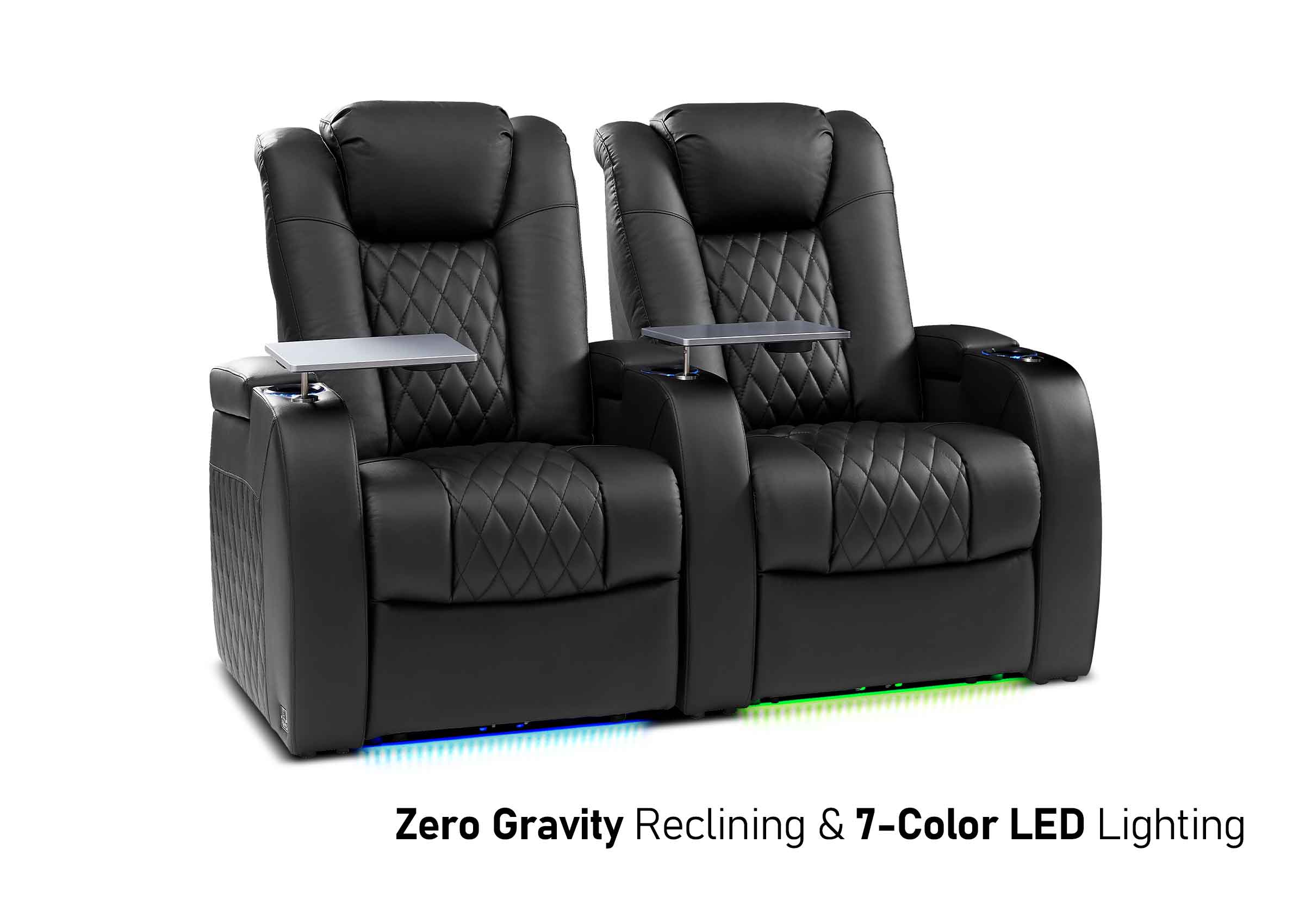
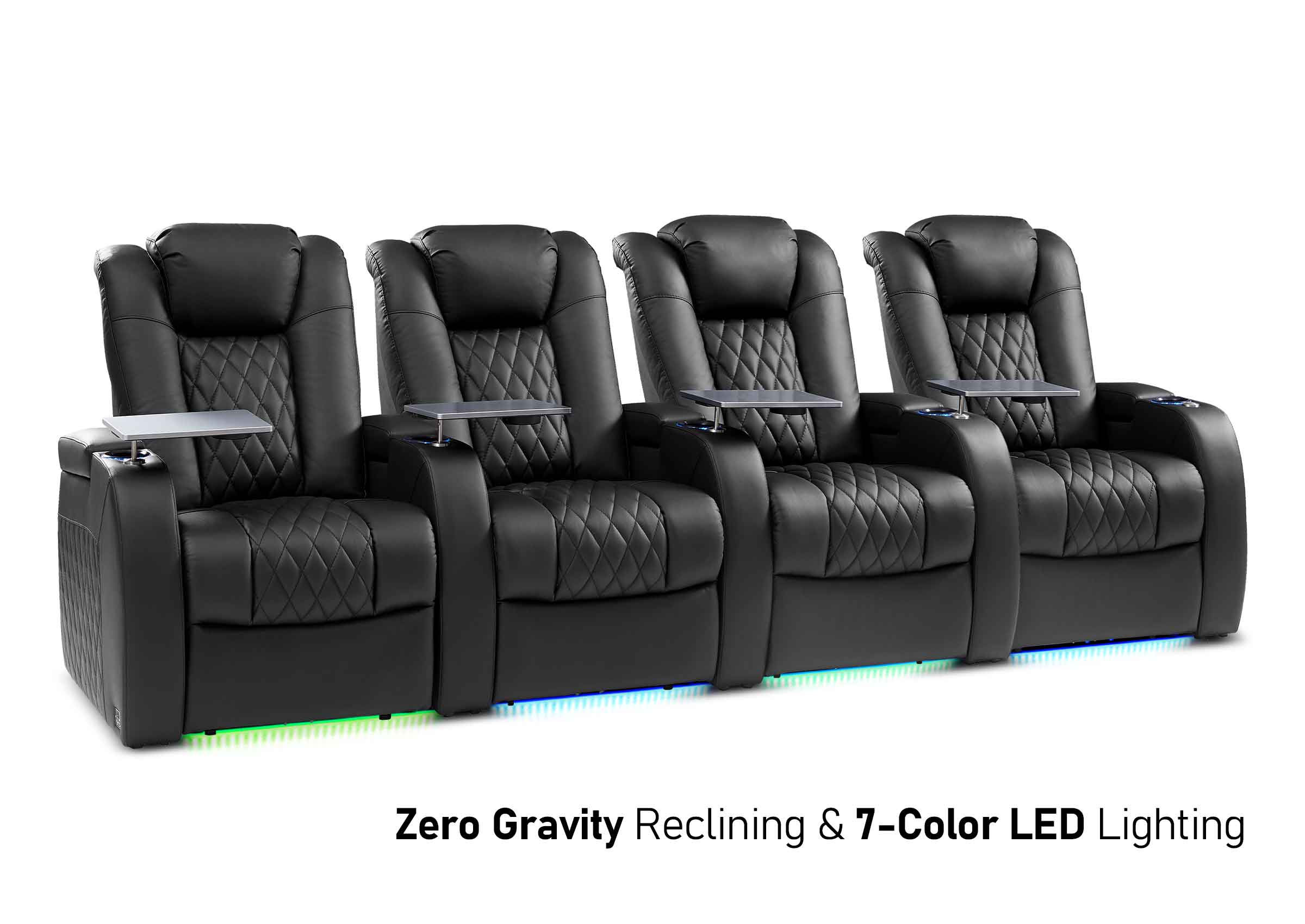




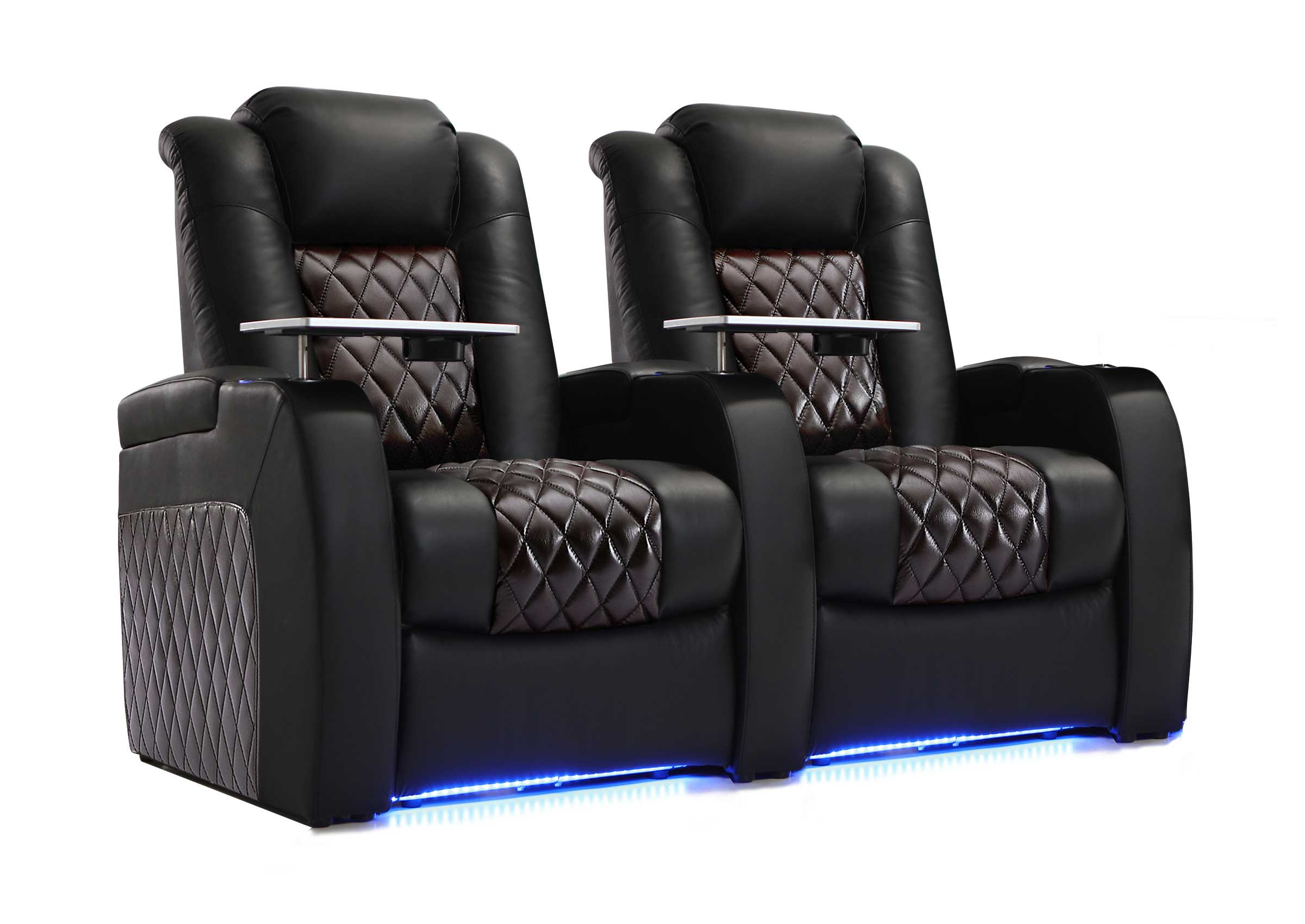
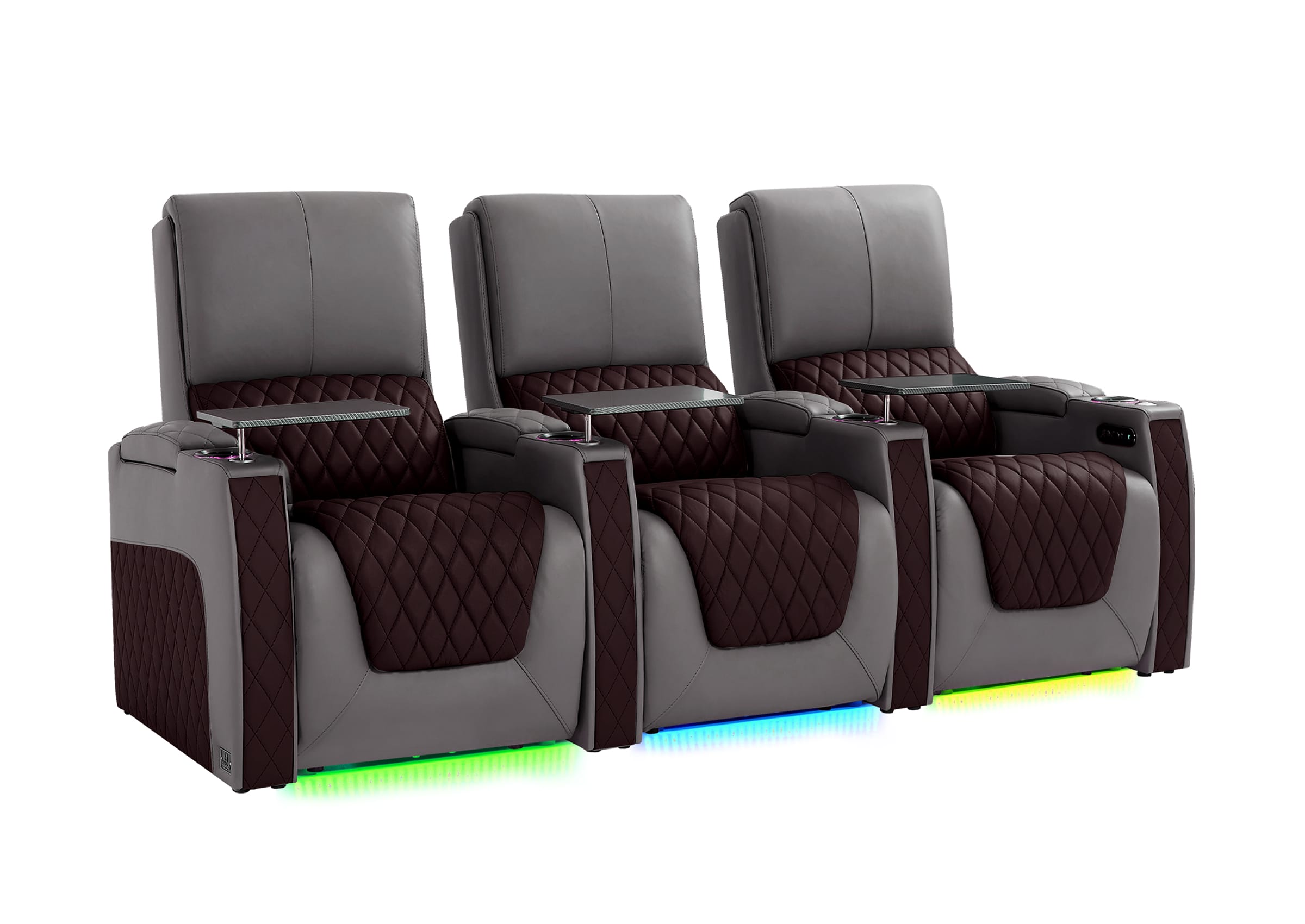
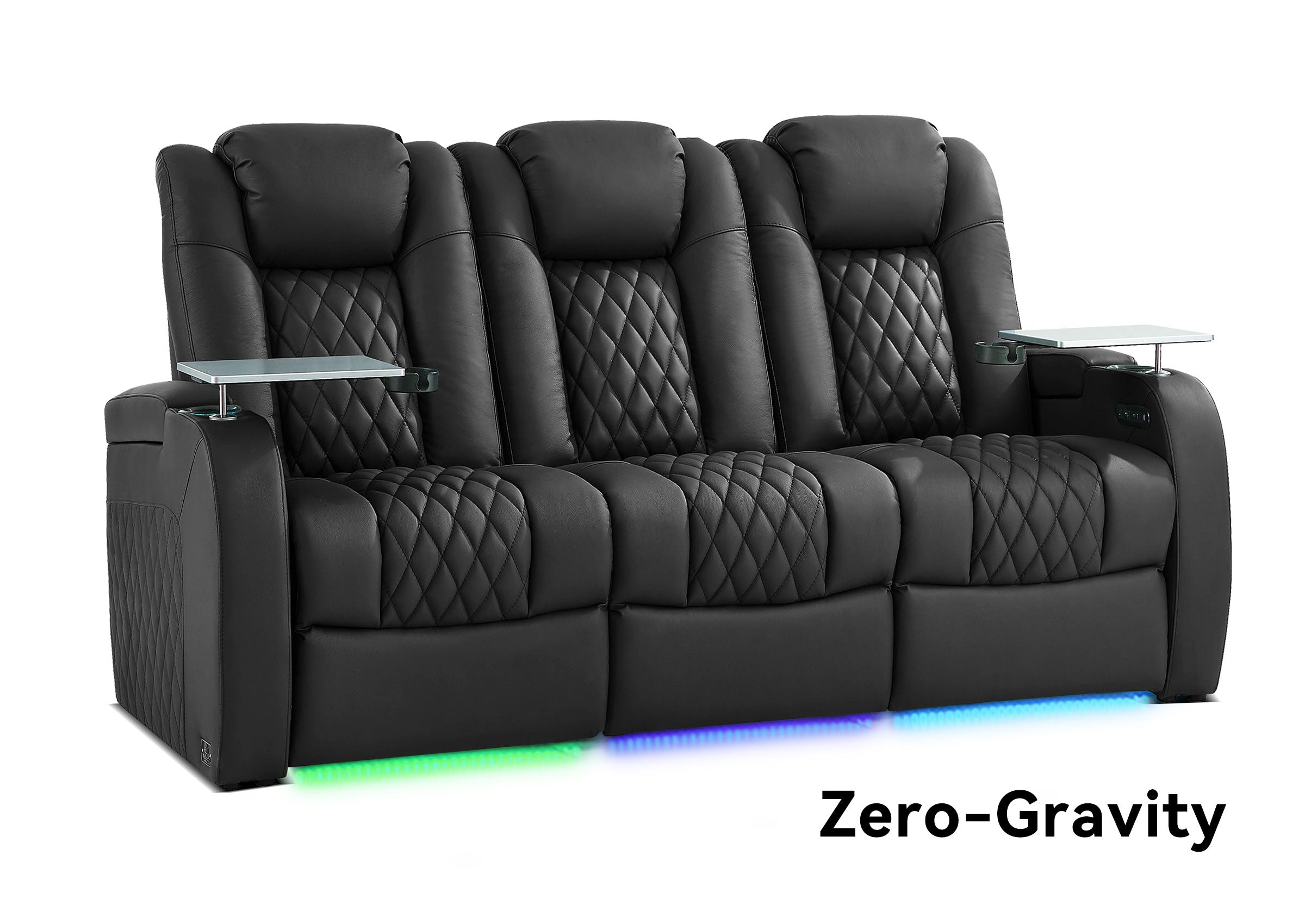


A two-row home theater creates a problem that most speaker-placement diagrams do not show.
A standard diagram has one main listening position. Add a second row—especially one on a riser—and there are now listeners at different distances, different ear heights, and different angles to the same surround and overhead speakers.
That means the goal is no longer to find one mathematically perfect speaker location.
It is to decide which row gets priority, how much compromise the other row can tolerate, and whether your processor and speaker layout can provide useful coverage to both.
For most two-row theaters, that decision should be made before permanent speakers are mounted and before room correction begins.
Choose the Primary Listening Row First
The first question is not where to mount the surround speakers.
It is:
Which row matters most?
Two rows can serve very different purposes.
Some theaters have a carefully positioned front row that is used almost every night and a second row mainly for guests. Others are designed for a family where both rows are regularly occupied. In some rooms, the elevated second row is actually the preferred viewing position.
Those rooms should not all use the same optimization strategy.
| How the theater is used | Sensible starting point |
|---|---|
| Front row is used most of the time | Treat the front row as the primary listening row |
| Rear row is the preferred row | Build the reference geometry around the rear row |
| Both rows are regularly occupied | Plan for broader multi-row coverage from the beginning |
| Second row is mainly overflow seating | Protect the primary row rather than compromising everything equally |
| Different rows matter for different uses | Consider whether the processor supports useful alternate presets after the physical layout is settled |
Audio Advice makes a similar distinction in its multi-row design guidance: once there is more than one row, the designer must decide how strongly the system should focus on the main row versus improving performance across all seats. See Audio Advice's speaker layout guidance.
This decision explains why apparently conflicting speaker-placement advice can all sound reasonable.
One recommendation may be optimizing a primary row.
Another may be trying to cover two rows with one surround pair.
A high-end theater may use additional independently rendered speaker positions.
They are solving different problems.
Do not choose the surround location until you know which problem you are solving.
Can One Pair of Side Surrounds Cover Two Rows?
Yes—but usually as a compromise.
A typical consumer system has one left side-surround channel and one right side-surround channel. With one seating row, positioning them relative to the main listening area is comparatively straightforward.
With two rows, the same pair has to serve listeners at different front-to-back positions.
If the speakers sit beside the front row, rear-row listeners may hear them mostly from ahead.
Move them too far toward the second row and the primary front row may lose the intended side presentation.
Place them somewhere between the rows and both rows may receive more balanced coverage, but neither necessarily gets the same geometry as a dedicated single-row reference position.
There is no universal “between the rows is always correct” rule.
The better question is:
Where can this one pair create the least harmful compromise across the seats that actually matter?
That depends on several variables:
- distance between the rows;
- width of each row;
- speaker dispersion;
- distance from the side walls to the nearest listeners;
- whether one row has priority;
- height difference created by the riser;
- seat-back and headrest height.
This is why copying a one-row diagram and simply placing a second row behind it often fails.
The diagram solved one listening position.
Your room now has a listening area.
If several seats or both rows are important, the related question becomes how much precision to preserve at one reference position versus how much consistency to seek across a larger area. Our guide to home theater sound across multiple seats covers that MLP and calibration decision separately.
Should the Side Surrounds Go Between the Two Rows?
Sometimes. But “between the rows” should be treated as a candidate location, not a rule.
If you only have one side-surround pair and both rows matter, a position between them can reduce the extreme front-to-back difference compared with placing the speakers directly beside one row.
But the physical midpoint between two sofas is not automatically the acoustic midpoint of the audience.
Imagine the front row has four regularly used seats while the second row has two occasional seats.
Putting the surrounds exactly halfway between the rows may give the occasional seats more influence over the design than they deserve.
Now imagine both rows are used equally.
A shared position becomes much easier to justify.
So instead of asking:
“Should the surrounds go between the rows?”
ask:
“Am I trying to create the best possible primary row, or the most acceptable shared coverage across both rows?”
The answer should determine where you begin testing.
When Do Two Rows Justify Two Pairs of Side Surrounds?
This is where a two-row theater can move beyond normal AVR design.
Kaleidescape's home-theater placement guide, developed with Trinnov, describes a high-performance two-row approach using one pair of side surrounds for each seating row. The purpose is to reduce reliance on phantom imaging over a larger listening area and improve spatial consistency for listeners away from the main listening position. See the Kaleidescape and Trinnov placement guidance.
That is an important idea—but it needs an equally important qualification:
Adding another physical pair of speakers is not automatically the same as adding another independently rendered pair of surround positions.
The processor has to support the speaker locations you are installing.
Dolby's extended home-theater guidance includes additional listener-level positions around the main side-surround location and notes that additional speakers can improve object-placement precision when the AVR or preprocessor supports them. Review Dolby's Atmos installation guidelines.
So before installing four side-surround speakers, check:
- whether the processor recognizes more than one discrete side-surround pair;
- what those outputs are called in the speaker-assignment menu;
- whether they are rendered independently;
- how many channels the processor can decode;
- how many channels the amplification stage can actually drive.
Do not assume that splitting one surround output into two physical speakers is acoustically equivalent to a processor rendering different audio information to two distinct speaker locations.
For many normal residential systems, one well-chosen surround pair may still be the more realistic design.
For advanced multi-row processors, additional positions can become part of a genuinely different spatial strategy.

Rear Surrounds Are Not “The Surrounds for the Second Row”
This distinction prevents a common two-row mistake.
In a 7.1-style listener-level layout, side surrounds and rear surrounds have different jobs.
Side surrounds help reproduce information beside the audience.
Rear surrounds preserve information coming from behind the audience.
Adding a second row does not turn the rear-surround channels into side surrounds for the people sitting there.
The Kaleidescape and Trinnov guidance is especially clear on this point: rear-surround positions belong behind the listening area because rear information is supposed to remain behind the audience.
That leads to a simple rule:
Side coverage problems should be solved as side coverage problems. Rear speakers should remain behind the audience.

If the rear row is so close to the back wall that the rear channels would end up almost beside or directly above the listeners, that is no longer simply a two-row speaker-placement problem. It is a rear-clearance constraint that deserves separate treatment. Our guide to surround speaker placement when seating is against the back wall covers that situation in more detail.
Do not distort the purpose of one channel just because another channel is difficult to place.
The Riser Changes More Than the View
A riser is usually discussed as a sightline solution.
Acoustically, it also changes the listener.
The second row is now physically higher than the first, so the ears in the two rows are no longer on the same horizontal plane.
That means a wall-mounted surround speaker has a different vertical relationship to each row.
Suppose you mount the side surrounds using only the front-row ear position.
Once listeners sit on an elevated rear row, those same speakers may be much closer to rear-row ear height than expected.
The reverse can also happen: choosing a high surround location simply to clear the first-row seats may place the speaker unnecessarily far above the second row.
Dolby's home-theater installation guidance treats the conventional speakers surrounding the listener as a distinct listener-level layer and recommends keeping that layer around the seated listener height where practical. It also emphasizes maintaining separation between the listener-level speakers and the overhead layer.
For a two-row theater, the practical lesson is:
Measure occupied ear height in both rows.
Do not base the speaker height only on:
- the room floor;
- the riser surface;
- the top of the chair;
- an arbitrary “surrounds should be X feet high” rule.
The acoustic reference is the people sitting in the room.
Do Not Raise the Surrounds Until They Become Height Speakers
A common response to two rows of high-backed theater seating is:
“I'll just mount the surrounds higher so everyone can hear them.”
A moderate height adjustment can be useful.
But there is a limit.
Atmos and other immersive layouts rely on a meaningful distinction between sounds around the listener and sounds above the listener. Dolby recommends maintaining useful vertical separation between the listener-level and overhead layers rather than moving the entire surround field toward the ceiling.
So if the front-row seats are blocking the sound path to the second row, do not automatically solve the problem by moving the listener-level speakers closer and closer to the ceiling.
First determine what is actually causing the obstruction:
- fixed seat-back height;
- raised adjustable headrests;
- speaker aiming;
- narrow speaker dispersion;
- side-wall mounting position;
- listener position while reclined.
Then decide whether a modest height change, different aiming, or a different wall position improves coverage.
If high backs or adjustable headrests are the main obstacle, see our guide to how high-back seating can affect surround sound rather than treating extra speaker height as the automatic solution.
The goal is not to make every listener-level speaker clear the furniture at any cost.
The goal is to preserve useful direct coverage without collapsing the distinction between the surround layer and the overhead layer.

Test the Seats in Their Real Movie-Watching Position
This is especially important with reclining theater seating.
A row may look acoustically clear when every chair is upright.
Then everyone reclines.
Heads move backward. Adjustable headrests rise. The direct path between a surround speaker and a listener can change.
The rear row may also interact differently with the front-row seats depending on the height of the riser and the seat backs.
So evaluate the room in at least two states:
Upright position
Useful for understanding the basic geometry.
Normal movie position
Useful for understanding where ears and headrests actually are during use.
You do not need to redesign the system around every possible recline angle.
But if the normal viewing position changes the listener's head location enough to alter the direct speaker path, that deserves attention before the speakers become permanent.
This is a furniture variable that many simple speaker-placement diagrams cannot show.
How Should Dolby Atmos Speakers Work With Two Rows?
Two rows make Atmos planning harder for the same reason they make side-surround placement harder:
the listening area becomes longer.
Dolby's home-theater installation guidance recommends keeping the overhead arrangement related to the listening area and maintaining clear separation from the listener-level layer. Speaker dispersion and aiming also matter when overhead speakers are expected to cover more than one seating position.
With one primary row, the solution is relatively straightforward:
build the Atmos geometry around the primary listening area.
With two equally important rows, you face another version of the same tradeoff seen at listener level:
precision for one row versus coverage across a larger audience.
Audio Advice similarly notes that standard layout examples tend to focus on one seating row and that multi-row theaters require decisions about how much to optimize the main row versus all seats.
This is why a new universal “two-row Atmos angle chart” would not solve the underlying problem.
The more useful process is:
- establish the primary listening row or shared listening area;
- confirm where listener-level speakers can provide good coverage;
- preserve a distinct overhead layer above that area;
- confirm the overhead speakers' dispersion can reach the listeners you want to serve;
- only then finalize ceiling positions.
If you already have an Atmos system, do not move the overhead speakers simply because you added chairs.
Ask whether the added row has materially changed the listening area you are trying to cover.
For the standard 5.1.2, 5.1.4, 7.1.2, and 7.1.4 placement logic itself, use our Dolby Atmos home theater setup guide. The two-row question is how that geometry should serve a larger seating area, not how to rebuild the Atmos system from scratch.

PLAN THE ROWS BEFORE THE SPEAKERS
Still Finalizing Your Two-Row Seating Layout?
Confirm the seat count, row positions, riser relationship, and everyday listening area before permanent speaker locations are locked in.
The Second Row Does Not Automatically Become the Main Row Because It Is Elevated
An elevated rear row can feel special.
It often has an unobstructed view and may look like the obvious “premium” seating position.
That does not automatically make it the acoustic reference.
The primary row should be the row you deliberately want the system to prioritize.
Consider:
- how often each row is used;
- distance to the screen;
- distance to the rear wall;
- proximity to surrounds and rear surrounds;
- whether the elevated row changes the intended overhead geometry;
- whether the processor's calibration strategy is built around one reference position.
A rear row pushed close to the back wall can actually involve more compromises than the front row, despite the better sightline.
Likewise, a front row positioned for ideal screen immersion may also give you better space behind the listeners for surround design.
Choose the primary row because of the whole room—not because one row is higher.
Calibration Cannot Decide Your Two-Row Layout for You
Automatic room correction is useful after the physical system is sensible.
It should not be asked to solve the design question.
Calibration may adjust:
- channel levels;
- delays;
- distance-related timing;
- frequency response;
- system-specific room-correction filters.
It cannot:
- move a side surround from the wrong part of the wall;
- create a second independently rendered surround pair;
- place a rear speaker behind a listener who is sitting against the wall;
- create a clear sound path through a tall headrest;
- restore vertical separation if the surround and Atmos layers have been mounted too close together.
So the order should be:
primary row → physical coverage → speaker height and aiming → processor capability → permanent installation → calibration
not:
mount everything → run calibration → hope both rows work
This distinction becomes especially important when both rows matter equally.
Room correction can improve a good compromise.
It cannot turn fundamentally different geometry into identical seats.
Once the physical layout is settled, the multi-seat calibration guide explains how to choose a main listening position and define the measurement area without treating every seat as an identical reference point.
Check the Processor Before You Add More Speakers
This may be the most important technical check in the entire project.
High-performance multi-row designs can include more speaker positions than a normal AVR can independently render.
Dolby's expanded Atmos architecture supports additional listener-level speaker positions, but the additional locations still depend on the capabilities of the AVR or preprocessor.
Before buying extra surrounds or cutting additional openings, check the current manual for your exact processor.
Confirm:
- maximum decoded channels;
- supported speaker assignments;
- available amplifier channels;
- whether additional surrounds are independently addressed;
- whether those channels are available simultaneously with your chosen Atmos layout.
A speaker location can make perfect sense acoustically and still be useless if the electronics cannot address it as intended.
Design the speaker count around both the room and the processor—not either one in isolation.
Test Both Rows Before the Installation Becomes Permanent
Paper diagrams are useful.
Temporary listening is better.
Before permanently cutting the wall or ceiling, test the most uncertain speaker positions when practical.
For wall-mounted or conventional speakers, temporary stands or provisional mounting locations can help. For planned in-wall or in-ceiling speakers, tape marks, laser lines, room drawings, and speaker dispersion information can at least help verify that the proposed position makes geometric sense before construction.
Then sit in:
- the primary center seat;
- an outside seat in the primary row;
- the center of the second row;
- an outside second-row seat.
Listen for obvious problems rather than tiny differences.
Surround Proximity
Does one listener hear a nearby speaker as a separate loudspeaker instead of part of the surround field?
Front-to-Back Movement
When an effect travels along the side or toward the back, does the transition remain believable from both rows?
Rear Definition
Do rear effects still sound behind the second row, or have the rear speakers become too close or too high?
Height Separation
Can you distinguish the surround layer around you from the Atmos layer above you?
Seat Obstruction
Do headrests or occupied seat backs noticeably change the sound when people sit normally?
Do not expect every seat to sound identical.
The useful goal is to find obvious failures before the holes become permanent.
A Two-Row Speaker Placement Decision Table
Use this as a planning checkpoint rather than a fixed installation chart.
| Your situation | What to prioritize |
|---|---|
| One row is clearly used more often | Build the main speaker geometry around that row |
| Both rows are used regularly | Evaluate broader coverage instead of optimizing only one chair |
| You have only one side-surround pair | Test the best shared compromise before mounting permanently |
| Advanced processor supports additional discrete side surrounds | Consider whether a pair per row improves coverage |
| Rear row is on a riser | Measure occupied ear height in both rows |
| Front-row headrests interrupt the sound path | Check aiming, dispersion, and moderate height changes before raising surrounds excessively |
| Rear row is very close to the back wall | Treat rear-channel clearance as a separate room constraint |
| Atmos speakers are being added | Define the listening area before finalizing overhead locations |
| More speakers are being considered | Verify processor assignments and channel capacity first |
| Room correction has not been run yet | Finalize physical geometry before calibration |
The common thread is simple:
the row count does not determine the speaker location by itself. The listening priority and coverage problem do.
What If You Are Still Planning the Two Rows?
If you have not yet decided the row spacing, riser, aisle, screen distance, or total number of seats, finish those decisions before treating speaker placement as final.
Those seating and room-fit questions belong to a different planning step. The home theater seating layout guide can help establish the physical row arrangement before you lock in the speaker positions.
Moving a proposed chair in a floor plan is easy.
Moving an in-wall surround after the drywall is finished is not.
At the same time, do not design the seating and speakers as completely separate projects.
A row can fit perfectly according to the furniture dimensions and still create a poor speaker location.
A speaker can satisfy a diagram and still sit directly beside someone's head.
A riser can fix a sightline and simultaneously change the ear height that your surround layout assumed.
That is why the most useful planning sequence is iterative:
rough seating layout → rough speaker layout → check ear positions and coverage → adjust both → finalize construction
not:
finish the seating plan completely → find whatever wall space remains for speakers
For a larger private theater where two rows, riser geometry, fixed speaker locations, access paths, and seating configuration all need to be coordinated before construction is finalized, you can also explore private theater seating project options. This is most relevant when the seating plan is part of a broader room project rather than a simple furniture replacement.
Frequently Asked Questions
Should surround speakers go beside the first row or second row?
If one row is clearly the primary listening row, start by optimizing that row. If both rows matter and you have only one pair of side surrounds, test positions that provide reasonable shared coverage rather than assuming one row must always determine the location.
Should side surrounds be placed between two rows of seats?
They can be, especially when one pair needs to serve both rows, but the midpoint is not a universal rule. Row priority, row spacing, speaker dispersion, ear height, and distance to the closest seats all matter.
Do I need two pairs of side surrounds for two rows?
Not necessarily. High-performance multi-row systems can benefit from additional independently rendered surround positions, but the processor must support them. Many two-row theaters will instead use one surround pair and accept a deliberate coverage compromise.
Where should rear surround speakers go with two rows?
Rear surrounds should remain behind the listening area rather than being moved beside the second row to compensate for weak side coverage. Their purpose is to preserve sound coming from behind the audience.
How high should surround speakers be when the rear row is on a riser?
There is no single wall height that works for every two-row theater. Measure the occupied ear height in both rows and preserve useful separation between the listener-level surround layer and the Atmos or overhead layer.
Should Atmos speakers be centered over the first row or both rows?
If one row is the clear priority, it can serve as the primary reference. If both rows matter, treat them as a larger listening area and evaluate overhead coverage accordingly. Speaker dispersion, ceiling height, and processor configuration also affect the result.
Can room correction fix uneven sound between two rows?
It can improve level, delay, and frequency-response differences within the capabilities of the system, but it cannot correct poor physical speaker coverage, blocked sound paths, unsupported speaker positions, or a rear row with no usable space behind it.
The Best Two-Row Layout Starts With a Priority, Not an Angle
Two rows do not require you to make every seat acoustically equal.
In most real theaters, that is not possible.
What you can do is make the compromise deliberate.
Decide which row matters most—or whether both genuinely deserve similar coverage.
Then evaluate whether one side-surround pair can serve that goal or whether the room and processor justify additional positions.
Measure the actual ear heights created by the riser.
Keep rear surrounds behind the audience.
Protect the distinction between listener-level surrounds and the Atmos layer.
Check high-backed seats in the position people really use.
And confirm the processor can support every speaker position before you build around it.
A good two-row theater is not the one with the most speakers.
It is the one where the speaker system, the seating rows, and the electronics are all solving the same listening problem.