






















True soundproofing for a home theater room means blocking noise from leaving the room or entering from outside, which requires structural changes focused on mass, damping, and decoupling. Many enthusiasts buy acoustic foam or panels hoping to stop sound leakage to bedrooms or living areas, but these only treat reflections inside the room and deliver almost no isolation benefit. The right first step depends on whether you are building new or retrofitting an existing space, whether your biggest issue is speech and effects or deep bass vibration, and how much budget you can allocate to invisible construction before investing in premium seating and AV gear.

Soundproofing vs Acoustic Treatment: Understanding the Difference
Why can't I just hang acoustic panels to stop my neighbors from hearing my movie? The distinction is critical because the two approaches solve completely different problems and use entirely different performance metrics. Soundproofing, more accurately called sound isolation, stops sound from traveling between rooms and is rated by Sound Transmission Class (STC), a laboratory measure of how well a barrier blocks airborne sound across frequencies. Acoustic treatment, by contrast, controls how sound behaves inside the room by absorbing or diffusing reflections and is rated by Noise Reduction Coefficient (NRC), which indicates absorption efficiency on a 0–1 scale.
According to ASTM standards for sound transmission and absorption, these are governed by separate test methods (E90 for transmission loss and C423 for absorption). Confusing them leads to the common and expensive mistake of covering walls with thin foam expecting quieter adjacent rooms, when the foam only shortens reverberation time inside the theater itself. Effective isolation almost always requires construction-level modifications to walls, floors, ceilings, and openings, whereas treatment is largely a surface-level addition that can be installed after the room is sealed.
For most new theater projects, address isolation first so the room stays quiet and respectful of the rest of the household. Only then layer in the right mix of acoustic panels, diffusers, and bass traps to create balanced, immersive sound.
How Sound Leaks Out of a Home Theater Room
How is sound escaping my room if the door is closed? In practice, sound finds every available path, and the weakest link determines the overall performance. Airborne noise such as dialogue, explosions, and high-frequency effects travels through any air gaps, thin walls, vents, or unsealed electrical boxes. Structure-borne noise, especially the powerful low-frequency rumble from subwoofers or even footsteps, travels through the physical framing, studs, and floor joists of the house like a tuning fork.
Standard residential construction is designed for basic privacy, not the 100 dB peaks common in modern soundtracks. A typical interior wall might only achieve an STC around 30–35, allowing loud speech or bass to remain clearly audible in the next room. As this guide to soundproofing HVAC in home theaters explains, HVAC ducts frequently act as “sound chimneys,” carrying noise throughout the house unless properly treated with baffles or lined ductwork.
The weakest-link principle means that even a well-built wall assembly can be undermined by one unsealed door gap or penetration. This is why many homeowners who spend heavily on walls still hear their theater in adjacent spaces. Understanding these transmission paths helps you prioritize upgrades that deliver the highest return before touching premium home theater seating or projectors.

How to Soundproof Home Theater Walls
What is the most effective way to build a soundproof wall for a theater? The highest-impact strategy follows a proven engineering trinity: adding mass, introducing damping, and breaking vibration paths through decoupling. A baseline 2×4 stud wall with single-layer drywall typically starts around STC 34. Adding a second layer of 5/8-inch drywall can improve that by a few points, but the real gains come when you add a viscoelastic damping compound between the layers and, most importantly, decouple the finished wall surface from the structure.
Decoupling is usually the single biggest lever. Resilient sound isolation clips (often called RSIC) or hat channels create an air gap that interrupts structure-borne vibration, allowing many single-stud assemblies to reach effective isolation in the STC 55–60 range in controlled conditions. Double-stud walls with staggered or separate framing can exceed that but consume 8–12 inches of floor space and are usually practical only in new construction. These numbers are assembly-dependent and should be viewed as planning benchmarks rather than guaranteed outcomes, because flanking paths through floors, ceilings, or doors can reduce real-world performance.
Here is a practical comparison of common approaches:
- Single-stud + single drywall: Low isolation, minimal cost and space. Suitable only for light background noise.
- Single-stud + double drywall + damping compound: Medium isolation. Good balance for many retrofits when combined with decoupling clips.
- Decoupled single-stud with RSIC clips: High isolation with moderate space loss. Often the best ROI for dedicated theaters.
- Double-stud or independent walls: Very high isolation but significant space penalty. Best for new builds where maximum bass containment is required.
If your primary concern is deep bass under 100 Hz, decoupling and substantial mass become even more important because low frequencies transmit efficiently through structure.

How to Soundproof a Home Theater Floor and Ceiling
How do I stop my subwoofer from shaking the whole house? Floors and ceilings require attention to both airborne sound (STC) and impact or vibration noise (measured by Impact Isolation Class, or IIC). Subwoofer energy and footsteps are primarily structure-borne, so simply adding mass is rarely enough; you must break the mechanical connection.
For ceilings, resilient isolation clips combined with hat channels and two layers of drywall plus insulation can significantly reduce noise transmission to rooms above. On floors, especially in basement theaters, a heavy rubber or cork underlayment beneath the finished floor helps damp vibration. Concrete slabs offer excellent mass for isolation but often need additional thermal and moisture control, and they transmit impact differently than wood-framed floors.
IIC ratings matter as much as STC when the theater sits above living spaces. The HUD Noise Guidebook provides useful context on these metrics and why impact noise often demands different solutions than dialogue. In retrofit situations, focus first on sealing the perimeter and adding underlayment or ceiling treatments before attempting full structural decoupling.
Soundproofing Doors and Windows in a Home Theater
What are the most common “leaks” people forget to seal? Doors and windows frequently become the dominant weak points, often rendering expensive wall work ineffective. A standard hollow-core door provides almost no resistance; upgrading to a solid-core door is the minimum, but a true acoustic door with perimeter gaskets and an automatic drop-down bottom seal delivers far better results.
Windows in a dedicated theater are best sealed or covered with heavy acoustic inserts or plugs, since glass is an efficient transmitter. Electrical boxes placed back-to-back between rooms should be sealed with putty pads, and all wall perimeters must use non-hardening acoustic caulk rather than standard painter’s caulk.
HVAC penetrations deserve special attention. As noted earlier, ducts can channel sound unless you install internal baffles, lined ductwork, or a zigzag soffit design that forces sound to lose energy. The practical rule is to address these gaps and penetrations before investing in complex wall or ceiling assemblies, because a 1% unsealed opening can cut overall isolation effectiveness dramatically. Sealing first often provides the highest return on investment and prevents regret after major construction is complete.

What Doesn't Work: Common Soundproofing Myths
What should I avoid spending money on when soundproofing a theater? Many readily available products promise dramatic results but deliver little or no isolation benefit. Egg cartons are a classic example: they are flammable, offer negligible absorption, and provide zero sound transmission loss. Thin acoustic foam or egg-crate panels are designed for NRC absorption inside the room and will not stop bass or dialogue from reaching other parts of the house, as clearly explained in analyses of sound absorption versus transmission loss.
“Soundproof” paint adds only a tiny fraction of mass and produces no meaningful STC improvement. Heavy curtains or decorative wall hangings can help control internal reflections and may even complement your seating fabric choices, but they cannot contain low-frequency energy.
Spending on these items before addressing real transmission paths is one of the most common sources of buyer regret. Focus first on sealing, mass, and decoupling; reserve surface treatments for the final acoustic tuning stage.
Choosing Your Next Step: DIY vs. Professional Installation
Should I soundproof my home theater room myself or hire a professional? The answer depends on the scope, your skill level, and how critical total isolation is to your household. Many homeowners can successfully handle the high-ROI early steps: installing automatic door bottoms, applying acoustic sealant, adding putty pads to electrical boxes, and hanging mass-loaded vinyl or basic decoupling clips. These measures often reduce complaints enough that further work becomes optional.
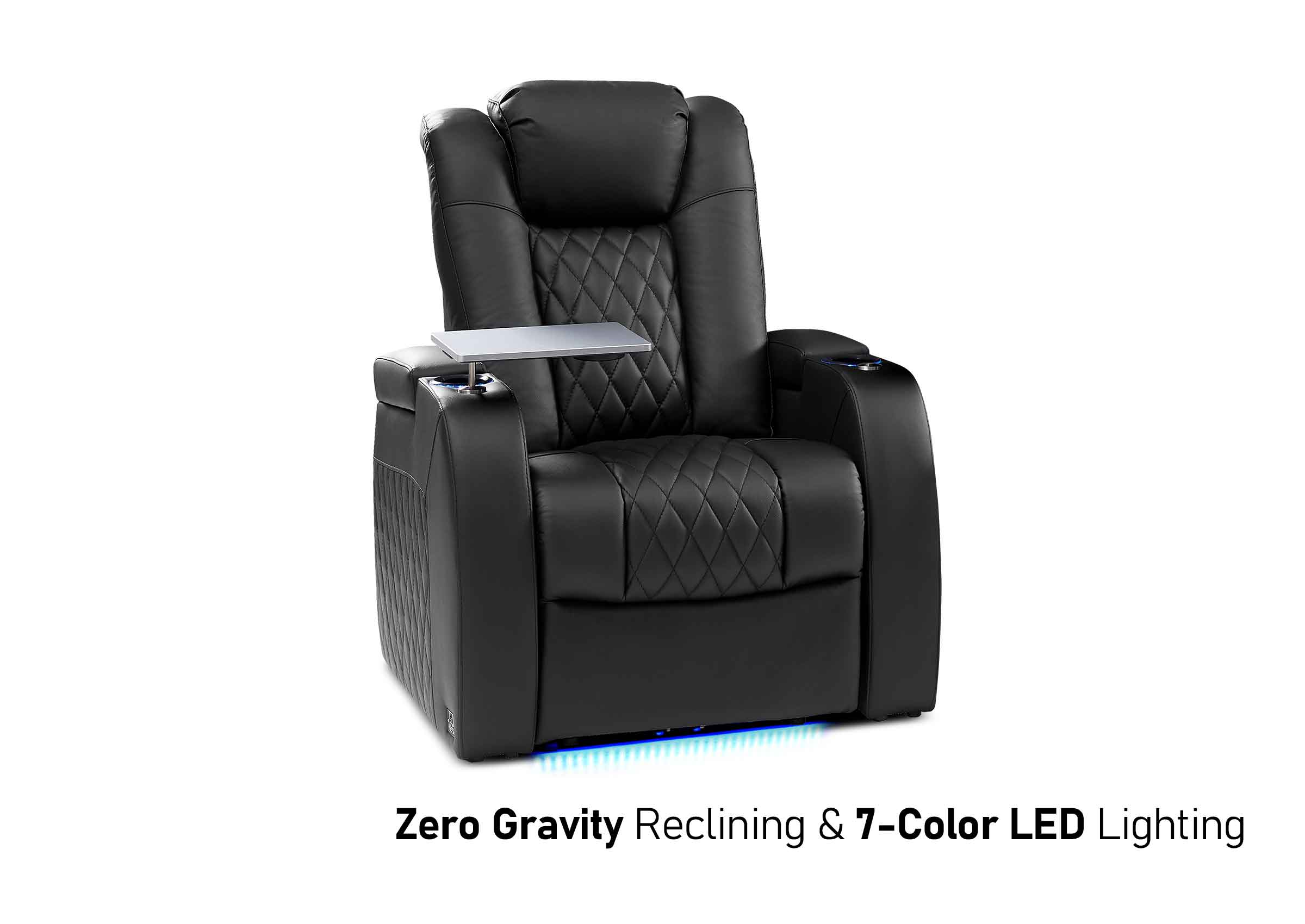
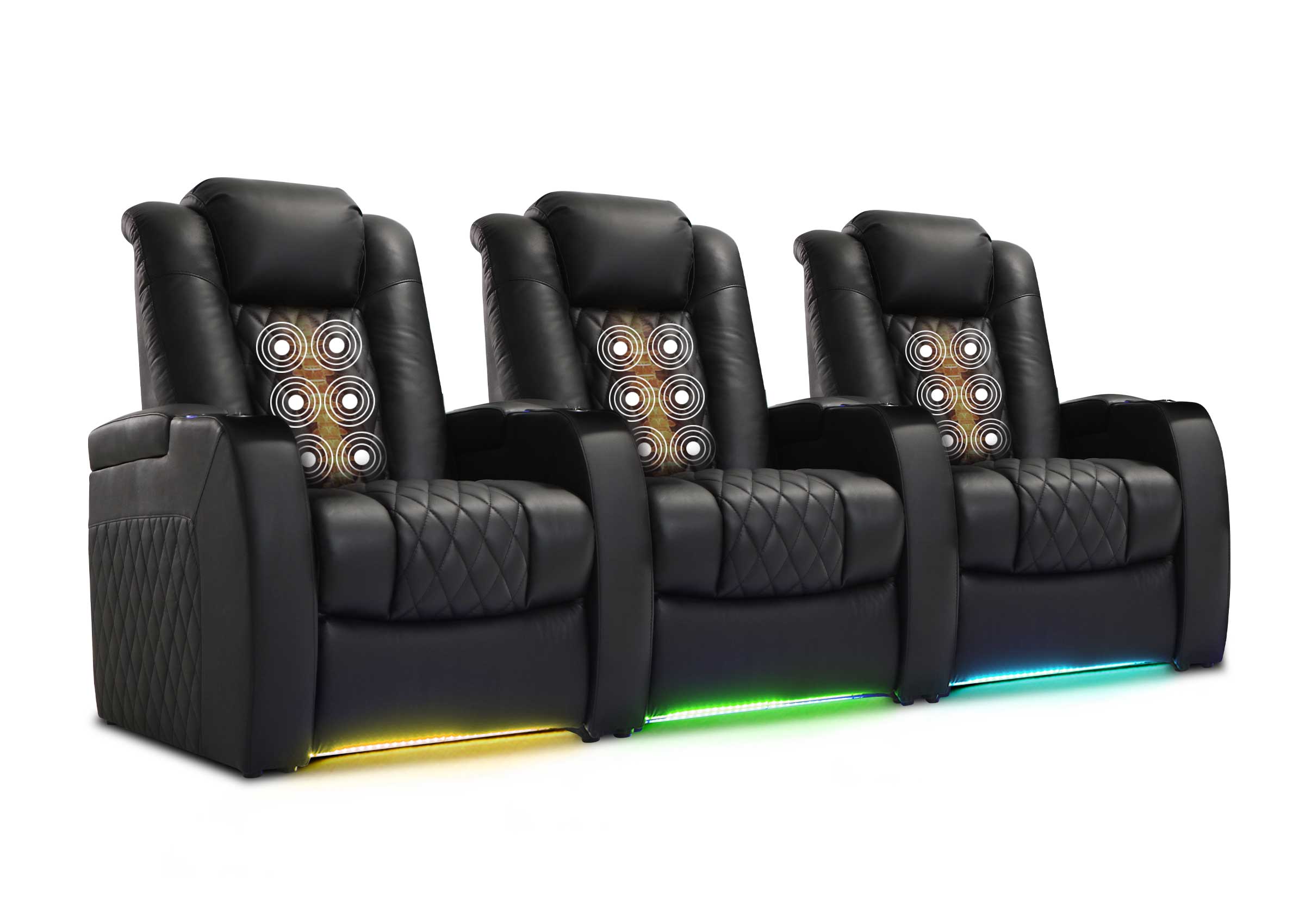
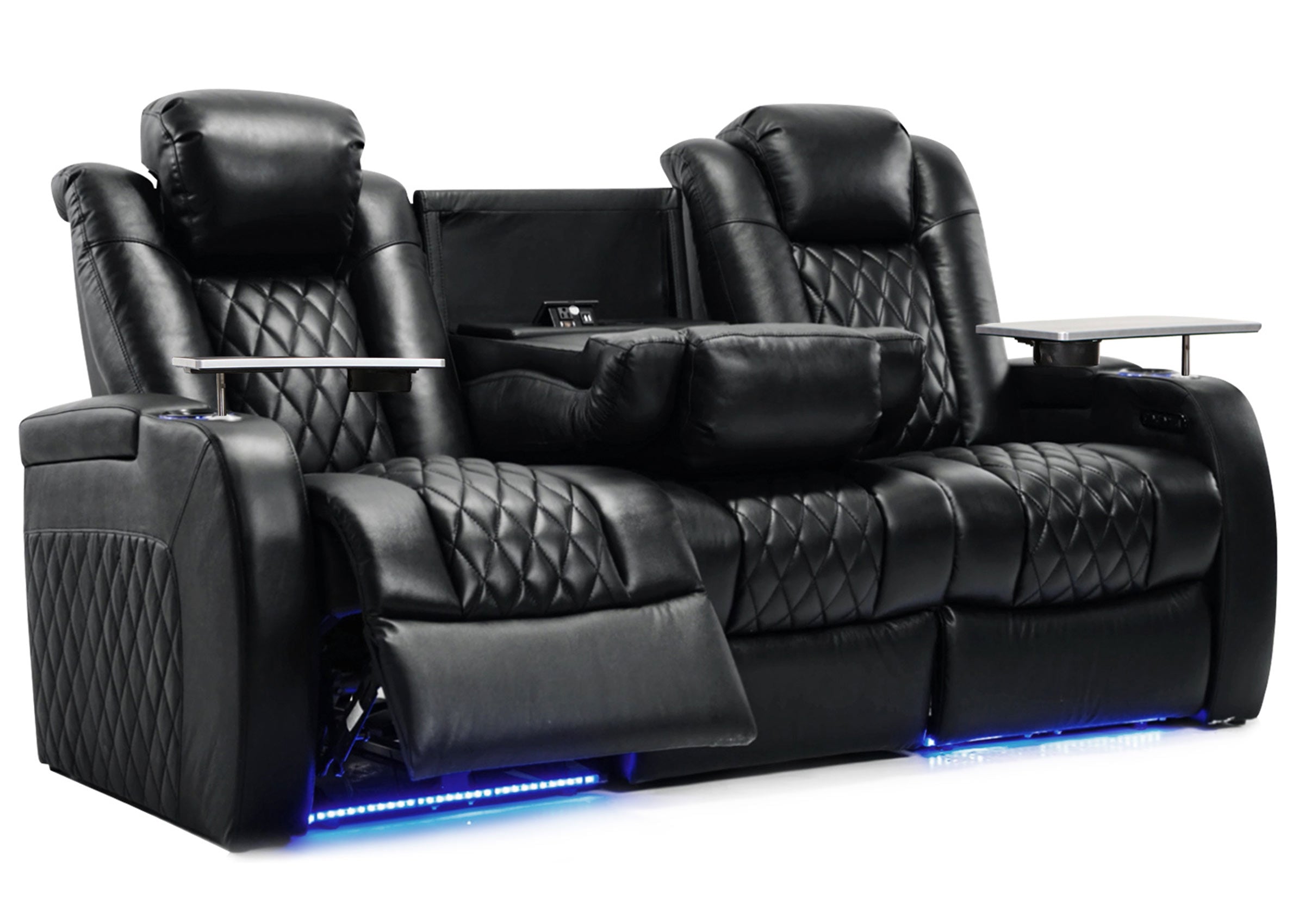
Structural decoupling, double-stud walls, HVAC redesign, or major ceiling work usually requires experienced contractors to maintain building codes, structural integrity, and proper ventilation. Always consult professionals for any electrical, load-bearing, or HVAC modifications. A quiet room dramatically increases the enjoyment of premium home theater seating. Once isolation is in place, the immersive experience of zero-gravity recliners with power lumbar, ambient lighting, and storage becomes far more satisfying because external distractions and internal reflections no longer compete with the soundtrack.
Use this quick decision checklist before buying materials or calling contractors:
- Seal all gaps, doors, and penetrations first.
- Add mass and damping to walls and ceilings second.
- Decouple from the structure third.
- Install acoustic treatment only after isolation targets are met.
- Budget for professional help on any change that affects structure, fire safety, or HVAC.
If you are planning a full basement conversion, review our detailed cost breakdown in how much it would cost to build a home theater in the basement to align construction and furnishing budgets realistically.

How Much Does Soundproofing a Home Theater Room Typically Cost?
Costs vary widely based on room size, whether you are retrofitting or building new, and how many weak points must be addressed. Basic DIY sealing, door upgrades, and surface mass can run a few hundred to a couple thousand dollars. Adding resilient clips, extra drywall layers, damping compound, and insulation across all surfaces often lands between $4,000 and $12,000 for an average dedicated theater, with professional labor pushing the upper end higher. Full decoupling and double-stud construction in a new build can exceed $15,000 but delivers the highest isolation for serious bass-heavy systems.
The key is sequencing: spend on sealing and doors before committing to full wall rebuilds. Many find that addressing the weakest links first brings the room to an acceptable level without reaching the most expensive structural options. Pairing a well-isolated room with high-quality home theater seating such as the AstroUltra or FortLux series ensures your investment in silence translates into years of comfortable, uninterrupted viewing.
FAQs
Can Acoustic Treatment Replace Soundproofing?
No. Acoustic treatment improves clarity and reduces echoes inside the theater but does almost nothing to prevent sound from transmitting to other rooms. You need both: isolation first, then treatment. Using panels alone is one of the most frequent reasons homeowners remain frustrated after their initial upgrades.
Is It Possible to Soundproof an Existing Room Without Major Construction?
Yes, but results are limited. Adding mass-loaded vinyl, resilient channels where accessible, solid-core doors with seals, and thorough gap sealing can reduce leakage noticeably. Deep bass containment usually still requires some decoupling or professional intervention. Set realistic expectations and test with a sound-level meter before and after each stage.
How Important Is Sealing Gaps Compared to Adding Mass to Walls?
Extremely important. A small unsealed gap or poorly sealed door can halve the effectiveness of an otherwise excellent wall assembly. Professionals often recommend spending the first 20–30% of the budget on sealing before touching drywall or clips.
Does Soundproofing Also Improve the Movie-Watching Experience Inside the Room?
Indirectly, yes. Once the room is isolated, adding the right acoustic treatment produces tighter bass, clearer dialogue, and more consistent imaging because external noise and excessive reflections no longer interfere. The two work together but are not interchangeable.
When Should I Hire a Professional Instead of DIY Soundproofing?
Hire professionals when the project involves structural changes, HVAC redesign, load-bearing modifications, or when you need guaranteed results for a shared-wall apartment or townhouse. DIY works well for surface sealing, door upgrades, and basic decoupling in accessible areas, but complex assemblies benefit from experienced labor to avoid costly mistakes or code violations.