



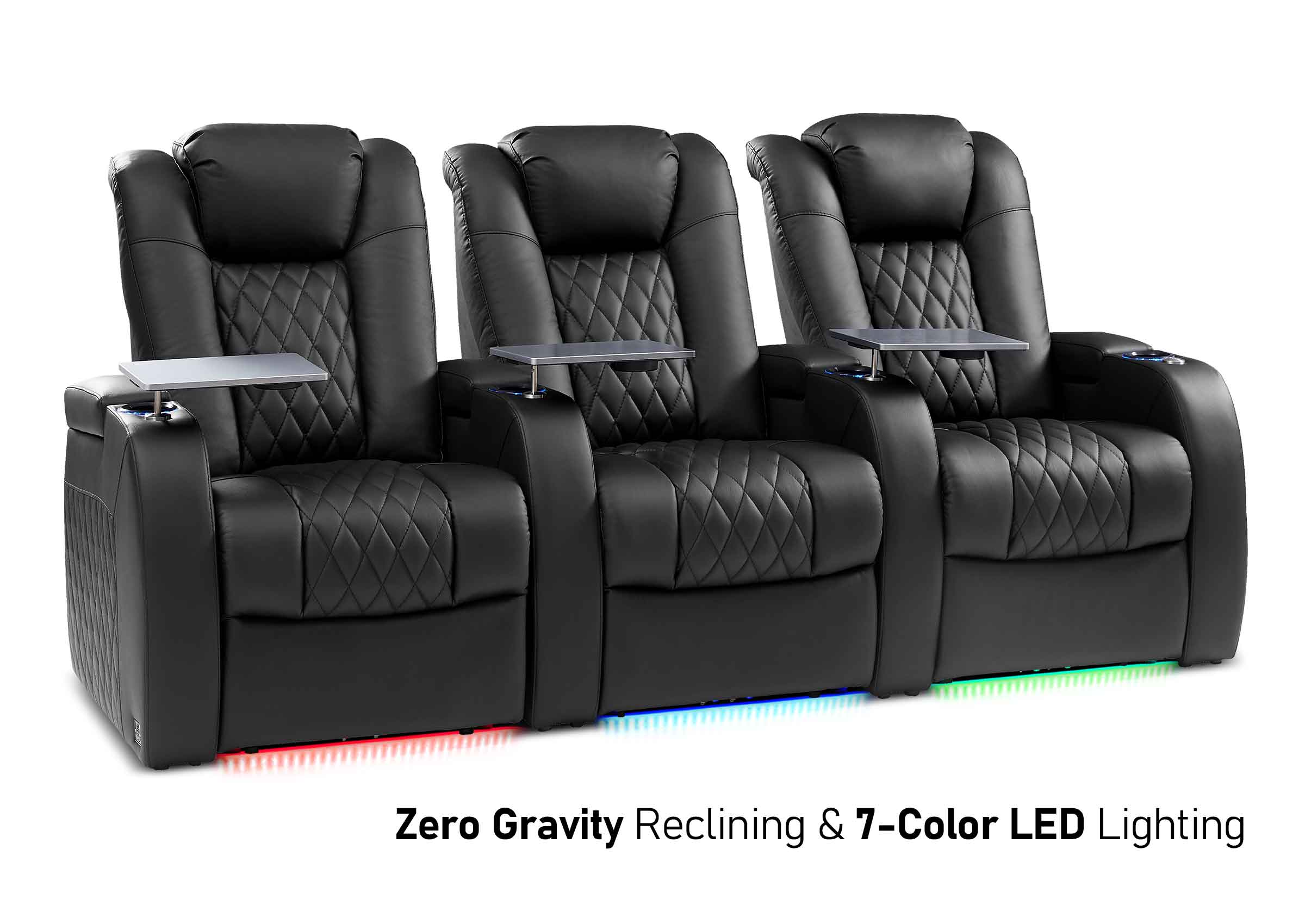
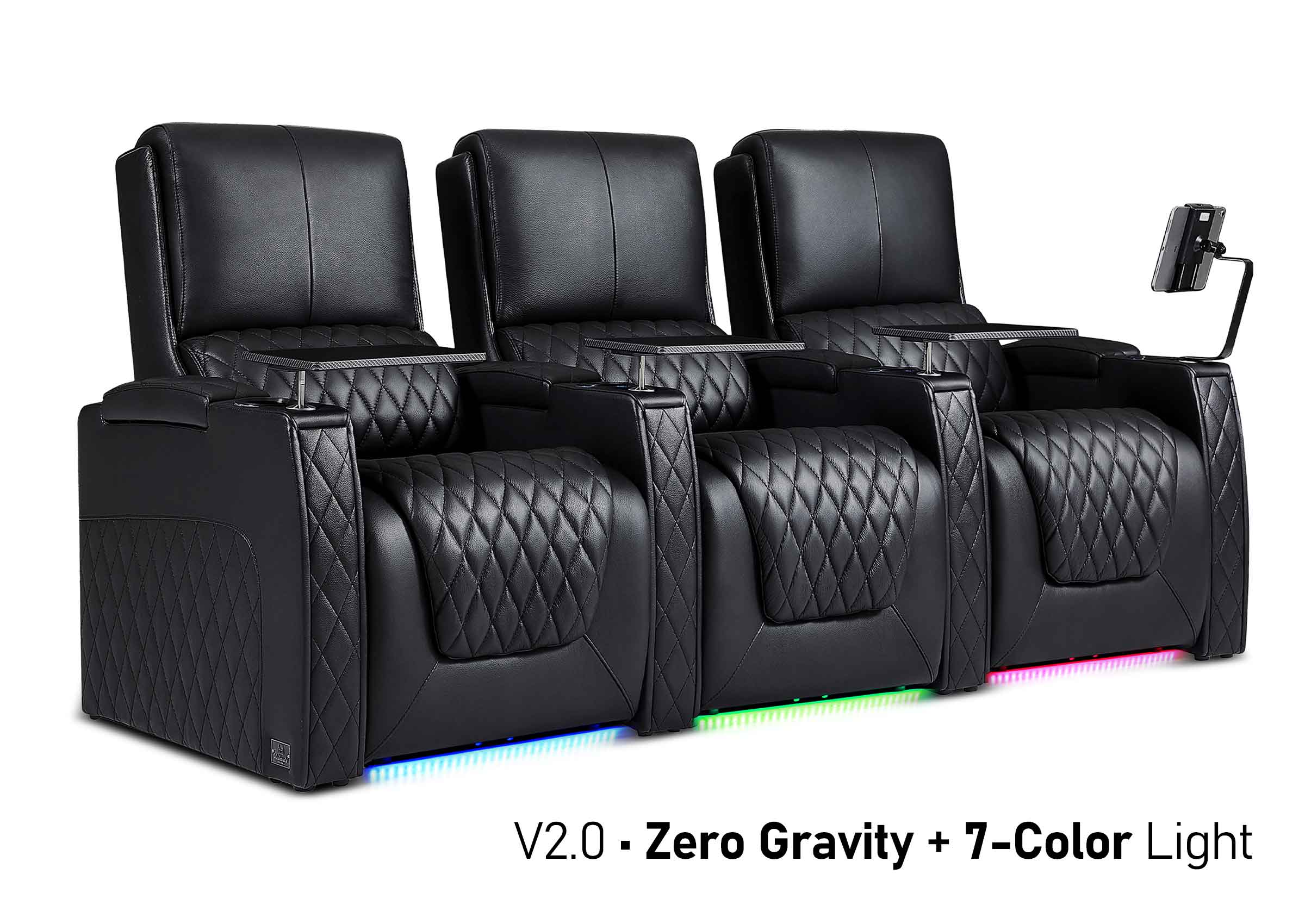
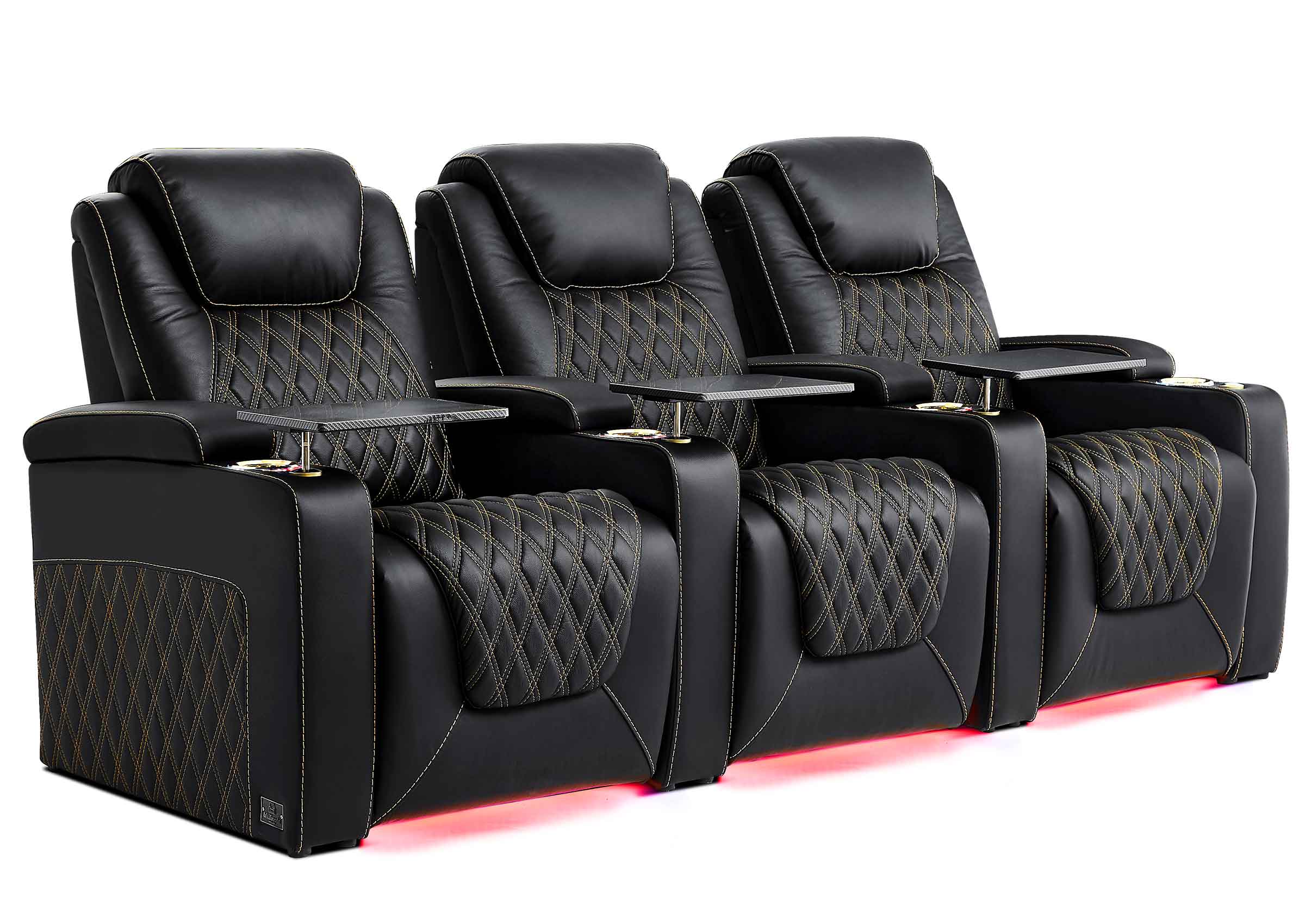
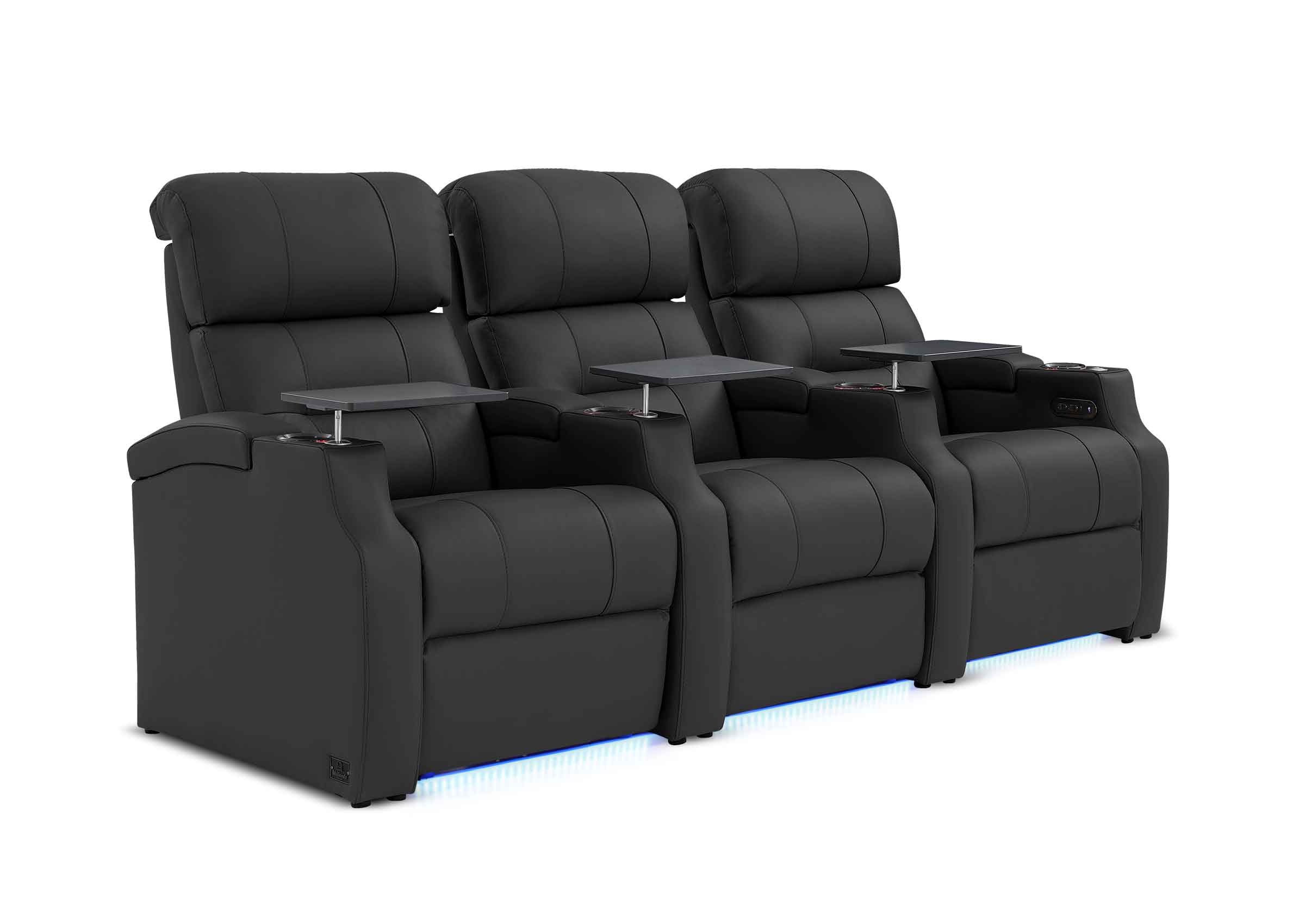
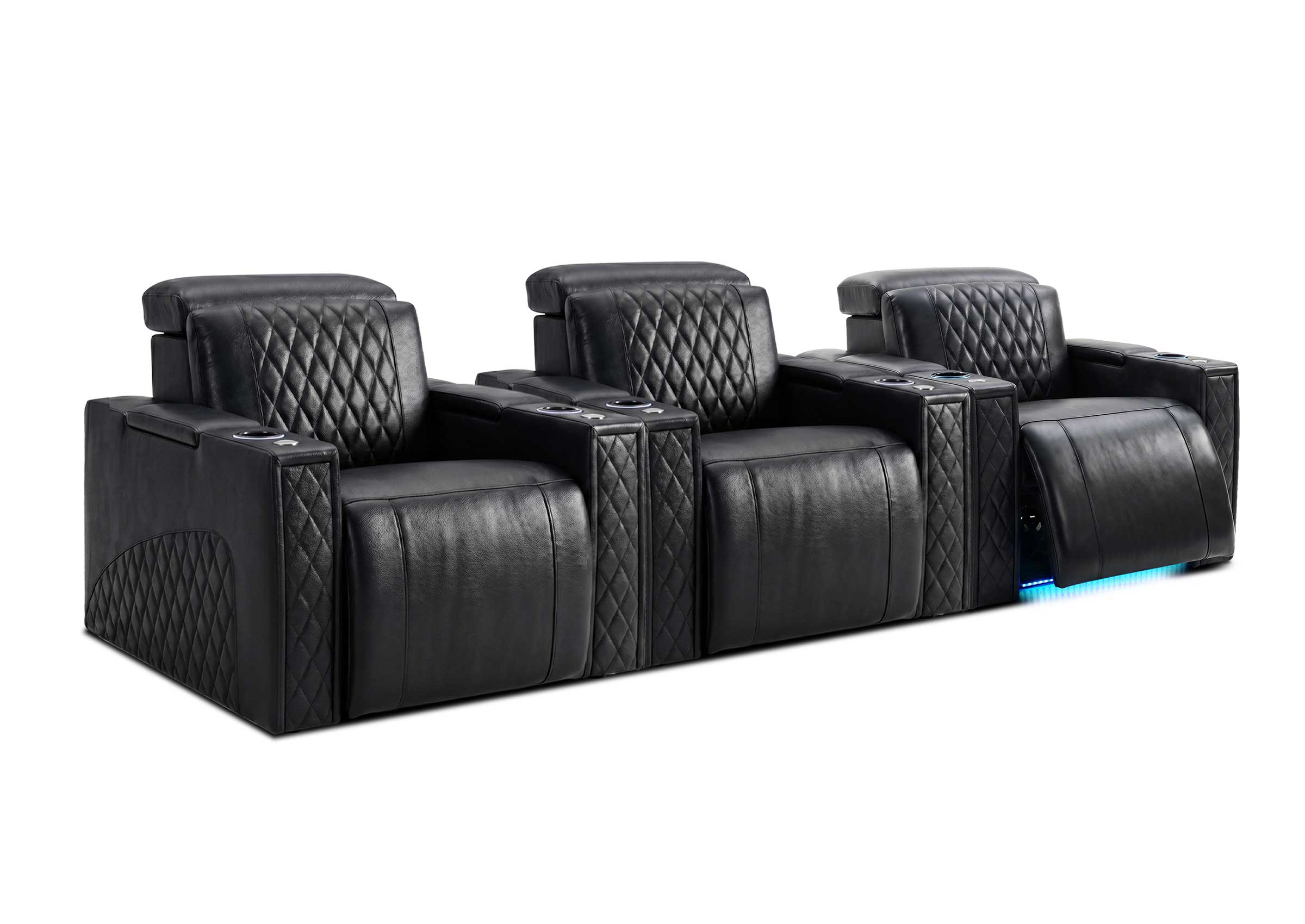

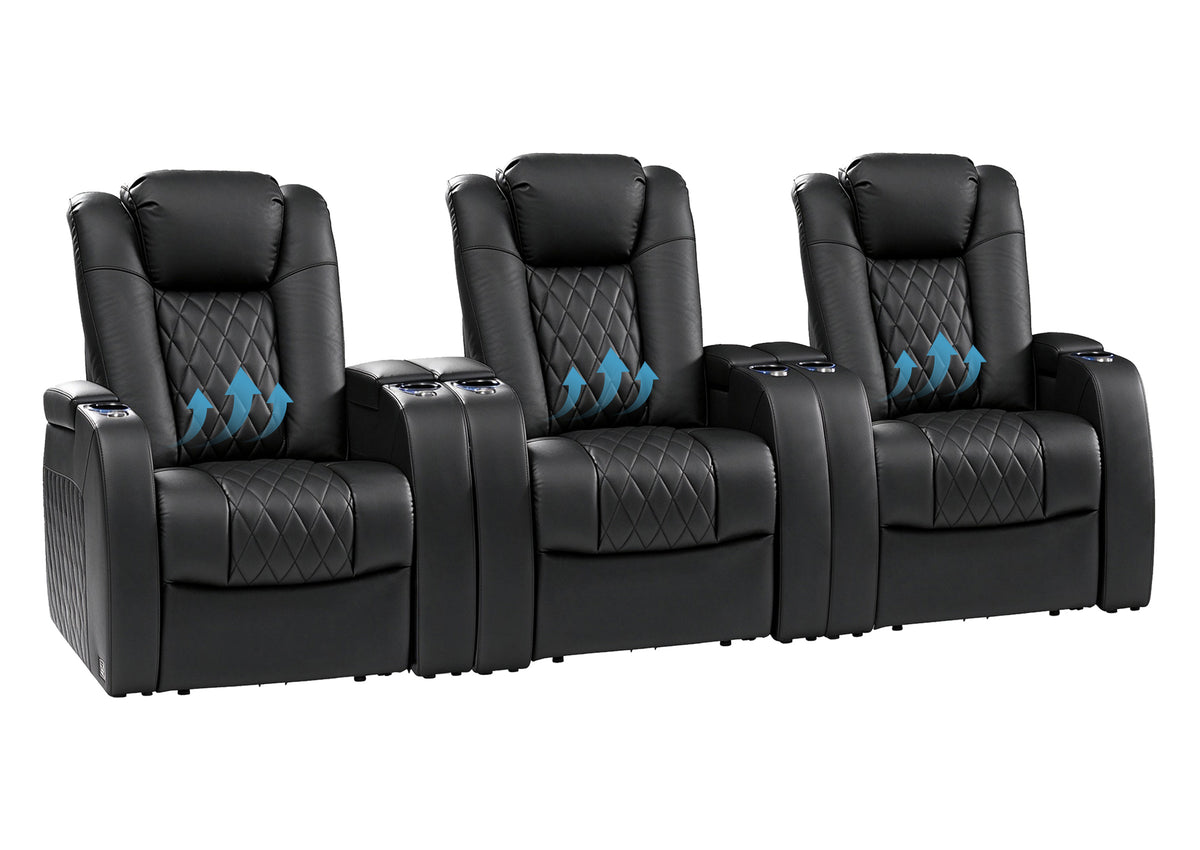
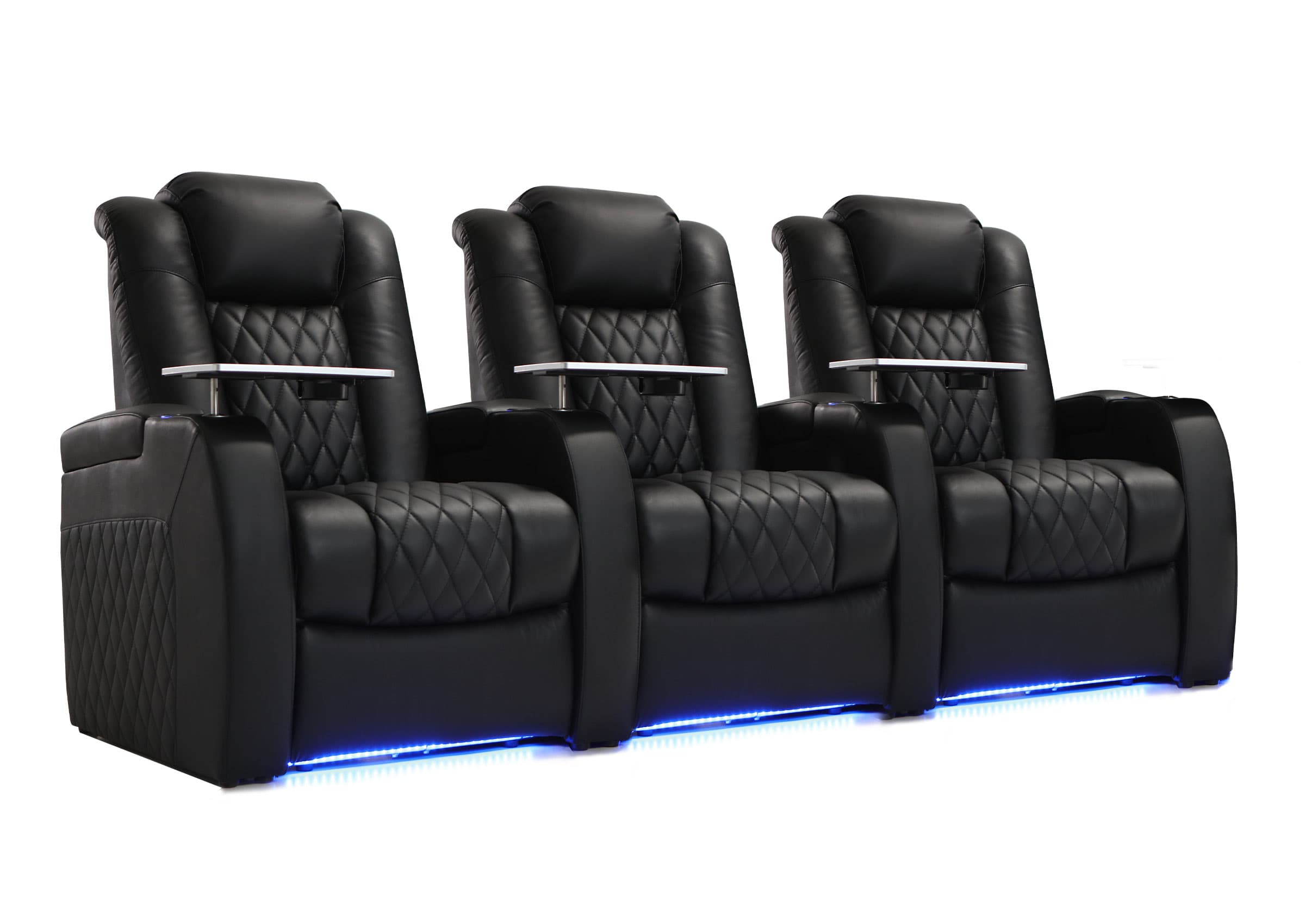
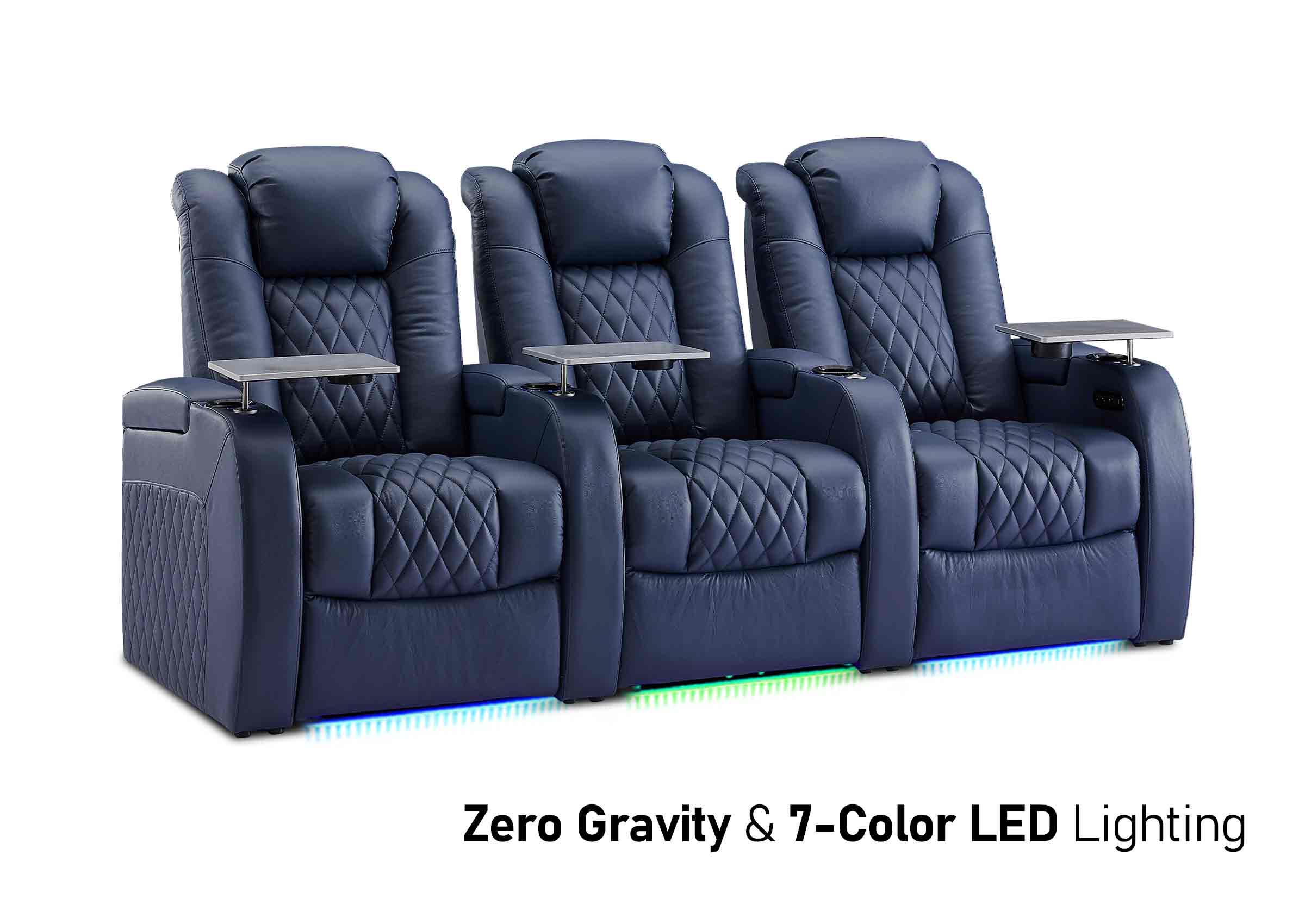
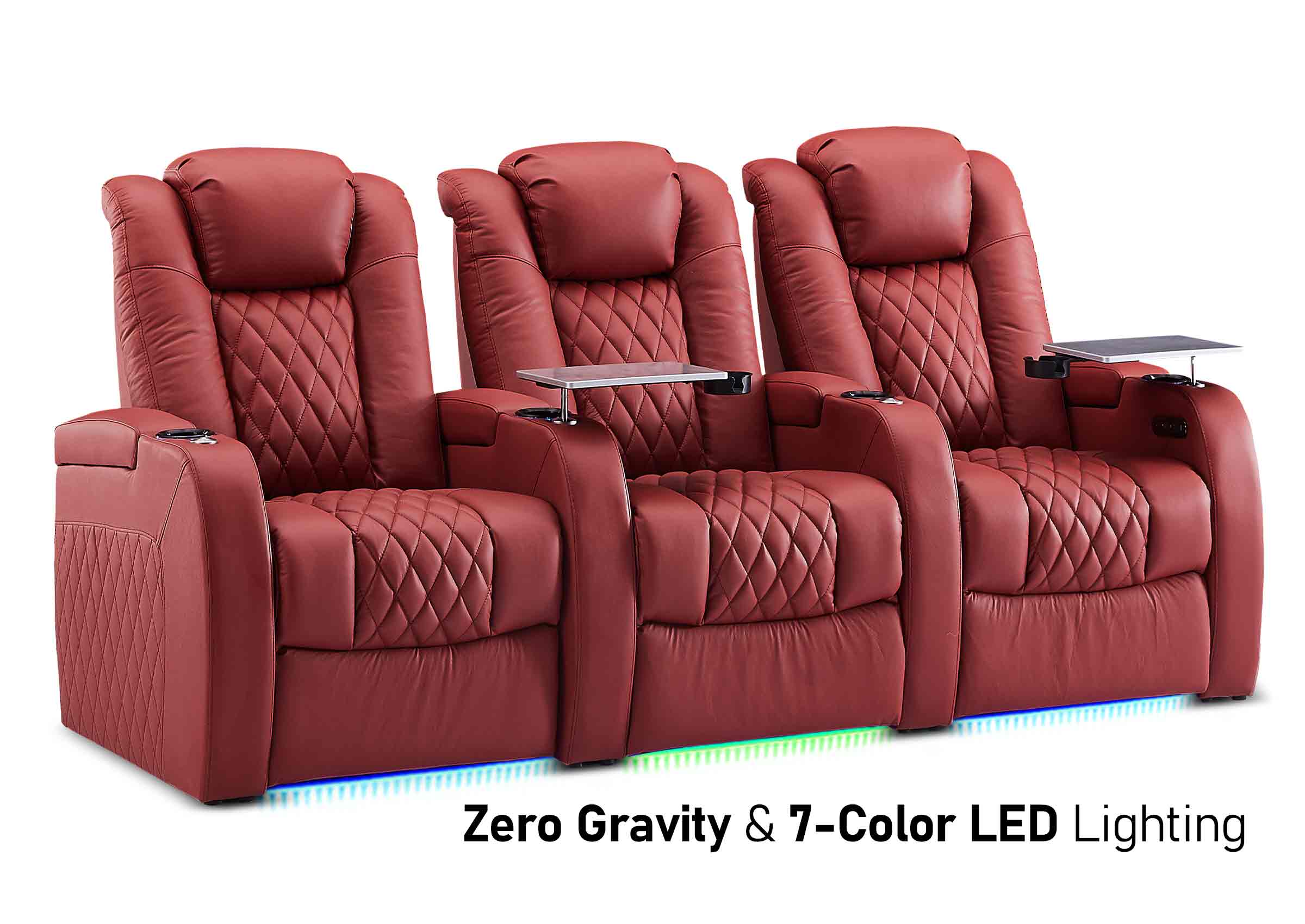
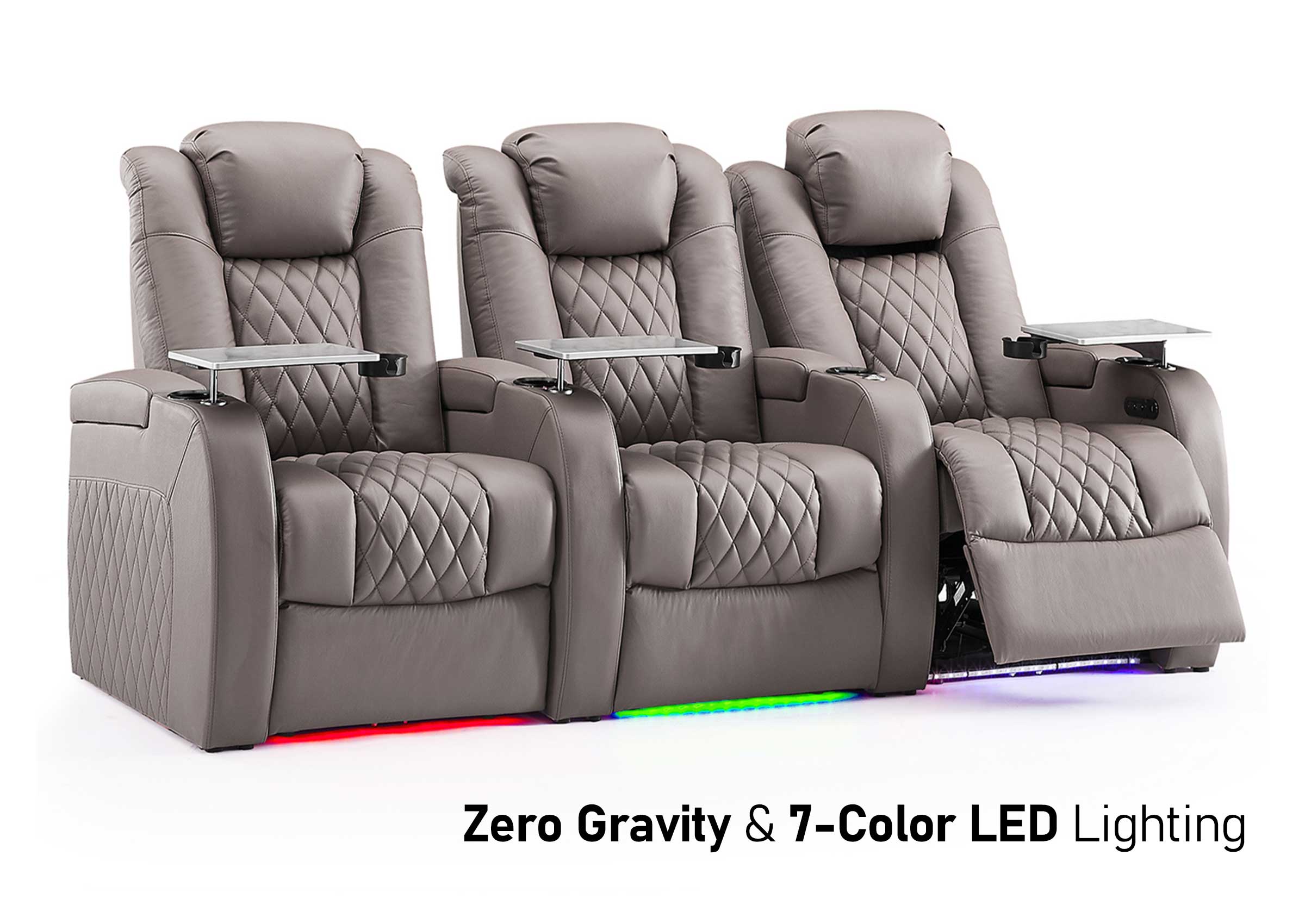
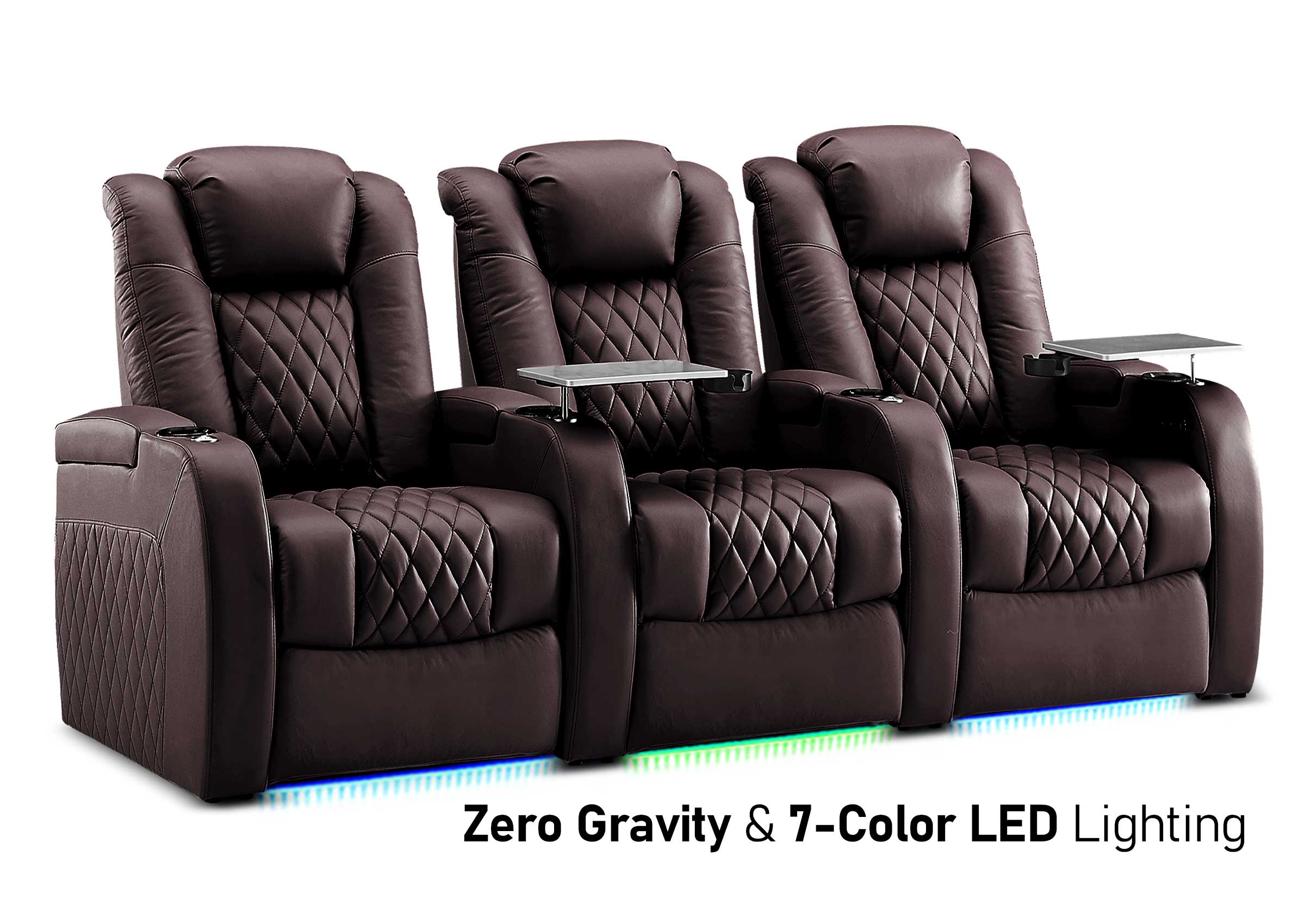

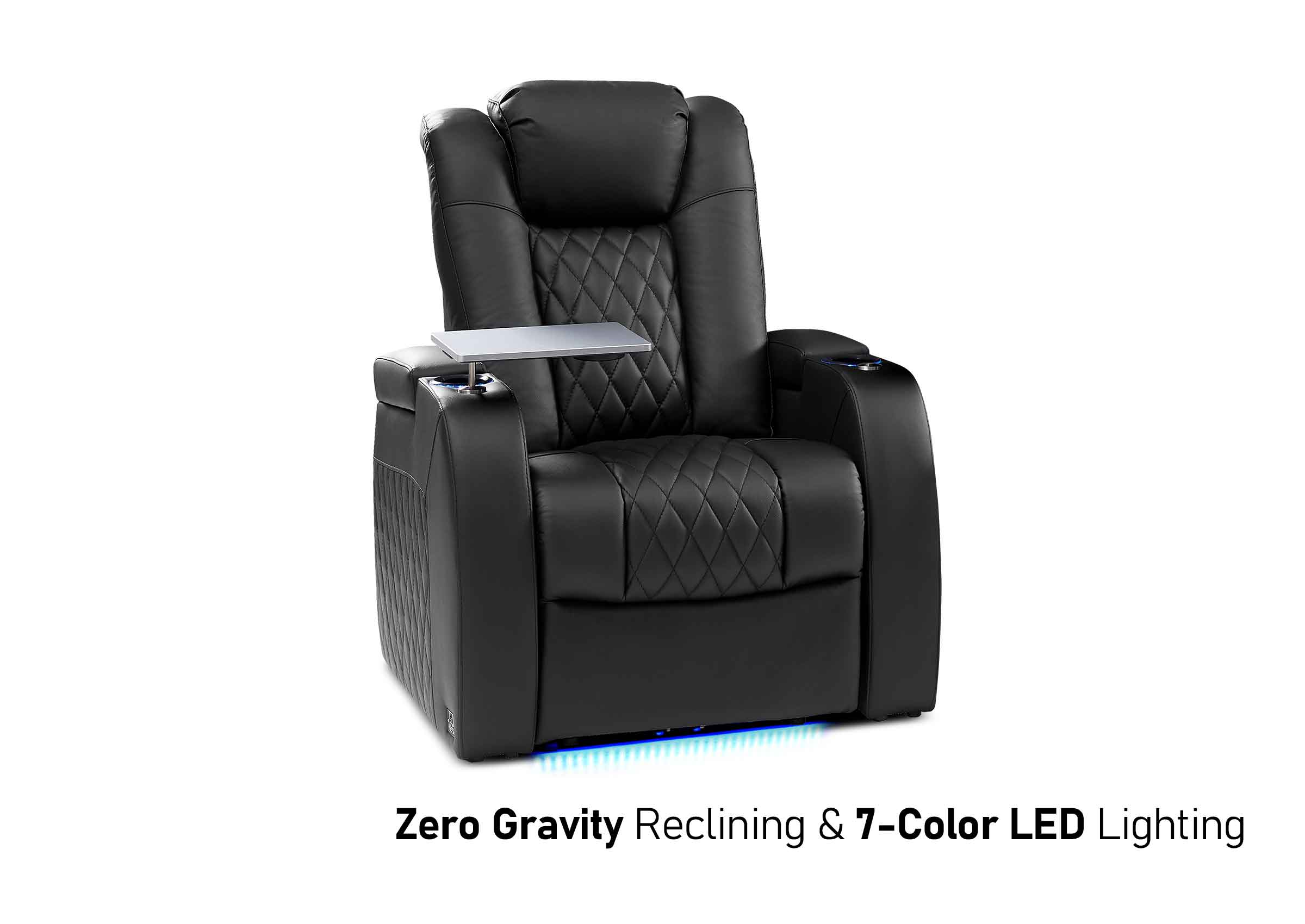
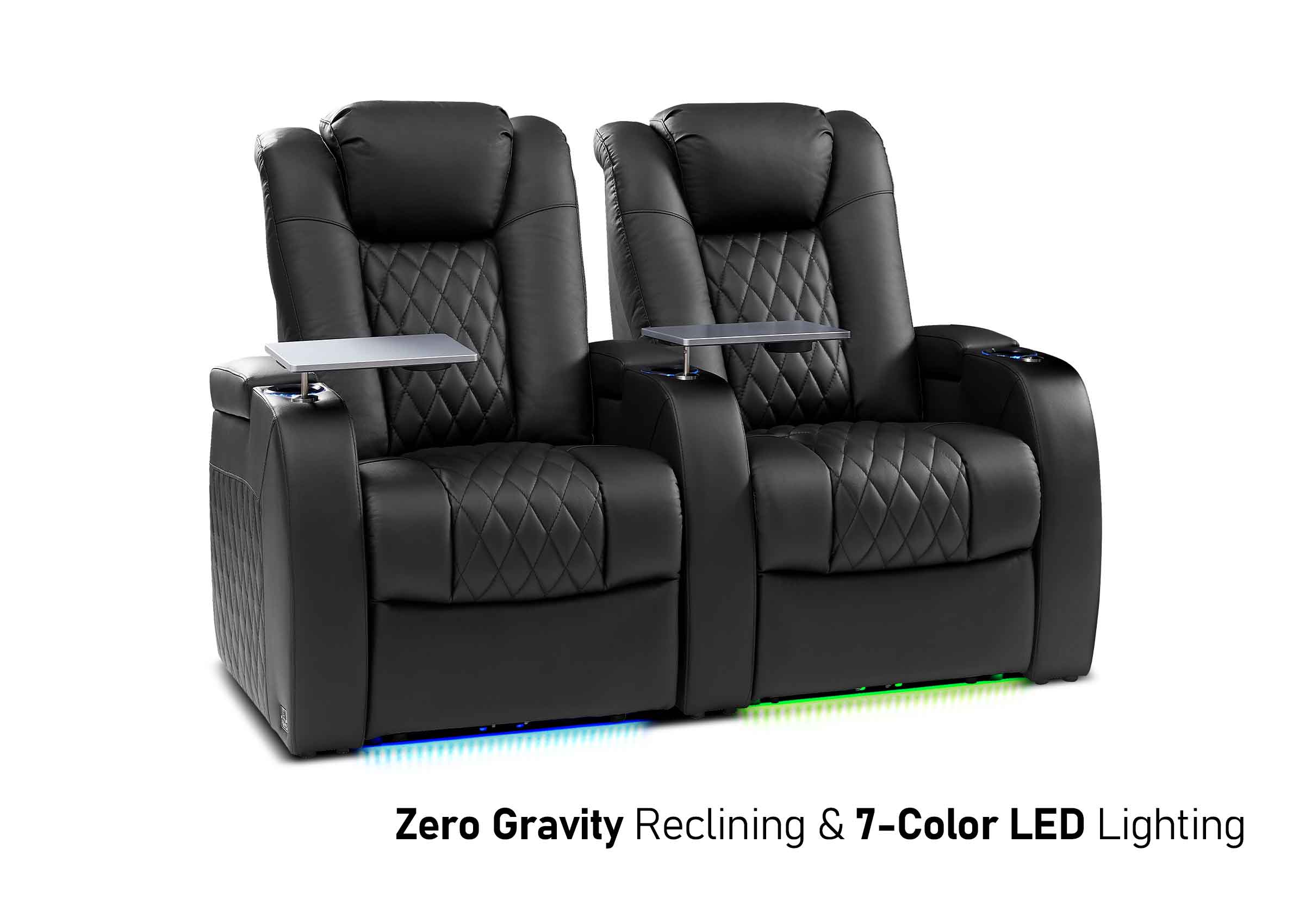
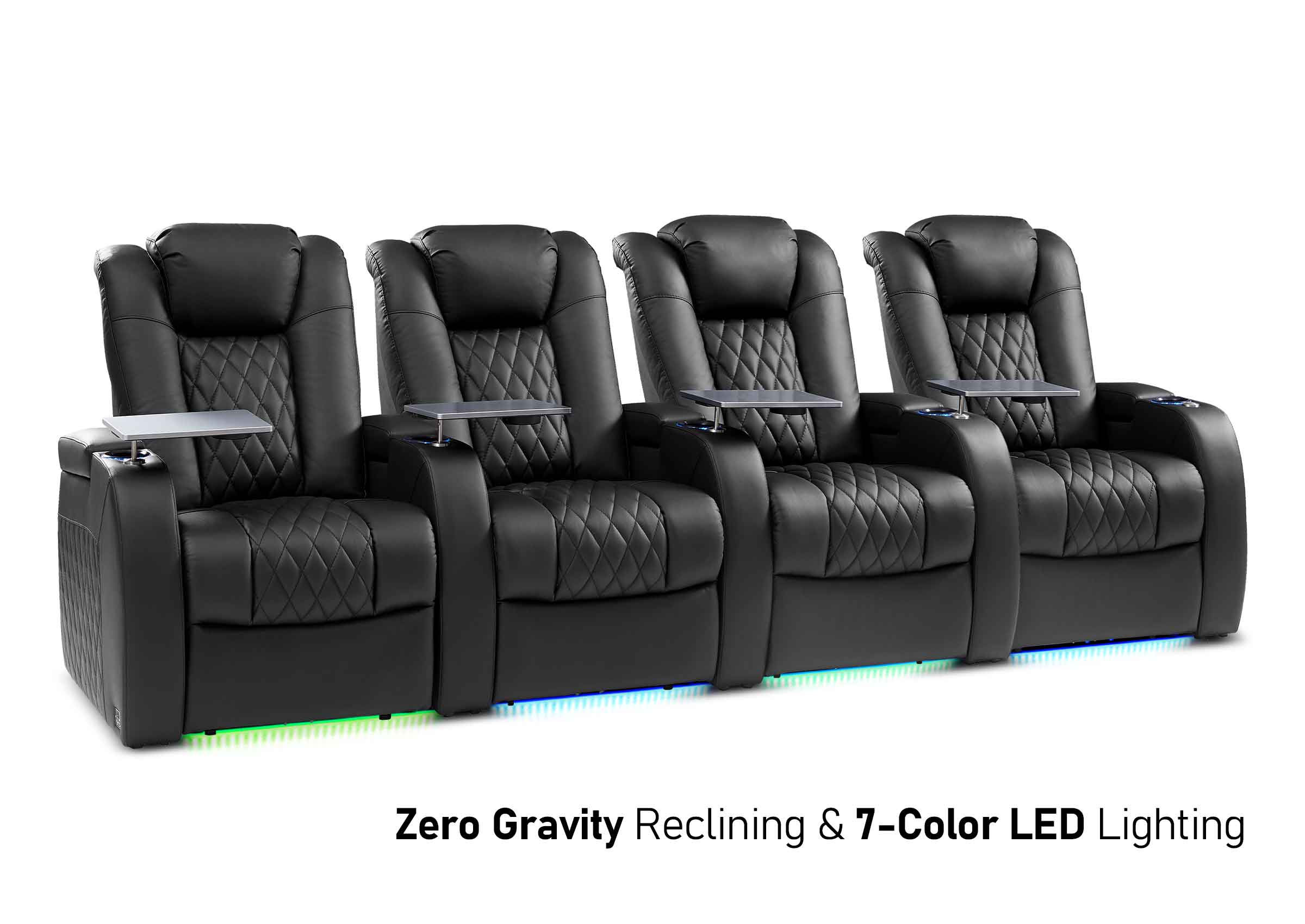
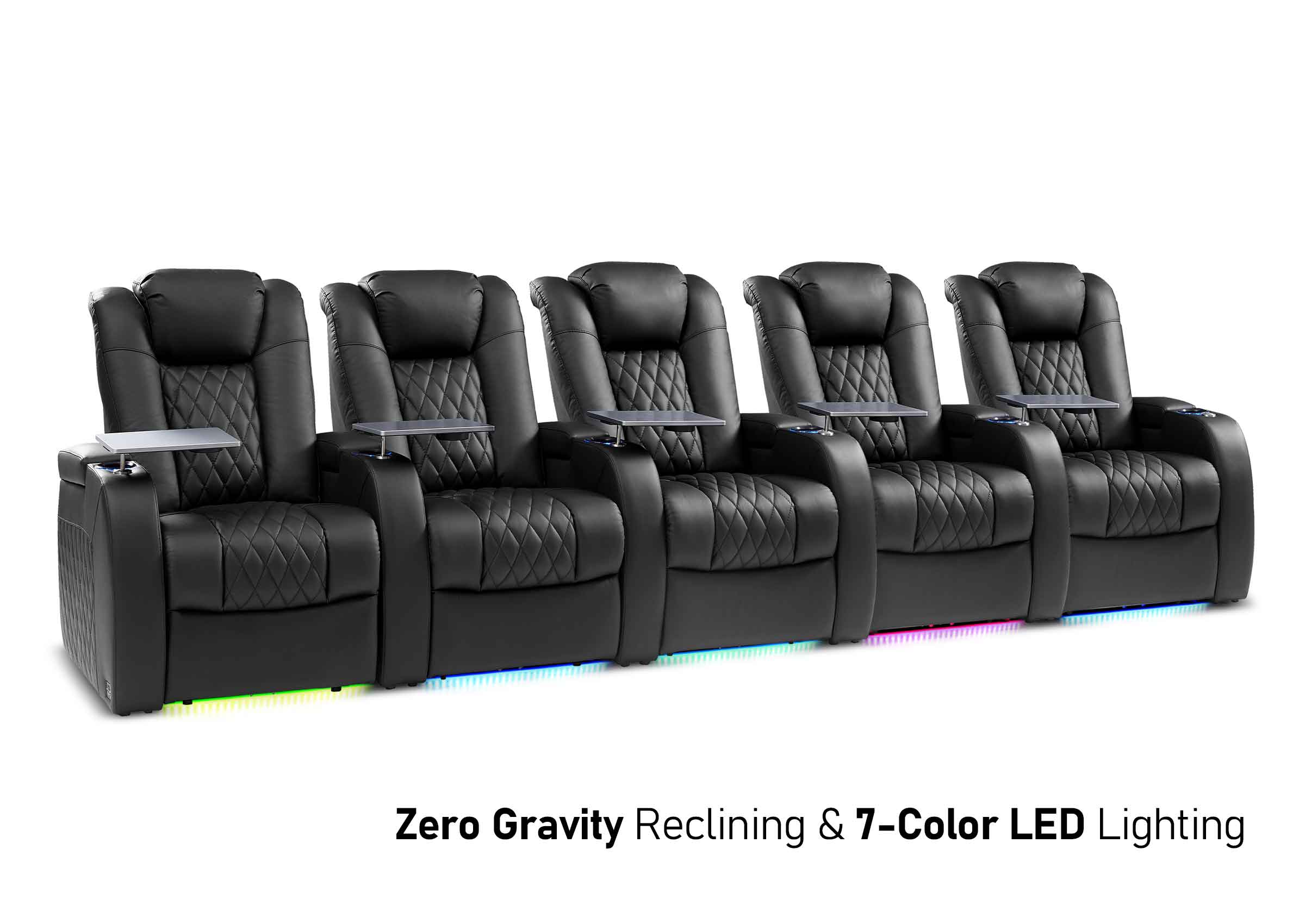


If your home theater needs more seats, a second row of recliners is not automatically the best answer.
Choose second-row recliners when the rear seats will be used regularly for full movies, games, or long viewing sessions. A back-row bar makes more sense when those positions are mainly occasional overflow, when room depth is limited, or when you want the rear of the theater to serve more than one purpose.
The important distinction is not simply comfort versus space.
It is whether you are creating another permanent viewing row or a flexible rear zone that can become seating when needed.
Before committing to either option, compare how the room will actually be used, the occupied depth of the seating, sightlines, ceiling conditions, circulation, and where rear listeners will end up in the audio layout.
If you are still deciding how rows, individual seats, loveseats, and consoles should relate to one another, start with a broader home theater seating configuration before locking in the rear zone.
Start With One Question: What Job Does the Back Row Need to Do?
Many theater layouts are planned around the largest group that might ever use the room.
That can lead to a room designed around eight or ten seats even though four people use it most nights.
Acoustic Frontiers recommends distinguishing primary from secondary seating instead of designing every seat around an occasional maximum-capacity event. Its example is simple: a family that normally needs four good seats may be better served by strong primary seating plus secondary options than by forcing twelve equally permanent seats into the room. Review the seating-layout guidance from Acoustic Frontiers.
That is the right place to start this decision.
Ask who will actually use the rear positions.
If your household regularly fills both rows for two-hour movies, a second row deserves real long-session comfort.
If the rear seats mainly appear during:
- sports nights;
- birthday gatherings;
- visits from friends;
- children's movie nights;
- occasional large family events;
then a back-row bar may provide capacity without allowing rare occasions to dictate the entire room.
Design the second row around how often it will be used, not how impressive the empty room looks.
Second-Row Recliners vs. a Back-Row Bar at a Glance
| If This Matters Most | Start by Considering |
|---|---|
| Rear seats are used for complete movies every week | Second-row recliners |
| Extra seats are mainly for occasional guests | Back-row bar |
| Long-session comfort is a priority for every viewer | Second-row recliners |
| Room depth is tight | Back-row bar |
| You want consistent seating in both rows | Second-row recliners |
| Rear space should also work for drinks, food, or casual use | Back-row bar |
| You want fewer permanent seats in the room | Back-row bar |
| Rear viewers need substantial back, arm, and leg support | Second-row recliners |
This is only the first filter.
A room may strongly favor recliners from a comfort standpoint and still fail the sightline or space test. A bar may appear compact on a floor plan and still need more occupied space than expected once stools and people are added.
Compare Occupied Depth, Not Furniture Depth
One of the easiest planning mistakes is comparing product dimensions instead of comparing the space people actually occupy while using them.
A recliner row needs more than the upright depth of the chair.

Depending on the selected seating and configuration, the room may also need space for:
- the fully operating or reclined footprint;
- entry and exit from the row;
- footrest clearance;
- a riser;
- walking circulation;
- power connections;
- space behind the rear seats.
A back-row bar also needs more than the depth of the countertop.
You still need to account for:
- stool depth;
- the seated person;
- room to pull out or access the stool;
- circulation;
- any space required behind the seating position.
So an 18-inch counter does not create an 18-inch-deep seating zone any more than an upright recliner dimension tells you the full depth of a functioning recliner row.
HT Market's back-row bar guide highlights the central reason these bars exist: they can add another seating level while using less depth than a conventional reclining row. See the HT Market back-row bar guide.
The useful comparison, however, is:
reclined row + people + circulation
versus
bar + stools + people + circulation.
That gives you a much more realistic floor-plan decision.
Which Option Is Better for Long Viewing Sessions?
This is where full recliners have their clearest advantage.
A good theater recliner is designed around sustained viewing. The user has a supported back, defined seat, arm support, and the ability to change position during a movie or long game.
A bar stool is a different kind of seat.
It can be excellent for:
- casual sports viewing;
- eating;
- chatting;
- checking a laptop;
- watching part of a movie;
- providing extra capacity during a gathering.
But those uses are different from spending an entire evening in the rear row.
That does not mean a bar is inherently uncomfortable. Stool design varies substantially.
The more useful rule is:
The longer and more regularly the rear positions will be occupied, the more valuable full recliner comfort becomes.
This is why usage frequency should come before capacity.
Four occasional guests do not necessarily justify four permanent recliners.
Four family members who use the rear row every weekend may.
How Do Sightlines Change the Decision?
Adding a second row is not just a furniture decision.
The rear viewers still need to see over the people in front.
Audio Advice notes that multi-row home theaters typically require a raised rear platform to create usable sightlines and that the depth of that platform must also accommodate the reclining seats and movement around them. The same guide suggests rear bar seating as a way to add an elevated seating level while consuming less depth than another recliner row. Review Audio Advice's home theater layout guidance.
A bar can therefore simplify one part of the problem because bar stools naturally place viewers higher.
But do not assume that higher automatically means correct.

You still need to consider:
- the actual seated eye position;
- front-row head and headrest height;
- screen position;
- ceiling height;
- projector location if applicable;
- rear soffits or other overhead restrictions.
Likewise, do not choose a generic riser height before the actual recliner configuration is known.
A taller riser can improve a rear viewer's line of sight while creating new conflicts with ceiling clearance or projector geometry.
The seat model, riser, screen, and room architecture need to work as one system. If the room uses a projector, viewer sightlines and the projector's light path should also be checked separately; this guide explains how to test whether theater seats may block the projector beam.
Do Rear Seats Change the Audio Plan?
Yes, potentially.
A second reclining row may push listeners farther toward the back of the room than expected.
That matters because theater seating is part of the audio geometry, not simply something placed after the speakers have been chosen.
Acoustic Frontiers specifically cautions against seating listeners very close to the back wall and notes that seat position affects bass consistency and surround performance.
This creates an important planning distinction.
Suppose the only way to fit a complete second recliner row is to place the rear viewers against the back wall.
The fact that the chairs physically fit does not necessarily mean the layout is finished.
A shallower secondary seating strategy may allow the important listening positions to remain farther forward.
A bar does not automatically solve acoustic problems either. Bar stools are still listening positions if people will actually watch from them.
The point is simply:
Do not evaluate rear seating capacity without evaluating where those listeners end up.
If several seats need to share the room's sound system, the next question is not only where the chairs fit but how those positions behave acoustically. See the guide to home theater sound for multiple seats for that separate task.
A Back-Row Bar Does More Than Save Space
The strongest argument for a bar is not necessarily its smaller footprint.
It is flexibility.

A complete reclining row has one primary job: people sit in it.
A rear counter can support several activities:
- additional movie seating;
- drinks and snacks;
- sports viewing;
- laptops or tablets;
- casual conversation;
- tabletop activities;
- a place to stand or gather before a movie.
Audio Advice specifically points to a rear bar as a useful solution for large sports gatherings when another complete seating row is difficult to accommodate.
That changes the decision.
Instead of asking:
Do I want four recliners or four stools?
ask:
Do I want four permanent movie seats, or a flexible rear zone that can seat four when I need it?
In a multi-use theater, that distinction can matter more than the seat count itself.
SEATING PLAN
Map the Row Before You Commit to More Seats
Once you know whether the rear zone is regular seating or flexible overflow, compare the actual row relationships, recline space, entry path, and seating configuration before finalizing the room.
When Is a Back-Row Bar the Wrong Compromise?
A bar should not become the automatic answer every time the room feels tight.
It may be the wrong choice when the rear positions are supposed to be some of the room's primary seats.
For example, reconsider a bar if:
- household members use those seats every week;
- rear viewers routinely watch entire movies;
- users strongly prefer substantial back and arm support;
- getting on and off taller stools would be inconvenient;
- the bar positions create poor viewing or listening locations;
- everyone expects the same theater-seat experience.
A technically usable seat is not necessarily a seat someone will enjoy using for three hours.
If the back row matters every night, treating it as overflow can create a room where some family members consistently receive a second-tier experience.
When Is a Second Recliner Row More Than the Room Needs?
The opposite mistake is equally common.
A second row of recliners may look impressive, but it creates a permanent claim on the room.
It can affect:
- riser dimensions;
- ceiling headroom;
- row access;
- power planning;
- outlet locations;
- speaker relationships;
- HVAC coordination;
- room depth;
- delivery and installation;
- rear-wall clearance.
Those tradeoffs can be reasonable when the row is genuinely important.
They become harder to justify when the row sits empty almost every day.
This is especially important in smaller rooms where adding a complete second row forces every other system to become more constrained.
Extra capacity has a room-level cost, even when the chairs themselves fit.
Example: Four Regular Viewers, Eight on Game Night
Consider a household of four.
Most movie nights involve the same four people, but several times a year another four friends come over for football or major events.
One solution is two rows of four recliners.
That gives every possible guest a permanent theater seat. It also means an entire row remains mostly unused during normal weeks.
A different solution is one high-priority recliner row plus a rear bar with stools.
Now the primary viewers receive the most comfortable positions during normal use. During game night, the bar adds capacity and also provides a surface for food, drinks, phones, or fantasy-league tracking.
Neither layout is automatically better.
Change one condition and the answer may reverse.
Suppose the household has six people and they regularly watch movies together.
Now the rear row is not overflow.
It is part of normal family use.
In that case, investing room depth and construction effort into another row of proper theater seating becomes much easier to justify.
Seat count and seat priority are not the same thing.
Do You Actually Have to Choose?
Not always.
A large enough room can support:
- a primary recliner row;
- a second raised recliner row;
- and a rear bar.
A real Weilianda basement theater example uses two rows of three recliners, with the second row elevated for sightlines, plus a small bar area behind the seating for snacks and casual use. The room was long enough to give those zones different jobs rather than forcing one solution to replace the other.
That layout demonstrates an important principle:
A bar does not have to be a substitute for theater seating.
It can also be a third layer of use behind properly planned primary and secondary rows.
But adding all three only makes sense when the room has enough depth, circulation, ceiling clearance, and AV flexibility to support them.
More seating zones are not automatically a better theater.
Common Mistakes When Choosing the Rear Seating
Planning Around the Biggest Party of the Year
Occasional guests matter, but they should not automatically control every permanent dimension in the room.
Comparing Furniture Depth Instead of Occupied Depth
Measure people, movement, recline, stools, and circulation—not just the furniture shell.
Assuming Bar Stools Automatically Fix Sightlines
They sit higher, but their actual eye position still needs to work with the front row and screen.
Building the Riser Before Selecting the Seats
The actual seating configuration changes the depth, eye position, access requirements, and reclined footprint.
Treating Every Seat as Equally Important
Primary family seats and occasional overflow seats can have different priorities without making the theater poorly designed.
FAQ
Is bar seating comfortable enough for a home theater?
It can be appropriate for occasional viewing, sports, food, social use, and overflow seating. If the rear seats will regularly be used for full-length movies or long gaming sessions, full theater recliners usually provide a more complete long-session seating experience.
Does a second row of recliners always need a riser?
In most traditional two-row theater layouts, the rear row needs elevation to see clearly over the front row. The exact requirement depends on the actual seats, seated eye heights, screen position, room dimensions, and other geometry rather than a universal riser number.
Can a back-row bar replace a second theater row?
Yes, when the rear positions are secondary or occasional seats and the bar provides acceptable sightlines and circulation. It is less convincing as a substitute when those positions are regular, long-duration seats.
How much room does a home theater bar need?
Do not calculate this from countertop depth alone. Include the counter, stools, seated users, access, and circulation. The required space depends on the actual bar and stool dimensions and the way people enter the seating area.
Should occasional guests get full theater recliners?
They can, but occasional maximum capacity does not always justify another permanent reclining row. Compare how often those seats are used with the space, riser, power, and layout changes required to support them.
Can you have two recliner rows and a bar?
Yes, if the room is long enough and the sightlines, ceiling, circulation, audio layout, and other systems still work. In that arrangement, the recliner rows can serve regular viewers while the bar acts as a flexible social or overflow zone.
Choose the Rear Zone by How It Will Actually Be Used
A second row of recliners and a back-row bar solve different problems.
Recliners prioritize consistent long-session viewing comfort.
A bar prioritizes space efficiency, flexibility, and secondary uses.
The decision becomes much easier once you stop asking which option looks more like a “real” theater and start asking what the rear of your room needs to accomplish.
If those seats will be occupied through every movie, treat them like real theater seats and give their comfort, sightlines, and audio position the same attention as the front row.
If they exist mainly for game nights, visitors, snacks, and occasional overflow, a back-row bar may use the room more intelligently.
And if the room is large enough to support both, give each zone a different job rather than adding seating simply because there is still space.
The best rear seating plan is not the one with the highest seat count. It is the one that gives your regular viewers the experience they need without making occasional capacity dictate the entire theater.
If your decision is now leaning toward a full second row, compare actual row and module options in the seating configuration guide, then explore home theater seating only after the room plan is clear.