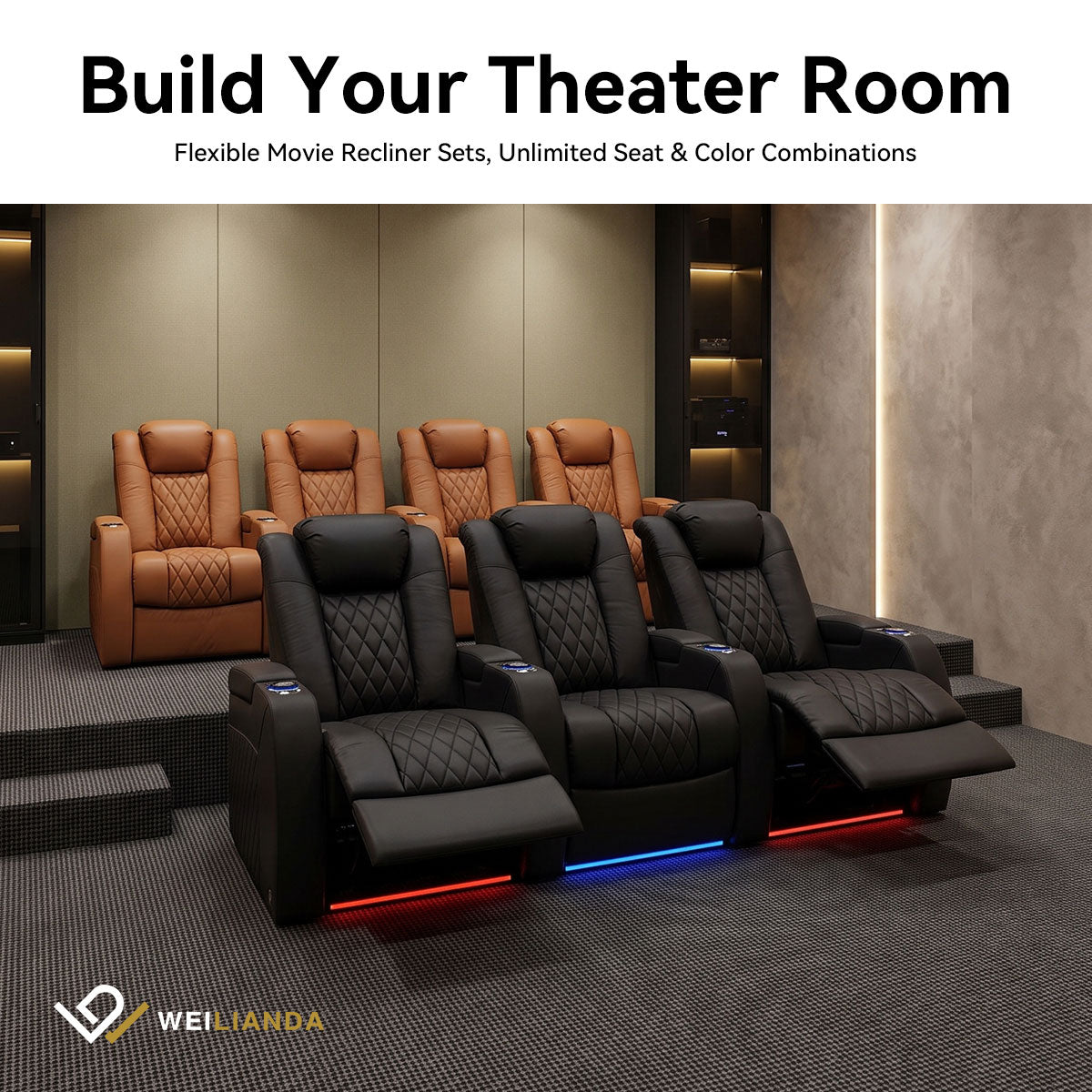














A minimalist home theater design is not about removing everything—it’s about removing what distracts from the viewing experience. The goal is to create a space that feels calm, organized, and cinematic without visual clutter.
For many homeowners, especially those building media rooms or upgrading living spaces, minimalism helps solve a common problem: too many features, too much furniture, and not enough comfort focus. A well-designed minimalist setup makes movies, gaming, and family nights feel more immersive because the environment no longer competes for attention.
What Defines a Minimalist Home Theater Design
A minimalist home theater focuses on simplicity, balance, and intentional design choices.
Instead of filling the room with equipment and furniture, every element has a clear purpose—either for viewing comfort, sound quality, or visual clarity.
A true minimalist theater prioritizes experience over decoration. That means fewer seats, cleaner lines, hidden storage, and controlled lighting rather than decorative overload.
Common traits include:
- Neutral color palettes (black, gray, beige, warm wood tones)
- Hidden or integrated storage
- Clean wall surfaces with minimal decor
- Controlled ambient lighting instead of bright overhead lights
- Streamlined seating layouts
Layout Principles That Keep the Space Clean and Functional
Minimalist design starts with layout decisions before furniture or tech.
| Element | Minimalist Approach | Why It Matters |
|---|---|---|
| Seating | Fewer, wider seats | Reduces visual clutter and improves comfort |
| Screen placement | Centered, unobstructed | Keeps focus on viewing axis |
| Walkways | Clear and wide | Improves flow and accessibility |
| Storage | Hidden or built-in | Eliminates visual distractions |
| Equipment | Integrated or concealed | Keeps walls and shelves clean |
The biggest mistake in home theater design is overfilling the room before defining movement and viewing flow. Minimalist layouts prevent that from happening.

Choosing the Right Seating for a Minimalist Theater
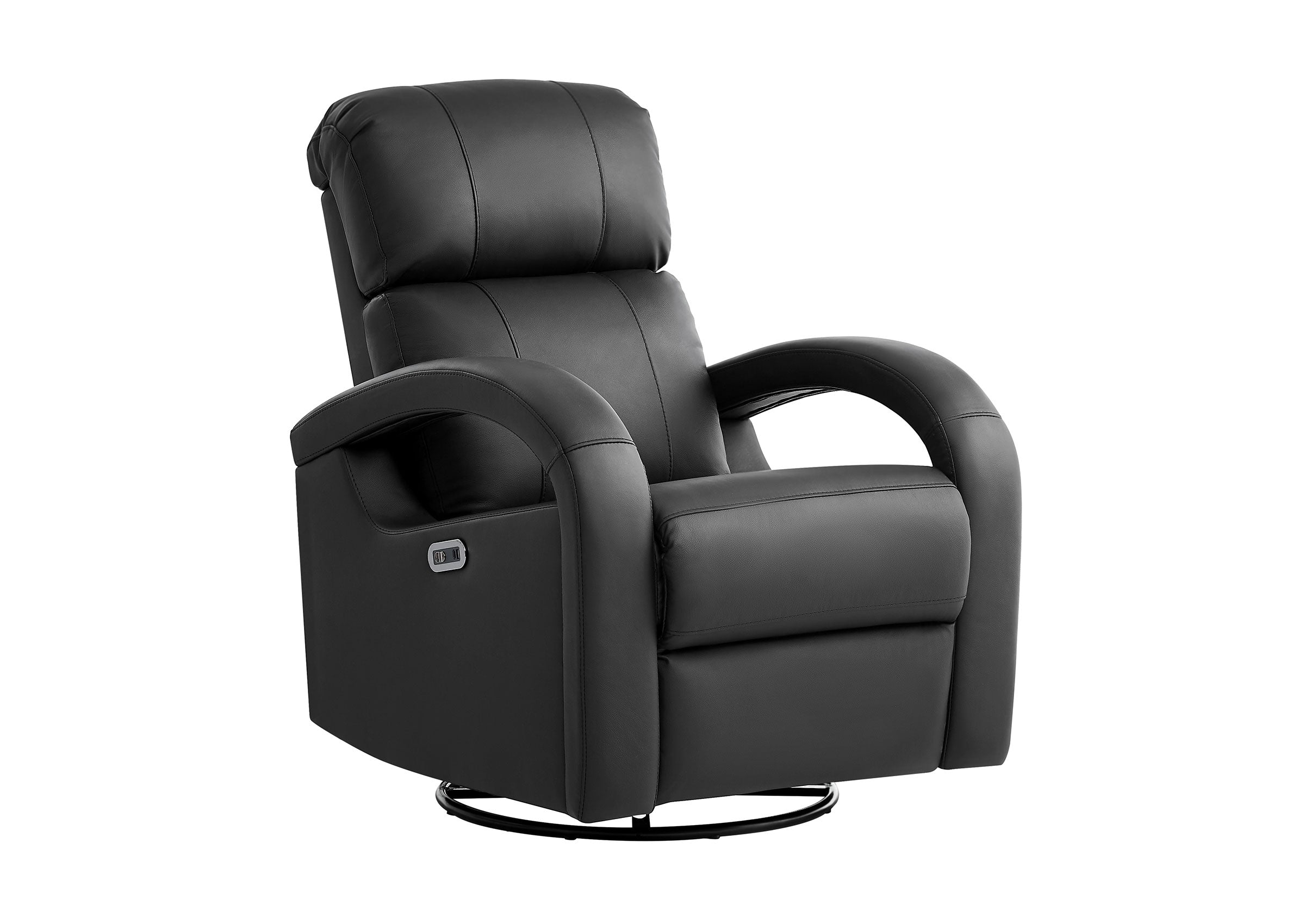
Seating is the most visually dominant element in a home theater, so it has the biggest impact on whether the space feels minimalist or crowded.
A minimalist approach usually means:
- 2–4 seats instead of large rows
- Wider, more comfortable recliners
- Clean armrest design with built-in storage
- Neutral upholstery tones
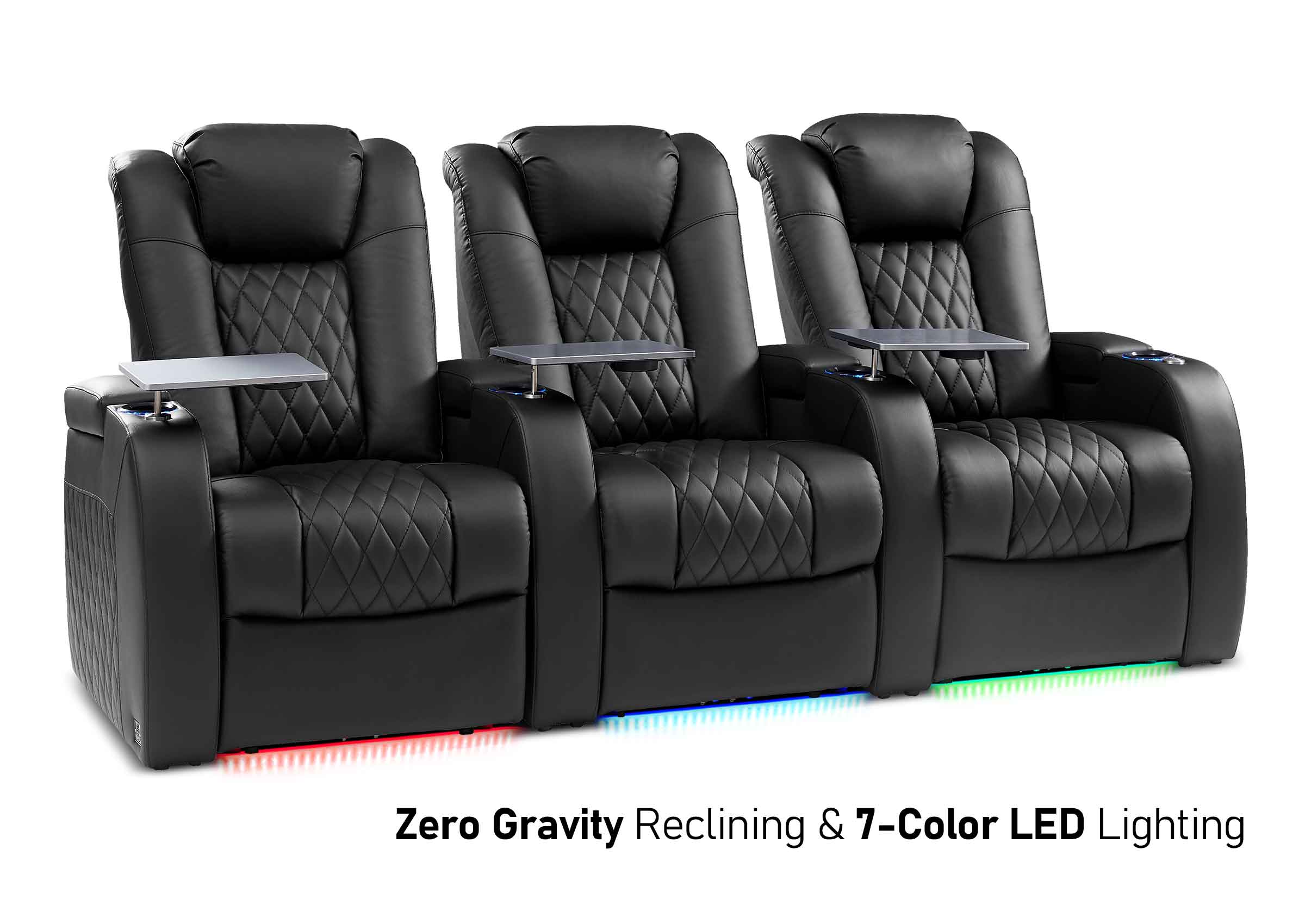
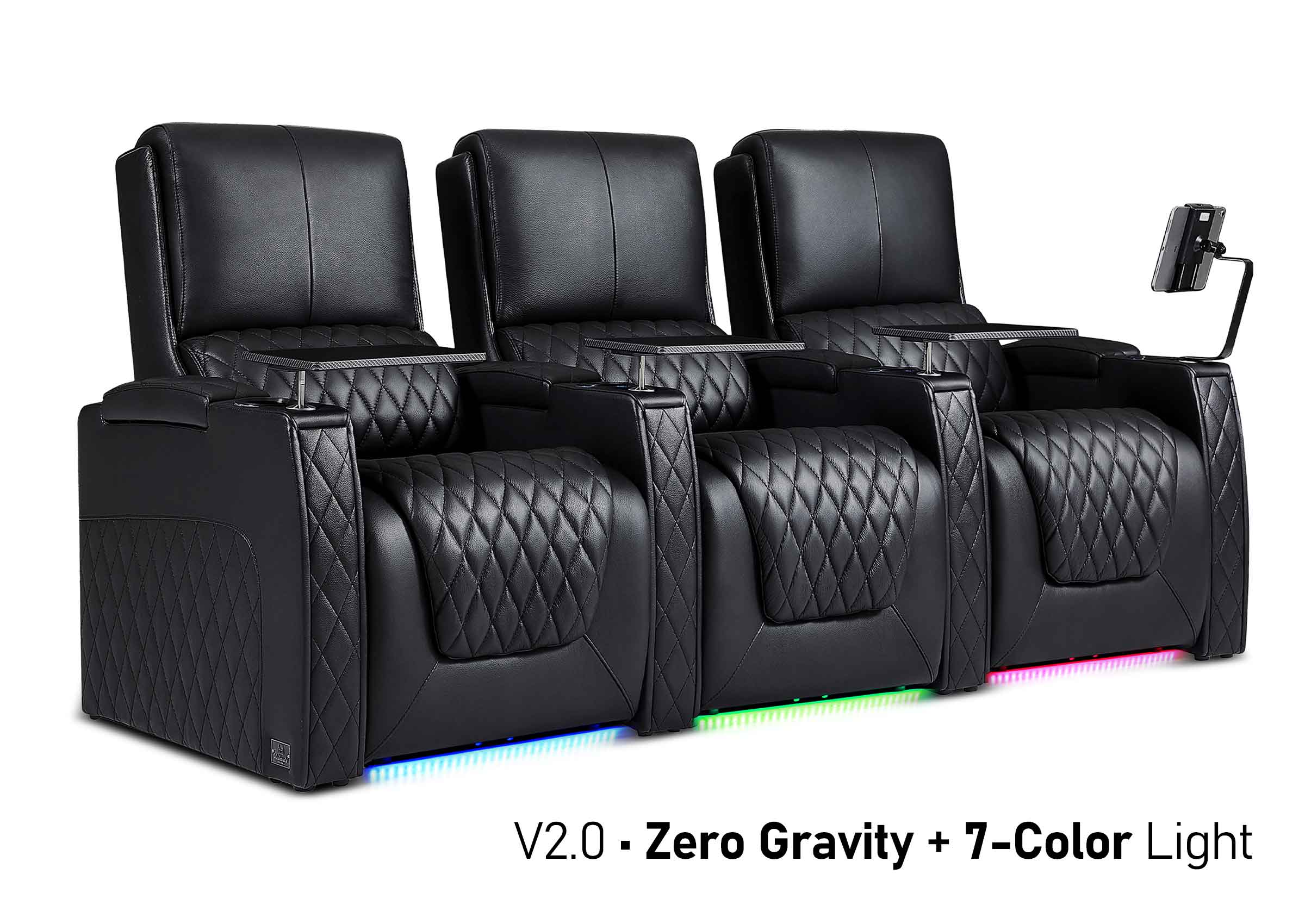
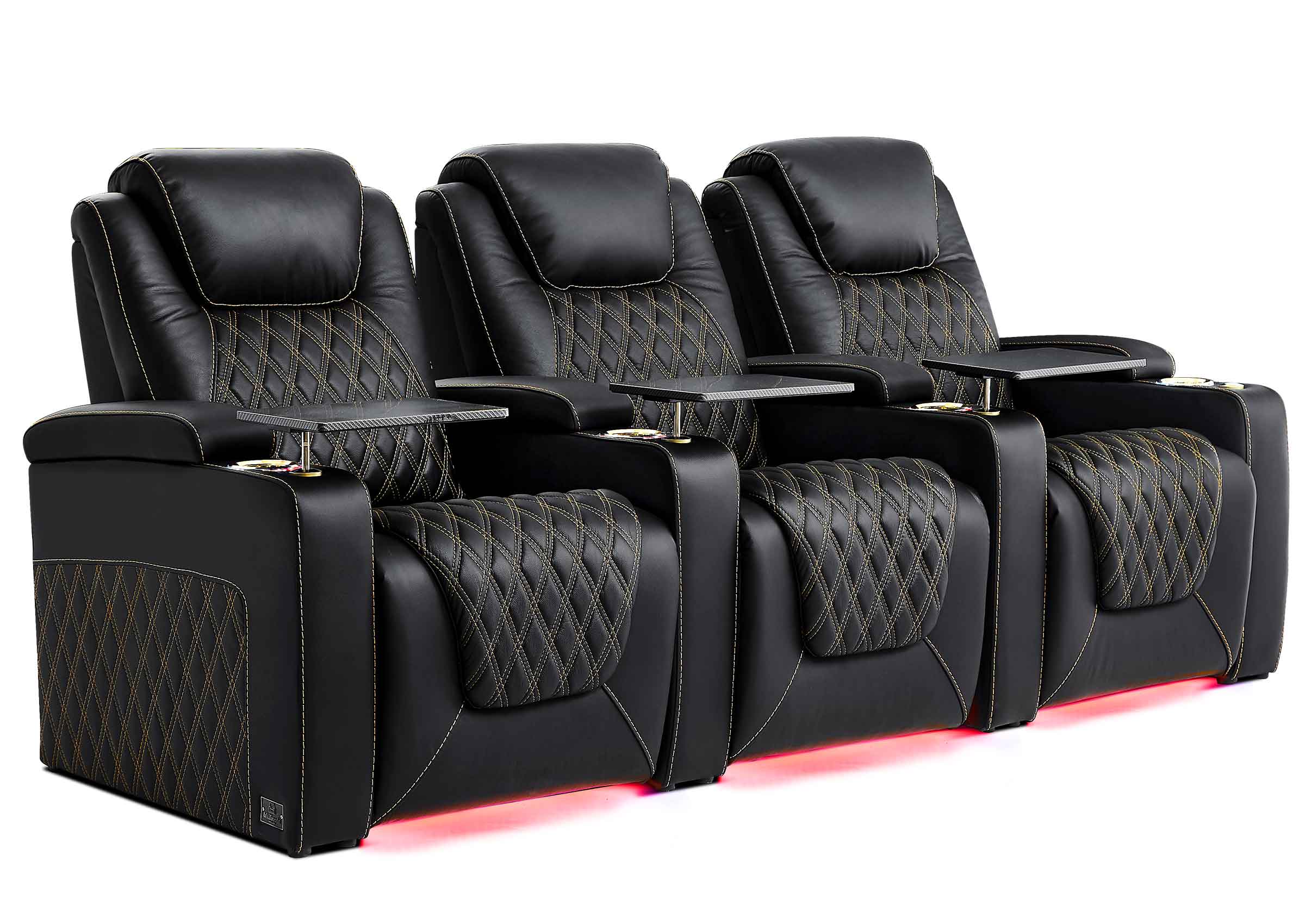
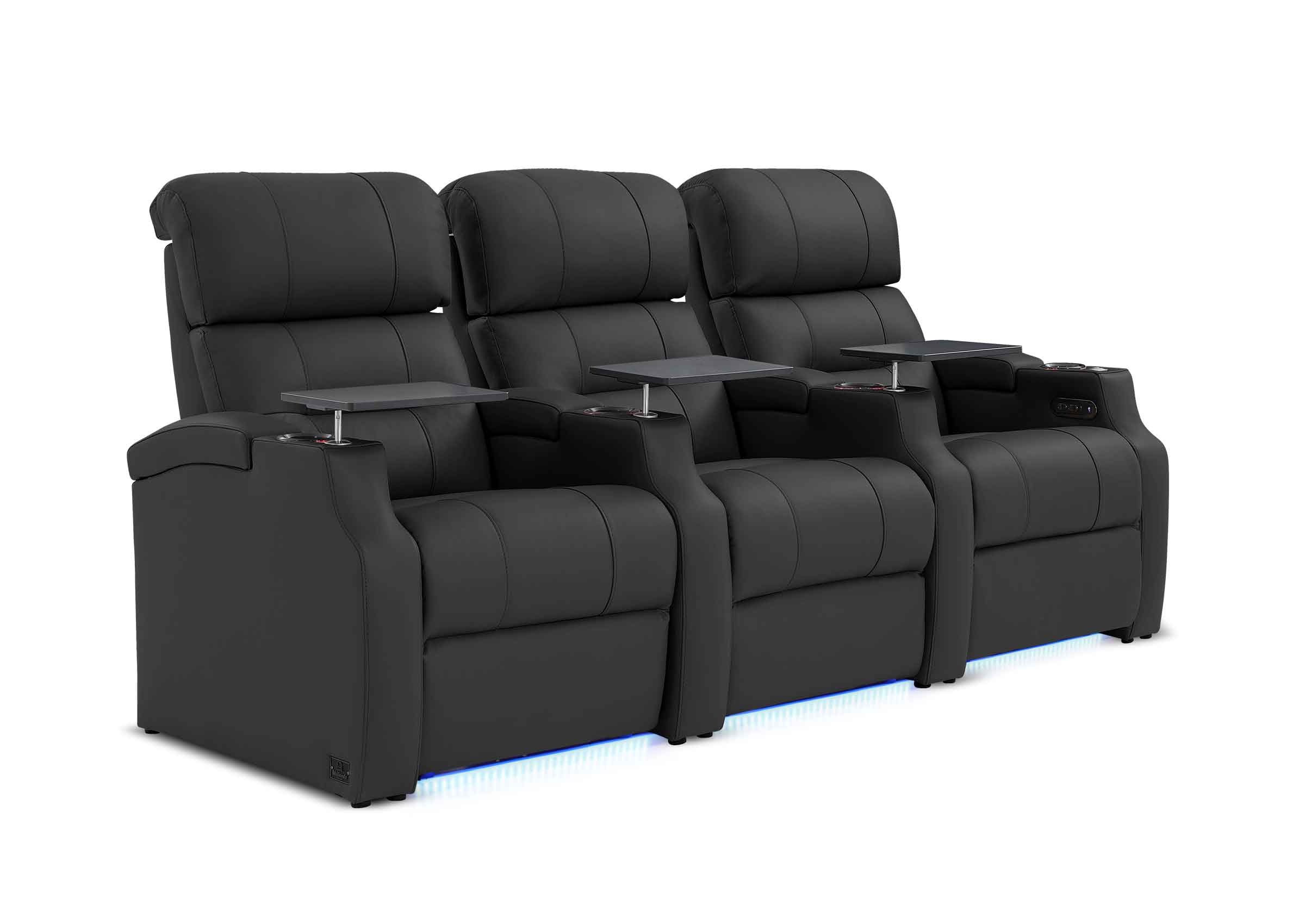
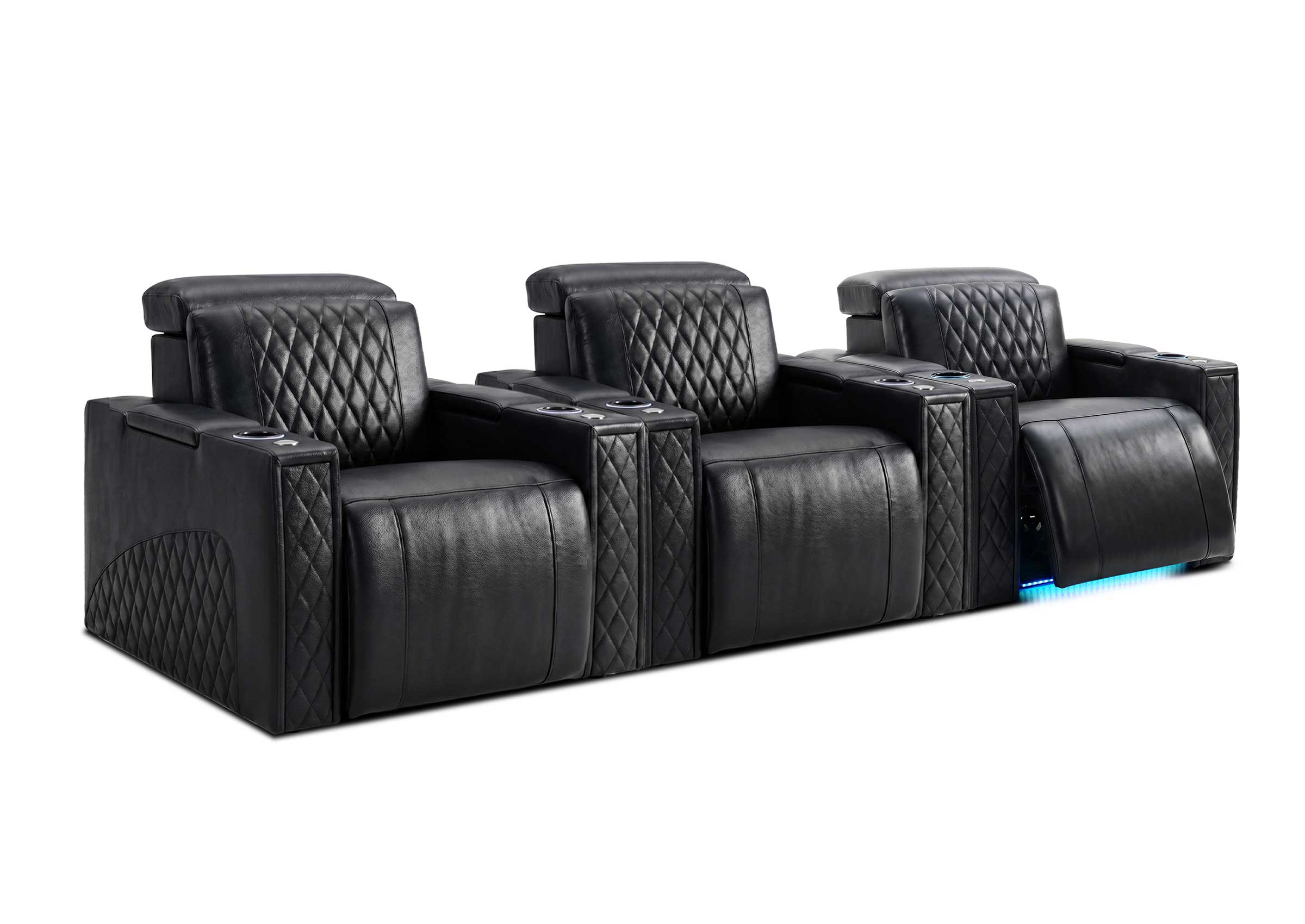
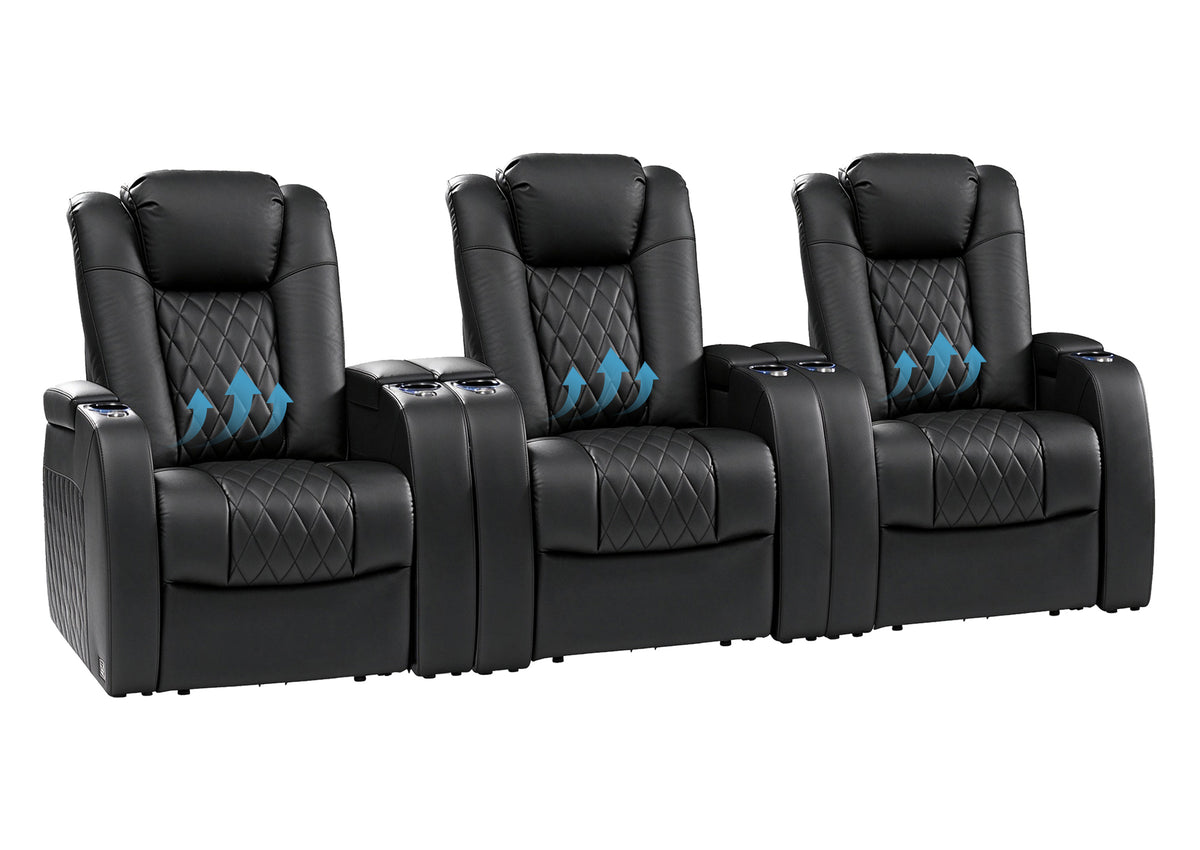
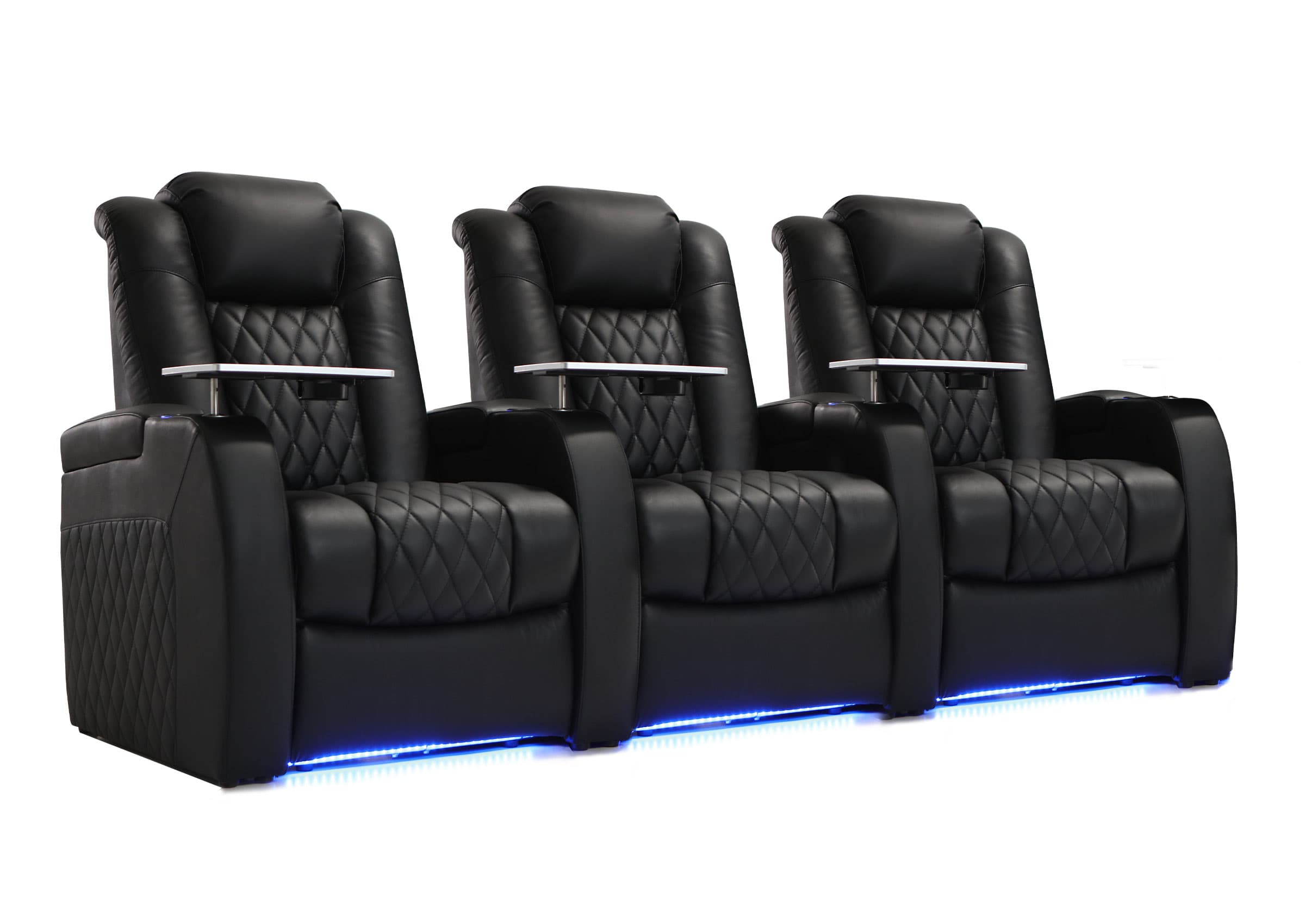
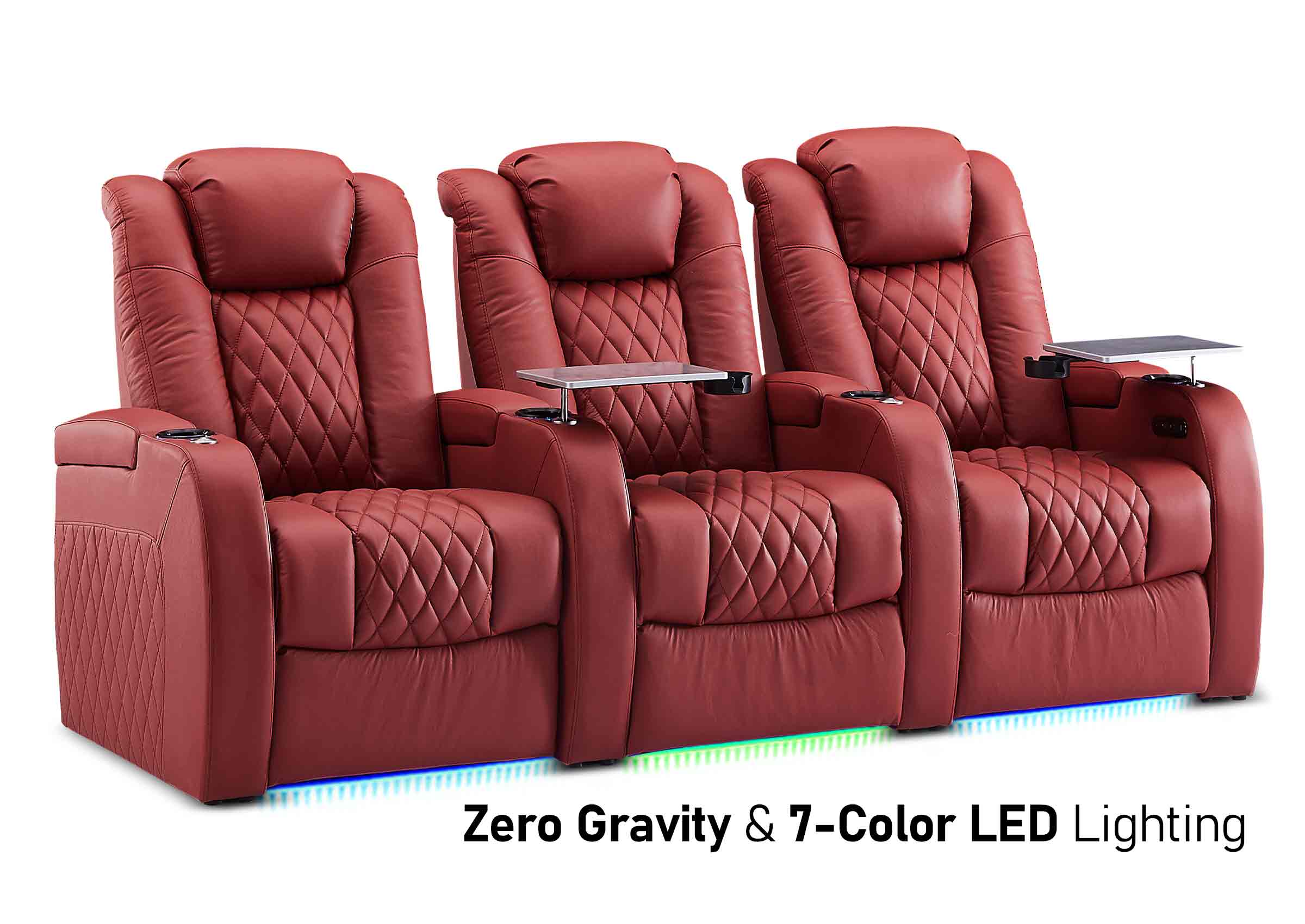
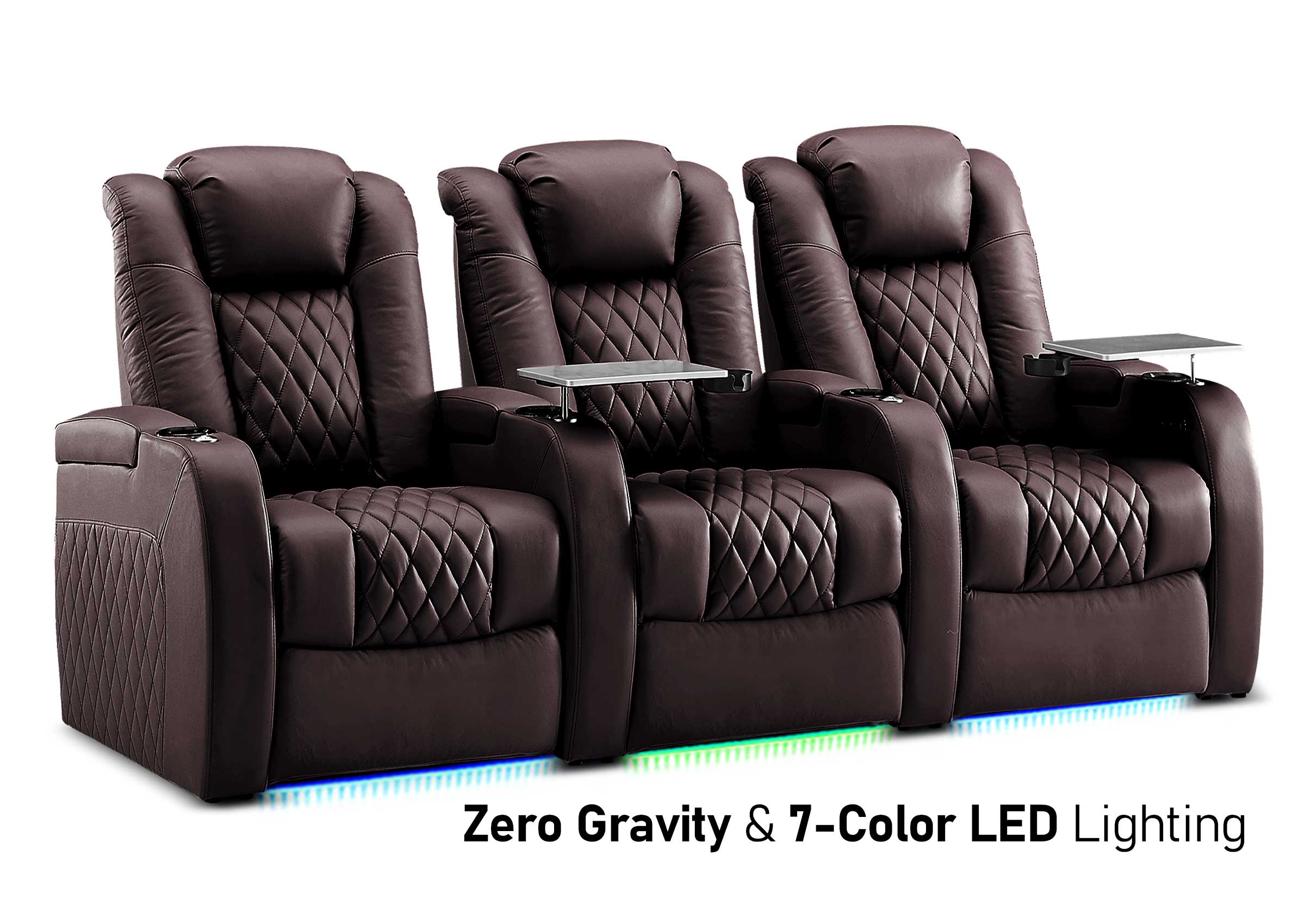
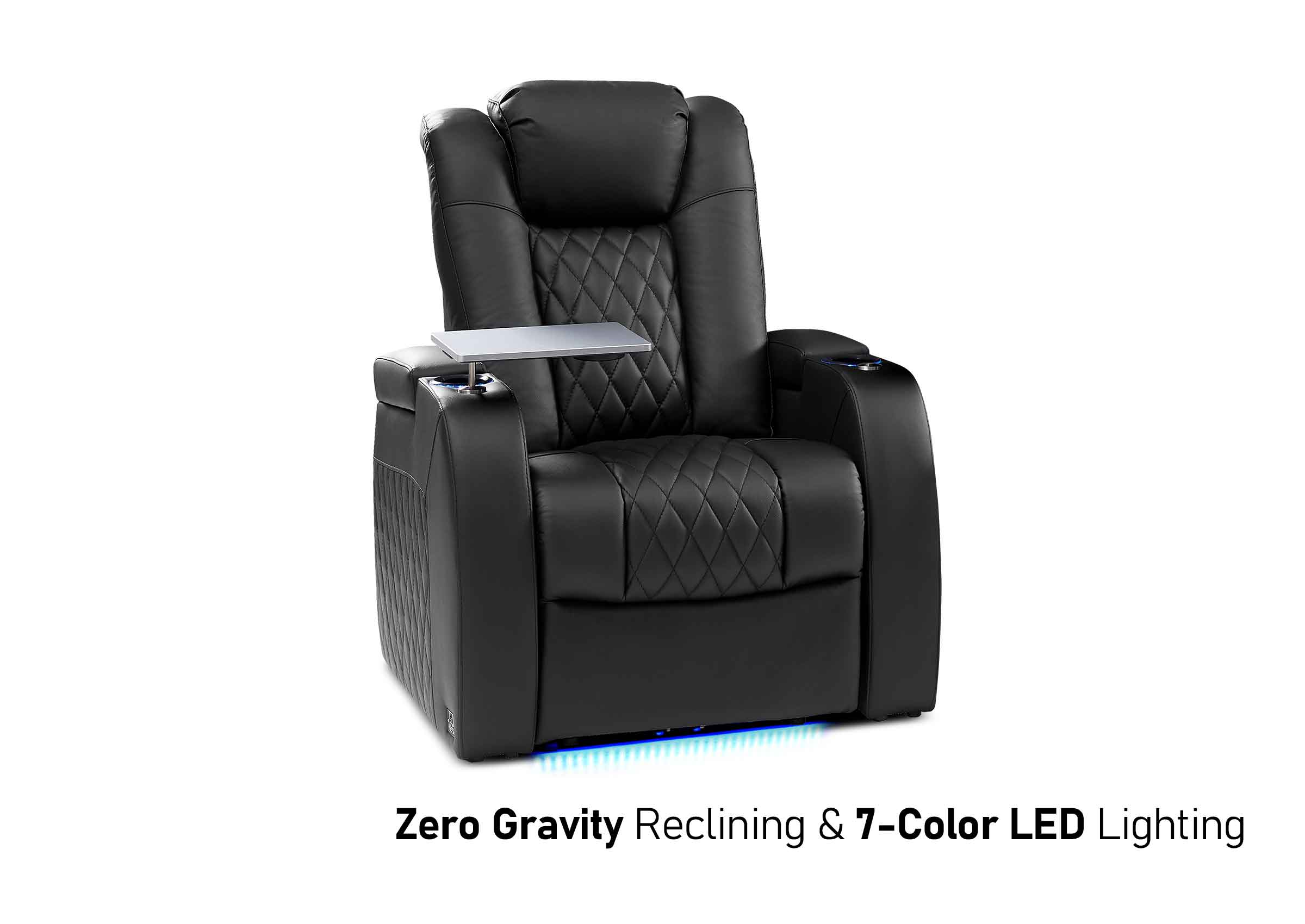
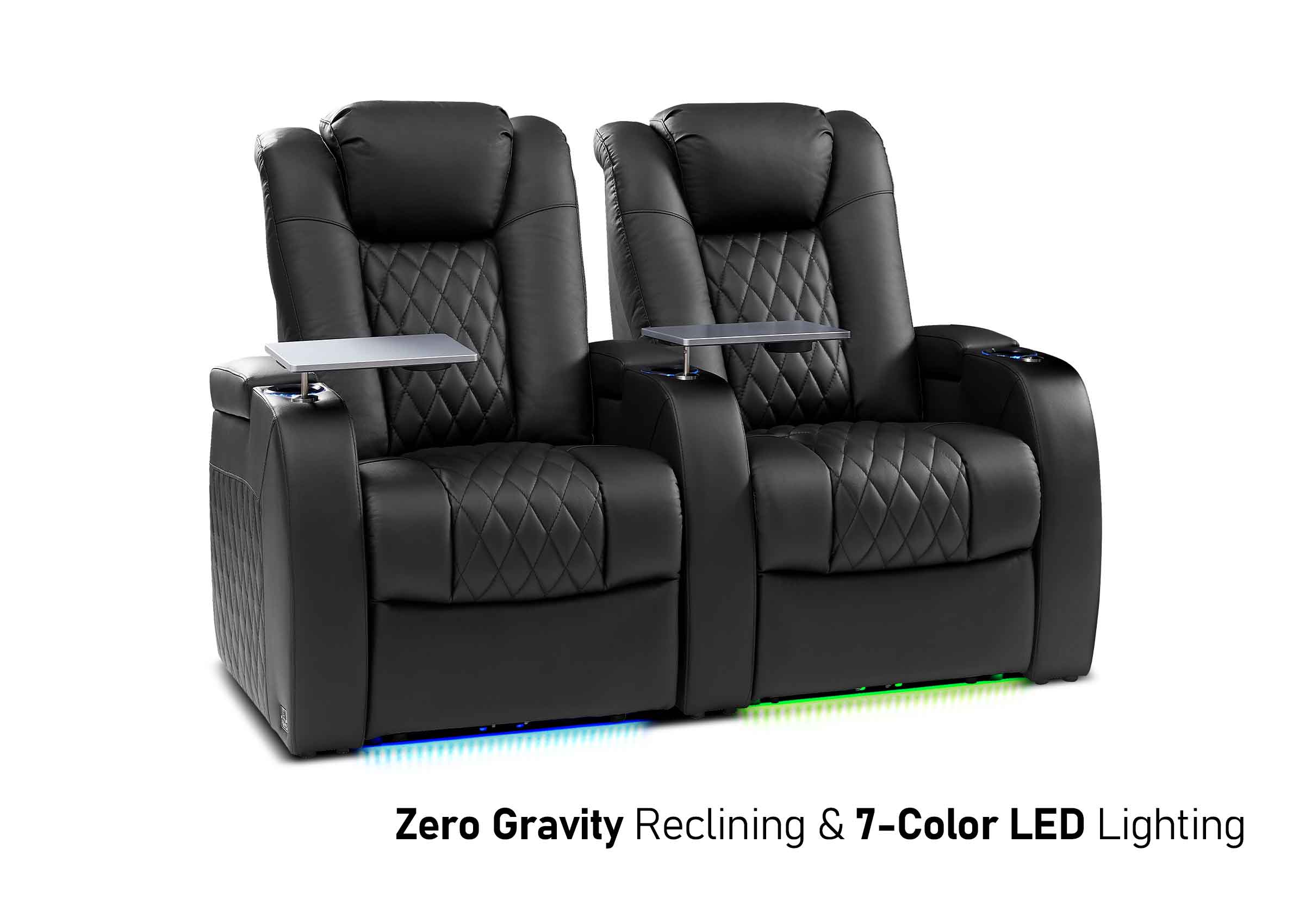
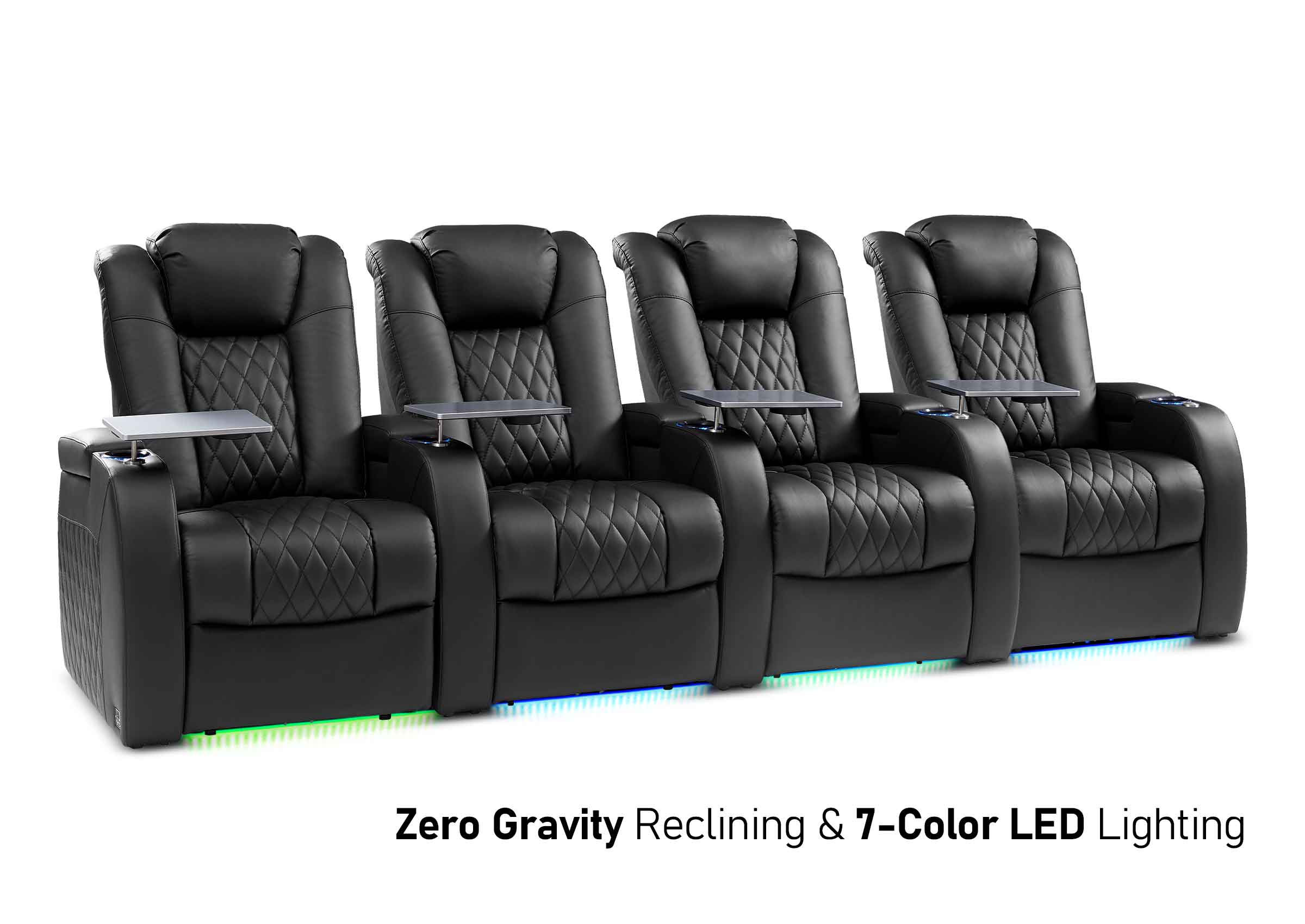
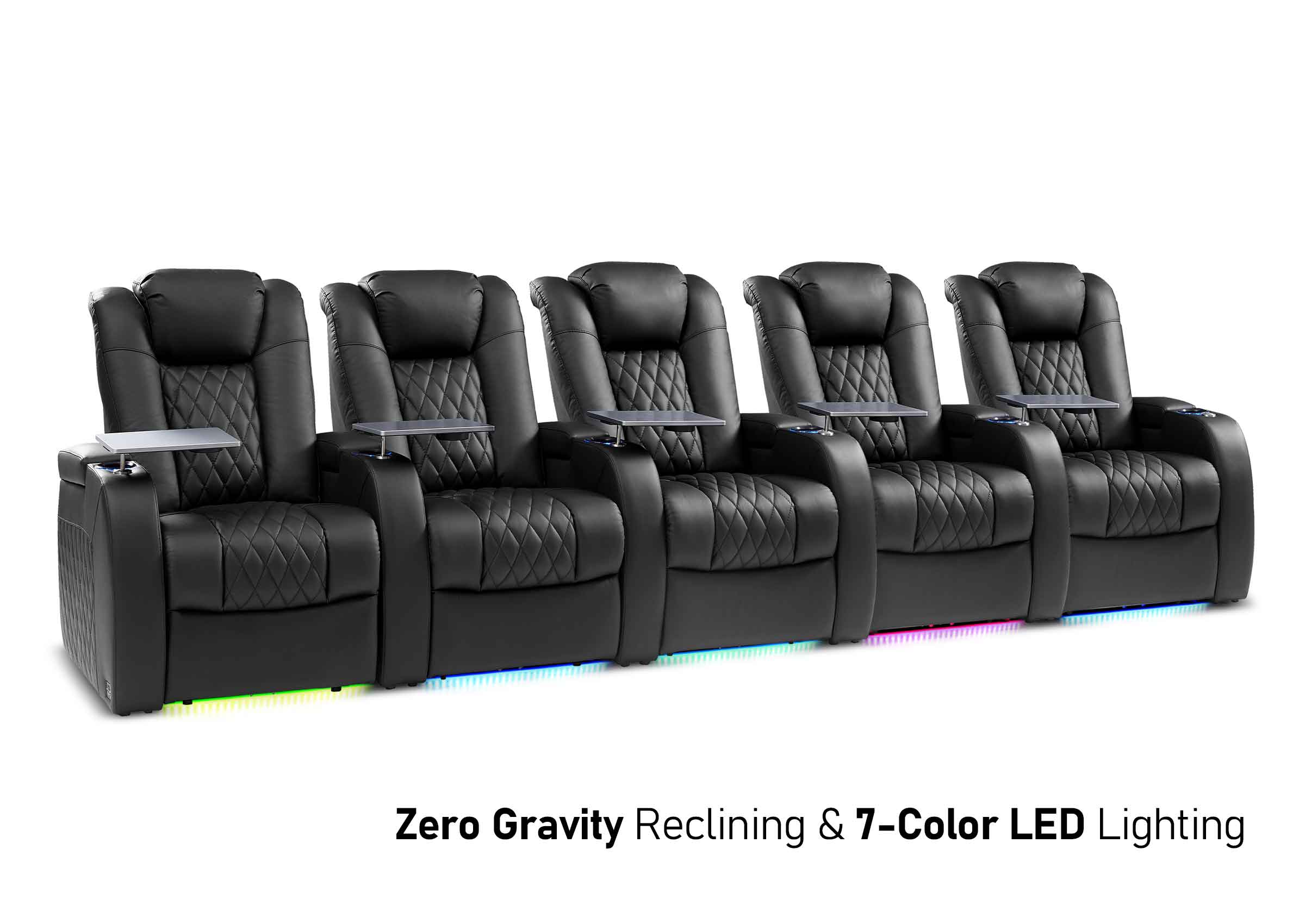
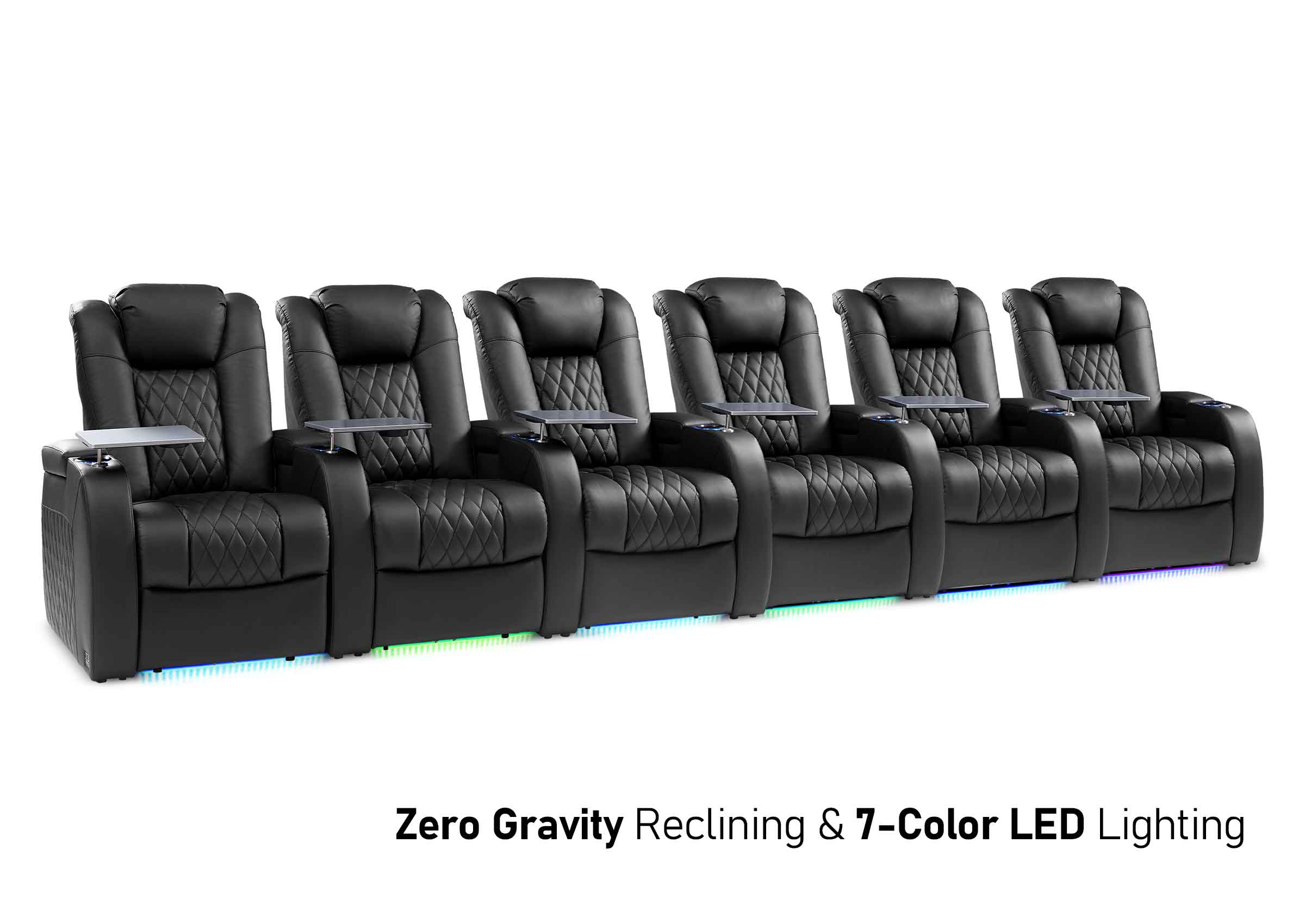
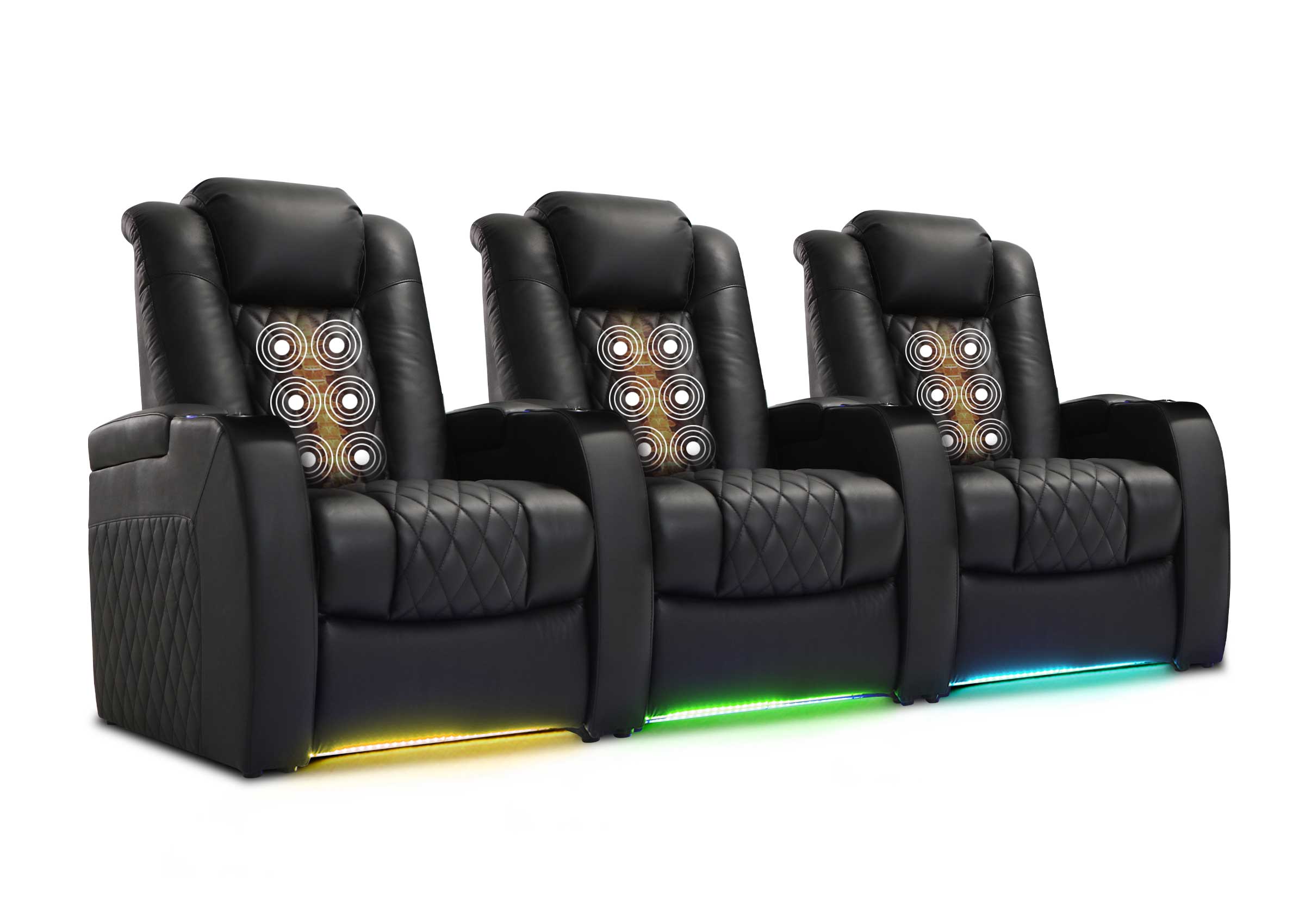
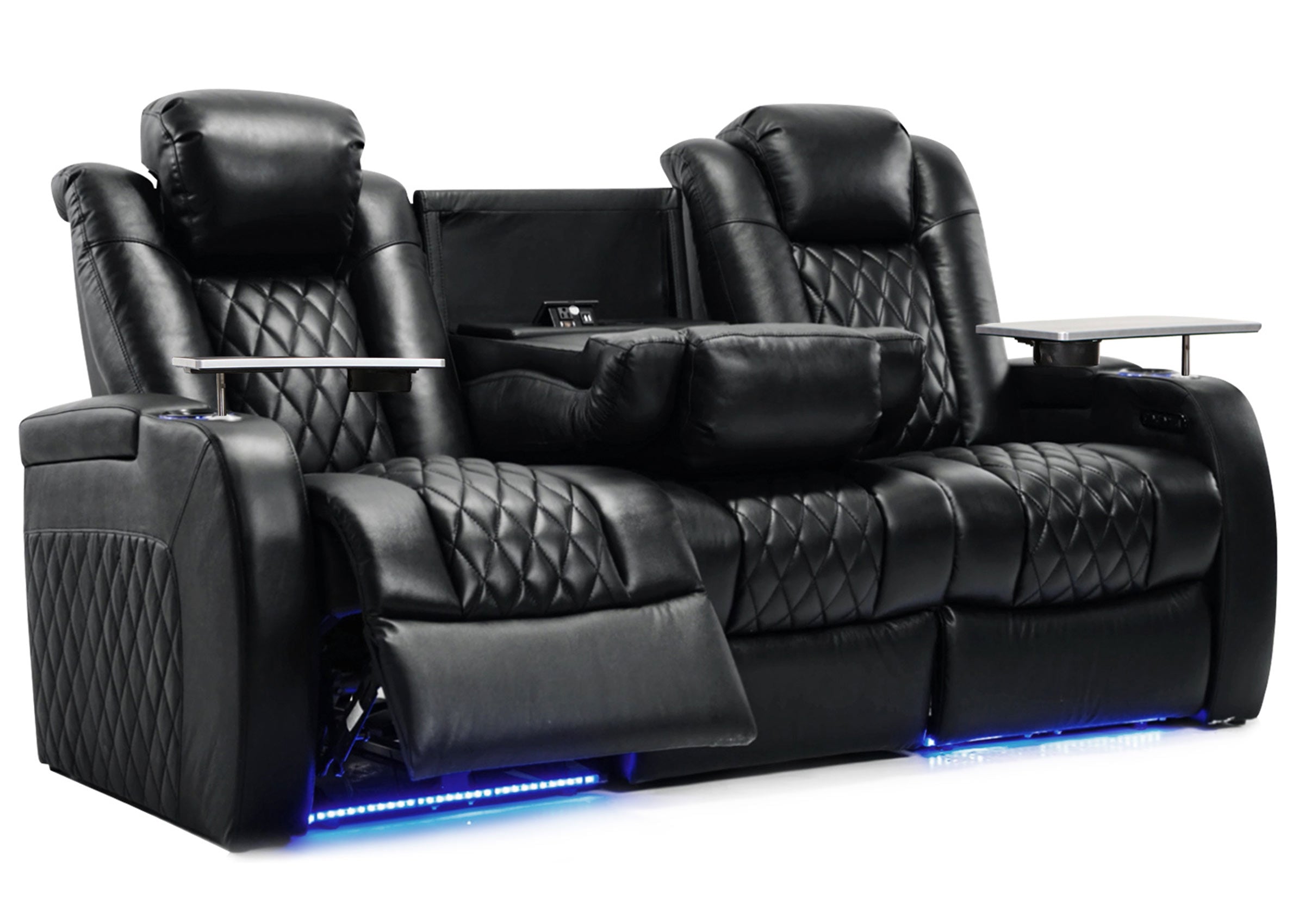
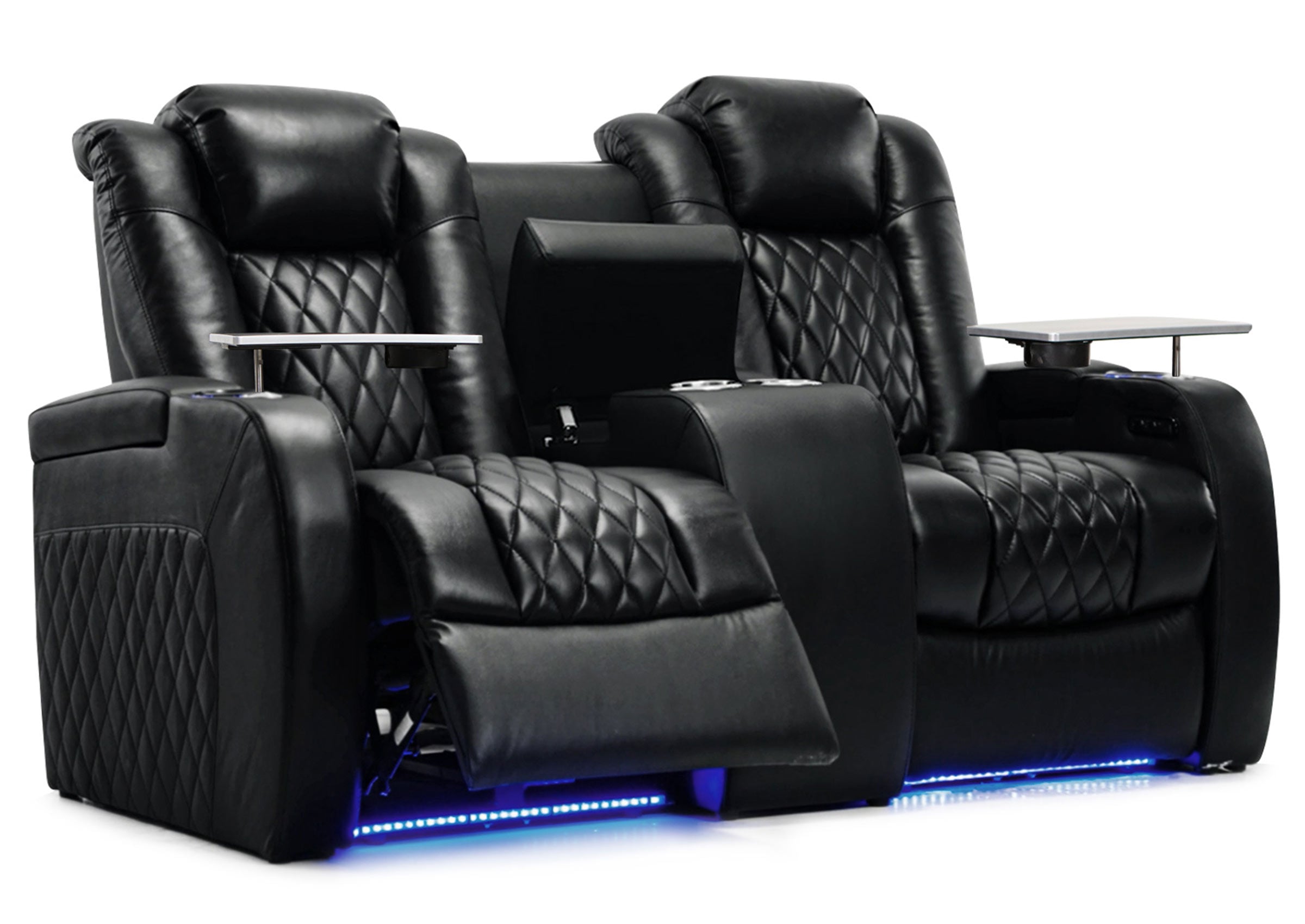
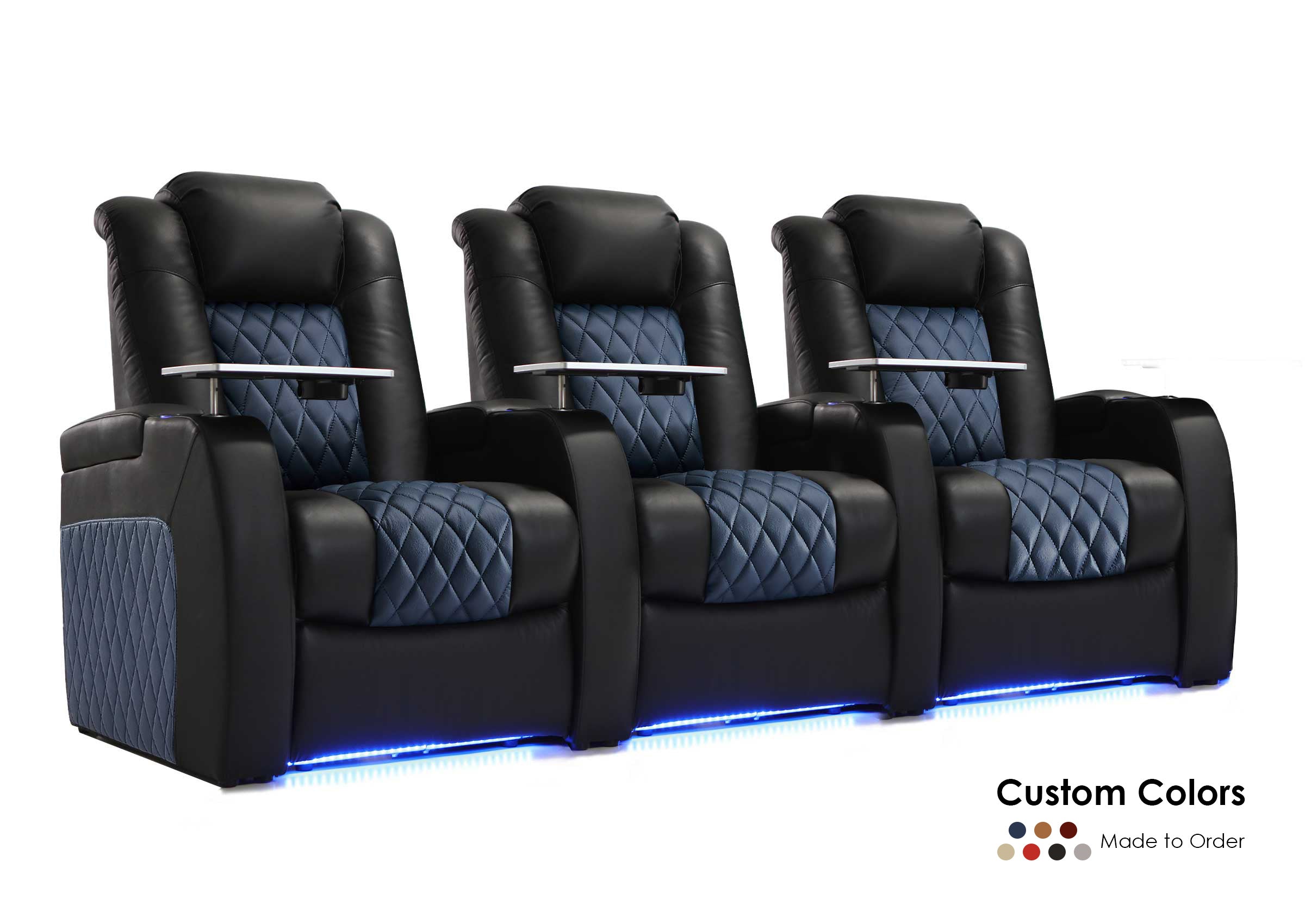
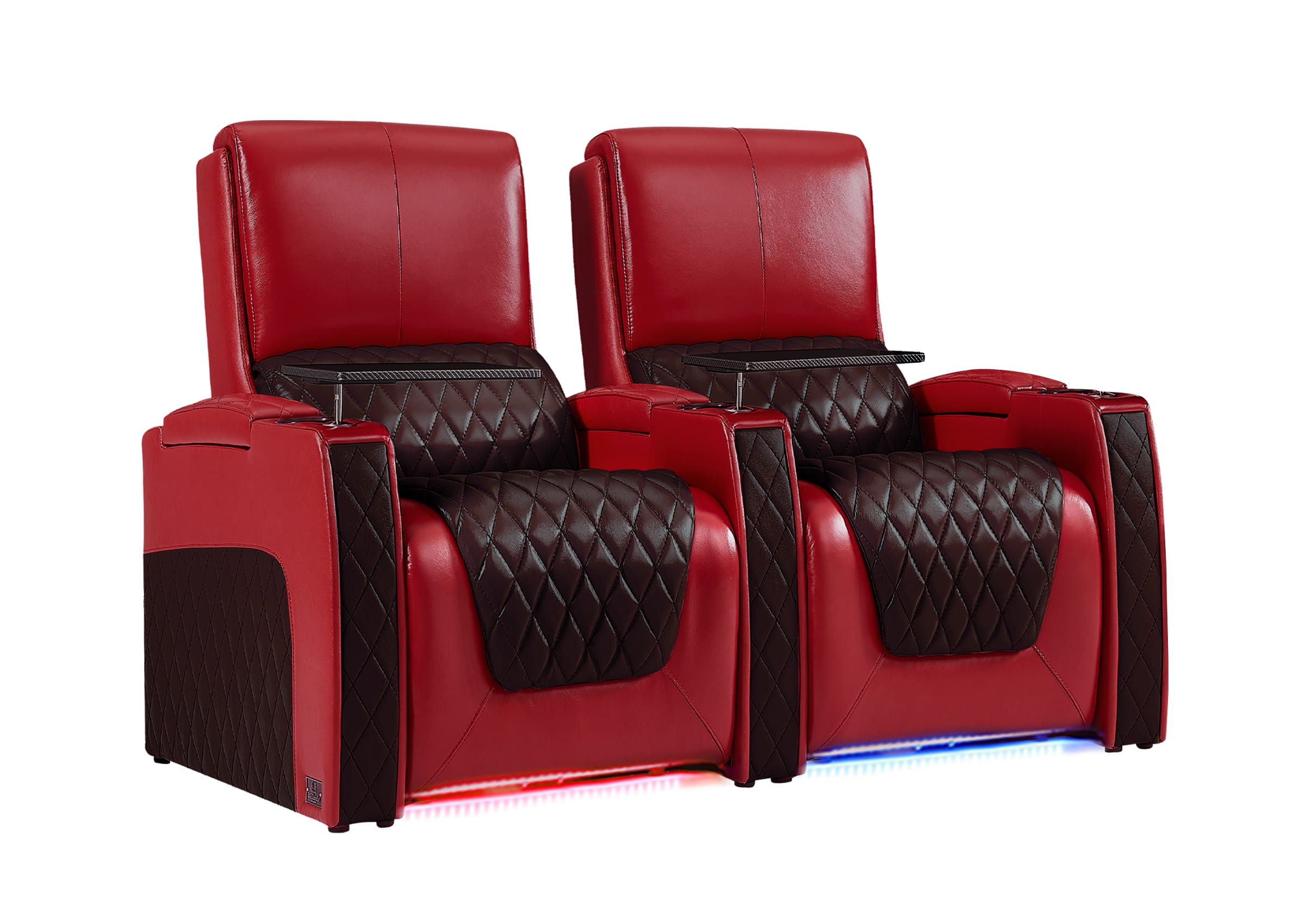
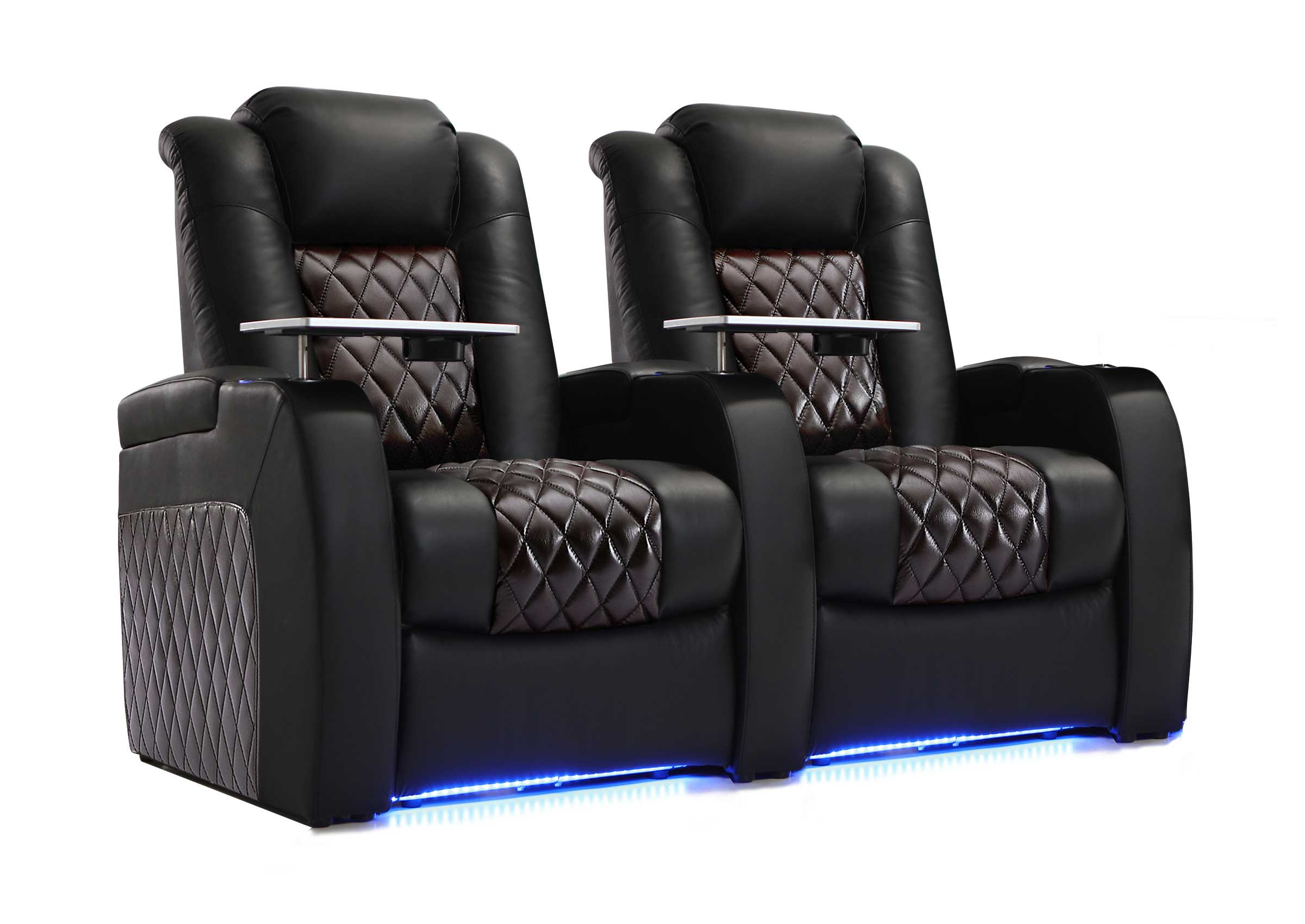
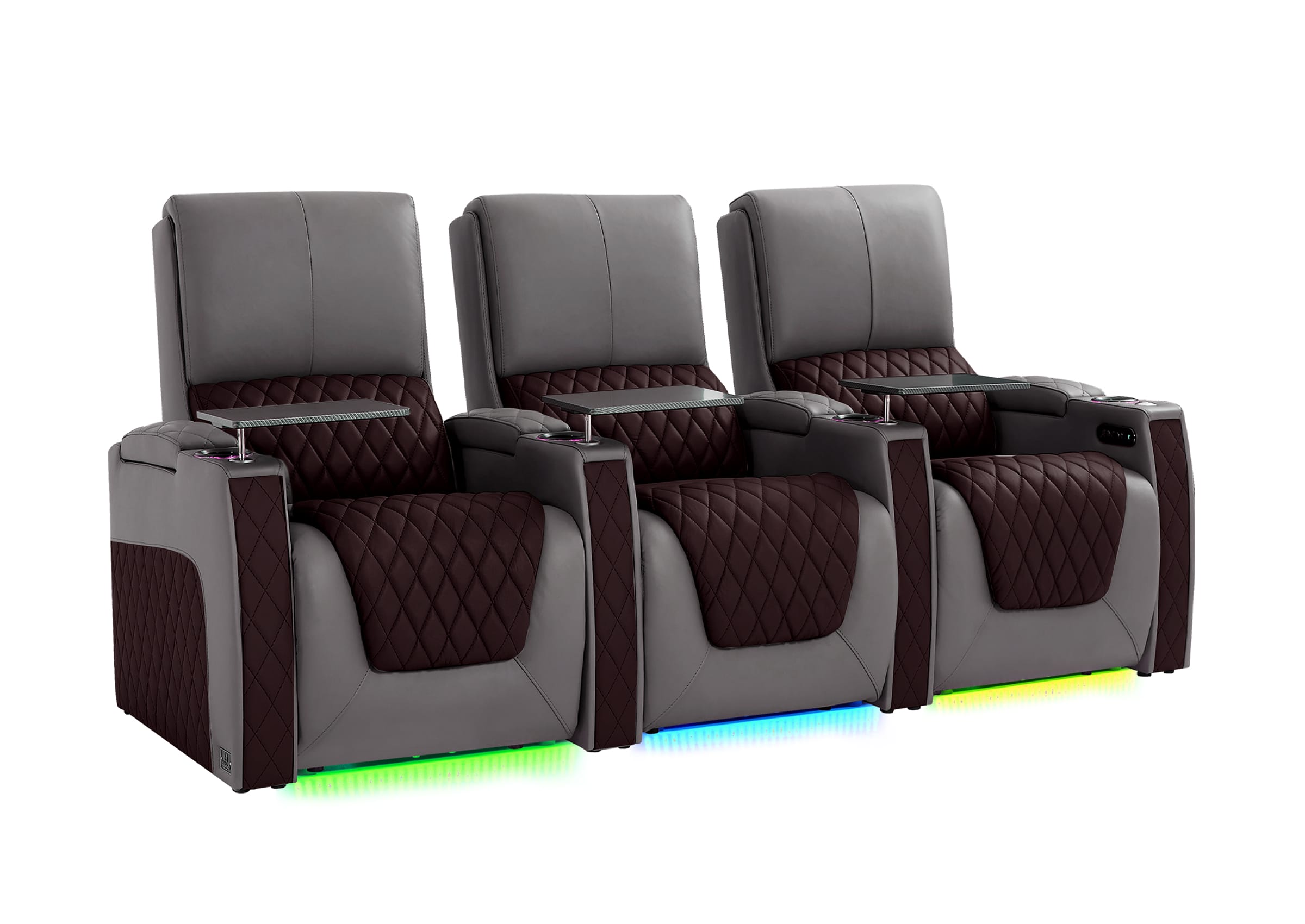
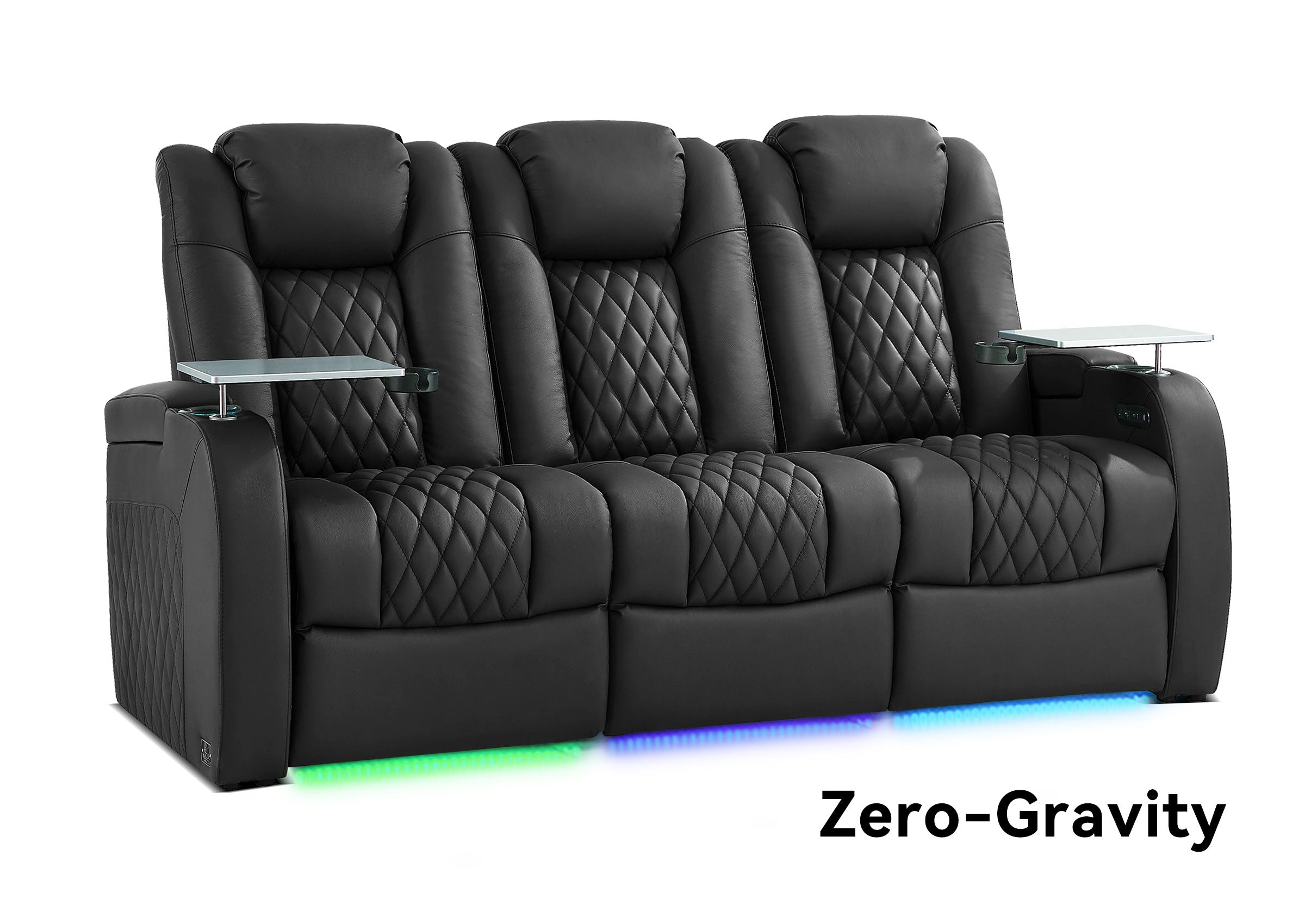
Recliners with integrated cup holders, USB charging, and hidden storage help reduce the need for side tables or extra furniture, keeping the room visually clean.
Comfort should replace quantity—fewer seats, but better long-session support.

Color Palette and Materials That Support Minimalism
Minimalist home theater design depends heavily on material choices.
Recommended combinations:
- Matte black or charcoal walls for depth
- Soft gray or taupe seating for balance
- Wood or acoustic panel accents for warmth
- Leather or performance upholstery for clean surfaces
Leather seating is often preferred in minimalist theaters because it is easier to maintain and visually consistent across large surfaces.
Light-absorbing materials help reduce reflections, improving screen clarity and keeping the focus on the display.
Lighting Strategy: Less Light, Better Control
Lighting is one of the most important elements in minimalist home theater design.
Instead of multiple light sources, focus on layered and controlled lighting:
- LED strip lighting behind seats or walls
- Dimmable wall sconces
- Floor-level ambient lighting
- Screen-friendly low glow settings
Good minimalist lighting should support visibility without competing with the screen.
Avoid:
- Bright ceiling fixtures
- Decorative chandeliers
- Overlapping color lighting systems
The goal is to guide attention, not divide it.

Hidden Technology and Cable Management
A clean theater design depends on how well technology is concealed.
Key strategies include:
- In-wall speaker systems
- Cable channels behind walls or baseboards
- Hidden AV cabinets
- Wireless or streamlined control systems
Even high-end equipment can break the minimalist look if cables and devices are exposed.
A well-designed system should make the technology feel invisible while keeping performance intact.
Acoustic Balance Without Visual Complexity
Minimalist design does not ignore acoustics—it simplifies how they are achieved.
Instead of bulky acoustic treatments, consider:
- Fabric-wrapped wall panels in neutral tones
- Acoustic curtains that blend into the room
- Built-in wall treatments that double as decor
- Strategic furniture placement for sound diffusion
A quiet-looking room should still deliver balanced, immersive sound.
This balance is what separates a minimalist theater from a plain empty room.
Best Room Types for Minimalist Home Theaters
Minimalist home theater designs work especially well in:
- Living rooms with shared entertainment use
- Basement media rooms with controlled lighting
- Dedicated small home theater rooms
- Multi-purpose family rooms
- Apartment entertainment spaces
For families and homeowners who value both daily usability and movie-night experience, minimalist layouts help avoid the “over-designed” feeling that often makes rooms less comfortable over time.
Common Mistakes in Minimalist Theater Design
Minimalism is easy to misunderstand. Removing too much can hurt usability.
Here are common mistakes:
- Choosing furniture that looks minimal but lacks comfort
- Using too few seats for real family use
- Ignoring storage needs for remotes, snacks, and devices
- Making the room too cold or empty with no texture
- Over-hiding technology at the cost of usability
Minimalist does not mean empty—it means intentional.
Every item should improve comfort, function, or visual clarity.
How to Build a Balanced Minimalist Setup Step by Step
A practical approach:
- Start with screen placement and viewing distance
- Define seating layout before choosing furniture
- Decide where storage will be hidden
- Plan lighting zones instead of fixtures
- Add acoustic elements only where needed
- Integrate technology invisibly into the structure
This sequence prevents overcrowding and keeps design decisions focused on real usage rather than decoration.
Where Seating Design Fits Into Minimalist Theaters
In real-world setups, seating often determines whether the room still feels minimalist after completion.
Modern recliner sofas and theater seating can support minimal design when they include:
- Built-in storage instead of extra furniture
- Clean armrest layouts
- Integrated charging ports
- Subtle LED lighting instead of external lamps
Some home theater seating options, such as those designed for media rooms and family movie setups, focus on combining comfort with reduced visual complexity. This helps maintain a clean design while still supporting long viewing sessions, gaming, and everyday relaxation.
FAQ: Minimalist Home Theater Design
What is a minimalist home theater design?
A minimalist home theater design focuses on simplicity, clean layouts, and essential elements only. It removes visual clutter and prioritizes seating comfort, screen visibility, lighting control, and acoustic balance to create a focused viewing environment.
Is minimalist design good for small home theaters?
Yes. Minimalist design works especially well in small spaces because it avoids overcrowding. Using fewer seats, hidden storage, and wall-integrated technology helps the room feel larger and more open.
What colors work best for a minimalist theater room?
Neutral and dark tones work best, such as black, gray, beige, and muted wood finishes. These colors reduce reflections and keep attention on the screen.
How many seats should a minimalist home theater have?
Most minimalist setups use 2–4 seats depending on room size. The goal is not maximum seating capacity but comfortable long-session viewing for real users.
Do I need special furniture for minimalist design?
Not necessarily, but furniture with built-in storage, clean armrests, and integrated features helps maintain a clutter-free look and reduces the need for extra tables or cabinets.
How do I keep cables hidden in a minimalist theater?
Use in-wall routing, cable channels, or AV cabinets. Planning cable paths during the design stage is the most effective way to maintain a clean visual layout.
Designing for Simplicity and Real Use
Minimalist home theater design is not about removing comfort—it’s about removing distractions that don’t improve the experience.
When the layout, seating, lighting, and technology all work together in a clean and intentional way, the room becomes easier to use, more comfortable for long viewing sessions, and visually more immersive.
If you are planning a media room or home theater, choosing seating and layout that support real daily use is often more important than adding extra features or furniture layers.
If you are exploring home theater seating options or planning a custom minimalist setup, you can design around your real space needs and viewing habits. For more guidance or personalized suggestions, feel free to reach out at leon@weiliandahome.com.