









Good home theater wall decor should make the room feel intentional without competing with the screen. A practical approach is to give each wall a different job: keep the screen wall visually quiet, use the side walls for controlled texture or functional decor, and reserve the back wall for more personality.
That does not mean every surface needs to be dark, padded, or covered with movie posters. The best result comes from balancing viewing comfort, room scale, sound considerations, lighting, and the way the theater looks when the screen is off.
What Should Home Theater Wall Decor Actually Do?
Wall decor in a home theater has a more demanding role than wall decor in a normal living room. It should help the room feel finished, but it also sits close to a bright screen, speakers, lighting, and equipment that need to perform without obstruction.
A useful wall plan should do four things:
- Keep attention directed toward the screen during viewing
- Add enough texture and personality to prevent the room from feeling unfinished
- Coordinate with seating, flooring, lighting, and the overall room style
- Preserve access to speakers, vents, controls, outlets, doors, and service points
Before choosing artwork, divide the room into visual zones. The wall behind the screen usually needs the least decoration. Side walls can carry rhythm and texture. The back wall can support a stronger feature because it is less likely to remain in the viewer’s direct line of sight.
This wall-by-wall method is more dependable than buying several attractive pieces first and trying to find space for them later.
What Should You Check Before Decorating the Walls?
Begin with the parts of the room that are already fixed or difficult to move. Mark their positions before deciding where the decor will go.
Check:
- The outer edges of the television or projection screen
- Front, center, surround, and rear speaker locations
- The projector’s light path, if the room uses one
- Wall switches, outlets, thermostats, sensors, and control panels
- HVAC supply and return vents
- Doors and the space required for them to open
- Reclined sightlines from every seating position
- Existing sconces, LED channels, and pathway lights
- Any wall panels or treatments already included in the room plan
Next, sit in each main seat with the room lights set the way they will be during a movie. A frame or reflective surface that looks harmless in daylight may become distracting when it catches the screen or a sconce at night. Taking a photograph from each seat can make a bright reflection or visually crowded wall easier to notice than it is while standing in the room.
Use painter’s tape or paper templates to test the size and spacing of proposed artwork. This simple step reveals whether a poster group feels balanced from the seats—not just when standing close to the wall.
What Works Best on the Screen Wall?
The screen wall should normally be the calmest wall in the room. Its purpose is to frame the image, reduce visual competition, and make the screen feel like the natural focal point.
Good options include:
- A matte painted finish
- Subtle fabric or upholstered wall panels
- Low-contrast wood slats or architectural paneling
- A simple border or surround that visually anchors the screen
- Concealed cable routes and equipment access
- Restrained lighting that can be dimmed or switched off during viewing
As our guide to home theater wall colors explains, the screen wall does not need to be completely black. Deep charcoal, muted navy, dark brown, or another low-reflectance color can feel softer and still keep the picture visually dominant. The exact choice should coordinate with the screen type, room lighting, and surrounding finishes.
Avoid placing small decorative objects around the screen simply because the wall feels empty. Multiple frames, bright signs, glossy shelves, or highly contrasting patterns can make the eye move away from the image. If the screen wall needs character, one consistent material treatment usually works better than several unrelated decorations.
What Should Go on the Side Walls?
Side walls offer the best balance between decoration and viewing function. They are visible when people enter the room, but they do not need to compete directly with the screen.
Suitable side-wall ideas include:
- Framed movie posters with controlled reflections
- Fabric-wrapped panels
- Decorative acoustic panels selected for the room plan
- Dark wood slats or shallow wall paneling
- A small number of oversized art pieces
- Wall molding painted in a low-contrast color
- Sconces positioned between artwork or panels
- Narrow display ledges outside walking and seating zones
Think in terms of rhythm rather than filling every empty area. Repeating panel widths, frame sizes, or spacing can visually lengthen the room and make multiple seating rows feel organized.
Side-wall decor also needs to work from a seated viewpoint. Artwork hung according to standing eye level may feel too high from a recliner. Test the composition from the actual seats before drilling or permanently mounting anything.

What Should Go on the Back Wall?
The back wall can usually carry more visual personality because viewers are not facing it during a movie. It is a good location for a larger piece of artwork, a restrained gallery, a theater sign, architectural paneling, or a display related to the household’s interests.
Possible approaches include:
- One large cinematic or abstract artwork
- A symmetrical group of two or three coordinated prints
- A display of selected film memorabilia
- Fabric or wood paneling that continues the side-wall design
- Concealed storage or shallow cabinetry when room depth allows
- A curtain treatment that softens the wall visually
However, the back wall may also contain rear speakers, equipment access, or a door. Decor should not cover speaker openings, restrict ventilation, create rattling surfaces, or make service access difficult.
If the last seating row is close to the wall, avoid deep shelves and projecting objects above viewers’ heads. A flatter treatment will usually feel safer, cleaner, and less crowded.
Are Movie Posters a Good Choice for a Home Theater?
Movie posters are a natural choice because they give the room a personal connection to film. The challenge is using them as part of a composition rather than turning every wall into a collection display.
For a cleaner result:
- Choose a consistent frame color or finish
- Use related poster sizes, even when the artwork differs
- Leave deliberate space between frames
- Keep highly colorful posters away from the immediate screen area
- Consider low-reflection glazing where reflections would be distracting
- Limit the collection to favorites instead of displaying everything at once
A row of similarly sized posters can work well along a side wall. One larger poster may be more effective in a small room. If the collection is larger than the available wall space, rotating a few favorites can preserve variety without creating permanent visual clutter. In a premium theater, fabric-printed artwork or artwork integrated into purpose-designed panels can create a softer look than several shiny glass frames.
Posters should also be treated as art, not automatically as acoustic treatment. Printing an image on fabric does not by itself confirm how the complete panel will perform. If sound absorption matters, the panel construction, covering material, placement, and room plan all need to be considered.
Can Acoustic Panels Double as Wall Decor?
They can, and this is one of the most useful ways to combine function and appearance. Fabric-wrapped panels, printed panels, slatted treatments with suitable backing, and custom shapes may introduce color, texture, or artwork while contributing to the room’s acoustic plan.
The important distinction is that decorative appearance does not prove acoustic performance. A wood-look panel, foam tile, upholstered square, or fabric print may behave differently depending on what is behind the visible surface and how it is installed.
Before treating a decorative product as acoustic treatment, confirm:
- What the panel is designed to do
- Which frequencies or room problems it is intended to address
- The complete construction behind the visible finish
- Whether the face material allows the intended performance
- The required thickness, mounting method, and air space
- Where it should be placed for the actual speaker and seating layout
Acoustic treatment and soundproofing are also different tasks. Treatments inside the room may help manage reflections or reverberation, while sound isolation deals with sound passing into or out of the room. Wall decor should not be promoted as a soundproofing solution unless the complete construction has been designed and verified for that purpose.

Which Wall Materials Create the Best Look?
The right material depends on whether the room should feel like a cinema, a lounge, a modern media space, or part of the rest of the home.
| Wall material | What it can add | What to check |
|---|---|---|
| Matte paint | A calm, affordable background | Color in both viewing and normal lighting |
| Fabric panels | Soft texture and a tailored appearance | Construction, cleaning, seams, and verified acoustic role |
| Wood slats | Warmth, rhythm, and architectural detail | Surface reflection, backing, dust, and speaker conflicts |
| Wall molding | Traditional structure without heavy visual clutter | Keep contrast restrained near the screen |
| Wallpaper | Pattern and personality | Avoid glossy finishes or busy patterns in direct view |
| Stone or brick | Strong texture and a dramatic feature | Hardness, reflections, dust, projection depth, and room scale |
| Framed artwork | Easy personalization and future changes | Glare, frame consistency, and mounting position |
| Curtains | Softness and the ability to conceal parts of a wall | Fabric fullness, access, safety, and interference with equipment |
Mixing materials can create depth, but too many finishes make a theater feel smaller and less coherent. A practical rule is to choose one dominant wall treatment, one supporting texture, and a restrained accent rather than giving every wall a different theme.
BRING THE ROOM TOGETHER
Ready to Coordinate the Walls With the Seating?
Once the screen wall, side-wall materials, lighting, and room palette are clear, compare seating options that support the same visual direction without making the room feel crowded.
How Should Wall Decor Work With Theater Lighting?
A thoughtful home theater lighting plan should reveal the wall decor before and after a movie without becoming part of the picture during viewing.
Wall sconces can create a classic theater rhythm, especially when aligned with panels or poster groups. Concealed LED lighting can outline a material transition or create a soft glow. If atmosphere is part of the goal, consider how LED lighting changes a movie-night setting without allowing it to overpower the screen. Picture lights may work for selected artwork, but they need separate control so they do not remain distracting during a film.
Check every decorative and lighting combination for:
- Reflections visible from the seats
- Bright points close to the screen
- Light spilling onto the screen surface
- Shadows that make panel spacing look uneven
- Fixtures that conflict with speakers or walkways
- Controls that allow the room to move from entry lighting to viewing lighting
The decor should still look intentional when the lights are low. If a design only works under bright room lighting, it may not suit the way the theater is actually used.
How Can You Decorate a Small Home Theater Without Making It Feel Crowded?
Small theaters benefit from fewer, larger decisions. Many small frames, shelves, signs, and contrasting materials can make the side walls appear to close in around the seats.
Use one or two of these strategies:
- Continue one wall color across several surfaces
- Use a single large artwork instead of a gallery wall
- Repeat shallow panels with consistent spacing
- Keep the screen wall nearly free of decoration
- Choose low-profile sconces or concealed lighting
- Match frame color closely to the wall
- Use vertical elements carefully to make a low room feel taller
- Keep shelves and memorabilia away from narrow walkways
In a narrow theater, visual continuity is often more valuable than variety. Matching the frames, panel edges, and lighting finish can make a modest room feel deliberately designed rather than densely decorated.
How Should Wall Decor Coordinate With the Seating?
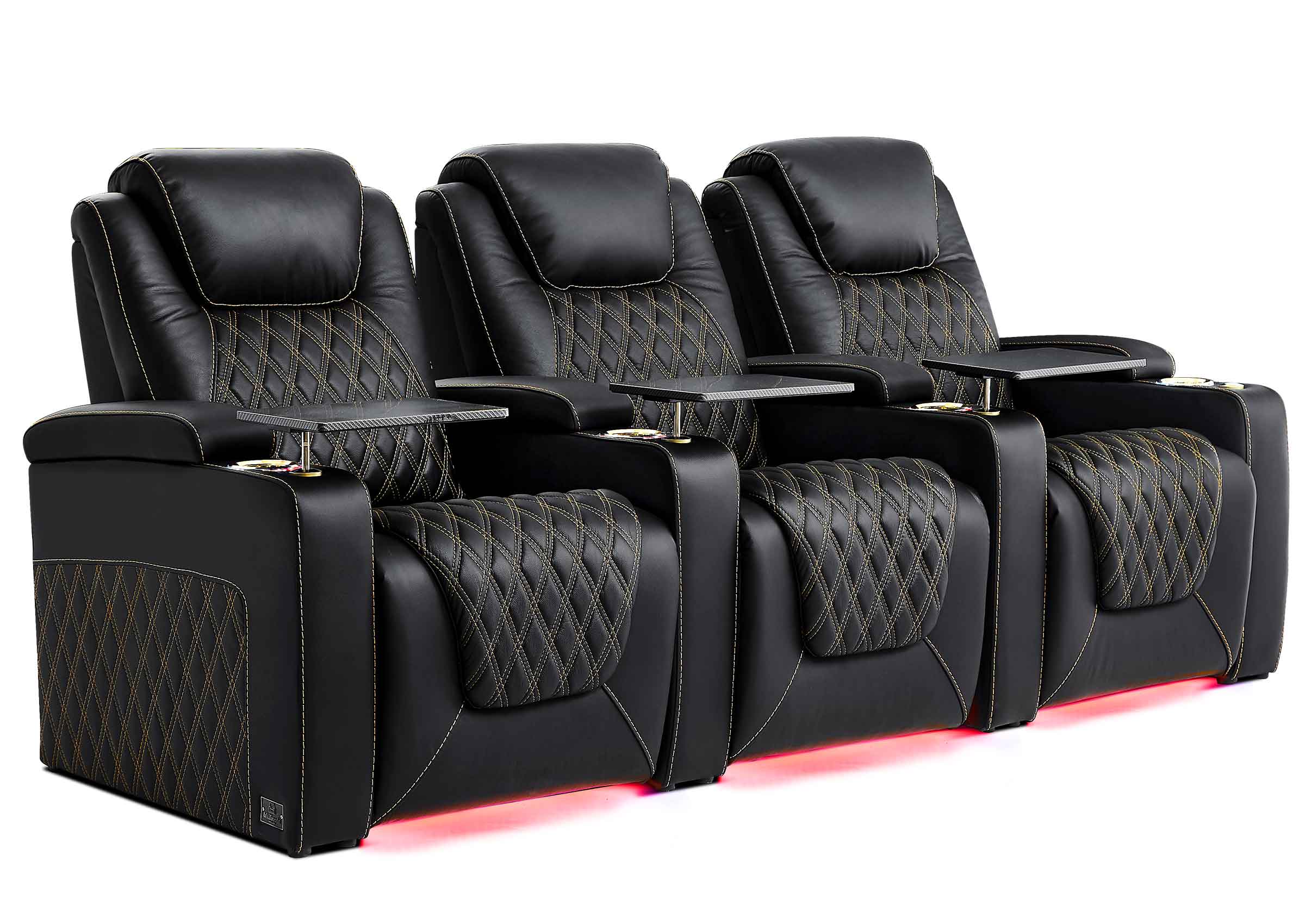
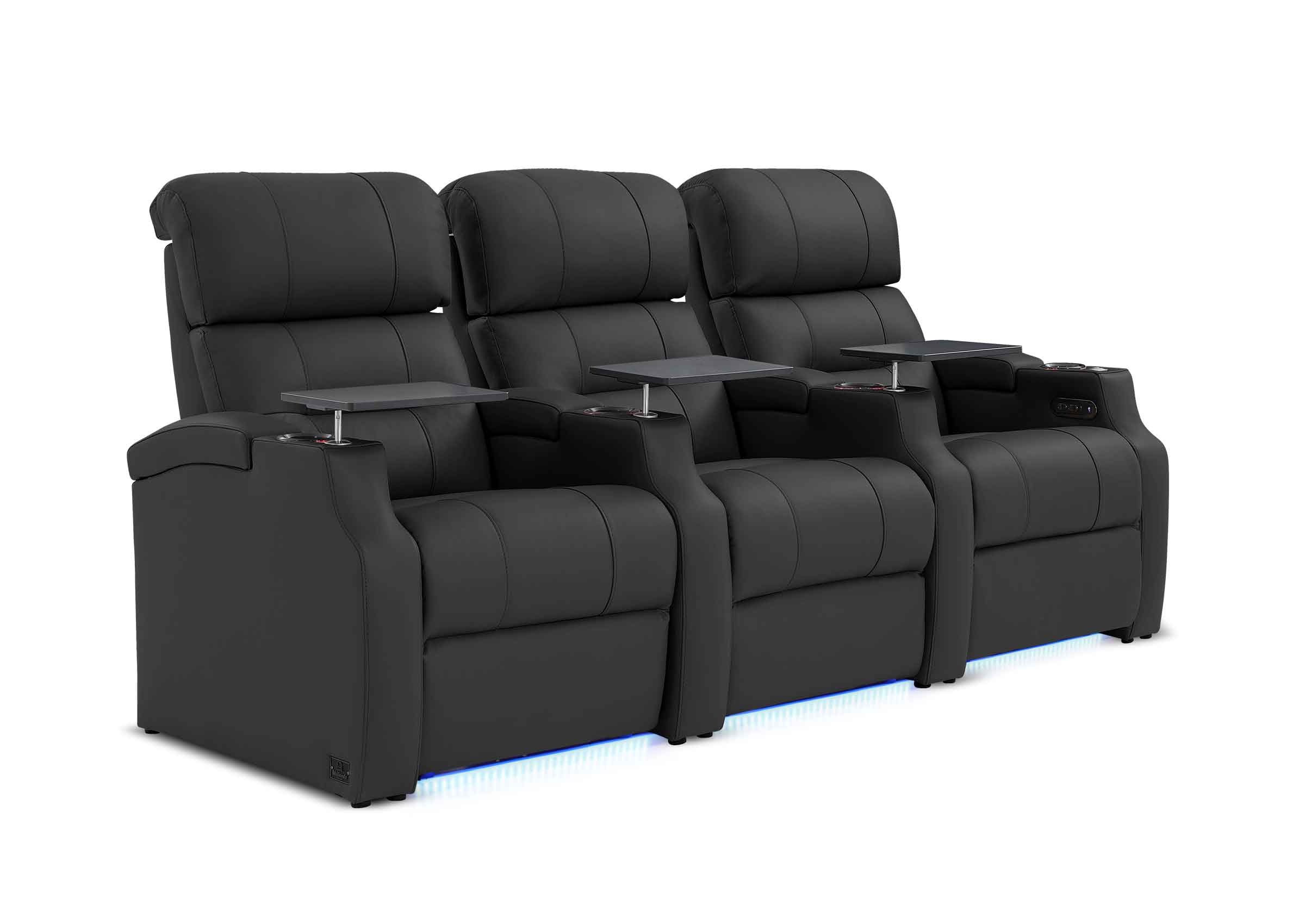
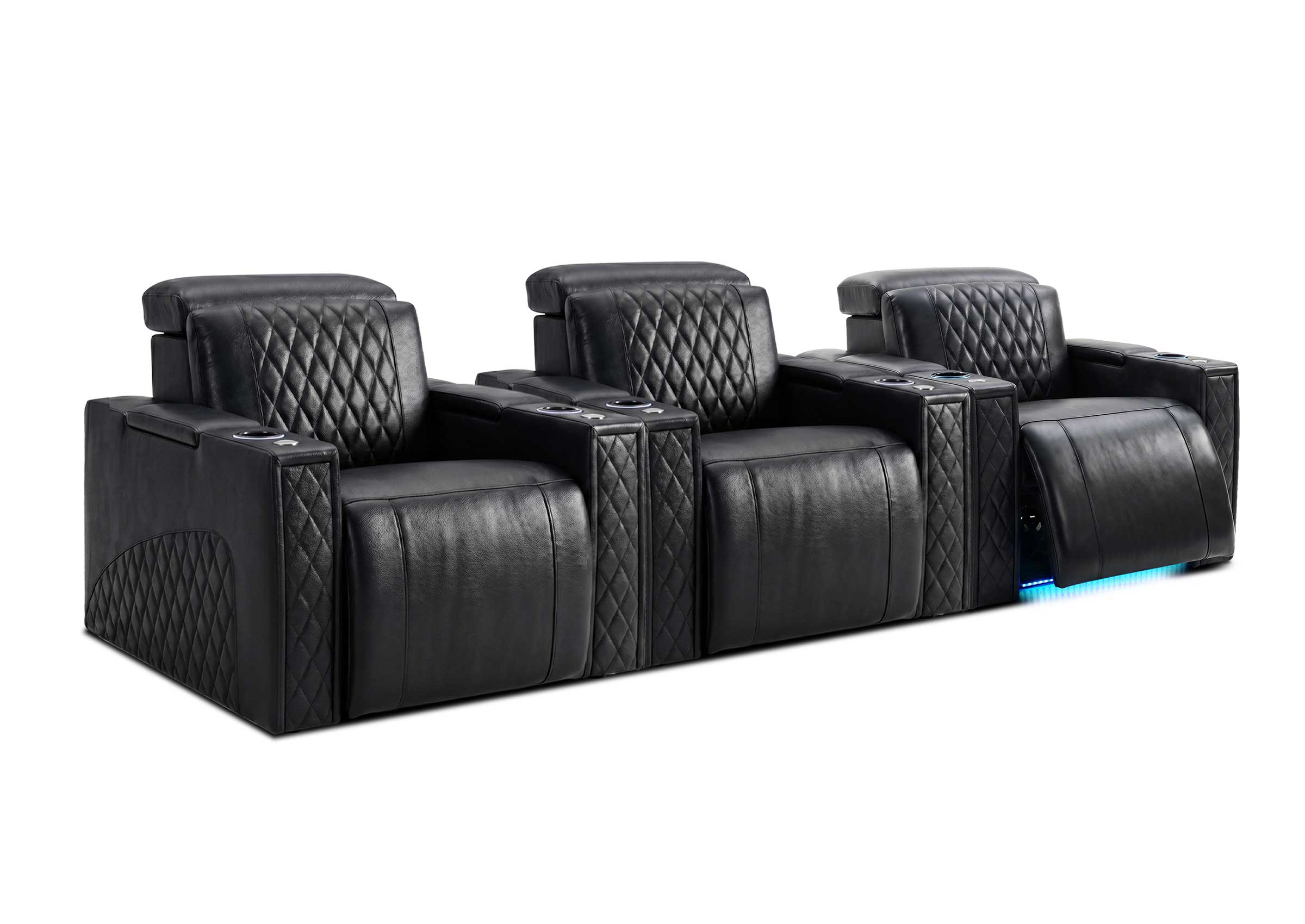
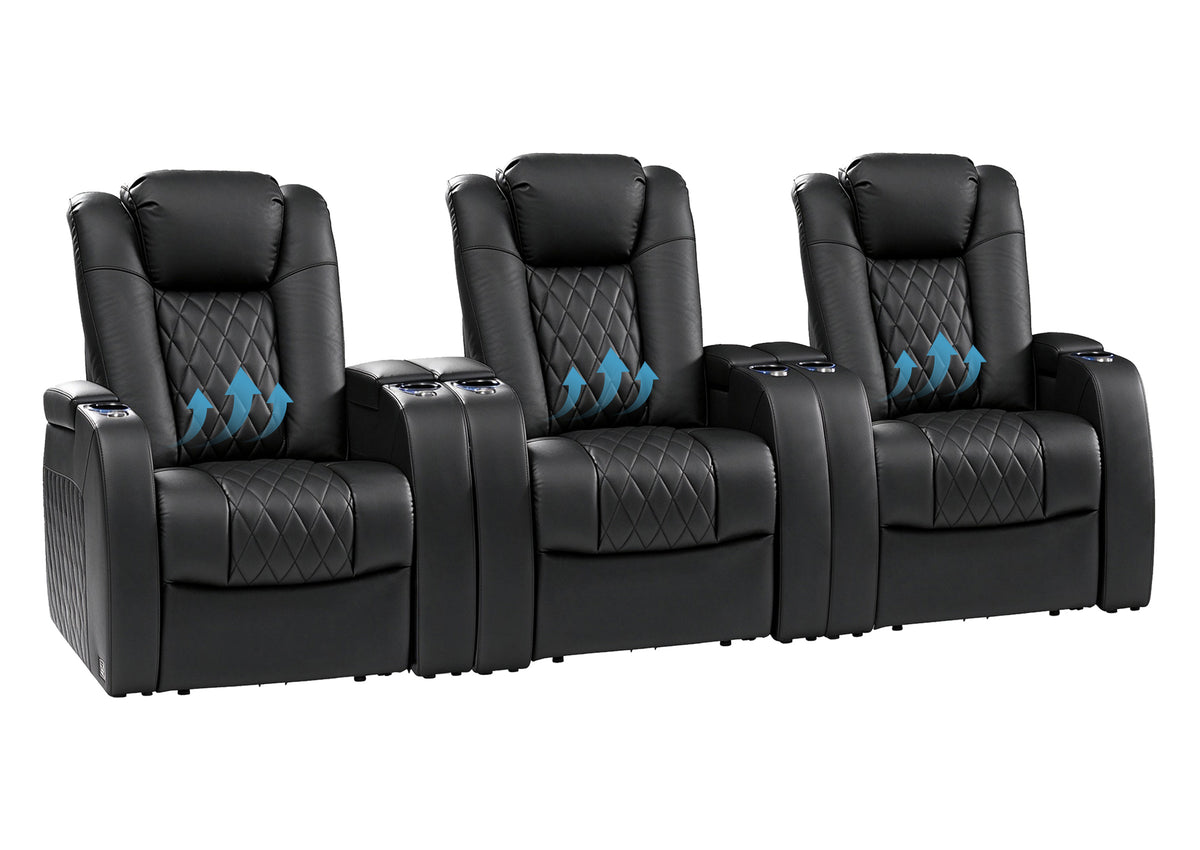
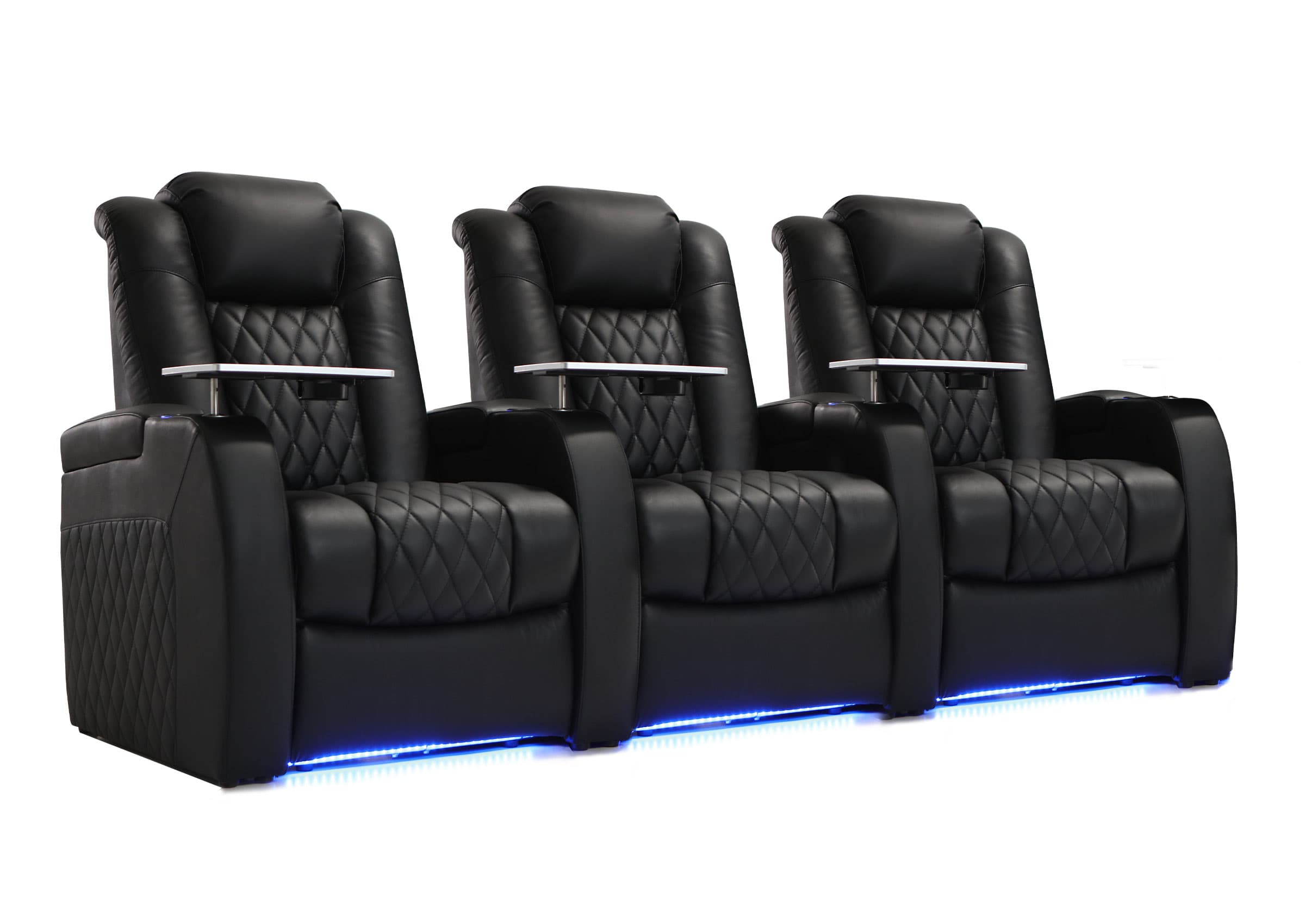
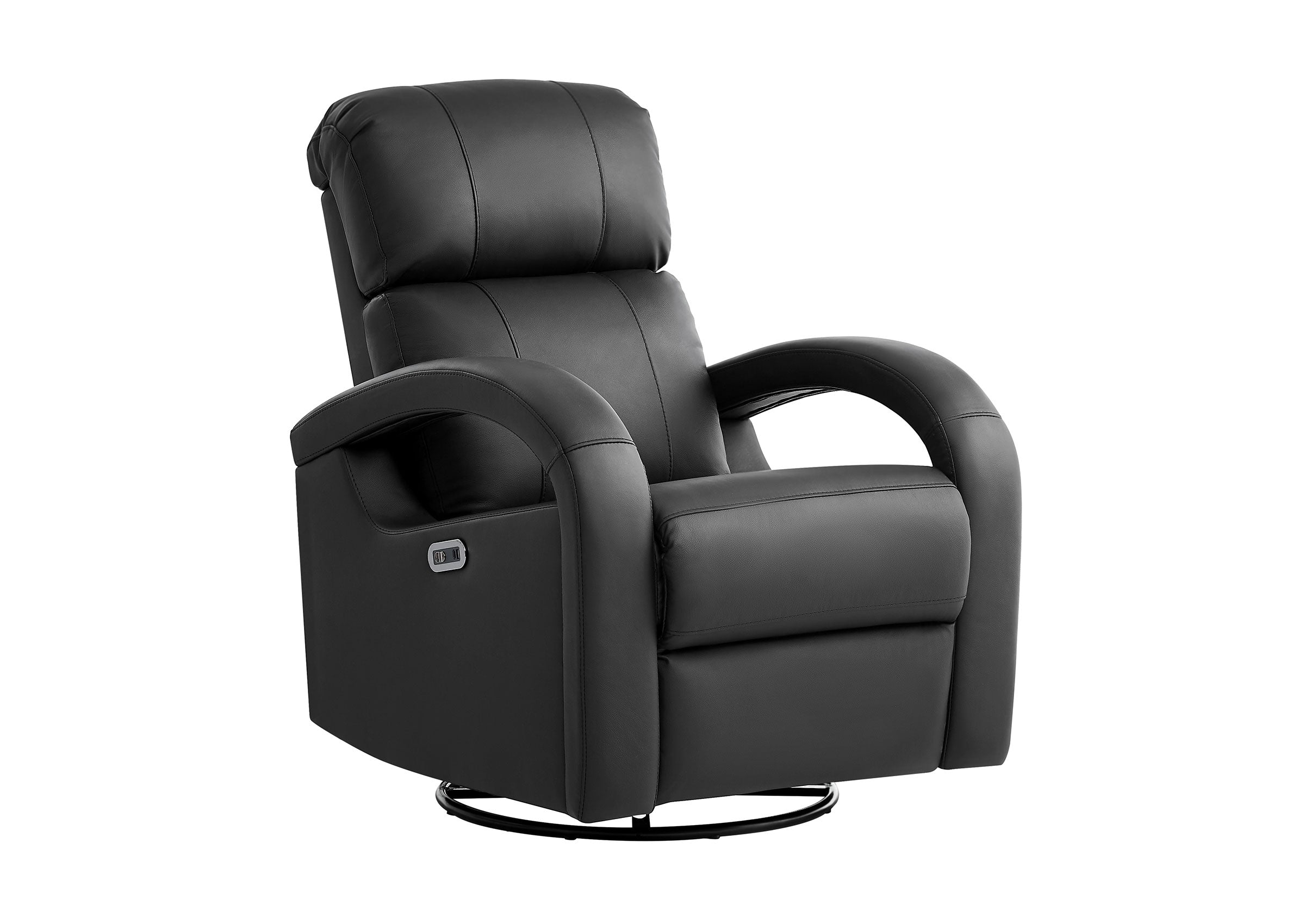
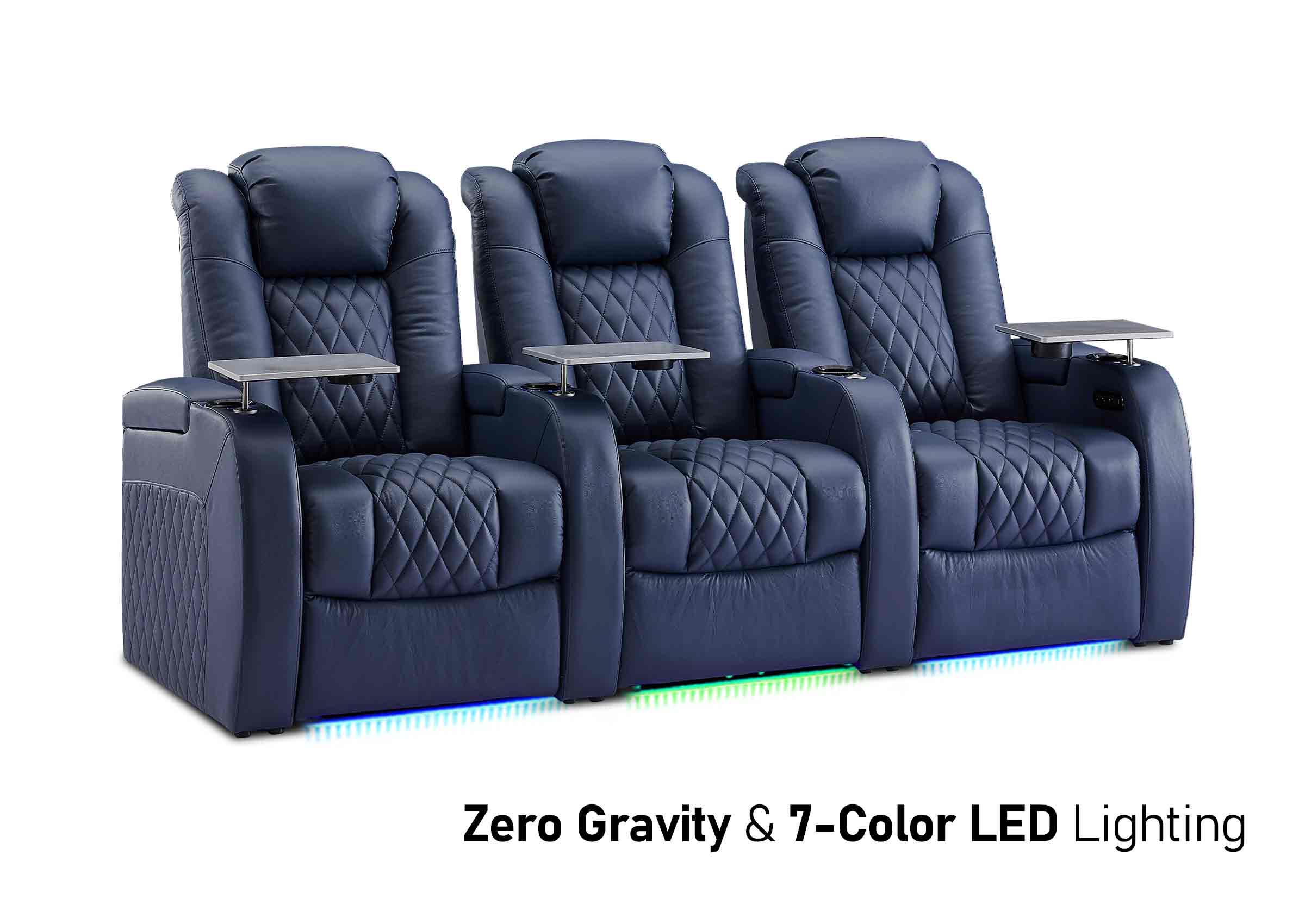
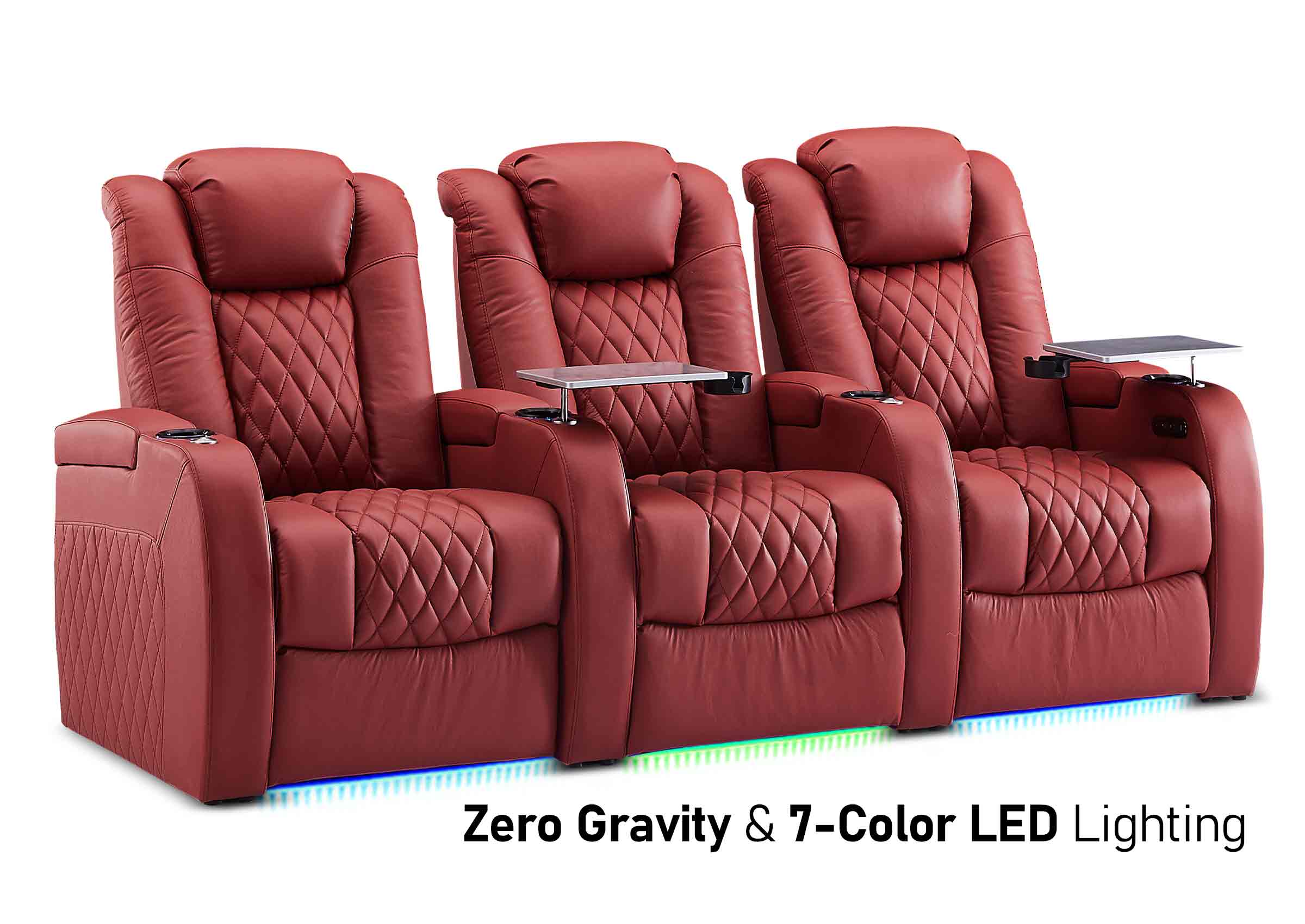
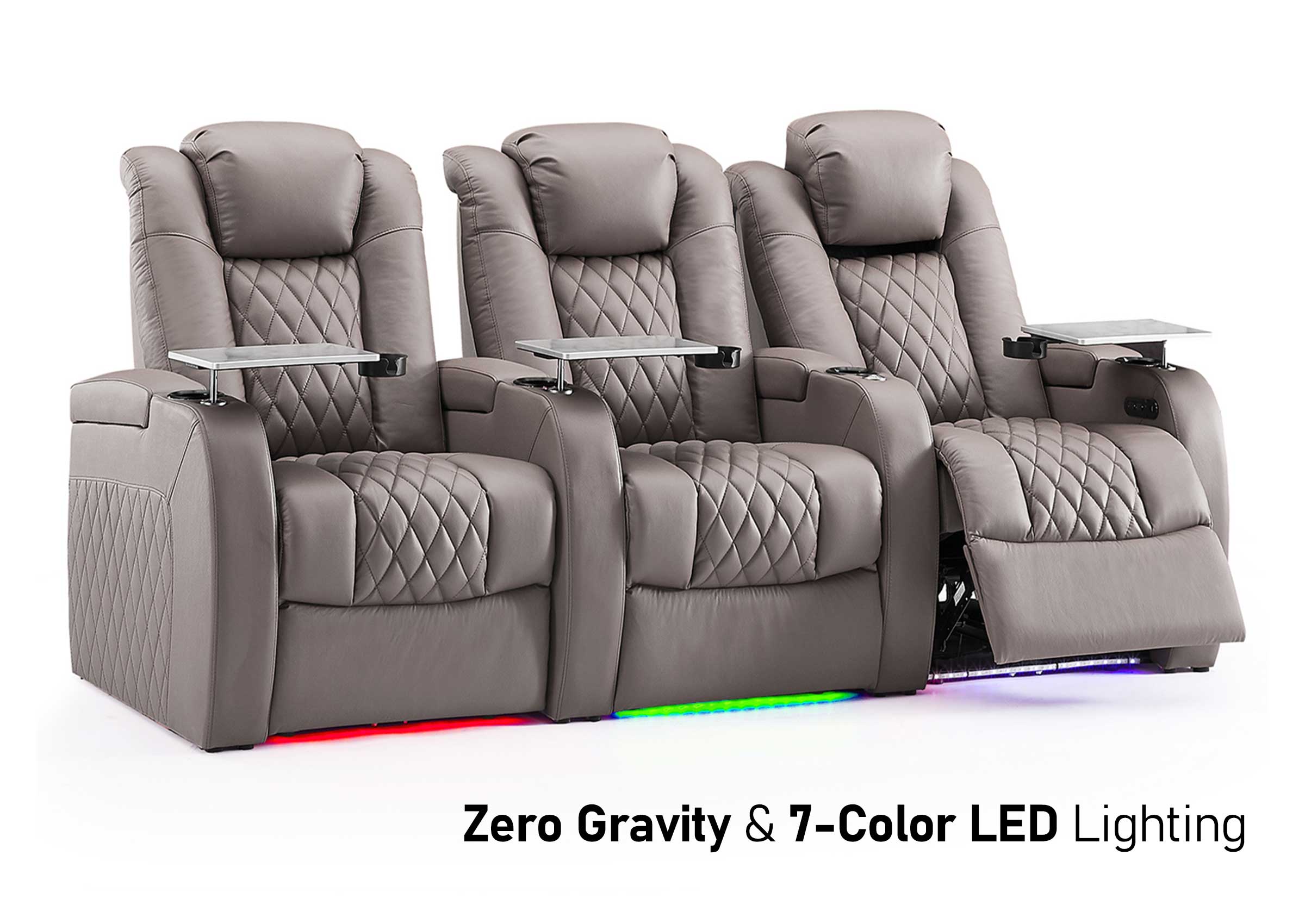
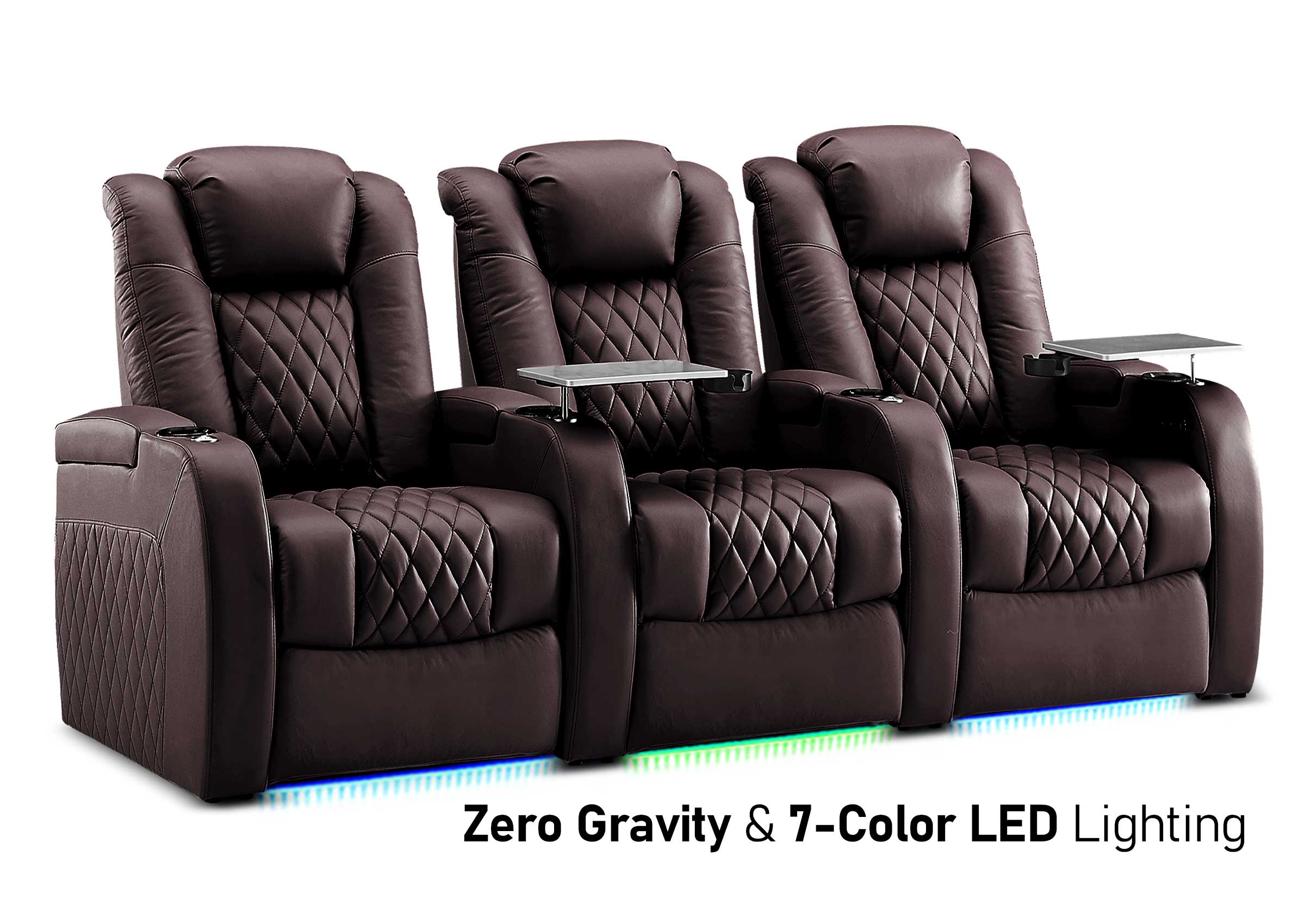
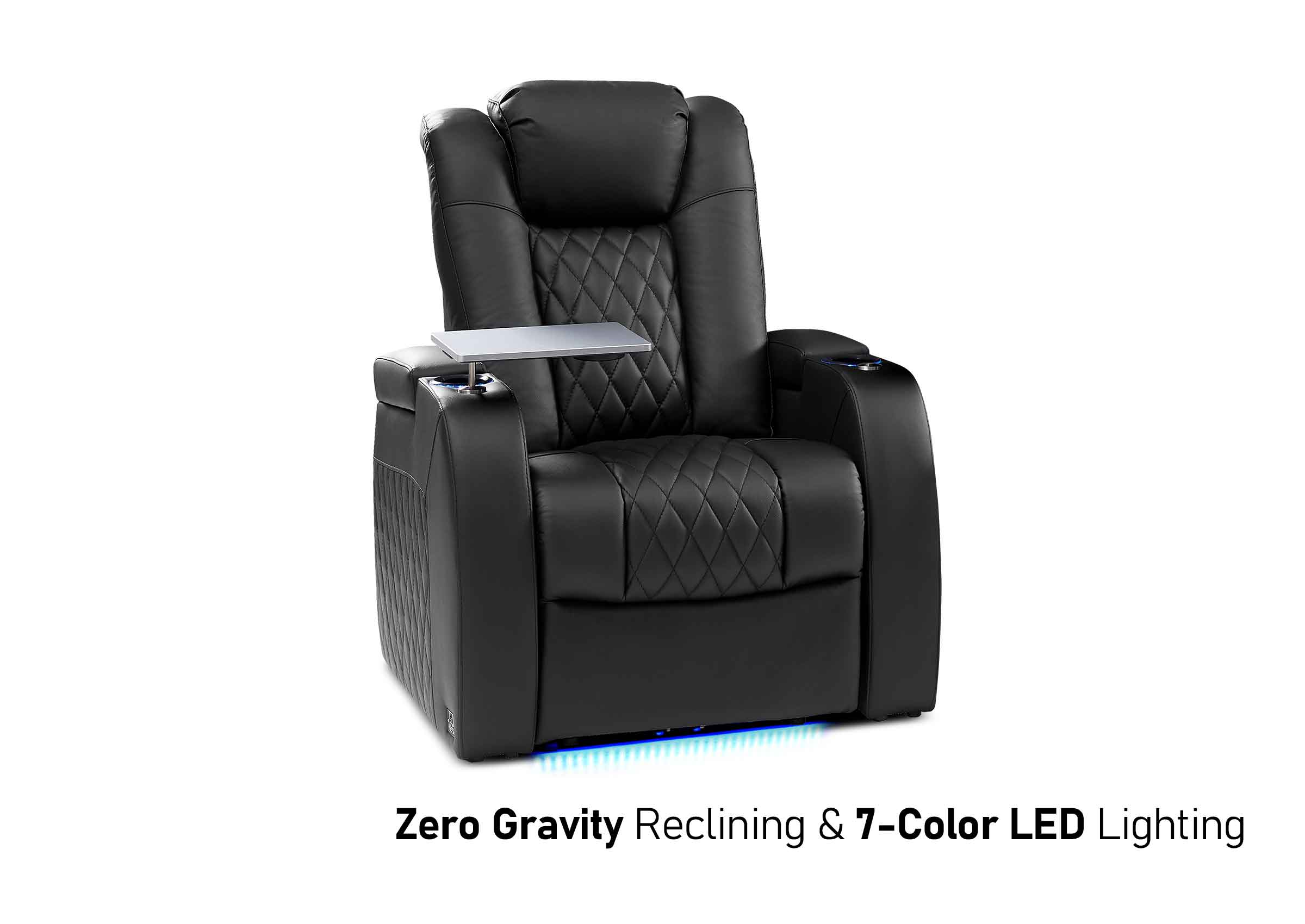
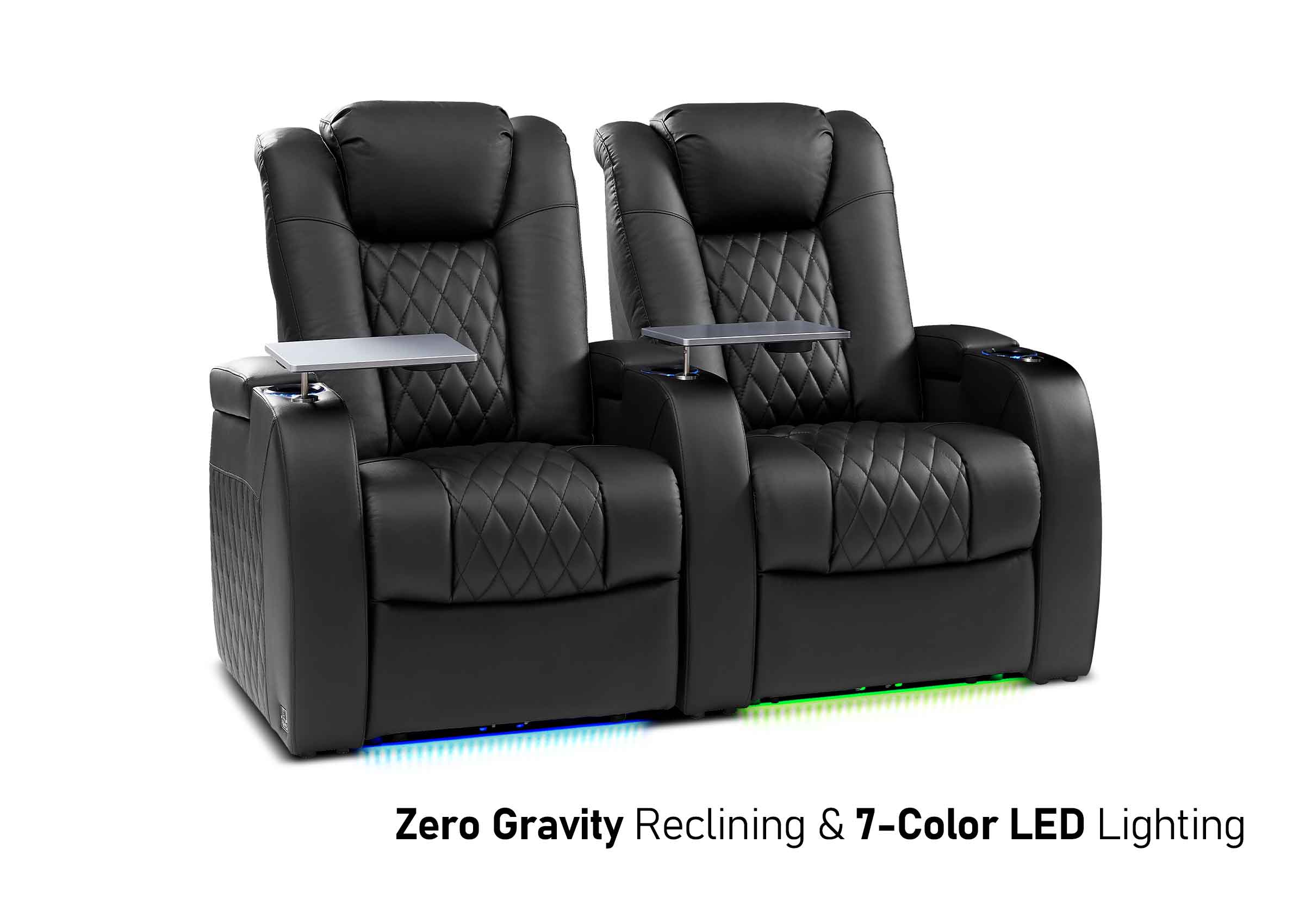
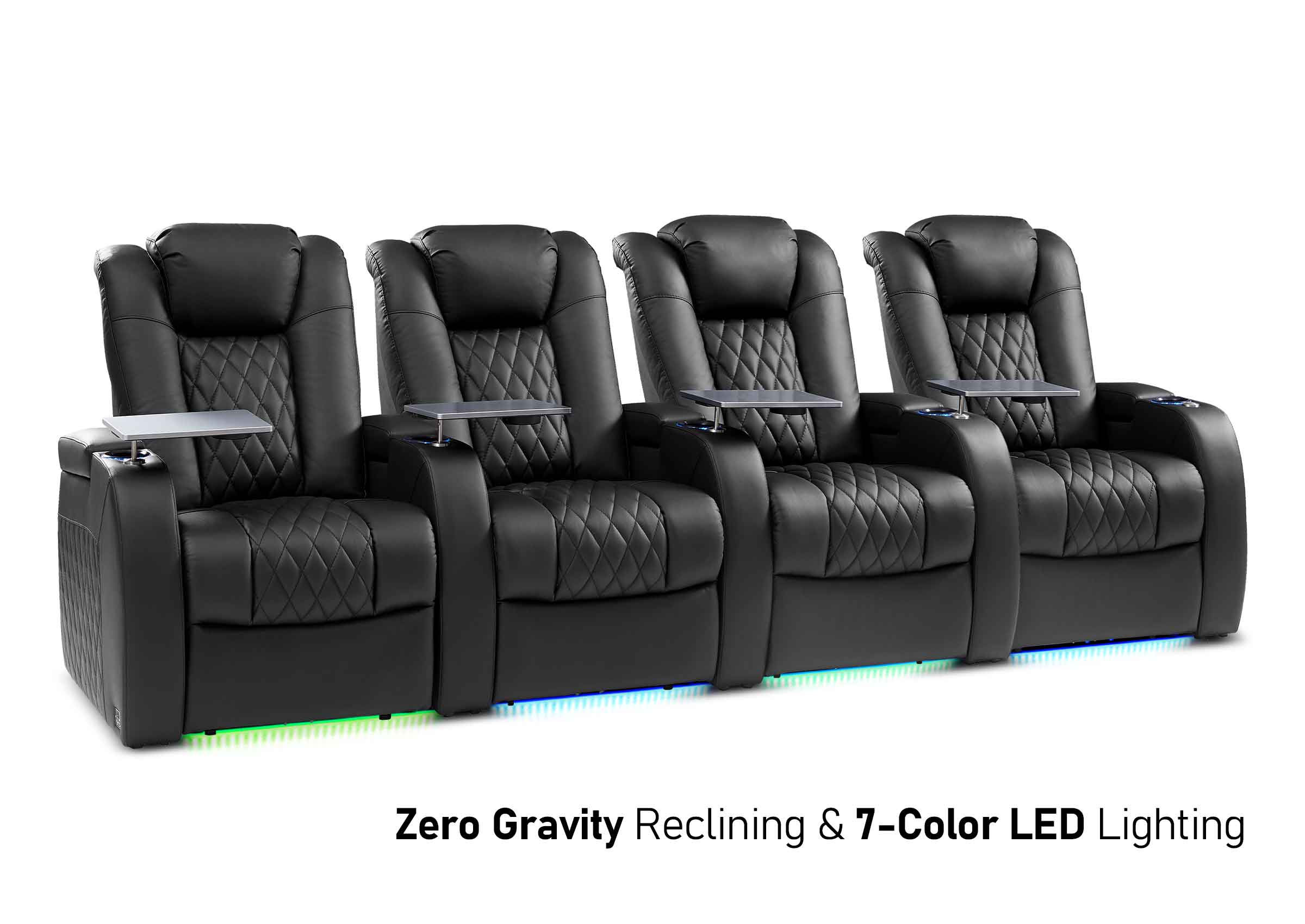
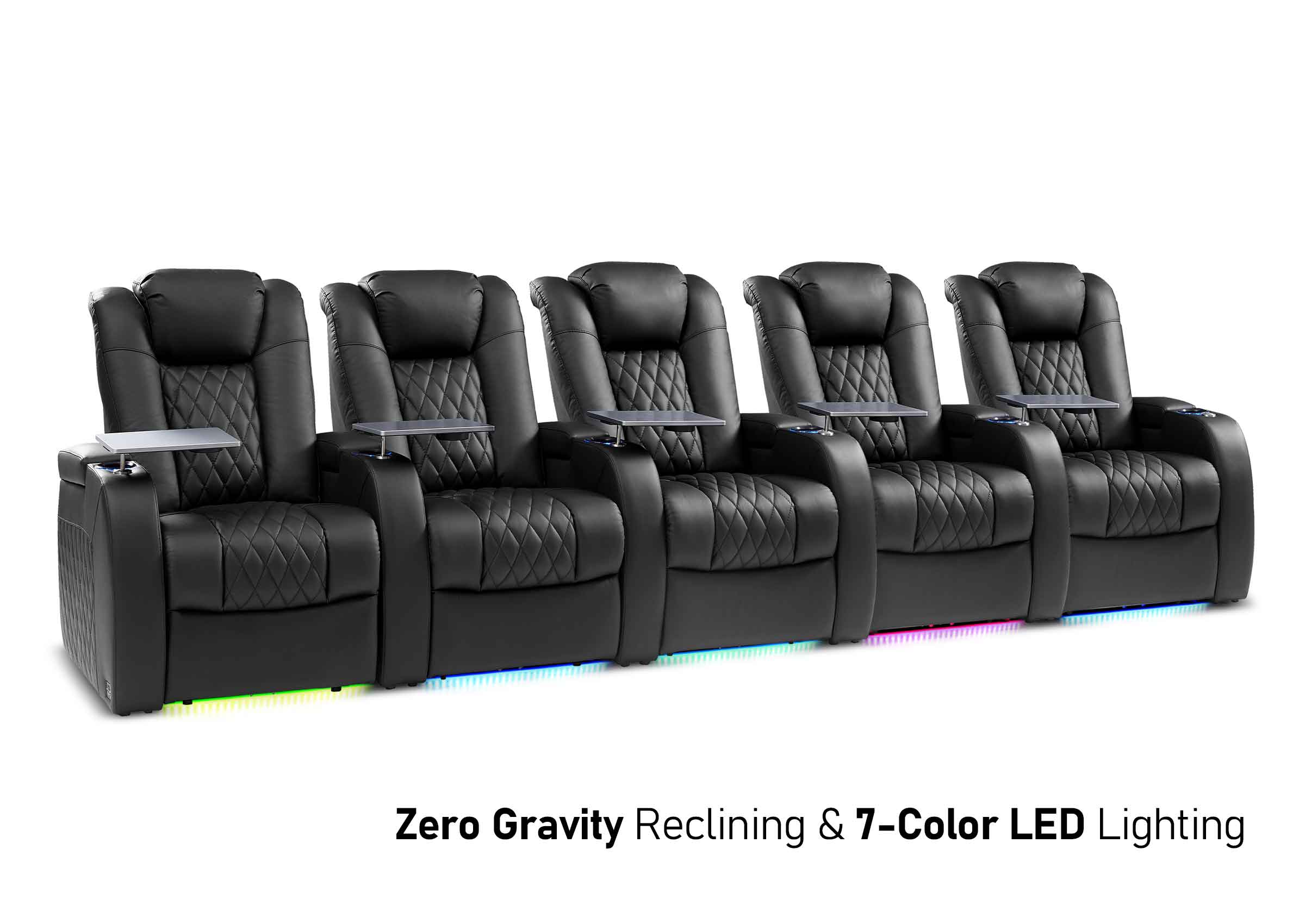
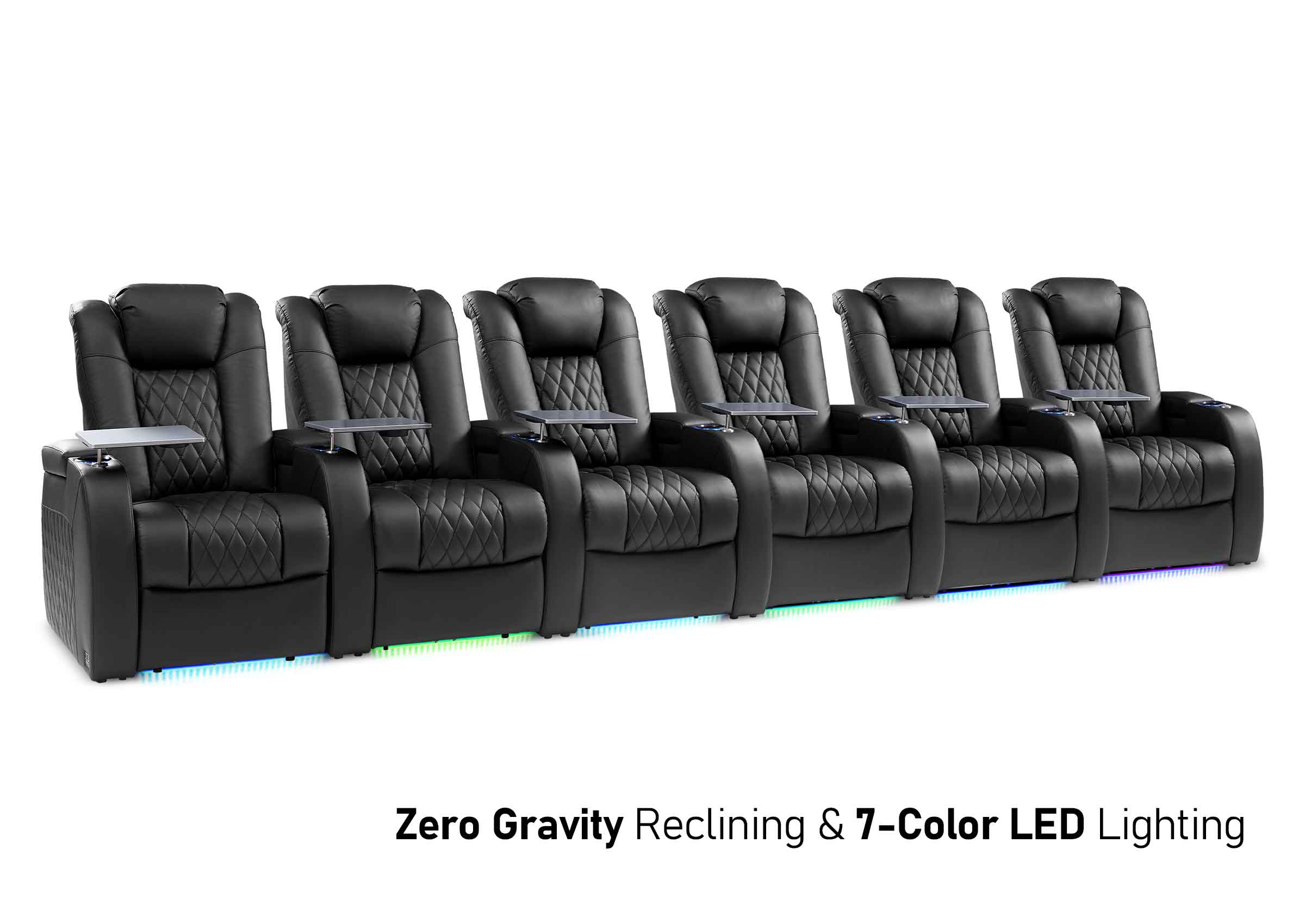
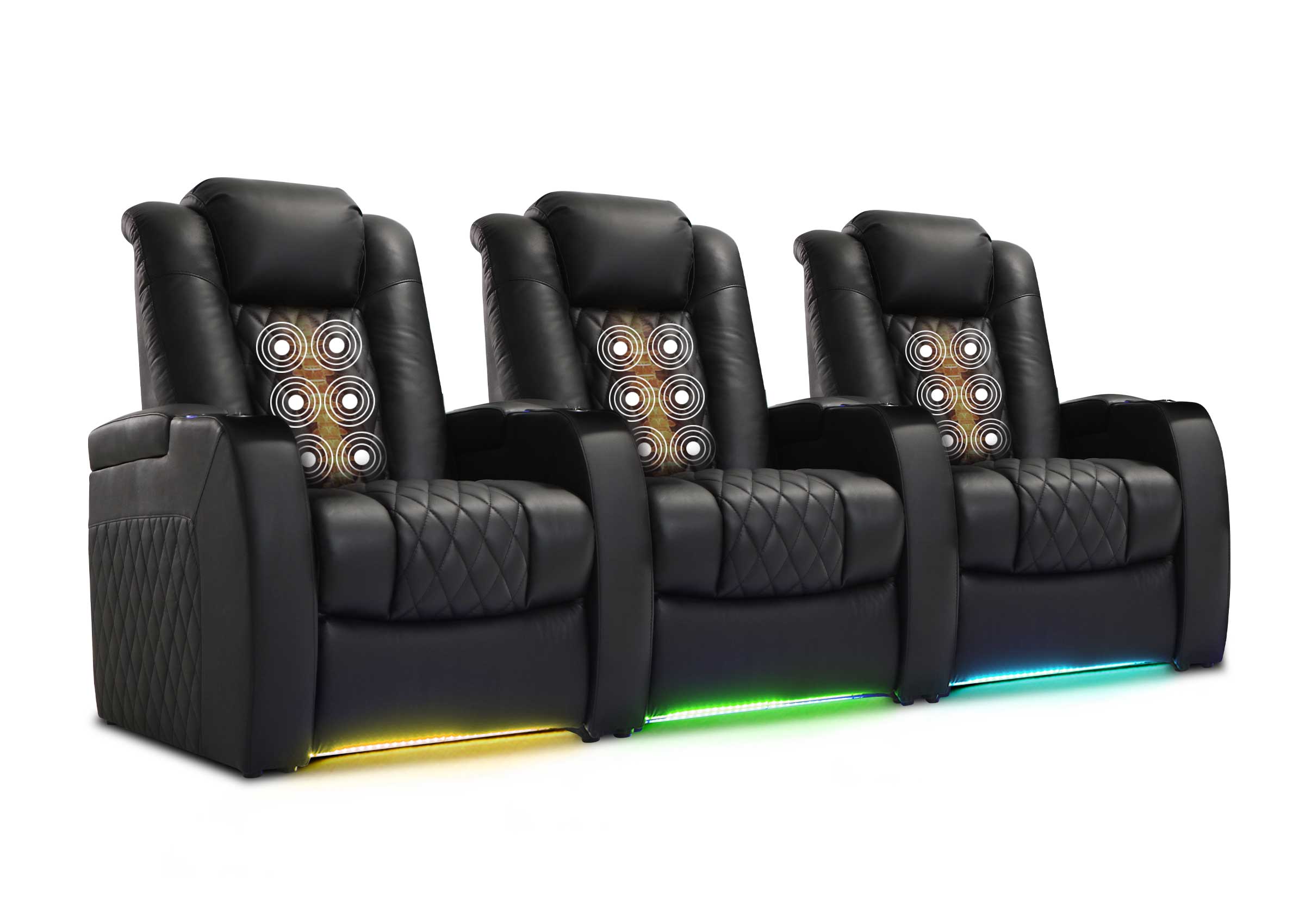
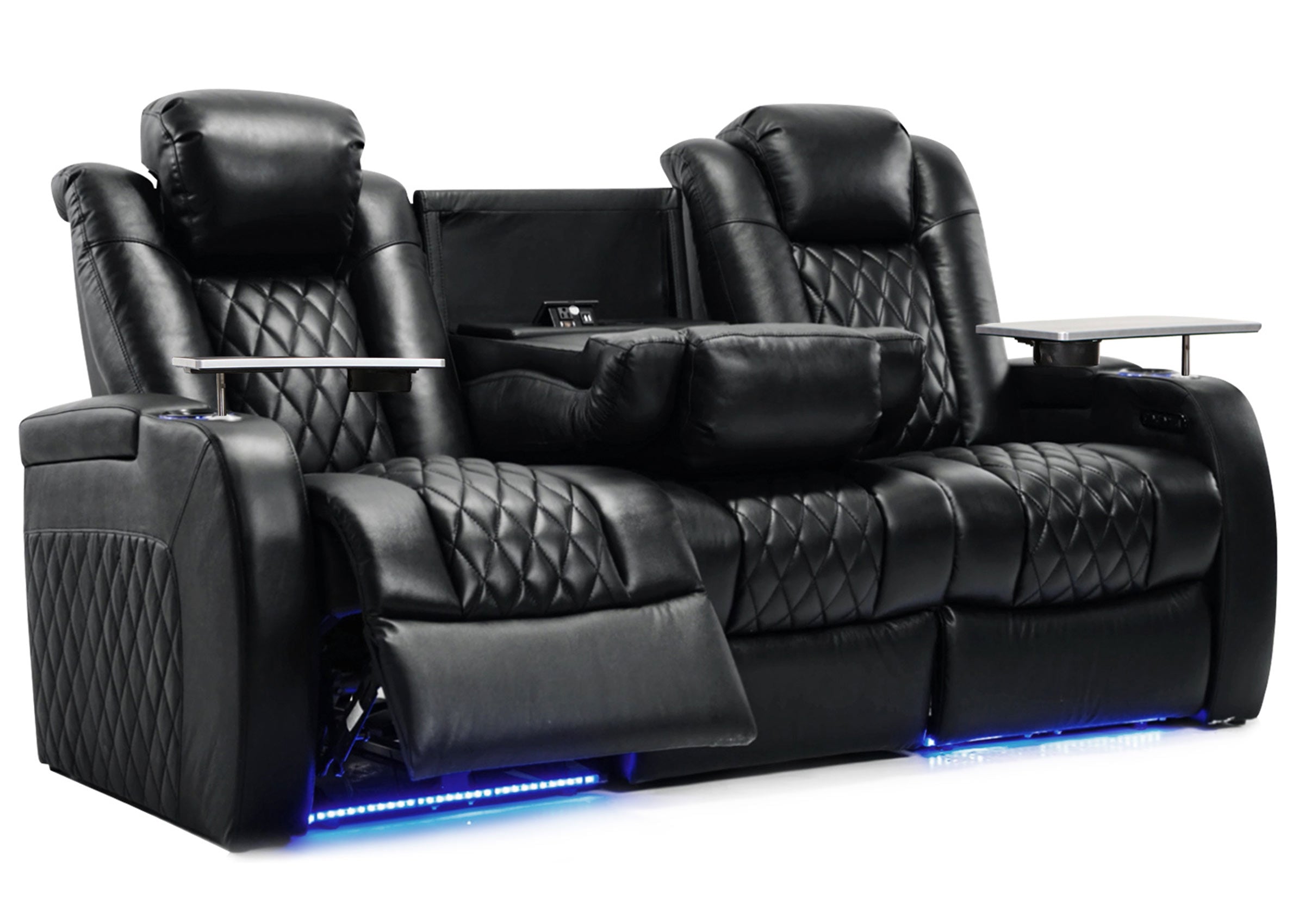
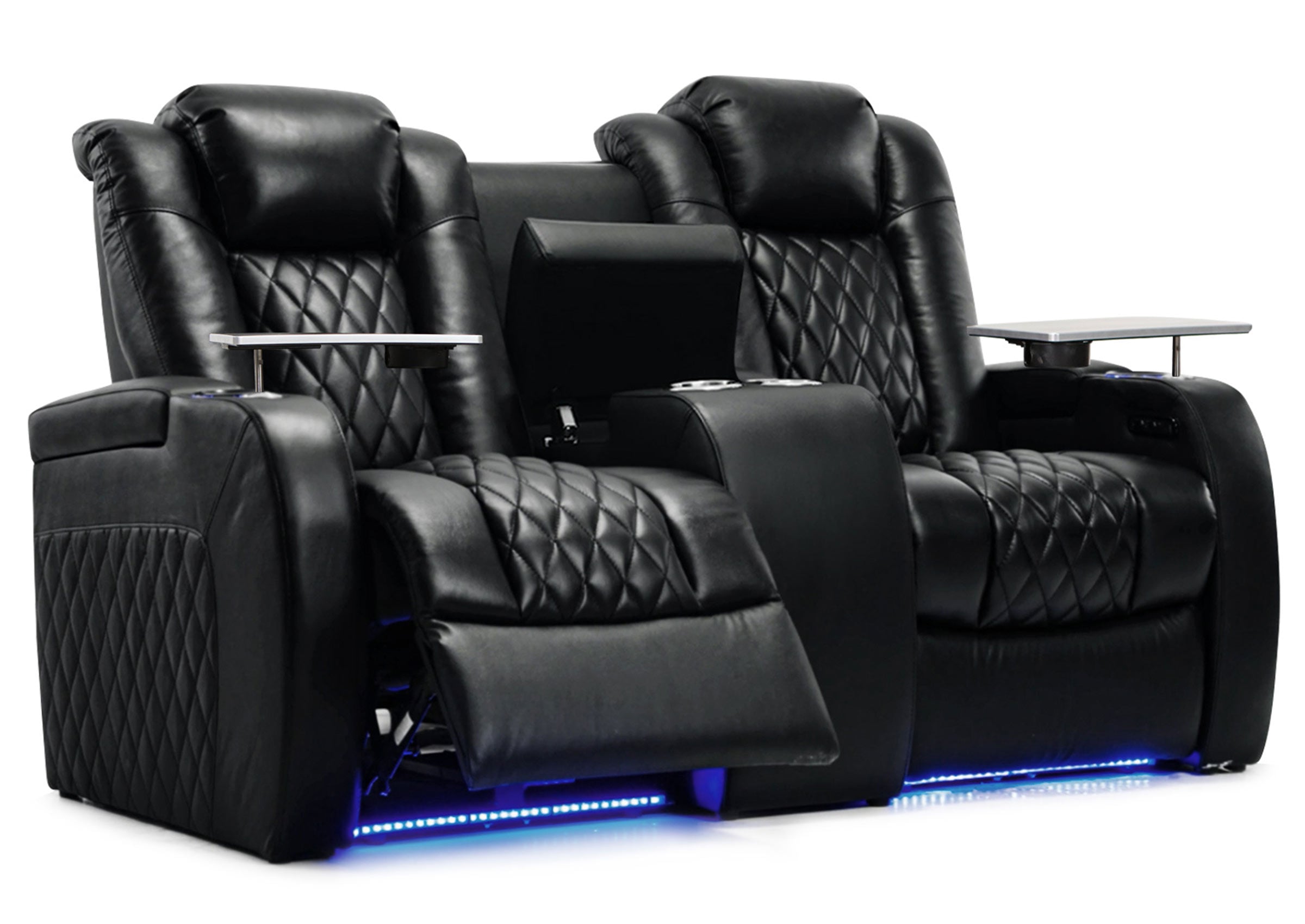
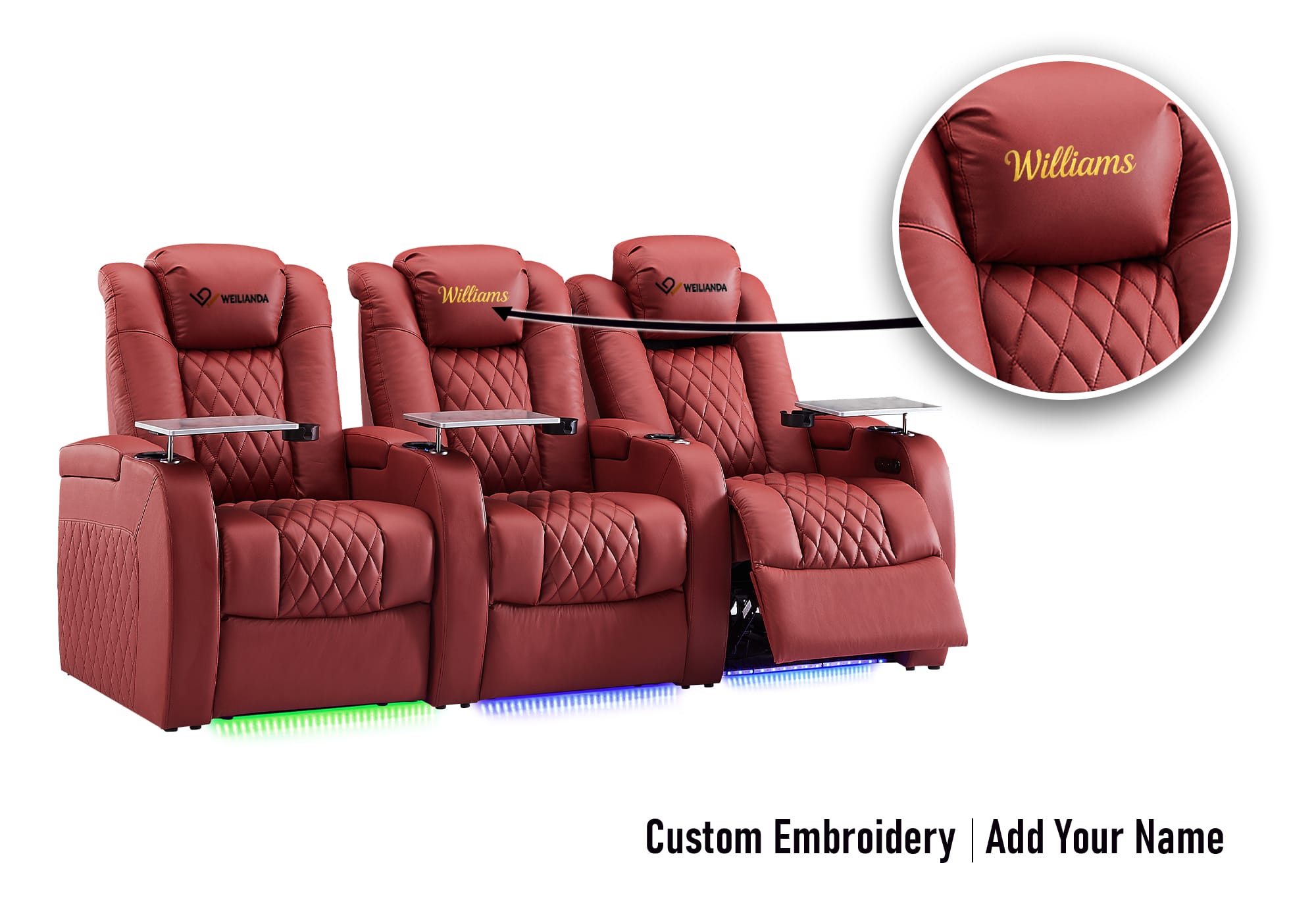
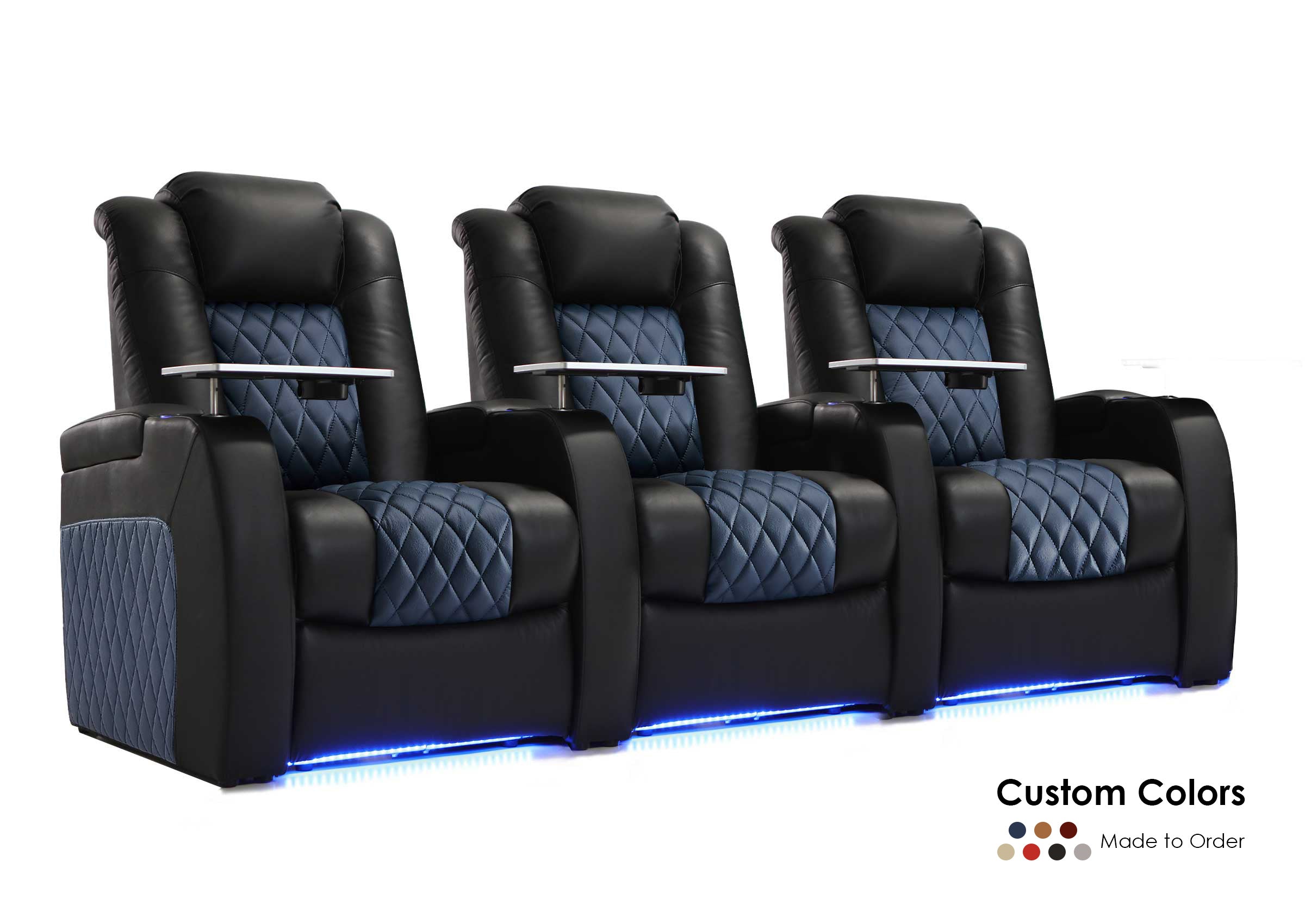
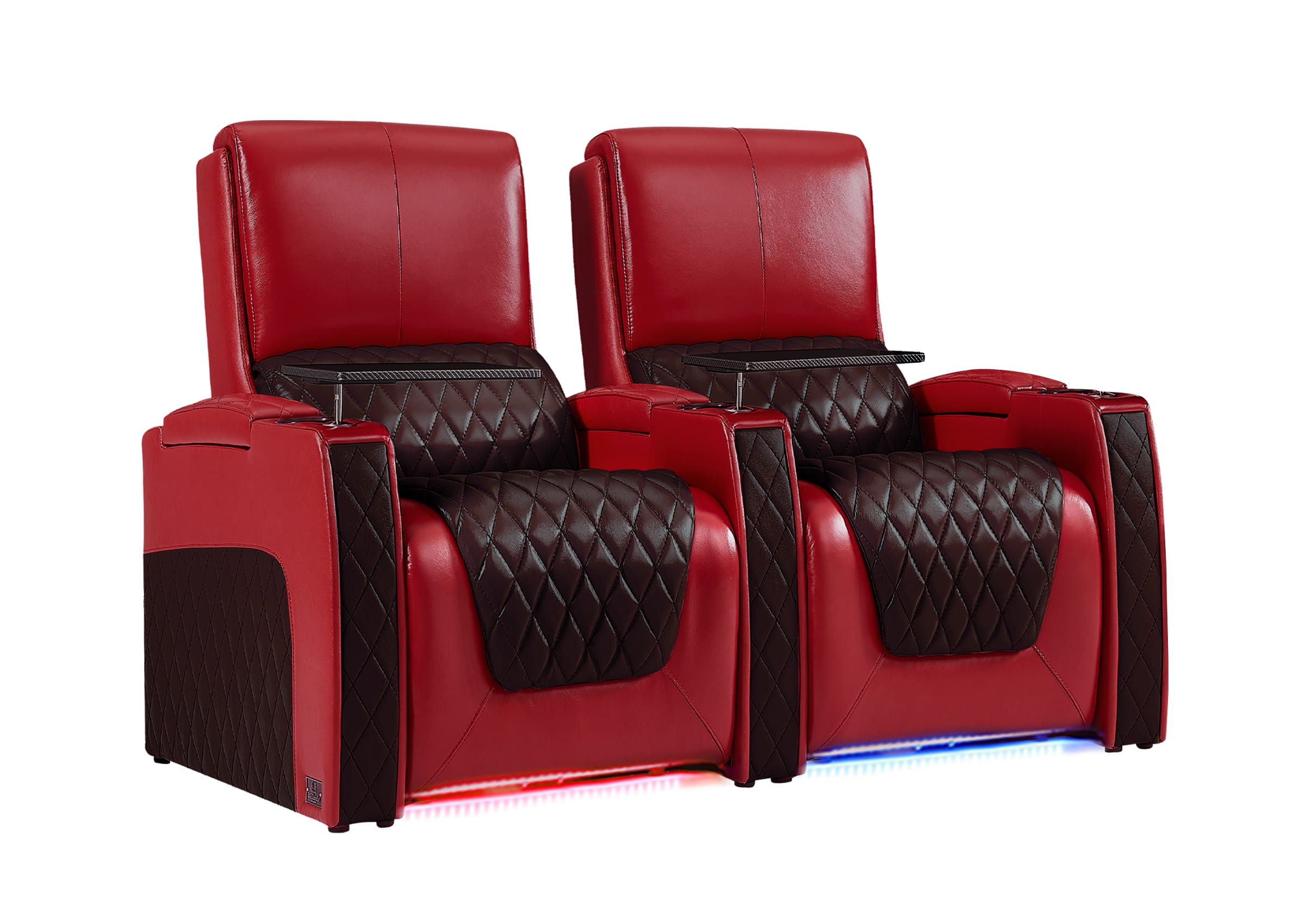
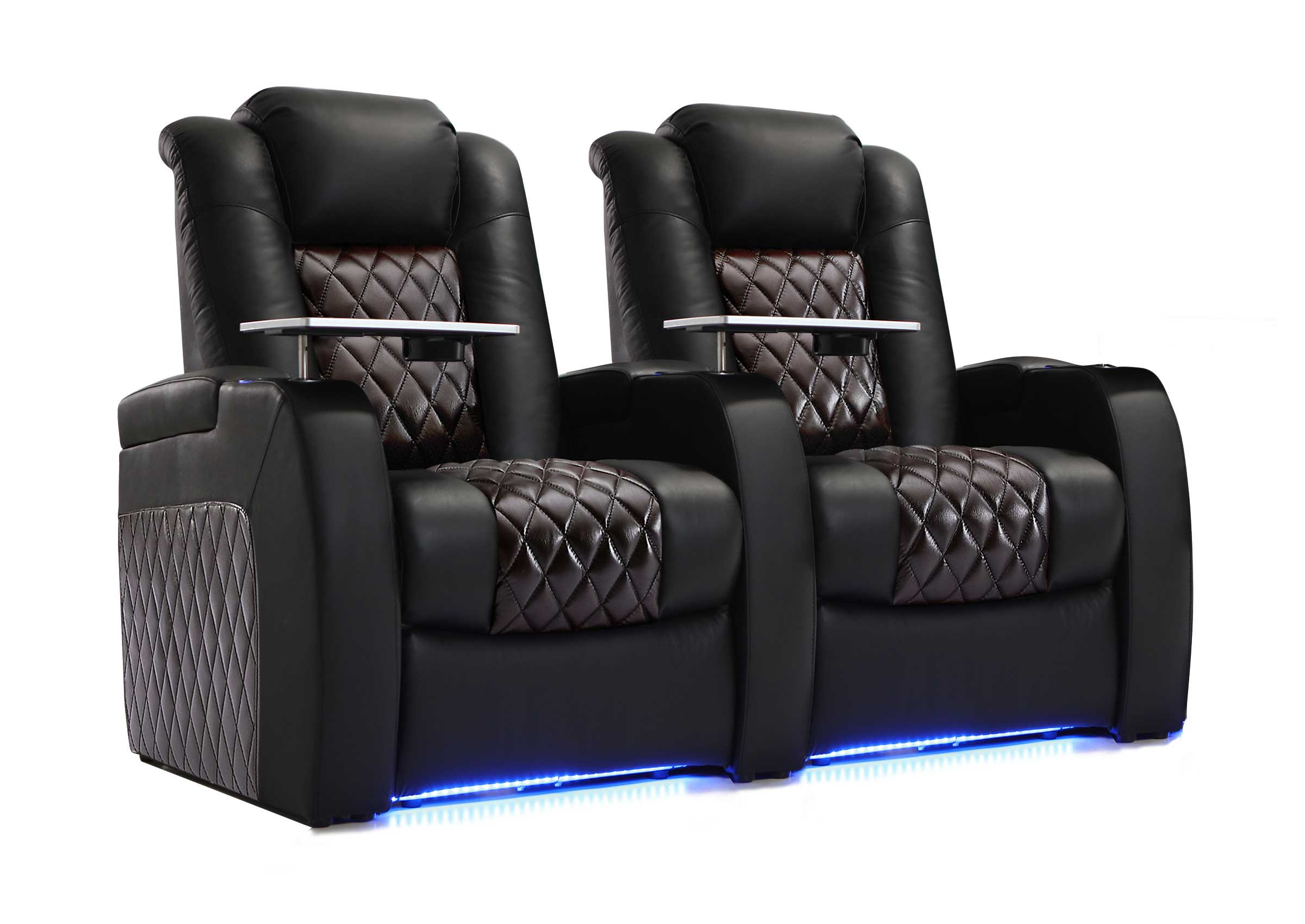
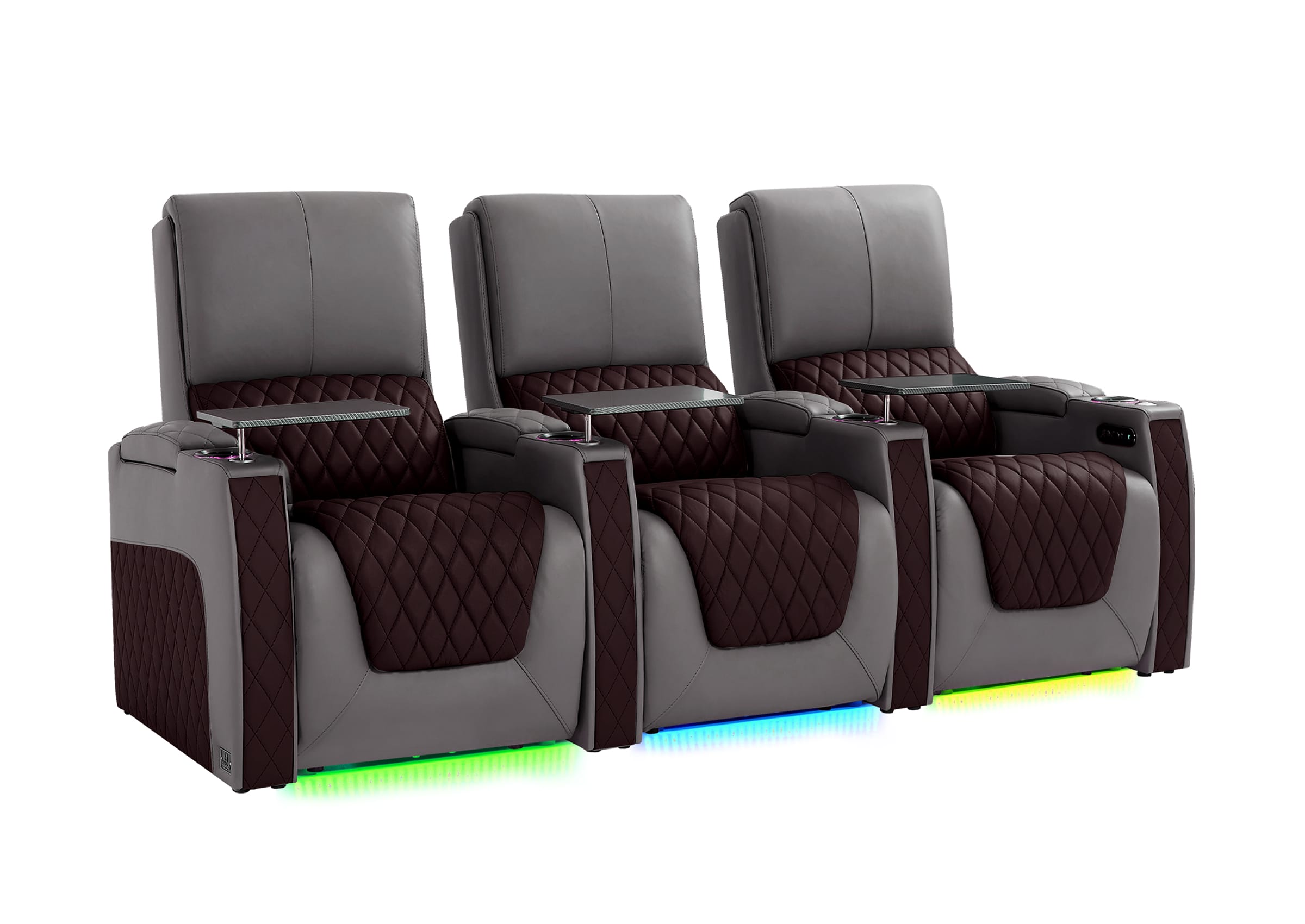
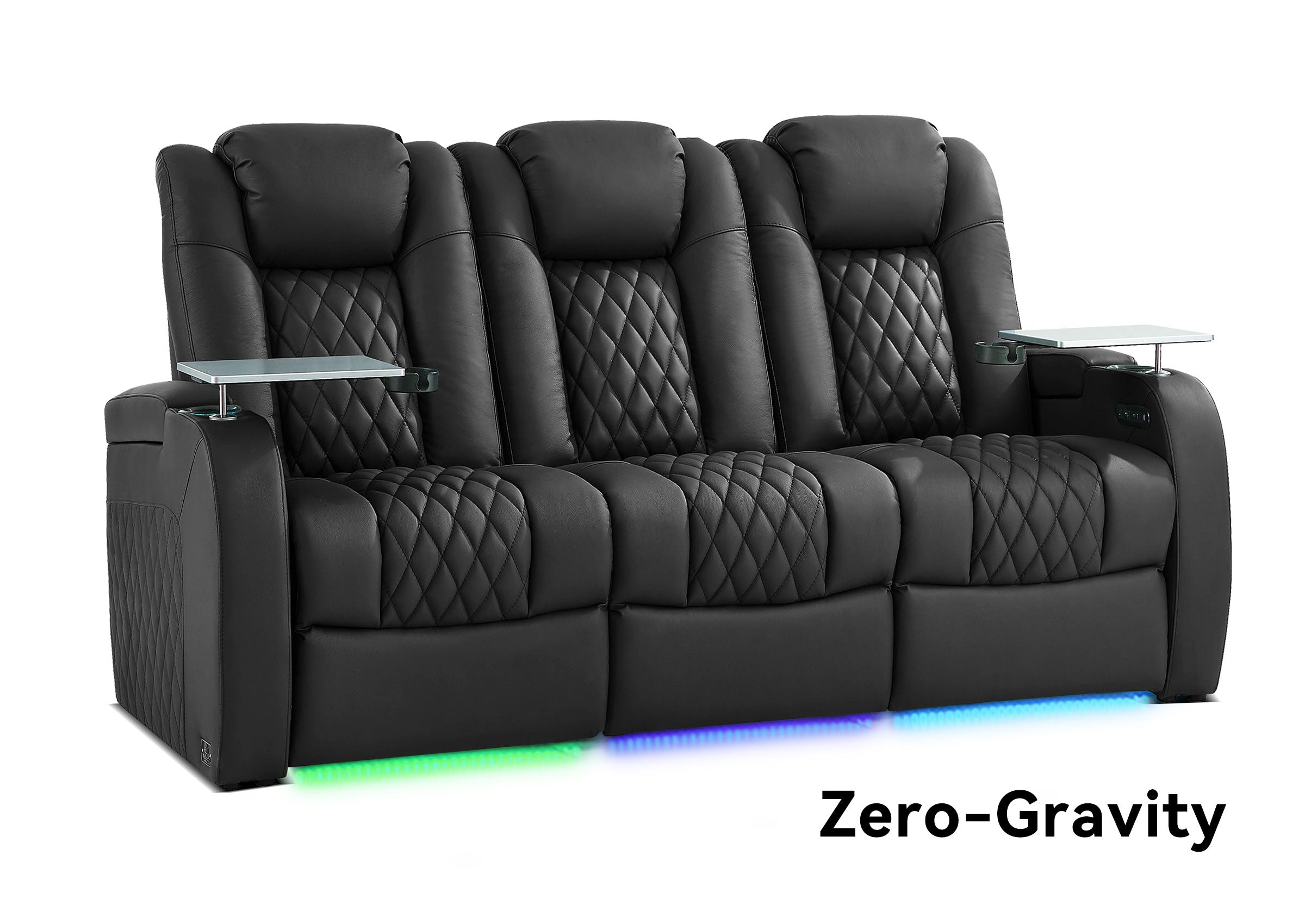
Home theater seating is usually one of the largest visual elements in a private theater, so wall decor should respond to it without trying to match every detail.
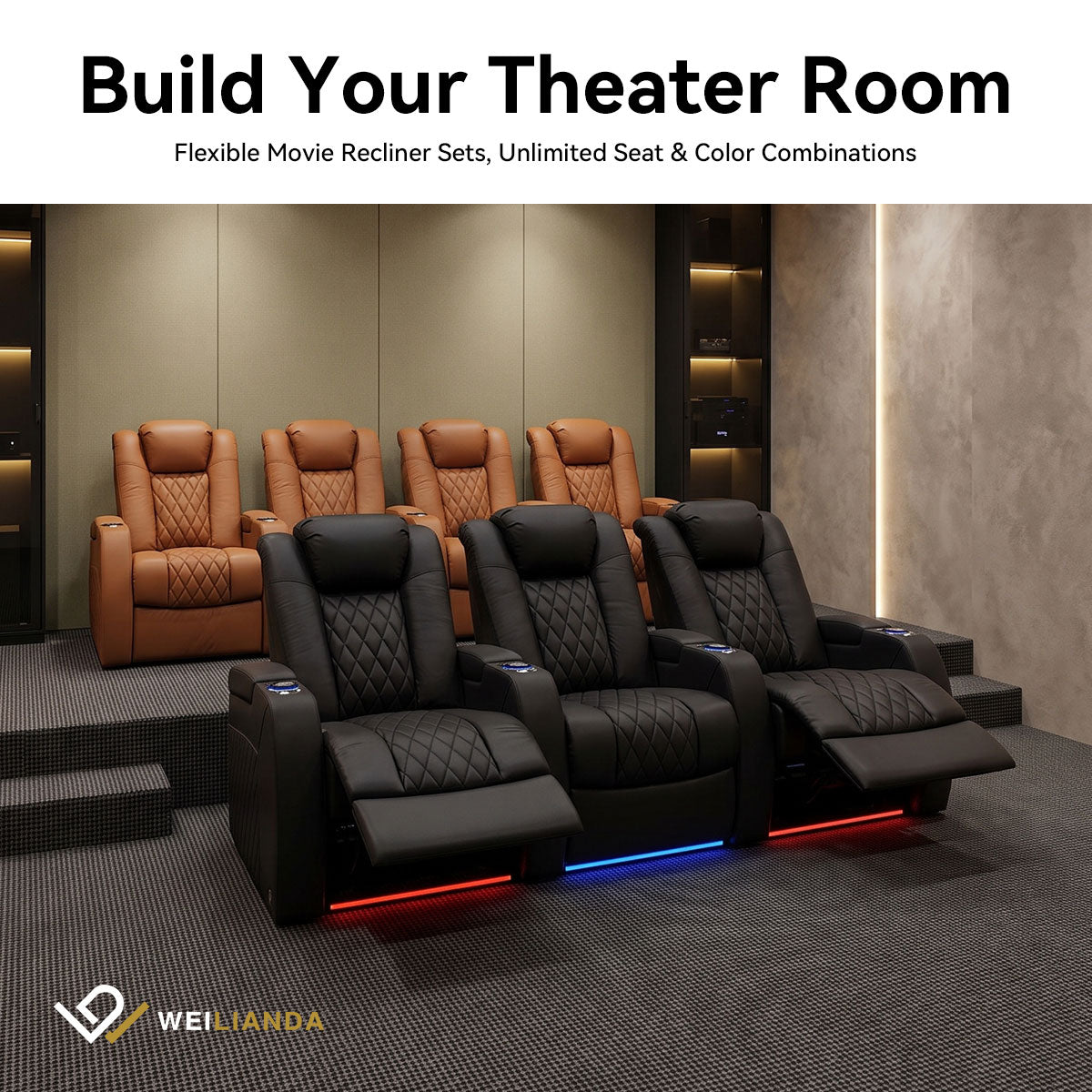
Black seating works with many directions, from classic cinema colors to warm wood and modern charcoal panels. Brown leather can pair naturally with walnut, bronze, warm neutrals, or muted heritage colors. Lighter seating may need a darker wall background to keep the room grounded and protect the screen as the visual focus.
Look for one or two connections:
- Repeat a metal finish from the seating or tables in the frames or sconces
- Echo a warm leather tone through wood or muted artwork
- Use the wall treatment to balance the visual width of a seating row
- Keep decorative lines aligned with major room elements rather than individual seat seams
Avoid trying to match leather, paint, wood, carpet, and poster colors exactly. A coordinated palette with controlled contrast usually looks more natural than a room built from near-matching samples.
What Can You Do at Different Budget Levels?
A strong wall plan does not require custom construction on every surface.
Simple Refresh
Repaint the screen wall in a matte, restrained color. Reframe a small number of favorite posters in matching frames, remove distracting objects near the screen, and test the nighttime reflections before adding anything else.
Mid-Level Upgrade
Add coordinated sconces, selected fabric panels, wall molding, or a limited wood-slat feature. Create a consistent spacing system across the side walls and conceal visible cables where practical.
More Integrated Design
Coordinate wall panels, lighting, speakers, wiring, and seating as one room plan. Decorative acoustic elements, custom millwork, concealed access, and integrated display areas can be considered before the final wall surfaces are completed.
Spend first on decisions that are difficult to change: wiring, equipment access, speaker relationships, wall construction, and lighting control. Posters and movable decor can evolve later.
What Home Theater Wall Decor Mistakes Should You Avoid?
Decorating Before Confirming the Equipment Layout
Artwork often gets moved when speakers, vents, switches, or projector requirements are finalized. Confirm the functional wall plan first.
Making the Screen Wall Too Busy
The wall that looks empty in daylight may feel appropriately calm during a movie. Do not solve every blank area with another object.
Ignoring Reflections
Glossy frames, mirrors, polished stone, and bright metal can catch screen or fixture light. Check them from every important seat under real viewing conditions.
Assuming Every Soft Panel Is Acoustic Treatment
Appearance alone does not confirm performance. Verify the complete panel and its placement when acoustics are part of the decision.
Covering Access Points
Do not make a control, cable route, speaker, vent, junction point, or service opening difficult to reach for the sake of symmetry.
Using Too Many Themes at Once
Classic cinema signs, superhero posters, modern slat walls, star lighting, and luxury molding can each work. Combining all of them without a clear hierarchy usually weakens the room.
Choosing Decor Only for the Lights-On View
Always evaluate the room in movie mode. The most successful decor supports both the arrival experience and the darkened viewing experience.
What Is a Practical Wall-by-Wall Checklist?
Before purchasing or installing the decor, confirm:
- The screen remains the strongest focal point
- No proposed item blocks a speaker, vent, control, outlet, or door
- Glossy surfaces have been checked from the actual seats
- Side-wall artwork feels balanced from a reclined position
- The back wall does not project uncomfortably over the last row
- Lighting can be dimmed or switched off independently when needed
- Decorative acoustic products have a verified role in the room plan
- Materials and mounting methods suit the wall and installation conditions
- Frames, panels, and fixtures follow a consistent visual system
- The room still has enough negative space to feel calm
- Seating, wall finishes, flooring, and lighting share a coherent palette
- Movable decor has been separated from decisions that need professional coordination
This checklist is useful to share with a partner, designer, AV specialist, or installer before the walls are finalized.
Frequently Asked Questions
Should the Wall Behind a Home Theater Screen Be Black?
It does not have to be black, but it should usually be visually quiet and relatively low in reflectance. Deep charcoal, dark navy, brown, or another restrained matte finish may also work, depending on the screen, lighting, and design direction.
Where Should Movie Posters Go in a Home Theater?
Side walls and the back wall are usually more forgiving than the immediate screen area. Check their height and reflections from the seats, and use consistent framing or spacing so the collection feels intentional.
Can You Put Mirrors in a Home Theater?
Mirrors can introduce distracting reflections from the screen and room lighting. If they are part of the design, keep them away from critical viewing directions and test the proposed position under actual movie lighting before installation.
Do Acoustic Panels Have to Look Technical?
No. Purpose-designed panels can use fabric, printed artwork, shapes, or architectural finishes. Their appearance can support the room design, but their acoustic role still depends on the complete product, construction, and placement.
Does Every Wall Need Decoration?
No. Negative space helps the room feel calm and keeps attention on the screen. One well-designed wall treatment and a few coordinated accents often look more premium than four heavily decorated walls.
What Makes Home Theater Wall Decor Look More Expensive?
Consistency usually matters more than quantity. Repeated spacing, appropriate scale, controlled reflections, coordinated materials, concealed clutter, and lighting that reveals the design without distracting from the screen can make the room feel more considered.
Create a Room That Looks Good in Both Movie Mode and Everyday Life
The best home theater wall decor does not treat every blank wall as a problem. It creates a visual hierarchy: a quiet screen wall, balanced side walls, and a back wall with enough personality to make the room feel personal.
Start with the screen, speakers, lighting, equipment access, and seating viewpoints. Then choose posters, panels, materials, and fixtures that support those fixed conditions. When the decor works with the way the room is actually used, the theater can feel immersive during a movie and thoughtfully designed when the lights come back on.
If you are coordinating wall finishes with new seating and want help identifying options that fit your room and design direction, contact Weilianda through our Support page or email leon@weiliandahome.com. Share your room dimensions, preferred seating arrangement, color direction, and any features you want to confirm before moving forward.