

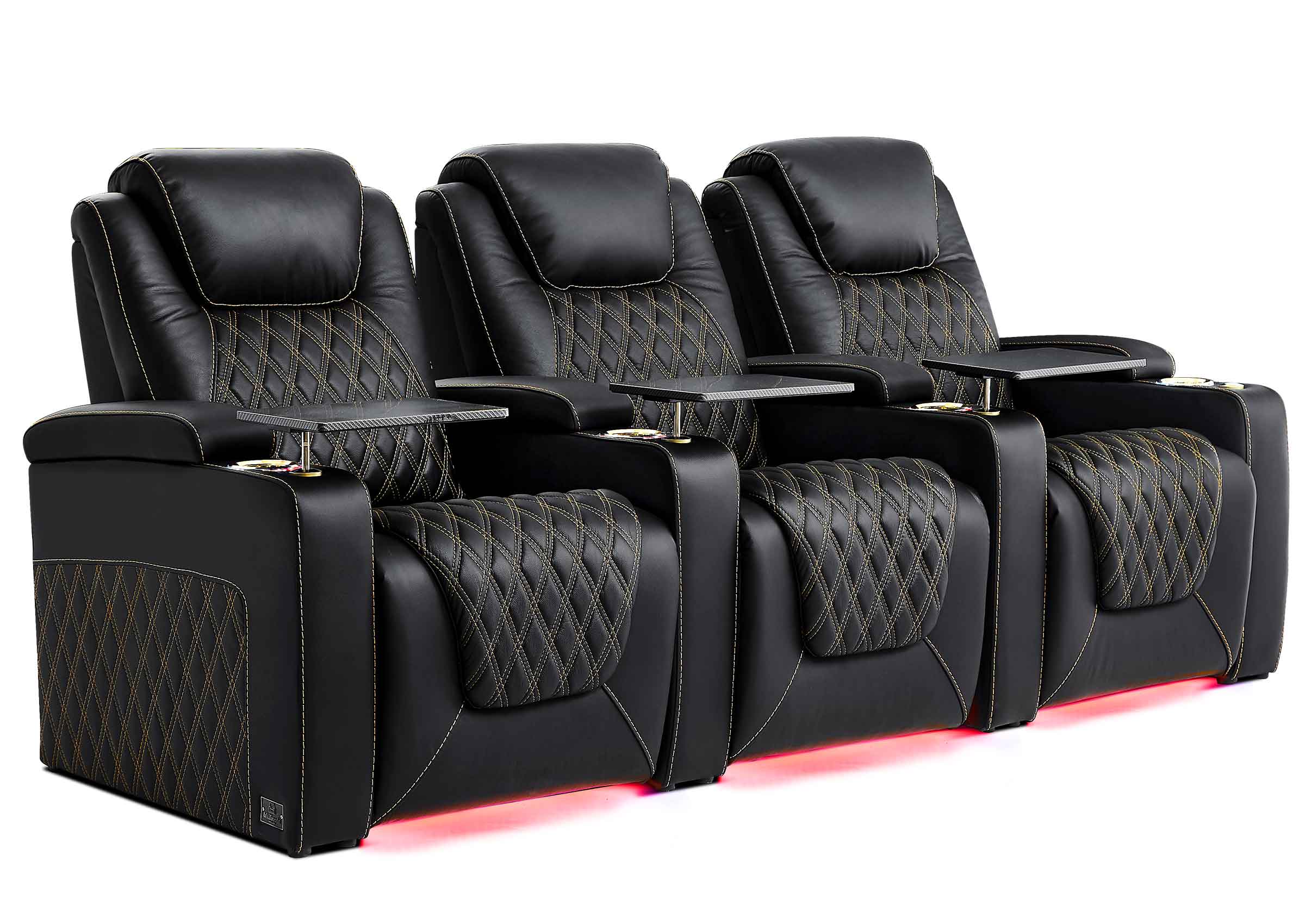
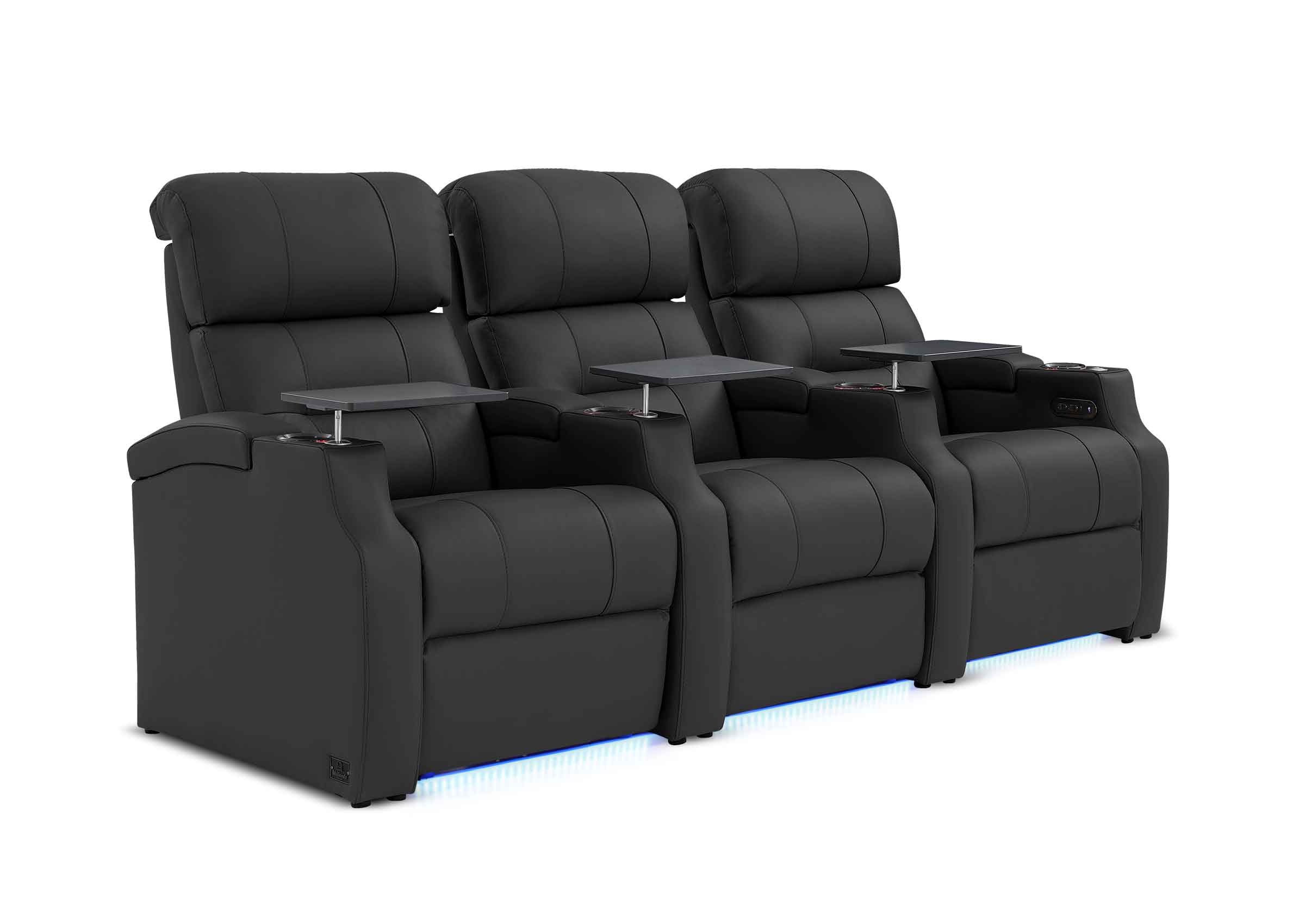
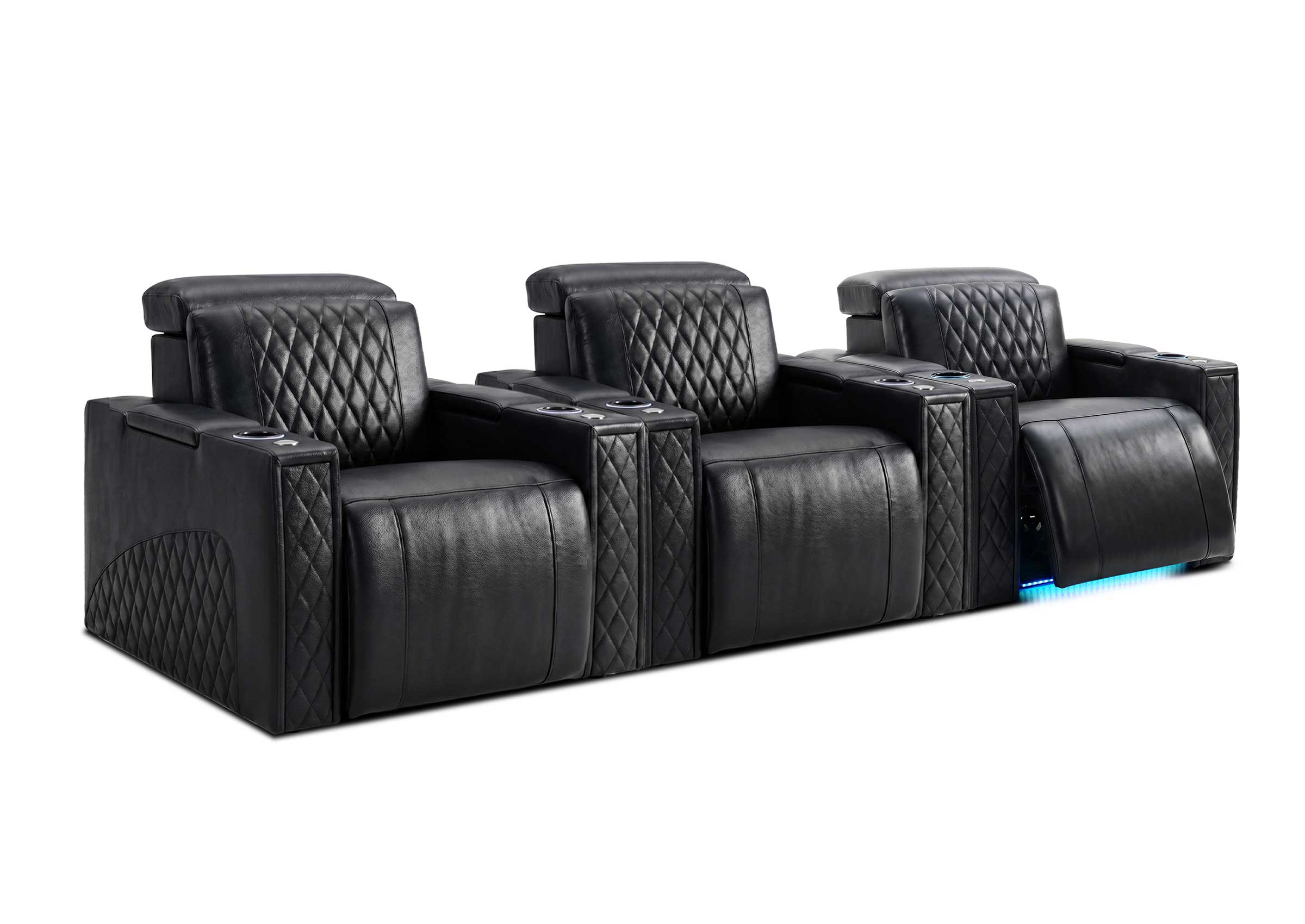

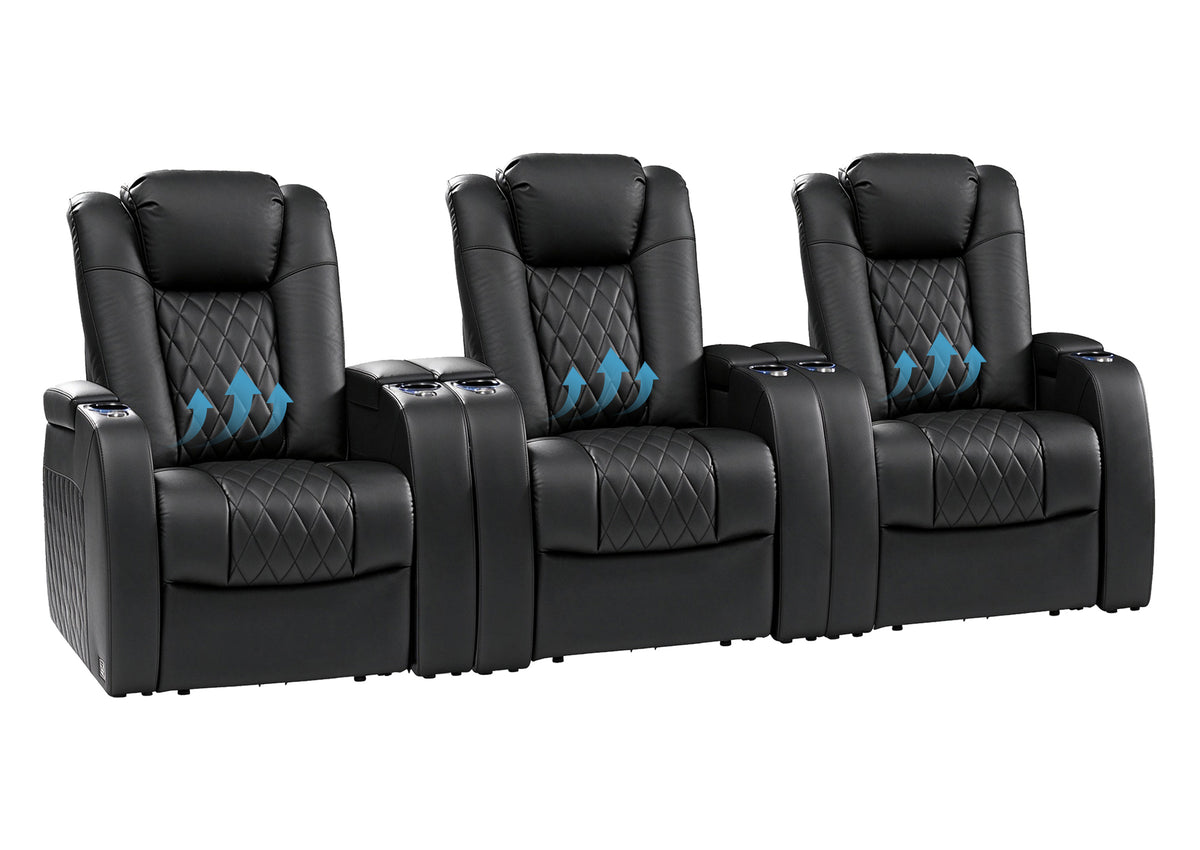
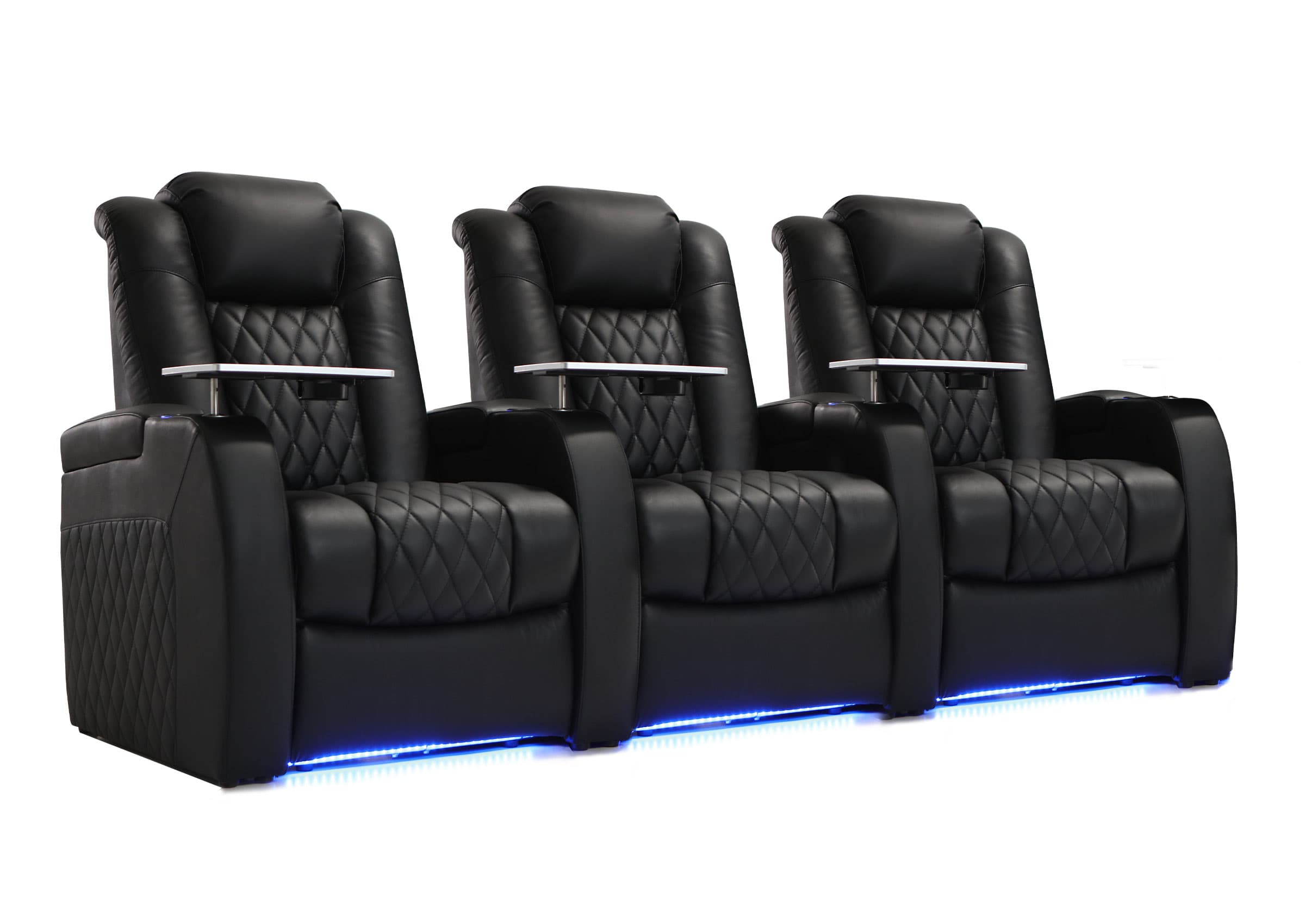
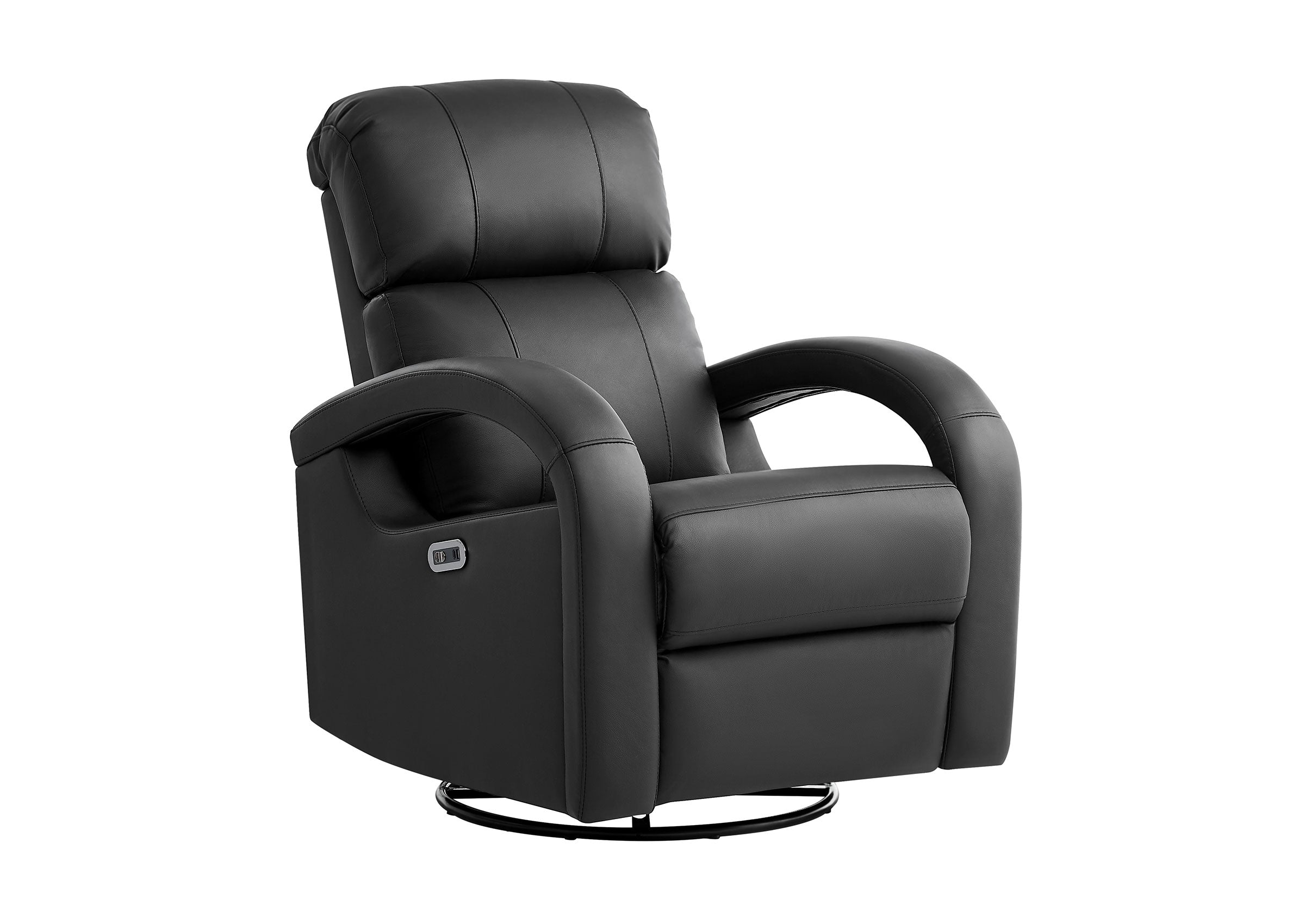
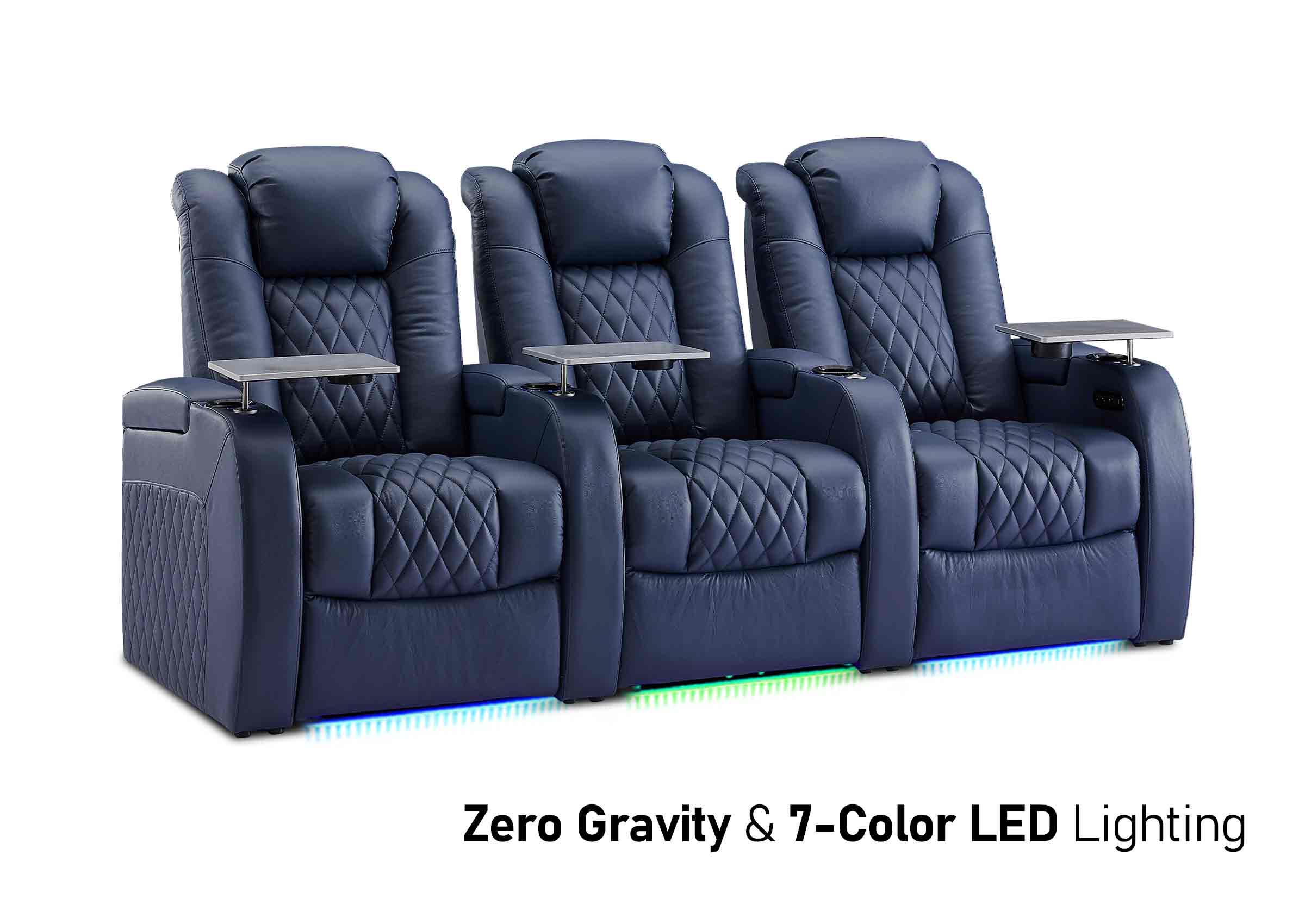
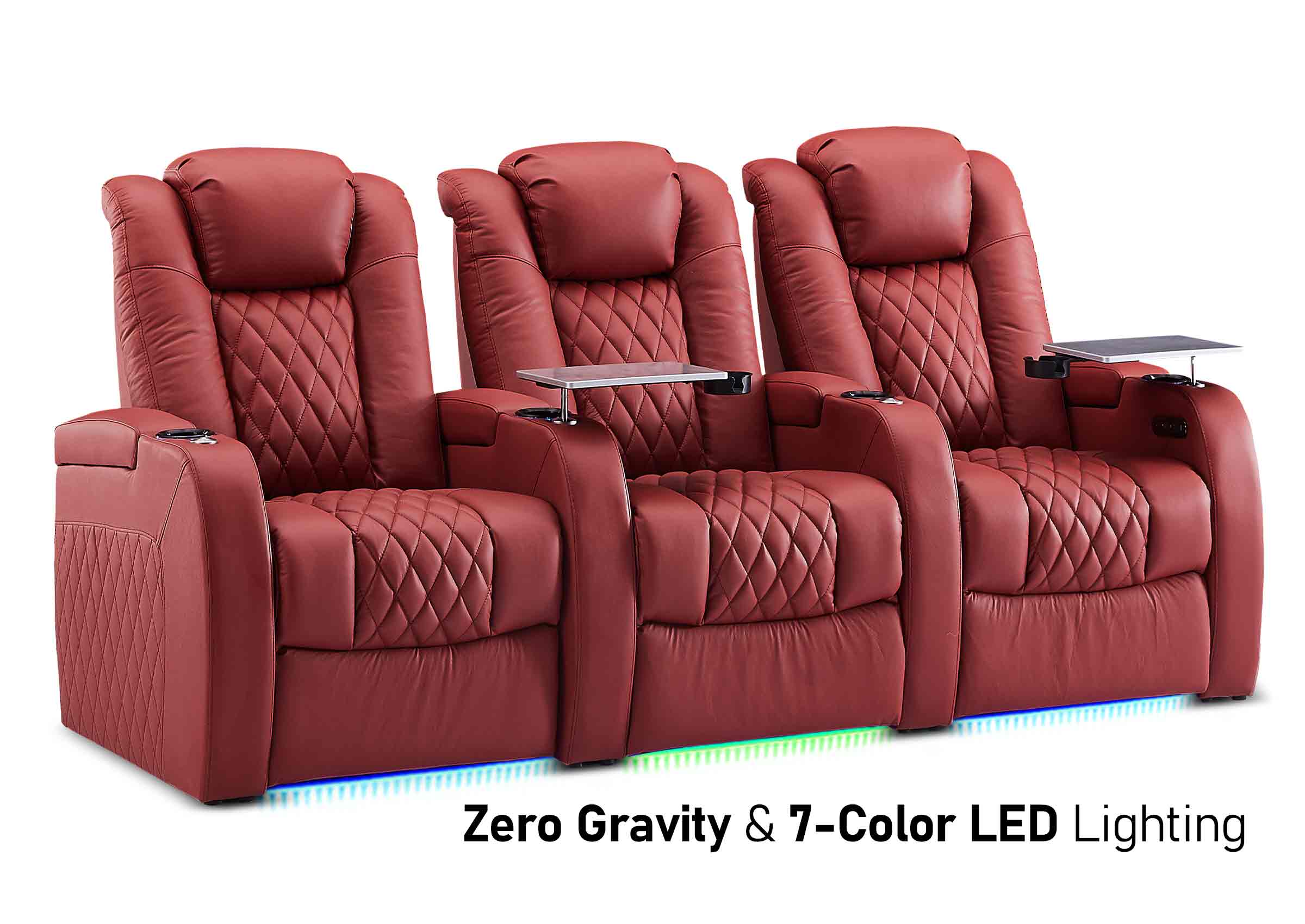
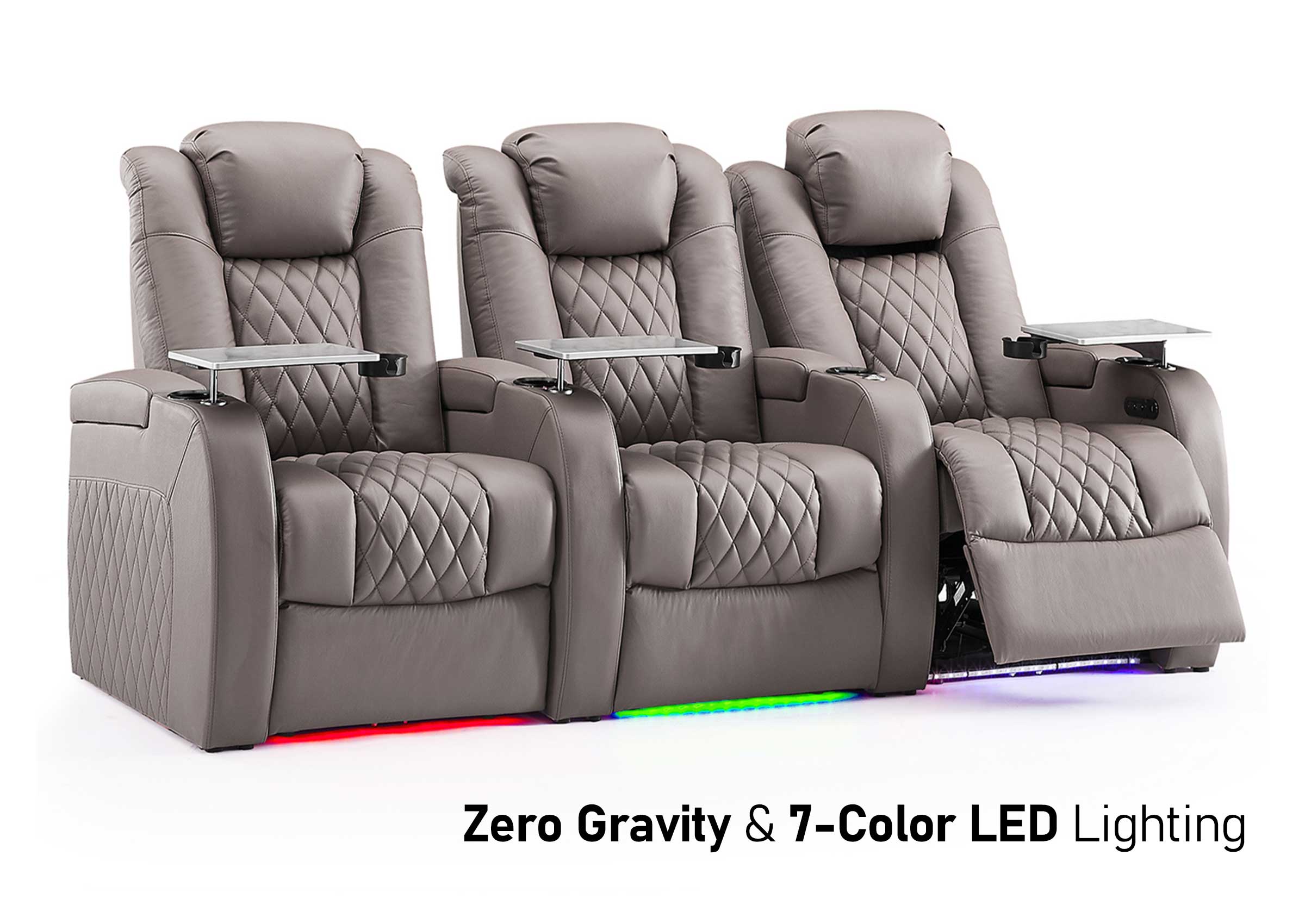
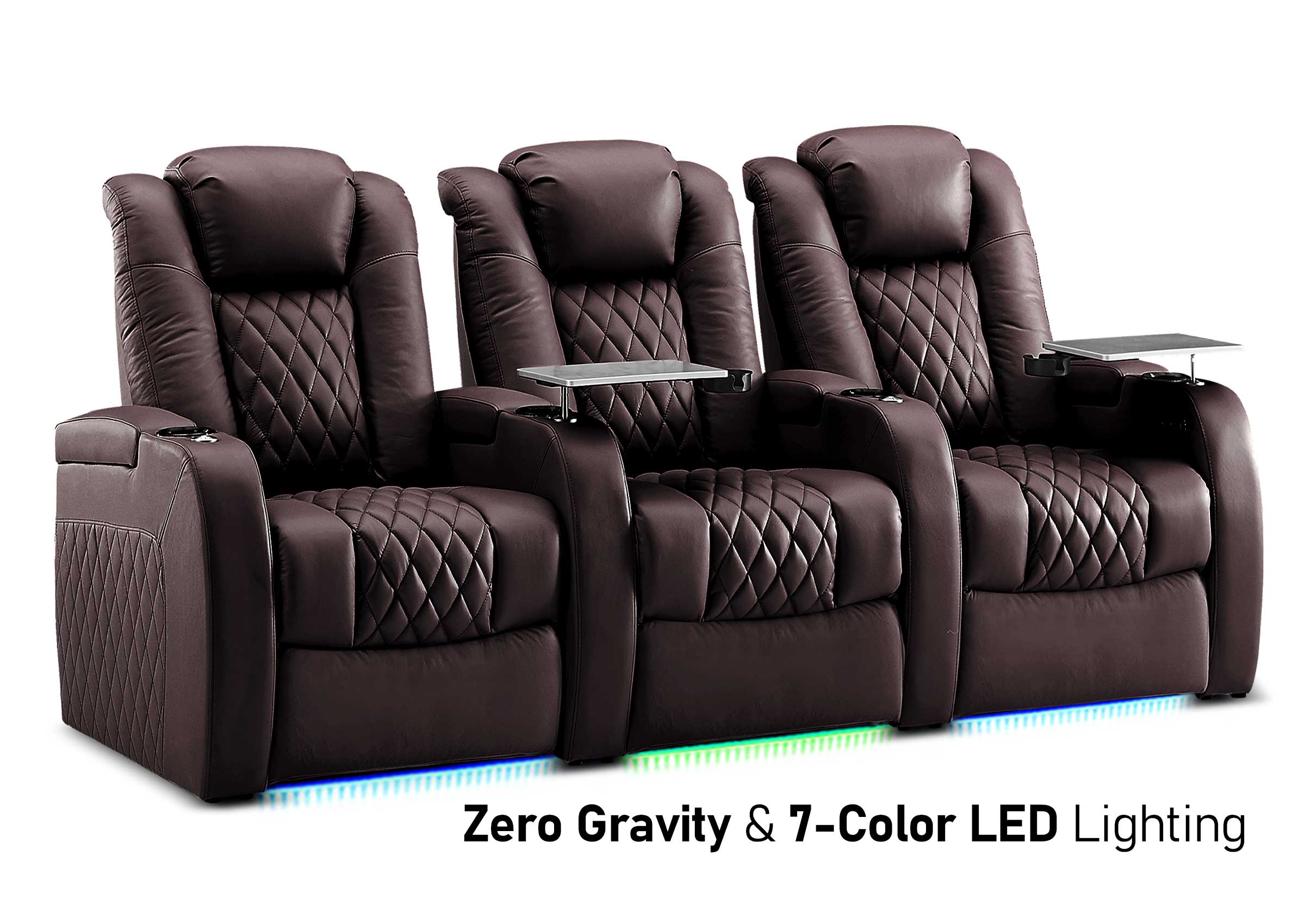

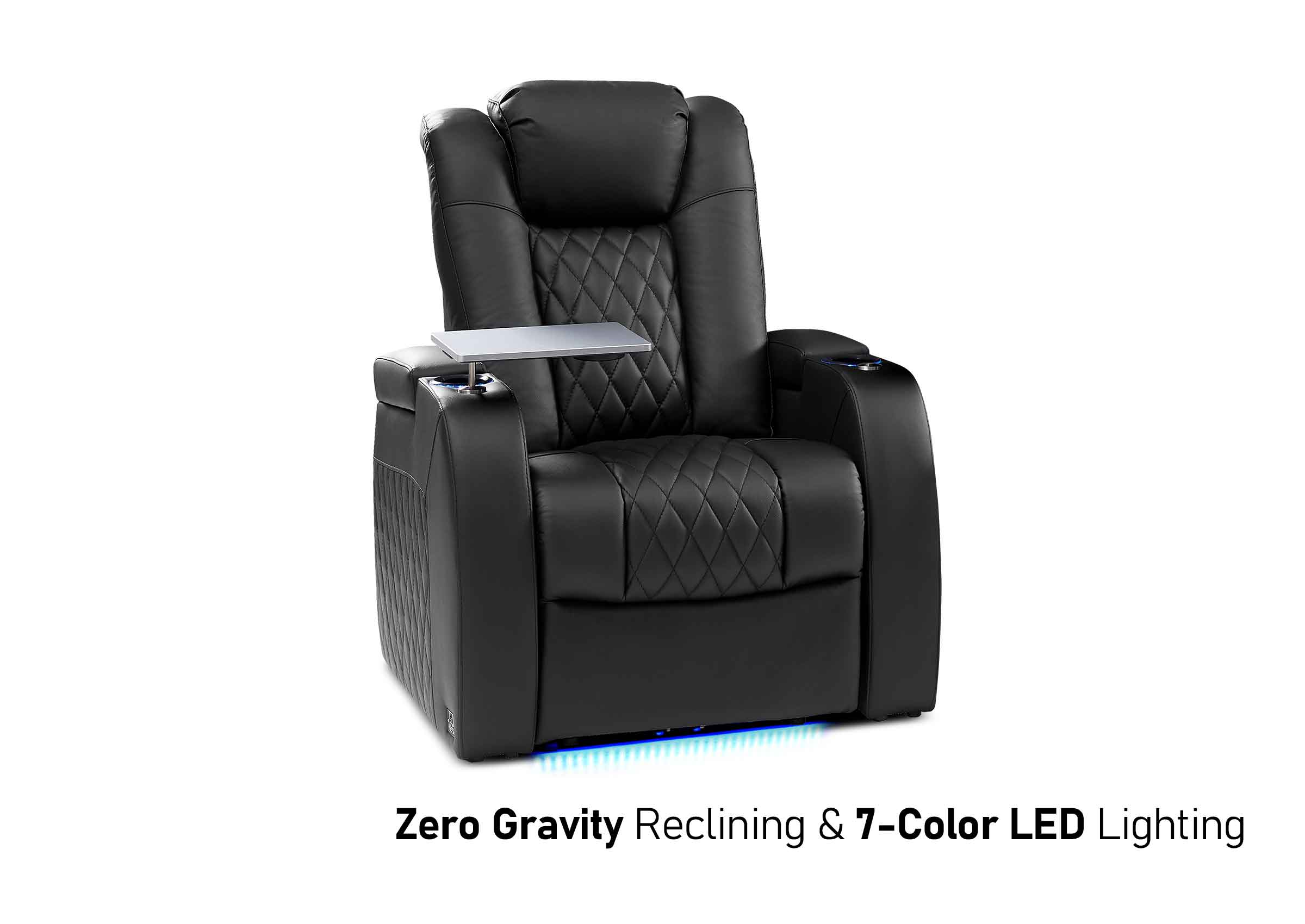
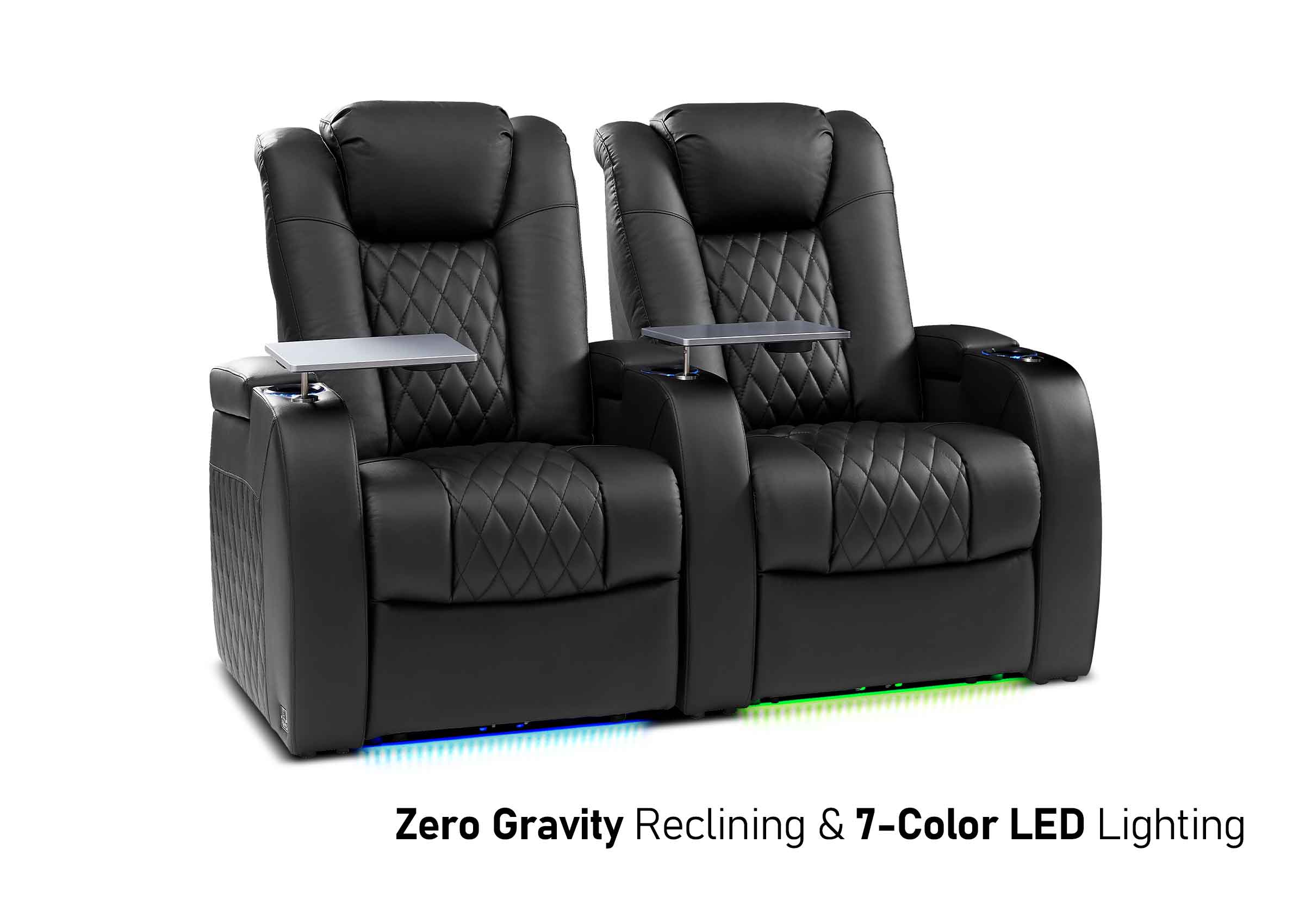
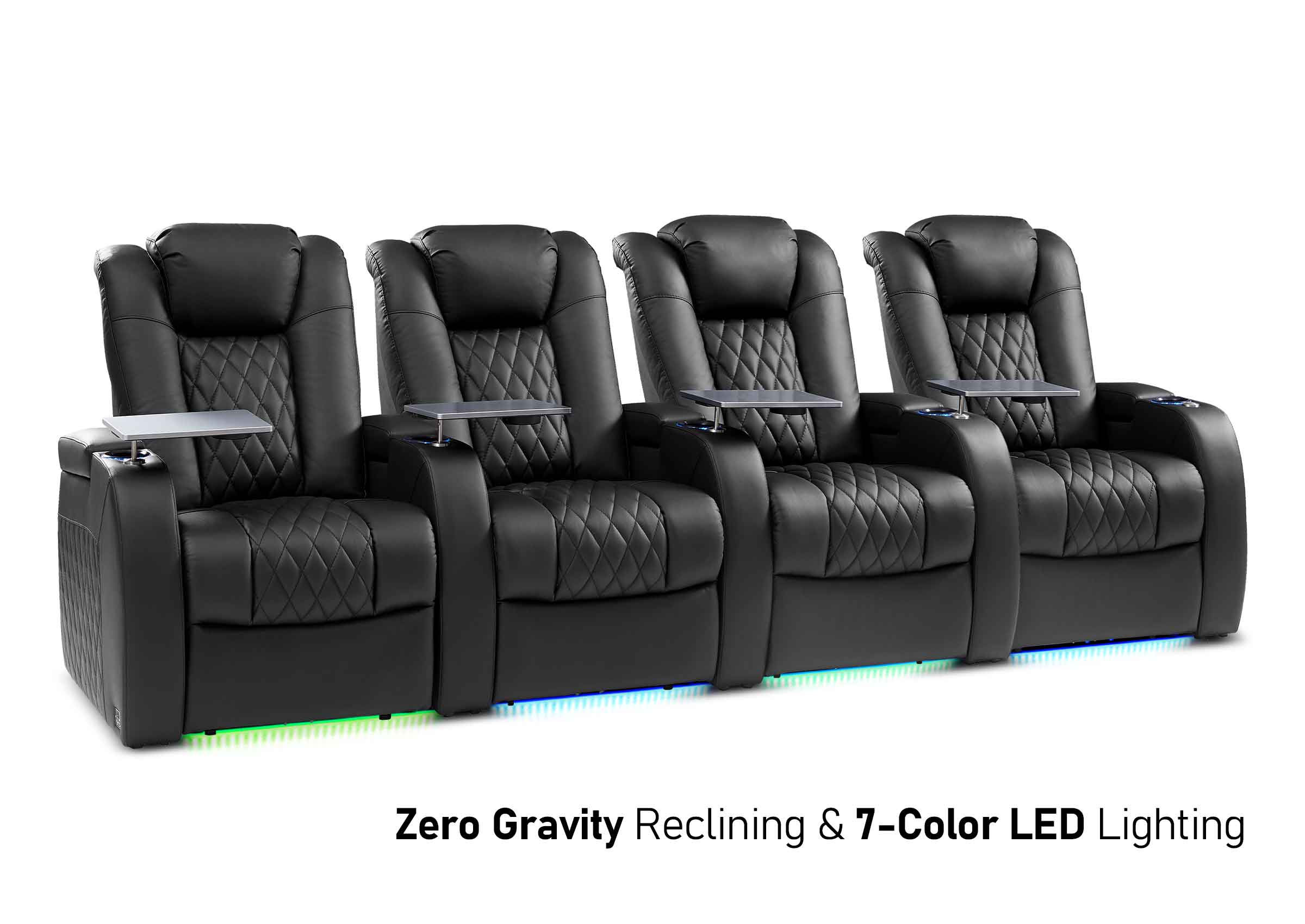
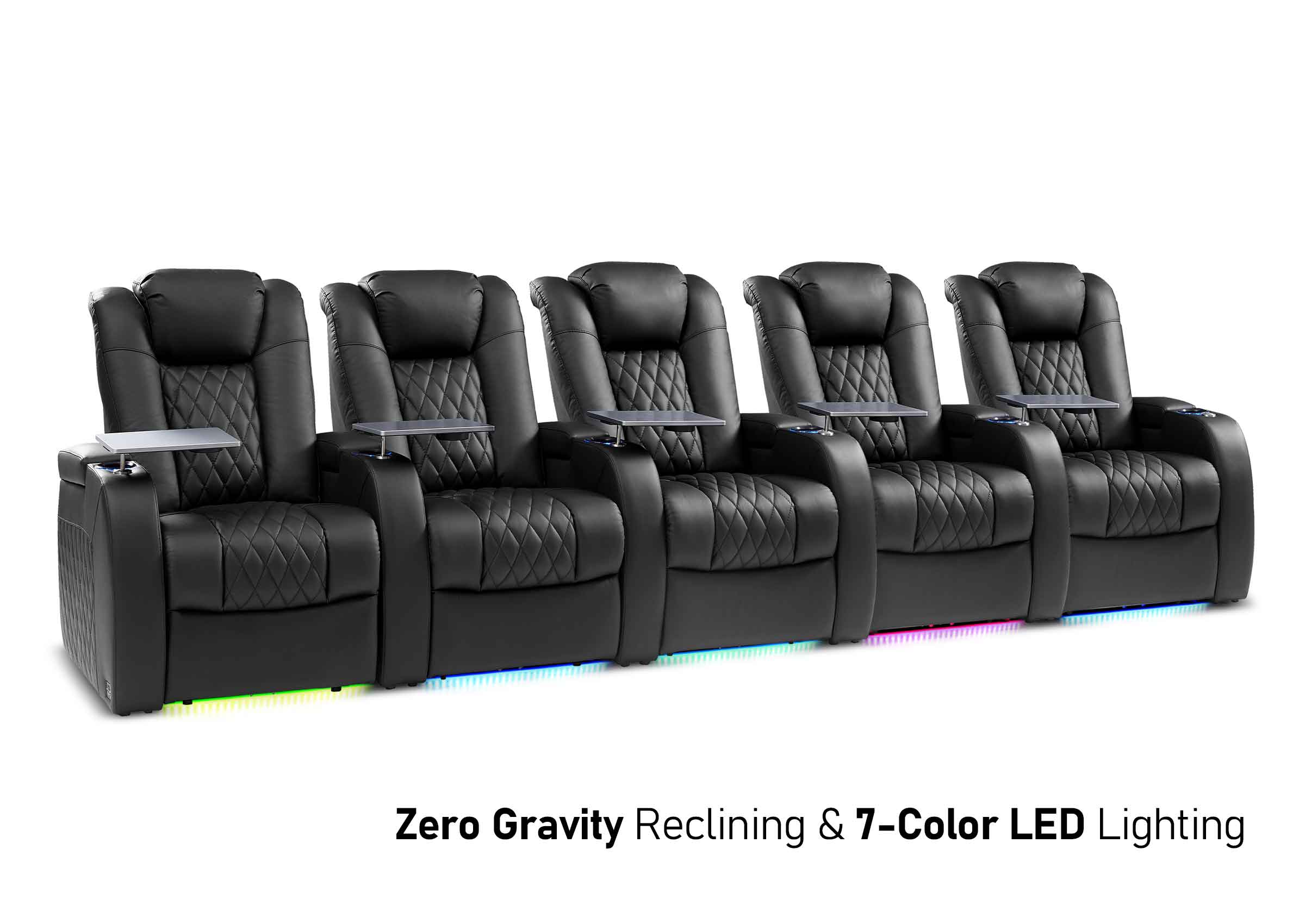
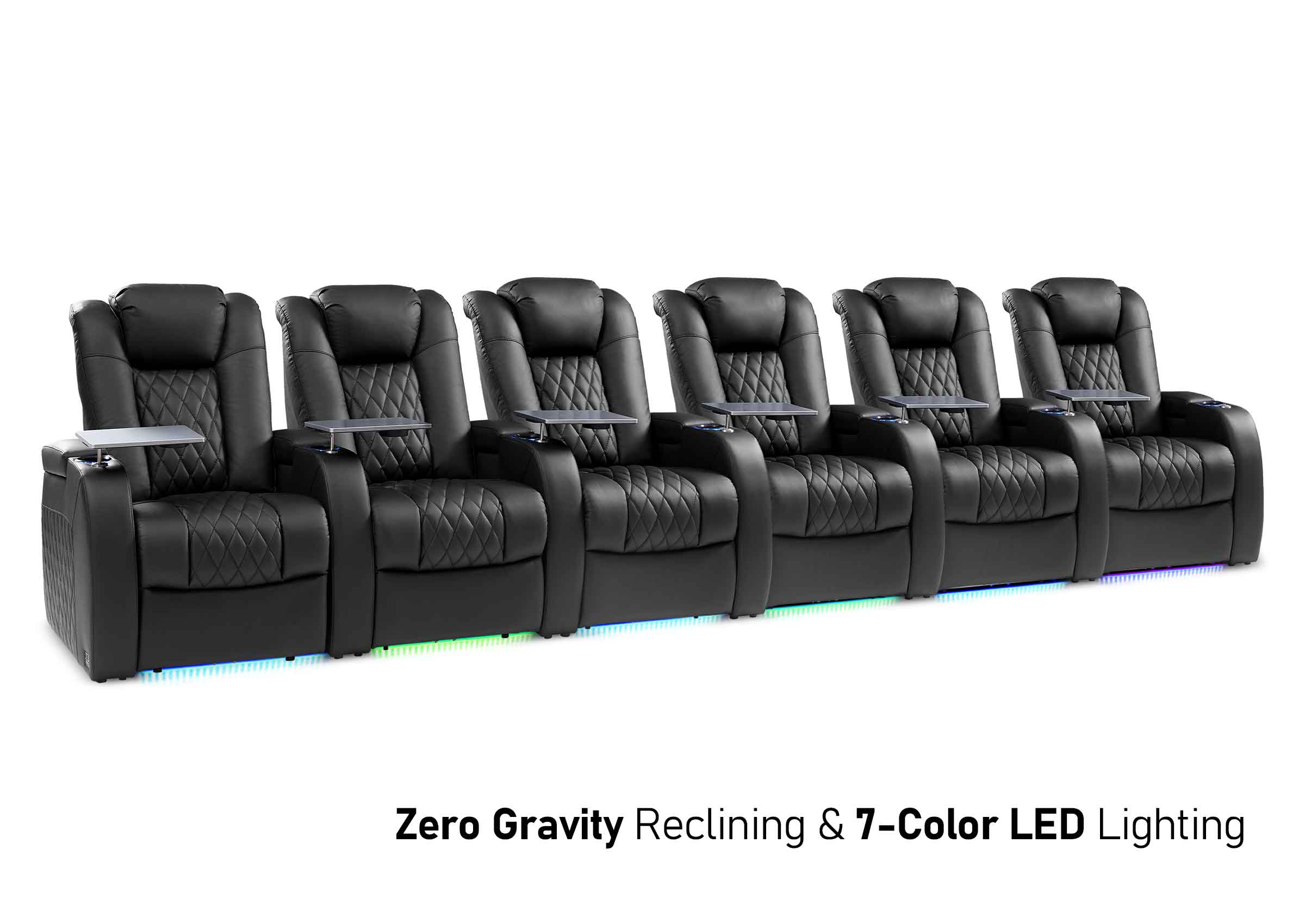
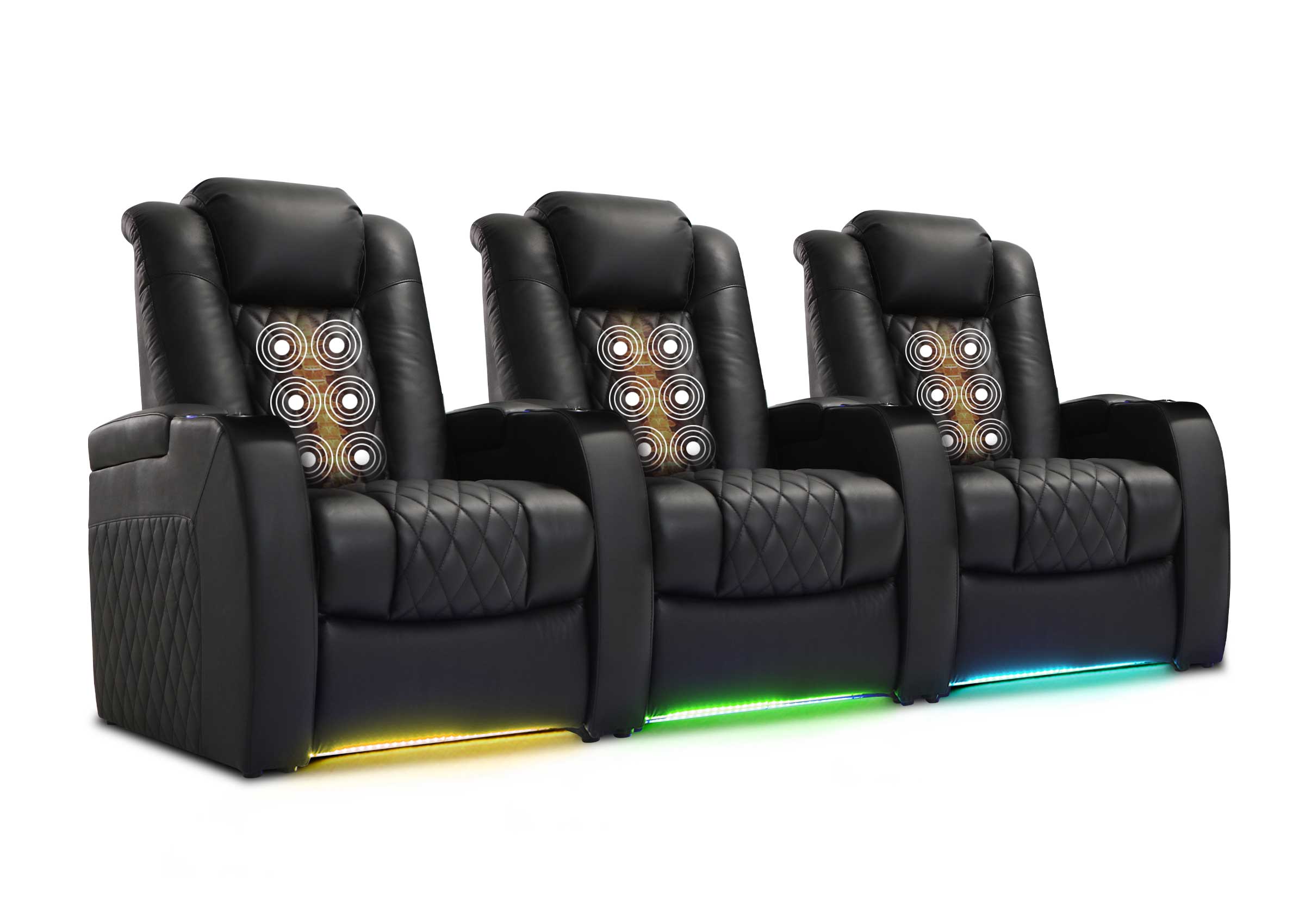

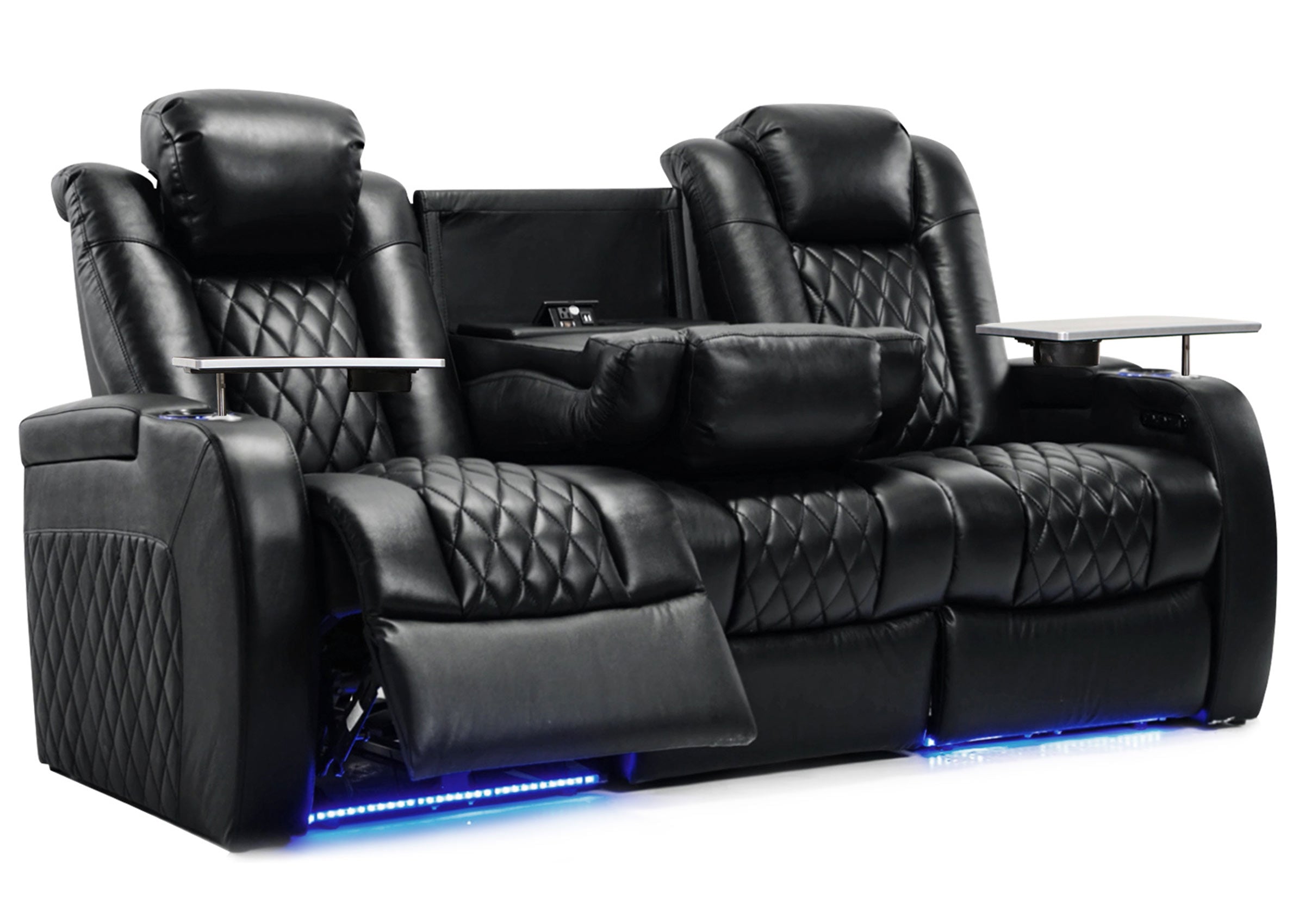
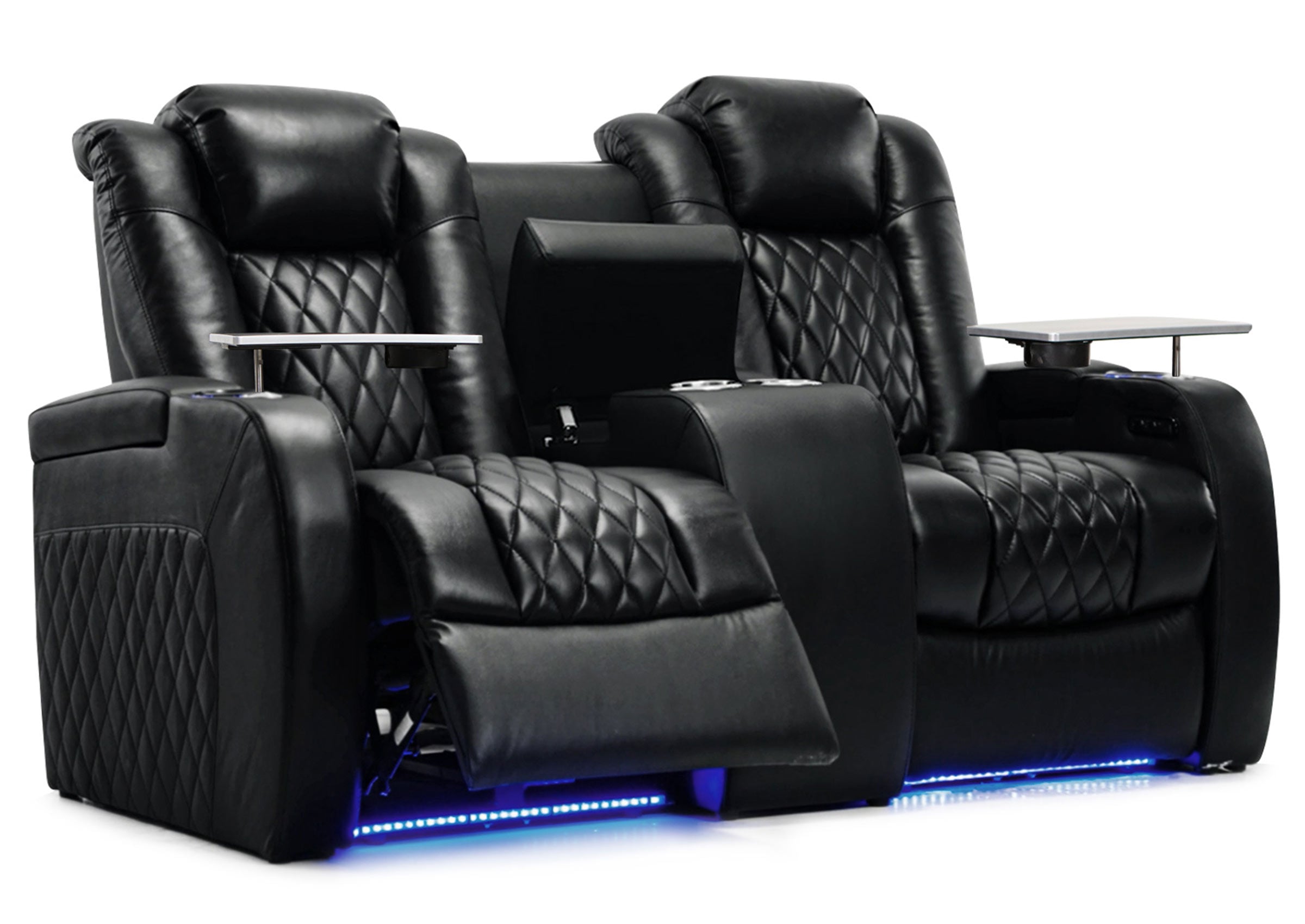


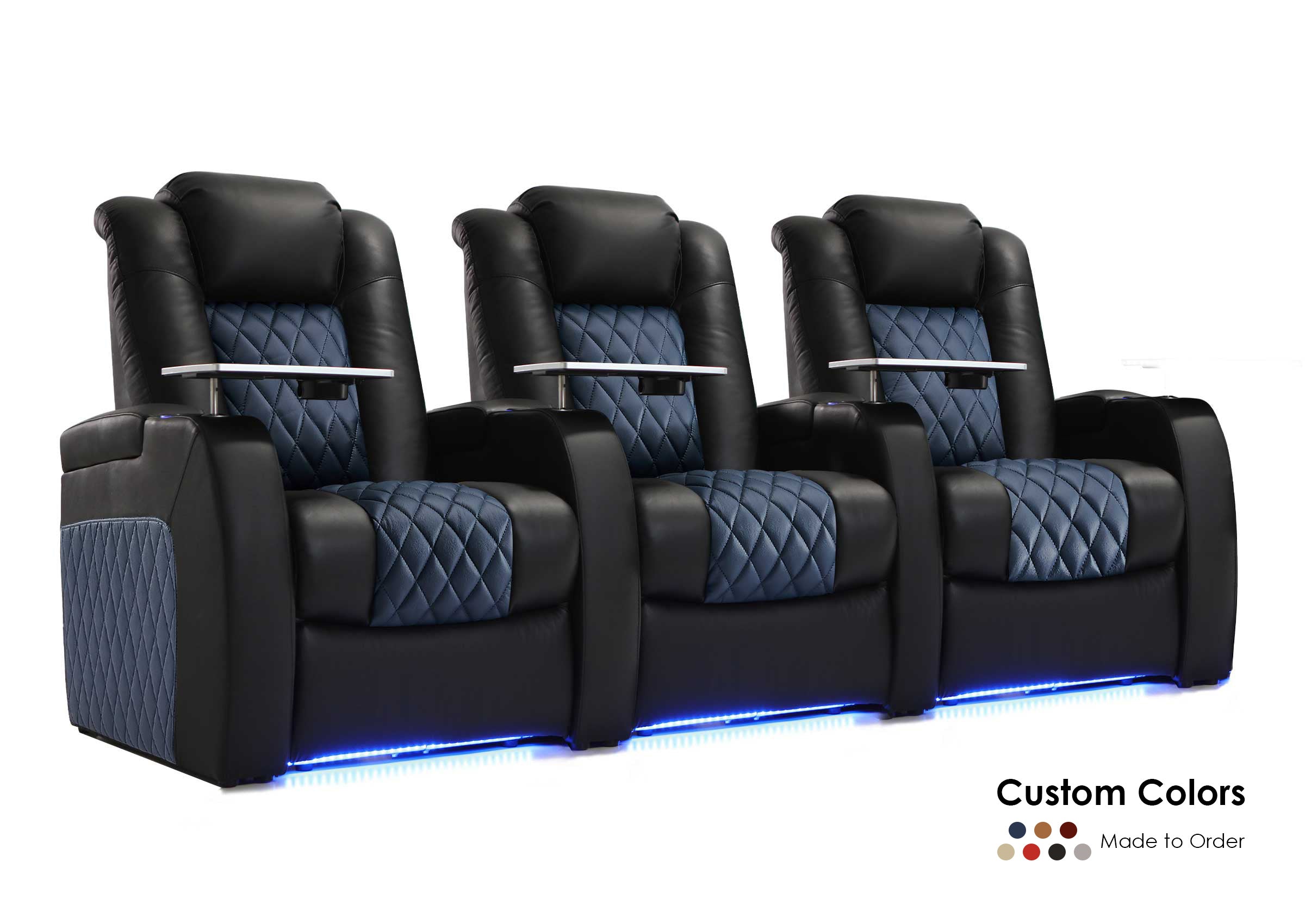



Recliners can be the most comfortable seats in a media room and still be the hardest furniture to make look intentional.
The problem is rarely that a recliner is inherently unattractive. More often, it has more visual weight than everything around it: a taller back, wider arms, deeper cushions, darker upholstery, or a larger base. Put that next to delicate chairs, a tiny rug, or lightweight tables, and the recliner begins to look like furniture that was added after the room was finished.
So if the recliners are staying, do not start by trying to hide them.
Treat them as part of the room’s visual foundation, then balance their scale, color, texture, and placement with everything around them.
That approach works whether you want a media room that feels like a polished family room or one that leans more deliberately toward a private theater. If you are still developing the room's overall direction rather than specifically designing around recliners, these media room ideas cover the broader planning stage.
Why Do Recliners Sometimes Look Out of Place?
Traditional recliners tend to combine several visually strong features in one piece: generous cushioning, large arms, high backs, visible reclining sections, and substantial upholstery.
None of those features is automatically a design problem. The mismatch usually happens when the rest of the room speaks a completely different visual language.
Imagine two large camel leather recliners surrounded by:
- narrow metal side tables;
- a small pale rug;
- a low, delicate accent chair;
- cool gray walls;
- lightweight decorative pieces.
The recliners may be the right seats for watching movies, yet still feel disconnected from the space.
Now imagine the same chairs with:
- a larger rug that visually groups the seating;
- medium-scale furniture nearby;
- warm wood tones;
- repeated camel, cream, or muted blue accents;
- substantial but uncluttered tables;
- softer lighting.
The recliners have not changed. The relationship between the recliners and the room has.
That distinction is the key to designing around them.
Start With Visual Weight, Not Color
When a recliner feels awkward, color is often the first thing people try to fix.
Should the sofa be cream?
Should the rug be brown?
Should the walls match the leather?
Those are useful questions later. First, look at scale.
A large reclining chair with thick arms and a tall back will still feel oversized beside a petite sofa even if the colors coordinate perfectly.
Visual weight comes from more than physical size. It is also affected by:
- dark versus light upholstery;
- exposed legs versus a solid base;
- thick versus narrow arms;
- tall versus low backs;
- smooth versus highly textured surfaces;
- how much floor space the furniture visually occupies.

The room above works because the recliners are not treated as isolated objects. The sofa, rug, tables, cabinetry, and lighting all have enough presence to support the seating without competing with it.
Houzz has highlighted scaled-down arms and lower profiles as reasons some recliners integrate more easily into residential spaces, while contemporary media-room examples often use other furnishings with enough presence to keep reclining seating from looking isolated. See examples of recliners integrated into residential interiors.
If your recliners are already large, you do not need to surround them with equally bulky furniture. But the next major piece should have enough visual presence to belong in the same room.
A medium-scale upholstered sofa, for example, will usually relate more naturally to two substantial recliners than a very thin, exposed-frame settee.
Before matching colors, make sure the furniture looks as though it belongs to the same scale of room.
Should the Other Furniture Match the Recliners?
Not necessarily.
The better question is whether your media room behaves more like a dedicated viewing room or a multi-use living space.
In a Dedicated Viewing Room
If the screen is clearly the focus, the recliners sit in a deliberate viewing position, and nearly everyone uses the room to watch movies or sports, repeating similar seating can make the layout feel intentional.
This is especially true when recliners are already positioned as a row.
Putting two completely different decorative chairs directly behind a theater-style row can sometimes make the second group look like an afterthought. A real Houzz media-room discussion illustrates this exact problem: the homeowner wanted to keep large camel recliners in the center of the room while adding seating behind them, raising questions about whether different chairs or a sofa could feel cohesive. View the media room discussion on Houzz.
In a Multi-Use Media Room
If the room also functions as a family room, reading space, conversation area, or casual entertaining room, exact matching can push the space too far toward a dedicated theater.
Here, coordination is usually more useful than duplication.
You might pair leather recliners with:
- a textured fabric sofa;
- upholstered side chairs;
- a low-profile sectional;
- a bench or ottoman;
- mixed but related side tables.
The goal is not to make every seat identical. It is to repeat enough visual cues that the pieces feel intentional together.
SEATING DECISION
Still Choosing Between Recliners, a Sofa, or Mixed Seating?
If recliners are not yet a fixed decision, compare the main seating types first. The right choice depends on how the room handles viewing, conversation, flexibility, and everyday use.
Compare Media Room SeatingMatch Undertones Before Matching Exact Colors
Two brown pieces can clash.
Two different colors can work beautifully together.
That is because undertone matters more than exact color matching.
A warm camel or cognac leather often works naturally with other warm materials:
- walnut;
- warm oak;
- oatmeal;
- cream;
- olive;
- muted navy;
- warm greige;
- aged brass.
A cool charcoal or blue-black recliner may sit more comfortably with cooler grays, crisp neutrals, black metal, or cooler wood finishes.
You do not need a rigid color formula. Instead, ask:
Do the major surfaces feel warm, cool, or neutral?
Once that relationship makes sense, you have much more freedom to mix colors.
This is also why buying a second brown sofa to “match” brown recliners can be less successful than choosing a textured cream or muted green fabric that shares the same warm undertone.
Leather Recliners Do Not Require More Leather
A common instinct is to repeat leather because it seems like the safest way to make recliners belong.
Sometimes that works, particularly in a dedicated theater.
But in a residential media room, another large leather piece can make the room feel heavier and more showroom-like.
Fabric is often useful because it changes the texture without breaking the palette.

For example:
camel leather recliners + oatmeal fabric sofa + walnut tables + muted navy accents
can feel coordinated because the colors and visual weight relate, even though the upholstery materials differ.
A useful rule is:
Match visual weight and undertone; vary texture when the room needs softness.
That gives the recliners a relationship with the rest of the room without forcing every upholstered surface to look the same.
Use the Rug to Make Separate Recliners Read as One Seating Zone
Recliners naturally look like individual objects.
That is part of their appeal: each person gets a clearly defined seat. But visually, multiple independent chairs can make a room feel fragmented.
A rug can solve more than a color problem.
It can turn:
chair + chair + table + sofa
into:
one seating zone.
The rug should visually relate to the main furniture group rather than floating as a small decorative island in the middle of the floor.
In a media room, it can also help soften a room full of hard surfaces. Houzz notes that rugs and other soft finishes can contribute both visual comfort and sound absorption in media spaces. Read Houzz's media room design guidance.
For reclining furniture, however, design around movement as well as appearance.
Check the rug in both upright and reclined positions. Footrests, moving mechanisms, and furniture bases should not catch awkwardly on thick rug edges or make the seating difficult to operate.
There is no single rug size that works for every recliner layout. The better test is whether the rug visually connects the furniture without interfering with how the furniture actually moves.
Choose Tables That Connect the Seats Without Adding More Bulk
Recliners often need nearby surfaces for drinks, remotes, phones, or snacks.
That does not mean every chair needs a large end table.
Four bulky recliners plus four bulky tables can make a media room feel more crowded than the seating itself.
Instead, consider whether the room works better with:
- one shared table between two seats;
- compact round side tables;
- a narrow console behind the seating;
- tables with open bases;
- integrated storage where appropriate.
The right table can also make a standalone recliner feel like part of a designed furniture group rather than a chair floating in the room.
If the recliners themselves are visually heavy, tables are often a good place to introduce a slightly lighter silhouette.
That creates contrast without making the room feel disconnected. If remotes, cables, gaming gear, blankets, and other accessories are becoming part of the visual problem, a broader home theater organization plan can help separate styling problems from storage problems.
Keep the Functional Geometry, Soften the Decorative Geometry
Theater seating tends to create strong repetition.
Seat.
Armrest.
Seat.
Armrest.
Seat.
That repetition is useful because it gives everyone a clear view and creates an orderly layout.
But if every other element in the room repeats the same symmetry, the media room can begin to feel more commercial than residential.
You do not need to disrupt the seating layout to fix this.
Keep the functional geometry; soften the decorative geometry.
For example, you can keep the recliners aligned while using:
- artwork that is not arranged as a rigid grid;
- one floor lamp instead of identical lamps on both sides;
- mixed cushions;
- a softer organic rug pattern;
- different but related tables;
- a plant or sculptural object on one side of the room.
The seats can remain disciplined while the decoration feels more relaxed.
That is often enough to preserve theater function without making the space look like a miniature commercial screening room.
Black Recliners Need Repetition, Not a Black Room
Black leather seating creates especially strong visual weight.
In a pale room, several black recliners can look like one dark object dropped into the middle of the space.
The answer is not necessarily to make everything else dark.
Instead, repeat black selectively.
Small elements such as:
- a lamp base;
- picture frames;
- cabinet hardware;
- a narrow table frame;
- one or two patterned textiles;
can distribute the color around the room.
Now the black seating has visual references elsewhere.
This is different from filling the space with black walls, black curtains, a black rug, and black furniture simply because the recliners are black.
That darker approach can work beautifully in a dedicated theater, but a multi-use media room often benefits from more contrast.
Design Lighting for Two Different Rooms
A good media room often has two identities.
There is the room when nobody is watching anything, and there is the room during a movie.
Those situations need different lighting.
Everyday Mode
The room should feel comfortable for:
- talking;
- reading;
- choosing a movie;
- playing games;
- having snacks;
- spending time together before the screen becomes the focus.
This is where lamps, indirect lighting, and general ambient light help the room feel residential.
Viewing Mode
The priorities change.
You want lower brightness, less screen glare, and enough controlled light to move through the room safely without destroying the viewing atmosphere.
Houzz's media-room guidance similarly emphasizes multiple lighting sources and softer light rather than relying on one harsh source.
If the only lighting plan is “turn everything off,” the room may function during a movie but feel unfinished the rest of the time.
Example: Designing Around Large Camel Leather Recliners
Suppose the room already has two large camel leather recliners.
The walls are a light warm greige, the floor is neutral, and you need additional seating behind or beside the recliners.
The easy response would be to look for another camel leather piece.
Instead, work through the room in layers.
First: Respect the Scale
Choose secondary seating with enough presence to relate to the recliners.
A tiny accent chair will probably make the recliners feel larger. A medium-scale sofa or a pair of substantial upholstered chairs can create a better balance.
Second: Stay in the Same Temperature
Camel leather is warm.
That does not require more brown, but it often works naturally with warm neutral fabric, walnut or oak, muted olive, navy, cream, or aged-metal accents.
Third: Vary the Texture
A woven fabric sofa or chair can soften the smooth leather and make the room feel less like a furniture set.
Fourth: Create One Visual Zone
Use the rug and tables to connect the leather recliners with the new seating rather than visually separating “the theater chairs” from “the nice furniture.”
Fifth: Repeat Camel Sparingly
A pillow, artwork detail, wood finish, or small accessory can echo the recliner color without turning the entire room brown.
The result does not depend on copying one particular palette.
The useful principle is:
The new furniture should relate to the recliners without looking as though it came from the same box.
When Should You Stop Trying to Make It Look Like a Living Room?
Not every media room needs to look residential.

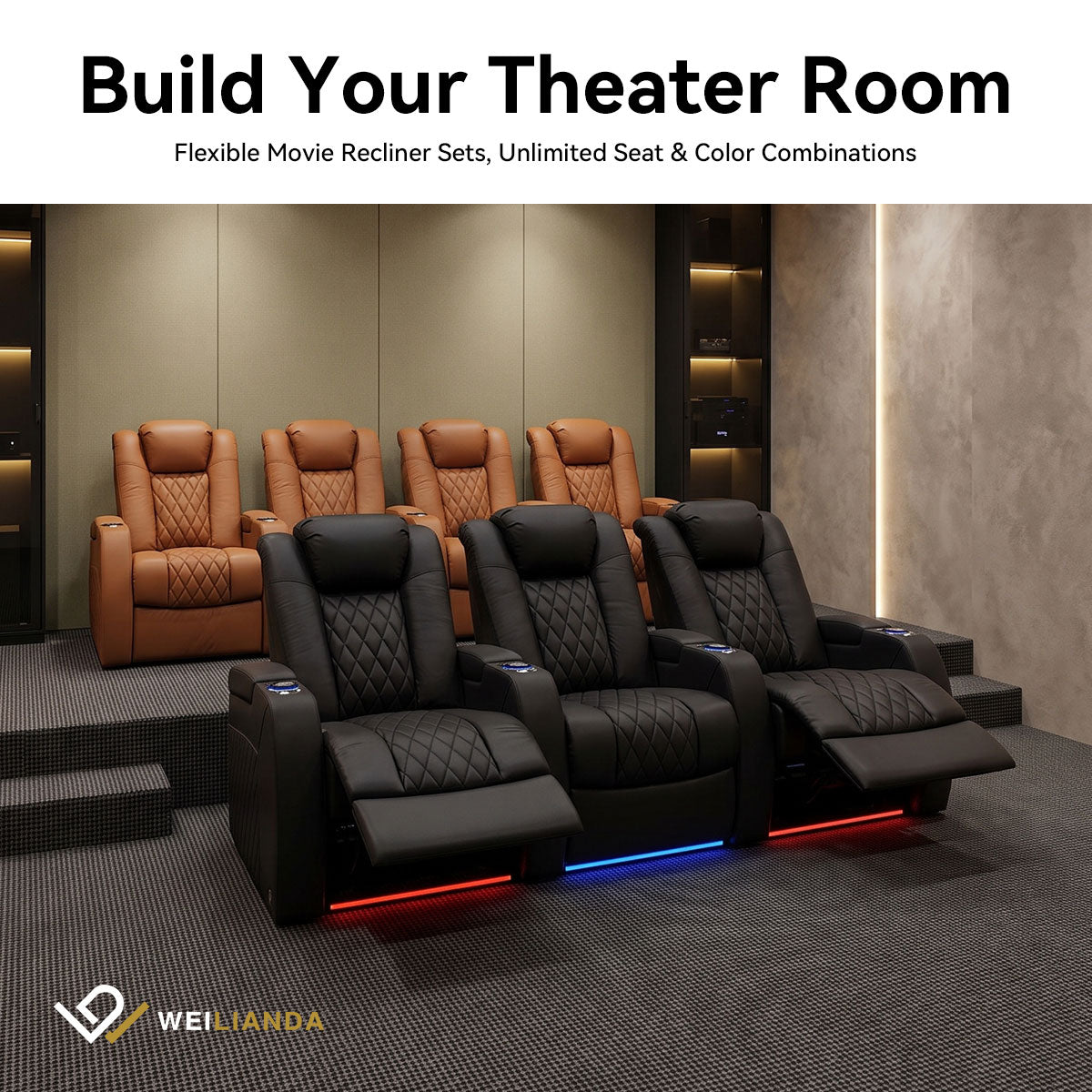
The two spaces above are solving different problems. The media room uses residential layering, mixed furniture, a large rug, wood, and warm ambient light. The dedicated theater uses repeated seating, a darker palette, and a stronger screen-first layout. Neither approach is automatically better.
If you have:
- a dedicated screen wall;
- multiple rows;
- a riser;
- acoustic treatment;
- blackout control;
- several matching theater seats;
- little need for conversation-oriented use;
then the recliners are not a design problem.
They are the design language.
Trying to disguise a real theater by adding unrelated lounge chairs, decorative coffee tables, or living-room furniture can make the room less coherent.
Architectural Digest's home-theater examples show how dedicated viewing rooms can use substantial seating, darker finishes, wood paneling, and other deliberately cinematic choices without sacrificing thoughtful interior design. See Architectural Digest's home theater examples.
The decision comes down to the room's actual job.
A multi-use media room benefits from residential layering. A dedicated theater can lean into repetition and cinematic structure.
What Usually Makes Recliners Look Awkward in a Media Room?
Trying to Hide Them
Large furniture rarely disappears because you place a throw over it.
Design around its scale instead.
Matching Color but Ignoring Scale
A small brown chair is not automatically a visual match for a large brown recliner.
Adding Too Many Small Accessories
A substantial recliner surrounded by several tiny objects can feel even larger. Fewer, better-scaled pieces usually create a calmer result.
Making Every Material Heavy
Leather recliners, dark wood tables, thick curtains, dark walls, and a heavy rug can all work in a theater, but together they may overwhelm a room that still needs to feel like part of the home.
Treating the Recliners and the Rest of the Room as Two Separate Designs
If the rug, palette, tables, artwork, and lighting ignore the seating, the recliners will continue to look added on.
Integration happens at the room level.
FAQ
How do you make recliners look less bulky?
Start by balancing their visual weight with the rest of the room. Use furniture with enough scale to relate to the recliners, connect the seating with a properly proportioned rug, and avoid surrounding large chairs with many tiny accessories. Dark recliners can also feel lighter when their color is repeated selectively elsewhere rather than concentrated in one large block.
Can you mix leather recliners with a fabric sofa?
Yes. Leather and fabric can work especially well together when their undertones and visual scale coordinate. The texture contrast can make a media room feel more residential than an all-leather furniture set.
Should all recliners in a media room match?
Matching seating can work well in a dedicated viewing room or organized theater row. In a multi-use media room, coordinated rather than identical seating may make the space feel more relaxed and flexible.
What colors work with black leather recliners?
The answer depends on the rest of the room, but black does not require an all-dark palette. Warm neutrals, cooler grays, wood, muted greens, blues, and other colors can work when the overall undertones are coordinated. Repeating small black accents elsewhere can also help connect the chairs to the room.
Should a rug go under recliners?
It can. A rug can visually group separate recliners and soften a media room, but its placement should not interfere with the reclining mechanism or footrest movement. Check the seating in its fully reclined position before finalizing the rug.
How do you make a media room feel less like a commercial theater?
Use residential materials and layering around the functional seating: mixed textures, a substantial rug, thoughtful artwork, warm or varied lighting, wood, fabric upholstery, and fewer rigidly repeated decorative elements. Keep the viewing geometry if it works, then soften the rest of the room.
Design Around the Comfort You Actually Want to Keep
If recliners are the seats your household genuinely prefers, replacing them simply because they are harder to decorate around solves the wrong problem.
A better media room starts by accepting what those chairs contribute—comfort, support, individual seating, and a clear viewing position—and then designing the room so those benefits feel intentional.
Start with visual weight before color. Coordinate instead of automatically matching. Use rugs, tables, lighting, texture, and repeated accents to connect the seats to the surrounding space.
And most importantly, decide what kind of room you are actually designing.
If it is a family room that happens to be excellent for movies, soften the theater language.
If it is a theater that happens to be inside your home, let the seating look like it belongs there.
A stylish media room does not need to disguise its recliners. It needs to make them feel like they were part of the plan from the beginning.