









A $10,000–$25,000 home theater renovation can create a luxurious place to watch movies, provided the budget matches the room you already have. In a finished space, that investment can go toward a coordinated picture, immersive sound, comfortable seating, lighting, and installation. Major construction or sound isolation changes the scope and needs its own quotation.
The goal is a room you look forward to using: dialogue you can follow, a picture that suits the light, seats everyone enjoys, and controls that make movie night easy. Start with what disappoints you now, keep equipment that still works well, and spend on the changes you will notice from your favorite seat.
Set the Renovation Scope Before Dividing the Budget
Walk through an ordinary movie night before shopping. Is the screen washed out? Do you turn up the volume to understand speech? Does someone avoid the back row? Are remotes, chargers, and cables scattered around the room? Write down the three problems that matter most, then connect each purchase to one of them.
Define what your renovation includes. An equipment-and-furnishings refresh is different from finishing a basement, relocating electrical circuits, rebuilding a ceiling, or creating substantial sound isolation. Ask installers to separate equipment, room work, labor, delivery, and taxes so two quotations describe comparable projects.
Keep, improve, or replace?
- Keep speakers, a display, furniture, or source devices that still meet your needs. Working speakers do not become obsolete simply because a new receiver is available.
- Improve items whose surroundings are the problem: reposition speakers, control daylight, adjust the listening position, or simplify controls before replacing them.
- Replace a component when a specific limitation remains, such as missing connections, insufficient usable seating space, unreliable operation, or poor results at your intended screen size.
For example, a family that already likes its large TV and front speakers could put more of a $10,000 renovation into seating, window treatments, sound calibration, and concealed wiring. A dedicated projection room may instead need a larger display allowance. Neither project benefits from a mandatory percentage for every category.
Three Ways to Plan a $10,000–$25,000 Home Theater Budget
The following hypothetical planning allowances illustrate three different scopes. They are not contractor quotes, tested systems, nationwide averages, or promises that particular products will fit each allowance. Replace every allowance with an actual quote before ordering.
| Budget item | $10,000 refresh | $17,500 upgrade | $25,000 renovation |
|---|---|---|---|
| Display and screen | $1,800 | $3,500 | $5,500 |
| Audio and receiver | $1,800 | $3,500 | $5,000 |
| Seating and selected accessories | $2,500 | $4,500 | $6,500 |
| Light control, finishes, and acoustic treatment | $1,200 | $1,800 | $2,500 |
| Installation, wiring, and setup | $1,500 | $2,500 | $3,000 |
| Unassigned reserve for tax, delivery, and unforeseen costs | $1,200 | $1,700 | $2,500 |
| Total | $10,000 | $17,500 | $25,000 |
The $10,000 example assumes a finished room, a modest display change, and some reused equipment. The $17,500 example allows more coordinated replacement of picture, audio, and seating. The $25,000 example gives those categories more room, while still assuming that major structural work is outside the project.
The reserve belongs inside the spending ceiling. If an installation quote or local tax consumes more than expected, reduce or defer another purchase. Do not count promotional gifts as cash available to pay an electrician.
Put the next dollar where it solves a problem
If the picture already looks good but voices are unclear, investigate speaker placement, the center channel, room reflections, and calibration before upgrading the projector. If everyone likes the sound but avoids uncomfortable seats, improve seating first. At the upper end of the budget, better integration and room finishes may add more daily enjoyment than another headline specification.
Choose a Picture That Works in Your Room
Projection can give a dedicated theater a dramatic sense of scale. A large TV can be the more convenient choice for a bright, multipurpose room used for daytime sports and gaming. Choose around your light control, viewing position, and installation options rather than assuming projection is always the more luxurious solution.

Evaluate the projector and screen as a pair
A laser light source can reduce routine lamp replacement, but it does not guarantee constant brightness or a maintenance-free projector. Rated light-source hours depend on the model, operating mode, and usage conditions. Likewise, check the actual resolution, HDR formats, lens adjustment, fan noise, and gaming capabilities of the model you are considering; laser illumination alone does not establish any of them.
Native imaging resolution and pixel-shifting technology describe different approaches. Compare the resulting image at your intended size, including detail, contrast, motion, and HDR presentation, instead of dismissing or approving a projector from that label alone. Dolby Vision support is model-specific, not a standard feature of every 4K projector.
A fixed-frame screen suits a dedicated room where it can remain visible. A retractable screen can preserve a living room's daytime appearance. Ambient-light-rejecting screens must suit the projector's throw type and installation geometry; they do not replace sensible light control. An ultra-short-throw projector also needs the correct cabinet position and screen compatibility.
Separate viewing distance from projector throw distance
Viewing distance is measured from the screen to the viewer's eyes. Throw distance is measured from the projector lens to the screen. BenQ's installation guidance explains the relationship: throw distance equals image width multiplied by throw ratio.
For a hypothetical projector with a 1.2 throw ratio and a 100-inch-wide image, the lens would need to be about 120 inches from the screen. That calculation does not tell you where viewers should sit. Use the selected projector's installation chart for mounting, then preview the screen outline from your actual upright and reclined eye positions. Check subtitles, sports graphics, and camera movement before finalizing the size.
Plan the screen, seated eye position, recline envelope, and walkways together. Our home theater dimensions guide provides a broader room-planning checklist; final dimensions should come from your selected equipment and seating.
Build Immersive Sound Around the Listening Positions
A well-placed surround system is a stronger starting point than a larger speaker count squeezed into the wrong locations. Establish the main listening area, place the front soundstage around it, and make sure dialogue remains clear at the volume your household actually uses.

Understand the layout before buying the receiver
A 5.1 system uses five main speakers and one subwoofer. A 7.2 layout adds two main surround channels and a second subwoofer; the extra main channels are not automatically overhead speakers. In Atmos notation, the third number identifies height channels: 5.1.2 has five main channels, one subwoofer, and two height channels. See Dolby's 5.1.2 placement guide for a concrete layout.
Choose the receiver for the layout you will install, checking both processing and powered-channel capacity. Also check the connections your sources need, speaker compatibility, ventilation, and the receiver's calibration system. A single watts-per-channel figure does not tell you how the complete system will perform in your room.
Spend on consistency across the seats
Keep the center speaker unobstructed and aimed toward listeners rather than hidden behind an unsuitable cabinet door. Check speech from the outer seats as well as the middle. A second subwoofer can be useful when placement and calibration improve bass consistency, but an arbitrary front-corner/side-wall arrangement is not a universal solution.
Use measurement and listening checks to decide placement, levels, timing, and crossover settings. Receiver room correction can help integrate the system; it cannot replace a sensible layout or stop sound passing through the building. Keep existing speakers when they work well, then address the weak link instead of replacing an entire set to make the renovation look more comprehensive.
Make Seating the Center of the Luxury Experience
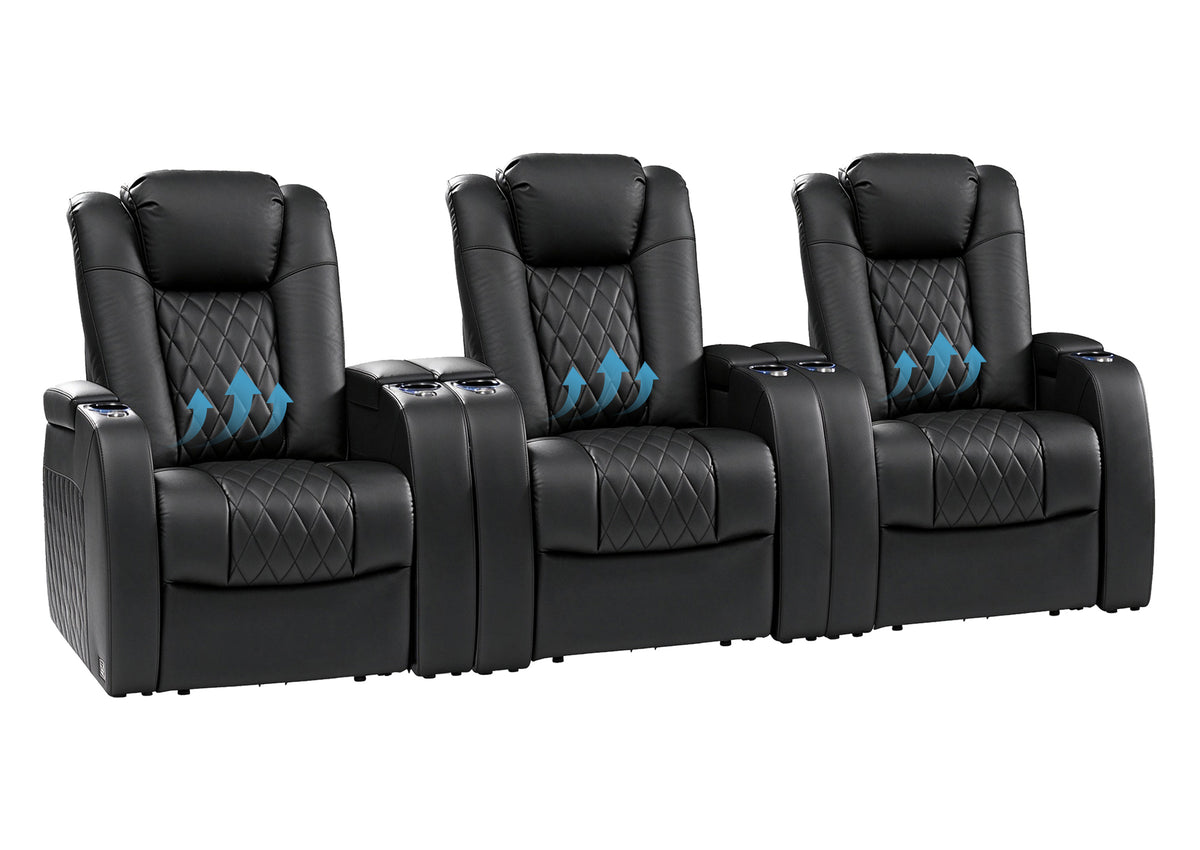
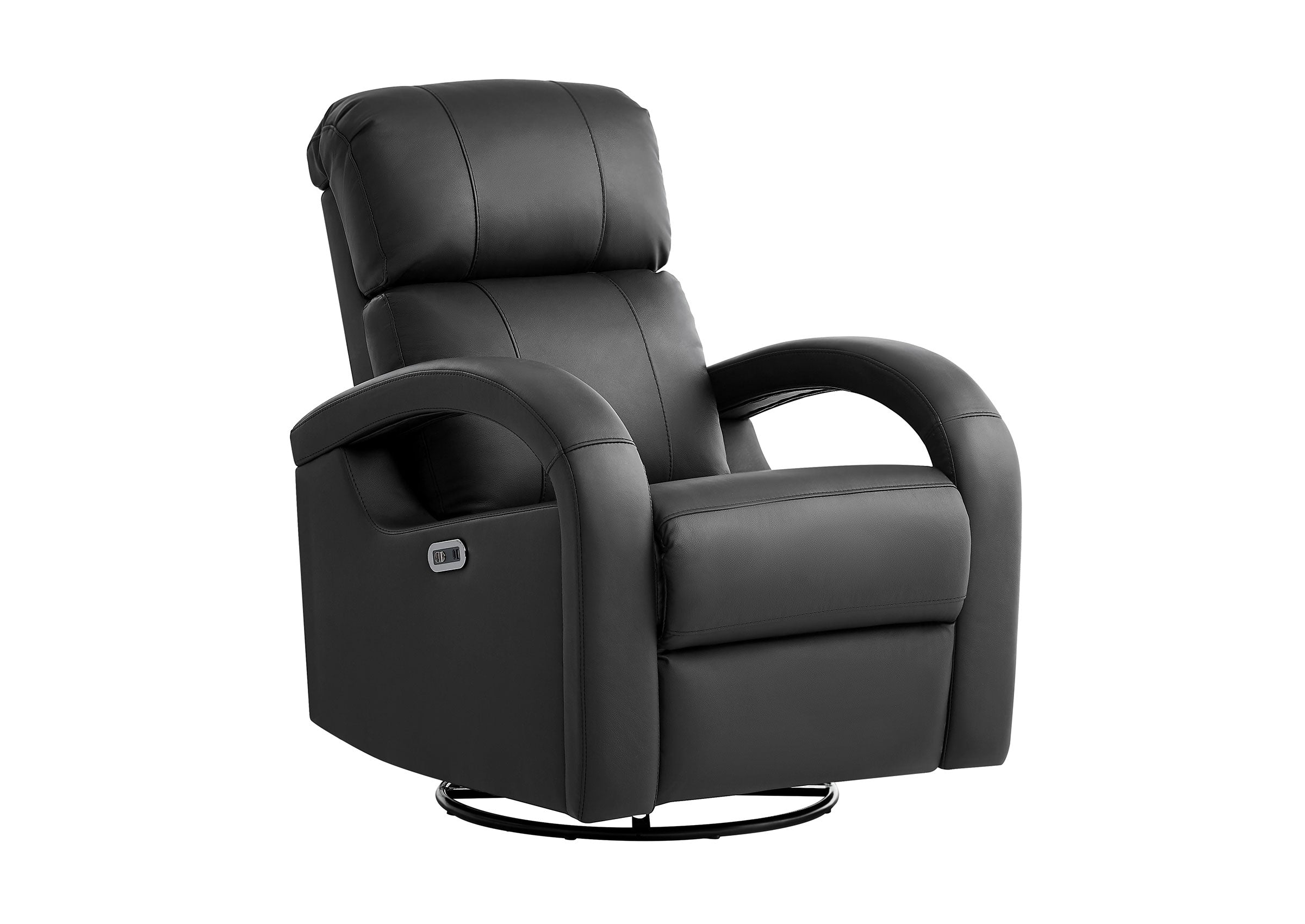
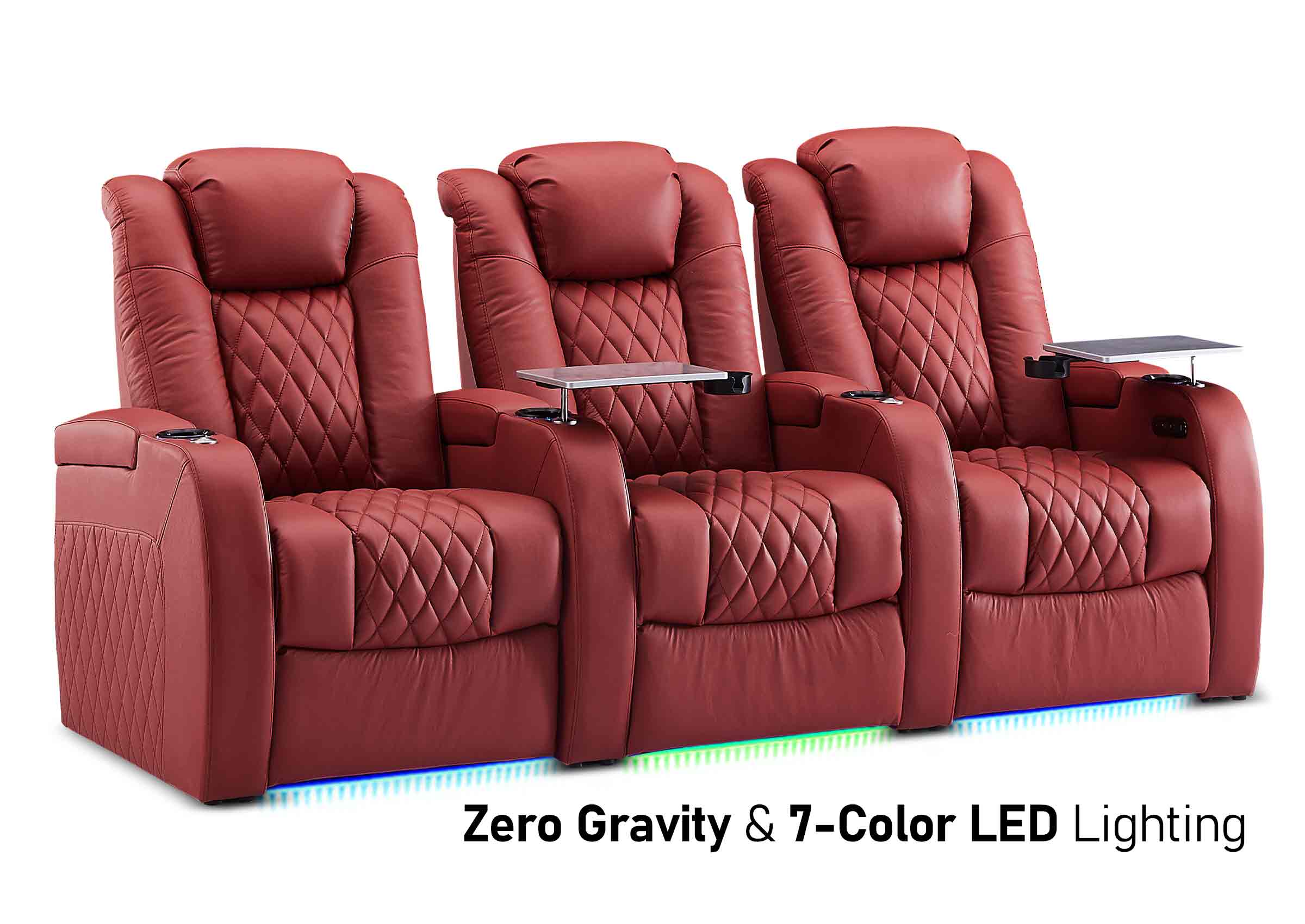
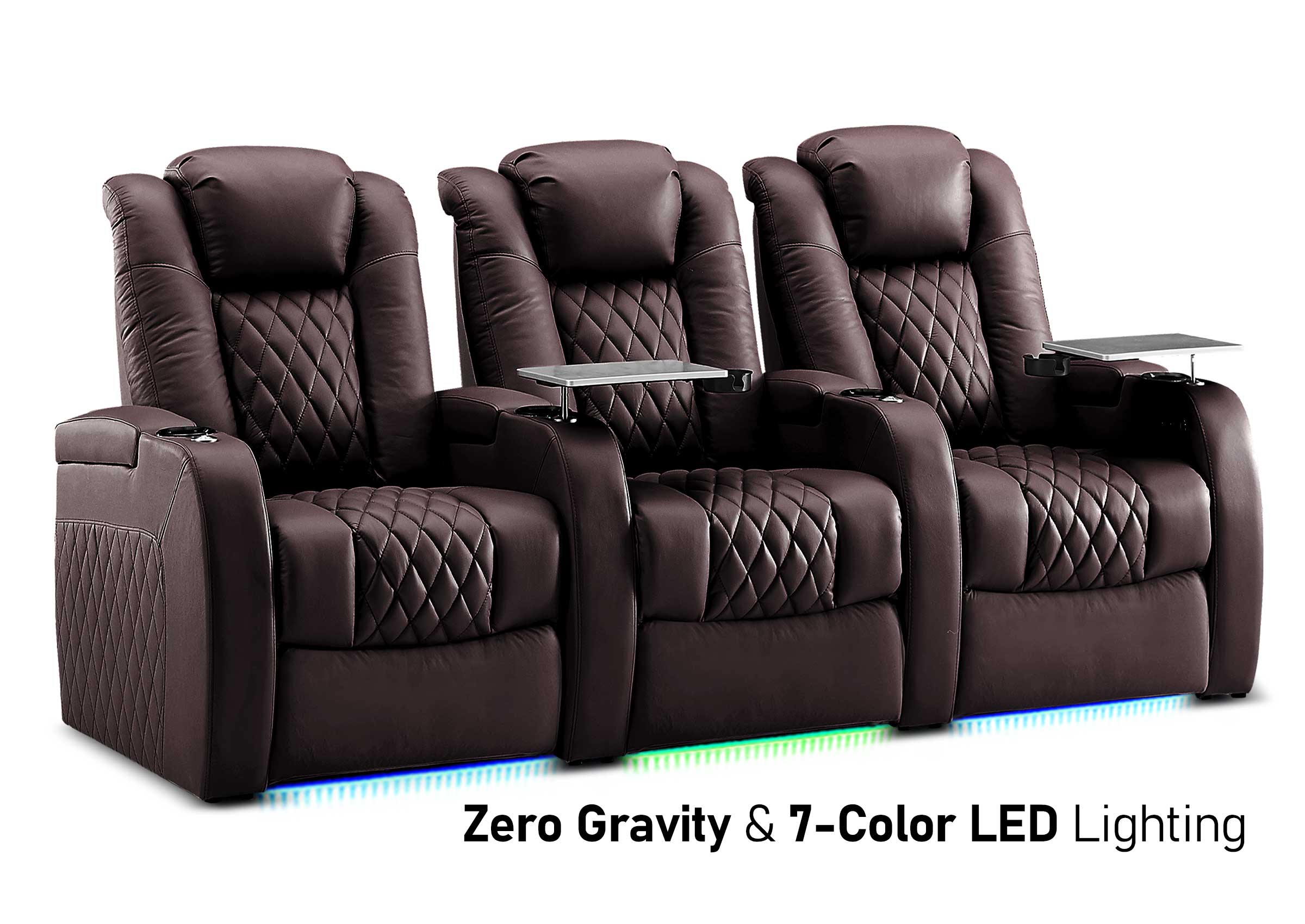
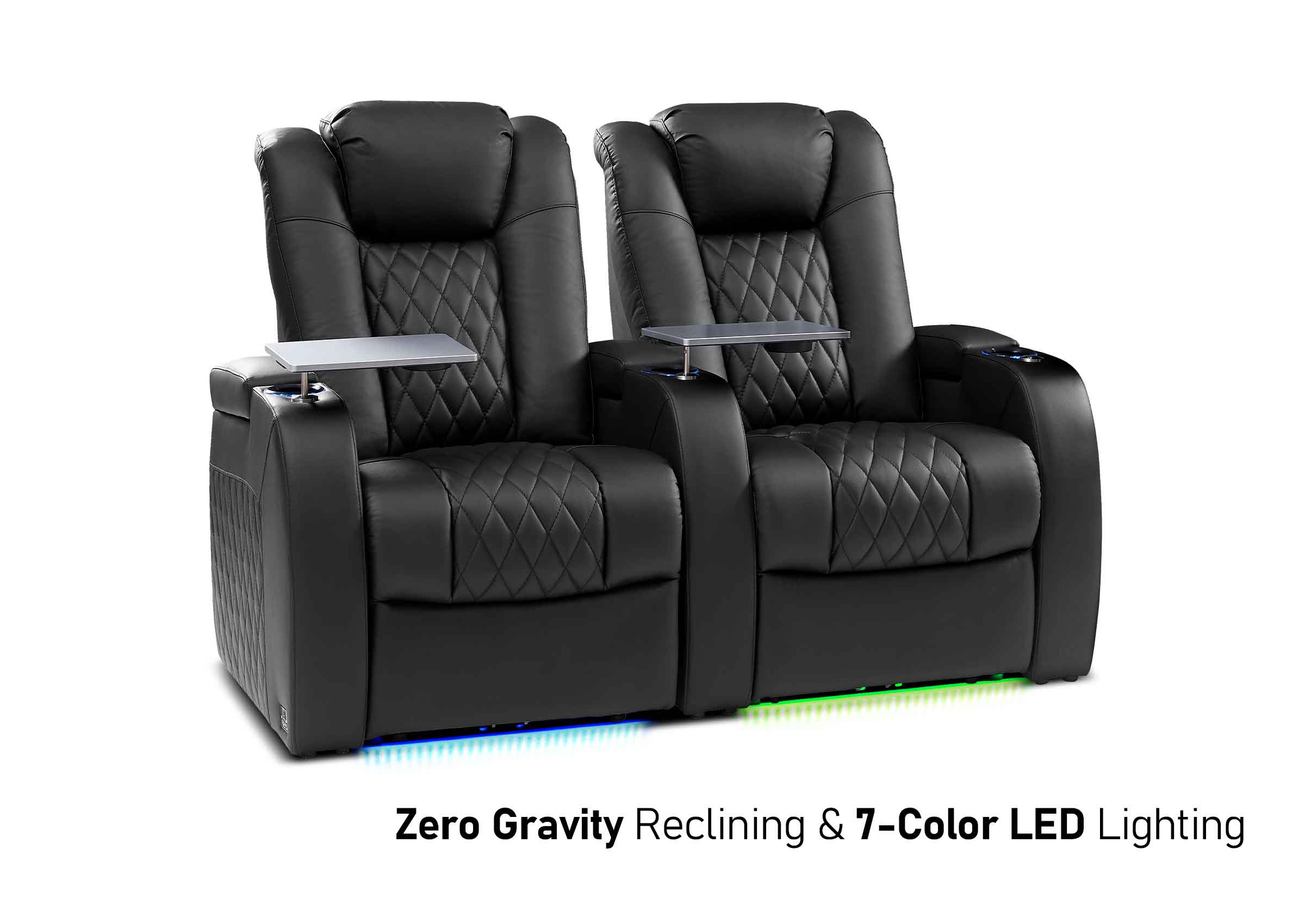
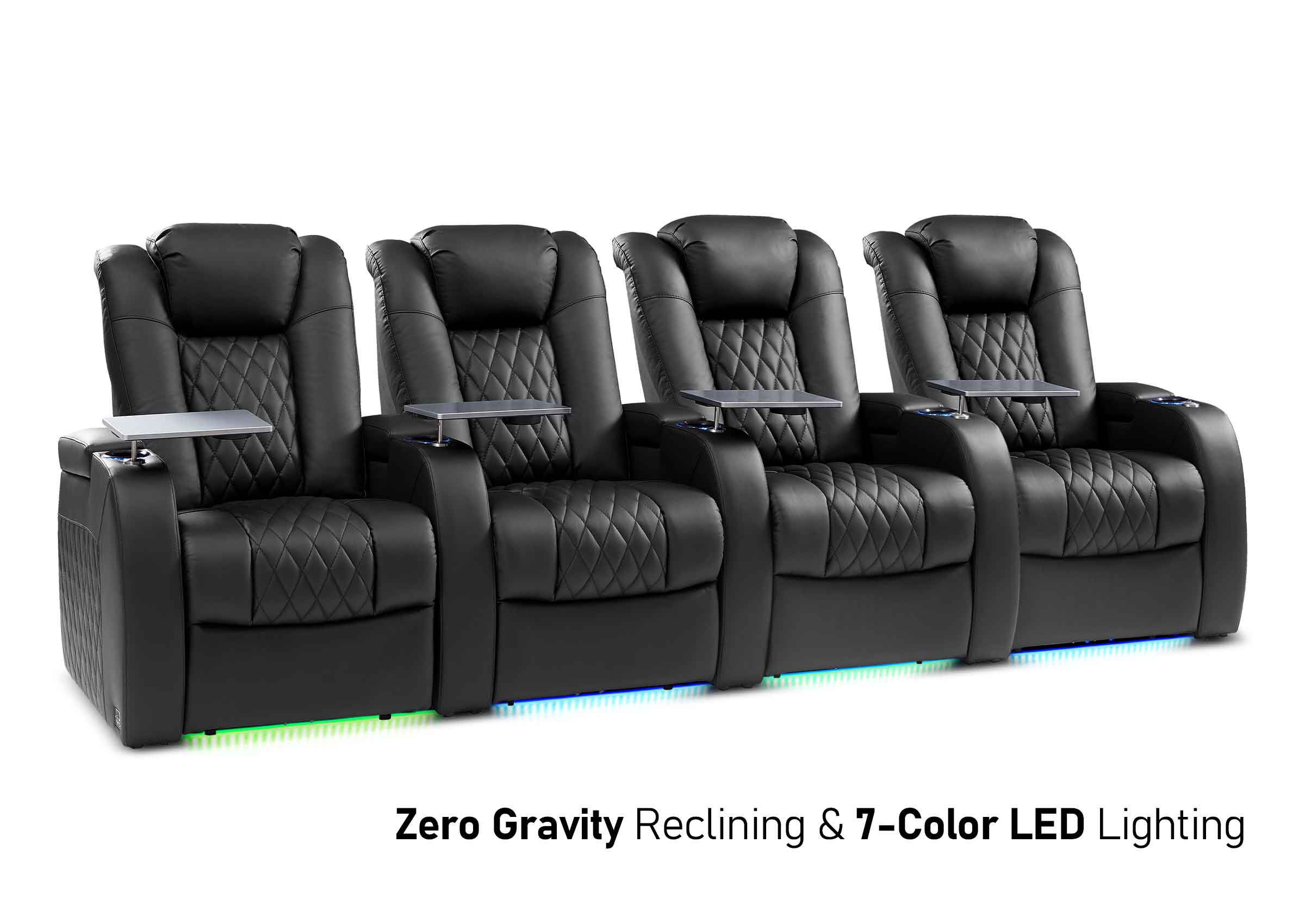
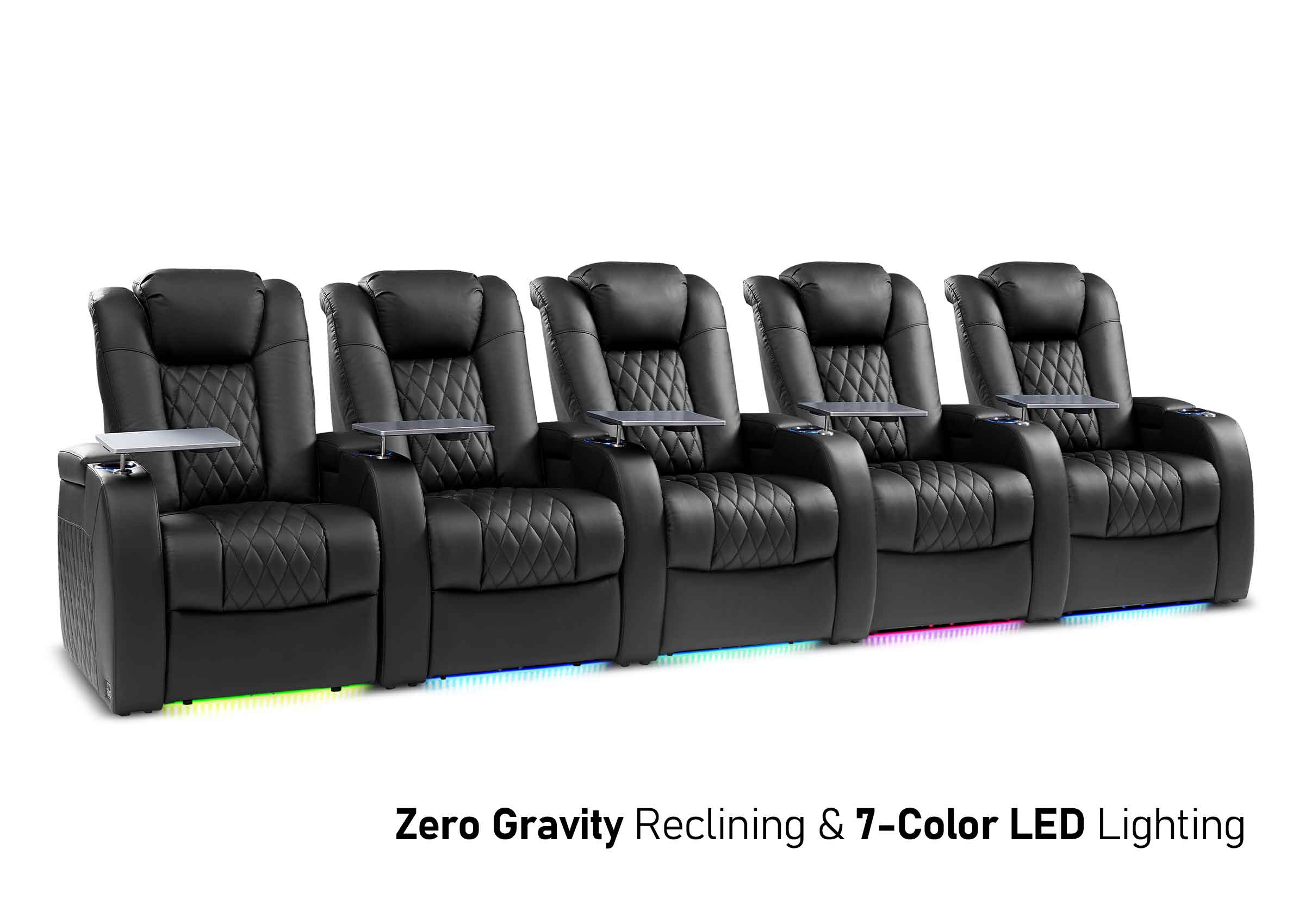
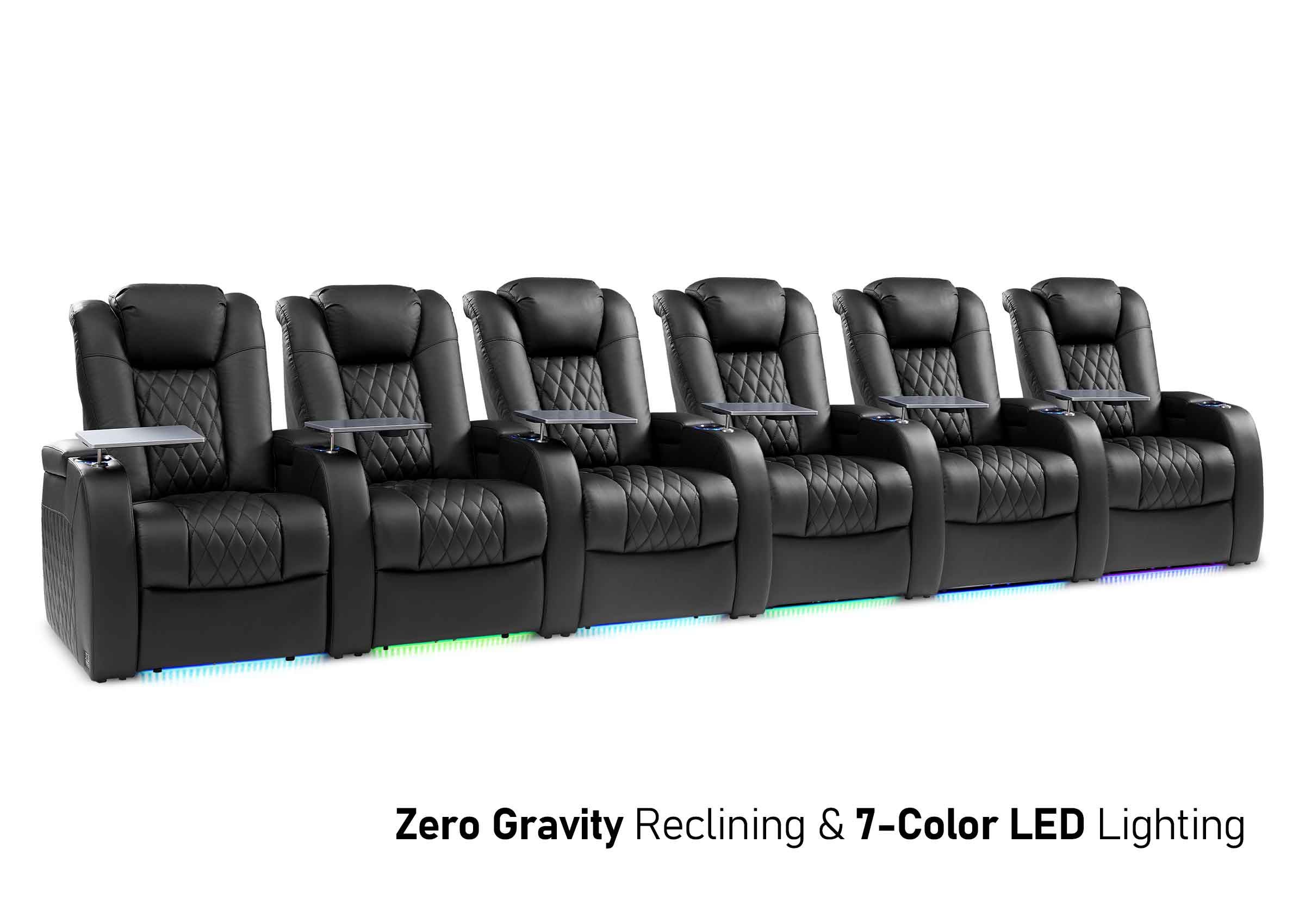
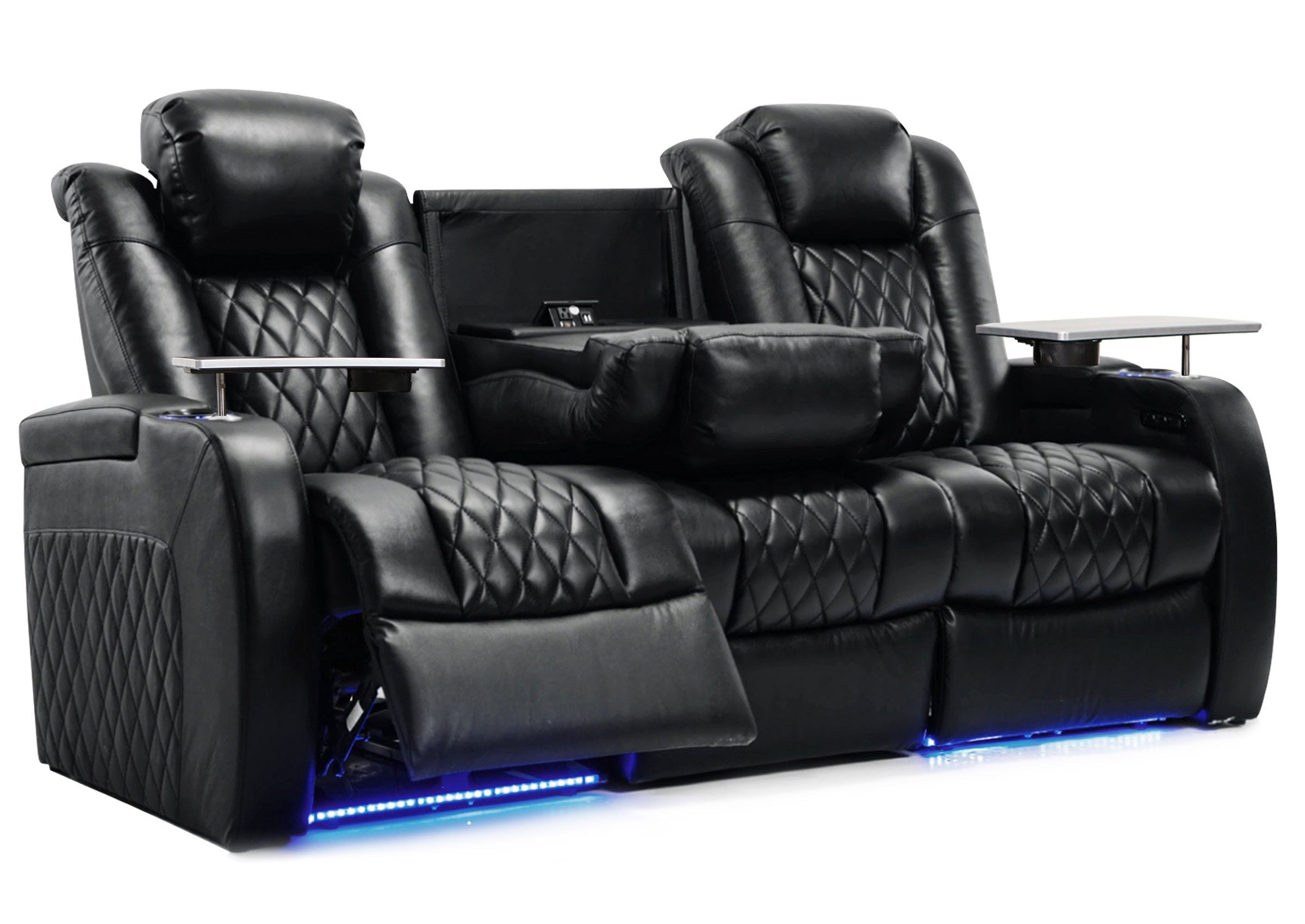
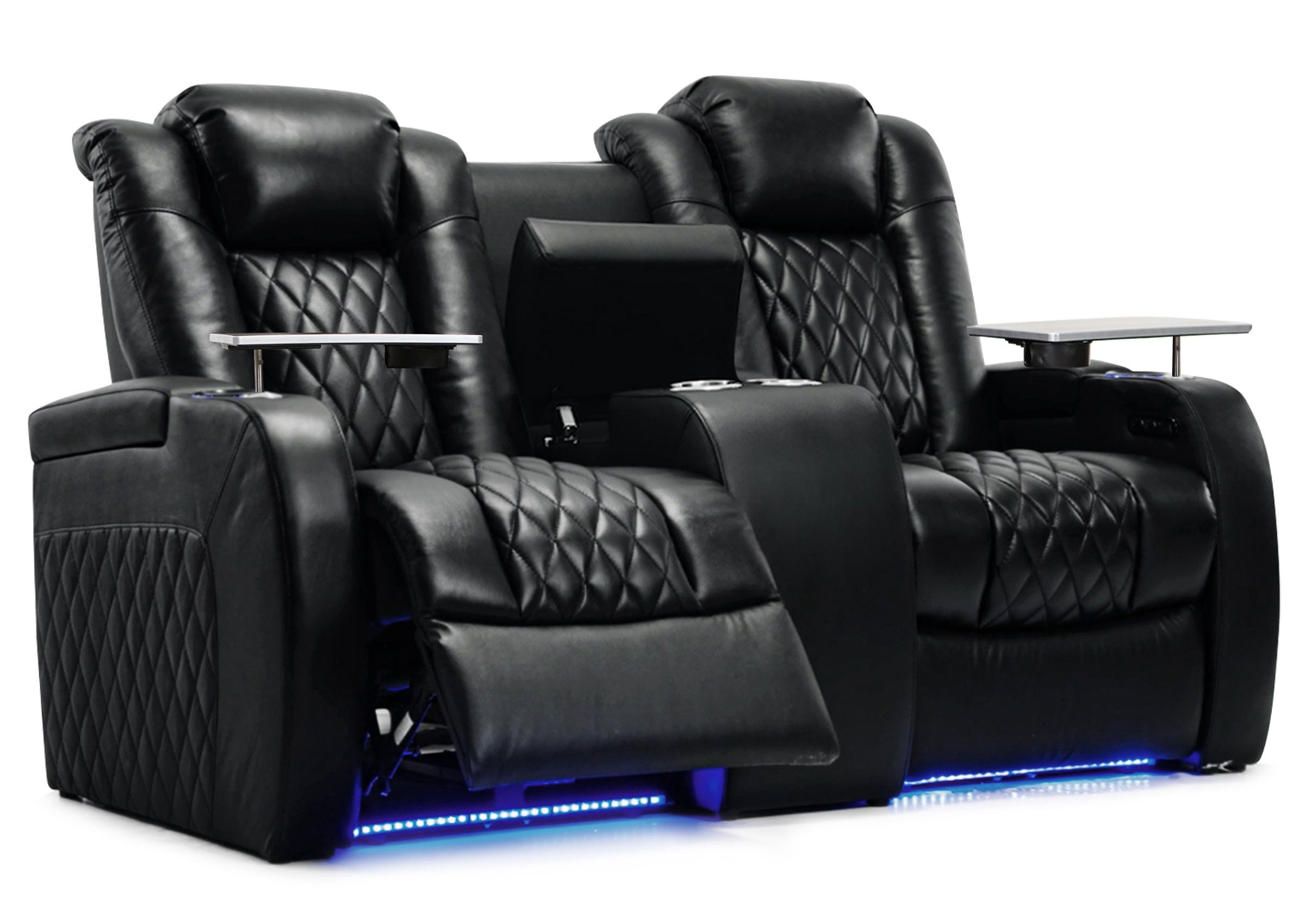
The best seat for a movie night depends on how you relax. Some households prefer independently reclining seats; others value shared lounging on a sofa. Decide who uses the room most often, whether reading or gaming matters, and how frequently you need extra guest seats. A spacious, well-positioned row can be more inviting than two crowded rows.

Choose features for the way you watch
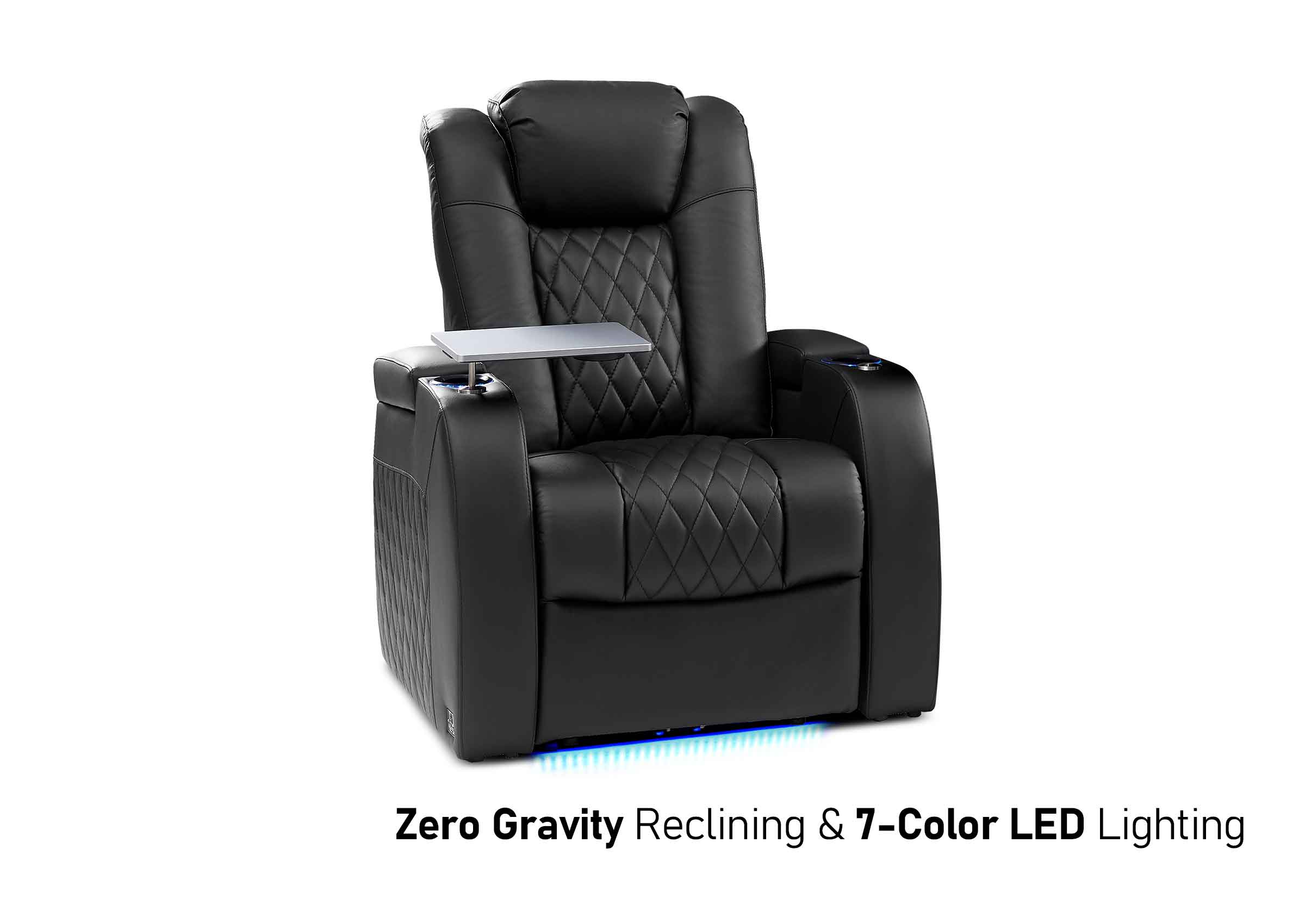
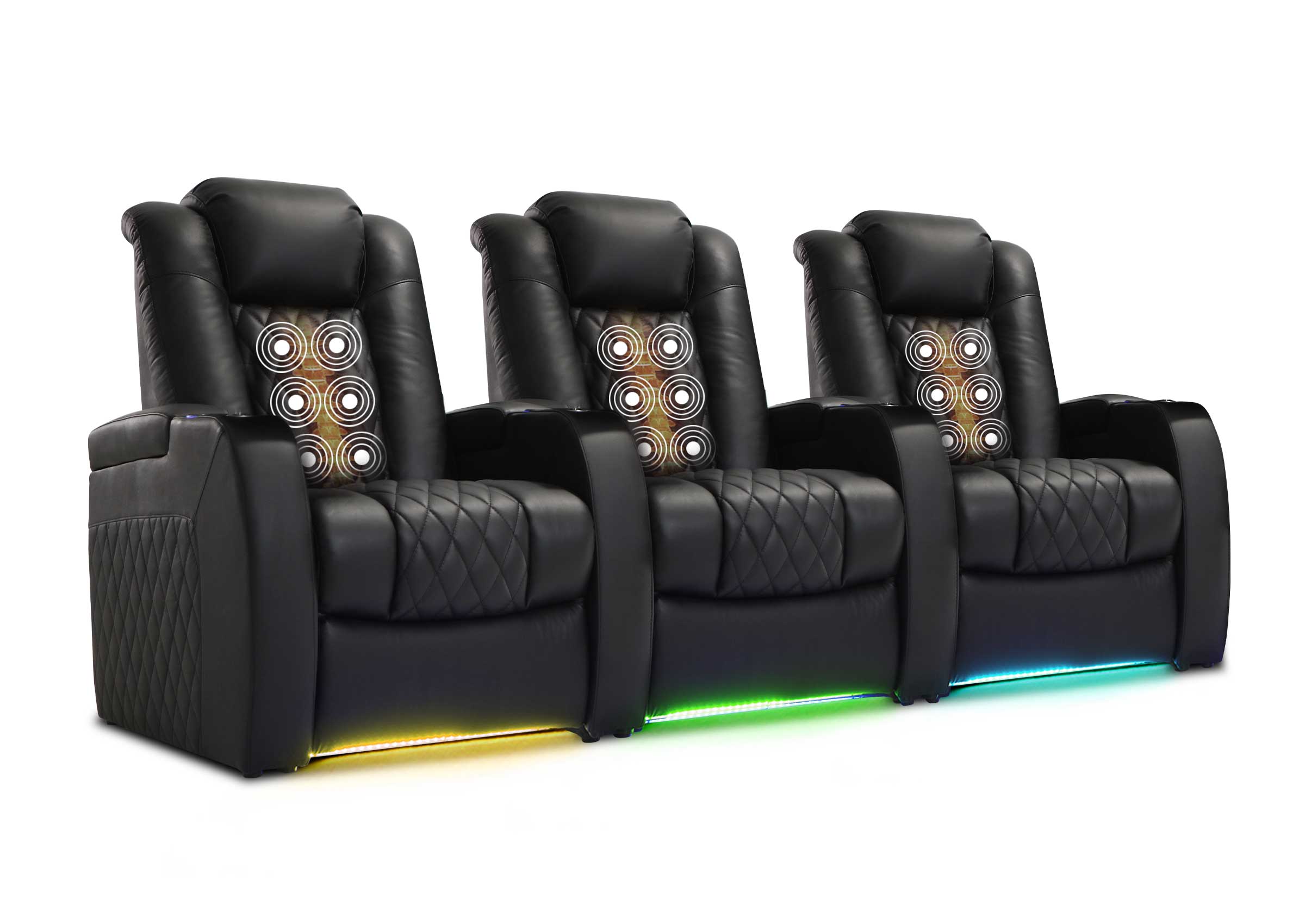
- Power headrest: useful to evaluate when you recline but still want a comfortable screen view. Check whether its range reaches the right position for you.
- Adjustable lumbar support: worth comparing if users prefer different back-support positions. The presence of a control does not guarantee personal fit.
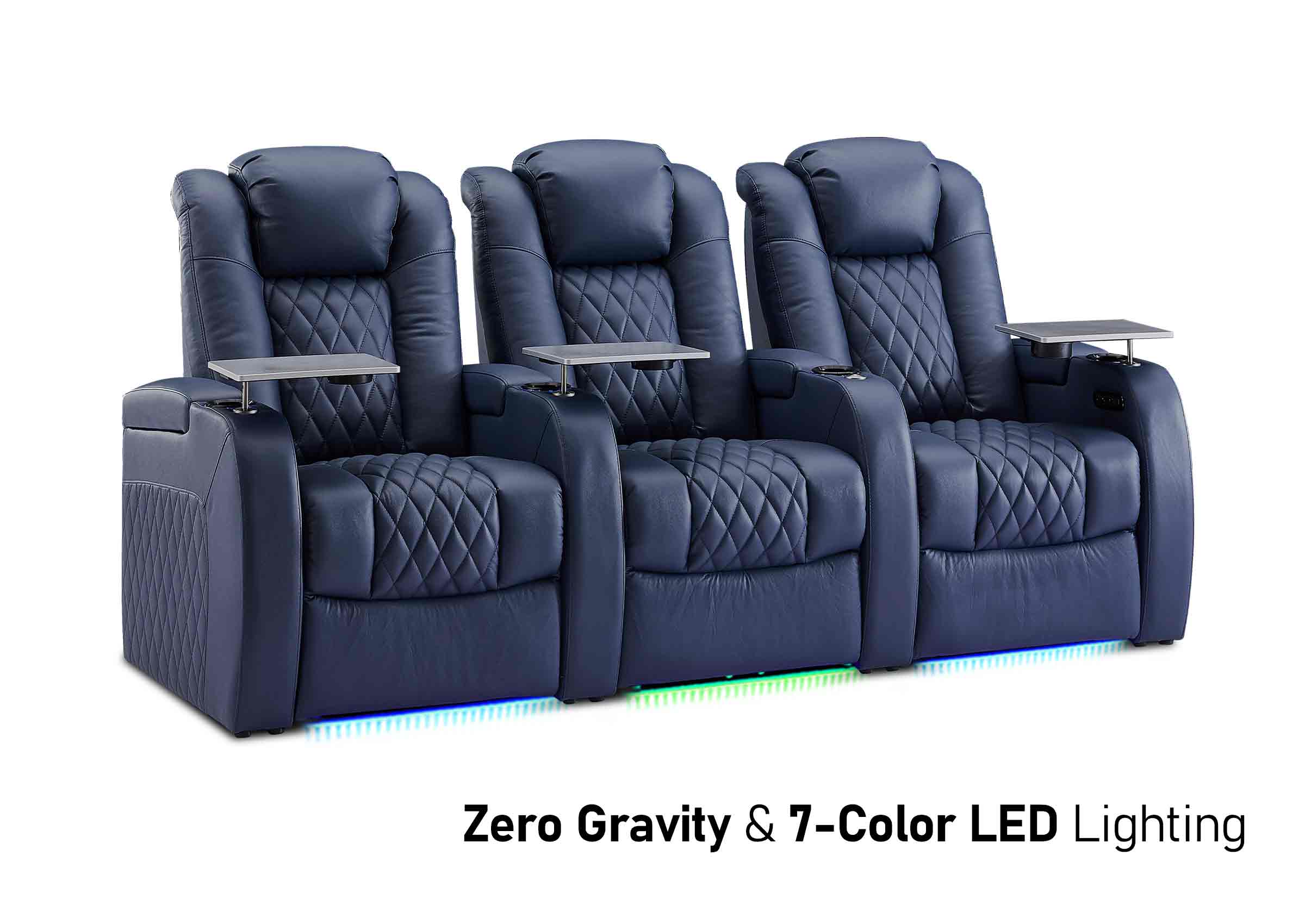
- Power recline or zero-gravity positioning: compare the actual movement and supported positions, including how your feet and head rest. These features are not medical treatments.
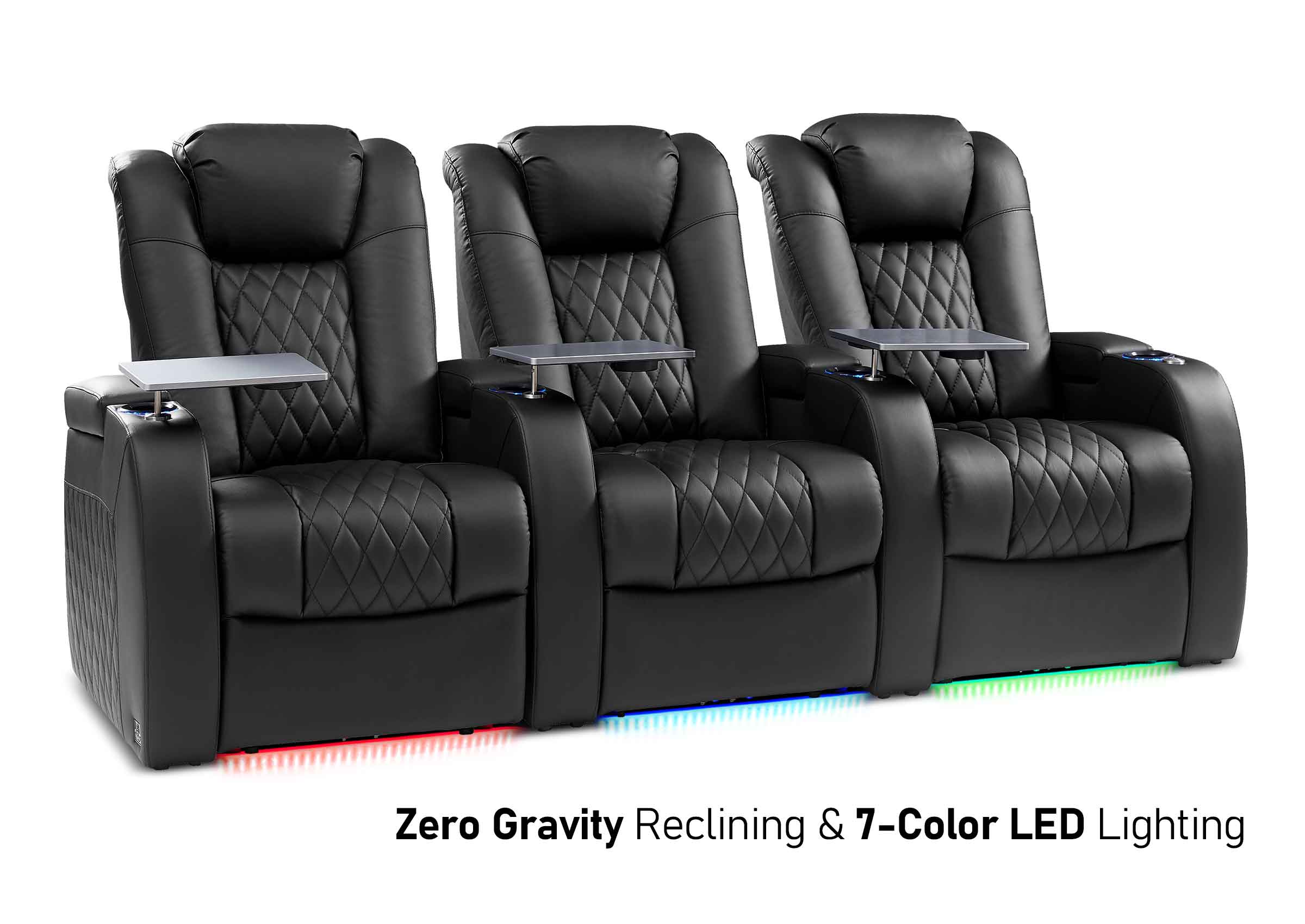
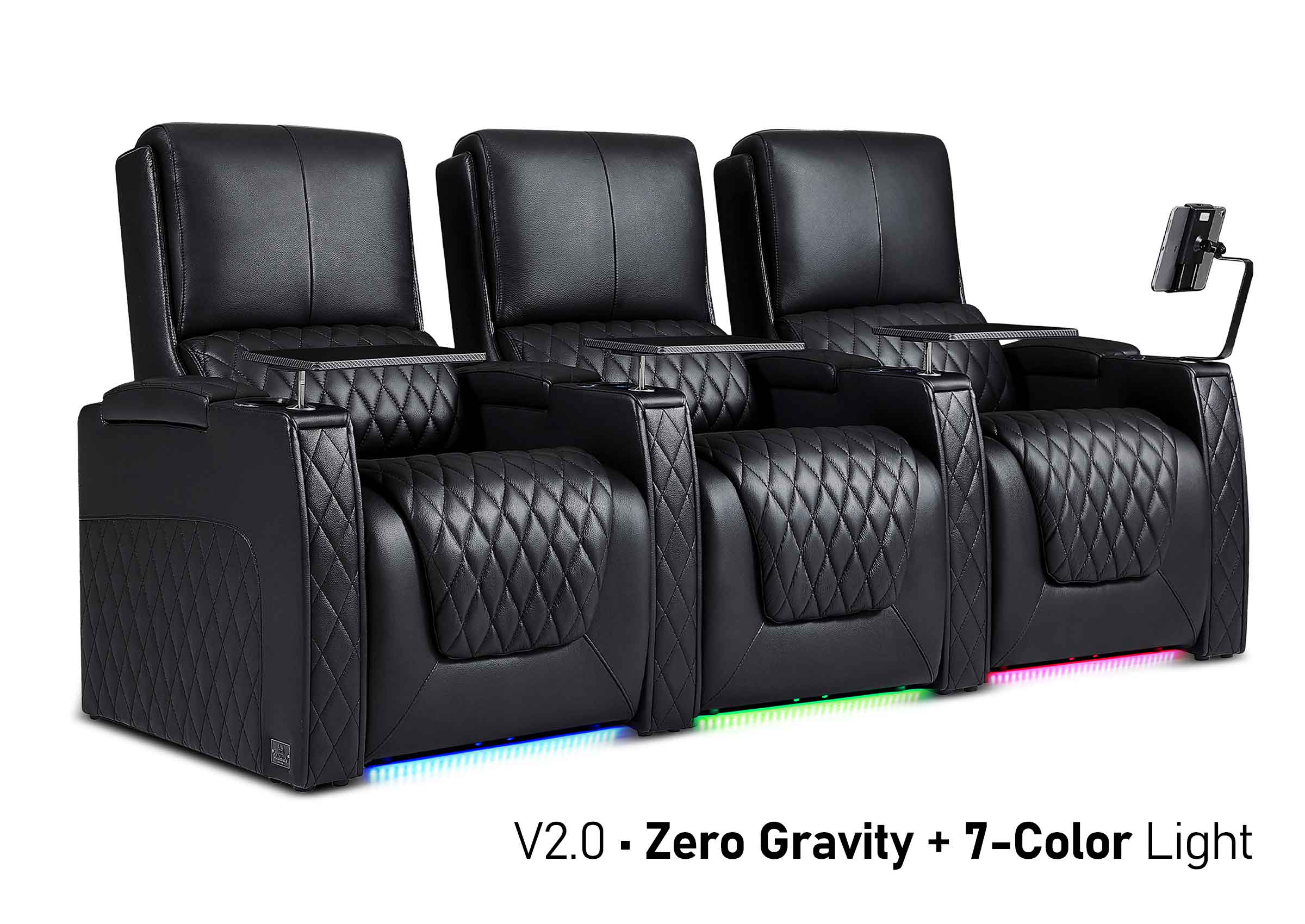
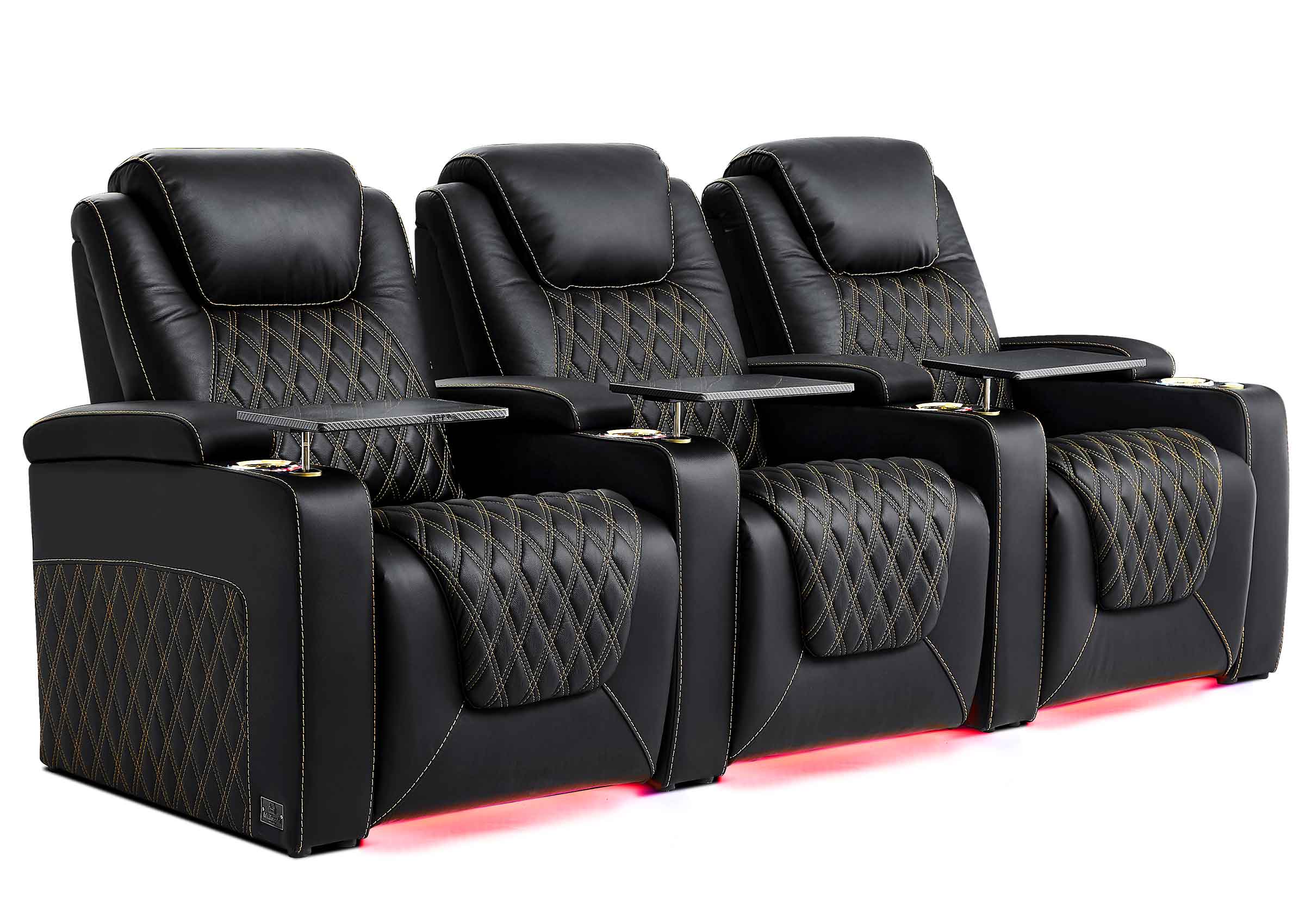
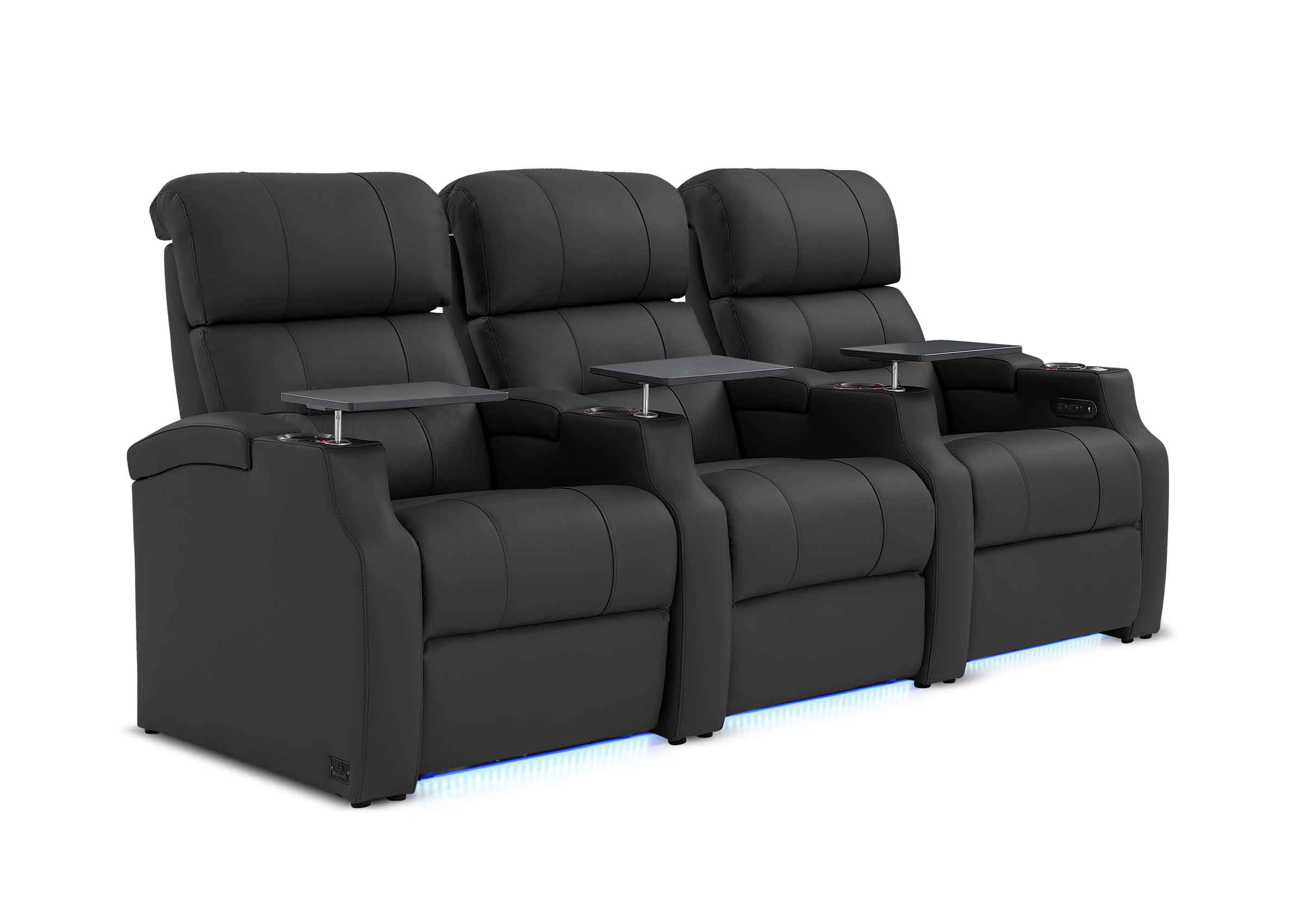
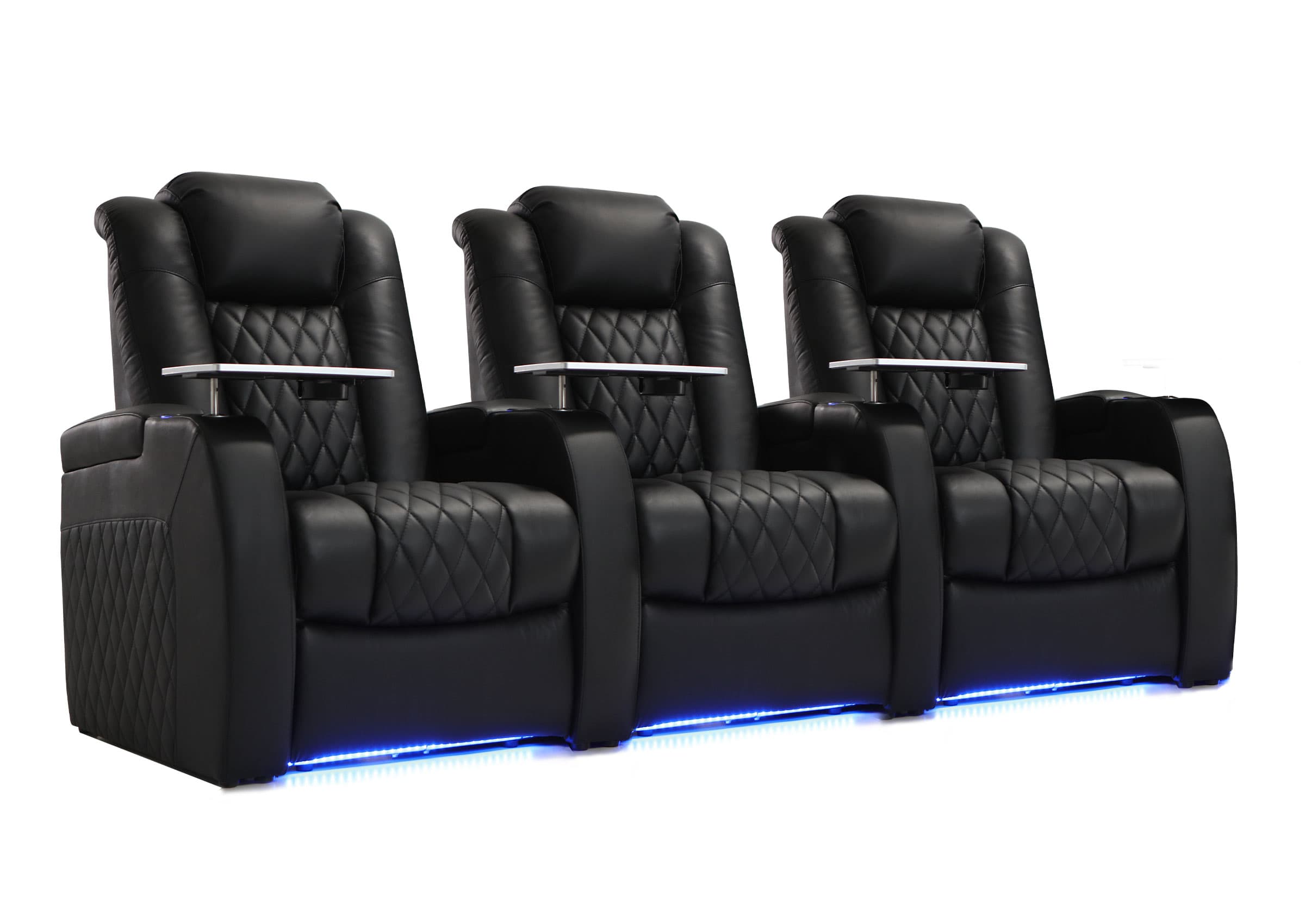
- Cup holders, trays, storage, and charging: choose what reduces clutter in your room. Check which accessories and connections are included in the selected configuration.
Keep seat lighting subtle during a movie. A bright demonstration color may look appealing in a product photo yet be distracting beside a projection screen. Check whether the selected seat allows the brightness or lighting to be adjusted as you prefer.

Fit the complete configuration, not just the seat count
Ask for the width of the actual arrangement, including shared arms, consoles, and end pieces. Map the fully reclined footprint, door swings, walking routes, and access to power. Check how the view changes when someone in front reclines.
For two rows, derive spacing from the seats' movement and the passage you need between occupied rows. A riser's height must follow the screen height, front-row head positions, rear-row eye position, available ceiling height, and applicable construction requirements. Neither a fixed 36–40-inch gap nor a universal 12-inch platform settles those questions.
Coordinate upholstery with the room
Black or deep-brown leather, restrained stitching, and dark timber can create a classic cinema atmosphere. A warm gray or taupe finish with walnut and soft wall lighting can feel more residential. Confirm the upholstery specification, leather coverage where relevant, available finishes, and cleaning instructions for the chosen model. A close-up photograph shows texture and stitching, not a material certification.

YOUR RENOVATION, YOUR SEATING
Compare Seating for Your Room and Budget
Explore current seating options, then compare the complete configuration, dimensions, upholstery, and useful adjustments against your renovation allowance.
Use Black Friday Savings to Improve the Whole Renovation
Compare the complete seating order after choosing the layout and features. A lower unit price is useful only when the arrangement fits, the desired functions are included, and delivery works with the renovation schedule.
Offer checked November 4, 2026: Weilianda's official Black Friday collection lists October 13–December 7, 2026 as the promotion period, with 30% off standard seating, 20% off custom seating, and savings up to 45% on selected products. Applicable discounts appear at checkout; do not assume every configuration receives the maximum reduction.
The published gift thresholds are $3,400, $4,500, and $6,800 in merchandise after discounts, excluding tax and shipping. One gift is available from the highest qualifying tier, subject to availability and terms. The advertised holiday price-protection window ends December 12, 2026; that is separate from the sale closing date and is not a fresh 60 days from every purchase.
Compare a real seating candidate against your allowance
On November 4, the Luxury Version 2.0 three-seat product page displayed $2,499. The listing identifies zero-gravity recline, a power headrest and footrest, and ambient lighting. Color, layout, and warranty selections can change the price. Use the selected variant and final checkout total, rather than treating the headline price as a quote for every combination.
Two sets at that displayed price would be $4,998 before any further checkout adjustment, tax, or delivery charges. That is a comparison example, not a six-seat recommendation or a confirmed promotional total. It would already exceed the $4,500 seating allowance in the middle budget above. Compare a different configuration, use one row, or move money from an agreed lower-priority category before placing the order.
Similarly, do not add an unwanted seat merely to reach a gift threshold. Compare the extra cash required with what the item actually contributes to the room. Preserve savings for calibration, light control, or the reserve if those solve a more important problem.
Separate dispatch, arrival, and installation
A dispatch message is not an arrival appointment. Confirm the selected configuration's availability, delivery estimate, address eligibility, and included handling before booking installation. Weilianda's shipping policy describes standard delivery to ground level, a lobby, or the first dry area; do not assume upstairs placement or assembly is included. The policy treats delivery dates as estimates.
Give the Room a Cohesive Look and Better Everyday Comfort
A luxurious theater should feel intentional even with the equipment switched off. Choose a limited palette and repeat it through seating, wood finishes, wall fabric, lighting, and storage. Spend on the surfaces and details visible from the seats instead of decorating every wall equally.
Two directions that work beyond movie night
Dedicated cinema: try a matte charcoal screen wall, black leather seating, dark wood, and a small amount of aged-brass detail. Use dimmable wall lighting and concealed cable routes to keep the room calm. Keep illuminated displays away from the screen's immediate surroundings.
Shared media lounge: combine warm-gray upholstery, walnut storage, deep-blue accents, and layered curtains. Keep a reading lamp and useful storage for daytime use; create a darker movie setting with window coverings and lighting scenes. A smaller number of substantial seats can preserve circulation and a conversational layout.

Treat reflections and light without promising soundproofing
Investigate audible echo, muddled speech, and uneven bass before covering the room in panels. Choose absorber type, thickness, placement, and quantity for the problem. Thin decorative panels do not solve every bass issue, and surface treatments do not provide the same result as sound-isolating construction.
For projection, control daylight and avoid directing room lights onto the screen. Use separate movie, intermission, and cleaning scenes so the room works without repeated adjustments. Check dimmer compatibility with the selected lighting, and keep a usable path to the door. Do not assume that LEDs under seats replace required room lighting.
Install in the Right Order and Test Before Calling It Finished
Finalize the room layout before closing walls or ordering fixed cabinetry. Coordinate the screen position, speakers, electrical provision, network, seating, equipment storage, and delivery route. Put the parts that are difficult to change ahead of cosmetic accessories.
- Survey and measure: confirm room dimensions, daylight, existing equipment, entrances, and the proposed seating arrangement.
- Complete necessary room work: electrical changes, cable routes, mounting support, ventilation, and any designed platform or isolation work.
- Install the display and audio: check alignment, connections, source compatibility, and the planned speaker layout.
- Position seating and finishes: verify movement, sightlines, access, and power connections before fixing nearby furnishings in place.
- Calibrate and hand over: test the system from the seats, save working settings, label connections, and demonstrate everyday controls.
For gaming or other demanding sources, specify the actual video and audio formats across the source, receiver, cable, and display. Use the appropriate certified cable category rather than relying on a vague version-number label. HDMI's official guidance identifies Ultra High Speed HDMI cables for applications including 4K120 and 8K60; the complete equipment chain still needs to support the desired mode. Test long cable runs before concealing them, and use the appropriate cable ratings and installation methods for their route.

Give the equipment rack ventilation and service access, with cables labeled at both ends. Agree on a simple movie-start routine and a manual fallback if automation fails. A qualified installer can handle room-specific mounting, electrical coordination, calibration, and integration; ask the quotation to include the setup and handover tasks you actually need.
At acceptance, check a familiar movie for speech and quiet scenes, bass across the occupied seats, screen reflections, reclined viewing, and control responsiveness. Test gaming and daytime sports if those are important. Open doors, extend footrests, and try the lights while someone walks through the room. Resolve those practical problems before adding more equipment.
Home Theater Renovation FAQ
Is $10,000 enough for a luxury home theater renovation?
It can fund a focused renovation in a finished room, especially when you keep useful equipment and prioritize a coordinated seating, picture, sound, and lighting experience. It is a tighter fit for a project that also needs major construction, extensive isolation, or multiple premium seating rows. Price the room work first, then decide what the remaining budget can achieve.
What should I upgrade first in an existing theater?
Address the problem that limits normal use. Check placement and settings before replacing equipment. Light control may improve a washed-out projected picture; seating may matter most when the system already performs well but nobody enjoys sitting through a film. Complete changes that affect wiring or construction before finishing the room.
Do I need a projector for a high-end result?
No. A projection system suits a large image and controlled light, while a large TV may better serve a bright room used throughout the day. Compare the installed result, viewing position, and room use. A projector plus an unsuitable screen or cabinet is not an upgrade simply because the image is larger.
Is a 7.2 receiver enough for Dolby Atmos?
The label alone does not answer that. Check the receiver's supported Atmos layouts and amplified channels. A 5.1.2 layout needs two height channels in addition to five main channels. Confirm the actual speaker connections and processing capability before purchasing ceiling or Atmos-enabled speakers.
Can I add acoustic panels instead of soundproofing?
Panels address aspects of sound inside the room. Keeping sound from disturbing other rooms involves the building assemblies and paths sound can travel through, including doors, penetrations, and ventilation. If isolation is a major goal, obtain a room-specific construction proposal before committing the equipment budget.
Should I wait for Black Friday to order seating?
Compare the current final price and terms once your layout is ready. A promotion is useful when the selected configuration, lead time, delivery scope, and total cost fit the project. Do not trade away essential fit or features for a larger advertised percentage, and do not treat a price-protection deadline as a delivery promise.
What can wait until after the main renovation?
Decorative collectibles, extra accessories, and nonessential automation can often follow later. Plan infrastructure for likely future additions while access is available, but avoid buying equipment solely because you might use it someday. Leave the room fully usable at each stage.
Plan the Seating That Brings Your Renovation Together
Bring your room plan, total spending ceiling, existing-equipment list, and preferred seat count together before finalizing purchases. Decide which changes make the room feel luxurious to your household, and keep enough room in the budget to install and use them properly.
For Weilianda seating, share the proposed arrangement, room and access measurements, preferred upholstery, must-have adjustments, and target installation date with Weilianda Support or email leon@weiliandahome.com. Ask the team to confirm the selected configuration, dimensions, current order total, promotion eligibility, and delivery arrangements before ordering.