


























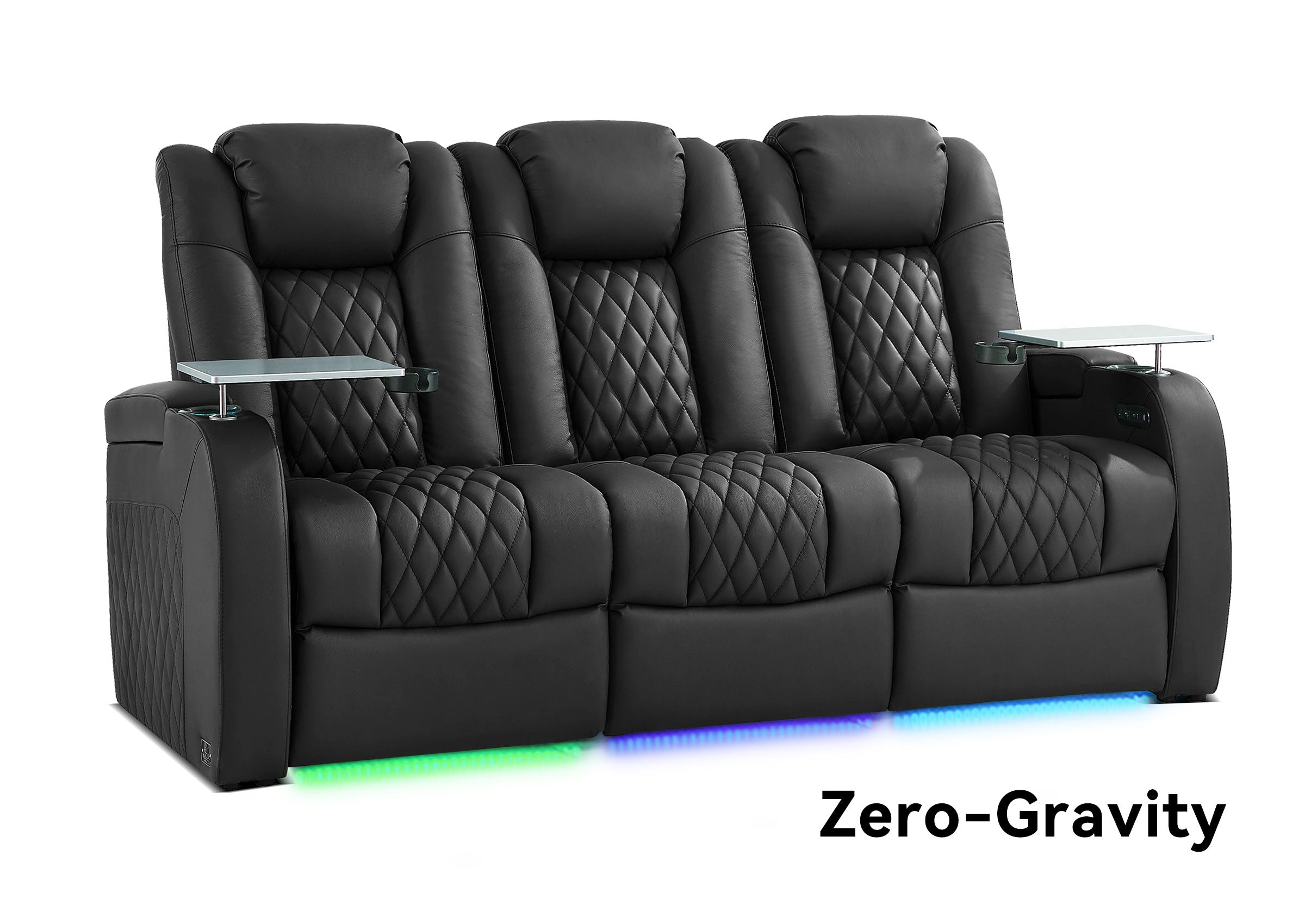


When home theater bass does not feel right, the first instinct is often to turn up the subwoofer.
That is not always the right first move.
Bass can be weak because you are sitting in the wrong place. It can be powerful at one seat and almost disappear at another. It can be loud but boomy, clean but disconnected from the rest of the system, or technically balanced while still lacking the physical impact you expected.
Sometimes the bass itself is fine and something in the room is rattling.
These are different problems, and they should not all be treated with more subwoofer output.
A better starting point is simple:
Identify what is wrong before deciding what to change.
Start Here: Which Bass Problem Do You Actually Have?
Use the symptom you notice most clearly.
| What you notice | Most likely problem | First move |
|---|---|---|
| Bass is weak almost everywhere | Output, setup, placement, or integration | Confirm the system is working correctly before changing equipment |
| Bass disappears mainly at one seat | Listening-position or room-mode problem | Compare the bass from nearby seats |
| Bass changes dramatically across the couch or between rows | Multi-seat consistency problem | Judge the listening area, not just one “perfect” seat |
| Bass is loud but sounds thick, boomy, or one-note | Placement, level, or room-response problem | Change physical placement or level before adding more output |
| Bass feels detached from the front speakers | Integration problem | Check crossover, timing, phase, and calibration |
| Bass sounds clean but action scenes still lack physical impact | Tactile-response problem | Decide whether you need more acoustic bass or more seat feedback |
| A seat, wall, floor, or object buzzes when bass hits | Unwanted vibration | Find what is physically making the noise |
| The best-looking subwoofer position conflicts with the couch or recliners | Placement constraint | Test sound and furniture movement together |

That first classification matters more than it may seem.
If you treat every problem as “not enough bass,” you can easily make good frequencies louder while leaving the actual problem untouched.
Weak Bass Everywhere Is Different From Weak Bass at One Seat
Start by asking a surprisingly useful question:
Is the bass weak everywhere, or only where you normally sit?
Those two situations point in different directions.
If bass seems weak throughout the room, check the system itself first. Confirm that the subwoofer is operating, the receiver or processor is actually sending bass to it, the level is reasonable, and the system has been calibrated for the current speaker and subwoofer positions.
But if the bass becomes noticeably stronger after you stand up, move one seat over, or walk toward another part of the room, increasing gain may be solving the wrong problem.
Low-frequency response changes with position.
Dolby does not prescribe one universal subwoofer location and recommends testing the actual room because placement interacts with room behavior. See Dolby's subwoofer placement guidance.
SVS similarly notes that even moving the subwoofer or listening position by a relatively modest distance can change bass from boomy or uneven to much more balanced. See SVS's subwoofer placement guide.
So before buying a larger subwoofer, perform one free test:
Move yourself.
If the problem changes with your seat, the room is already giving you useful diagnostic information.
If Moving One Seat Changes the Bass, Treat the Seat as Part of the System
A listening position is not separate from the audio system just because it happens to be furniture.
At low frequencies, the location of your ears—and therefore the location of your seat—can place you closer to a peak, a dip, or a cancellation pattern in the room.
Dirac's current Bass Control system explicitly treats bass consistency across multiple seats as a separate optimization goal. It models the room, subwoofers, speakers, phase, timing, and low-frequency behavior across the listening area rather than assuming one location represents the entire room. See Dirac's Bass Control approach.
This leads to a practical rule:
If changing seats changes the problem, do not diagnose it only from the equipment rack.

Bass Weak at One Specific Seat
If one listening position loses a large amount of bass while nearby positions sound substantially stronger, investigate the listening position and possible cancellation before adding output.
That is the job of our dedicated bass-null diagnosis guide, because a deep positional problem needs a different workflow from a general bass setup.
Bass Varies Across Several Seats
If the issue is not one obviously bad seat but rather that one side of the couch sounds strong while another sounds weak, the problem has become one of consistency across the listening area.
That is different from optimizing one sweet spot.
For that situation, use our guide to getting better bass across your home theater seats.
The important distinction is:
One bad position is a diagnosis problem.
Many different positions are a consistency problem.
They overlap acoustically, but they do not have the same completion goal.
Loud Bass Can Still Be Bad Bass
More bass is not automatically better bass.
A subwoofer can produce plenty of output while the listening experience still feels wrong.
Common descriptions include:
- boomy;
- muddy;
- slow;
- one-note;
- overwhelming;
- detached from the rest of the soundtrack.
When people describe bass this way, buying more output should move down the priority list.
The system may already have enough energy.
The problem may be where that energy is accumulating and how it integrates with the rest of the speakers.
SVS notes that room placement strongly affects bass response and that moving the subwoofer or listener can change excessive or one-note bass into a more balanced result.
Dirac approaches the same problem from the system-integration side: its bass-control process coordinates subwoofers and speakers, including crossover behavior, phase, timing, peaks, dips, and seat-to-seat consistency. See Dirac's room correction and bass control guidance.
That suggests a better troubleshooting hierarchy.
Fix Physical Placement Before Asking Electronic Correction to Rescue It
Room correction is useful.
It is not a substitute for every physical decision.
If the subwoofer is sitting in a position that creates severe problems at your important seats, immediately reaching for EQ can make the troubleshooting process harder to understand.
A better sequence is:
placement → integration → correction
not:
bad placement → aggressive correction → hope

This does not mean EQ is ineffective.
It means electronic correction works best after you have removed avoidable physical problems.
Dolby's own guidance reflects this physical-first reality: there are no hard universal rules for subwoofer placement, and the actual room should be tested. For rooms with strong modal variation, Dolby also discusses distributing multiple subwoofers rather than treating one fixed location as universally correct.
What to Check Before Changing EQ
Ask:
- Is the subwoofer extremely close to a corner or boundary?
- Does moving it slightly change the problem significantly?
- Does the problem occur at one seat or throughout the listening area?
- Is the subwoofer obviously audible as a separate sound source?
- Does the issue remain after recalibrating the system following a placement change?
You do not need to make the room perfect before calibration.
You want to avoid asking calibration to solve a physical configuration that could have been improved first.
Boomy Bass and Weak Bass Can Exist in the Same Room
This catches many people by surprise.
One seat can have too much bass while another seat feels weak.
That does not necessarily mean the subwoofer has inconsistent output.
The room is part of the system.
Crutchfield's current subwoofer setup guidance specifically asks users to listen at the primary seat and then compare other locations because bass can change substantially as the listener moves. It also recommends recalibrating after changing the subwoofer position. See Crutchfield's subwoofer setup guidance.
This is why a single statement such as:
“My subwoofer is weak.”
does not contain enough information.
A better description would be:
“Bass is weak in the center seat but strong near the side of the couch.”
or:
“Every seat has plenty of bass, but one note overwhelms everything else.”
Those descriptions lead to completely different next steps.
The more precisely you describe the symptom, the less likely you are to spend money fixing the wrong problem.
What If the Bass Feels Detached From the Speakers?
Sometimes the bass is not obviously weak or boomy.
It simply feels separate.
You may hear the front speakers presenting the soundtrack and then perceive the low-frequency impact as another layer that never quite joins them.
That points more toward integration than output.
Useful areas to investigate include:
- crossover behavior;
- subwoofer level;
- phase;
- arrival time;
- speaker distance settings;
- calibration.
Dirac describes phase and timing alignment between subwoofers and speakers as part of achieving a smoother blend rather than having bass feel disconnected.
The key lesson is not that one particular setting fixes every room.
It is that:
A subwoofer is not finished when it makes bass. It is finished when the bass belongs to the system.
If you can constantly identify the subwoofer as a separate source, increasing its volume is unlikely to make integration better.
What If the Bass Sounds Good but Still Does Not Feel Powerful?
This is where many bass discussions become confused.
Audible bass quality and tactile impact are related, but they are not identical goals.
Imagine this situation:
- bass is balanced;
- there is no obvious boom;
- different seats are reasonably consistent;
- the subwoofer does not draw attention to itself;
- action scenes still feel less physical than you expected.
At that point, adding more acoustic output is only one possible answer.
The thing you are missing may be tactile response.

That matters because continuously increasing subwoofer level in pursuit of physical sensation can eventually create new problems:
- excessive room bass;
- rattles;
- vibration transmission;
- disturbed neighbors or adjacent rooms;
- loss of balance with the rest of the system.
Before increasing output again, ask:
Do I want to hear more bass, or do I want to feel more of the bass I already have?
Those are not always the same upgrade.
A tactile transducer or bass shaker can intentionally transfer low-frequency sensation into seating without requiring every bit of that sensation to come from higher acoustic output.
But that does not mean every home theater needs one.
If you eventually decide that tactile feedback is the missing piece, our bass shaker installation guide for theater seats covers the mechanical and electrical installation side.
A separate comparison between bass shakers and additional subwoofer output deserves its own decision page rather than being compressed into one paragraph here.
Good Bass Impact Should Not Require You to Ignore Rattles
Physical bass can be desirable.
Unwanted mechanical noise is not the same thing.
A theater seat may transmit impact without making an extra audible sound. A floor may feel slightly alive during a deep scene. Those experiences are different from:
- a cup holder buzzing;
- a storage lid chattering;
- wall décor vibrating;
- a riser producing an audible rattle;
- a recliner mechanism making noise during bass passages.
If you hear an extra sound that was not part of the soundtrack, do not automatically label it “powerful bass.”
That is a vibration diagnosis.
Our subwoofer room-rattle guide separates local rattles, structure-borne vibration, seating components, risers, bass shakers, and actual subwoofer problems.
The distinction matters because turning the entire subwoofer down can hide a loose component without solving it.
The Best Acoustic Position Still Has to Survive the Room
Subwoofer advice often becomes theoretical at exactly the point where a real household becomes difficult.
A location may measure well acoustically and still be impractical because it blocks:
- a walkway;
- a door;
- access to equipment;
- a reclining footrest;
- a moving seat;
- power access;
- cable routing.
That does not mean acoustics stop mattering.
It means the room gets a vote.
SVS describes real-world subwoofer placement as a balance between acoustic performance and practical constraints such as available floor space and foot traffic.
For a room with reclining theater seating, the furniture is especially important because its footprint changes when people actually use it.
An empty room with every recliner upright is not the real listening condition.
PLAN AROUND THE SEATS YOU ACTUALLY USE
Will Your Bass Setup Still Work When the Theater Is Full?
Subwoofer placement, listening positions, walkways, and power recliner movement all share the same room. Check the seating layout before making a temporary bass position permanent.
What if Behind the Couch Is the Only Practical Location?
That can be a legitimate candidate.
It is not automatically good or bad.
Test:
- how it sounds;
- whether bass remains acceptable across the seats that matter;
- whether the subwoofer becomes easy to localize;
- whether the recliner can complete its full movement;
- whether cables and service access remain practical;
- whether the position introduces rattles.
Our subwoofer-behind-the-couch guide handles that specific permanent-placement decision.
The broader lesson is more important:
An acoustically promising position is only useful if the room can actually live with it.
Do You Need a Second Subwoofer?
Sometimes, yes.
But the reason matters.
“More bass” is only one reason people add another subwoofer.
A second—or multiple—subwoofer system can also be used to address low-frequency variation across a listening area.
Dolby notes that in rooms with strong modal behavior, multiple subwoofer cabinets may be distributed to reduce the dominance of room modes rather than simply grouped for maximum acoustic summation and headroom.
Dirac likewise treats multiple-sub optimization as a way to improve consistency across seats.
So the better question is not:
“Would two subs be better than one?”
It is:
“What problem would the second subwoofer be solving?”
A Second Sub May Make Sense When:
- the current system genuinely lacks clean output for the room;
- multiple important seats have very different low-frequency response;
- placement options allow the subs to work together effectively;
- you are prepared to integrate and calibrate them as a system.
A Second Sub Is Not the First Fix When:
- only one seat is sitting in a severe null;
- the room is rattling;
- crossover or calibration is obviously wrong;
- your real complaint is lack of tactile seat sensation;
- the current subwoofer has never been tested in another viable position.
More hardware should solve a defined problem.
It should not be the diagnosis.
Use This Order Before Spending More Money
When the problem is not yet clear, this is a more useful order than immediately shopping for upgrades.
1. Describe the Symptom
Do not just say “bad bass.”
Is it:
- weak;
- missing;
- uneven;
- boomy;
- disconnected;
- not physical enough;
- rattling?
2. Compare Positions
Move between the seats that matter.
If the symptom changes, position and room behavior move higher on the suspect list.
3. Check Physical Placement
Look for a viable subwoofer position that works both acoustically and practically.
4. Integrate the System
Check crossover, level, phase, timing, and basic bass management.
5. Recalibrate
If the subwoofer or important seating position changes, run your calibration process again.
Dolby recommends calibration and listening from different seats as part of achieving suitable subwoofer performance in the actual viewing space. See Dolby's home subwoofer guidance.
6. Decide What Is Still Missing
Only now ask whether the remaining issue requires:
- more output;
- better multi-seat consistency;
- acoustic treatment;
- another subwoofer;
- tactile enhancement;
- a mechanical rattle fix.
This order reduces the chance of solving one problem while creating another.
The Seat You Actually Use Matters More Than the Empty Room
Many home theater decisions are made while standing in the room.
Bass is experienced while sitting in it.
That difference matters.
A reclining seat changes where your body and ears are located. Multiple family members may occupy a couch rather than one ideal microphone position. A riser changes how the second row interacts with the room. A subwoofer location that looks convenient may become awkward once a footrest opens.
Those are not furniture details added after the acoustic system is finished.
They are part of the real listening environment.
Dirac's current room-correction and bass-control approach explicitly models the listening space and attempts to improve low-frequency consistency across seats rather than treating the room as irrelevant.
For home theaters with real seating, that leads to a useful rule:
Tune the system for the theater people actually use, not the empty room you measured before everyone sat down.
When Should You Consider Acoustic Treatment?
Not every bass problem requires bass traps.
Acoustic treatment becomes more relevant when the remaining problem is genuinely related to room resonance, decay, or low-frequency behavior that is not adequately addressed through practical placement and system integration.
It is less relevant when:
- a cup holder is rattling;
- a cable touches a recliner frame;
- only one seat is in a deep cancellation;
- the subwoofer is poorly integrated with the main speakers.
Those problems have more direct first steps.
If you have already narrowed the problem to room acoustics rather than a seating, placement, or equipment issue, our guide to acoustic panels, diffusers, and bass traps for home theaters covers that path separately.
A Better Bass System Is Not Necessarily a Louder One
The most useful bass upgrade is often not more output.
Sometimes it is:
- moving a seat;
- moving a subwoofer;
- improving integration;
- making several seats more consistent;
- stopping an unwanted rattle;
- adding tactile feedback without overdriving the room;
- accepting that a theoretically ideal location does not work with the actual furniture.
Good home theater bass should do more than impress you during one explosion.
It should behave predictably.
It should support the soundtrack without constantly revealing where the subwoofer sits. It should work from the seats people actually use. Physical impact should feel intentional rather than being accompanied by buzzing hardware or a vibrating room.
Most importantly, you should know what problem you are trying to solve before choosing the solution.
If the bass is weak, uneven, boomy, disconnected, physically underwhelming, or rattling something in the room, those symptoms are not interchangeable.
Classify the problem first.
Then make the smallest change that actually addresses it.