



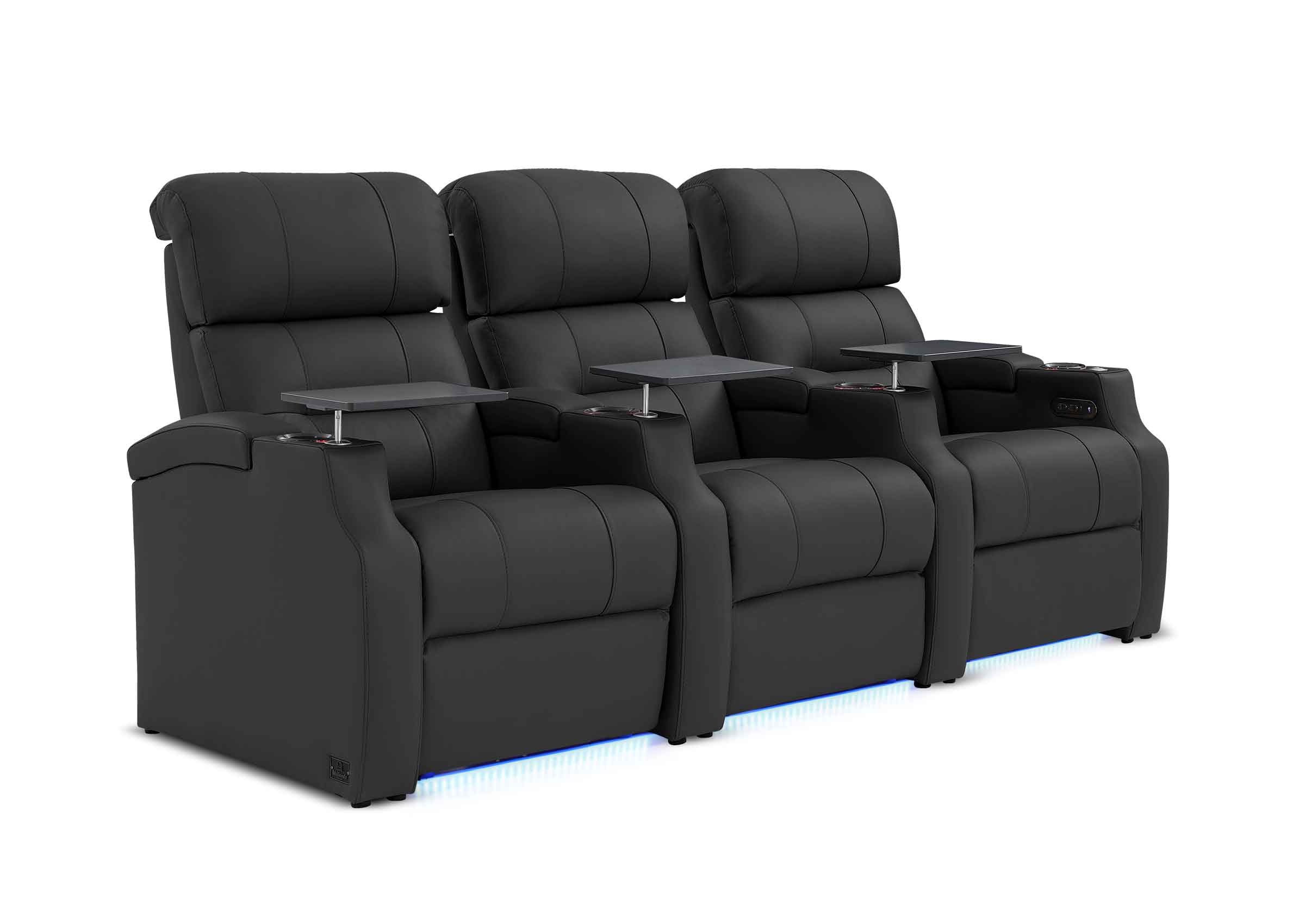
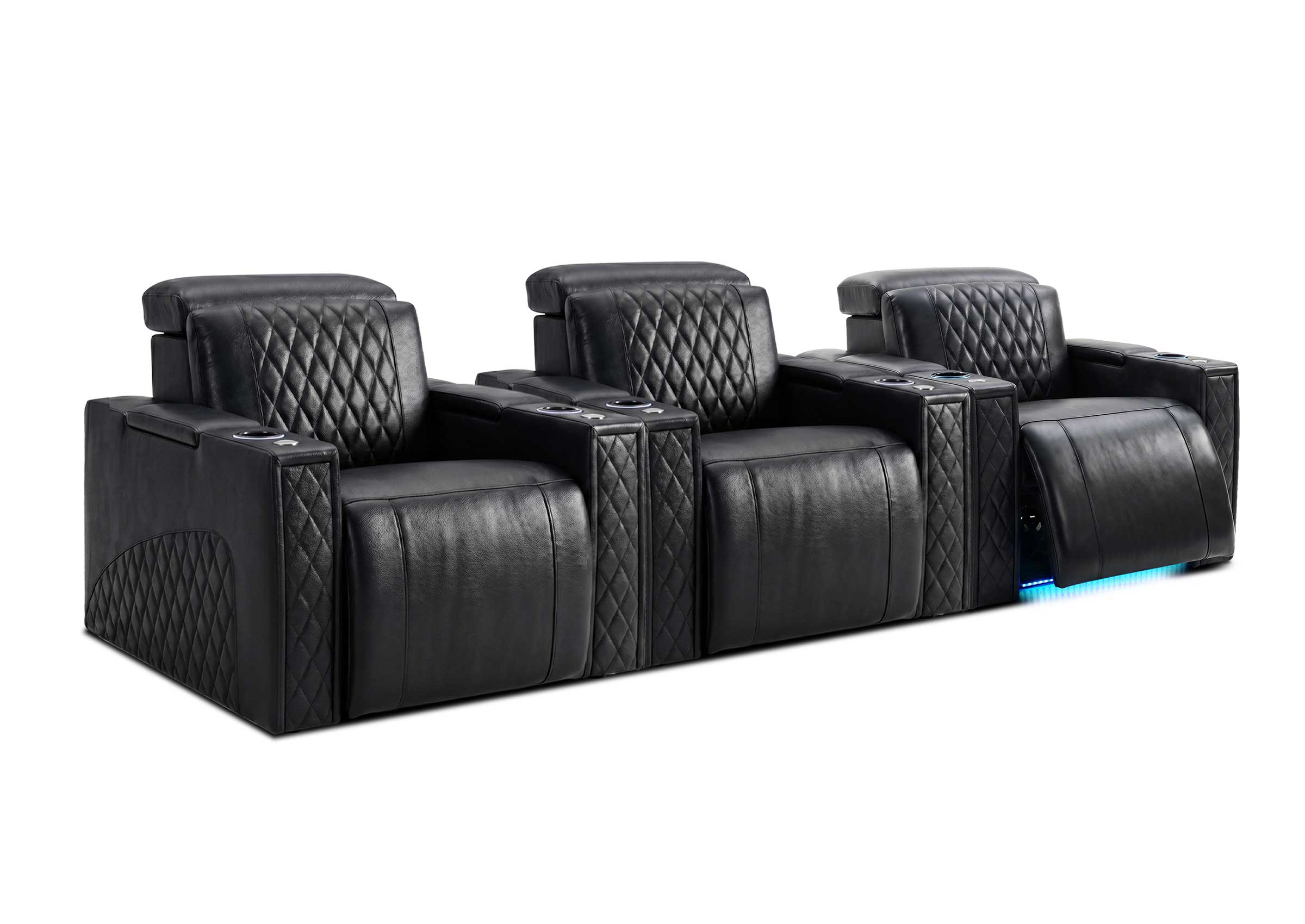

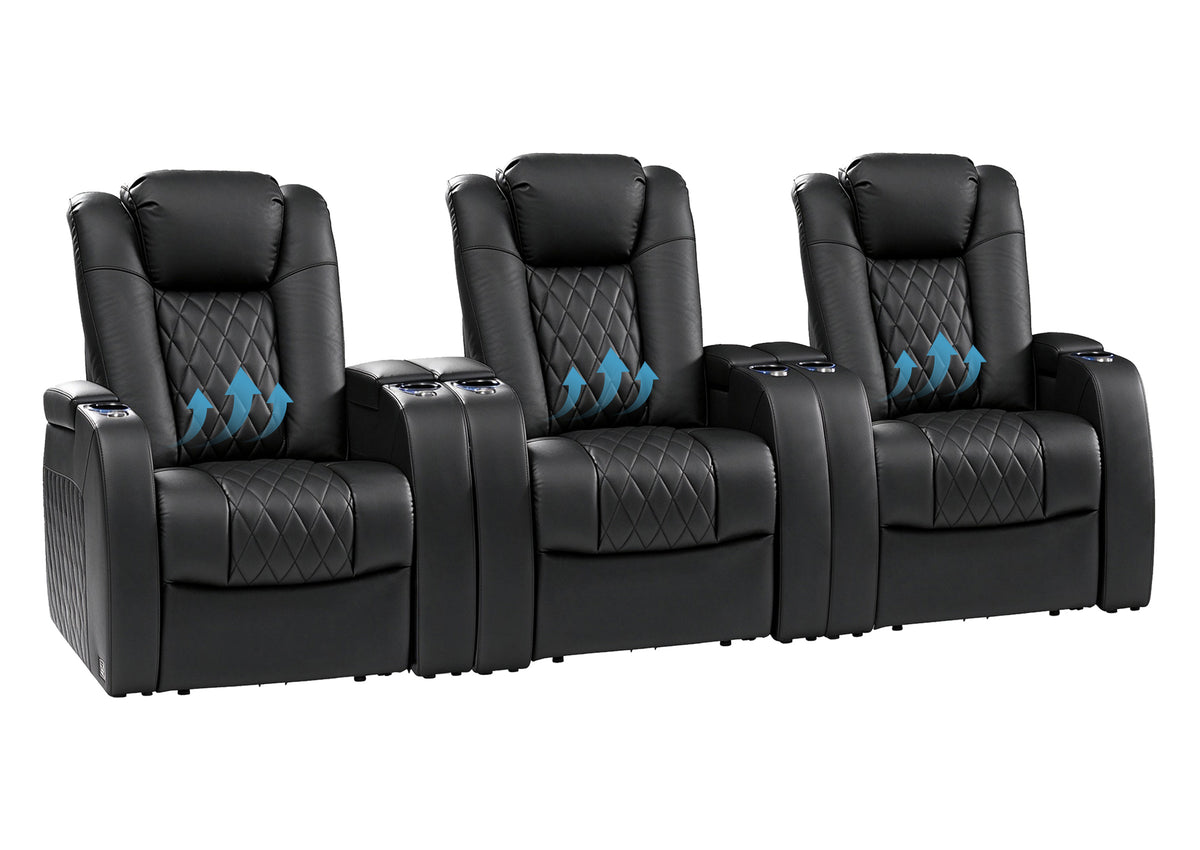
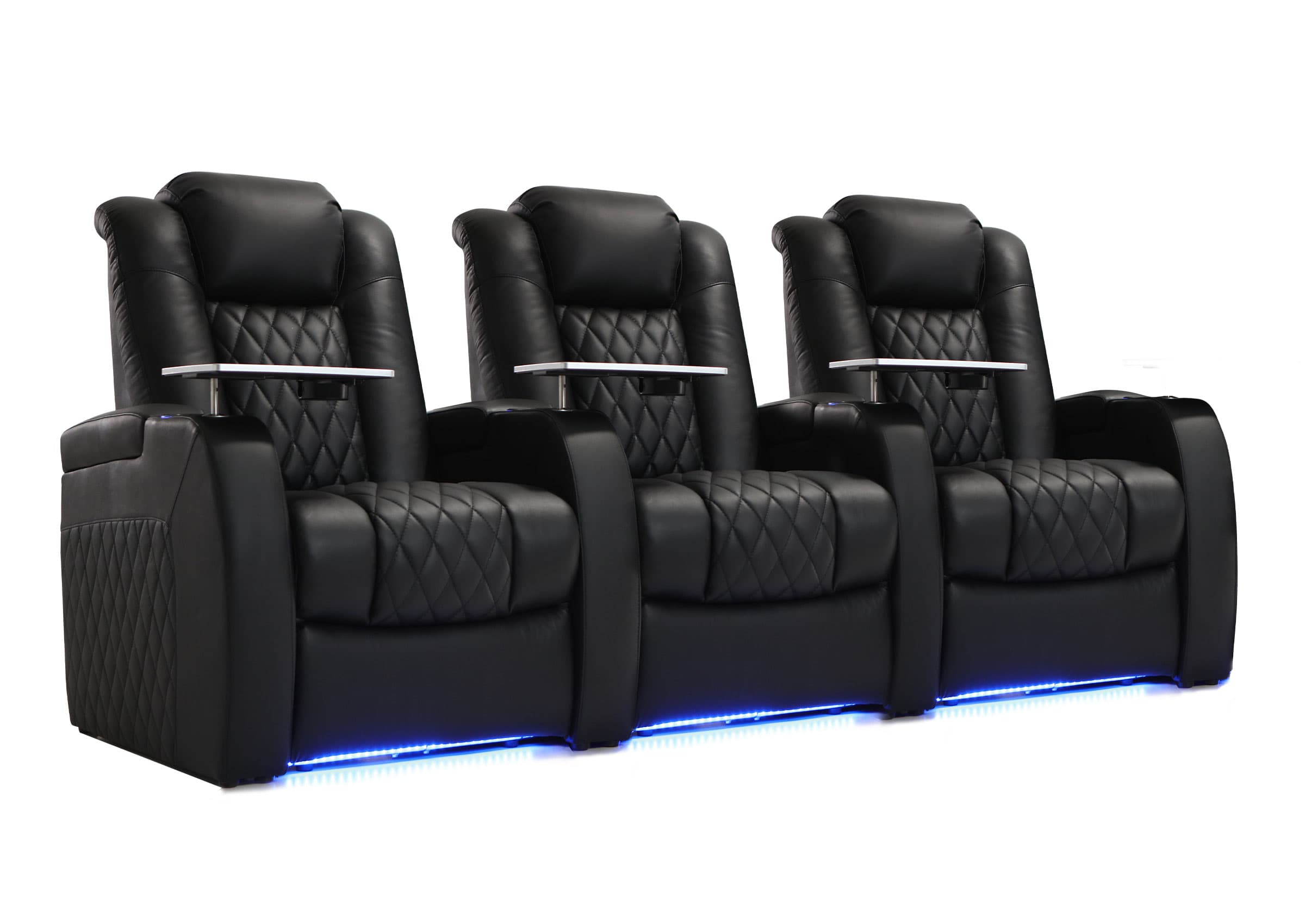
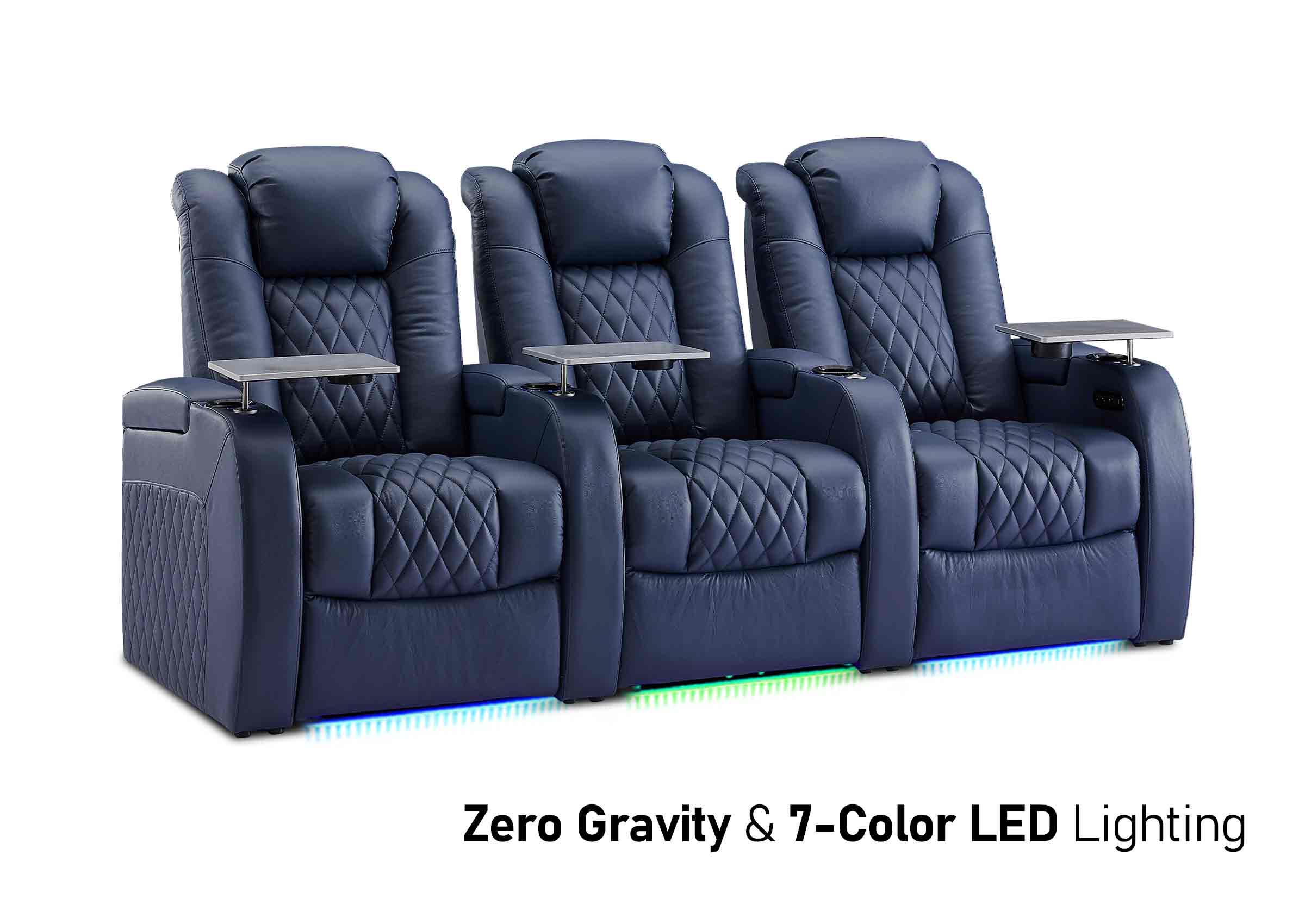
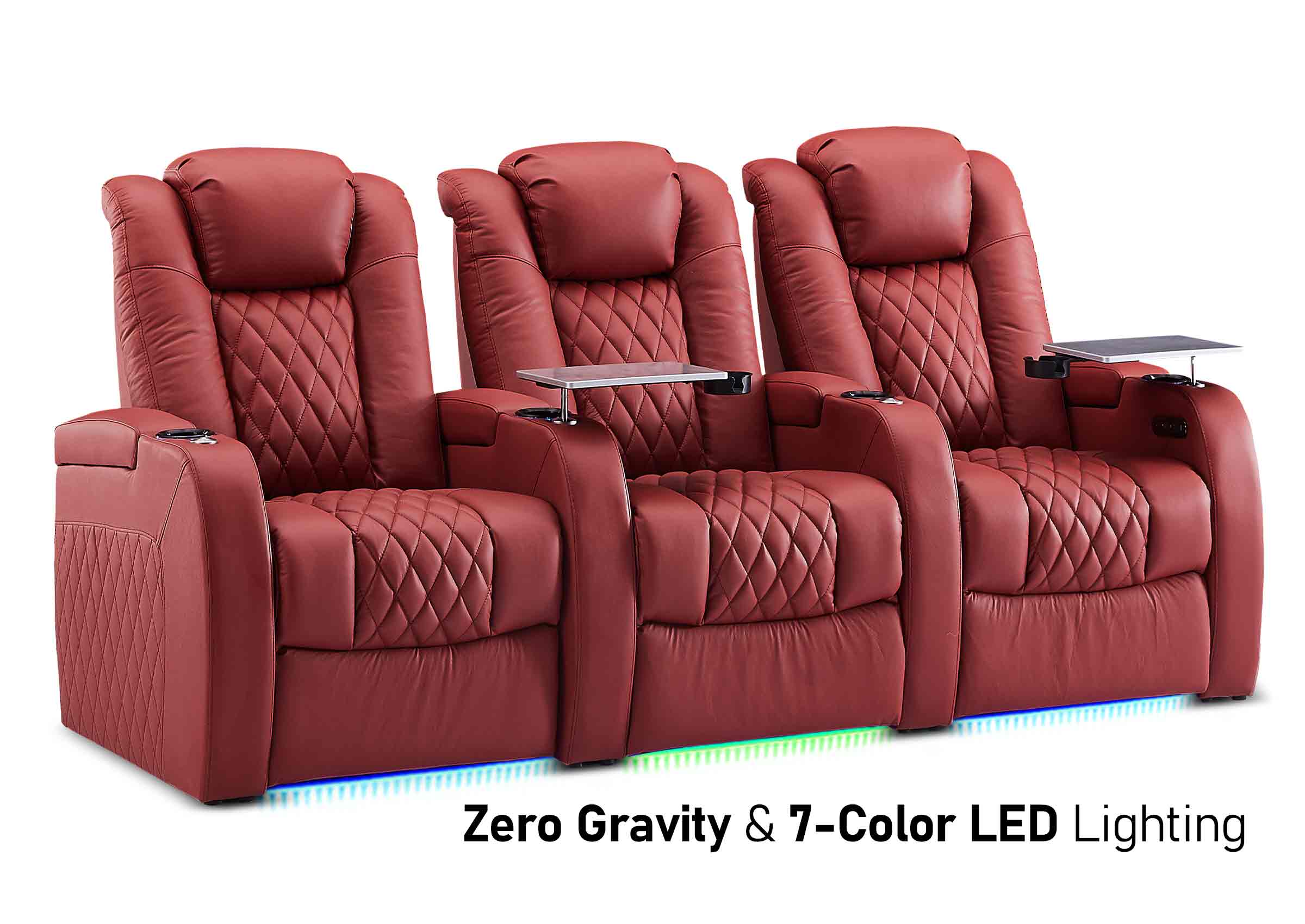
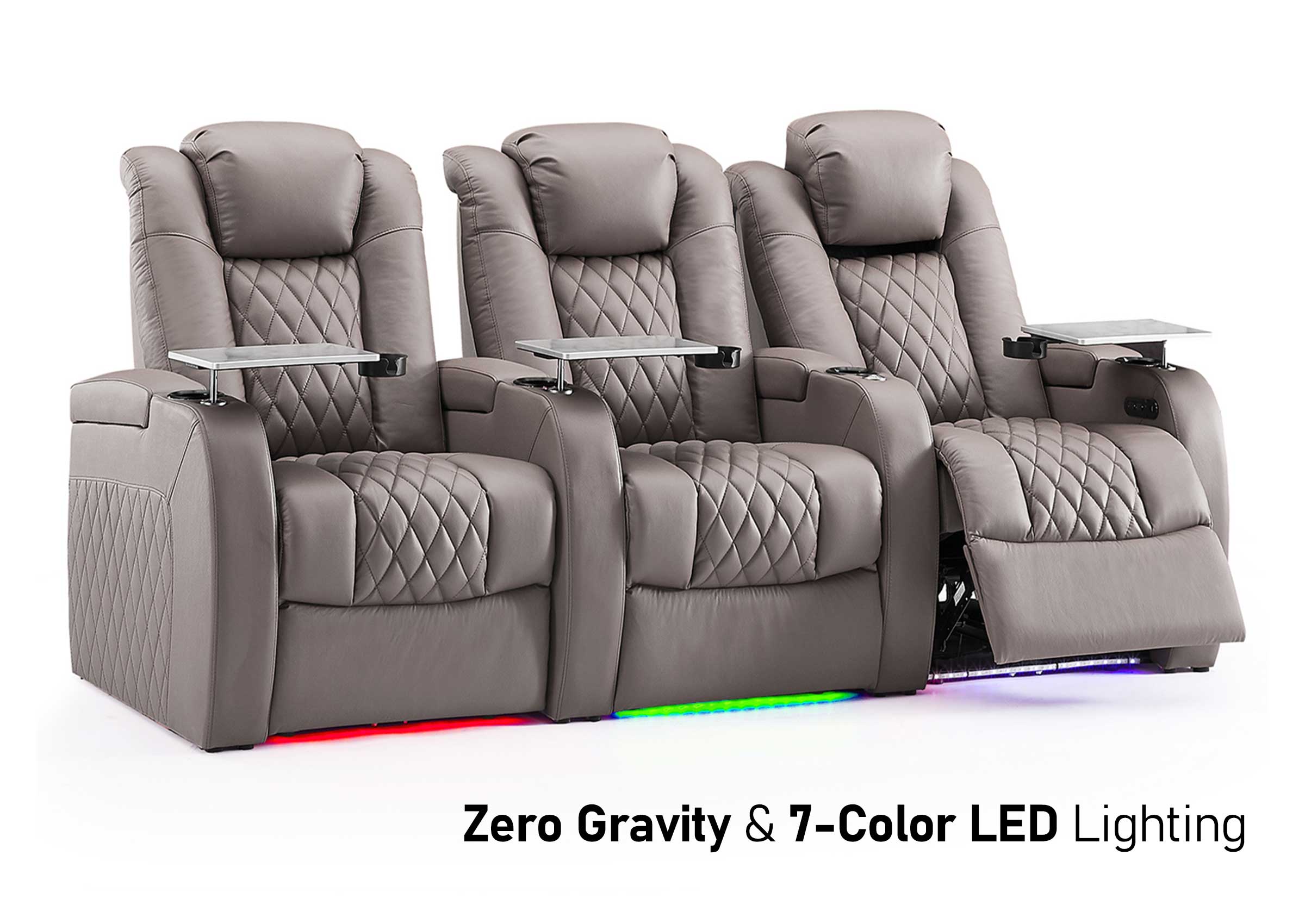
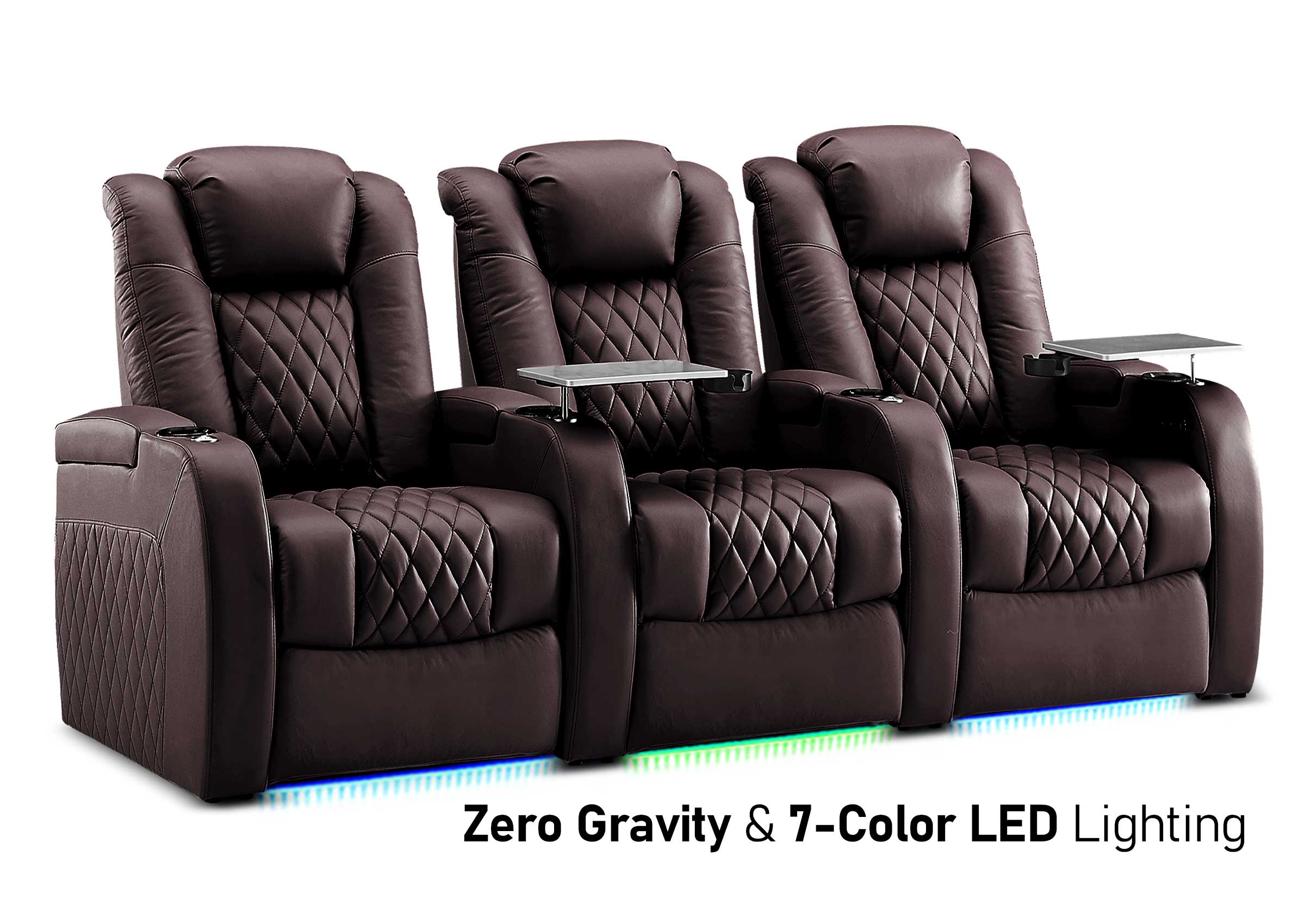

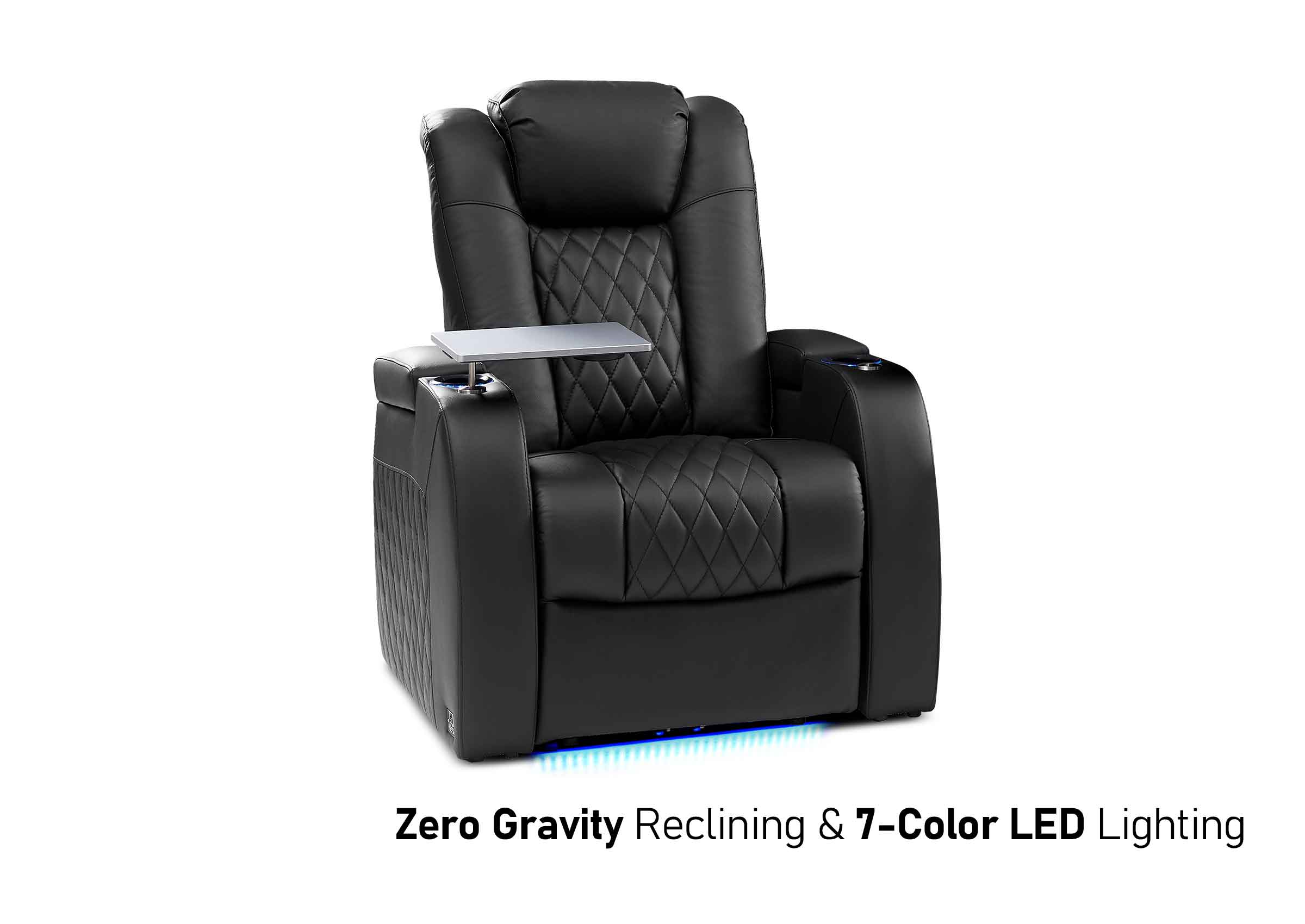
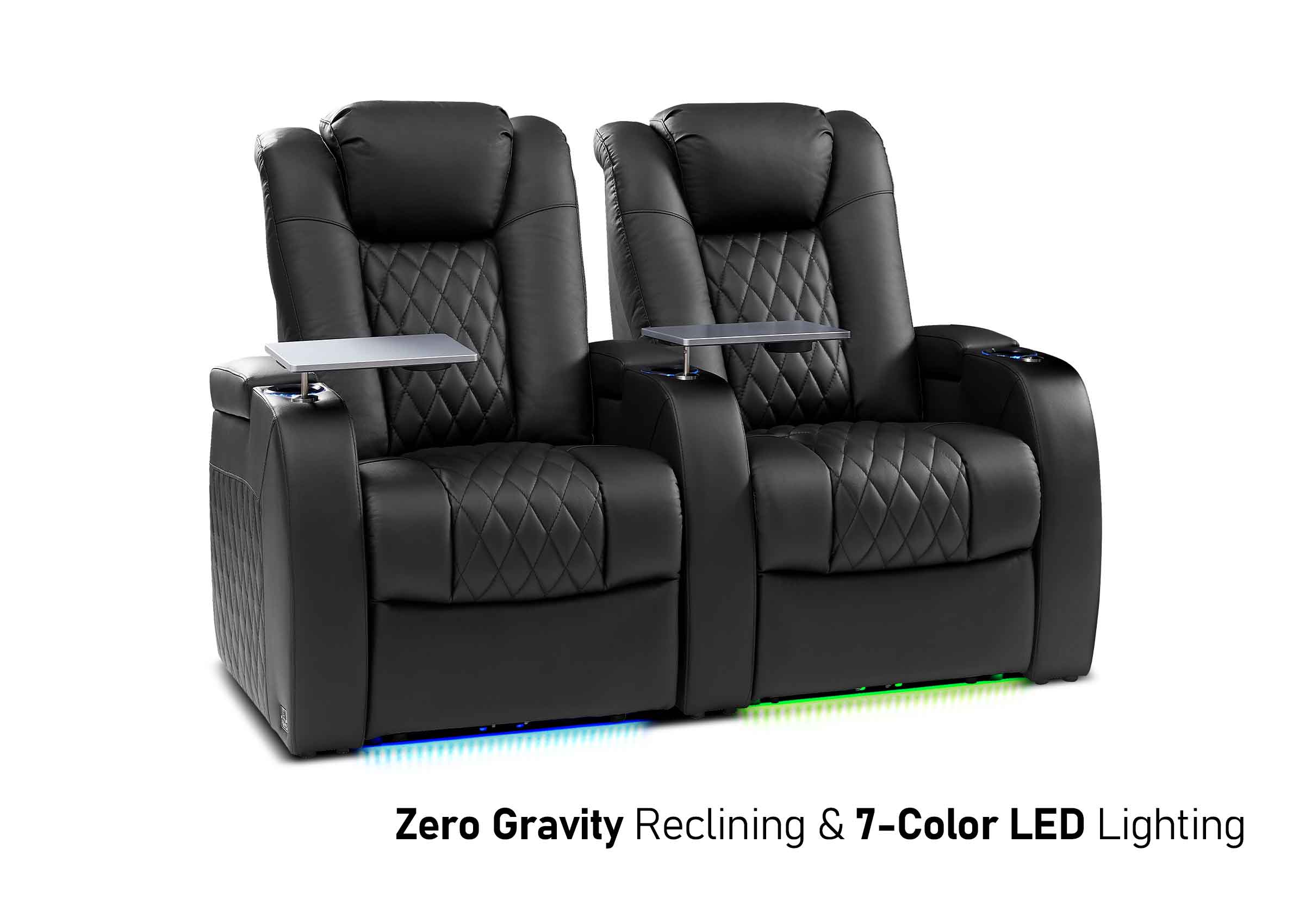
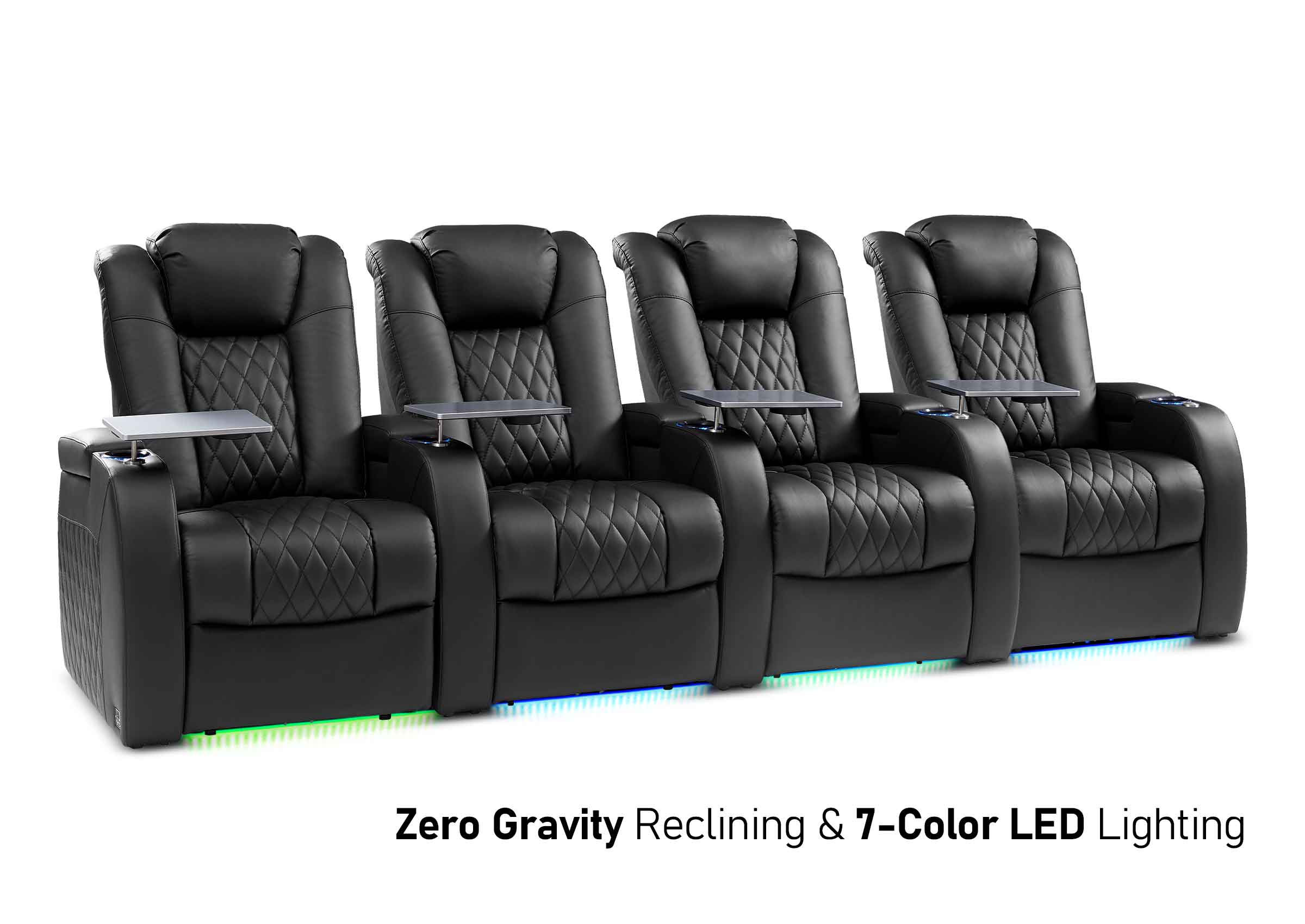
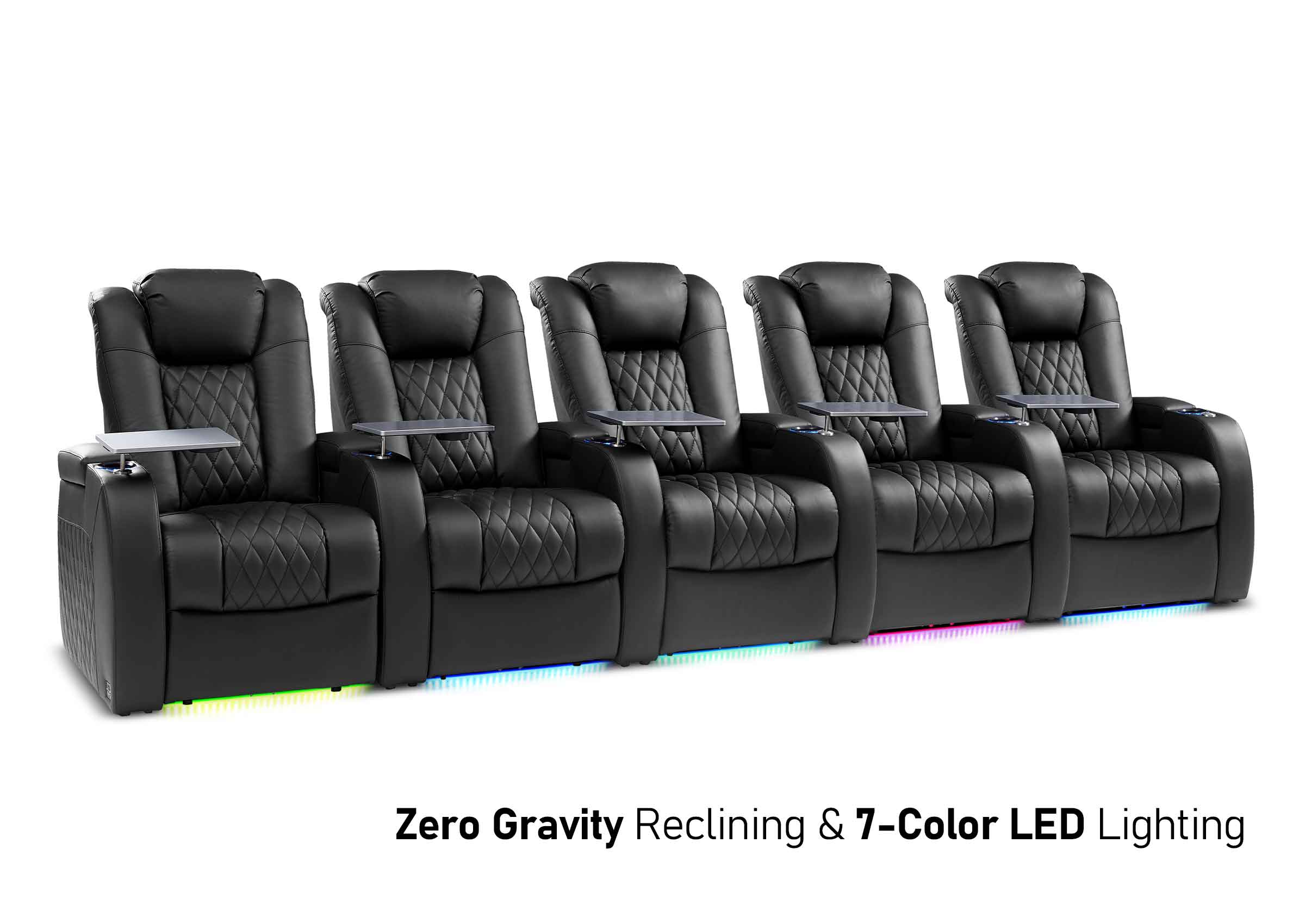
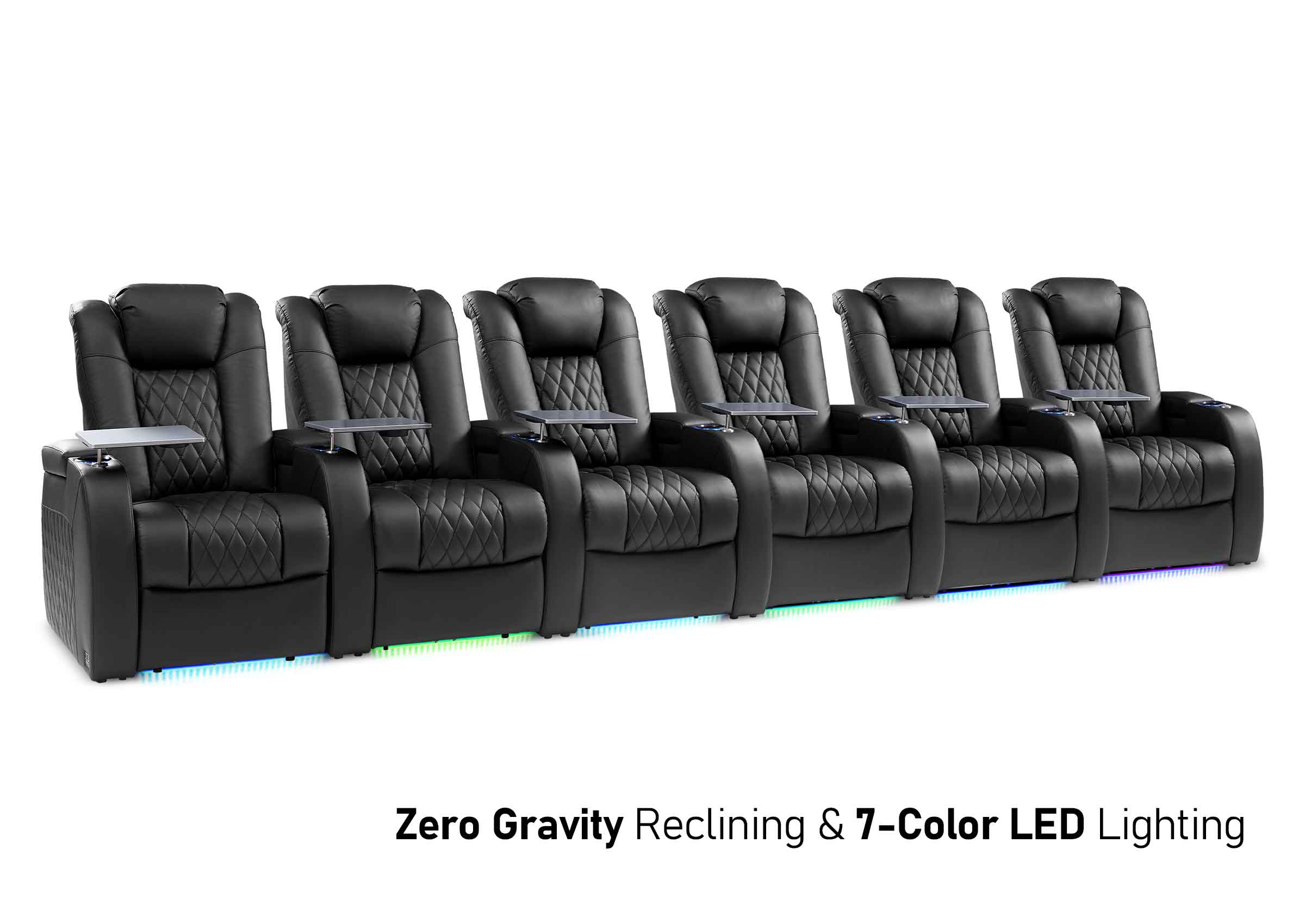
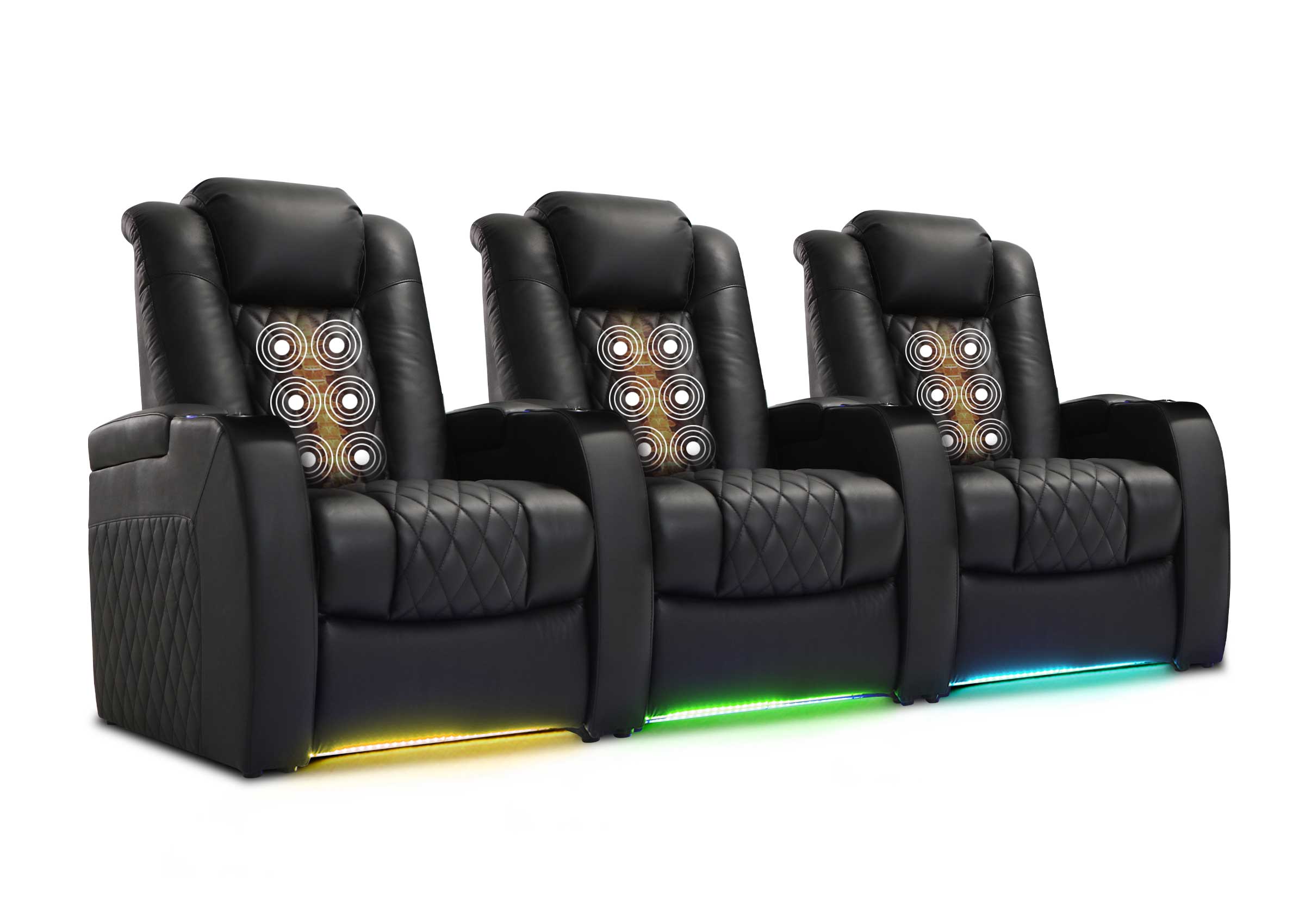
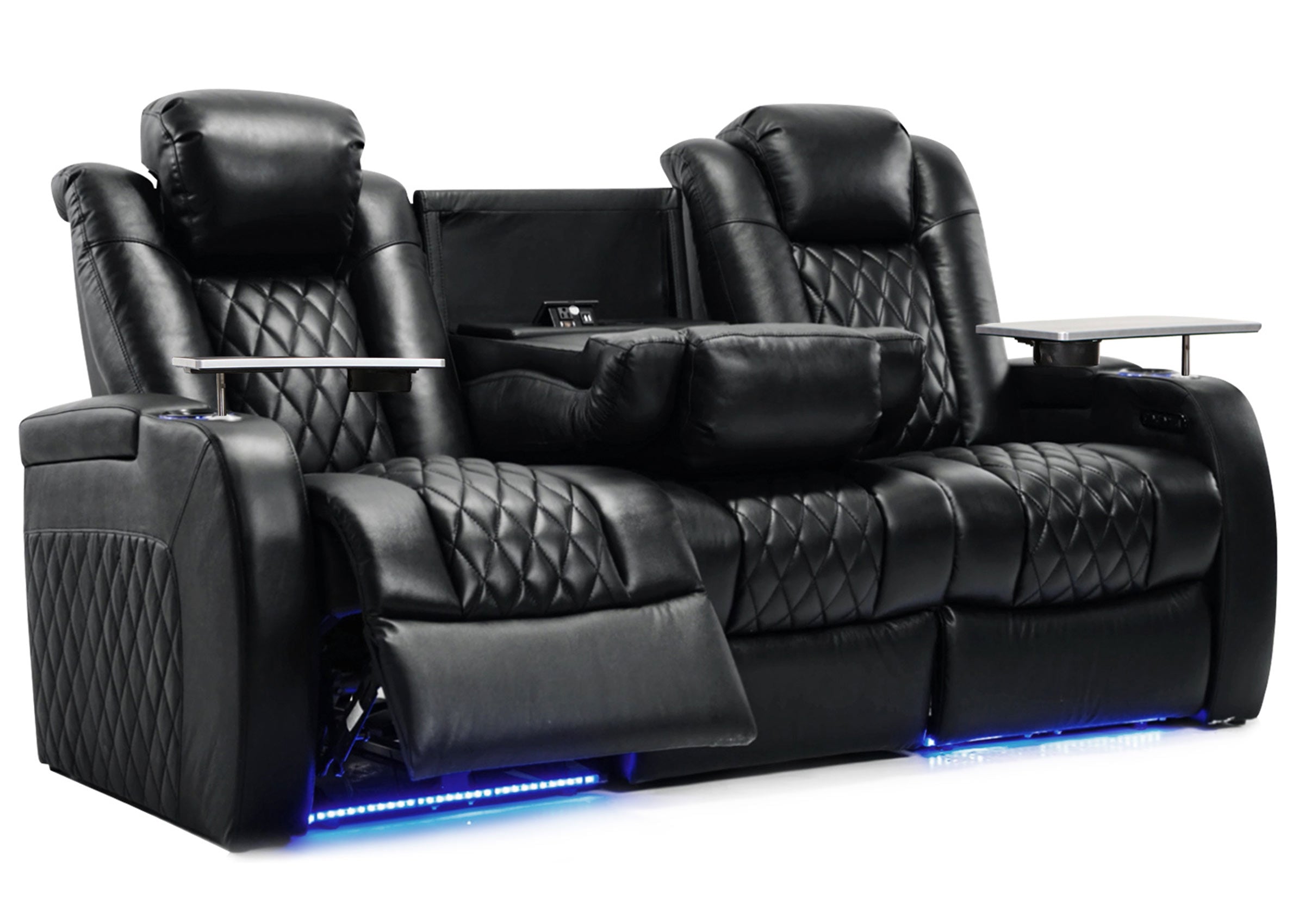




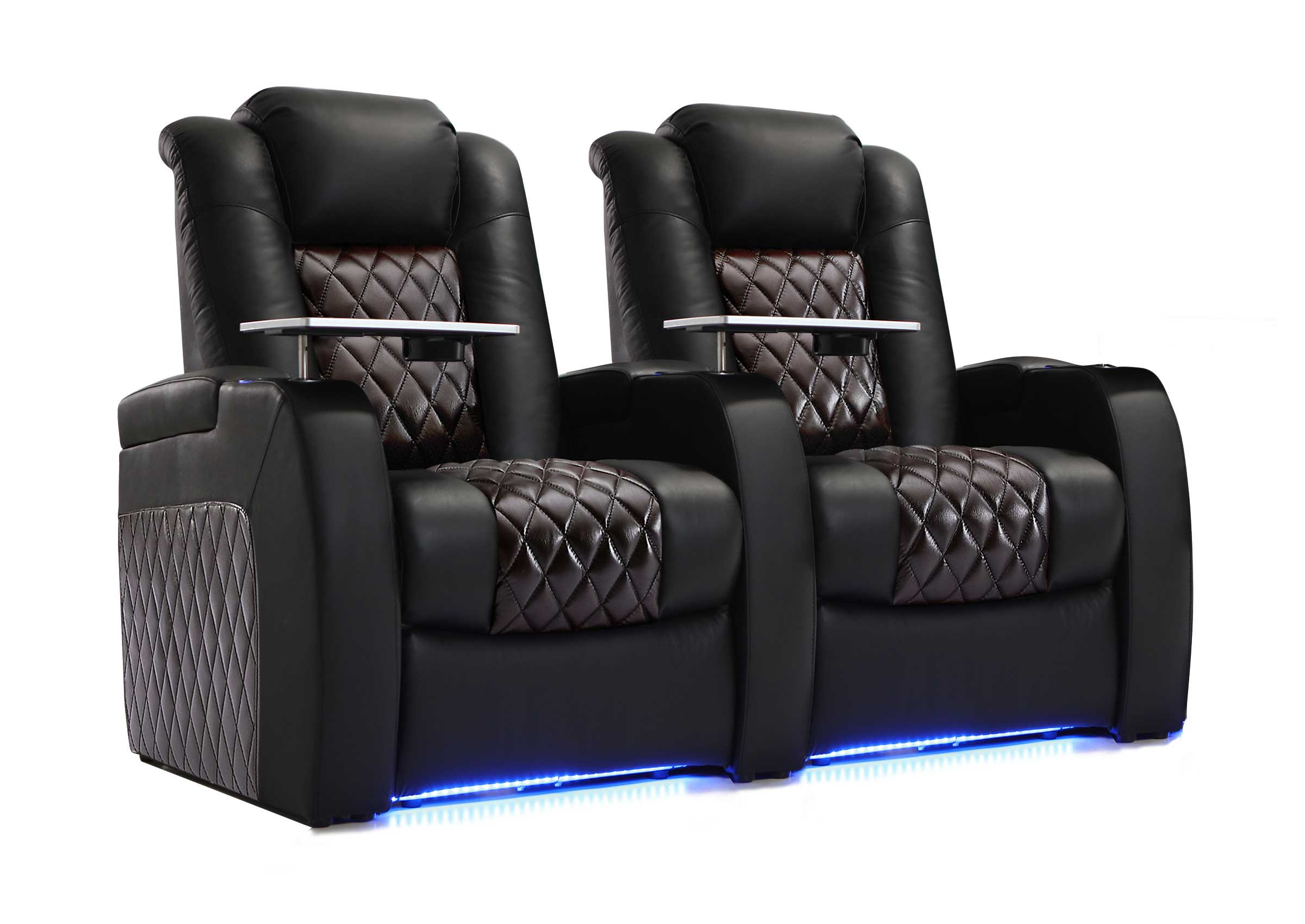
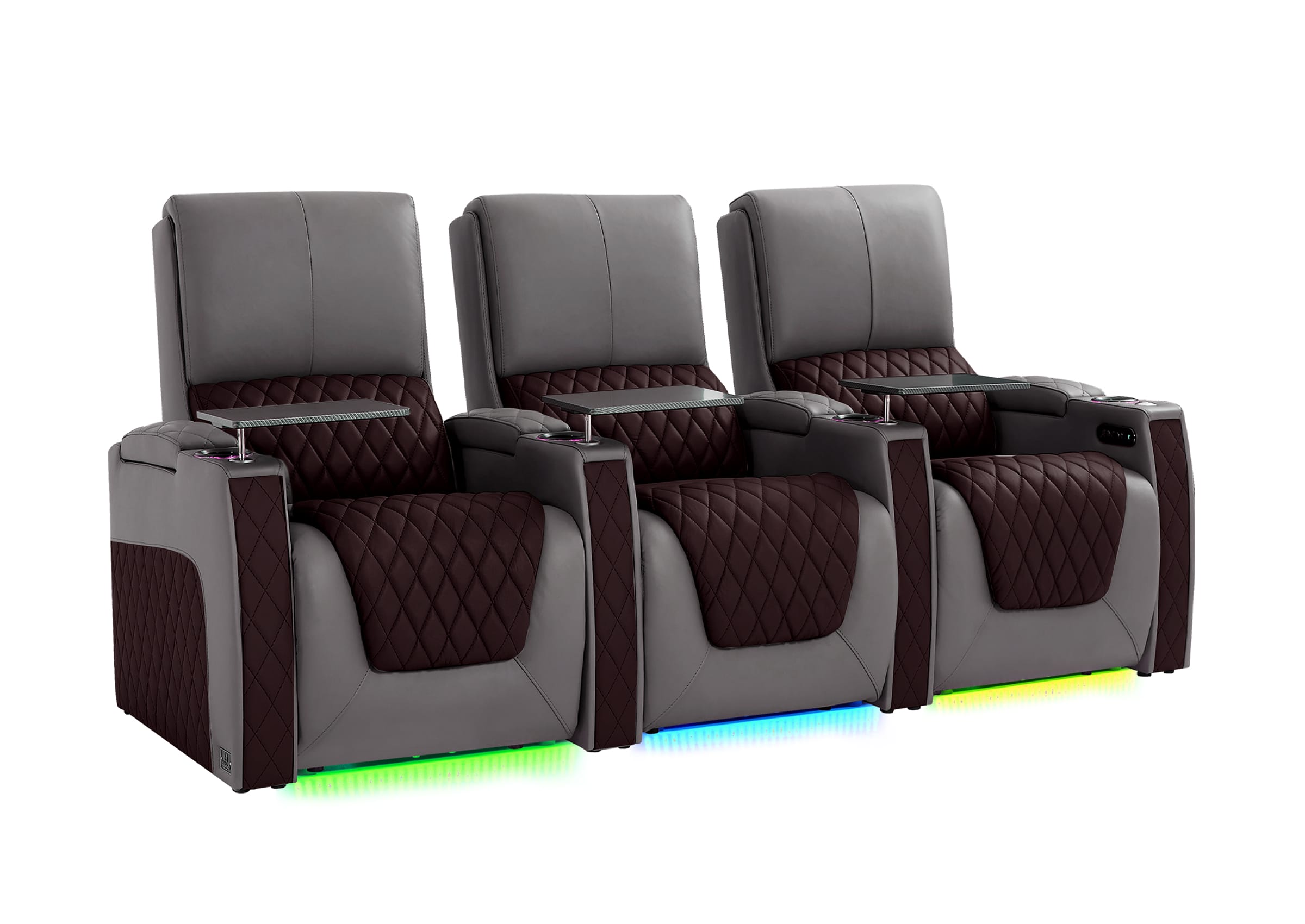
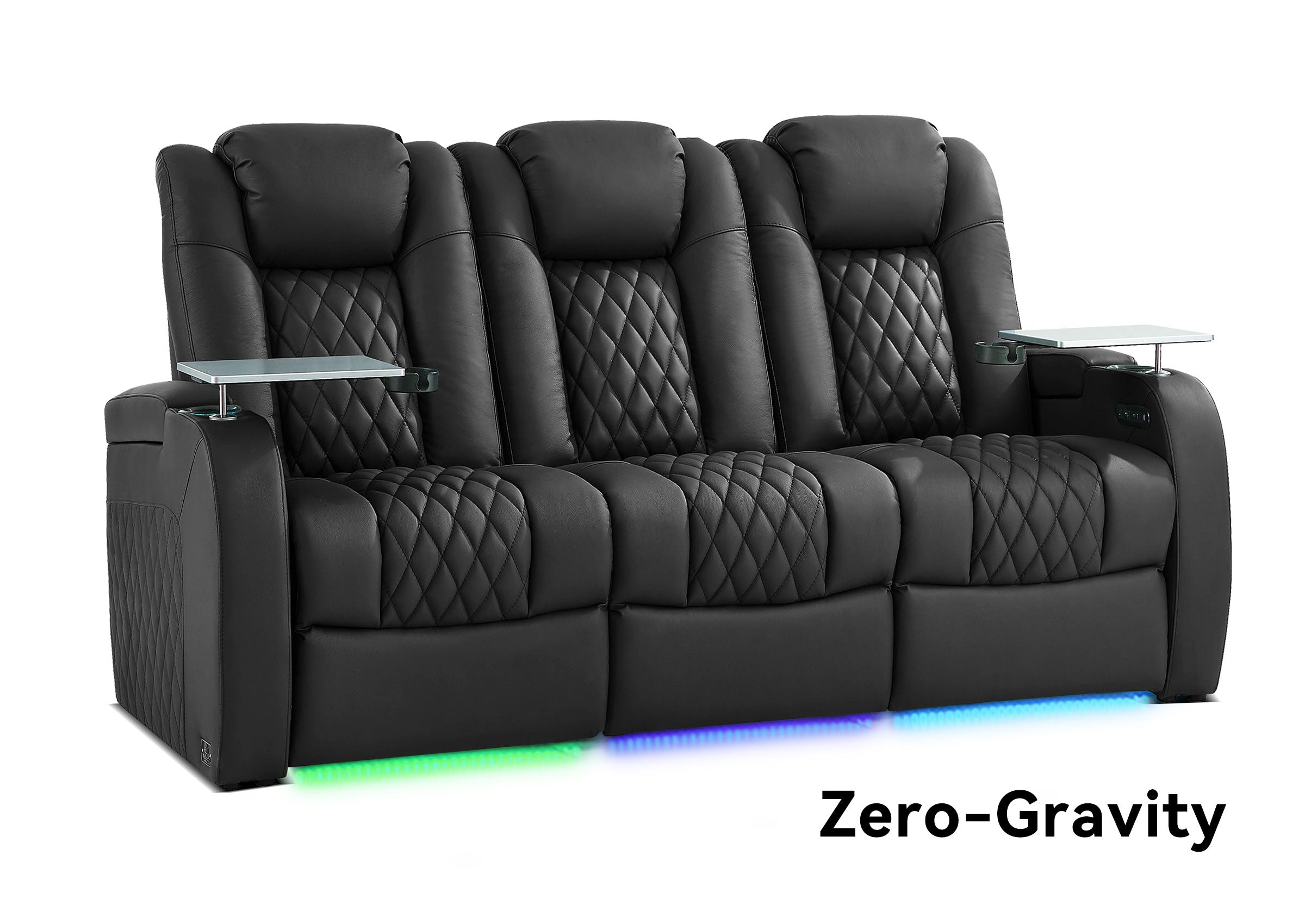
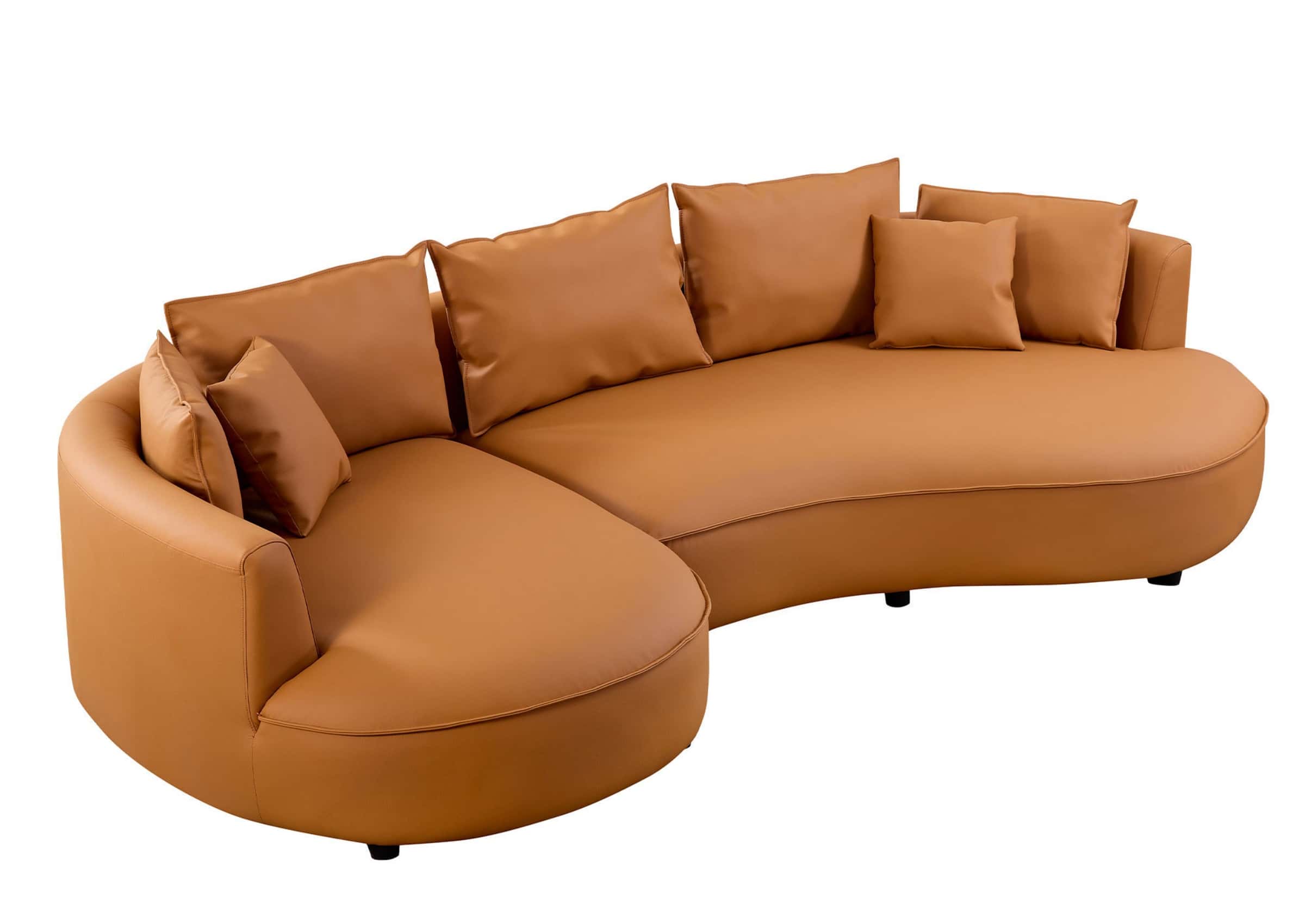


Most modular home theater seating is configurable when you order it, but not every system is designed to be rearranged repeatedly after delivery. A row may arrive in separate pieces and offer several approved layouts while still being difficult—or impossible—to turn from individual recliners into a loveseat later.
True flexibility depends on more than separate seat modules. Armrests, finished end panels, connectors, controls, wiring, recline clearance, and future module compatibility all determine what you can actually change.
If you want individual chairs today, a more connected loveseat arrangement tomorrow, or fewer seats after a move, confirm those exact changes before buying. The word “modular” alone does not answer the question.
How Flexible Is Modular Home Theater Seating?
Modularity is not a yes-or-no feature. It has different levels, and the level you need depends on how often you expect the room to change.
| Flexibility level | What it usually means | What it does not guarantee |
|---|---|---|
| Modular for delivery | Backs, seats, arms, or bases arrive as separate components | A different finished layout after assembly |
| Configurable when ordered | You select seat count, arm positions, consoles, or loveseat-style combinations | That those choices can be changed easily at home |
| Reconfigurable occasionally | Approved modules can be added, removed, separated, or rebuilt into another supported layout | Daily switching between every possible arrangement |
| Designed for frequent change | Arms, connectors, controls, and finished modules support repeated conversion | Permanent availability of matching future pieces |

The fourth level is what many users imagine when they search for flexible theater seating: a system that can move between chair, loveseat, and sofa-style use as household needs change. It is also the most demanding level because every position must remain finished, stable, powered correctly, and comfortable after the change.
Do not judge flexibility by how many pieces appear in an assembly diagram. Judge it by the configurations the manufacturer supports after the seating is in your home.
Which Flexibility Problem Are You Trying to Solve?
Before comparing products, identify the change that matters to you. Different problems require different kinds of modularity.
Easier delivery and installation
Separate backs or bases can make a narrow doorway, staircase, or basement turn easier to manage. Use a delivery-path and room-access checklist to verify those constraints. This is delivery flexibility—not necessarily layout flexibility.
A better initial fit
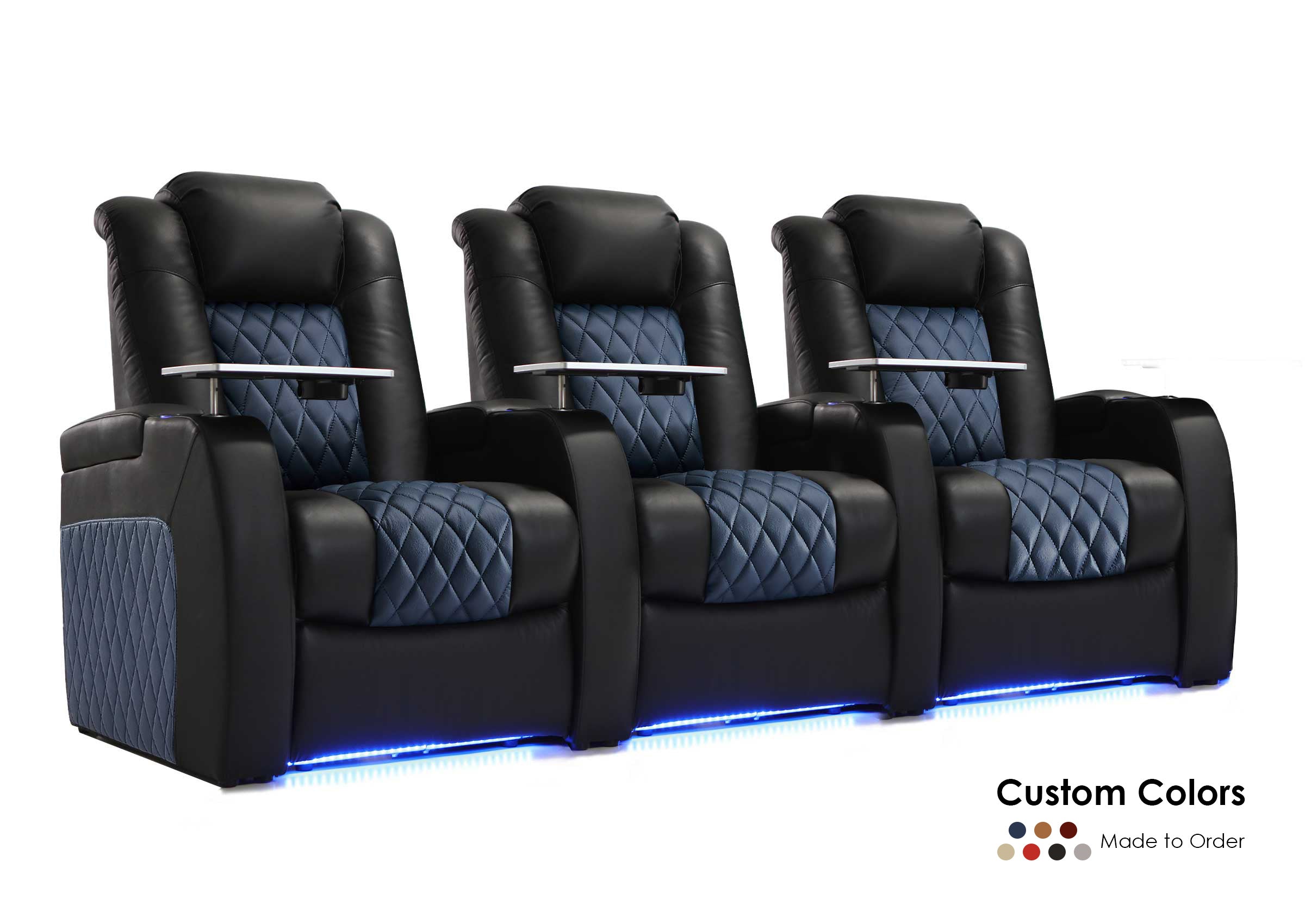
Single-arm, armless, center, and end modules may help a row fit the available wall width more efficiently. This can reduce unnecessary armrests or create a loveseat position without requiring a completely custom frame. Before choosing modules, plan the initial seating configuration around the room, seat count, and intended relationships between positions.
A future change in seat count
You may expect to add a seat, remove one, or divide a long row after moving. This requires compatible modules that can form complete end positions, not merely pieces that connect in the original order.
A room with more than one purpose
A media room used for movies, gaming, sports, conversation, and family time may benefit from smaller seating groups or a more open center position. The ability to change social distance may matter more than creating a formal row.
Frequent chair-to-loveseat conversion
This is the most specific and difficult request. It requires more than an armless center seat. The arm system, connectors, controls, cushion gaps, exposed surfaces, and power arrangement all have to support repeated changes.
The best modular system is not the one with the largest theoretical number of layouts. It is the one that supports the changes you are genuinely likely to make.
Can Individual Theater Seats Really Become a Loveseat?
Sometimes, but only when the seating system was designed for that relationship between modules.
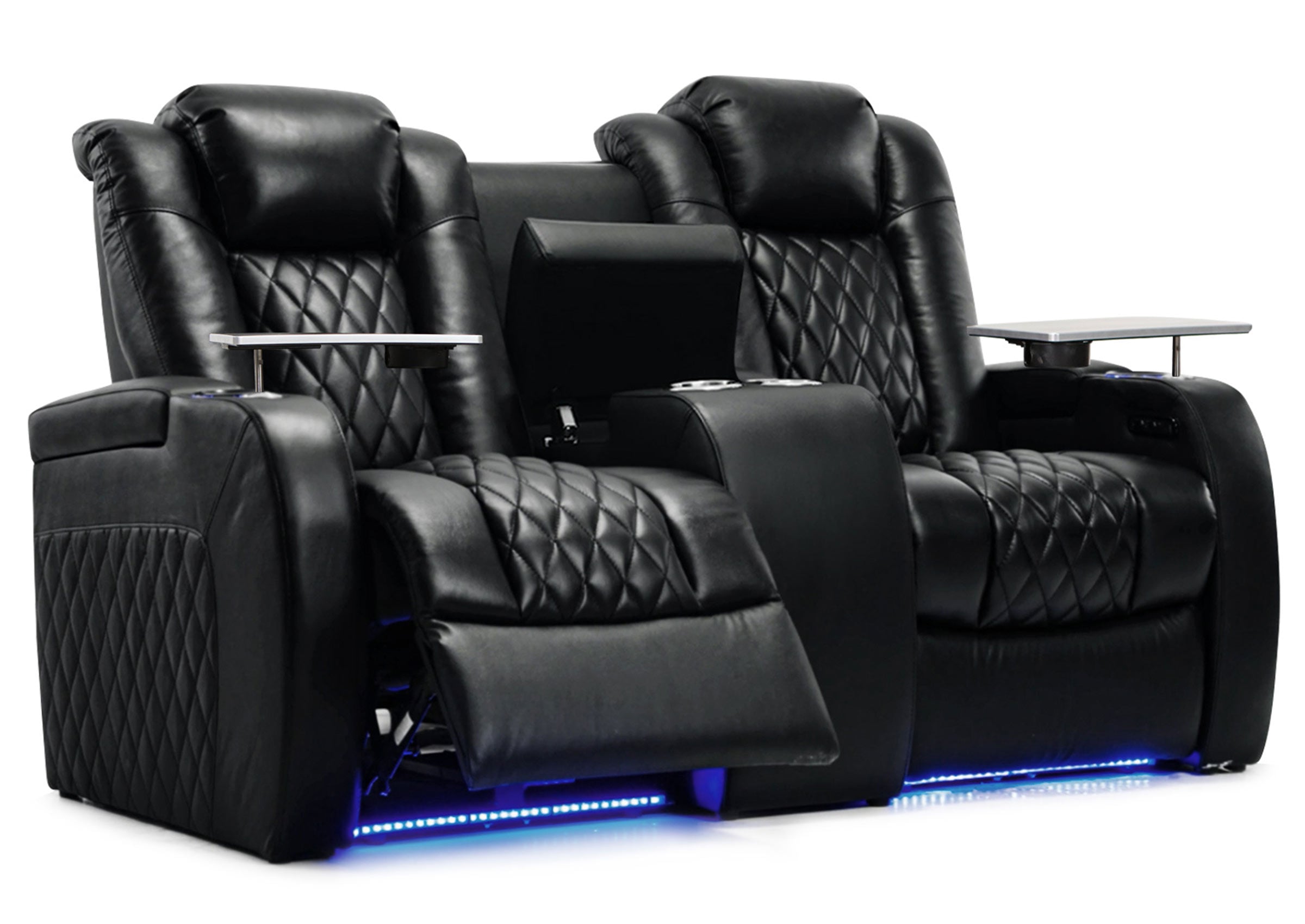
Removing a center arm can create more physical closeness, but it does not automatically create a usable loveseat. Two seats pushed together may still have an uncomfortable gap, exposed attachment points, unsecured movement, or controls that are no longer accessible.
Confirm the following before relying on chair-to-loveseat flexibility.
How are the armrests built?
Find out whether the arms are permanently integrated, removable, shared between modules, or sold as left, right, and center components. A removable arm is useful only if the remaining seat surfaces are finished and approved for use without it.
Can every remaining module form a finished end?
An armless center seat may work only between two other modules. If you divide the row, it may lack an exterior arm, finished side, control panel, or stable end connection.
Ask a precise question:
If I remove the seat beside this module, what exact parts are needed to make the remaining module a complete end seat?
How do the seats connect?
Modules should remain aligned and stable in every supported arrangement. Check whether the connection method is intended for repeated release and reconnection or only for initial assembly.
What happens in the center?
A loveseat-style arrangement should be evaluated as occupied seating, not just as two cushions shown side by side. Check the gap between seats, back-cushion alignment, independent recline movement, and whether either user feels pulled toward the center.
Where are the controls and conveniences?
Controls, USB ports, cup holders, storage, and lighting may be built into an arm or console. Removing that piece can also remove a function or change how the adjacent seat operates.
A system can support a loveseat configuration without supporting rapid conversion between loveseat and chair modes. Confirm both the available arrangement and the intended frequency of change.
Why Does Powered Reclining Make Reconfiguration Harder?
Powered modular seating has two layouts at once: the furniture layout you can see and the electrical layout that makes it work.
Before adding, removing, or moving a powered module, use a power theater seating project checklist to confirm:
- where each motor receives power;
- whether modules share a power supply or wiring path;
- where control buttons are located;
- whether an arm contains controls, charging ports, or lighting connections;
- how cables are routed and protected;
- whether every proposed arrangement reaches a suitable outlet;
- whether cords remain outside walking and reclining paths;
- whether the system requires a specific connection order.
A rearranged row may look complete while leaving a control on the wrong side or a cable crossing an aisle. A modular frame does not make the electrical system universally interchangeable.
The active layout matters as much as the assembled layout. Check the room with every important seat occupied and fully reclined. A pair of modules that fits neatly upright may block circulation, touch another seat, or interfere with a cabinet when both footrests are open.

What Does Each Future Change Require?
Use the change you expect to make as the starting point for product questions.
| Change you want | The system needs to support | Common limitation to verify |
|---|---|---|
| Add another seat | Compatible individual modules and a supported connection sequence | The series, finish, or matching module may change later |
| Remove one seat | Remaining modules can form complete, powered end positions | A center seat may not work as an end seat |
| Split one row into two groups | Both groups have finished sides, controls, power, and stability | Extra arms or end components may be required |
| Change chairs into a loveseat | Removable or shared arms and an approved center relationship | Cushion gaps, exposed hardware, or lost controls |
| Move to a narrower room | A shorter supported configuration that still fits when reclined | Spare components need storage and future reuse |
| Rearrange frequently | Connections and wiring designed for repeated changes | Heavy modules and setup effort may discourage actual use |
This table also exposes an important trade-off: every extra configuration can require additional parts, storage space, setup time, or compromises in integrated features.
Practical flexibility is the combination of changes the system officially supports and changes your household will actually use, minus the effort and compromises required each time.
Can You Count on Buying Matching Modules Later?
Future expansion is one of modular seating’s strongest promises—and one of its easiest assumptions to get wrong.
Even when a manufacturer currently sells modules separately, future compatibility may be affected by:
- model or series updates;
- changes in connectors or electrical components;
- revised dimensions or arm designs;
- discontinued colors or upholstery;
- natural shade variation between leather batches;
- different wear between the existing and newly added seats.
If future expansion matters, save more than the product name. Keep the order confirmation, model or series identifier, module descriptions, upholstery selection, color information, photos of connectors, electrical specifications, assembly instructions, and any approved configuration diagram.
Also confirm what can be purchased separately today. A product may be built from modules at the factory without every module, spare arm, or connector being offered as an individual retail item.
Treat later expansion as a possibility that must be verified—not a guaranteed benefit included in the word “modular.”
Is Modular Seating Better for a Small or Multipurpose Room?
It can improve how the room is configured, but it cannot make oversized seating physically smaller.
In a tight room, modular choices may help you:
- use fewer seats;
- eliminate an unnecessary center arm;
- select a shorter supported combination;
- separate one long row into smaller groups;
- preserve a walkway for daily use;
- move an occasional seat when the room changes purpose.
Every proposed layout still needs to pass the same checks: upright width, fully reclined depth, screen relationship, speaker clearance, access to controls, power routing, and an open exit path.
For a multipurpose room, identify primary and secondary seating. The most frequently used movie seats may remain in a stable screen-facing position, while lighter or more movable seating handles guests and casual activities. Trying to make every seat equally movable, reclinable, social, and theater-focused can create more complexity than the room needs.
Modularity should solve a room constraint. It should not be used to excuse a configuration that is too large when fully in use.
How Is Modular Seating Different From a Sectional, Custom Seating, or a Fixed Row?
These terms can overlap, but they answer different questions.
| Seating approach | Main question it answers | Best fit |
|---|---|---|
| Modular theater seating | Can approved seat components form different arrangements? | Changing seat counts, modules, or room conditions |
| Sectional seating | Can connected lounge-oriented sections support shared, relaxed use? | Family rooms, casual viewing, and lying across seats |
| Custom seating | Can the current order be adapted to a specific finish, feature, or project requirement? | Projects that standard options do not fully satisfy |
| Fixed theater row | Can a finalized forward-facing arrangement remain consistent? | Dedicated rooms with stable seat counts and layouts |
A sectional may be highly modular, but its deep corners or chaise positions may not create the most consistent screen-facing experience. If shared lounging is the priority, first consider when a sectional works in a home theater. Theater modules may create clearer individual viewing positions but offer less freedom to lie across the seating.
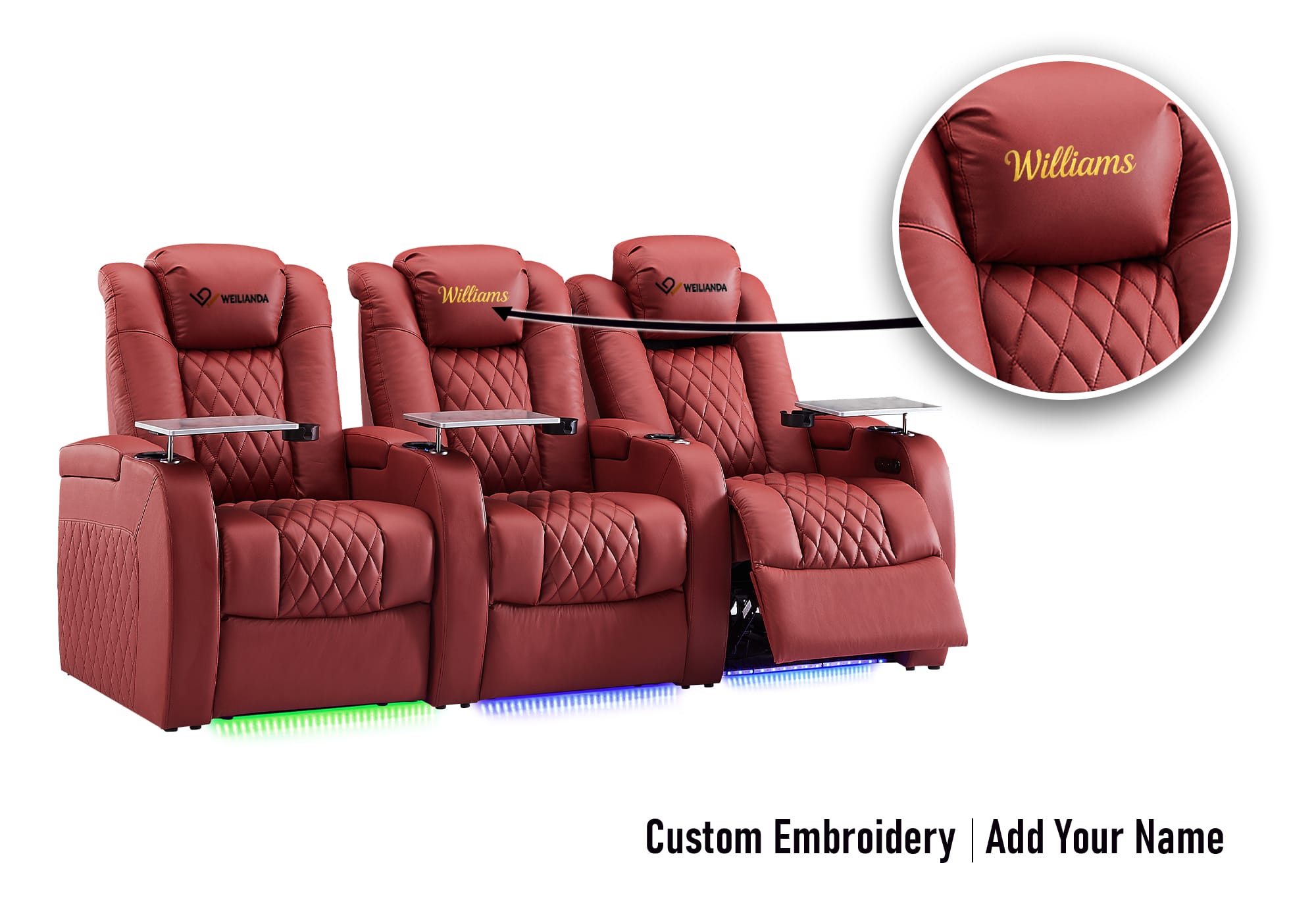
Customization can affect what you order now without making the furniture easy to rearrange later. Conversely, a standardized modular system may support several layouts without offering a special finish or feature. When the current room needs a more specific finish or reviewed configuration, explore custom theater seating options separately from future reconfiguration.
Choose according to the problem, not the label.
When Is a Fixed Theater Row the Better Choice?
A fixed row is often the more practical solution when the room and viewing plan are already settled.
It may be better when:
- the room is dedicated primarily to movies;
- the final seat count is known;
- each viewer needs a defined forward-facing position;
- multiple rows, risers, and aisles have already been planned;
- integrated arms, storage, and controls matter at every position;
- the seating is unlikely to move;
- visual uniformity matters more than future rearrangement.
Less flexibility is not automatically a disadvantage. It can mean fewer compatibility questions, fewer spare components, simpler power planning, and a layout optimized for one clear purpose.
The relevant comparison is not modular versus outdated. It is adaptable versus settled.
How Often Will You Really Reconfigure the Seating?
Frequency changes the value of every modular feature.
If you expect one change after a future move, occasional reconfigurability may be enough. You can store extra end components and accept a more involved rebuild when that day comes.
If you expect seasonal changes or frequent guest arrangements, weight, connection time, cable routing, and storage become part of the product experience. A theoretically supported layout has little value if changing it requires moving several heavy powered seats and reconnecting hard-to-reach cables.
If you want to switch between chairs and a loveseat every week, ask for the actual change procedure. Find out:
- Which components must be removed or added?
- Are tools required?
- Where will spare arms or connectors be stored?
- How long does the change normally take?
- Can one person perform it safely?
- What needs to be disconnected from power?
- Does each finished layout preserve all intended controls and support?
This is more useful than asking whether the product is modular. It turns a broad marketing term into a real household task.
What Should You Confirm Before Buying Modular Theater Seating?
Use this checklist with the exact model and every future arrangement you are considering.
- ☐ I know whether the system is modular for delivery, initial configuration, occasional reconfiguration, or frequent change.
- ☐ I have diagrams or written confirmation for the layouts I intend to use.
- ☐ I know which modules can become left, right, center, and finished end positions.
- ☐ I know whether arms are fixed, removable, shared, or module-specific.
- ☐ I have confirmed whether a true loveseat-style arrangement is supported.
- ☐ I understand the gap, cushion alignment, and recline behavior between connected seats.
- ☐ I know where controls, charging ports, storage, and lighting are located after each change.
- ☐ I understand how every powered module connects and receives power.
- ☐ Each arrangement fits the room upright, occupied, and fully reclined.
- ☐ Walkways and exits remain clear in every active layout.
- ☐ I know which modules and spare components can currently be purchased separately.
- ☐ I am not assuming future model availability or an exact future upholstery match.
- ☐ I have a place to store unused arms, connectors, or modules.
- ☐ The effort required to change the layout matches how often I expect to do it.
If several answers remain unclear, treat future flexibility as unconfirmed rather than as part of the product’s value.
PLAN FOR CHANGE BEFORE YOU ORDER
Which Seating Changes Do You Actually Need?
Share your room dimensions, preferred seat count, and the layouts you may want now or later. We can help identify the module, arm, control, power, and compatibility details worth confirming before you choose a configuration.
Prefer email? Send your room and configuration details to leon@weiliandahome.com.
Frequently Asked Questions
Is all modular home theater seating reconfigurable after purchase?
No. Some seating is modular mainly for delivery or initial assembly. Other systems allow approved modules to be added, removed, or rearranged. Confirm the exact post-purchase configurations supported by the selected model.
Can modular theater seats turn into a loveseat?
Only if the system supports the required arm, connector, cushion, control, and power arrangement. Removing an arm from an ordinary row does not automatically create a finished or approved loveseat.
Can I add another theater seat later?
Possibly, but current module availability does not guarantee future compatibility. Confirm the series, end-position requirements, electrical arrangement, and separately available components before relying on later expansion.
Is modular seating always better for a small room?
No. It can help create a more efficient combination, but every module still has real width and recline depth. The final active layout must fit without blocking circulation, furniture, doors, or equipment.
Is modular seating the same as custom seating?
No. Modularity concerns how approved components relate and rearrange. Customization concerns choices made for a particular order, such as finishes, features, or project-specific configuration. A system may offer one, both, or neither.
Is modular theater seating easy to move?
Separate modules may be easier to transport than one large connected sofa, but powered recliners can still be heavy. Moving difficulty depends on module weight, connectors, stairs, turns, and whether electrical parts need to be disconnected.
Choose the Flexibility You Will Actually Use
Modular home theater seating is most valuable when it supports a realistic change: a different seat count, a future move, a multipurpose room, or a more social seating arrangement.
The word itself is not enough. Confirm the finished end positions, arm system, connectors, controls, power path, reclined footprint, separately available components, and every layout you expect to use.
If the room is stable and the seating plan is final, a fixed row may provide the cleaner solution. If change is likely, choose a modular system based on supported future configurations—not on how flexible the product appears before it is assembled.