




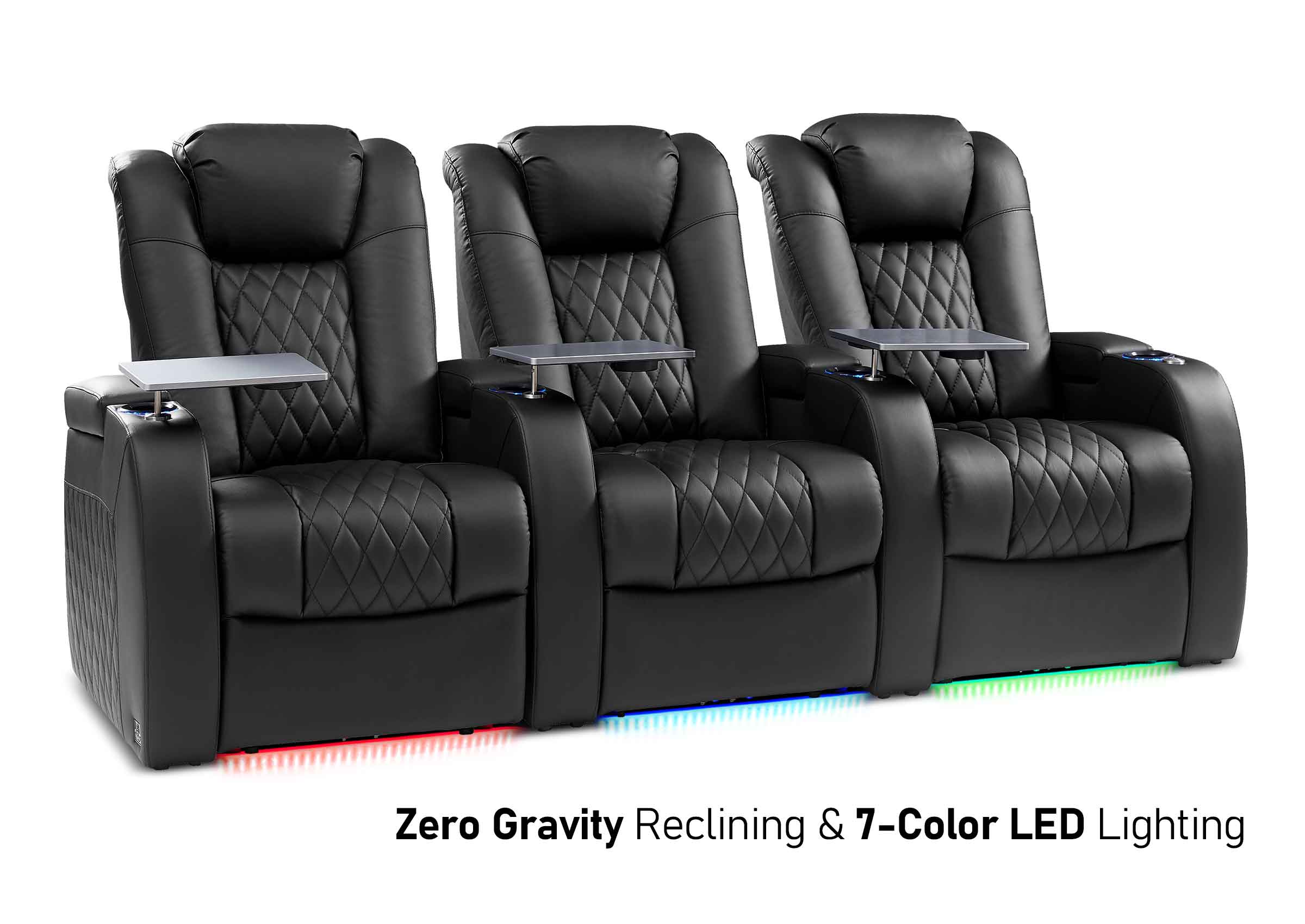
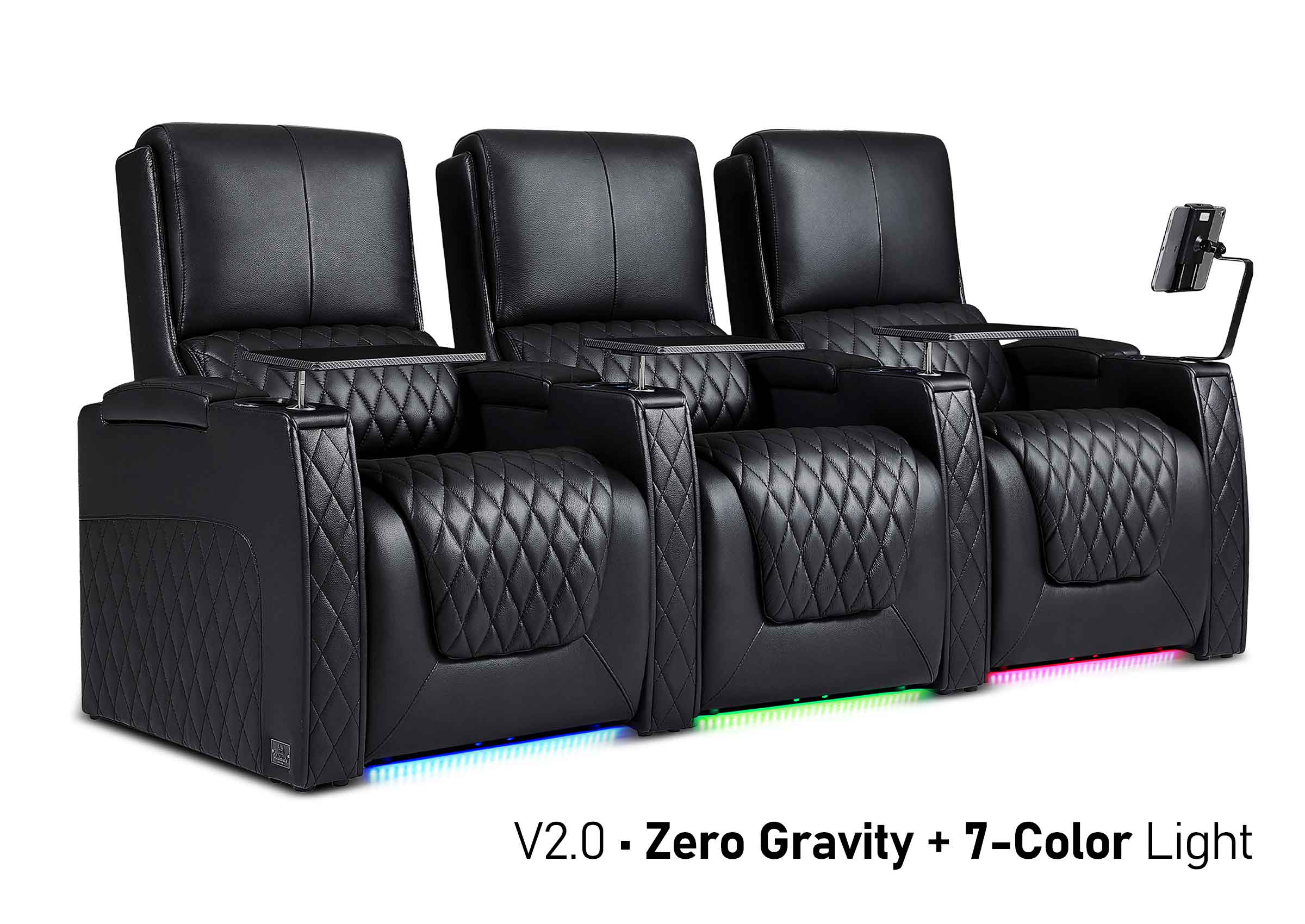
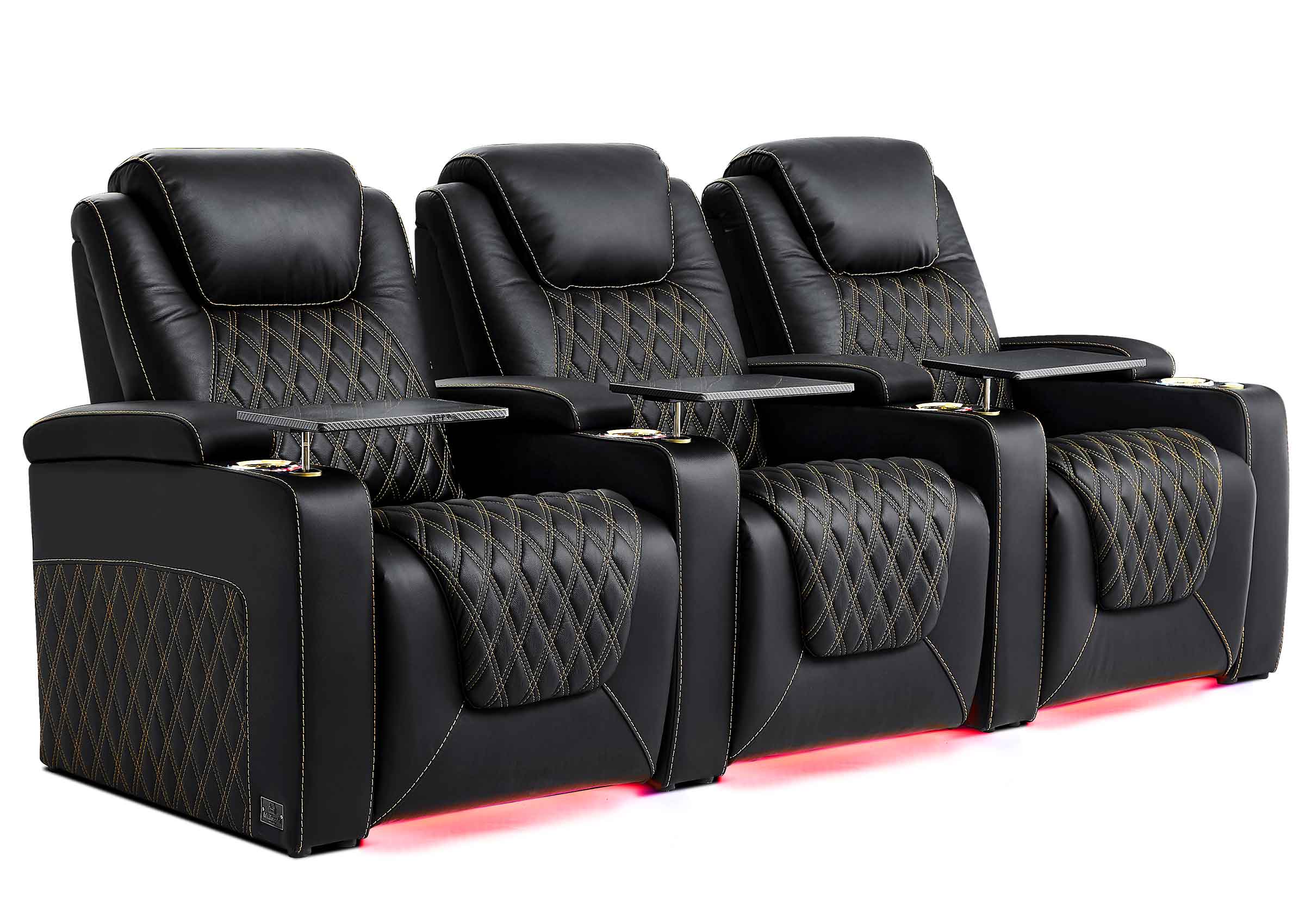
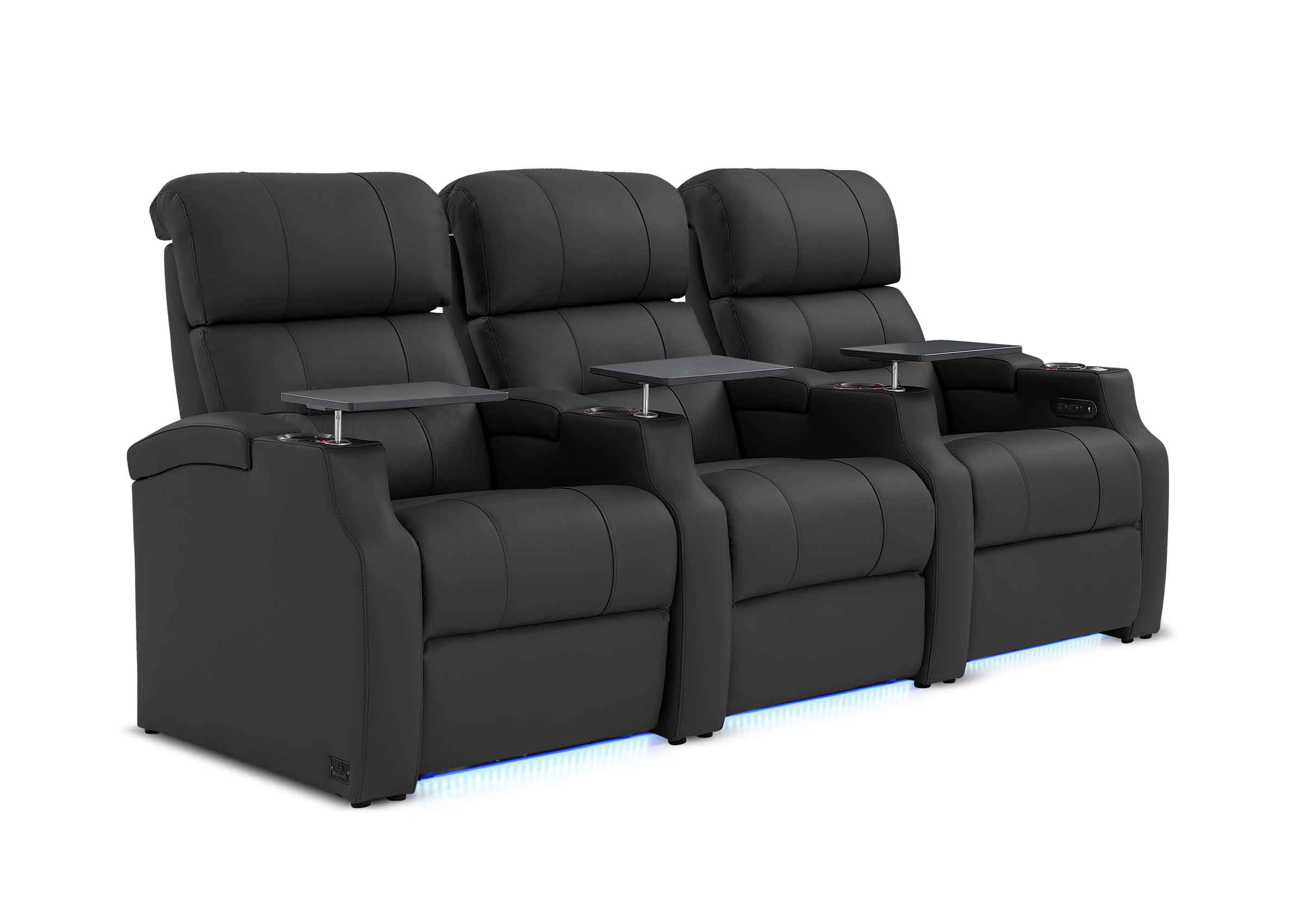
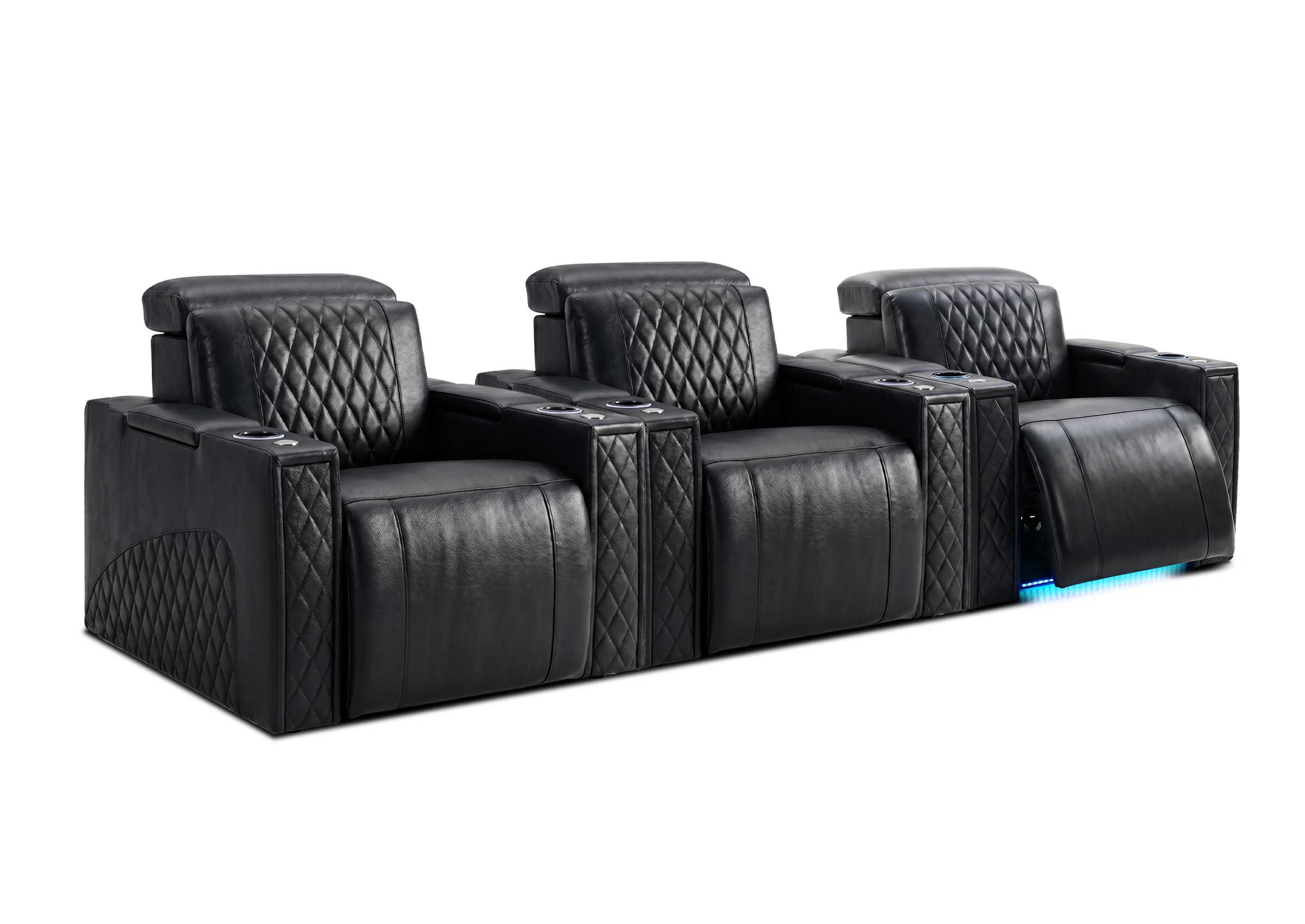

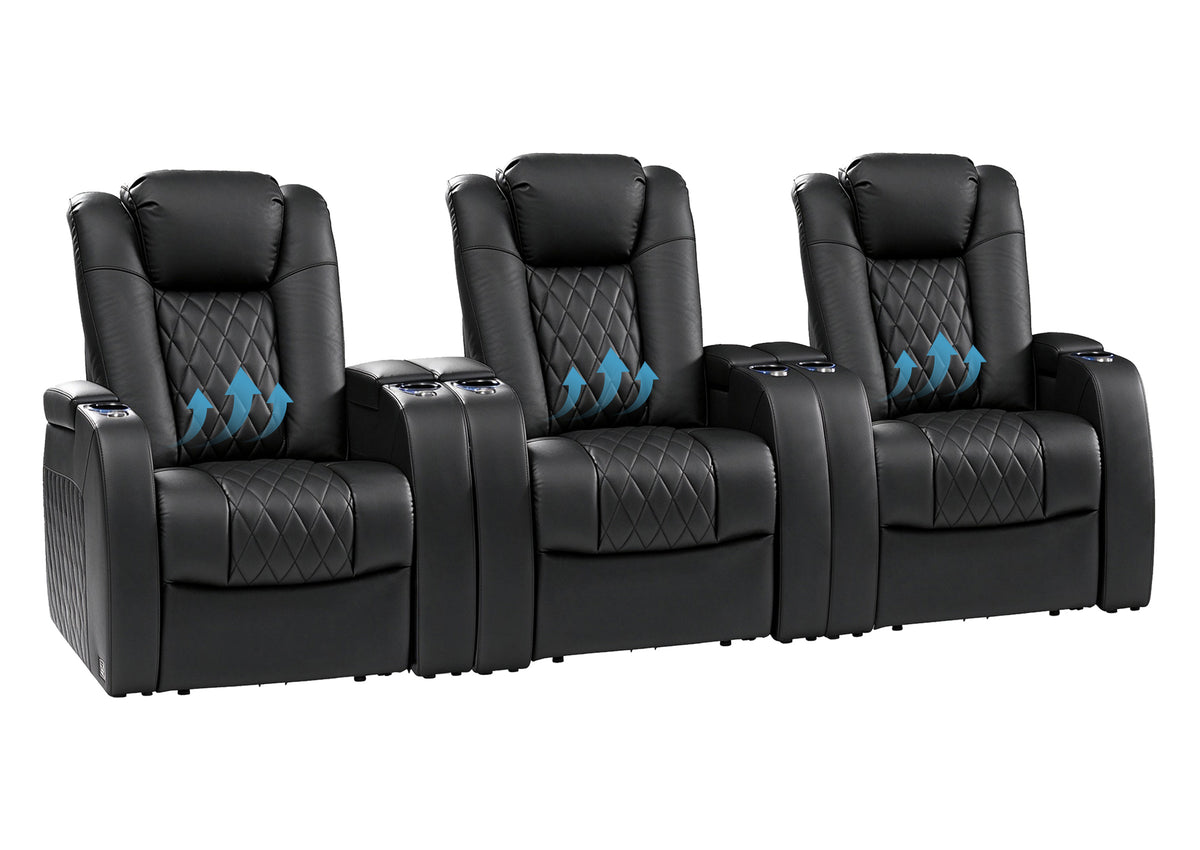
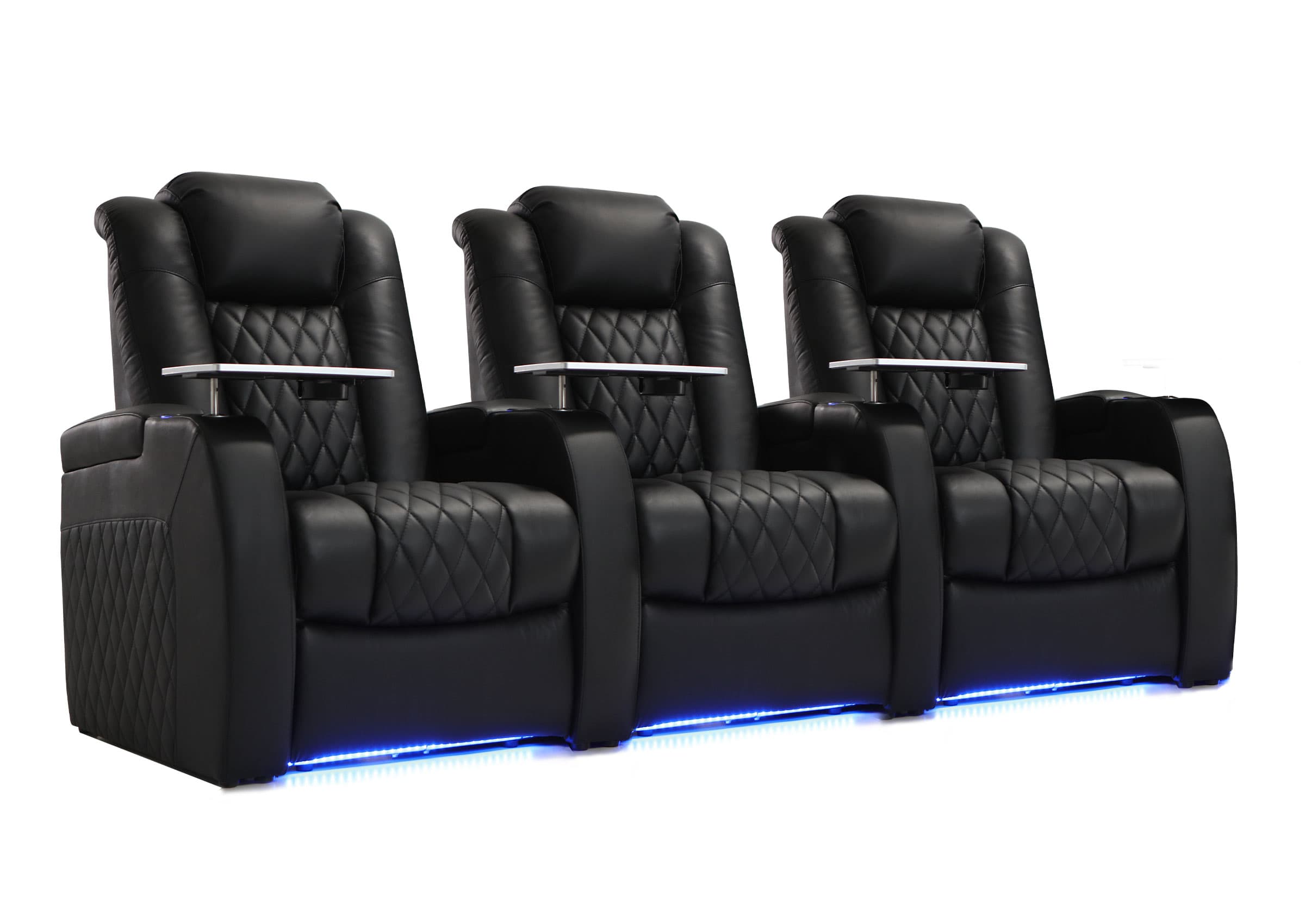
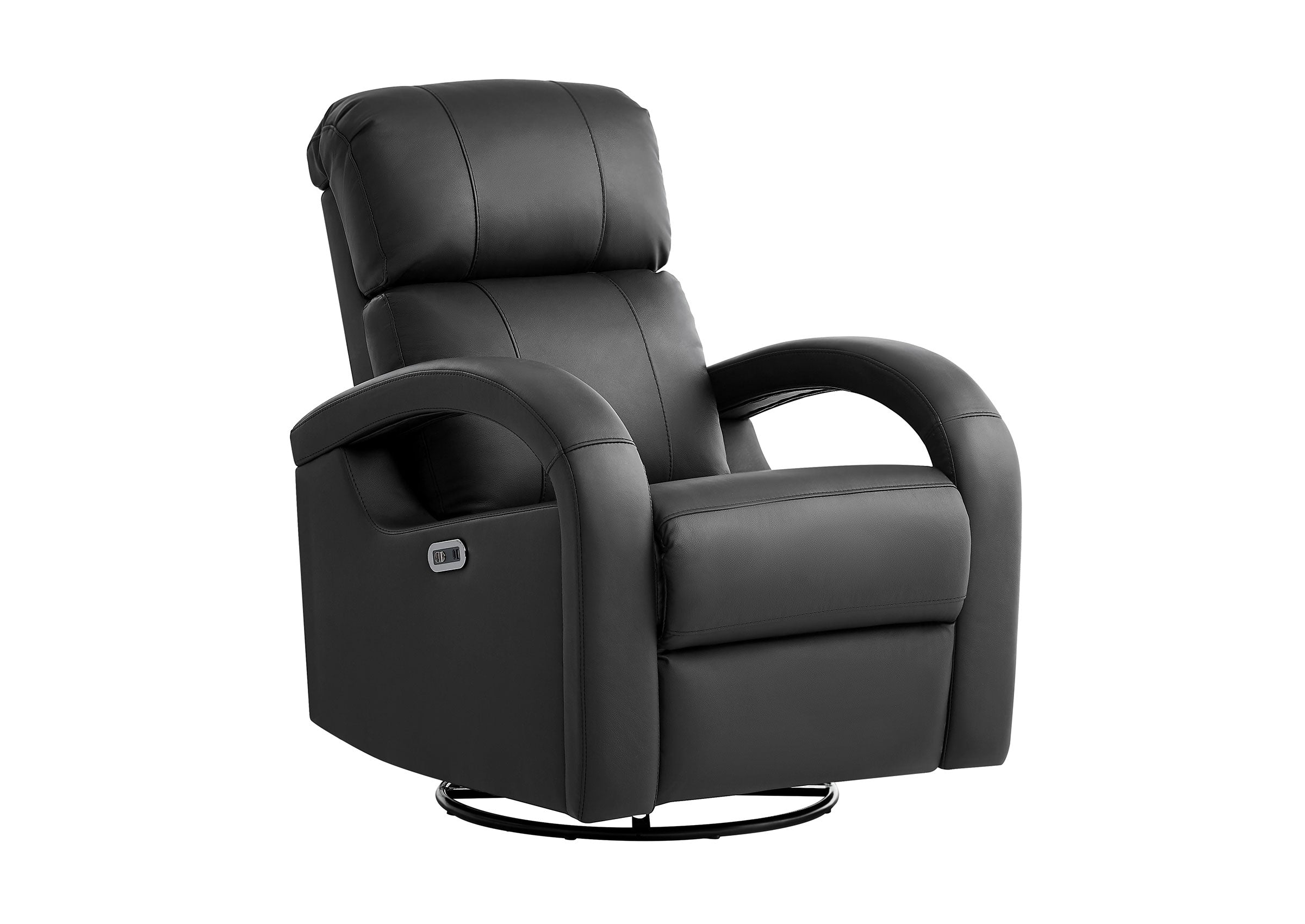
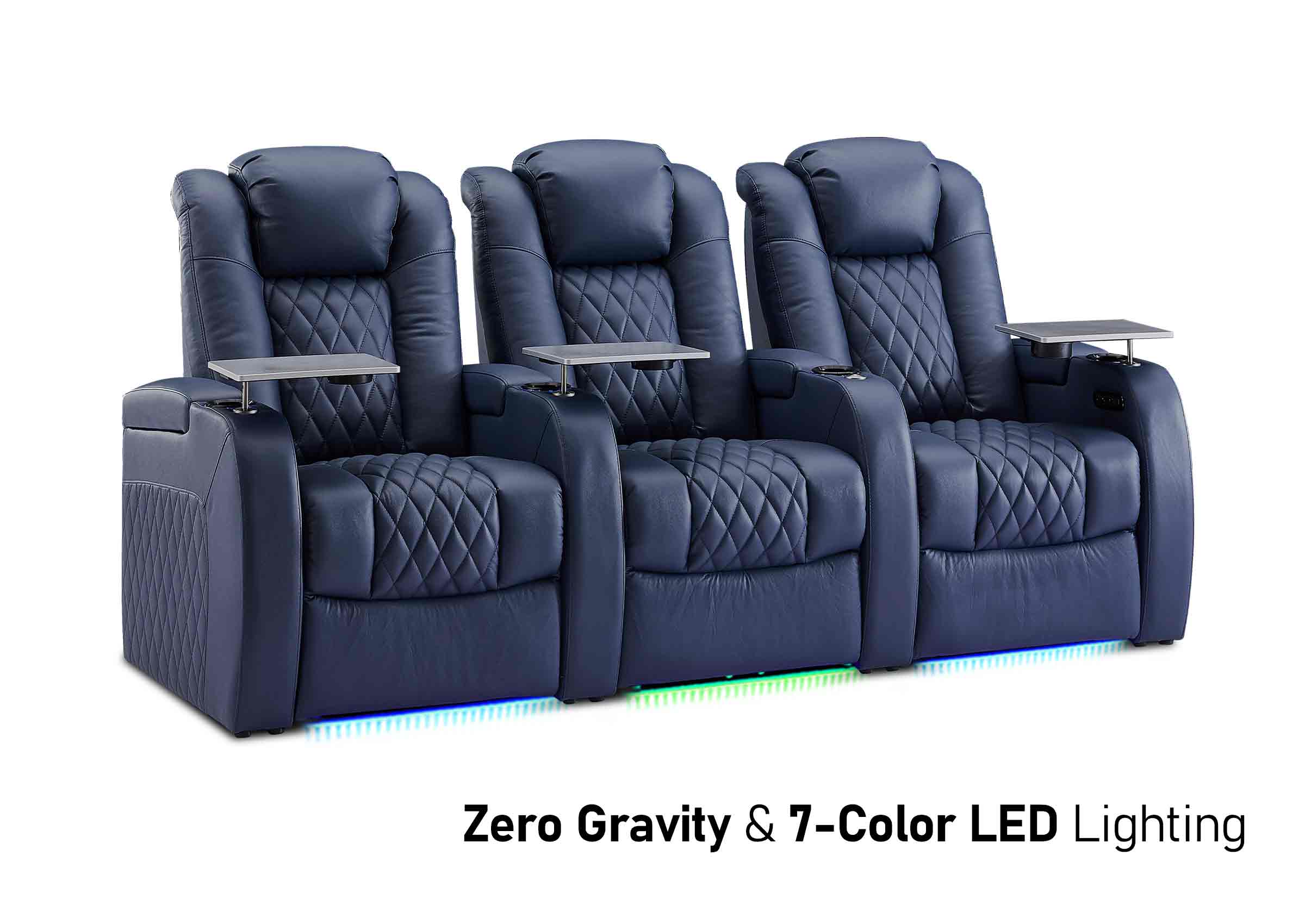
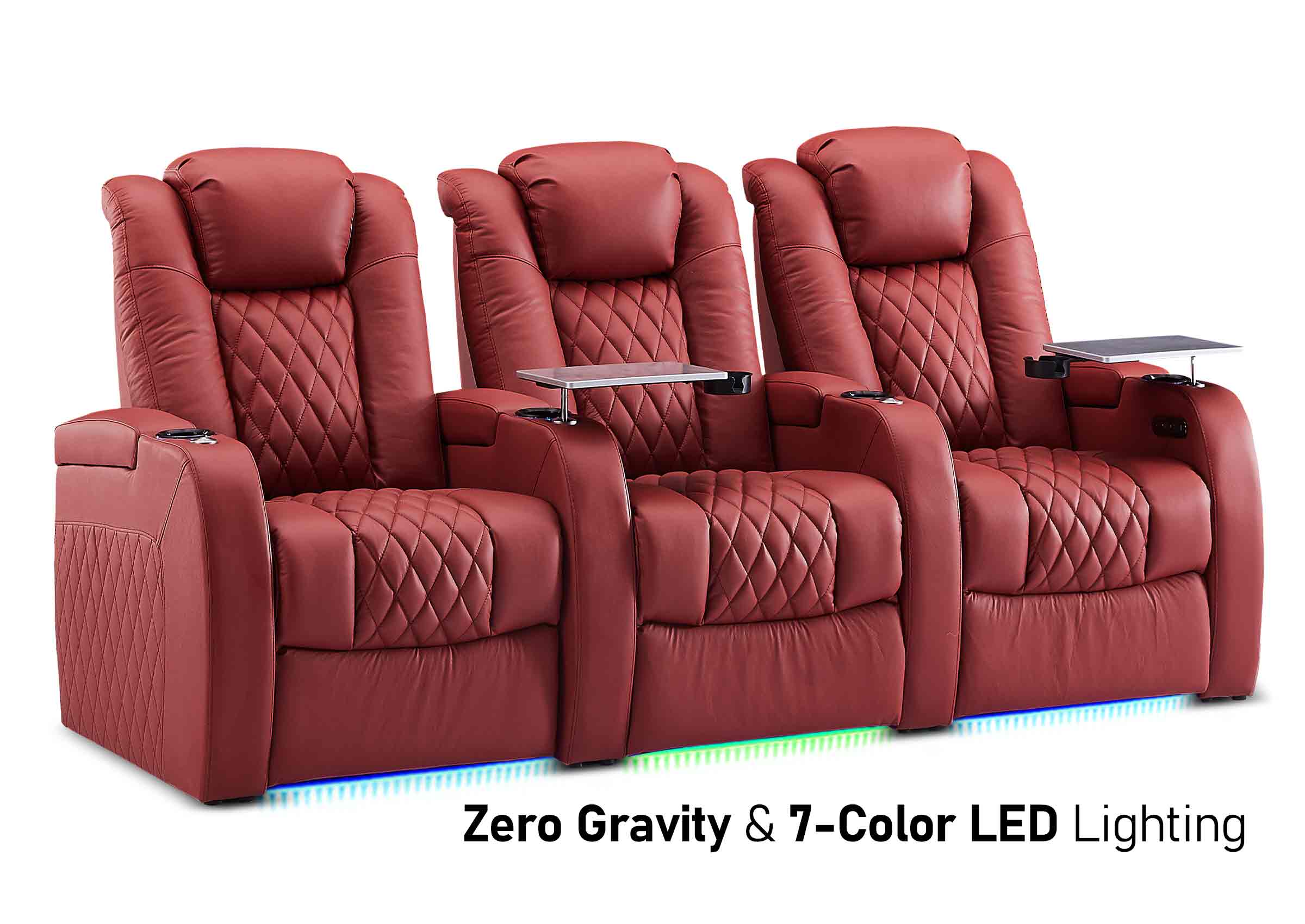
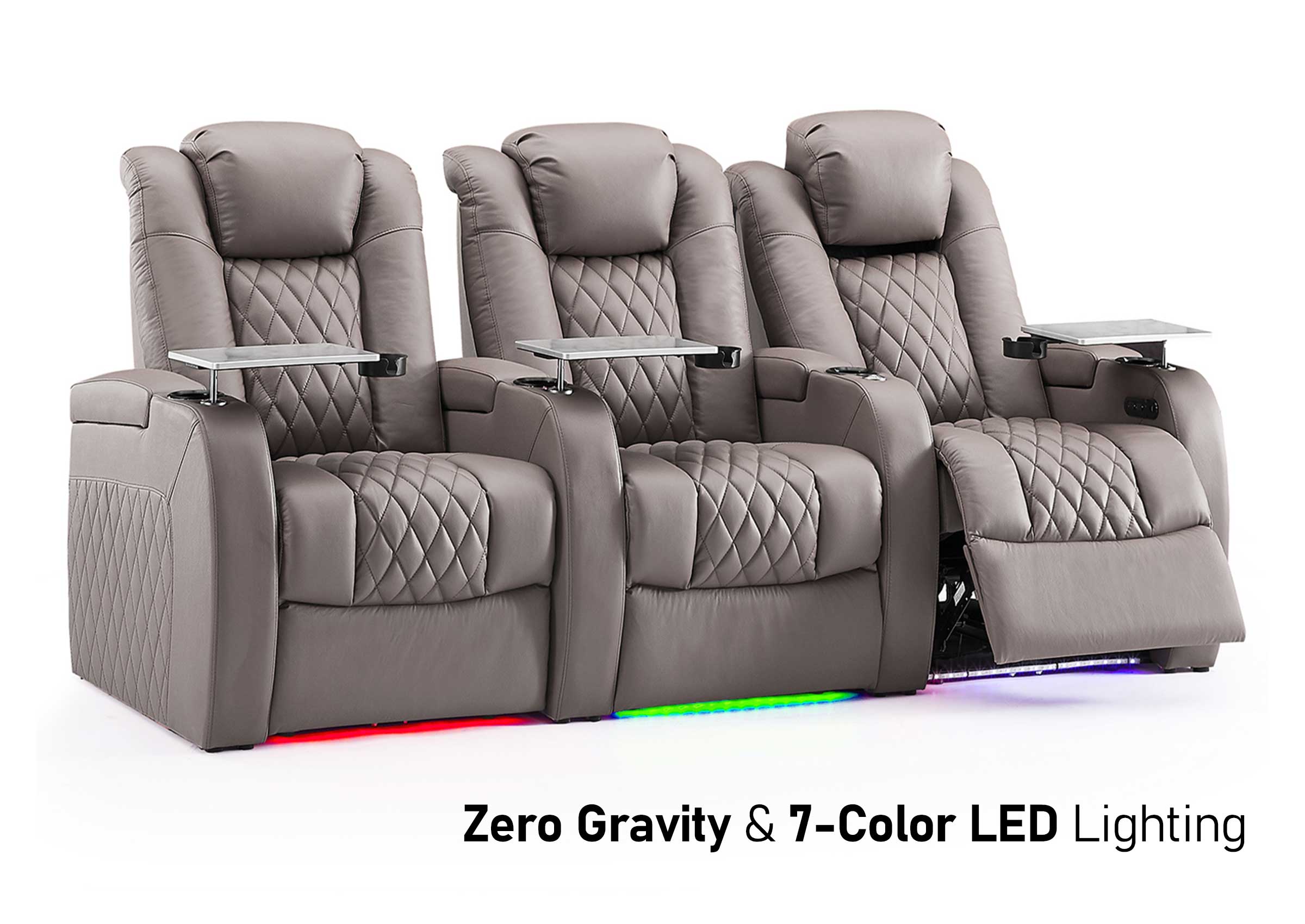
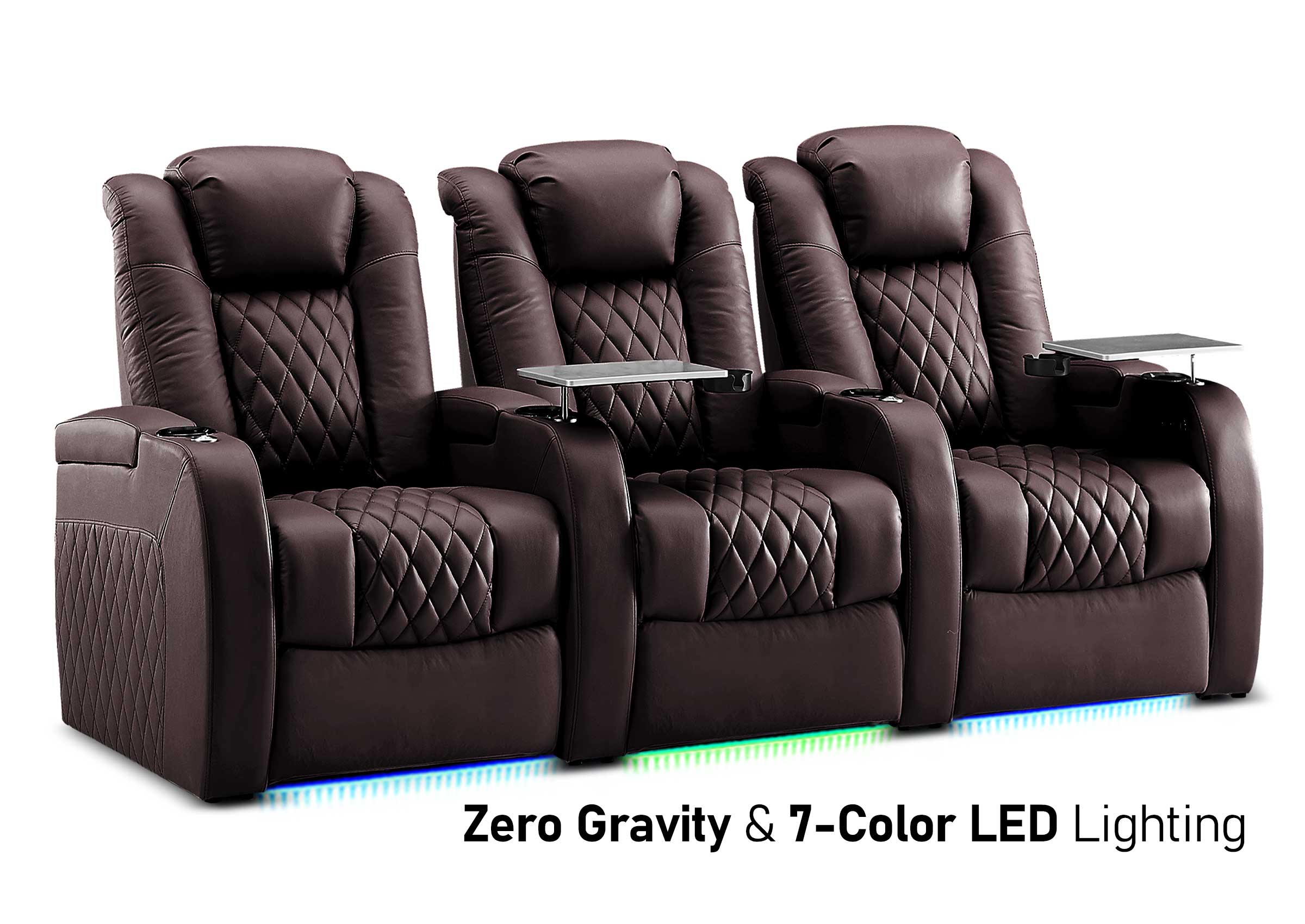

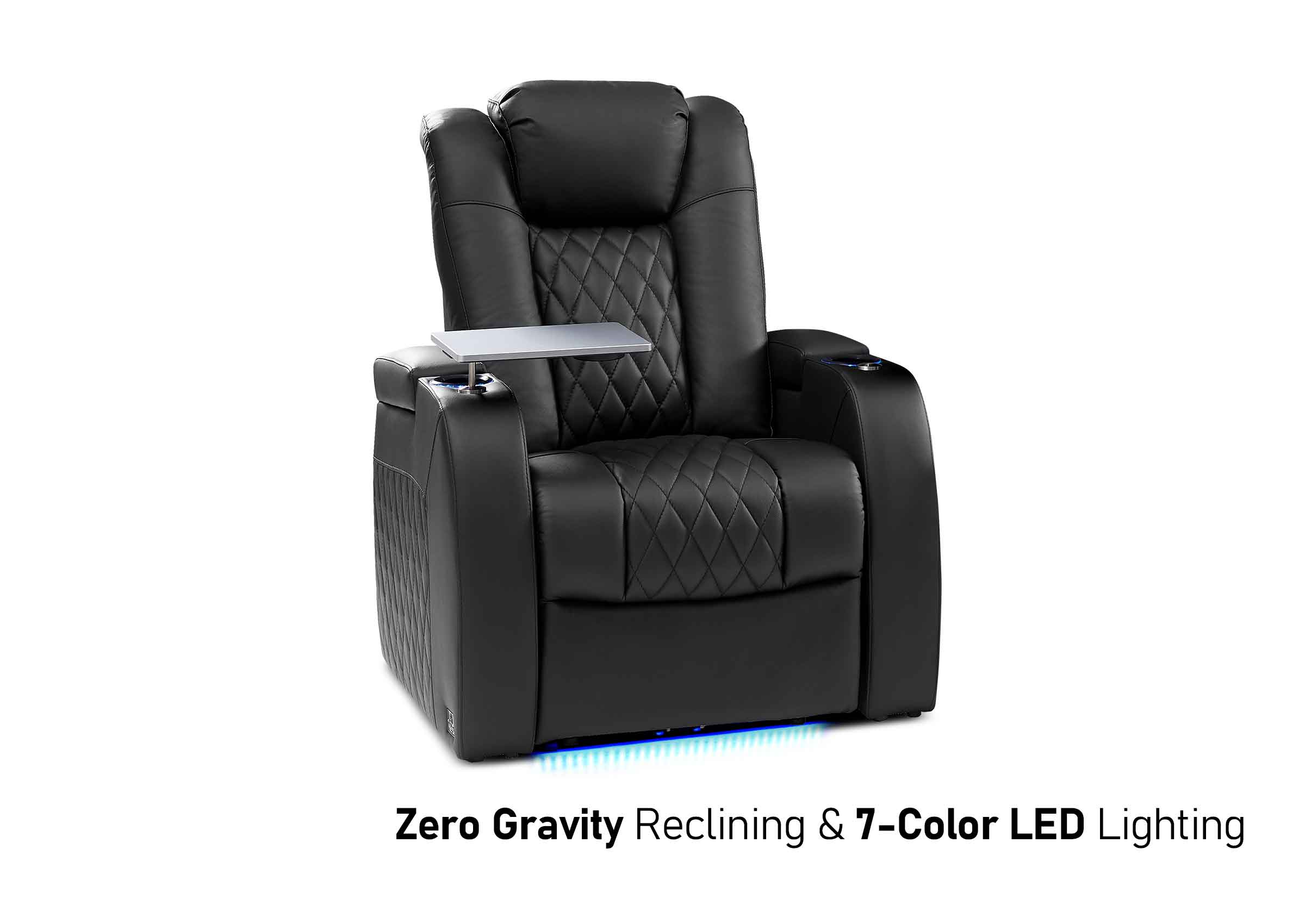
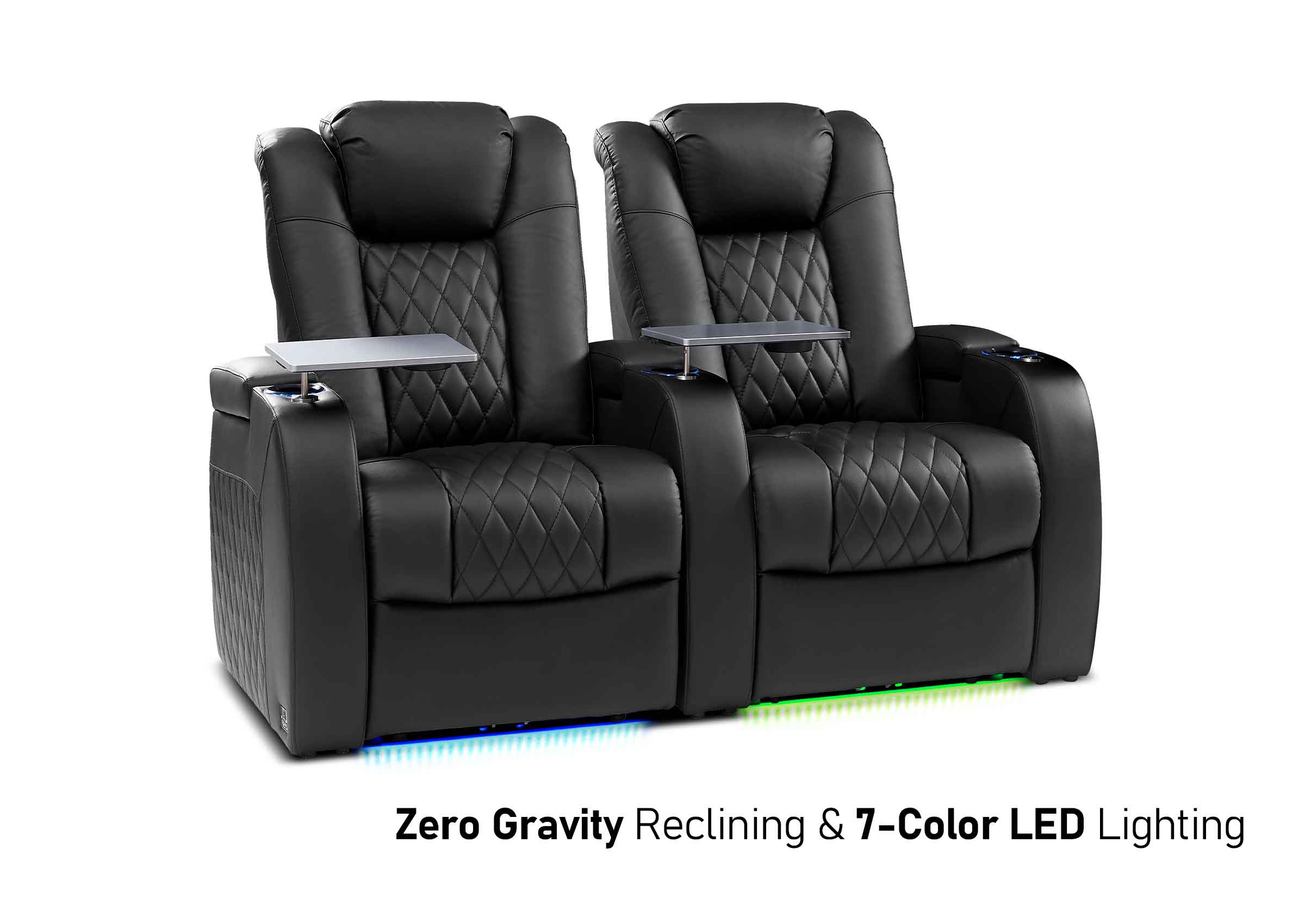
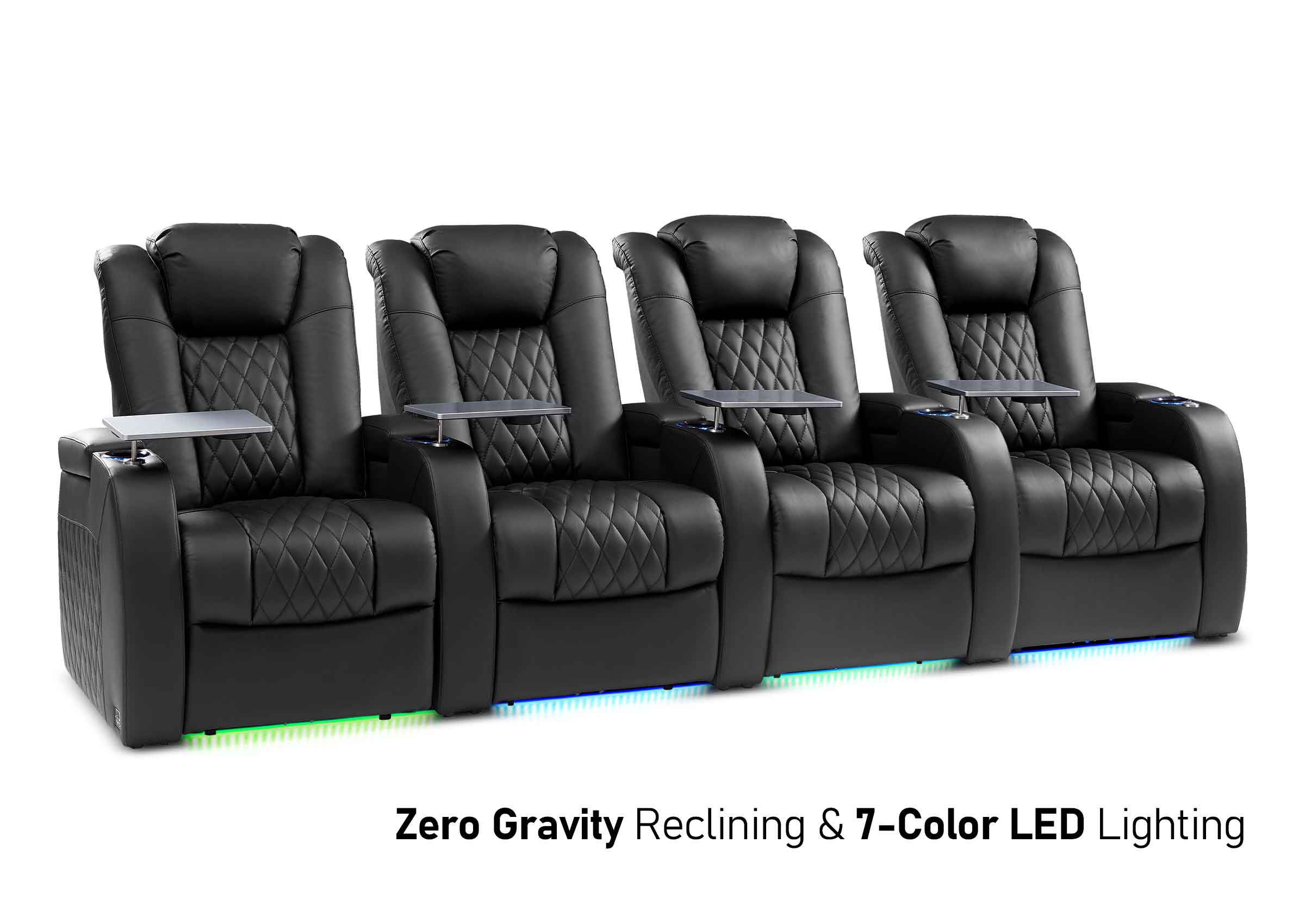
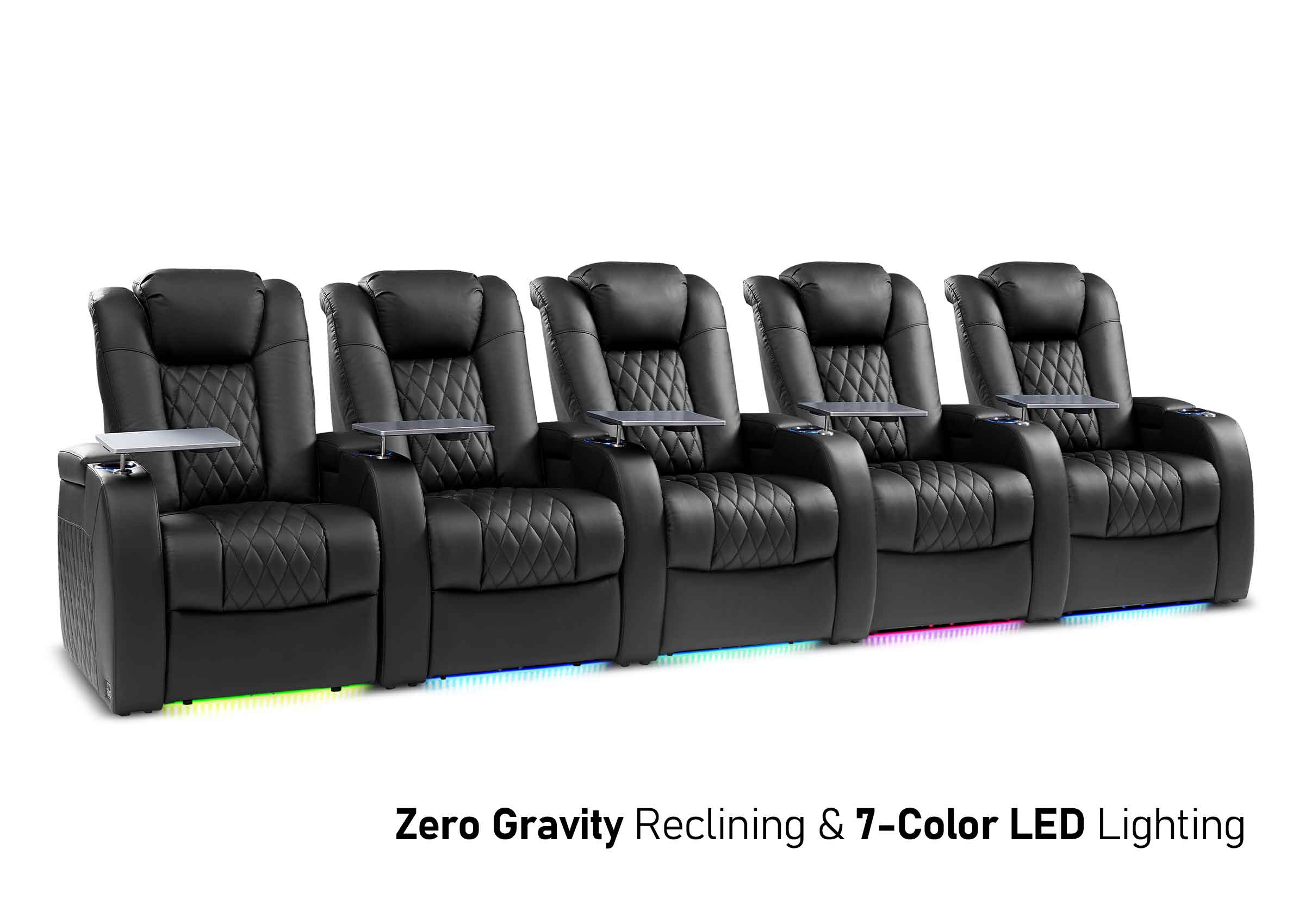
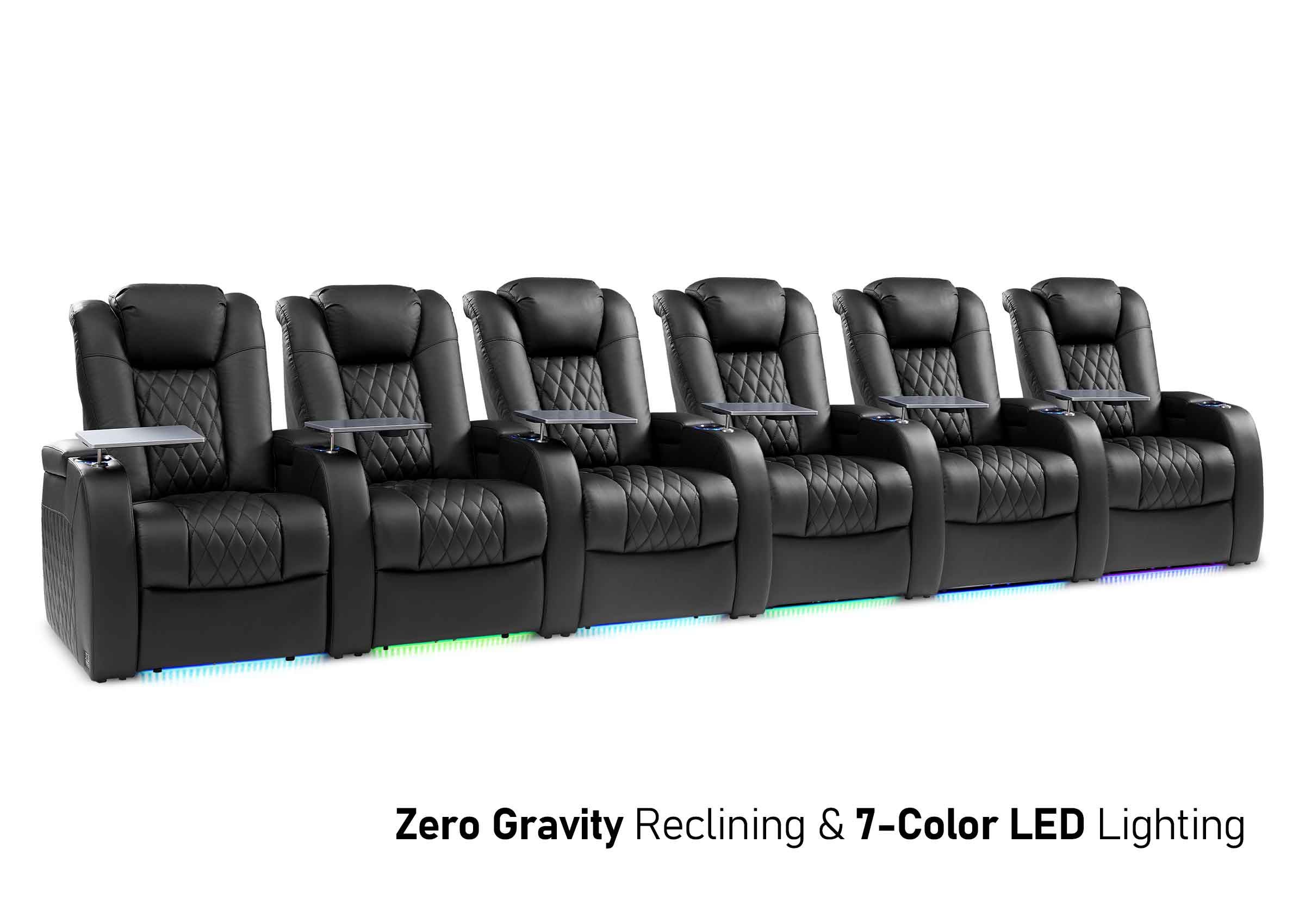
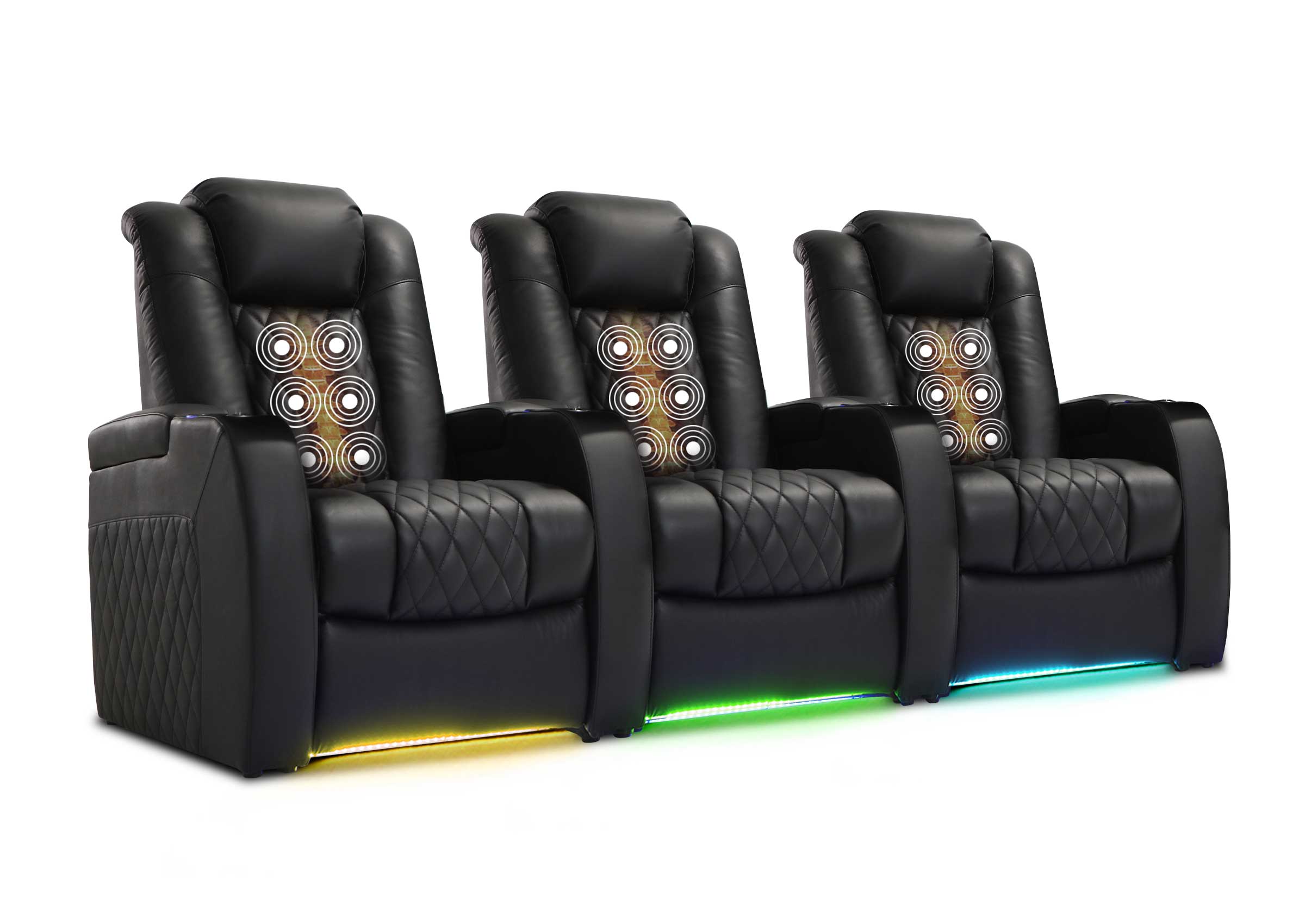
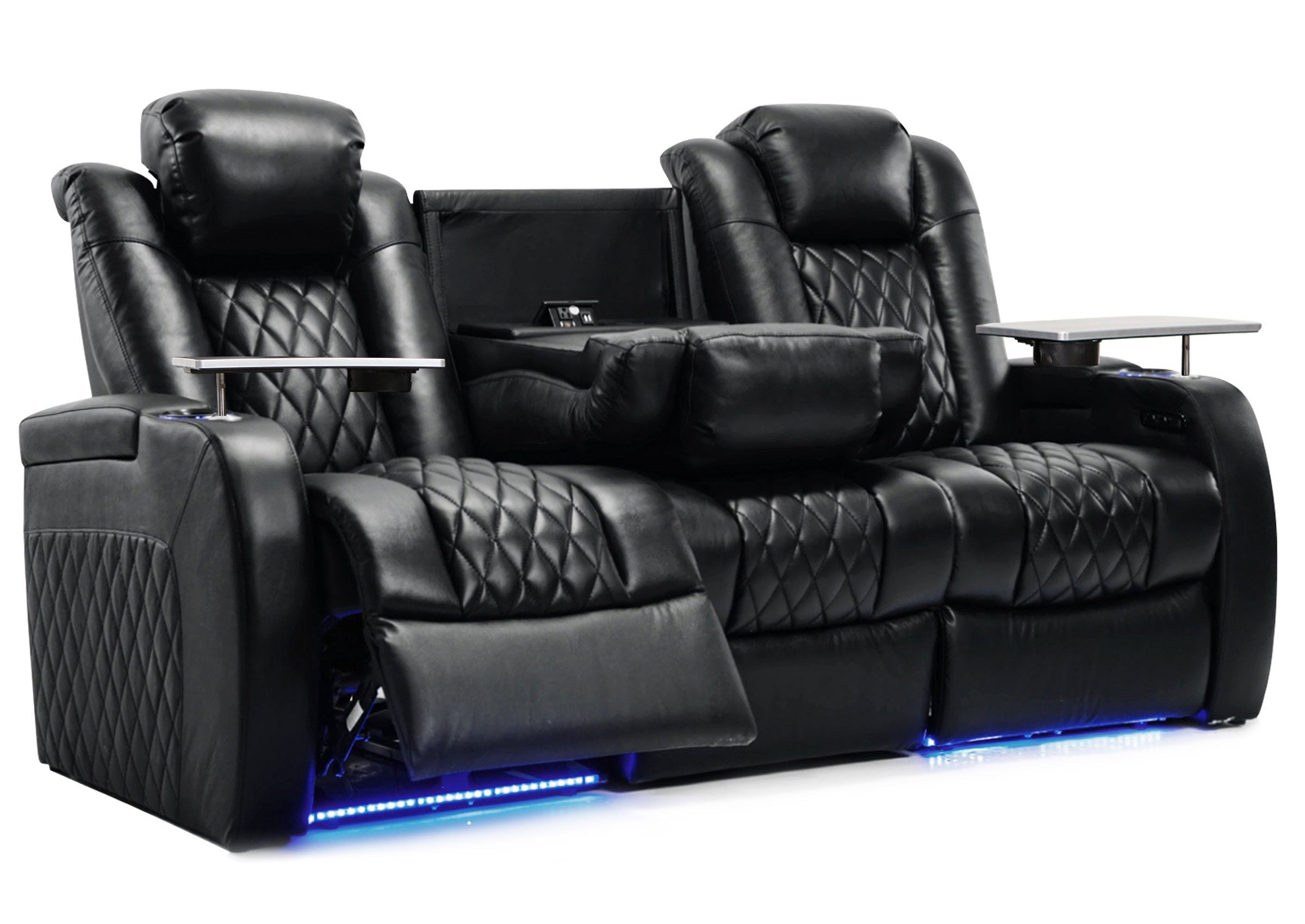
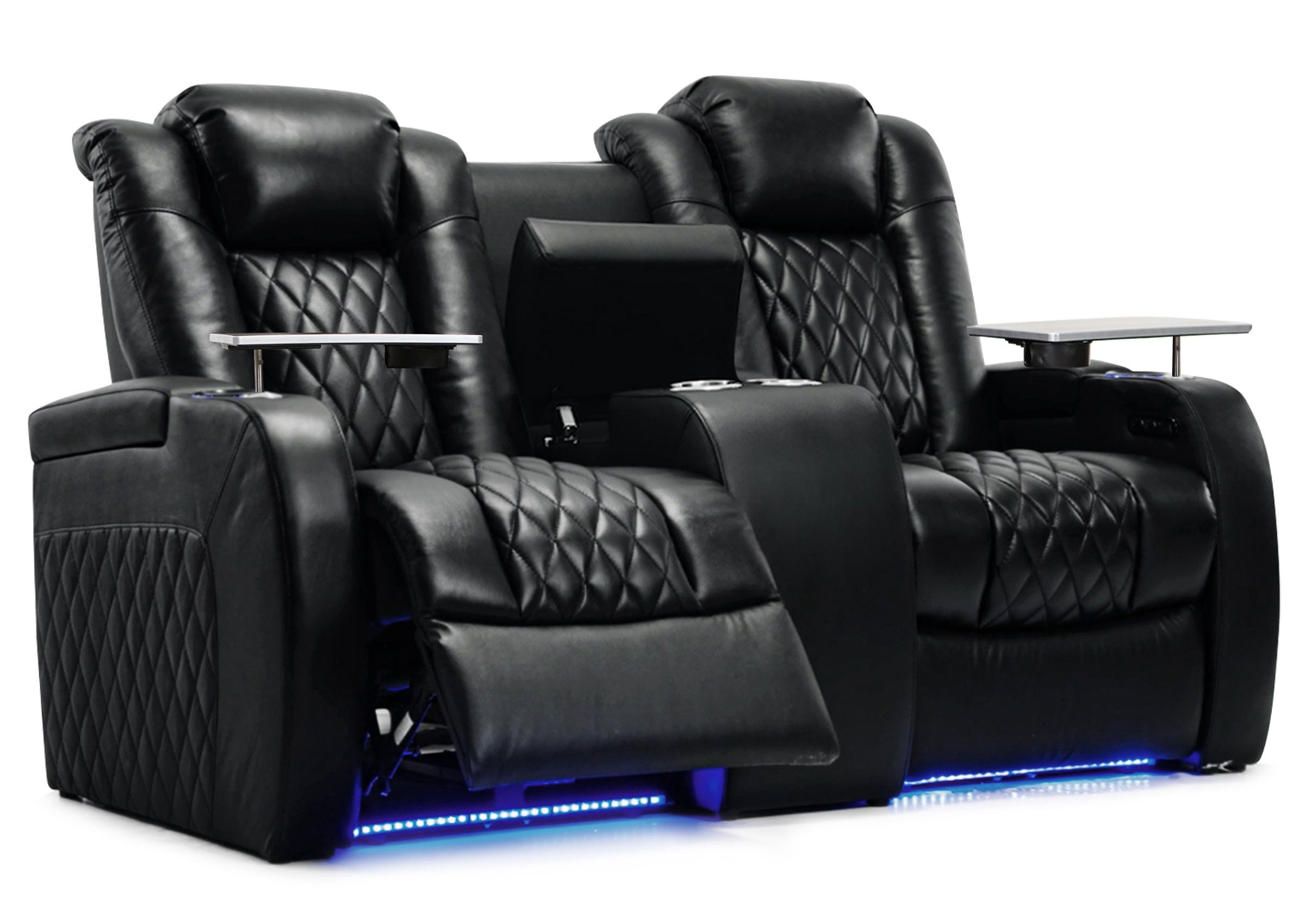


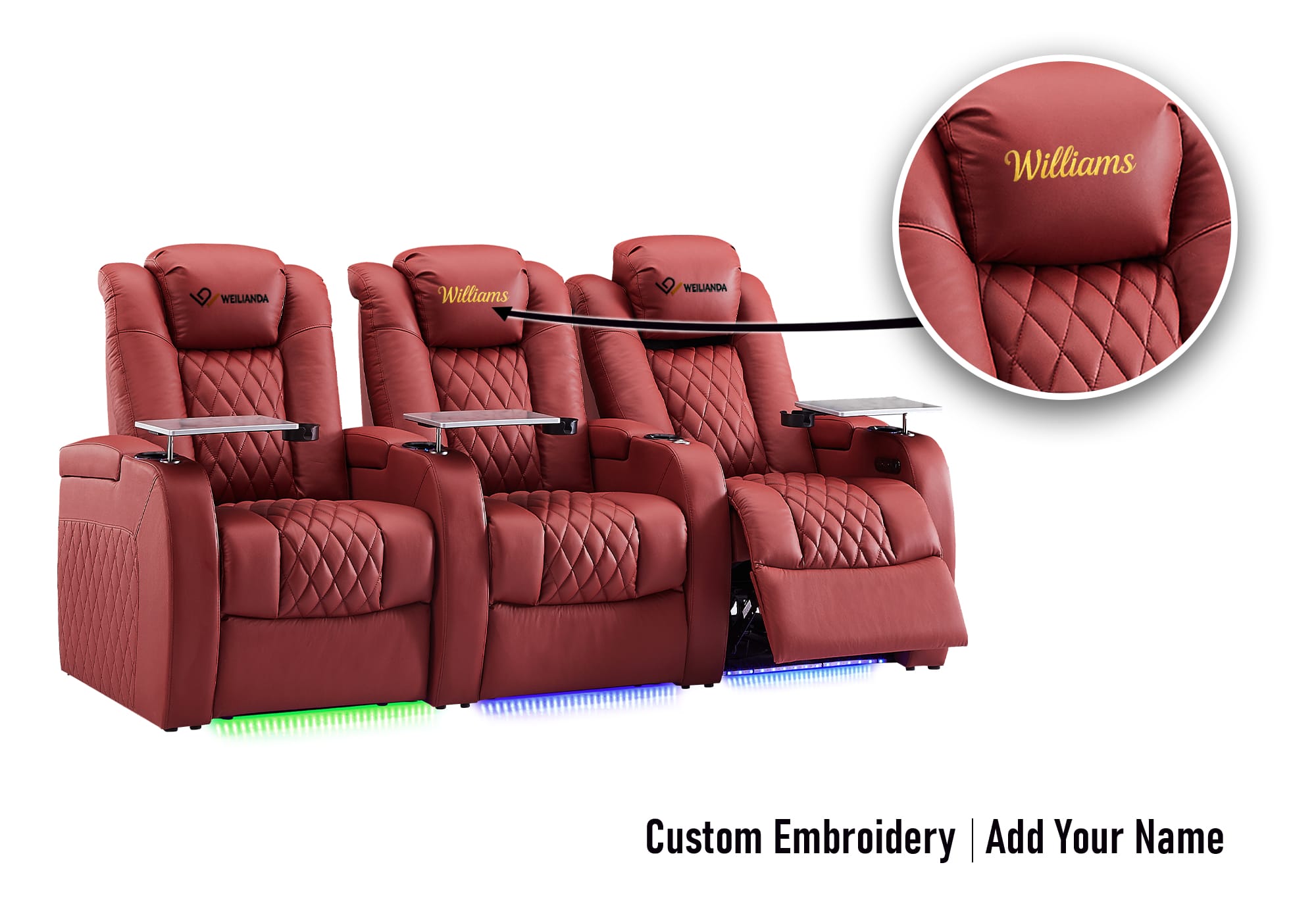

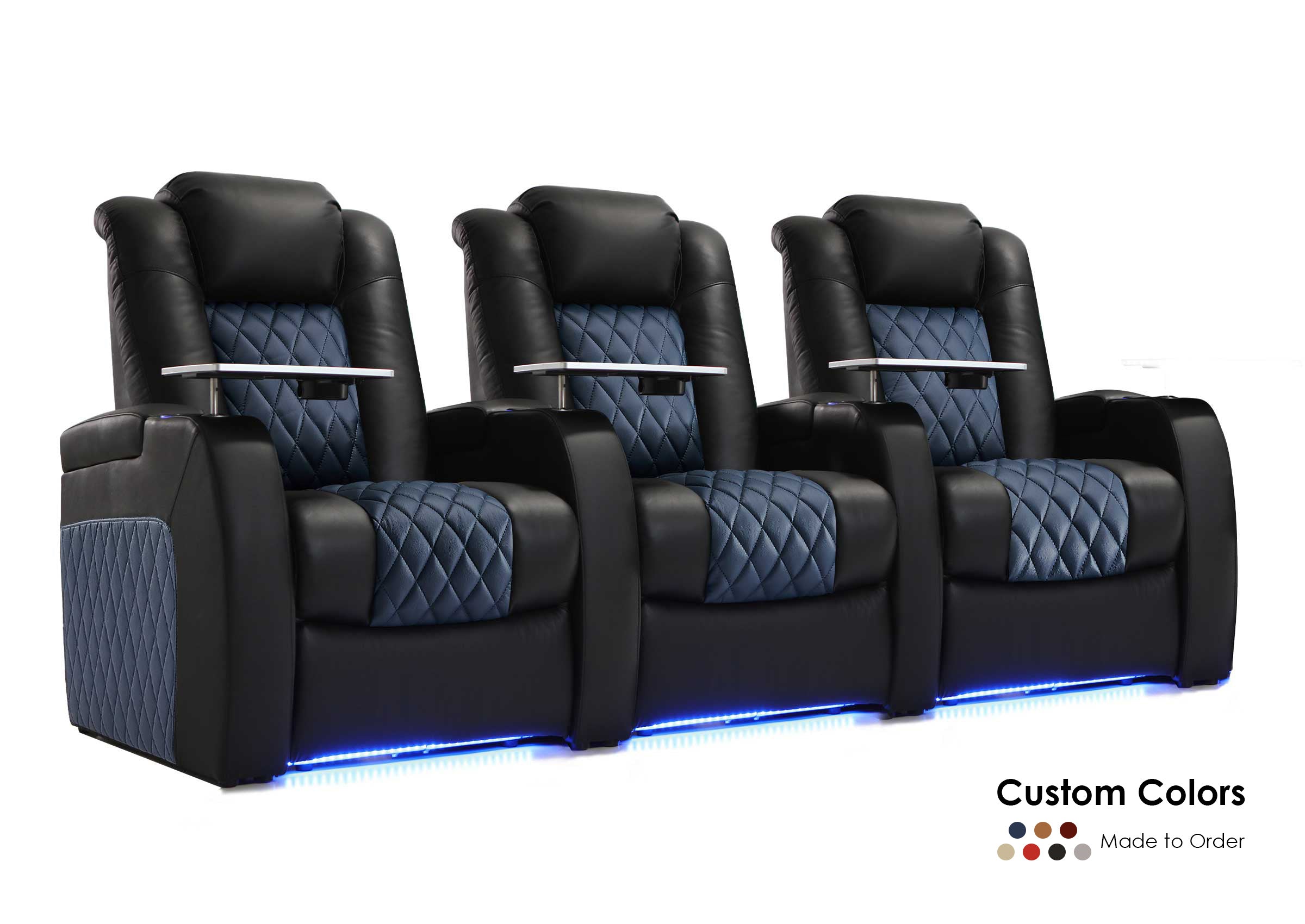

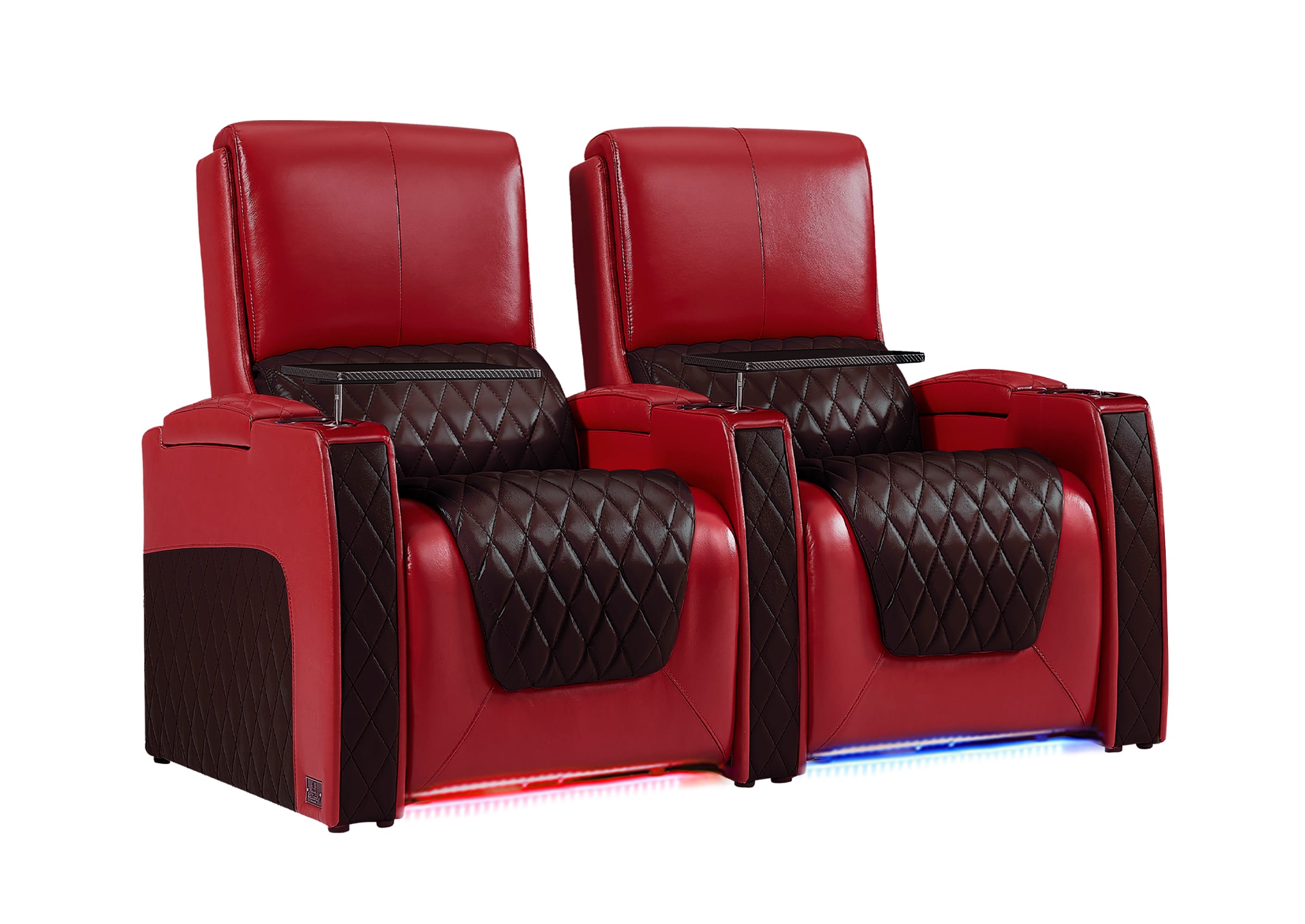
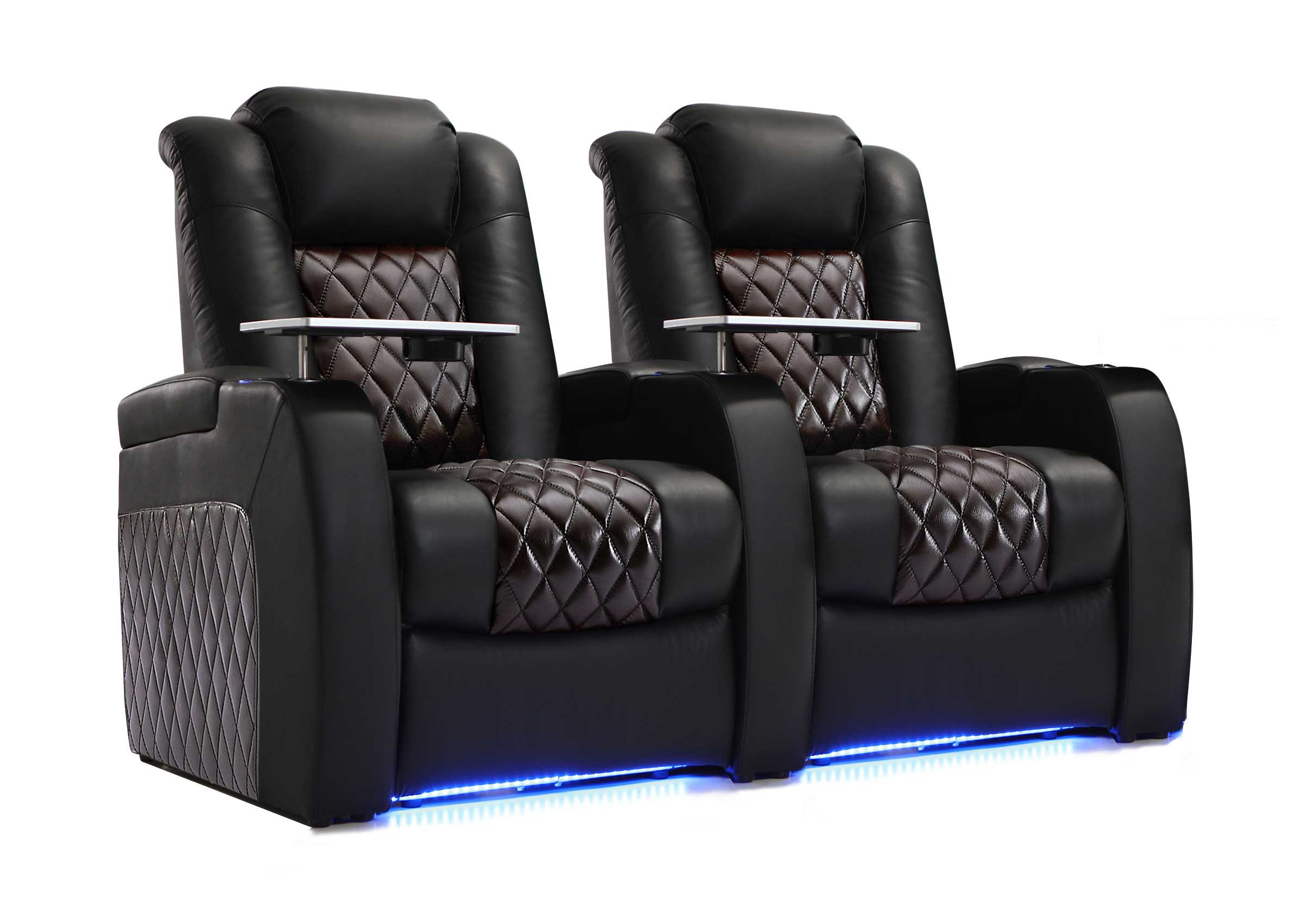
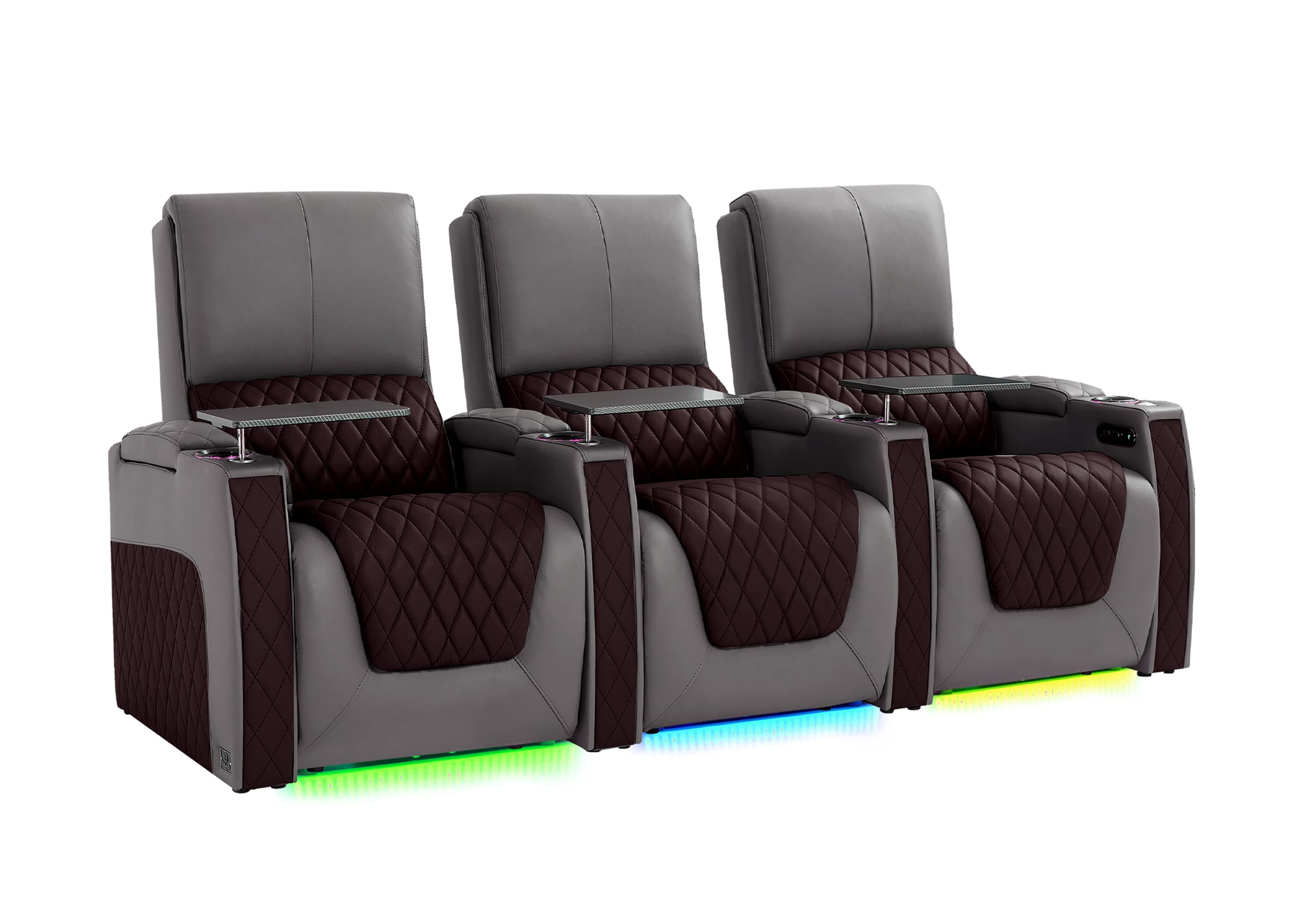
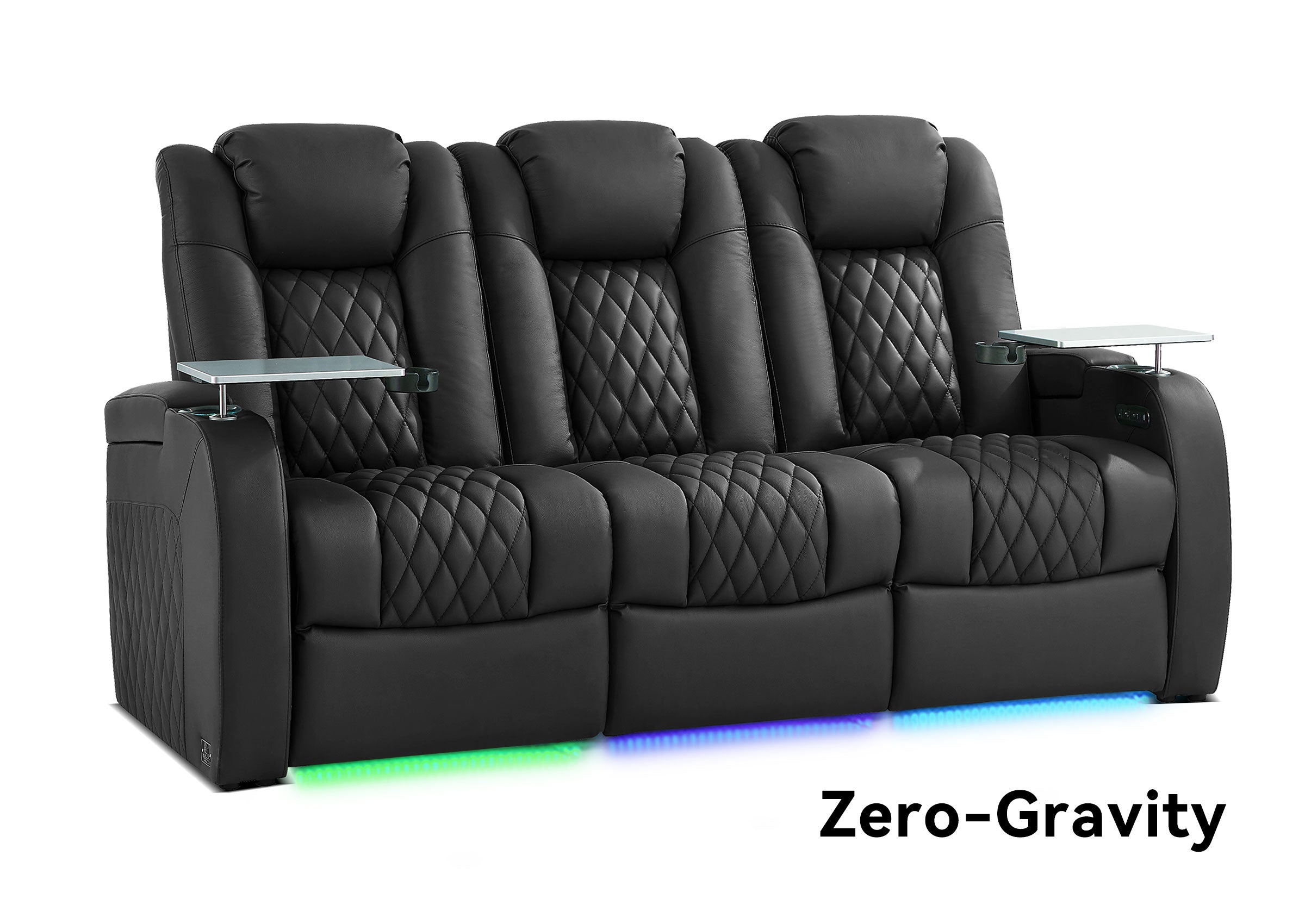
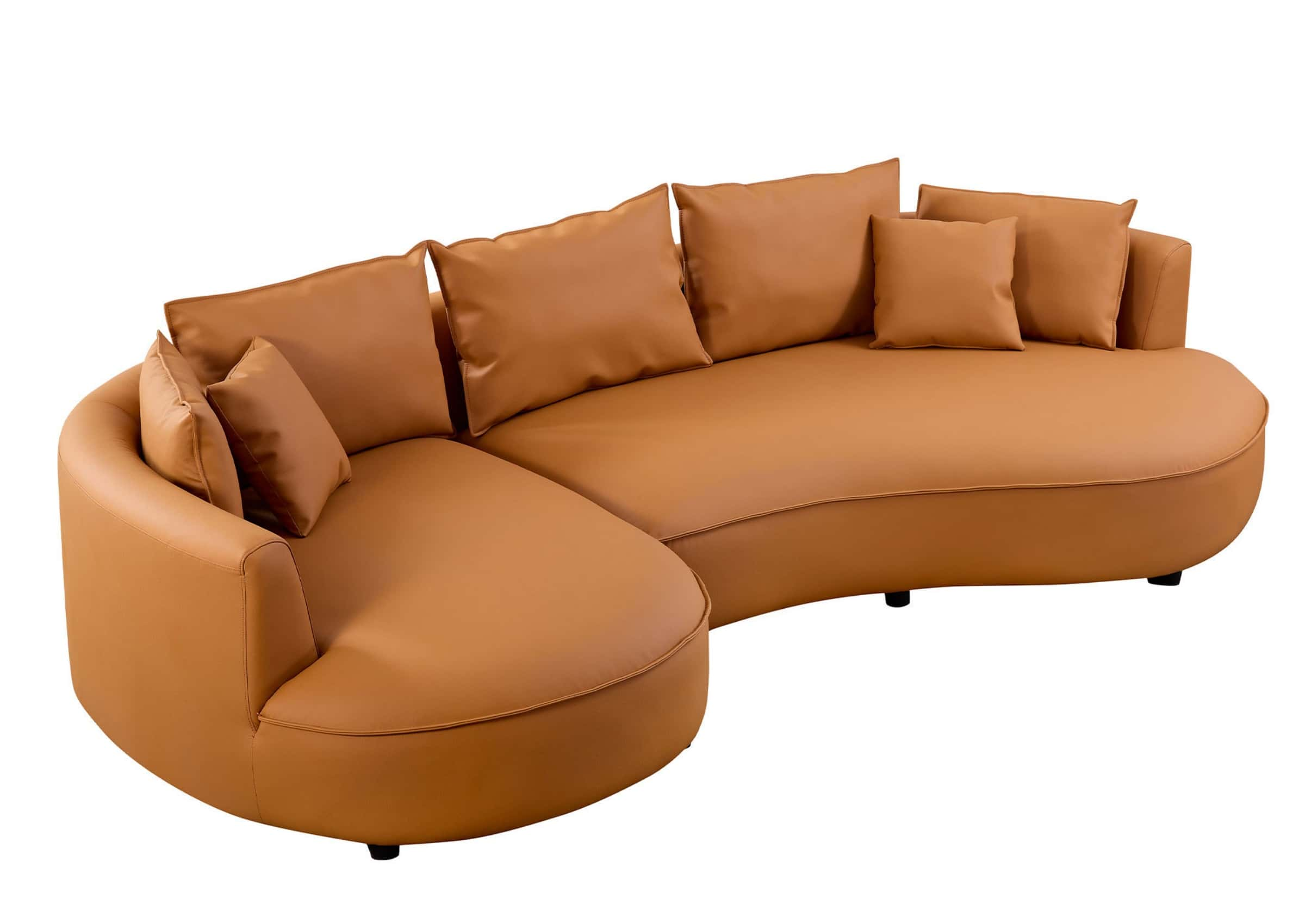


A home theater bed is usually a long, upholstered lounging seat designed for watching a screen with your legs supported along an extended surface. It may have a fixed back, a reclining backrest, or another adjustable arrangement; the word “bed” alone does not tell you how it moves or whether it is intended for overnight sleeping. Choose between it and a conventional theater recliner by checking the actual support, adjustment, and viewing position you want.
Start by asking what the particular product does. A full-length chaise, a recliner with an extended base, and a sofa that unfolds into a mattress can look similar in a photograph while solving different problems. Knowing which one you are considering makes the comfort comparison more useful.
What does “home theater bed” mean on a product page?
In cinema seating, the name generally points to a longer lounging surface rather than a standard bedroom bed. For example, Elite HTS separates theater beds from reclining chaises, sectionals, and cuddle couches. Its descriptions distinguish a full-length lounging seat from a chaise that keeps a reclining backrest while replacing the usual footrest with an extended base.
That distinction matters more than the styling. A long seat does not necessarily fold, a powered backrest does not necessarily move the leg section, and a wide cushion does not necessarily provide two independently adjustable positions.
When looking at a listing, identify which construction it shows:
- A fixed lounge or daybed-style seat, where you change posture on a surface that largely stays in place.
- A reclining chaise or bed-style lounger, with a long base and specified moving sections.
- A sleeper sofa or convertible seat, with a separate conversion intended to create a sleeping surface.
These are useful questions to ask about the product, not universal categories every seller follows. Some designs combine features. Ask for the model’s operating instructions or a demonstration if the photographs do not make the mechanism clear.

How is a theater bed different from a conventional recliner?
The main difference is how leg support and adjustment are provided. A conventional theater recliner normally has a seat, backrest, and footrest that changes position. A bed-style lounge provides an extended support surface, although its backrest or other sections may still move.
Neither description guarantees a flat sleeping surface or a particular recline angle. Compare the selected designs rather than assigning one angle or comfort level to an entire furniture category.
| Decision | Bed-style lounge | Conventional theater recliner |
|---|---|---|
| Leg support | An extended base or lounging surface; confirm usable length | A footrest that extends from the seat; confirm fit in use |
| Changing posture | May depend on cushions, body position, or a moving backrest | Depends on the available recline and adjustment controls |
| Returning to upright sitting | Check whether the deep base supports the way you sit | Check the upright seat position and footrest operation |
| Space between films | A fixed extended base continues to occupy its footprint | A retracting footrest may reduce depth when closed |
| Sharing the seat | Depends on inside width, cushion shape, and control arrangement | Depends on individual, loveseat, and console configuration |
| Overnight use | Requires confirmation for the specific product | Requires confirmation for the specific product |
A single-person theater bed can be about uninterrupted leg support rather than sharing. Conversely, a theater loveseat may let two people sit close while retaining separate reclining positions. Decide whether you need a longer support surface, less separation, independent movement, or some combination of those features.
Will the lounging position work while you watch?
Test the position you would actually use through a film. A lounge that feels inviting when you first stretch out may put your eyes lower or farther forward than your usual chair. The screen and nearby furniture stay in place while your body position changes.
Settle against the intended back support and look toward the screen. Can you keep your head supported without repeatedly lifting it? Does a pillow help, or does it push you so far forward that your legs no longer fit as expected? Try a more upright position too, especially if you also use the room for gaming or conversation.
On an adjustable lounge, confirm which control changes the backrest and what happens to the leg section. On a conventional recliner, try an intermediate position as well as fully open. Maximum recline is not automatically the position you will prefer for watching.
If the room has another row, check the view from the actual positions in both rows. A low-looking lounge is not proof that every viewer behind it can see the lower screen. Your head, cushions, backrest, and any raised furniture still affect the view. Use the occupied arrangement rather than an empty product photograph to judge it.
COMPARE THE ACTUAL CONFIGURATION
Ready to Compare Recliner Configurations?
If adjustable viewing positions suit your household, compare recliner configurations and confirm the selected seats’ controls, leg support, and operating footprint.
Which measurements tell you whether a theater bed fits?
Ask for both the room footprint and the usable support surface. Overall depth can include a thick back, frame, or headrest; it is not automatically the length available for your body. Overall width can include arms and side structures that are outside the lounging area.
For the exact configuration, confirm:
- Overall width and depth in its normal and maximum operating positions.
- Usable supported length with the intended back cushions in place.
- Clear inside width, including any center division or shared cushion arrangement.
- Seat height and how you enter, turn, and get up from the intended position.
- Movement clearances and the location of controls and power connections, where applicable.
A dimension drawing should show which measurement is which. If the usable length is not listed, ask the supplier to identify where it starts and ends with the normal back cushions in place, then try the actual seat if possible. Do not estimate it by subtracting an assumed cushion thickness from a photograph.
The room comparison also needs matching conditions. Draw the bed-style lounge as used, then draw the recliner with its footrest and backrest in the positions you expect to use. Include the route to each seat and any side table. A retracting footrest can free space between films, but the room must still accommodate it while someone is watching.
Can a home theater bed replace a guest bed?
Only treat it as a guest bed when the specific product is intended for that use and its sleeping arrangement suits the guest. The words “bed,” “lie-flat,” or “chaise” do not establish the same thing as a sleeper mechanism, mattress specification, or suitable overnight support.
Some seating systems offer a separate sleeping conversion. Fortress, for example, lists hide-a-beds among its mechanism options. That illustrates why you should ask about the actual sleeping feature rather than infer it from an extended footrest or long cushion.
If overnight use matters, confirm the supported sleeping dimensions, gaps or seams, mattress or cushion requirements, conversion procedure, and the manufacturer’s intended use. Keep those questions separate from whether the seat is pleasant for a movie. You may enjoy watching on a lounge while preferring a different arrangement for guests.
The room then needs its own guest-stay plan, including the open sleeping footprint, bedding, luggage, and privacy. Choosing furniture is one part of that job; the theater-bed label does not complete it.
Which option should you choose?
A bed-style lounge is worth considering when you actively want a long support surface and like the viewing posture it provides. It can suit someone who wants to stretch out without relying on a conventional extending footrest. If the design is fixed, be comfortable with both its permanent depth and the way you sit upright on it.
A conventional theater recliner is a stronger starting point when you want to switch between upright and reclined positions using the seat’s controls, or when closing the footrest is useful between activities. Confirm the selected model’s headrest, backrest, and leg adjustment; independent movement should never be assumed from the word “power.”
For two viewers, check the relationship between their positions. Can one sit upright while the other leans back? Is the center open, divided, or shared? A product can look like one broad bed while containing separate mechanisms—or offer one shared surface with much less independent adjustment.
Before deciding, put three things beside the product photograph: a drawing of the usable surface and full footprint, an explanation of what moves, and confirmation of the intended use. If those details match your normal viewing posture and room, the choice becomes much clearer. Buy the support and operation you will use, rather than expecting the name to settle the decision.
Home Theater Bed FAQ
Is a home theater bed meant for one person or two?
A home theater bed can be a single-person lounger or a wider shared seat, depending on the design. Check the intended number of users, clear inside width, and cushion arrangement for the selected model. Overall width alone does not tell you how much supported space each viewer will have.
Can two people use different reclining positions on a theater bed?
Only if the selected design provides separate moving sections and controls. A shared cushion or a wide lounging surface does not establish independent adjustment. Ask whether one viewer can sit upright while the other reclines, and request a demonstration of that exact configuration.
How can I tell whether a theater bed is long enough for me?
Ask for the usable supported length with the normal back cushions in place, then check where your head, back, and feet would rest in your preferred viewing position. A product's overall depth includes its frame and back structure, so it cannot substitute for that measurement. If possible, try the seat with the cushions and backrest arranged as you would use them.
What should I request if I cannot try the seat before ordering?
Request a dimension drawing, photographs showing the support surface with its normal cushions, and a video demonstrating each adjustment. Ask the supplier to identify the usable length, inside width, and maximum operating footprint. If overnight use matters, request the manufacturer's intended-use information as well; a reclining demonstration alone does not establish suitability for sleeping.
Confirm the Right Seating Configuration for Your Room
Before ordering a bed-style lounge or recliner, check that its usable support surface, moving sections, and operating footprint match your viewing posture and room. Keep the dimension drawing and adjustment details together so you can compare the actual configurations.
If you are considering Weilianda recliners, share your room dimensions, number of viewers, preferred viewing posture, and any need for separate reclining positions with Weilianda Support, or email leon@weiliandahome.com. Ask the team to confirm the selected configuration's controls, leg support, and operating dimensions before you order.