



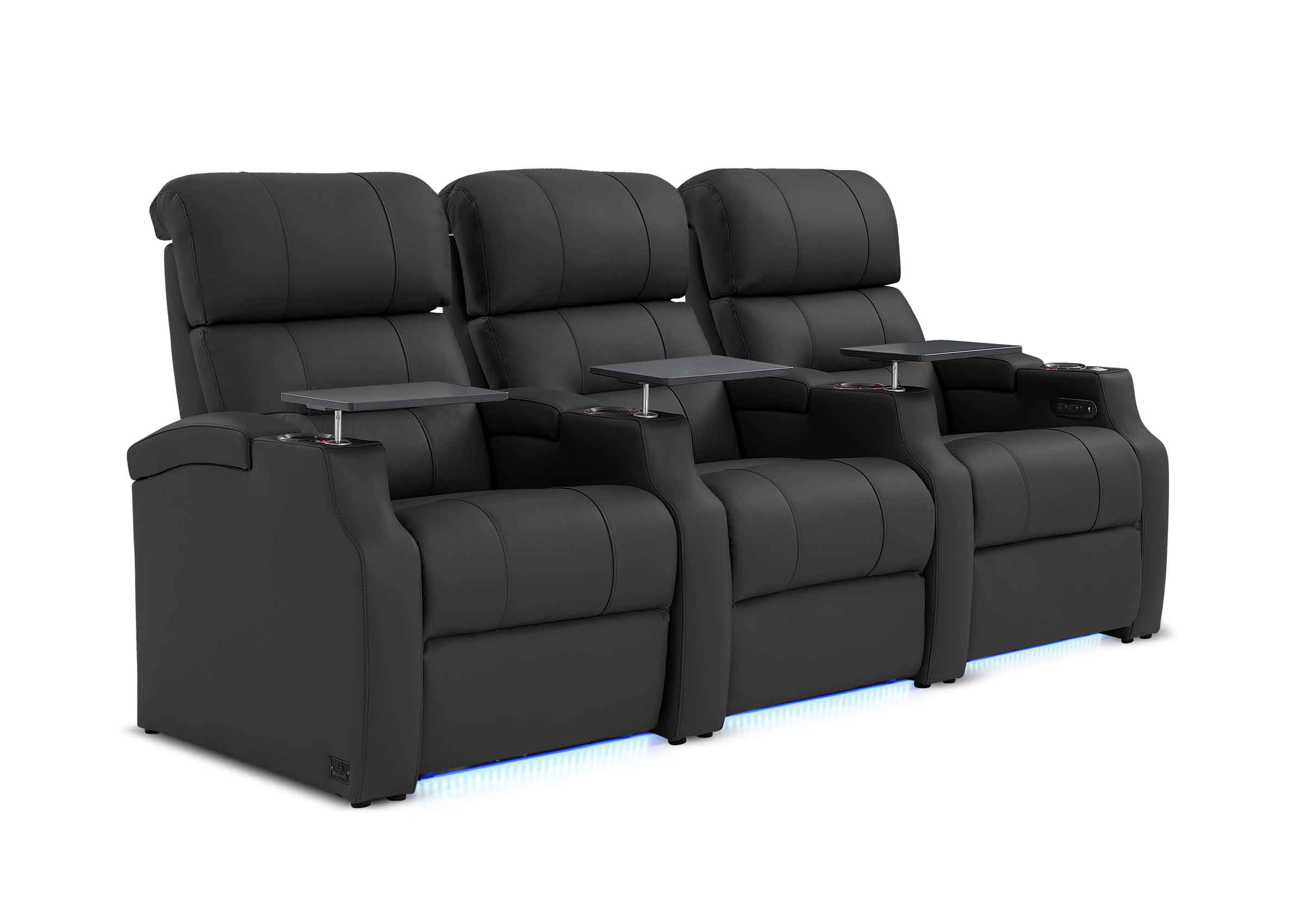
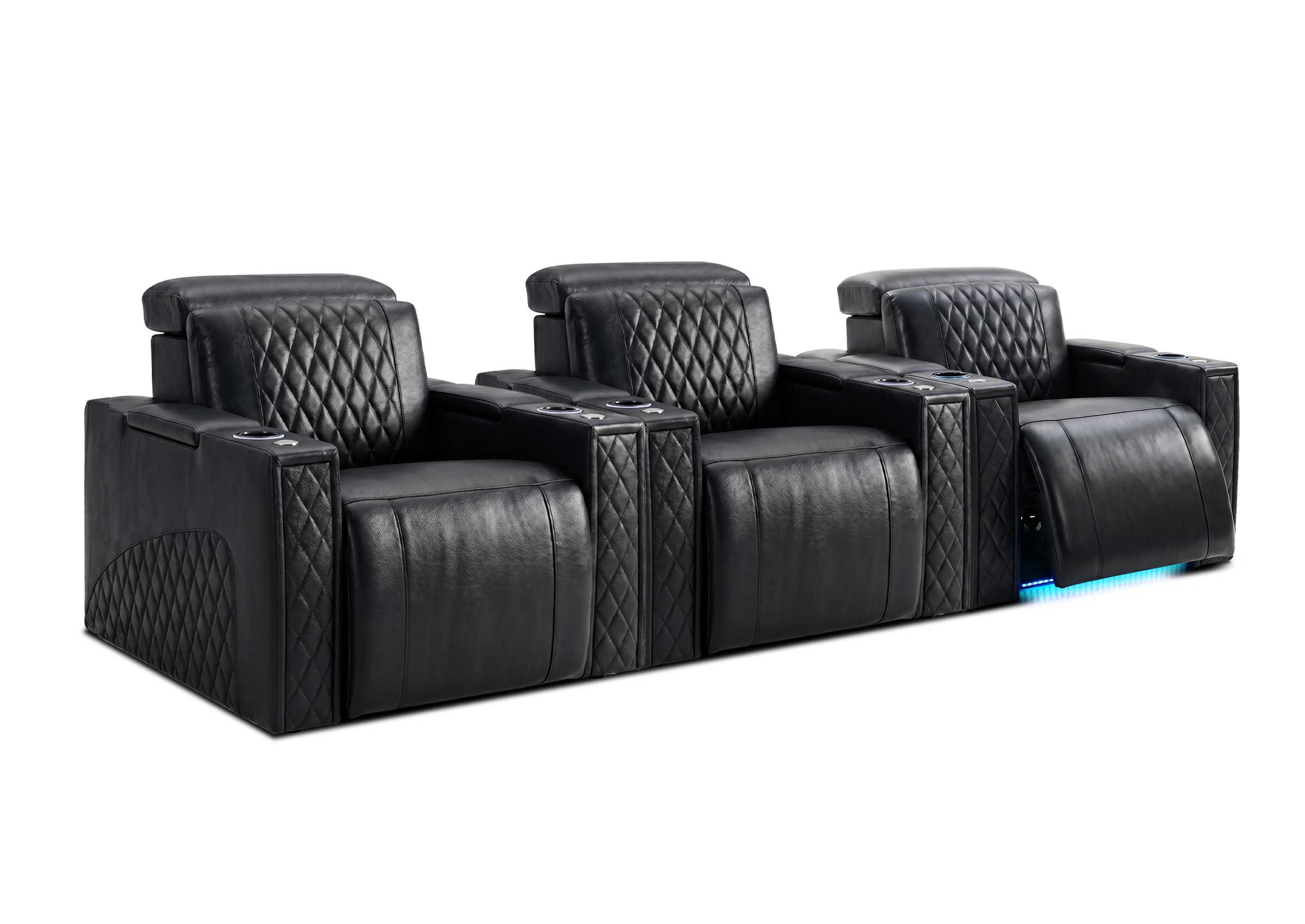

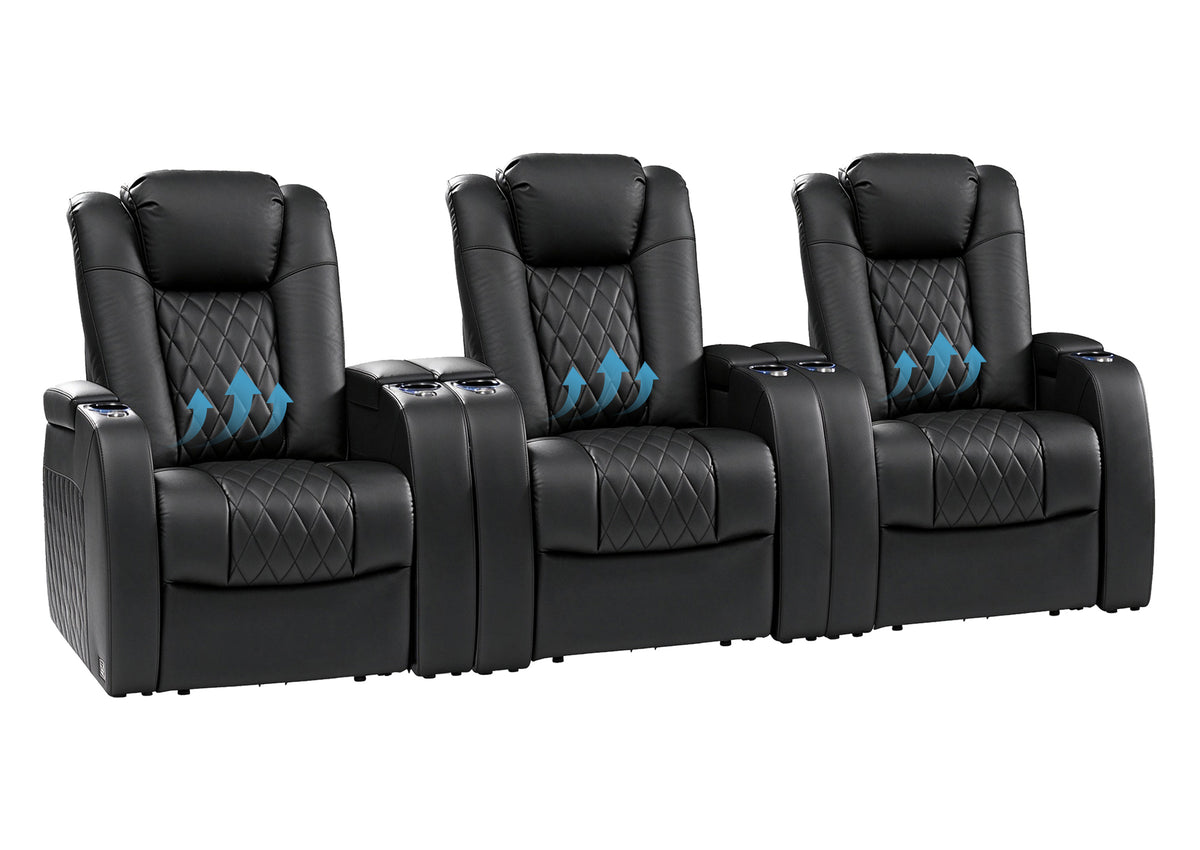
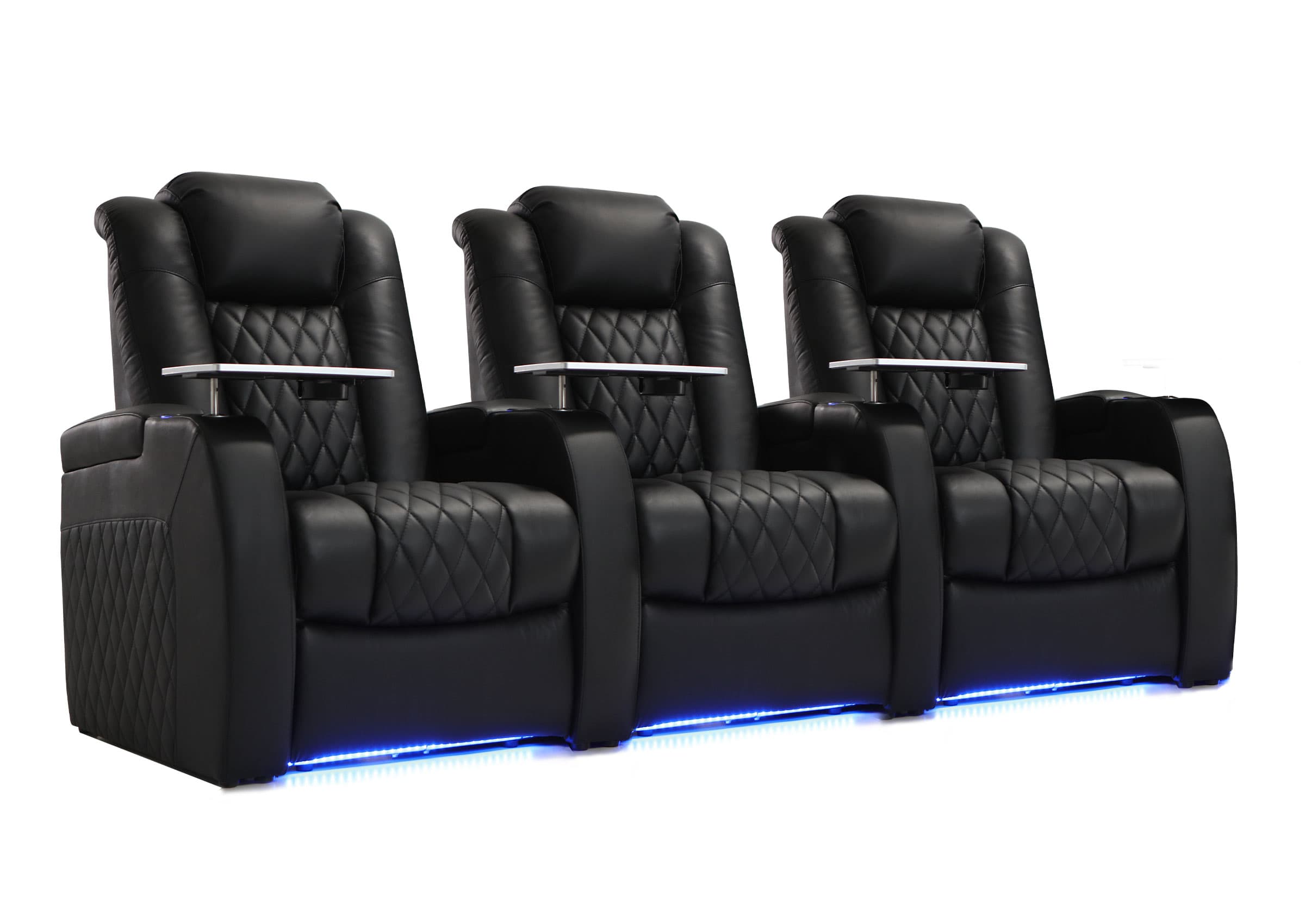
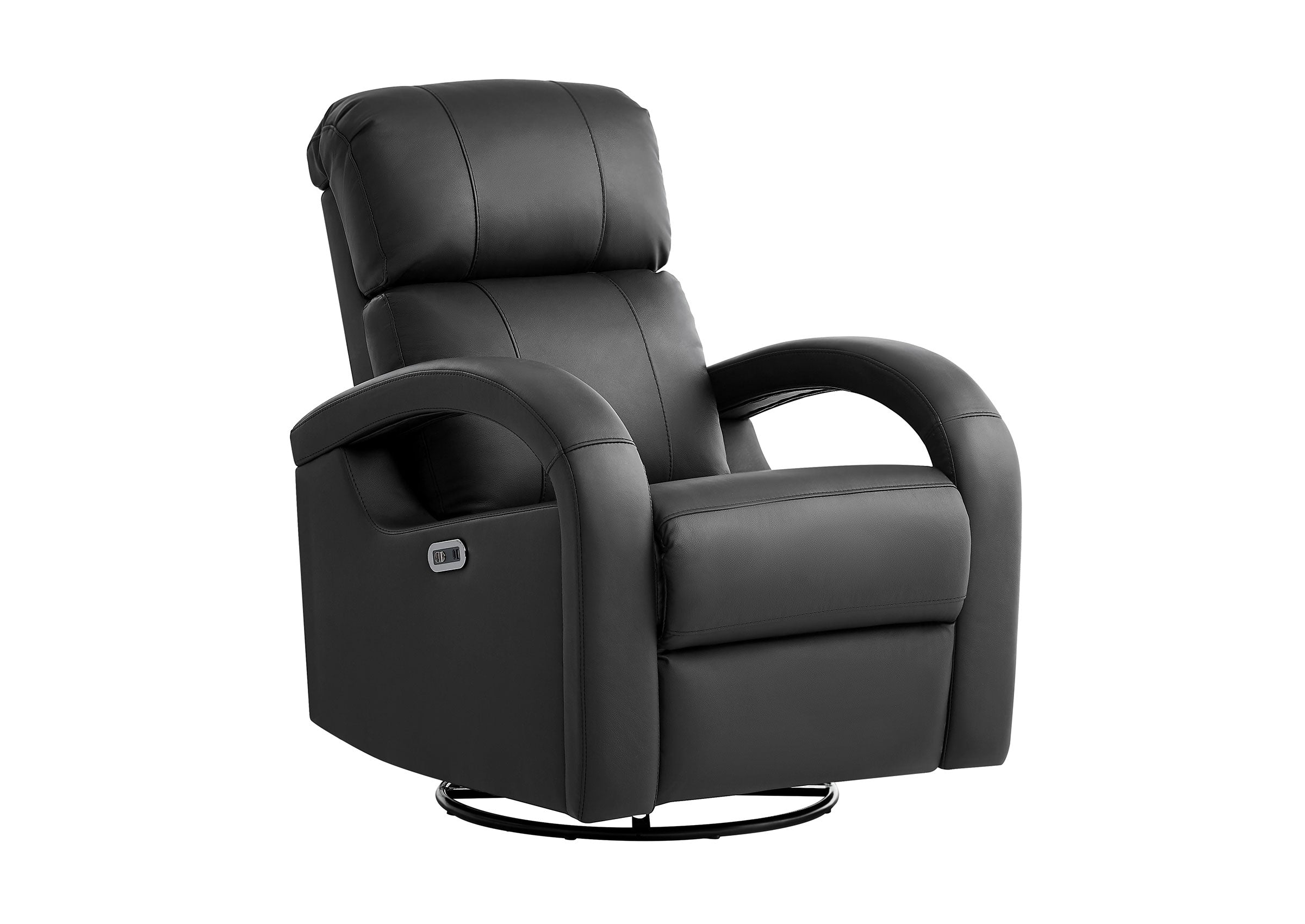

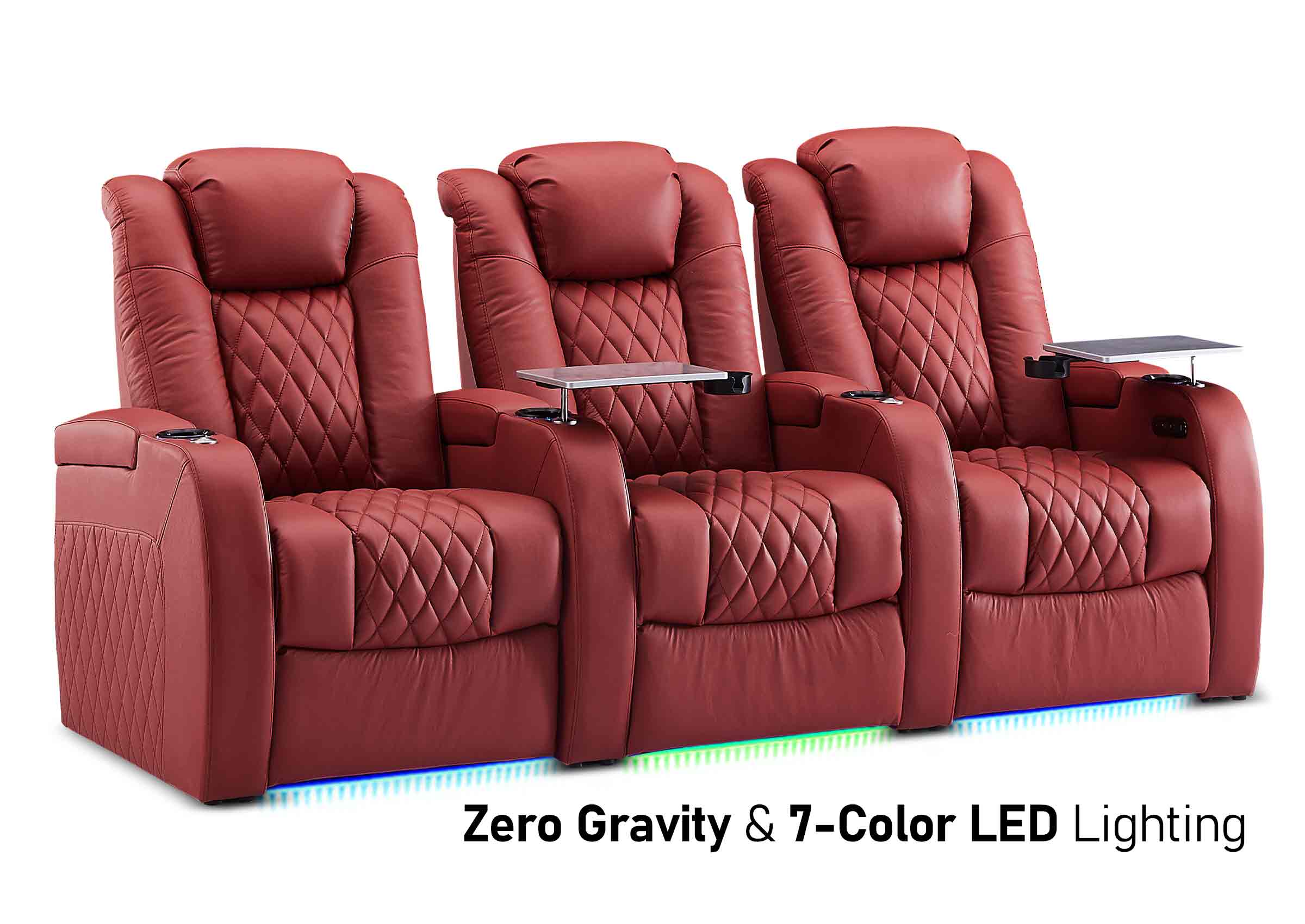

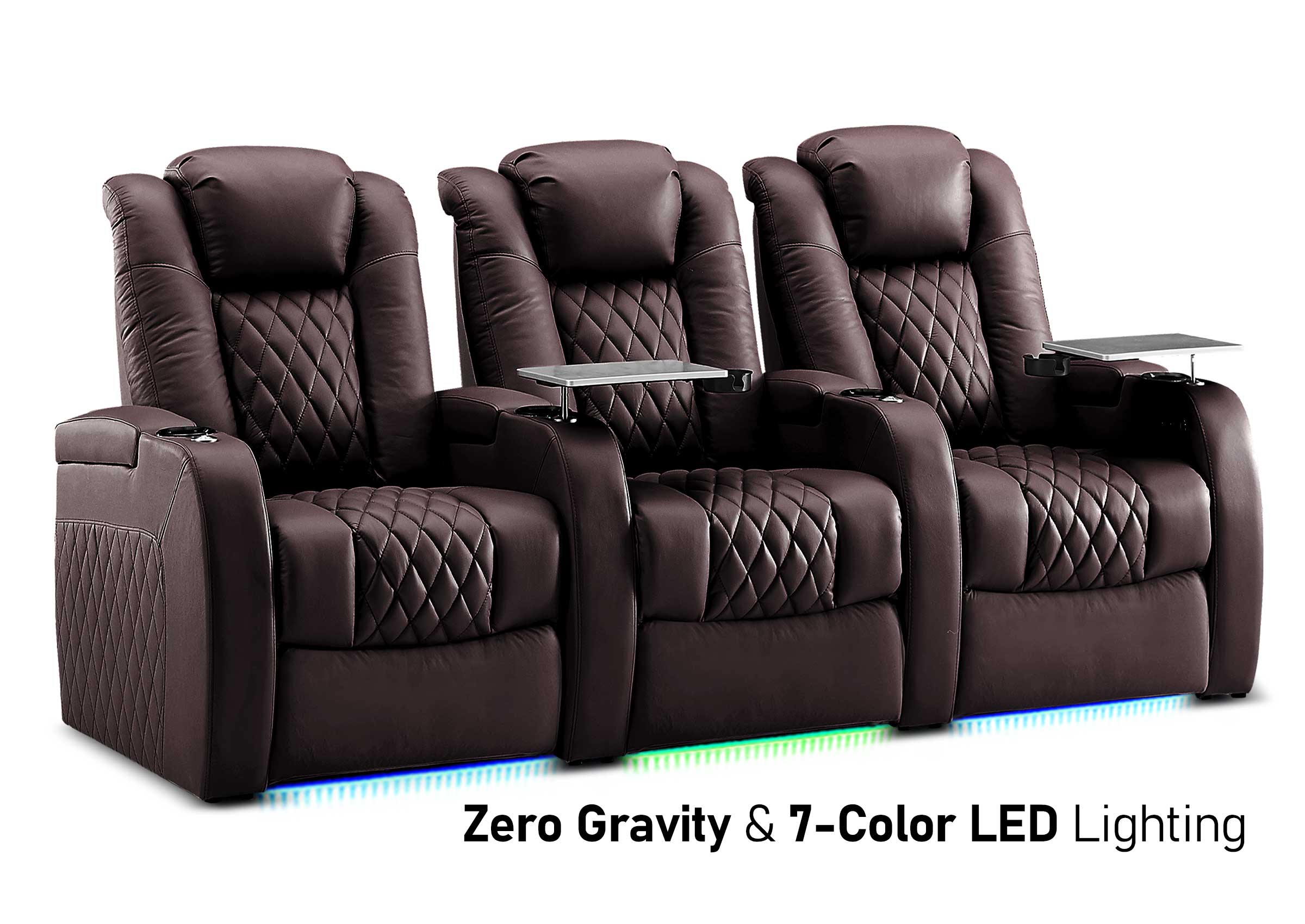

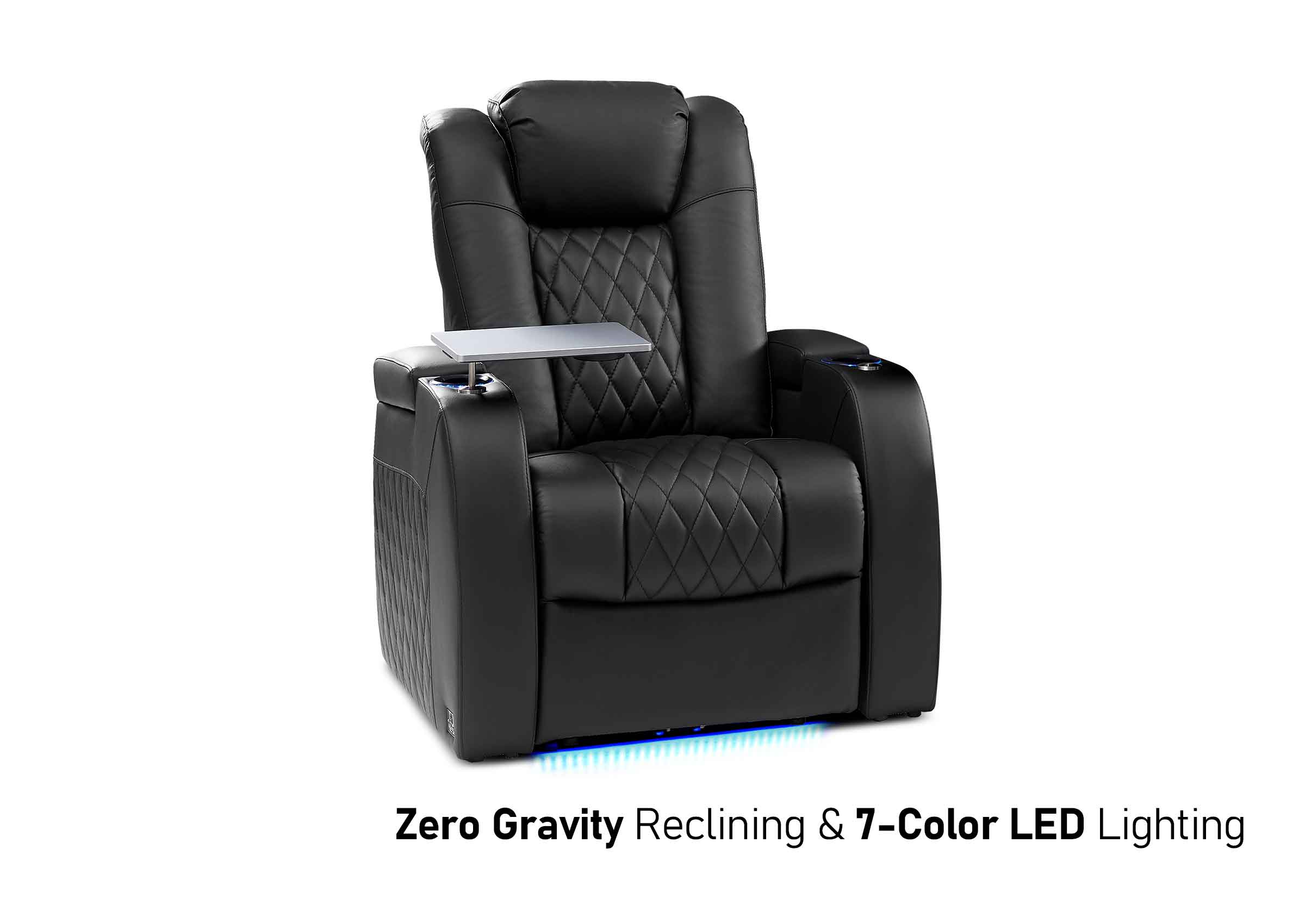
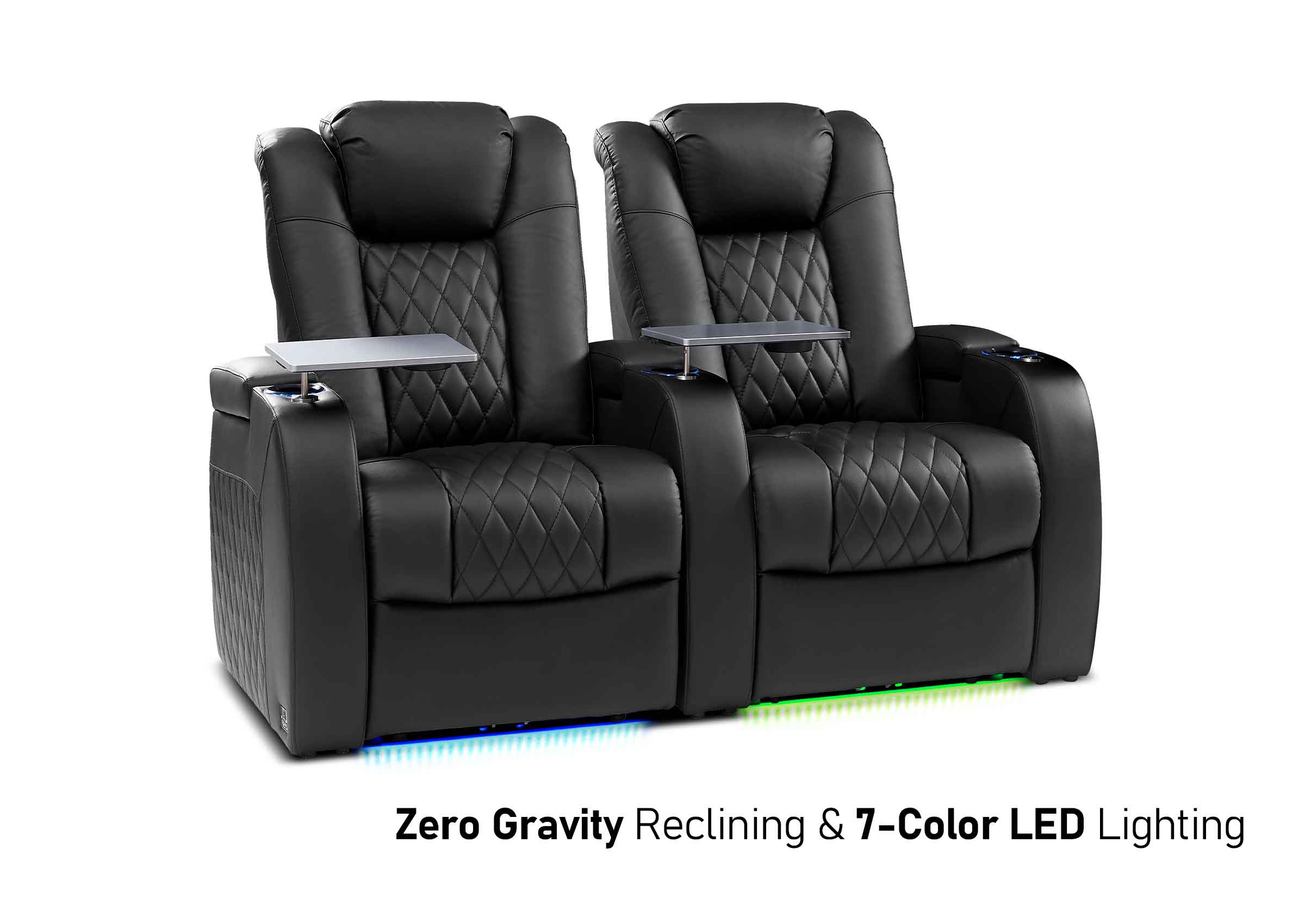
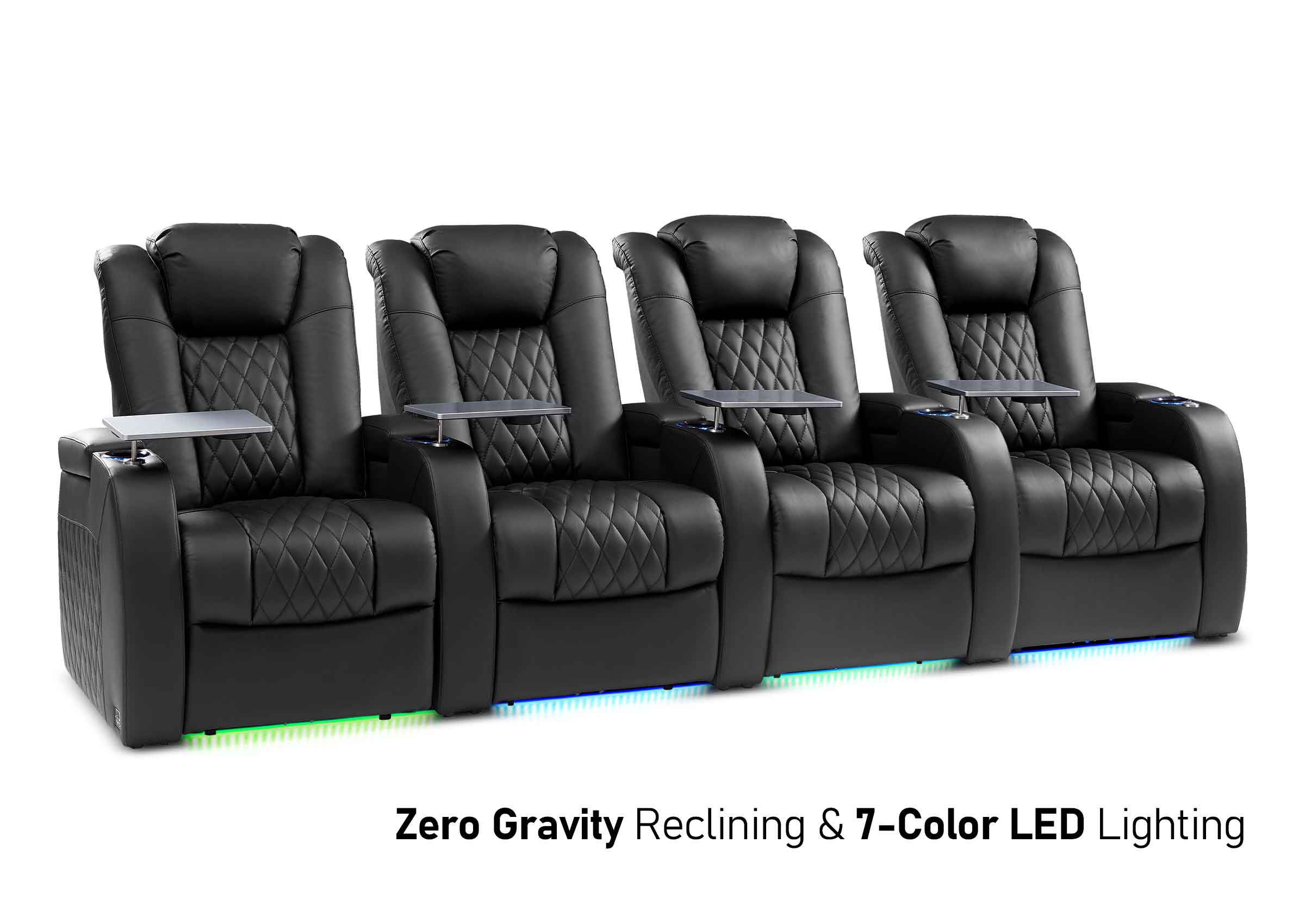
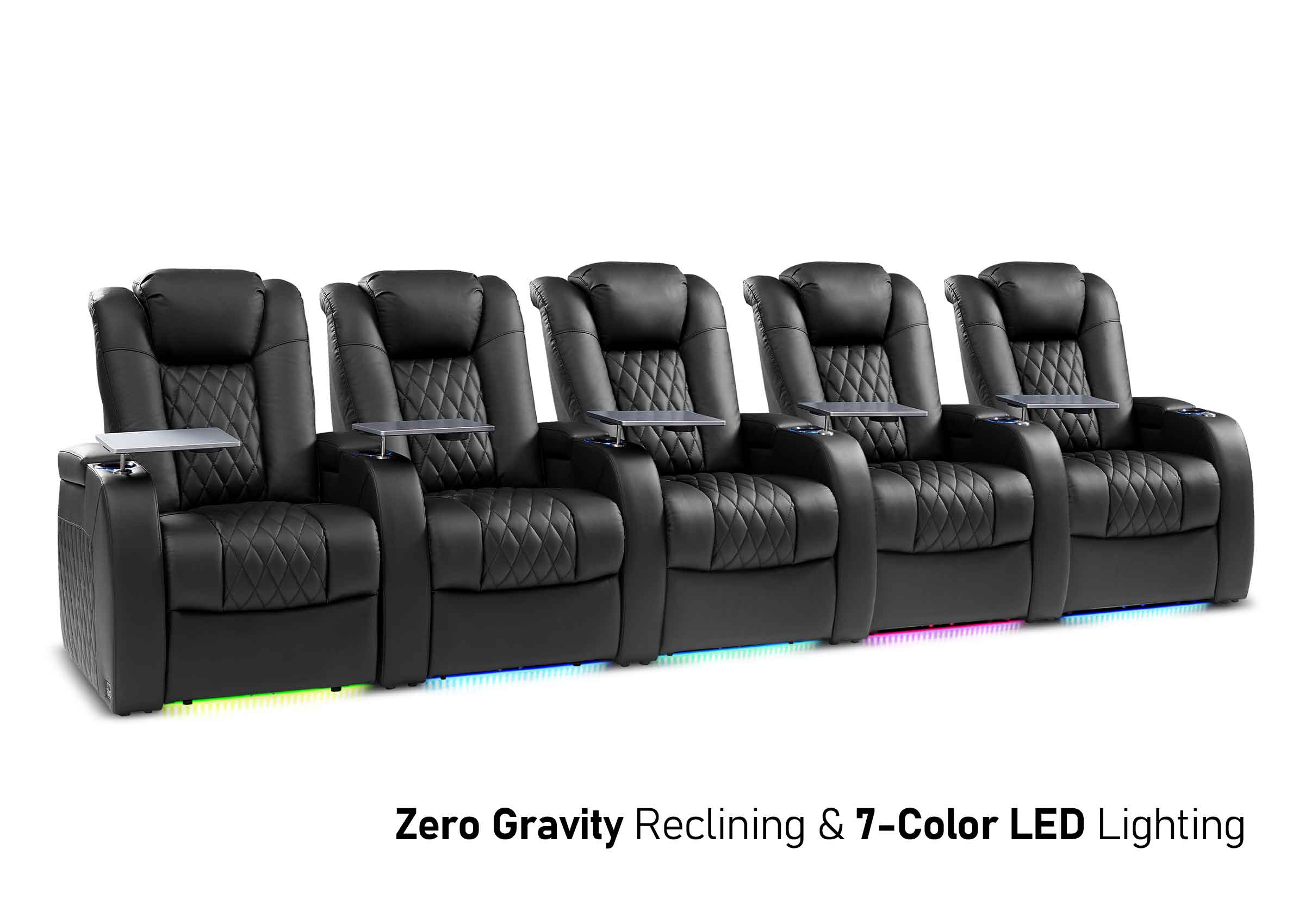
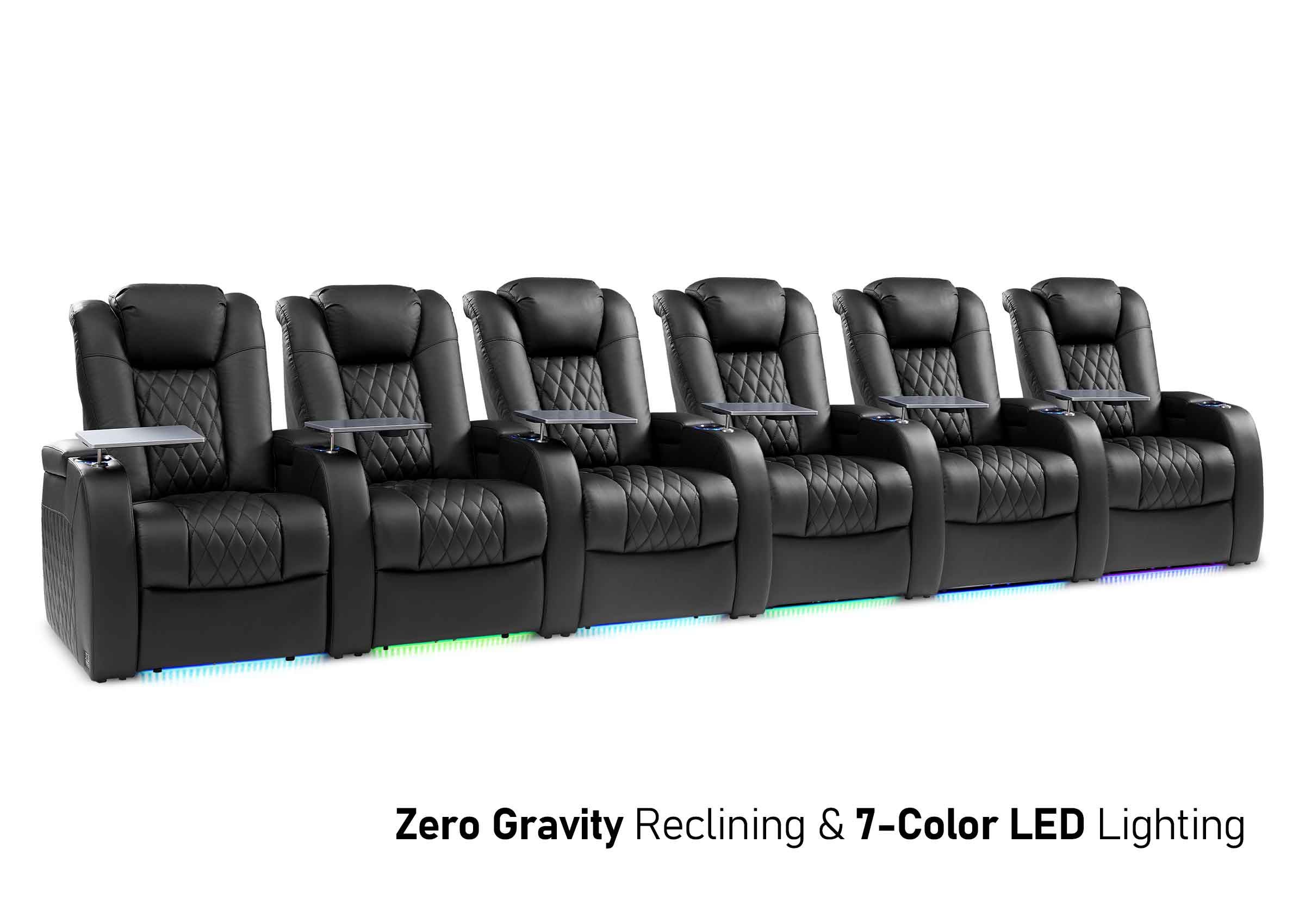
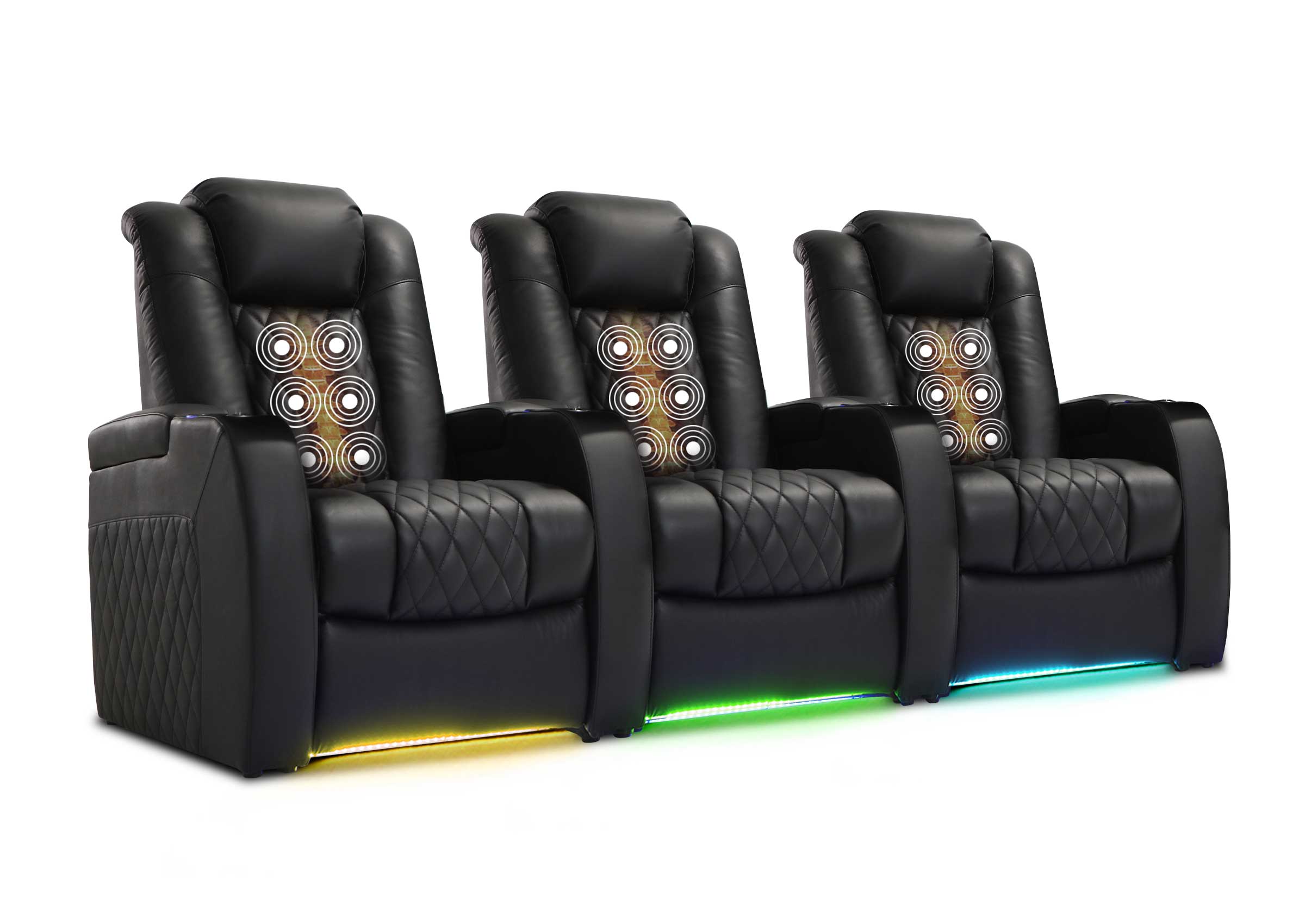
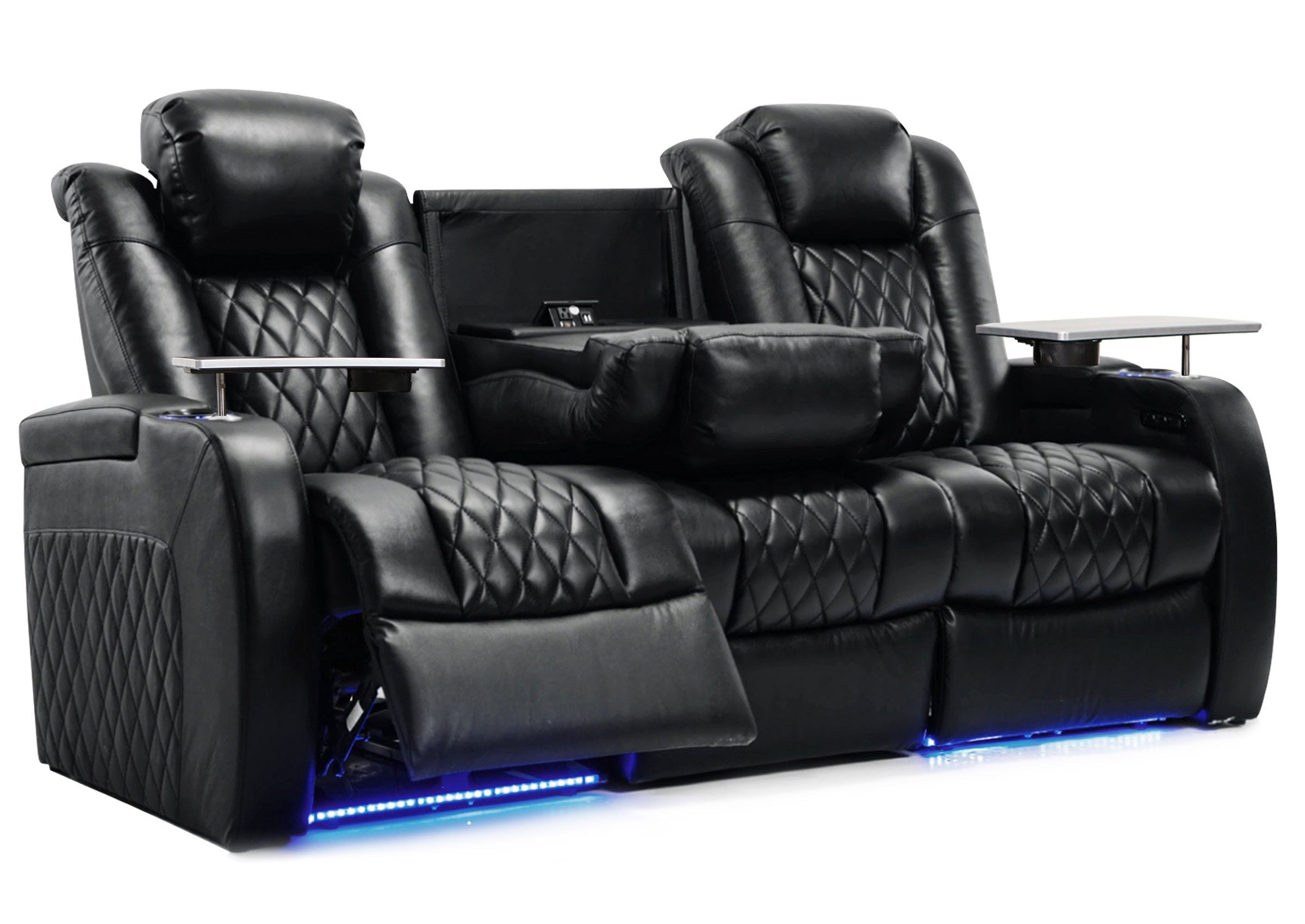
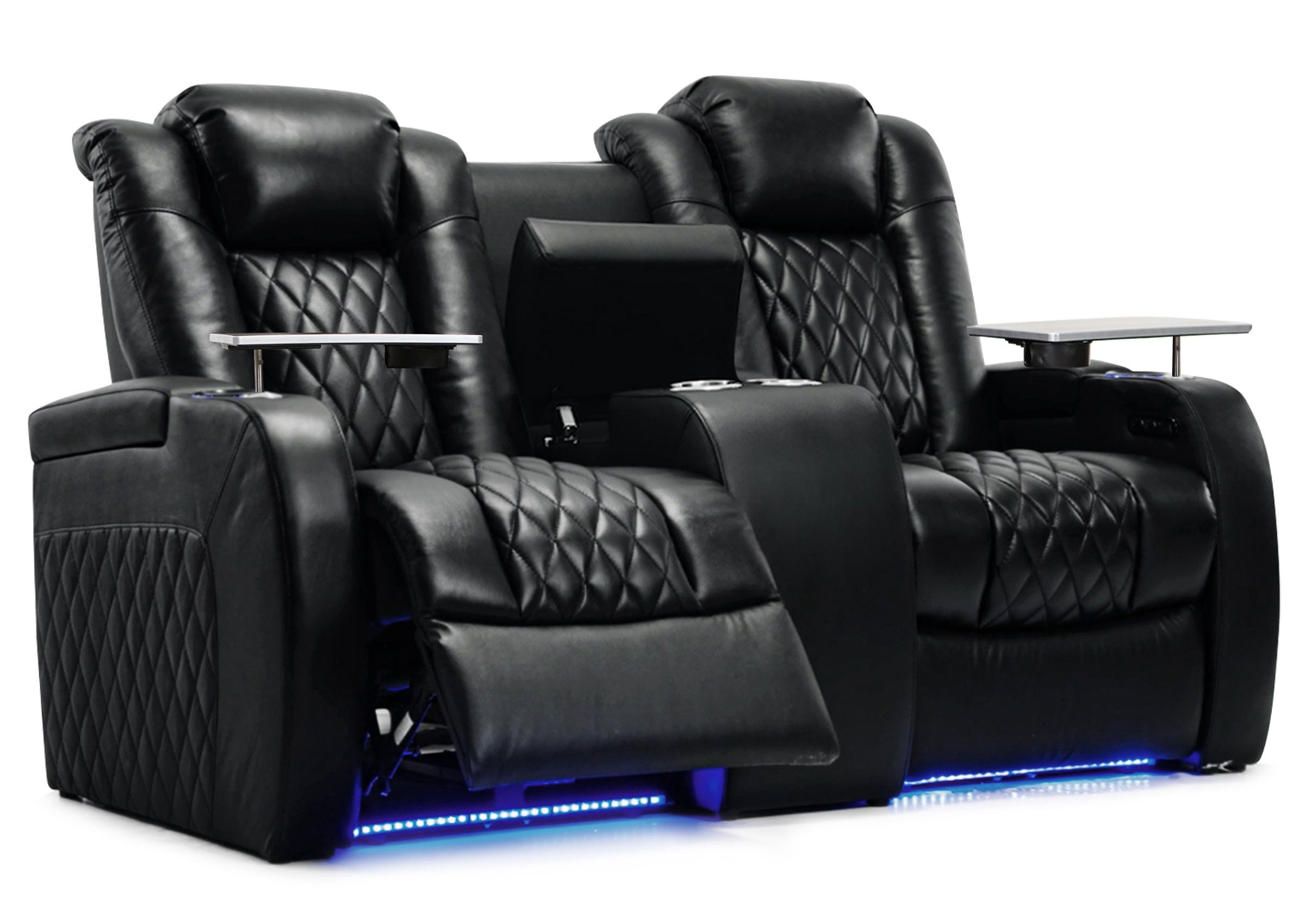


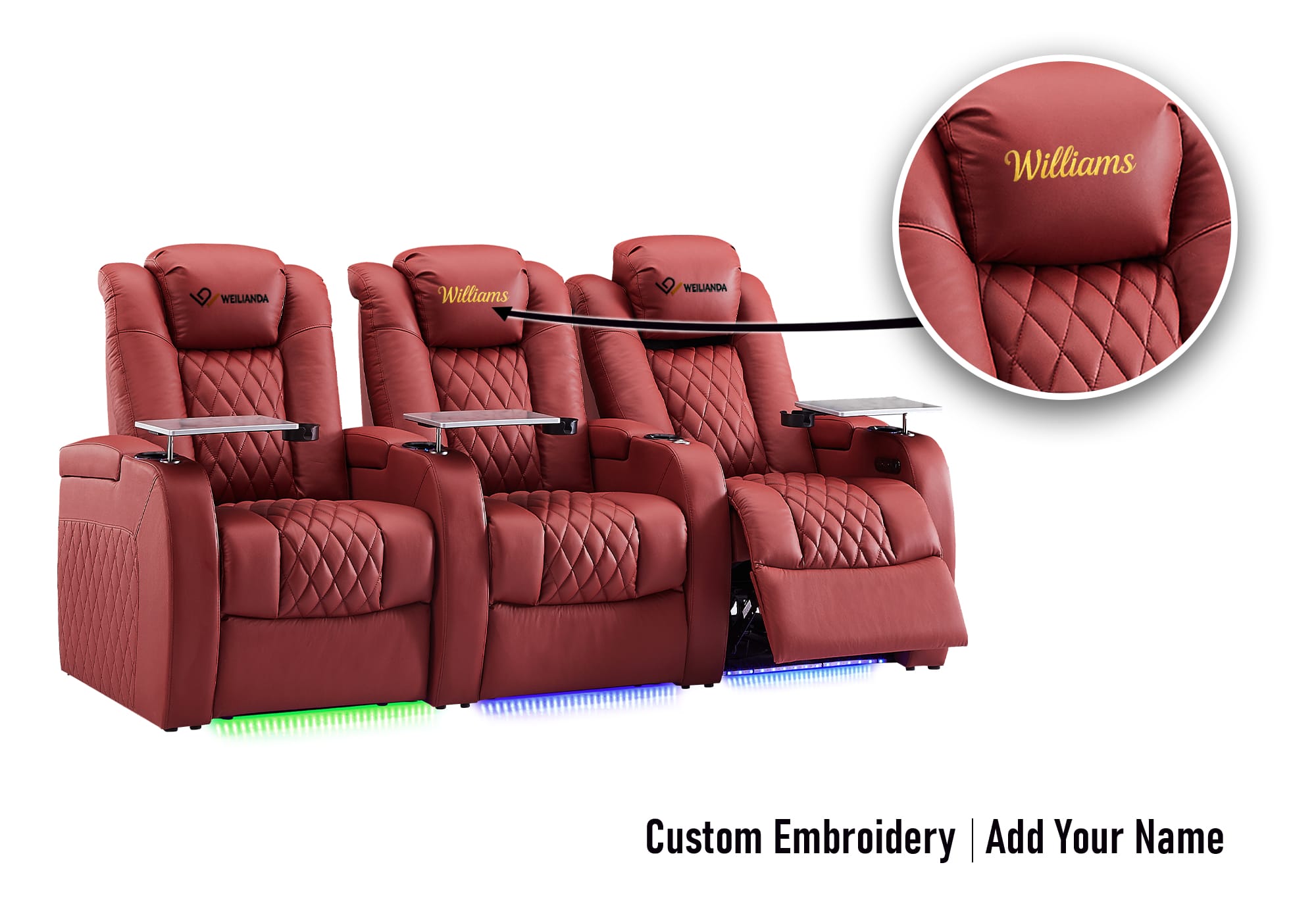

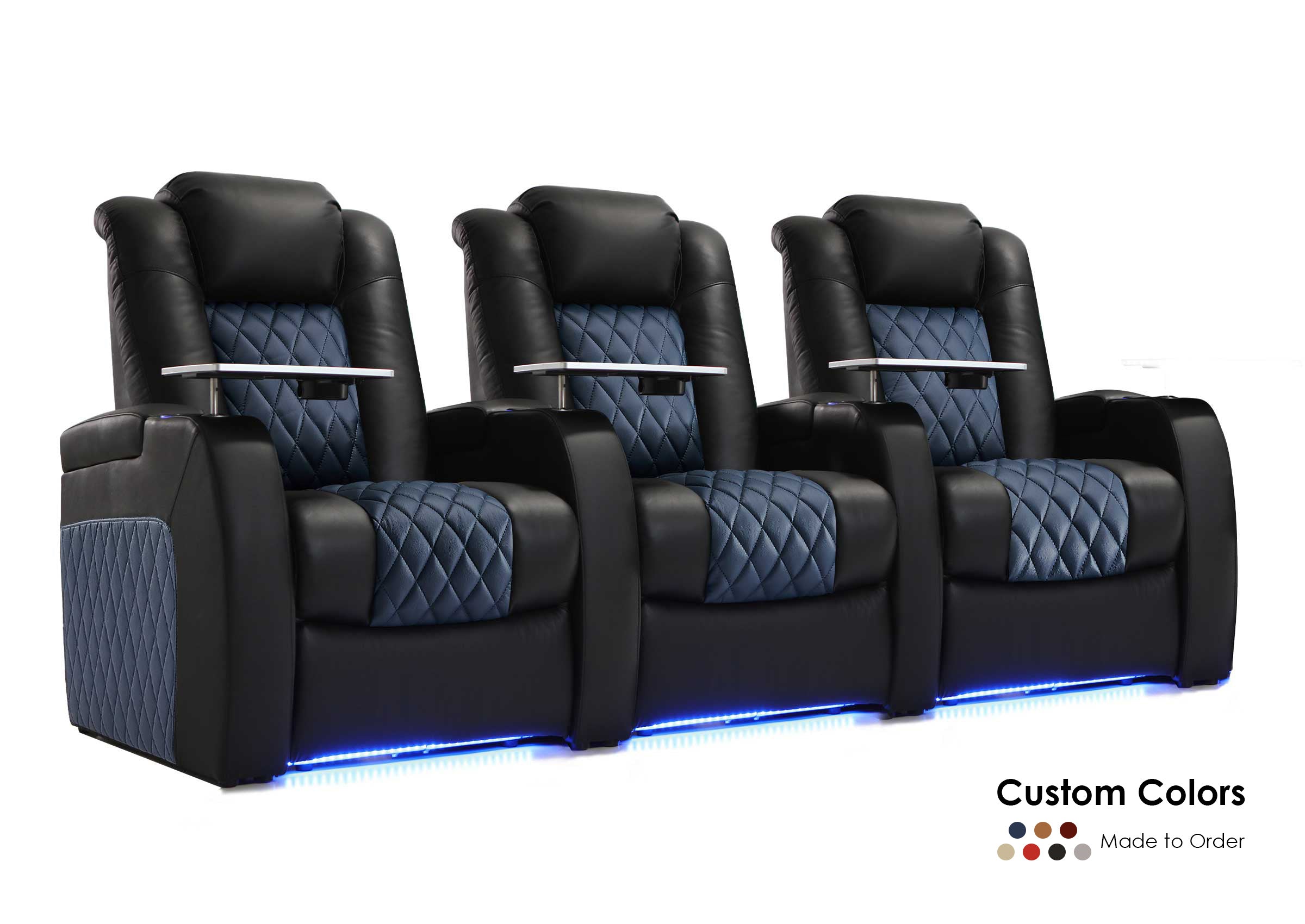

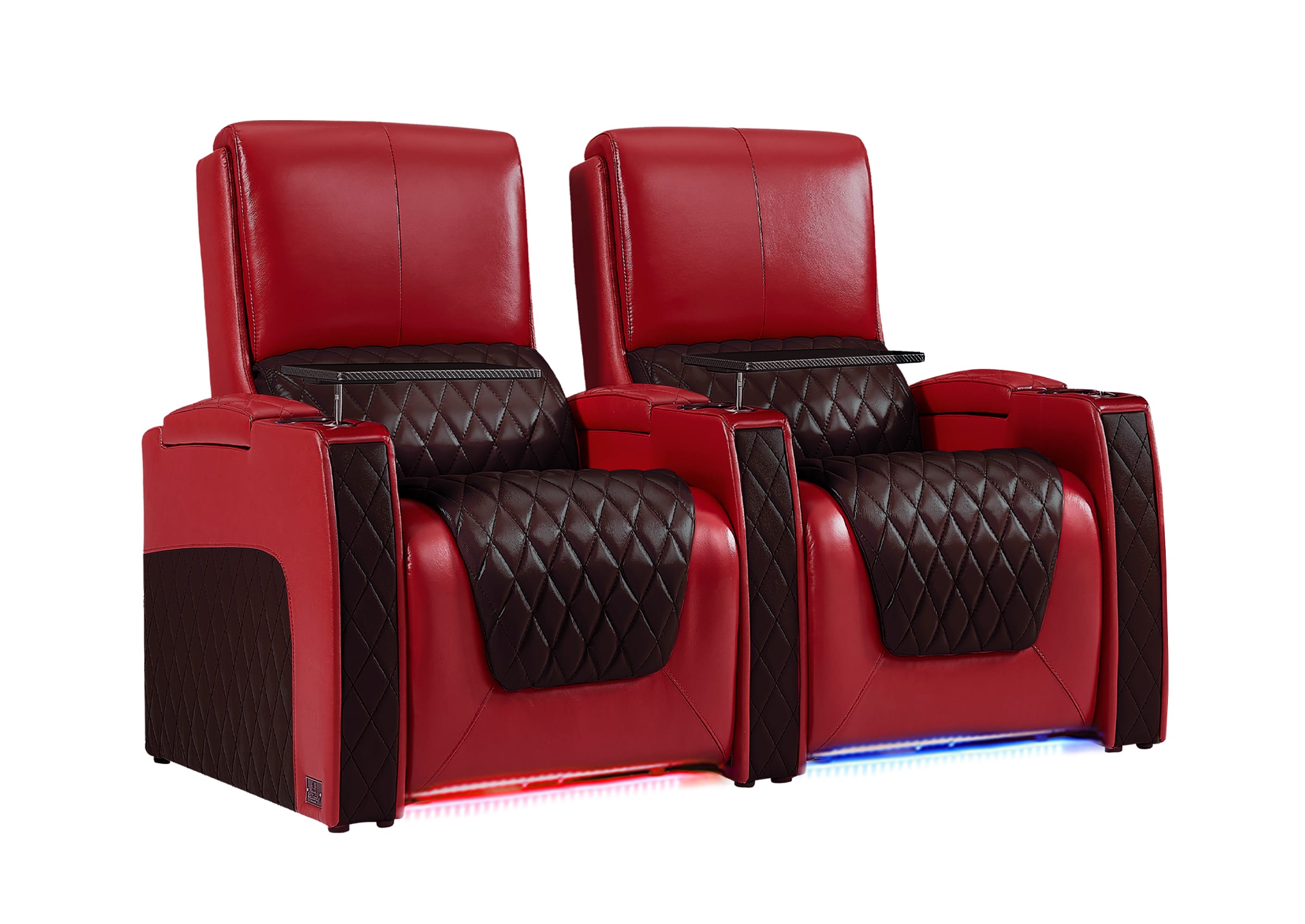
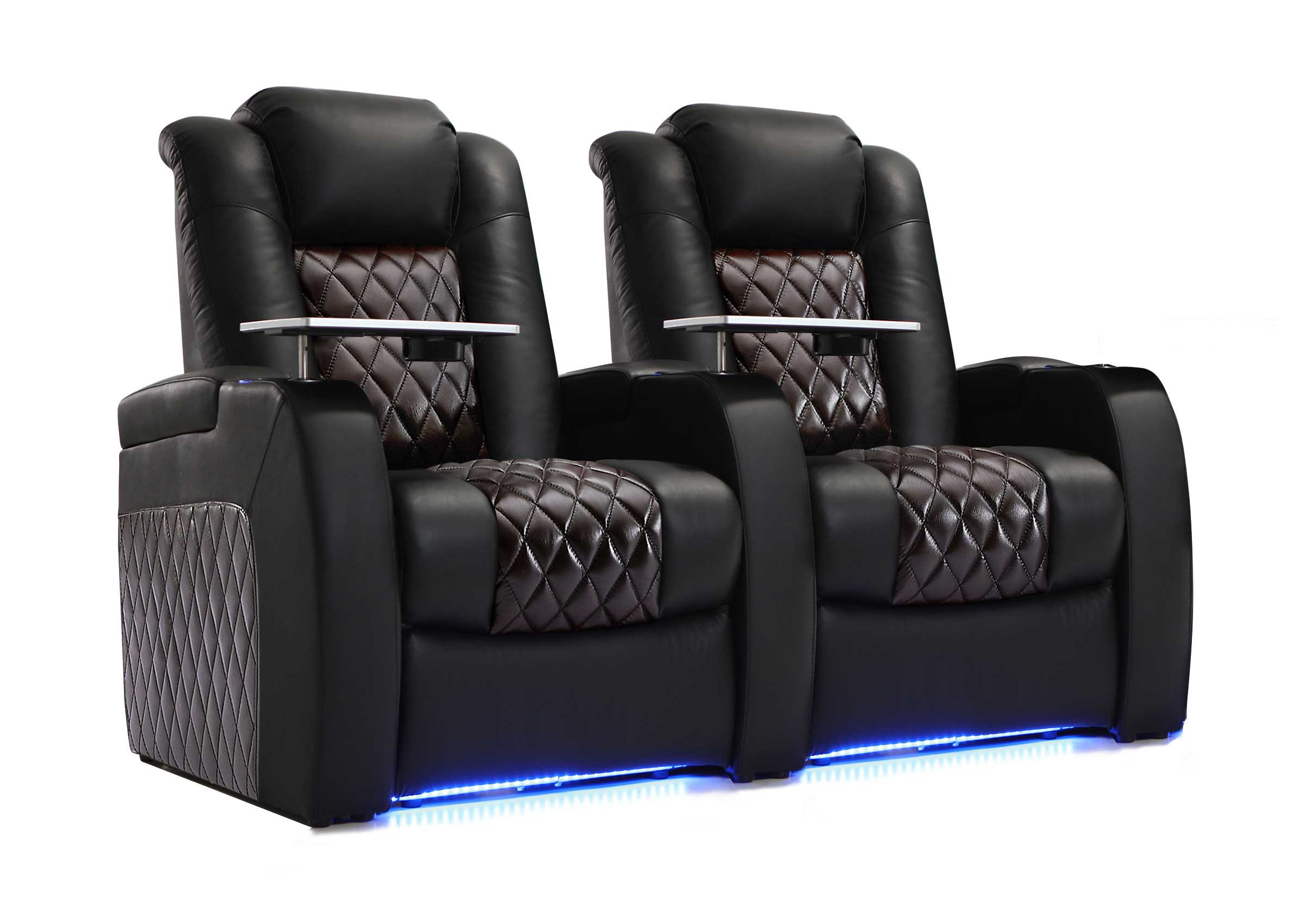
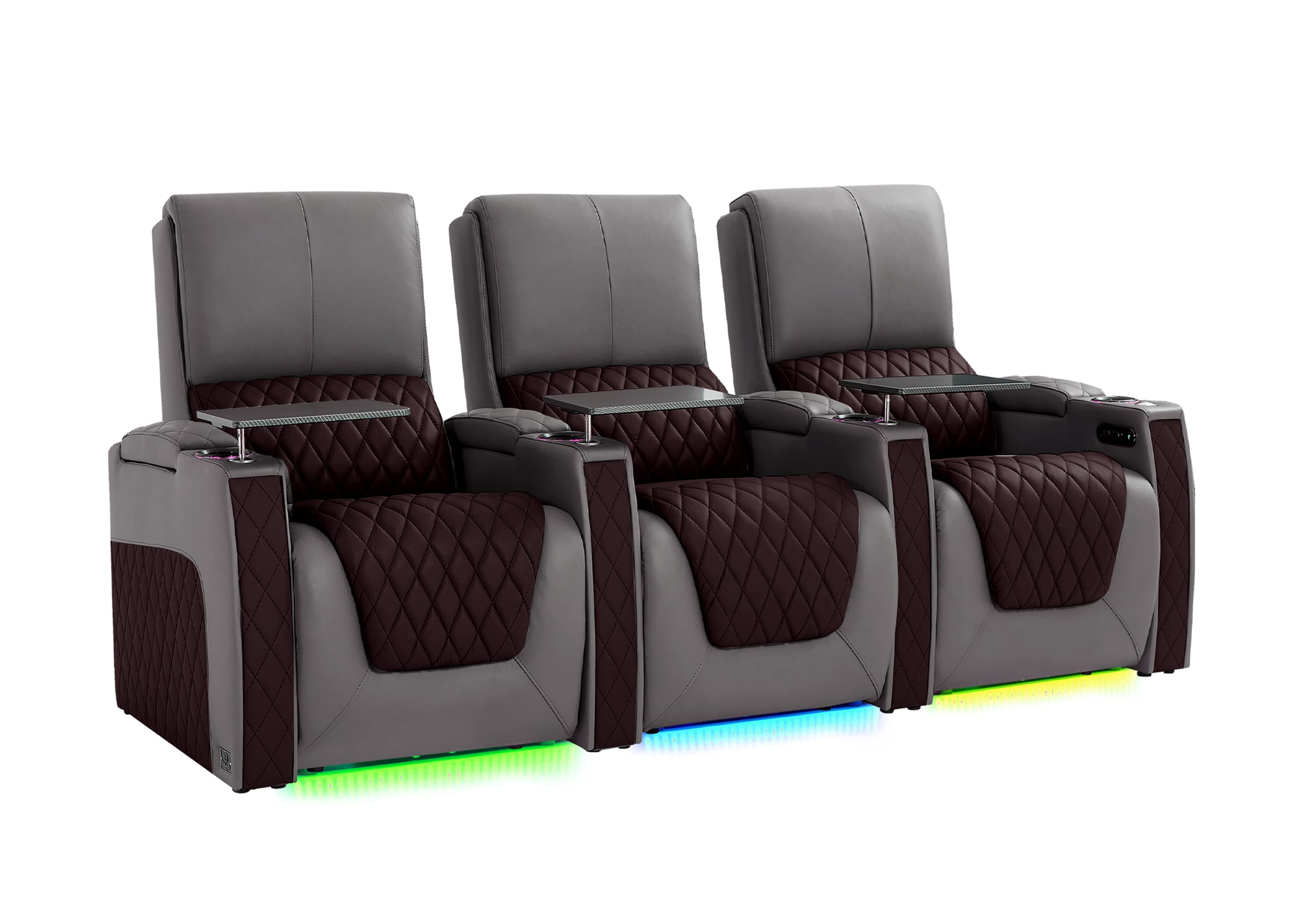
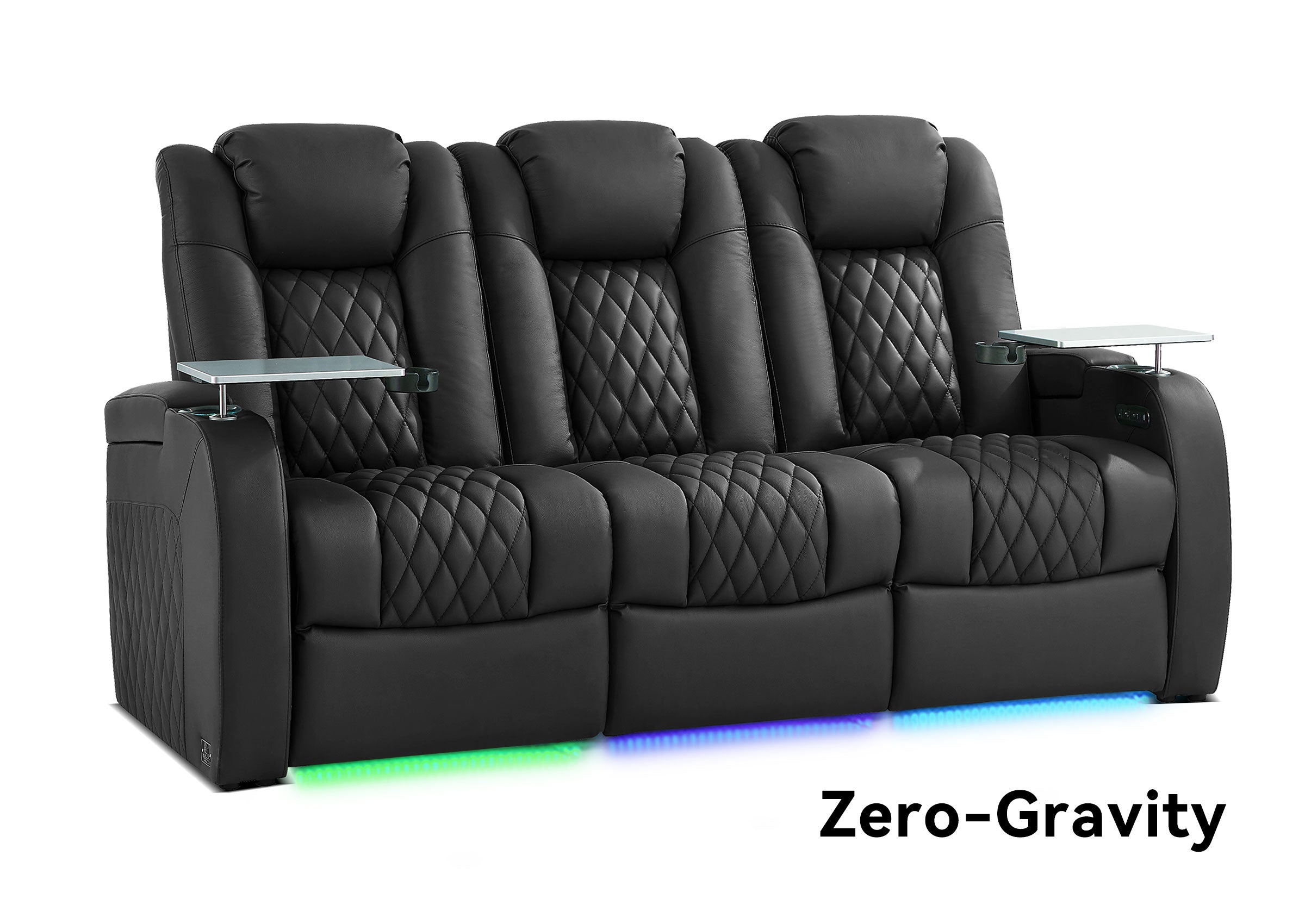


Commercial cinema seating starts with the chair price, but the amount you need to open the auditorium also includes delivery, installation, site preparation, and project-specific work. Some publicly advertised fixed cinema seats cost a few hundred dollars per seat. That is a useful starting reference—not a complete installed budget or a price for every commercial recliner.
Build the budget around an agreed seating plan and a defined handover: the seats are delivered, installed, checked, and ready for the intended use. Then keep operating costs and any loss of trading time visible alongside the capital cost.
What Does a Commercial Cinema Seat Actually Cost?
A public listing can establish the price of a particular advertised product. It cannot establish the cost of your auditorium without its configuration, quantity, and delivery scope.
For example, at the October 28, 2026 review, TheaterSeatStore's fixed cinema seating collection displayed the Octane 5003 Series at $219 per seat and the Recital at $289 per seat. The page also displayed separate volume-pricing messages. Those are retailer listing observations in USD, not an industry average, a Weilianda quotation, or an installed commercial-project price.
Use such numbers to identify a product category worth discussing, then obtain a quotation for the actual row layout, end and shared arms, upholstery, base, quantity, and intended use. A low advertised volume price may apply only to a particular order or configuration.
For powered recliners, VIP combinations, and dine-in seating, request a budgetary price against a defined specification. Do not multiply a residential sale price by the planned seat count and assume that commercial suitability, installation, accessories, or project terms are included.
When a supplier quotes a row, loveseat, or multi-seat module, convert it to a clearly labeled cost per seating position only after confirming how many usable positions it provides. Keep the complete configuration price visible as well.
Build the Budget Around the Finished Seating Scope
Separate three amounts: the seating supply price, the cost to put that seating into service, and the cost to operate and maintain it. This prevents a low supplier subtotal from becoming an incomplete project allowance.
Start with the following budget lines. Assign an owner to each one, even when the work sits in a contractor's separate package.
| Budget line | What to include or confirm |
|---|---|
| Seats and specified options | Exact modules, arms, bases, upholstery, numbering, tables, controls, and approved accessories |
| Delivery and handling | Freight, insurance where applicable, unloading, handling equipment, storage, and movement into the auditorium |
| Existing-seat removal | Dismantling, disposal or reuse arrangements, and the work needed after old fixings are removed |
| Building and electrical work | Floor repairs, platforms affected by the layout, required power provision, and associated finishes |
| Installation and handover | Setting out, appropriate fixing or assembly, connection, operation checks, correction of defects, and cleanup |
| Design and project coordination | Layout revisions, surveys, required reviews, and coordination with other trades |
| Opening support | Agreed spare components, maintenance information, staff handover, and any separately priced support |
| Taxes and risk allowances | Applicable taxes and import charges not already included, plus a documented allowance for remaining uncertainty |
The distinctions appear in actual procurement documents. The Dietrich Theater's January 2026 seating procurement RFP requests separate prices for the seats, removal and disposal of existing seating, floor patching and painting, installation, shipping, and possible storage. It also asks about maintenance, spare seats, and repair response. This is evidence of the scope a real venue needed priced, not a published contract award or universal cost schedule.
Define the boundary with the wider cinema fit-out. Projection, sound, kitchens, and general building works may belong in other budgets. However, if the seating choice requires a floor alteration or new power provision, the seating decision still needs to carry that consequence somewhere in the overall project.
Mark each line as confirmed, allowed for, excluded, or open. An excluded item needs another budget owner; an open item needs investigation. Record who owns the amount, its pricing date, and what could change it. Do not include a known task in both a scope allowance and the contingency reserve.
Choose Seat Types by Their Effect on the Whole Project
Fixed and Rocker Seating
Fixed-back and rocker-style seats can support a different density and experience from full recliners. Check the actual dimensions and base arrangement before assuming that one model can replace another seat for seat.
A replacement that works with the existing floor and seating geometry may reduce associated work. A different fixing pattern, damaged floor, or revised layout can remove that advantage. Inspect representative areas rather than assuming every old position is reusable.
Powered Recliners and VIP Layouts
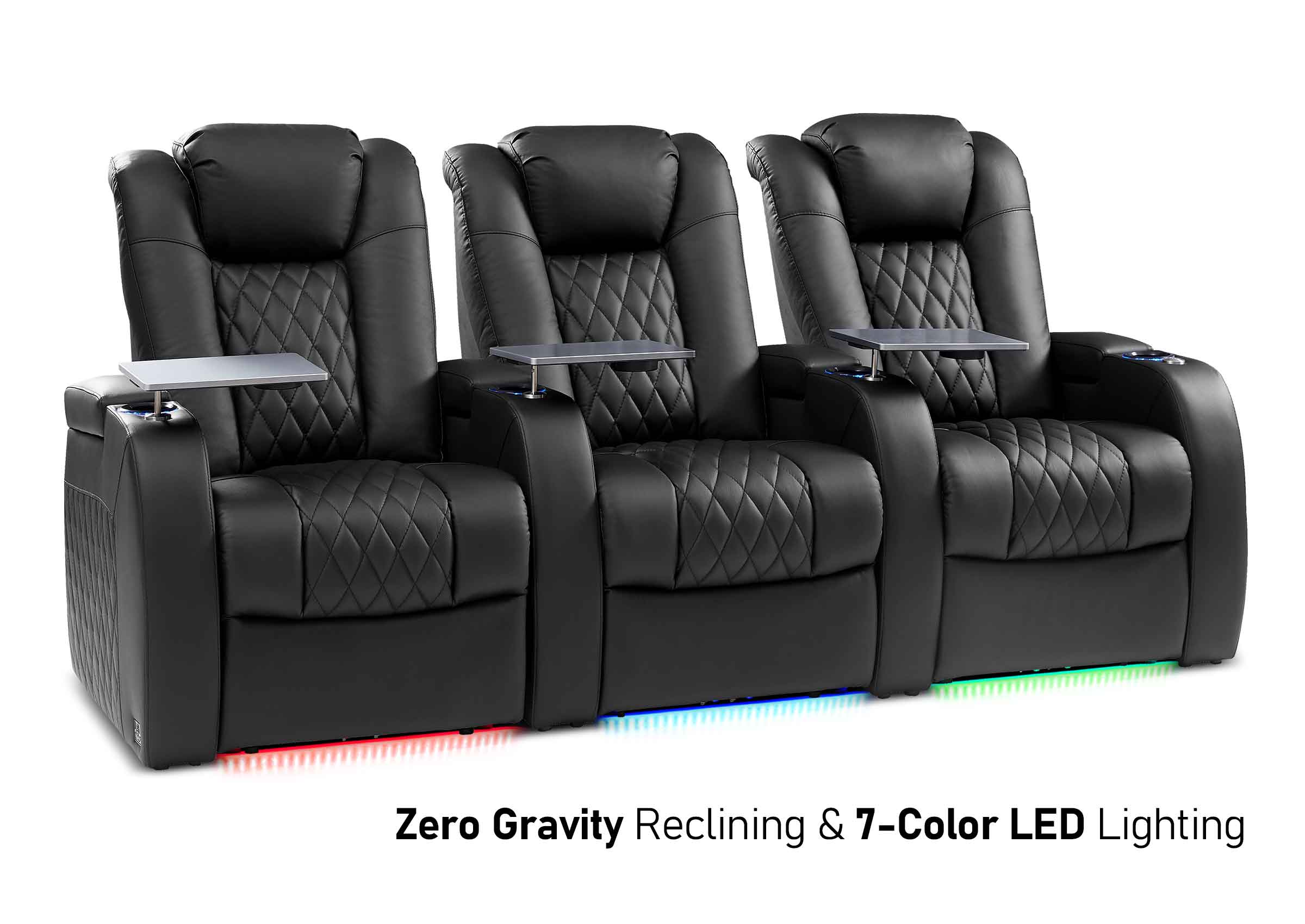
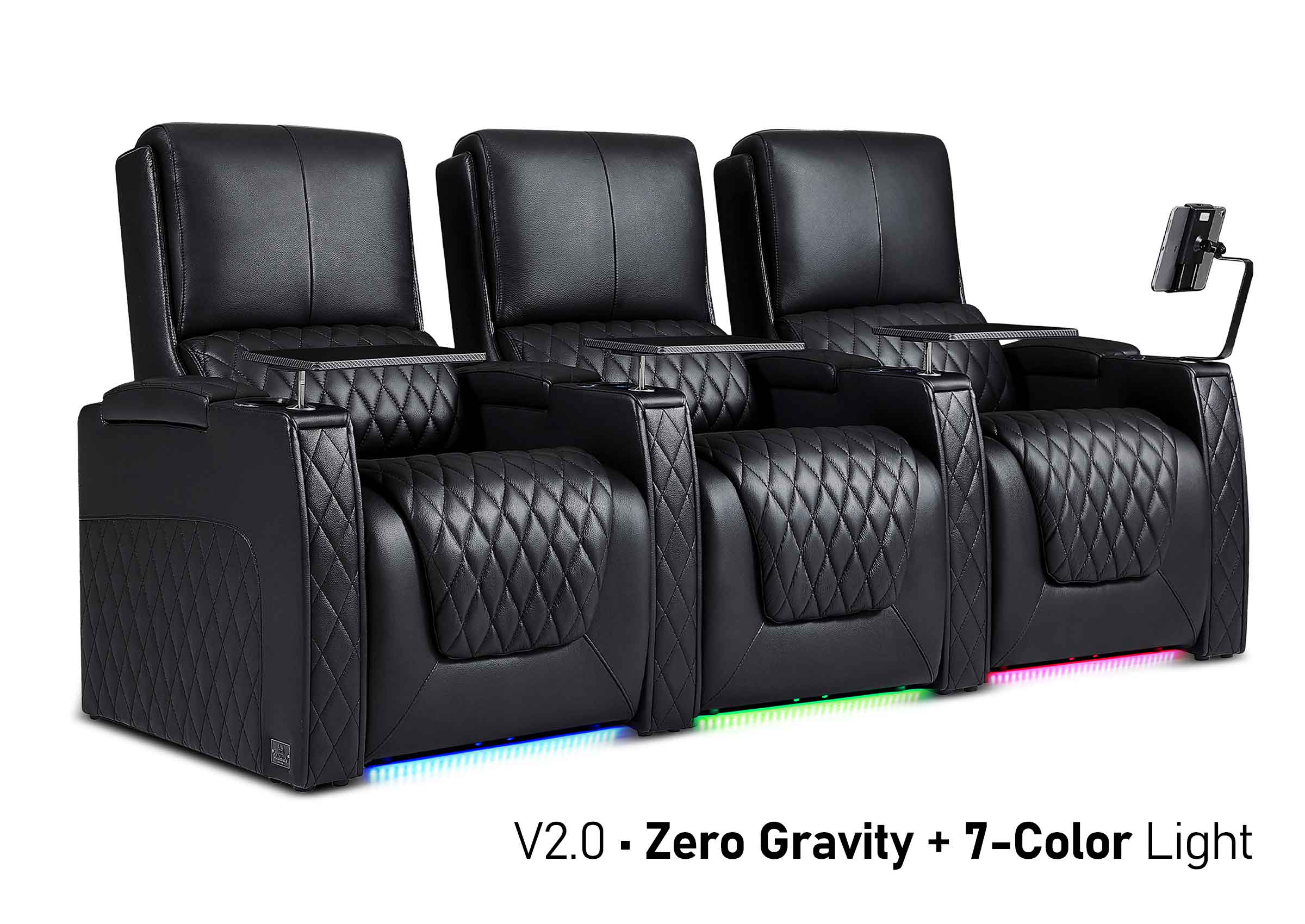
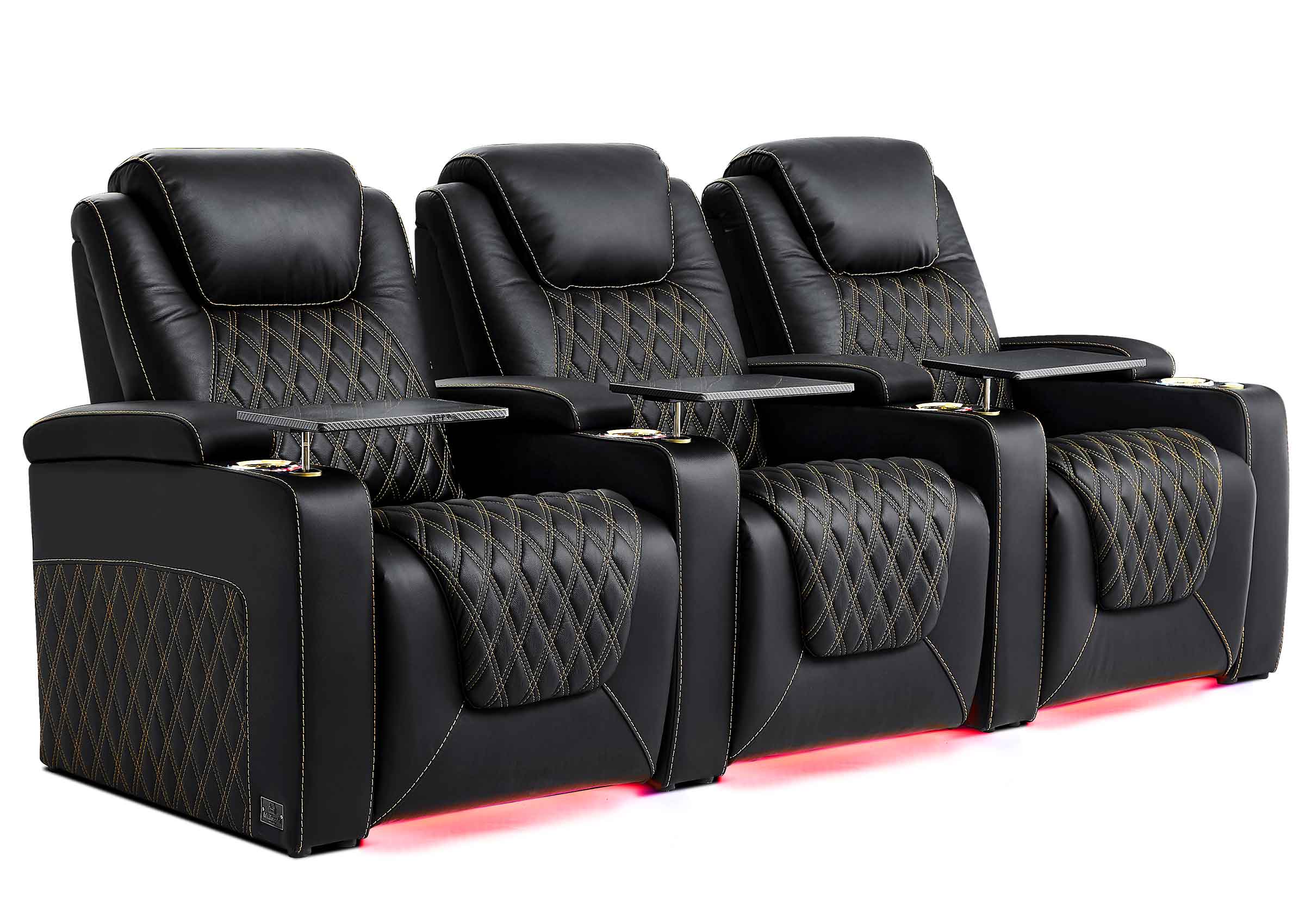
For a powered layout, price the selected movements, controls, and accessories, then identify the site work they require. Power distribution, cable routing, clearance during movement, and access for servicing all affect the installed result.
A more expensive mechanism is not automatically the right upgrade. Prioritize what changes the viewing experience and how staff will maintain it. Confirm commercial-use terms for the selected configuration rather than treating a familiar residential feature list as a project specification.
Our commercial versus residential seating guide explains the documentation, installation, and service questions behind that distinction.
Dine-In and Shared Seating
Tables, shared arms, paired seating, and service access change both the order and the room plan. Check how trays or tables are supplied, how staff move between guests, and whether finishes and access support the venue's cleaning process.
Price an approved arrangement, not a collage of product photographs. A shared-arm layout may use different components from the same number of stand-alone chairs, while the room may need different circulation space.
Once the seating direction and scope are clear, Weilianda's project inquiry page provides a place to share the layout, quantity, finish direction, and questions for a project-specific discussion. Confirm the available product and order terms before treating a preliminary amount as a commitment.
PLAN THE COMPLETE SEATING SCOPE
Put Your Cinema Seating Scope Into a Project Discussion
Share the venue, proposed layout, approximate quantity, preferred seating type, and work you need included. Confirm the available configuration and project-specific pricing basis.
A Worked Budget: Why 100 Seats Do Not Cost Only 100 Times the Chair Price
The following is a hypothetical USD planning example, not a market benchmark or supplier quote. Every amount is a chosen assumption for showing the calculation; replace it with your own quotations and site information.
Assume an approved layout requiring 100 purchased seats at an assumed $500 each, with an existing auditorium that needs removal, preparation, and installation work.
| Illustrative budget item | Assumed amount |
|---|---|
| Seating supply: 100 × $500 | $50,000 |
| Freight, unloading, and internal handling | $6,000 |
| Existing-seat removal and disposal | $3,000 |
| Floor and electrical work | $12,000 |
| Installation and handover | $7,000 |
| Design coordination and opening spares | $4,000 |
| Subtotal before contingency and tax | $82,000 |
| Illustrative contingency: 10% of $82,000 | $8,200 |
| Pre-tax project allowance | $90,200 |
The assumed $500 chair price becomes a $902 pre-tax project allowance per purchased seat. That difference comes from the stated scope and contingency, not from a hidden chair markup.
The 10% is simply an example input. It is not a recommended rate, an industry requirement, or evidence that a project with more unknown work is adequately funded. Taxes are excluded from the example because their basis depends on the project. The all-in authorization would be $90,200 plus the applicable tax amount after checking which quoted lines already include tax. Until that amount is established, leave tax open rather than entering zero or describing $90,200 as the final payable total.

Notice which changes affect more than one line. Choosing a powered seat may change both supply and electrical work. Moving the layout may change floor preparation, installation, and design. Removing one optional accessory may save only its own cost.
Test the Layout and Capacity Before Approving the Spend
Compare viable layouts before settling on a final seat quantity. The lowest cost per chair can still produce a poor project if it requires an unsuitable layout or leaves insufficient access.
Use the actual seating drawings to coordinate full movement, sightlines, circulation, accessible routes, and service access. In the United States, the Access Board's accessible-route guidance is one relevant starting source. The design team must determine the requirements that apply to the actual venue; this budget guide does not prescribe a universal aisle width, row pitch, or accessible-seating count.
Keep three quantities separate: seats purchased, usable audience capacity, and positions available for sale during an operational period. A wheelchair space is not another physical chair to order, and a seat held out of service is not generating admissions.
A simple sensitivity check shows why capacity matters. Suppose one viable layout has 120 ticketed positions and another has 80. At an assumed 50% occupancy, a $12 average ticket in the first layout produces $720 in ticket revenue for a showing. At the same occupancy, the second layout would need an $18 average ticket to match that amount.
Those figures are illustrative arithmetic, not a forecast that guests will accept the higher price. Occupancy, ticket mix, food and beverage sales, film-related costs, staffing, and maintenance can change the result. Compare the experience and operating model as well as the construction cost.
If the upgraded layout does not support the venue's requirements, revisit the configuration, number of premium positions, or project scope before placing the order.
Allow for the Schedule, Site Risk, and Payment Timing
A seating project can cost more when delivery and site readiness fail to meet. Storage, a second handling visit, remobilized installers, or a delayed opening may not appear in the chair quotation.
Build a short sequence with the supplier and site team: specification approval, production or allocation, dispatch, delivery, site access, installation, inspection, and reopening. Confirm which dates are estimates and which commitments are actually written into the order.
For an operating venue, identify which auditorium closes, how long removal and installation need, and whether other rooms can continue to trade. Treat lost trading opportunity separately from the contractor invoice so the team can see both the cash spend and the operational consequence.
Track payment timing as well as the total. A deposit may become due before the room is ready, while freight, site labor, and the balance may fall together later. Ask what triggers each payment and what happens if approvals or access change. A deposit applied against the seat balance changes the cash schedule; it is not an additional seating cost. Avoid counting both the full seat price and that same deposit in the project total.
A useful contingency discussion starts with named uncertainties: hidden floor damage, incomplete electrical design, unresolved freight, or a layout awaiting approval. Investigate what can be resolved now and retain allowances for the remaining risks. A percentage alone cannot explain what the project is prepared to absorb.
Budget for Maintenance Before the Seats Enter Service
The initial cost does not describe what it takes to keep an auditorium available. Request the maintenance instructions, replaceable-component information, and commercial-use warranty terms for the exact model and order.
Ask who can perform repairs, which parts can be replaced on site, and how a seat can be accessed without disturbing an entire row. Clarify parts, labor, freight, response arrangements, and exclusions rather than reading a warranty term as a complete maintenance plan.
Set an agreed planning period and separate scheduled cleaning and inspection from uncertain repairs. A useful ownership comparison includes the installed capital cost, expected maintenance and repair allowances, and any planned refurbishment or replacement work over that same period. Use documented supplier and service information; do not assign an invented useful life or failure rate. If opening spares or service are already included in the capital budget, carry that amount forward once rather than adding it again. For two alternatives, use the same planning period and inclusion basis.
Spare parts should follow the product and operating plan. An approved upholstery component, control, or mechanism may be more useful than a generic percentage of extra chairs, but the supplier and maintenance team need to confirm compatibility and storage requirements.
For Weilianda project orders, confirm the applicable terms against the selected model, components, order type, and intended use in the quotation or agreement. Do not apply a residential warranty or promotional coverage period to a commercial venue without that confirmation.
Turn the Preliminary Budget Into a Useful Project Brief
Before seeking a firmer amount, assemble enough information that suppliers and installers can price the same outcome:
- The venue location, intended use, current plan revision, and proposed layout or capacity alternatives.
- The required seating type, actual modules and arms, finish direction, essential functions, and optional upgrades.
- Existing-seat removal, floor condition, electrical provision, access, unloading, storage, and installation responsibilities.
- The scope included in the budget, applicable tax assumptions, open items, and target spending limit.
- Approval, delivery, installation, and opening dates, including the constraints that remain unresolved.
Ask for a budgetary estimate when the design is still developing, and record the assumptions and validity period. Request a revised scope and amount when the configuration or site conditions change; an early estimate cannot silently become a fixed installation commitment.
When the budget is too high, compare alternatives against the outcome you need to protect. Simplifying optional finishes may preserve the seating experience. Retaining suitable infrastructure may avoid building work. A different layout may help capacity, but it needs design review rather than an arbitrary reduction in clearances.
Once proposals arrive, use our theater seating quote-comparison guide to check their scope, exclusions, and responsibilities on the same basis. This budget establishes what needs funding; that later review determines whether the offers actually cover it.
Frequently Asked Questions
Is there a standard total price for a 100-seat cinema seating project?
No. A seat count does not identify the seat specification, layout, site condition, destination, or work included. Establish a supply amount, add the costs needed to put the seating into service, then include applicable taxes and documented risk allowances. The 100-seat example above is a calculation method using assumed inputs, not a quotation you can transfer to another venue.
Can I use the lowest advertised volume price in my budget?
Only after the supplier confirms that your quantity, configuration, materials, and delivery basis qualify. Keep an unconfirmed volume price as a sensitivity case rather than a committed amount. Check whether end arms, bases, options, and other required components are included before comparing it with another supplier's figure.
Does an overseas seat price include freight, duties, and installation?
Not necessarily. Request the named delivery point and a written inclusion list covering export and import handling, taxes or duties where applicable, unloading, internal movement, and installation. Put excluded services into the project budget under the responsible party. A lower factory or port-based price is not directly comparable with a finished installation.
Can refurbishing the existing seats cost less than replacement?
It can, but compare the scope needed to achieve a usable result. Inspect frames, fixings, upholstery, mechanisms, and the availability of compatible parts. Refurbishment that preserves a suitable layout may avoid some removal and site work; damaged structures, unavailable components, or a different required layout can change the decision. Obtain separate, documented refurbishment and replacement scopes.
Is replacing the seats in phases cheaper?
Phasing may spread payments and allow some operations to continue, but it does not guarantee a lower total. Smaller deliveries, repeated installer visits, storage, and matching later batches can add cost. Price the full project and the phased alternative, then compare the operational benefit with the additional work and availability risk.
How much contingency should I allow?
Choose it from the remaining project risks, not a universal cinema-seating percentage. A surveyed room with an approved layout and complete quotations has different uncertainty from one with unknown floor conditions and unfinished electrical plans. The example's 10% demonstrates arithmetic only. Record what the allowance covers and who can approve its use.
Does a commercial warranty cover all future repair costs?
Do not assume that it does. Confirm that the intended commercial use is covered and identify the included components, exclusions, labor, transport, and claim process. A parts warranty can still leave the venue paying for removal, installation, shipping, or interruption. Budget maintenance separately from the protection provided by the actual agreement.
Bring a Complete Seating Budget to the Project Discussion
Start with a layout the project team can evaluate, a preferred seating direction, and a budget showing both the seating and the work around it. Keep optional upgrades and unresolved site items visible so they can be discussed without disguising the total.
Send the plan, approximate quantity, venue location, finish and function priorities, intended use, and requested delivery or installation scope to Weilianda Support or leon@weiliandahome.com. Ask which configuration, documents, price basis, and order terms can be confirmed for that specific project. Use that discussion to turn the preliminary allowance into a documented seating scope and a project-specific budget.